
Would be a fair way of describing a remarkable novel I read earlier this year called “The Last Man” by Mary Shelley.
One of the unexpected features of the Kindle, not a design feature but an incidental benefit, is how it encourages one to explore novels and texts you would not otherwise think of reading. These are often books long out of print – or if not books that are unlikely to be stocked in your local high street book store. A quick check on Amazon shows me that this novel was last reprinted as a Wordsworth Classic” (a cheap and cheerful publishers) in 2004.
Some – if not most – 19th century novels have entered our 21st century consciousness by means of adaptation for television, radio, and not least film (not forgetting records – most of what I knew about Wuthering Heights before I read it I gleaned from Kate Bush!) In that journey they are often adapted almost beyond recognition. But this novel has been long forgotten, as have many of her other novels with the obvious exception of Frankenstein. Even there the novel and the films share little beyond the original concept.
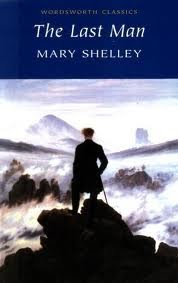 Published in 1826, “The Last Man” is not an easy read. The plot is rambling, the only thread being the death, one by one, of everyone in the book and indeed the world, principally through an unidentified plague, until we are left with the title character, the eponymous Last Man. The central character is troubled and unsympathetic, and the unrelenting death toll makes it hard to identify with any of the characters – we know no matter what they do they are doomed. The book contains a number of thinly described portraits of Shelley’s friend and acquaintances, including her then late husband, and a very gushing portrayal of Lord George Gordon Byron. The novel is set in the late 21st century, although apart from the date references and some curious flying machines there is little to distinguish the world described from Regency Britain or to justify the description sometimes given for this novel as being an example of early science fiction.
Worth a read? Yes if you are a Shelley fan, definitely if you want to trace the origins of early sci-fi, but otherwise stick to the more regular highways of literature.
 The Reading Bug