Book review

Collected Short Stories, by E. M. Forster, 1947

Having recently broken my short story review duck, I decided to read another collection, this time by the Edwardian modernist E. M. Forster. This edition, available as a Penguin 20th Century classic, is a good introduction to Forster, because it so clearly demonstrates what is wrong with his work, avoiding the need (if you are lucky enough to start here) to go on and read the novels.

The problem is essentially one of perspective. All of these stories, and I think this comment also applies to many if not all of the novels, are written from the narrow upper-middle class point of view from which Forster is never able to move away, no matter how he tries. All his point of view characters are to a greater or lesser extent prosperous, never seem to have to work, have servants or paid companions, and can afford long, indulgent if apparently unenjoyable journeys across southern Europe. Working class people and foreigners do appear in Forster, but the world is never seen from their perspective, and to be blunt they always seem two-dimensional participants.

Forster does, to be fair, consistently side with the people who are polite and condescending to these “others”. In novels such as Howards End and Where Angels Fear to Tread this extends as far as being able to contemplate relationships across class and national divides, but these relationships almost always end in tragedy or violence. Howard Bast is murdered, (Howards End) Gino loses his wife and baby (Where Angels) and Dr Aziz (Passage to India) has his life ruined by the false accusations made against him. Here the Greek family who are kind to Mr Lucas in The Road from Colonus are wiped out in a freak accident the day he moves on.

I don’t know whether Forster was unable to see the world through the eyes of the people who obviously fascinated and attracted him, or simply chose to write about what he knew. The relentlessness of yet another group of fussy English people settling into yet another picturesque Southern European town, with its hotels, its funny foreigners, the stereotypical alpha-male trying to assert himself by speaking English loudly, the older women, often in pairs, fussy about their luggage, eventually becomes wearisome.

Forster kept his sexuality a well-guarded secret in his lifetime, refusing to publish Maurice until after his death, but the homo-erotic gaze is also apparent here, not least in The Story of the Siren where a young Italian diver entrances the narrator:

With a jerk he became alive, seizing my arm and saying “…I will show you something beautiful”….He drew me away from the light till I was standing on the tiny beach of sand…there he left me with his clothes…for a moment he stood naked in the brilliant sun…the man is past all description. His effect was that of a silver statue.”

(I’ve edited some text here to emphasis the point. Quite why he needs to be naked to go diving to recover a book, which surely would have floated anyway (thus avoiding the need for the naked diving) is unclear.)

These stories differ from the novels in one important way, and that is in their handling of the supernatural. In the introduction to the 1947 edition Forster describes them as “fantasies”. An element of the other-worldly is introduced in most tales. In some it is creatures such as Pan, fauns or sirens; in others it is the afterlife – one character goes to heaven, finds it boring, and leaves. Another character escapes from a boorish fiance by becoming a tree. At some points these injections of fantasy seem largely whimsical, and to this reader at least a little nauseatingly so. Elsewhere the allegorical nature of the tale is more obvious. In The Other Side of the Hedge for example, life is described in Bunyanesque terms as a walk beside a hedge, on one side of which is a hard-paced race with no obvious end in sight, and on the other an Elysian paradise of fields and recreation.

The Story of a Panic, the first story in the collection, demonstrate many of the inherent problem in Forster’s use of the fantasy genre. It is a silly melodramatic story about a sulky teenage boy, Eustace, (possibly the inspiration for Eustace Scrubb?) who one day, while on a walk in the ubiquitous Italian countryside, is possessed by the spirit of Pan. Instead of narrating the story in a way that is at least marginally sympathetic to the child, giving us some insight into what happens to him, Forster narrates the tale through the eyes of an older English tourist, who insists on being addressed formally, and looks sneeringly down on the Italians working in the hotel.  This strange little mis-firing tale establishes the template for many of the other stories in the collection, where essentially the same mystical experience is predictably repeated using the same set of characters and features. The tiresome and repetitive nature of these motifs almost became too much for me by the end of the collection, to the point where I didn’t want to read on because a) I knew what was coming, and b) I felt patronised by it. The most interesting story in the collection, The Machine Stops, which I reviewed earlier this year, is an exception to the fantasy genre, and is all the more refreshing for it.


Standard
Book review

Tarzan of the Apes, by Edgar Rice Burroughs, 1912

Tarzan of the Apes is unquestionably pulp fiction, but it is also great fun, if you can stomach the appalling colonialist attitudes. Tarzan has become one of those archetypal characters from fiction – Dracula, Frankenstein, Sherlock Holmes – with a life far beyond the confines of their original story. Rice Burroughs went on to really milk the most possible value from the original success of his story of the ape-man, with around 25 sequels including Tarzan and the Foreign Legion and Tarzan at the Earth’s Core to name just a couple.

I am sure you know the bones of the Tarzan story. Newly-wed Lord Greystoke, an English aristocrat and his young wife are marooned on a deserted African shoreline following a mutiny by the crew. Here they create a mini-Eden, building a thatched hut with all-mod cons. Lady Greystoke gives birth to an heir, only to succumb to a fit of the vapours following a lion attack. Lord Greystoke quickly follows his wife, leaving young Tarzan to be adopted and brought up by the apes of the jungle. Interestingly these are not gorillas – Rice Burroughs is very specific on that point. This (invented) species of ape bears many similarities to the gorilla, but can speak a primitive language. Tarzan grows up among them, acquiring his physical prowess. He also discovers his parents’ hut and his father’s knife, which allows him to win a series of battles with the alpha-males in his troupe, as well as other beasts, finally becoming king of the jungle.

In parallel Tarzan teaches himself (improbably) to read and write and discovers more about his ancestry and the world beyond his jungle. Rice Burroughs was obviously taken with the idea of white people being marooned on the coast of Africa by mutinous sailors, because he re-uses this plot-device to introduce Jane Porter, lovely young American heiress, her eccentric father Professor Porter, and her suitor Clayton, Lord Greystoke. Yes, another Lord Greystoke, Tarzan’s cousin, has pitched up on the same shore in the same manner, twenty years on. This sums up the laziness of Rice Burroughs writing. Why bother inventing a new plot device when there’s a perfectly good one available that is only 15 chapters old?     

You won’t be surprised to hear that this novel is profoundly racist. The African natives Tarzan encounters are uncivilised, superstitious cannibals and they are wiped out by the French sailors towards the end of the novel without compunction.  Jane’s maid, Esmerelda, is a cliched American  lawks-a mercy caricature, always using clumsy malapropisms in a very unfunny manner and fainting every few minutes. The novel appears to accept an evolutionary link between man and beast, but the natural order in which white men are superior to dark-skinned men and beasts, and aristocratic white men are superior to all, is insisted on throughout.

Only in the novel’s portrayal of sex is there any hint of transgression. When Jane is first kidnapped by one of the apes, it is made explicitly clear that he intends to rape her.

“The tribe had kept his women. He must find others to replace them. This hairless white ape would be the first of his new household, and so he threw her roughly across his broad, hairy shoulders and leapt back into the trees” (Chapter 19)

Jane’s response to Tarzan when he rescues her is intensely sexual.

Jane—her lithe, young form flattened against the trunk of a great tree, her hands tight pressed against her rising and falling bosom, and her eyes wide with mingled horror, fascination, fear, and admiration—watched the primordial ape battle with the primeval man for possession of a woman—for her.

As the great muscles of the man’s back and shoulders knotted beneath the tension of his efforts, and the huge biceps and forearm held at bay those mighty tusks, the veil of centuries of civilization and culture was swept from the blurred vision of the Baltimore girl.

When the long knife drank deep a dozen times of Terkoz’ heart’s blood, and the great carcass rolled lifeless upon the ground, it was a primeval woman who sprang forward with outstretched arms toward the primeval man who had fought for her and won her.

And Tarzan? He did what no red-blooded man needs lessons in doing. He took his woman in his arms and smothered her upturned, panting lips with kisses. For a moment Jane lay there with half-closed eyes. For a moment—the first in her young life—she knew the meaning of love.

Note Jane’s response is in part to Tarzan’s muscles, but also to his violence, and she goes to him – indeed springs towards him. This would have been titillating to Rice Burrough’s Edwardian audience. This is not a novel for nice young women, but an adventure story for frustrated young men. The erotic emphasis on Tarzan’s musculature is relentless.

A feeling of dreamy peacefulness stole over Jane as she sank down upon the grass where Tarzan had placed her, and as she looked up at his great figure towering above her, there was added a strange sense of perfect security. As she watched him from beneath half-closed lids, Tarzan crossed the little circular clearing toward the trees upon the further side. She noted the graceful majesty of his carriage, the perfect symmetry of his magnificent figure and the poise of his well-shaped head upon his broad shoulders.

What a perfect creature! There could be naught of cruelty or baseness beneath that godlike exterior. Never, she thought had such a man strode the earth since God created the first in his own image.

However I am not sure how transgressive this actually is – while sexual activity between a young woman and a jungle man would have been taboo, we are never allowed to forget Tarzan’s aristocratic origins.

If you enjoy reading origin stories out of a sense of curiosity (in what way does the popular culture version of the character differ from the original?) Tarzan will keep you diverted for a couple of hours, but I doubt few if any readers will feel compelled to read any further in Tarzan’s adventures, which I suspect are simply reiterations of this template.

Standard
Book review

The Buried Giant, by Kazuo Ishiguro, 2015

The Buried Giant is an enigmatic, allegorical novel. Do those two features work well together – can an allegory actually be enigmatic, because if it is then is it really an allegory (and if so of what?). These are the questions that I am grappling with in shaping this review, whereas I suspect they may actually be a distraction, because The Buried Giant is first and foremost an enjoyable story.

Set in Britain in what became known as the Dark Ages, the period in history roughly between the departure of the Roman occupation and the Norman Conquest, this novel tells the story of two Britons, Axl and Beatrice, as they journey from their village to visit their son. Journeys of this nature were at the best of times dangerous and challenging, here all the more so because Axl and Beatrice are old. Although peace has descended on the countryside following years of conflict between Britons and Anglo-Saxons, this is still a world full of danger and menace, so of it very practical – a fall or an infection could easily prove fatal – and some of it fantastical, such as the unspoken threat that lurks on the Great Plains, or the ogres that steal children away from villages.

The fantasy element of the novel sits a little uncomfortably alongside the highly realistic portrait of Dark Ages life, in all its primitive, brutish and short nastiness. It becomes slowly apparent that the people are being affected by a form of collective amnesia – Axl and Beatrice refer to it as ‘the mist’ meaning that they quickly forget even recent events, and lives their lives in a fog of the very recent past. Axl sometimes wonders if this is a blessing, allowing them to forget upsetting incidents in their past, whether it be the conflicts that have swept across the land between Britons and Anglo-Saxons, or the personal problems the couple have faced, despite appearing the model of old-age devotion.

An adventure element to the novel is introduced with the character of Wistan, an Anglo-Saxon warrior sent by his king in the fens to travel west on an unspecified quest. Wistan rescues a boy from some ogres and agrees to share Axl and Beatrice’s journey for some of the way. They meet an aging Sir Gawain, knight of the Round Table, who is also on a quest. Slowly the truth about the amnesia causing fog and the characters’ back story emerges, and while I don’t think I would be spoiling the plot for you if I said more, I won’t in case it might. The adventure element of the novel keeps the pages turning, even if the allegorical nature of the plot (nothing is ever just itself – it always represents or stands for something, and after a while this gets a little distracting) is really what we are here for, with the sword fights and escapes through mysterious tunnels just a bit of a distraction.

This is very much an aside, but I would have liked it if Ishiguro had avoided some of the cliches about the Dark Ages. Of course they were difficult dangerous times, but the savagery and lawlessness that is suggested is probably wrong. There is evidence, principally archaeological, that travel and trading between Britain and the continent continued after the Romans left, and that society continued in many ways unchanged, with cooperation and inter-marriage between Britons and Anglo-Saxons. But of course it suits the narrative here to have these as savage times.

So what’s the novel an allegory of? It’s a meditation on relationship, naturally, but however touching the relationship of Axl and Beatrice is this is not more than a portrait of a couple growing old together and coming to terms with the challenges their marriage has faced over the years. In the end Axl faces the loss of his wife with stoicism. Their journey through the country can be seen as Bunyanesque, with the challenges they face as metaphorical manifestations – ogres, dragons, dog-beasts – of child-rearing, infidelity and old-age. You have to work hard at these allegorical associations – Ishiguro doesn’t join any dots for the reader – and I am not convinced that they really work. Everyone will have their own personal interpretation of these symbols. The Buried Giant itself only appears in passing, and is a slightly easier puzzle – conflict in the land has been buried by the collective amnesia caused by Merlin’s spell, and when it awakes there will be a heavy price to pay.

I’ve read a few negative reviews of this novel, both when it was published and subsequently in preparing for this post. Some of the objections are relatively trivial – if the identity of the narrator in some chapters is unclear, does it really matter? (I did notice, and it niggled slightly, but I got over it). The concerns about Ishiguro appropriating the tropes of fantasy fiction – which when it boils down to it that just  means dragons – seem a bit ridiculous in hindsight. Of course you can put dragons into your novels if you want to, who says you can’t? That doesn’t mean you are showing disrespect to the authors who were writing about dragons before you came along with your Nobel prize and your realism. I think this is one of those novels that unsettle readers and reviewers when it first comes out, but over time comes to be appreciated for what it is.

Despite my minor reservations, this was a genuinely enjoyable read. The characters are interesting, and you come to care about them as more than just cyphers for the values they represent. Post-Roman England is realistically portrayed. What I really like about Ishiguro’s work is that he refuses to be pigeon-holed by genre – novels as varied as this work, Never Let Me Go and The Remains of the Day are all worth reading. Although it was published in 2015 this is his most recent novel – let’s hope the fuss about the use of fantasy tropes when it come out haven’t put Ishiguro off taking risks in his fiction.


Standard
Book review

The Lottery, and other stories, by Shirley Jackson, 1949

I haven’t checked but I think this may well be the first collection of short stories I have reviewed in over 400 posts. That must at least be in part because I focused on the Guardian’s top 100 novels for a long time, but it is probably also a comment on the limitations of the short story as a literary form. Most publishers, even in this case, feel compelled to gather them together in a quasi-novel format of approximate novel length.

Having said that, this collection works well as a whole, and the use of The Lottery as a conclusion gives the whole text a strong collective punch. The Lottery is by far Jackson’s best known short story, and rightly so – it is an extraordinary, bleak portrait of rural America descended into a controlled, ritualistic form of Taliban-style barbarism. The citizens of a small, unnamed farming community gather on 27th June for a traditional ceremony involving the drawing of lots, the purpose of which is only fully revealed in the story’s closing lines. The ceremony is a harvest sacrifice – “Lottery in June, corn be heavy soon” – of the kind practised by primitive societies. Whilst the story is chillingly bleak, there is some hope offered in the asides that confirm that some communities are abandoning what is obviously a long-established tradition of human sacrifice by stoning to death.

Originally published in 1948 The Lottery revealed the potential for savagery lurking under the veneer of civilisation in America. I understand it is read widely in American schools, although in the UK it is not, by comparison, well known. If I was teaching English teenagers I would definitely use this powerful exploration of how we in the West think of ourselves as so advanced but how we are just one step away from the jungle. The tiny details in The Lottery are what give it its power – the calm, bucolic portrait of the villagers gathering in good cheer, chatting quietly to one another about this and that, the officials fussing about getting things underway, and then slowly the panic builds as the lottery starts.

I am sure this point has been made many times before, but there are strong echoes between The Lottery and The Hunger Games. Instead of a simple sacrifice the later novel uses the concept of a lottery as the starting point for a to-the-death gladiatorial contest, but the random selection of an ordinary person chosen for the sacrifice is such a powerful concept that I can understand why Collins would have been inspired by it.

None of the other short stories in this collection feature such a gruesome turn of events as that in The Lottery. They are mainly set in domestic, suburban settings, in which housewives, often newly wed or with small children, struggle to settle into new homes. Usually there is a sinister undertone to the stories, a sense of repressed threat which finally explodes in the Lottery, thus justifying its place at the climax of the collection. Sometimes the stories are simply sketches of brief if unsettling incidents, such as The Witches, in which an old man on a train disturbs a family with inappropriately gruesome reference to witchcraft. Other longer stories feature women past their prime living lives of quiet desperation, with the minutiae of everyday life becoming oppressive.

Jackson links these 25 stories thematically and in terms of their setting – they all seem to take place at roughly the same period of time, and in the same middle-American setting. They are linked further by the use of the same name for several characters across the different stories – indeed the original title of the collection was going to be ‘The Lottery and the Adventures of James Harris’. This unsettles the reader – are we following different events in the lives of the characters, or unrelated stories featuring people who just happen to share a common name? Is there any continuity between the stories? This is a world in which the supernatural still lurks beneath the surface of everyday life, a world where the memory of Salem Witch trials still troubles, and where people believe in daemons.

Jackson is a fine stylist. Not a word is wasted. If you want to dip into her work The Lottery is a great if atypical starting point, but I would recommend this collection as a more representative selection of her writing.

Standard
Book review

One Flew Over the Cuckoo’s Nest, by Ken Kesey, 1962

One Flew Over the Cuckoo’s Nest is one of those novels (such as The Wizard of Oz, Gone with the Wind) where the film of the book is better known than the book itself. In this case that is completely understandable – Jack Nicholson’s Oscar winning performance in the 1975 film is truly memorable, there are loads of other wonderful performances, and the editorial choices are really well thought through. It must be almost 30 years since I last saw the film, but I still remember certain scenes vividly, such is the impact it made. It also made an impact on wider society and an important contribution to the discussion on the treatment of the mentally-ill.

One Flew Over the Cuckoo’s nest (cuckoo being a pejorative term for the mentally-unwell) is set on an Oregon hospital ward. The patients are all settled in their secure environment, bullied by the senior nurse Ratched and her orderlies, but relatively comfortable. The narrator is Chief Bromden, a native American who pretends through most of the novel to be deaf and dumb, even though he is perfectly capable of speaking and hearing. His silence is effectively a protest about the way he and his people are ignored in modern America. The discovery that he can actually speak is a minor development in the novel, but in the film it is presented as a significant moment.

Into this environment bursts Randle MacMurphy, transferred into the hospital from prison. It is suggested, by MacMurphy himself, that he has engineered this transfer to serve his sentence in greater comfort, although the precise extent of his illness, if any, is never completely resolved. MacMurphy sets about challenging the autocracy of Nurse Ratched, and a battle of wills ensues. When MacMurphy eventually realises that Ratched has the power to extend his detention indefinitely, it looks as if he is going to knuckle down, take his medicine, literally, and serve his time, but that fragile peace is never going to hold for long.

One Flew Over the Cuckoo’s Nest can be read on a number of different levels. Superficially it is a protest about the treatment of the mentally ill in America. In portraying the patients as largely normal, perhaps a little quirky, and with a central character, MacMurphy, who at time seems saner than anyone, Kesey weights the argument heavily in favour of his call for the more humane, liberal treatment of the mentally unwell. In so far as the novel (and the film) moved America and the west to this position then it had a positive effect, but the novel’s portrayal of electro-convulsive therapy as being akin to torture, and being used by the hospital as a form of punishment, gave this treatment (which is still used effectively to this day) a terrible reputation from which it continues to suffer. The use of lobotomy was already in steady decline by the time this book was written and published, but if One Flew gave this operation a final shove down the stairs of history then obviously it made a significant contribution. There is still a long way to go in the process of removing the stigma from mental illness, but this novel was an important step on the way, making us think of the mentally ill as people not threateningly alien.

The novel is not just a treatise on the treatment of the mentally ill. On another level it is a parable of the story of Christ, his life and crucifixion. MacMurphy is brought amongst the poorest and weakest in society, and goes about healing them and making them whole. He makes them fishers of men, (the chapters where the inmates are allowed out of the hospital to go on a fishing trip are so profoundly improbable that they can really only serve to contribute to the narrative if we accept their metaphorical significance). MacMurphy consorts with fallen women, and eventually sacrifices himself (his sadness, which the Chief notices on the fishing trip, suggests he is aware that this is going to be his fate) for the sake of his friends after a riotous last supper, and after being betrayed by Billy Bibbitt, who goes on to kill himself after having accepted his metaphorical pieces of silver. When accepting his electro-convulsive treatment MacMurphy even explicitly makes this association himself, asking if he is going to be given a crown of thorns. MacMurphy is brought into the world, suffers and dies so that our sins may be forgiven.

The novel concludes with a crushing loss but also with freedom, a refusal to accept oppression. It argues that the revolution will not be without cost, but also suggests that the ultimate prize may be worth the price. This makes One Flew Over the Cuckoo’s Nest one of the most important texts of the 1960’s counter-revolution.

Standard
Book review

The Discworld Companion by Terry Pratchett and Stephen Briggs, 1994

By a wonderful act of synchronicity, I stumbled across this £1 charity bookstore treasure very shortly after completing Soul Music. This edition of the Companion (later editions being called the New Discworld Companion, followed by The Turtles Moves..The Discworld Companion…So Far) was published in 1994, ending with the publication of – and therefore fully describing the known Discworld up to – Soul Music.

This is much more than a guide to the Pratchett universe, although it is a very comprehensive one at that, obviously only comprehensive up to 1994 that is. This partiality is in itself is fascinating, as this snapshot of the DW universe reveal that at this point it is surprisingly complete – certainly all the main features you would expect – the Watch, Vetinari, the Witches, Death, a fully developed concept of how magic works, and so on – are all there, fully formed. In one sense the final 25 or so books were about filling in the detail and backstory rather than reinventing DW, and the genesis of several of the later novels are clearly present here. Examples of this include the references to the mysterious world of XXXX, later explored in the Last Continent (Discworld 22) or the writer William de Worde and the fact that moving type has not yet been fully embraced in Ankh-Morpork. de Worde’s entry in the Companion ends with the this sentence:

“It could well be that the future holds great things for young Mr de Worde…”

You really couldn’t ask for a clearer indication that Sir Terry had The Truth, the DW novel about the introduction of printing, planned out in his head, even though it wasn’t to eventually appear until 2000 as DW 25.

The Companion also has lots of canonical additional content found nowhere else – there is a very comprehensive description of the history, working and traditions of the Unseen University for example, in which Unseen Academicals is hinted at in the description of the DW version of football:

“UU records suggest that students from the University have no participated recently, but street football with various rules is still an Ankh-Morpork tradition”.

The sections on magic, DW units of measurement/standards, and Morporkian law, equally all give plenty of background to the DW universe only hinted at in the novels.

At the end of the Companion, after the A-Z section, is some fascinating additional content. In a chapter apparently written by Stephen Briggs, there is what I feel is one of the best summaries of the reasons why the novels are so loved:

“There is a certain quiet optimism (in the books). If there is a struggle, the good win – but not easily, and at some cost. There is a strong dislike of coercion of people, either by other people or gods or some concept of fate or destiny. There’s a very frequent theme which says that what people happen to be doing does not define what they actually are.”

Elsewhere a long and comprehensive interview with Sir Terry reveals that in the mid-90’s in response to the question:

“Do you see yourself still writing Discworld books in ten years’ time?”

he gave a very definitive

“No. Not even in five years time. Certainly not on a regular basis, anyway. There’s only so much I can do with it.”

I am so glad he changed his mind!

P.S. In the very final section of the Companion Briggs write about Pratchett fandom:

“Fan activity is available to anyone with a computer and a modem. There is a Pratchett forum on CIX….and a rather larger one known as alt.an.pratchett on the Internet (the huge worldwide computer network which shifts megabytes of information around the planet”.

Oh so that’s what the Internet is!! Gotta love 1995.

Standard
Book review

Soul Music (Discworld 16) by Terry Pratchett,1994

There’s a disappointing, cut and paste feel to Soul Music which for me makes it the weakest of the Discworld novels thus far (i.e. of the 16 published up to this point). And it is still wonderful! How come? I’ll come to the mitigation, but first this is the plot outline:

A young harpist, Imp Y Celyn, (bud of holly, get it?) from Llamedos seeks fame and fortune in Ankh-Morpork. He forms a band with Lias Bluestone (a troll percussionist) and Glod Glodsson (a dwarf hornblower) along the way acquiring a magical guitar with mysterious powers, more specifically an entity comprising the primordial music which brought the universe into existence. As one does.

Meanwhile, Death, upset at the death of his adopted daughter Ysabell and her husband, Mort, takes another impromptu break from his day job, leaving his granddaughter, Susan Sto Helit to fulfil his soul-gathering function. She fluffs her first job by failing to reap the soul of Buddy when he is scheduled to die while performing at the Mended Drum.

Thus the novel’s two primary threads are established – death takes a break and a family members steps in to cope as best they can, a plotline Pratchett had already used before (Mort and Reaper Man); and in a parallel storyline a new phenomenon/innovation (in this case rock music) takes the Discworld by storm, causing chaos and ultimately threatening the existence of the universe, a theme already explored in some detail in Moving Pictures.

That’s pretty much it – although there are a lot more events, they all fall within this basic template. And that was what I found disappointing by Soul Music, its writing by numbers feel. To be fair to Pratchett he was writing a phenomenal amount of Discworld novels at the time, feeding our voracious appetites for all things DW. (The Colour of Magic was published in 1986,  just 8 years and 15 DIscworld novels earlier. In addition to the eventual count of 41 novels there are also any number of books and other material including short stories, cookery books, maps, guides etc). So it is hardly surprising that to meet deadlines he had to dial it in from time to time.

Fans of dad jokes and clever popular culture references will be spoilt for choice here, beginning with the original cover illustration which echoes the Meat Loaf album Bat out of Hell, rapidly followed by a steady stream of allusions to groups and records, in particular cheesy examples from the seventies and eighties, such as “Pathway to Paradise” (“Stairway to Heaven”) and ”Sex and drugs and Music With Rocks In” (“Sex and Drugs and Rock and Roll“). At first the game of spot the reference is fun, but after a while it palls – it is after all essentially the same joke time after time, however cleverly done. Having said that even I had to applaud the way the groanworthy reference to “There’s a Guy Works Down the Chipshop swears he’s Elvish” is worked in.

Pratchett was at this point over a third of the way into the Discworld saga, and he was still refining his craft. This novel would not have disappointed any DW fan, but neither can it be said to take the series to a new height or in a new direction in the way books such as The Night Watch did. It’s fun, and the jokes consistently work, but I am not sure we care that much about the characters (except Susan perhaps), and the eventual happy-ever-after ending is never in any doubt. The scenes of the band on the road felt like padding, an effort to reach a minimum word-length target. So perhaps I need a Pratchett holiday – but I really don’t want one, because I know what great novels are coming up.


Standard
Book review

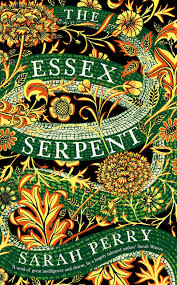
The Essex Serpent by Sarah Perry, 2016

When Cora Seaborne’s bully of a husband thankfully dies, she begins her new life as a widow with a sense of relief. Cora is our story’s heroine, an intelligent free-thinker, interested in the ideas of Marx and Darwin, ill-suited for the role of society wiEssex serpent 2fe. Seeking a change of scenery following the funeral, Cora moves to Essex, first Colchester then coastal Aldwinter, accompanied by her eleven-year old son, Francis, and his nanny, Martha.

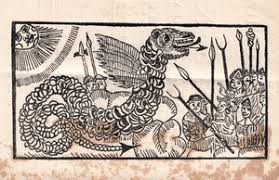
Here we are introduced to the legend of the titular serpent, a wonderfully ambiguous and flexible metaphor for the unknown, sexuality, and more. The serpent is rumoured to have returned to haunt the coast after an earthquake brought it back to the surface, a folk-tale which has just enough plausibility to intrigue Cora. She becomes convinced that what the local people think is a mythical sea beast may be a previously undiscovered species. This is a time when the undiscovered was being explored and pinned down by hyper-active Victorians all the time.

The romantic element to the story is introduced when she meets the local vicar Will Ransome, who has a different, faith-based interpretation of the serpent legend. To Will and his flock the serpent has strong echoes of an earlier satanic snake. A strong wider cast slowly introduced to us, and one of the many pleasures of the novel is getting to know the people of Aldwinter and Cora’s other friends and relatives.

There’s much to admire in this novel, a late Victorian Gothic horror/romance. It fizzes with ideas and incident, interesting characters and accurately evoked settings.  Set in 1893, a time in which the ideas of Marx and Darwin were moving from being shocking and challenging to much more accepted and mainstream, but where superstition still governed the lives of many; where human relationships begin to test the boundaries of the constraints of marriage (for example shown here in the relationship between Martha and Edward Burton). Martha can be introduced as a socialist in company without that causing shock or dismay.

This is a society in flux, approaching the end of the Victorian era and the nineteenth century, set just two years before the trials of Oscar Wilde, and where social activism on the state of the slums in East London is much more than a matter of public health. Medicine is also leaping forward into the twentieth century, with Luke Garrett, jokingly (?) nicknamed “the imp”. a surgeon and suitor of Cora’s who begins to explore the possibilities of heart surgery.Essex serpent

The writing is strong. The point of view narration sweeps between characters seamlessly so we can tell from moment to moment how each is feeling as each scene unfolds, something that only novels can really do this well. The influence of Dickens and Hardy in particular is pervasive and explicitly acknowledged. Take this paragraph for example which to my mind is almost heroically Dickensian in its use of pairings and contrasts:

One o’clock on a dreary day and the time ball dropped at the Greenwich Observatory. There was ice on the prime meridian, and ice on the rigging of the broad-beamed barges down on the busy Thames. . . . Time was being served behind the walls of Newgate jail, and wasted by philosophers in cafes on the Strand; it was lost by those who wished the past were present, and loathed by those who wished the present past. . .

In Lincoln’s Inn and Middle Temple lawyers eyed their calendars and saw statues of limitations expire; in rooms in Camden and Woolwich time was cruel to lovers wondering how it got so late so soon, and in due course was kind to their ordinary wounds. Across the city in terraces and tenements, in high society and low company and in the middle classes, time was spent and squandered, eked out and wished away; and all the time it rained an icy rain.

If I have a criticism of this novel, churlish though it may be, it is that the ending is weak. The serpent itself was always going to be a disappointment, but the resolution is anti-climactic, to say the least, and a little ludicrous (the scene with ‘Gracie’). The resolution of the interwoven relationships is also a little disappointing – almost as if the ground is being laid for a sequel. Certainly I felt as if Cora, Michael, Martha and families had more stories to tell, and I would happily read more about their lives. I am equally convinced that this would make a hugely popular television series in the right hands.

If I am honest it was the awkward portrayal of sex in the novel that troubled me the most. The descriptions creep close to being a pastiche or parody of the way Hardy would have written them. Here for example is the time towards the end of the novel (spoiler alert) where Will and Cora finally consummate their relationship:

moving aside the folds of her coat he tugged her shirt where it was tucked into the waist, in the place where once he’d touched her and been disgraced by it. But the disgrace this time kept its distance: it seemed to him that to keep apart from her now would be obscene; how could it be possible to seek out each fold and turn of her mind and not grow familiar with the particular patina of her skin, the scent and taste of it. Not to touch her now would be to breach a natural law. Back she lay against the soft green stair in the thickening dusk and fixed her eyes on his, unsurprised, daring him: he raised he short and there in the split between the black cloth of her clothes he found her soft belly, very white, marked with the silver lines her son had made: he kissed it once and could not stop, and rolled against him in delight.

The sun slid down….She met his gaze then, levelly as she always had, and felt herself go rushing to meet him like a river in spate; ‘Please,’ she said, pulling at her skirt:’Please’, and he heard it like a command. He found her easily, and his hand slipped and moved in her, and her bright head drooped, and she was silent. He showed her his hand, and how she gleamed there; he put a forefinger to his mouth and hers, and they had an equal share”. 

Ignoring the fact that her shirt gets pulled out twice, which I suppose I can forgive, my main reaction to reading this paragraph was – really? They had an equal share?? That’s my nominee for the Bad Sex in Literature Award sorted. I was also irked by the deliberate archaism of “back she lay” rather than “she lay back” – why?

Earlier, Will goes for a long walk, the traditional remedy for sexual frustration, his mind boiling with thoughts of Cora:

He walked on to the mouth of the estuary, not knowing what to do with his desire, only that he could not take it to Stella; he knew he’d touch her and find her for the first time slight and insubstantial – he had in mind something more like fighting, and it appalled him; he went out to the water’s edge and with quick movements spent himself on the black marsh with something like a bark and with a dog’s joy”

The boatload of day-trippers from Clacton would have had something to talk about on the way back that day!

Or here:

“The windows in her room were open and light was fading on the wall. She said, ‘There may be blood,’ and he said, ‘Better that way – better’; and it was Cora’s mouth he kissed, and Cora’s hand he placed where she wanted it most. Each was only second best: they wore each other like hand-me-down coats.”

I am not sure if this is beautiful or over the top. ‘There may be blood’ sounds like a bad western, or an ominous line from a Tarantino film, but the reference to wearing one another like hand-me-down coats is lovely, and picks up on the constant references to Cora wearing a man’s coat (and many other references to the coats people wear – in fact there is probably a whole essay to be teased out of clothing in this novel alone, such is its depth and richness).

This is not the only example of overwriting, spectacular though it is. 

“He felt his faith deeply, and above all out of doors, where the vaulted sky was his cathedral nave and the oaks its transept pillars: when faith failed, as it sometimes did, he saw the heavens declare the glory of God and heard the stones cry out.”

But I am being churlish. Writing of this nature always tiptoes on the edge of hyperbole, and it is easily forgiven. I will close with a positive example of how the author evokes the Essex countryside – has it ever been described with such affection?

“Then it carried me in spate to the Essex shore, to all the marsh and shingle, and I tasted on my lips the salt air which is also like the flesh of oysters, and I felt my heart cleaving, as I felt it there in the dark wood on the green stair and as I feel it now: something severed, and something joined.”

Perry is a writer of enormous promise. The Essex Serpent was massively popular throughout 2016 and beyond, and has won prizes and sold huge amounts of copies – at times you couldn’t turn around in a bookshop without bumping into piles of it. One of the benefits of such ubiquity is that second hand copies are easy to find, and my £1 charity bookshop copy was a gleefully pounced upon treasure.


Standard
Book review

This Census-Taker by China Miéville, 2016

I’m usually pretty comfortable with novels that ask the reader to do all the heavy-lifting; that only give the barest context and leave it to us to fill in the gaps. Mieville takes this idea close to if not beyond its limits in This Census-Taker, a 2016 novella in which almost all of the details that a reviewer would normally set out in this point in a review are missing.

This is a first-person story where the narrator unsettlingly changes voice (from third to first person) and tense, but eventually settles down to a more conventional narrative about an unnamed child (the narrator) and a series of disturbing incidents from his childhood. Throughout the tale we are left with a series of unresolved questions – what has happened to his mother, is his father a murderer and what are the mysterious, quasi-magical keys that his father makes all about? The novella uses a combination of the fantastical, such as the scenes where the inhabitants of the local town suck mildly narcotic blood from the legs of giant beetles, or what one reviewer described as

“an unspecific but eerily well-realised terrain of soft apocalypse”

and a more realistic element in which the boy’s experience are recognisably those of a sad, lonely refugee or perhaps survivor. There is a lot of narrative incident, but little of it serves much apparent purpose – things just happen, then other things happen; in particular people disappear regularly, with the father looming menacingly over all events. If he is a murderer nothing can be proven, so after the mother disappears things return to a strange version of normal. The protagonist finds a substitute family of street children but they cannot replace his missing mother, and he remains trapped with his father. This is bleak indeed. The entrance of the enigmatic census taker at the close of the novel does little to resolve this mystery or sense of tension.

Eventually through a brief reversion to a future present, we are shown that the events of the novel are being recorded by a a much older version of the narrator, although what his future holds is frustratingly ambiguous, like so much else of this novel. This is not the grand reveal or resolution we may have optimistically been hoping for.

Fantasy is a wonderfully flexible genre, that can accommodate novels such as this at its fringes, and at the extreme the work of a much more mainstream writer such as Terry Pratchett, who I will be returning to next with, I admit, a small and undignified sense of relief after the challenges of This Census Taker.

Standard