I found myself becoming increasingly troubled by J G Farrell’s Booker prize winning ‘The Siege of Krishnapur’. It is not a bad novel, but it has some serious flaws. It is based on the Indian Mutiny of 1857/8. In India this conflict is known as the Indian rebellion, but 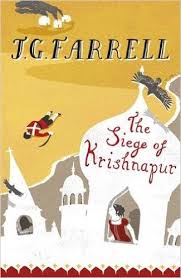 you would not know that from reading this novel. The narrative perspective is entirely from the point of view of the ‘plucky’ British settlers. The Indian people who appear in the novel are either cannon fodder, mown down in their thousands by the plucky British defenders, or ridiculous caricatures, such as the entirely dumb ‘Prime Minister’. Even the Sikhs who loyally refuse to join the rebellion are given non-speaking parts and diminutive nicknames.
I wonder – did it ever occur to Farrell that the Indian people might have had a different perspective on events from the British characters, and that giving a voice to one of them might have been an interesting counterpoint to the stubbornly imperialist perspective otherwise offered? I am sure that anyone wanting to defend the novel will say that Farrell is comically pointing out the absurdities of Empire. Quite why this was necessary in the 1970’s is a moot point, but the fact that the British behaved ridic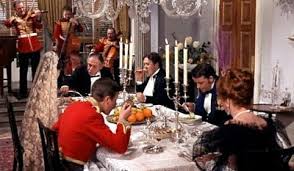 ulously in the Raj, keeping up the croquet on the lawn, tea parties, and cucumber sandwiches while the natives rebelled isn’t particularly original funny – Carry on Up the Khyber made the same point far more succinctly five years earlier.
Let’s call this what it is – racism. A novel set in the time of the British Empire in which all the non-British characters are marginalised and ridiculed wouldn’t find a publisher these days, would it? The novel made me wonder whether you can actually write a novel in which all of the predominant characters share a colonialist mindset, and use these attitudes and situations to challenge and undermine that perspective? In other words, how do you write a novel about racism without being racist? That’s a very broad question, but I would expect to see racist attitudes challenged robustly – which doesn’t really happen here – and some progression in the characters’ attitudes on the issues, which again is missing. In the novel’s final chapter set several years after the siege, there is no indication that the protagonists have come to realise they bore some responsibility for the uprising and the deaths that followed.
I am sure Farrell tried to make the novel a serious discussion about Empire. Many of the British characters are sympathetic and well-meaning, but misguided. There are some heavy-handed points made about the Great Exhibition of 1851, a few years before the novel’s setting. The senior British official organising the defence of the besieged community is known as ‘The Collector’, and while this title refers to the collection of taxes, it also refers to his hobby of collecting small technical devices from the Exhibition. These all eventually end up forming part of the barricades or are broken down to be remade into ammunition – so much for the value of civilisation in such a backward country.
There were a number of other features of the novel that caused me concern. The women characters are mainly there for decorative purposes, to provide wives and babies. There is a regular and rather uncomfortable series of references to the women’s sexual attractiveness, their smell, and even the effect the siege has on the plumpness of their bodies. In one bizarre scene a woman strips naked to escape a plague of insects that has descended on her, covering her head to toe, and two of the officers scrape the insects off her body using the hard-back covers torn from a Bible. They are bemused by her pubic hair, not knowing whether to scrape that off as well! This scene was I am sure intended to be funny, but my sense of humour failed me. Not only was it distasteful, but the clubbingly heavy-handed point being made – she is a “fallen” woman being redeemed of her sexual misconduct by the literal application of the Bible – made me groan.
And….the plot is slight – the siege becomes a game of survival, but there is never any doubt that it will eventually be relieved. Several characters are set up with potentially interesting story lines, which are not followed up. A lengthy debate about the causes of cholera is obviously well-researched, but utterly pointless given we now know who was right and who was wrong. But despite all these reservations, I didn’t hate this novel. It was well constructed and skips along with just enough pace to sustain the otherwise static narrative.
I know I am in a small minority in this one – novel’s don’t win the Booker without any merit, let alone be shortlisted for the Booker of Bookers. So the question is, what am I missing?