Book review

Blood Meridian by Cormac McCarthy, 1985

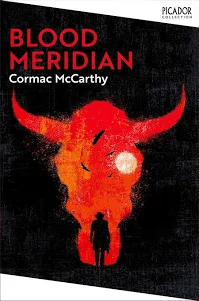
Blood Meridian is an extraordinary novel. It is profoundly violent, and at the same time quite lyrically beautiful. It reminded me at various points of The Odyssey, The Inferno, and even Don Quixote, without ever being self-consciously ‘literary’.

The events of the novel take place in the aftermath of the Mexican-American War of 1846-1848. During that war, the US effectively conquered the north of Mexico, which eventually became the South Western states including Texas, New Mexico and California. But despite this victory US control of this area was limited. Native tribes including the Comanche and Apache were still active and represented a threat to Mexicans and ‘Americans’ alike. Effectively this vast area of land was lawless. Settlers were vulnerable to raids by these tribes, so local governments in both northern Mexico and the Southwestern US employed mercenaries to hunt down these tribes, offering a bounty for each grisly proof of a kill.
The novel follows the adventures of an unnamed, troubled teenager known only as ‘the kid’. Born in Tennessee, by the age of fourteen he has “a taste for mindless violence”. He runs away from home and soon meets Judge Holden – the Judge – a character who haunts the rest of the novel. When he first encounters the Judge he incites a crowd to attack a preacher. This incident could be the trigger for the kid’s subsequent life of violence. He joins a militia planning to travel into Mexican territory: this is presented as a campaign to protect American settlers but it is clearly just an excuse for the gang to go looking for plunder. However, the gang is poorly prepared and under-equipped and is quickly wiped out by a war party of Comanches. This is not going to be a straightforward Western where the superior firepower of the Americans can overwhelm the poorly equipped ‘natives’. Blood Meridian is informed by many of the tropes of the tropes of the traditional Western narrative but consistently subverts them in this way.

The kid survives the massacre and sets out through the desert looking for somewhere to rest and recover, the first of many such aimless journeys. When he does eventually reach a town he is arrested by Mexican soldiers and jailed without trial. His time on a chain gang ends when he signs up for another gang of scalp-hunters led by Captain Glanton (closely based on a real historical figure). Glanton’s gang (although it is never described as such, that’s clearly what it is) includes the Judge that the kid had met earlier in the novel.

Much of the rest of the narrative follows the gang’s campaign of mindless violence through the increasingly hostile landscapes of this part of Mexico. In theory the gang are authorised by the Mexican authorities to kill Native Americans and return their scalps for a bounty. But they quickly work out that it is hard to tell Native American scalps from those from Mexicans, and begin killing and scalping people indiscriminately. Some of the scenes of the massacres, including those in which women children and babies are slaughtered, can be hard to stomach. Consider that your trigger warning.

The narrative point of view McCarthy uses to tell his story is chillingly calm and totally non-judgmental. The massacre scenes are stripped of adjectives and atmosphere, emphasising their brutality. The gang have no conscience, no sense of humanity at all. People are just products to be harvested.

As the long journeys to find more people to kill continue, we learn more about the Judge. One of the gang members tells a story about how he once helped an earlier version of the gang manufacture gunpowder which they then used to massacre the Apaches chasing them. The Judge is an enigmatic, almost supernatural figure. At times he is an avenging angel, at others he takes an academic interest in his environment, making sketches of the landscapes. the flora and fauna, and the native American artefacts that litter the landscape. He is perhaps Western colonialism personified, wreaking huge damage on the peoples and countryside under the guise of academic analysis.

Although largely operating with impunity, the gang eventually goes too far – after a fight at a cantina they attack a group of Mexican soldiers. Their contract with the local government is cancelled and a bounty is posted on Glanton’s head. The gang leave the area and travel to a neighbouring state, where they pick up another contract for Apache scalps. This is the cue for further scenes of brutality, although this time the gang meets more substantial opposition from both Native American warriors and Mexican soldiers. Eventually, at the Colorado River, they seize control of a key ferry crossing, and grow rich exploiting and robbing their passengers. This good life is abruptly ended by another attack from a local tribe, and most fo the gang are killed, including Glanton himself. The kid survives, albeit seriously wounded, and along with another survivor tries to escape. But now they are being tracked by the Judge, who has turned against them, and pursues them relentlessly.

Blood Meridian is shocking in its brutality, but also lyrically beautiful. McCarthy evokes the stark beauty of the landscape:

“They rode on and the sun in the east flushed pale streaks of light and then a deeper run of color like blood seeping up in sudden reaches flaring planewise and where the earth drained up into the sky at the edge of creation the top of the sun rose out of nothing like the head of a great red phallus until it cleared the unseen rim and sat squat and pulsing and malevolent behind them.

But as the novel unfolds the landscape becomes increasingly hellish, with more and more bodies littering the ground. This is a journey into hell.

The only element of the novel that for me fell a little flat was the Judge’s philosophising. He is presented to the reader as a guru, someone whose thoughts on life and existence are worth listening to.

“Whatever exists, he said. Whatever in creation exists without my knowledge exists without my consent. He looked about at the dark forest in which they were bivouacked. He nodded toward the specimens he’d collected. These anonymous creatures, he said, may seem little or nothing in the world. Yet the smallest crumb can devour us. Any smallest thing beneath yon rock out of men’s knowing. Only nature can enslave man and only when the existence of each last entity is routed out and made to stand naked before him will he be properly suzerain of the earth.”

Or

“Men are born for games. Nothing else. Every child knows that play is nobler than work. He knows too that the worth or merit of a game is not inherent in the game itself but rather in the value of that which is put at hazard. Games of chance require a wager to have meaning at all. Games of sport involve the skill and strength of the opponents and the humiliation of defeat and the pride of victory are in themselves sufficient stake because they inhere in the worth of the principals and define them. But trial of chance or trial of worth all games aspire to the condition of war for here that which is wagered swallows up game, player, all.

Rather than these being profound meditations on power, good and evil, and so on, for me they were trite and out of place in the narrative. They weren’t needed. This didn’t in any way spoil the novel for me – I was more than happy to accept these speeches as brief interruptions soon passed by, but they felt heavy-handed, when everything the author wanted to say was already very clear. The wild west was not a place of adventure but a war-zone, devoid of morality. McCarthy has a bleak vision of humanity, but this is what makes him a prophet for our times.
Blood Meridian or the Evening Redness in the West by Cormac McCarthy, 1985

Aside
Book review

The Road by Cormac McCarthy, 2006

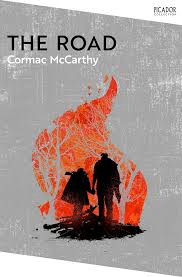
The Road is a pretty traumatic read – if books came with trigger warnings, this would have lots of them. It is set in the nearish future after an environmental or some other disaster that has wiped out almost all plant and animal life on earth. The sun is blocked by clouds and ash covers everything. The landscape is hellish, blasted and burnt. The few human survivors hunt one another for food.

The story is told through the eyes of ‘the man’ and his son, survivors in an unremittingly bleak and hostile landscape. The only other survivors they meet want to kill them and eat them, or are enslaved and due to meet the same fate. At one point they see from a hiding point

“An army in tennis shoes, tramping. Carrying three foot lengths of pipe with leather wrappings. Lanyards at the wrist. Some of the pipes were threaded through with lengths of chain fitted at their ends with every manner of bludgeon…The phalanx following carried spears or lances tasselled with ribbons, the long blades hammered out of trucksprings in some crude forge upcountry…Behind them came wagons drawn by slaves in harness and piled with goods of war and after that the women, perhaps a dozen in number, some of them pregnant, and lastly a supplementary consort of catamites illclothed against the cold and fitted in dogcollars and yoked each to each.”

The son was born just after the end of the world. Initially his mother was with them for some time, but in one of the novel’s many disturbing scenes the man remembers his final conversation with her where she confirms her decision to take her own life:

“Sooner or later they will catch us and kill us. They will rape me. They’ll rape him. They are going to rape us and kill us and eat us and you won’t face it. You would rather wait for it to happen. But I can’t. I can’t.”

The novel is a dystopian version of the classic journey/quest story, its title ironically referencing Kerouac’s On the Road. While Kerouac’s characters travelled freely through a sunny, prosperous American landscape, the man and his son are on foot, hunted and starving. They travel south looking for a warmer climate, with the vague destination of the coast, when they can go no further, and an equally vague hope that they might meet a community of non-cannibals willing to take them in and help them. They carry their small amount of food and possessions in a shopping trolley, which explains the need to stay on the road rather than heading across country. The road is largely deserted but also very dangerous – it is where they are most likely to meet other, equally hungry and desperate people.

The boy – he is around ten years old – constantly asks his father questions, principally to seek reasurance and comfort. He believes his father when told that they will find food, somewhere warm, and people to help them, even though every day proves how profoundly unlikely this seems. As all plant life is dead, the only food left is tinned and this is obviously in very short supply. All the other necessities of life, including shelter, clothes and clean water, are equally hard to come by. At several points they come close to starvation; at many others they are nearly captured or killed. After every step they get colder, hungrier, thirstier. The world they live in is so vividly realised that the reader shares in the feeling of trauma. Hellish doesn’t begin to describe it. The only thing that keeps them going is one another, and the small, unspoken hope that somewhere there is a place of refuge. Extraordinarily, at one point they find just such a place, an emergency bunker full of food and other resources, but the man refuses to stay, refusing to believe they will be safe, even though the road is a much more dangerous environment.

Despite everything, the boy preserves a core of integrity. He wants to help people they encounter, and cannot accept the hard decisions his father has to constantly make. He is the voice of compassion, the conscience of a lost world he knows only through the memories of his father, which in hindsight seems a paradise:

“Once there were brook trout in the streams in the mountains. You could see them standing in the amber current where the white edges of their fins wimpled softly in the flow. They smelled of moss in your hand. Polished and muscular and torsional. On their backs were vermiculate patterns that were maps of the world in its becoming. Maps and mazes. Of a thing which could not be put back. Not be made right again. In the deep glens where they lived all things were older than man and they hummed of mystery.”

I enjoy dystopian fiction, and will watch just about anything involving zombies or end of the world catastrophes. Usually these involve a suspension of disbelief – the characters often survive for long periods without any obvious sign of food or water, for example, or find weapons in abundance just when they are needed. The Road offers no such false comforts. This is a terrifying world in which death seems an attractive alternative to the hardships of daily life. I read The Road compulsively in just over a day, all the time anticipating the end which I thought was inevitable – this novel was not going to have a happy ending. I am going to avoid spoilers and let you decide what you think about the ending, but whatever you do don’t read The Road unless you are feeling quite psychologically strong. Keep telling yourself it is only a story.

The Road by Cormac McCarthy, 2006

Aside
Book review

The 4.50 from Paddington by Agatha Christie, 1957

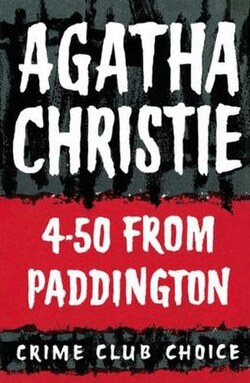
I’ve always felt very slightly guilty at never having read anything by Agatha Christie. TheTuesday Murder Club stories assuaged this a little, although I would never had read them were it not for the association with Richard Osman. The 4.50 from Paddington was a very late attempt to address this shortcoming. It features one of the author’s recurring detective characters, Miss Marple. Overall I think it is quite seriously flawed. The murder mystery element of the story depends on some utterly bizarre behaviour by the protagonist. There are a series of other serious structural flaws, but these could be forgiven if the murderer had not seemed desperately to do everything he possibly could to be caught. Obviously there is no way I can make this point without extensively spoiling the book for you, so if you ever intend to read this please turn away now.

The novel opens as a traditional ‘murder on a train’ puzzle. Mrs McGillicuddy, a friend of Miss Marple, is travelling by train when her carriage passes another train going in the same direction. When the trains are stopped next to each other she sees a woman being strangled. This was obviously a very strange time to choose to strangle someone. She is convinced this is a case of murder. She reports the attack, but the police are unable to find a body or any other evidence.

Miss Marple decides to investigate, of course. By some analysis of train timetables that was quite dull she works out that the body was probably thrown from the train into the grounds of Rutherford Hall, a stately home just outside Brackhampton. She asks her friend Lucy Eyelesbarrow, to help her investigate by taking a job at the hall as a housekeeper. Lucy is a promising character, but I could not move past the fact that Christie asks us to accept that despite her having a First in Mathematics from Oxford she decides to become a housekeeper. A well paid housekeeper, but a domestic servant nonetheless. I can see Lucy serves a useful role in the novel – she is bright and observant, and acts as Miss Marple’s eyes and ears on the ground within the Hall (a more conventional approach would have been for Miss Marple to have somehow get herself invited to stay with the family) but this is still a deeply implausible career choice for a first class mathematician, and is profoundly old-fashioned. Is this really the optimum career choice for a bright young woman in the 1950s? One character observes of Lucy “She scares the life out of me, she’s so devastatingly efficient. No man would ever dare marry that girl”. Sadly, Christie abandoned the character after this novel, and she never reappears.

We are then introduced to the inhabitants of Rutherford Hall: the cranky patriarch Luther Crackenthorpe, his unmarried daughter, Emma. and his sons Cedric, a painter; Harold, a businessman, and Alfred, occupation undetermined. His older daughter Edith died four years before the novel begins, and her husband Bryan and son Alex are part of the extended family. Another son died in the second world war. Local doctor, Dr Quimper frequently comes to the hall to see to Luther and is ‘close friends’ with Emma. These characters are paraded before the reader several times, and it is quite obvious that this is a list of suspects from whom we are being invited to select the killer.

Lucy uses her free time to search the hall’s grounds, and quickly finds the body hidden in a stone sarcophagus in a barn. Having a stone Greco-Roman sarcophagus lying around in one’s barn is typical eccentric aristocratic behaviour, nor worthy of further comment. The police are of course contacted, and resume their investigation into the original murder, led by Inspector Craddock of the Yard (When did local police forces start investigating murders in their area instead of calling in Scotland Yard?) The police conclude that the body is either that of a dancer, Anna Stravinska, who had gone missing from a ballet troupe, or a French woman called Martine. Martine may have married the eldest brother who died in the war – Emma reveals that she received a letter a few weeks before the woman’s body was found, claiming that she had married Edmund just before he died. The police speculate that Martine may have been murdered by one of the Crackenthorpe family to prevent her making a claim on Luther’s estate. However the ‘Martine’ theory doesn’t last long – a neighbour, Lady Stoddart-West reveals that she is Martine, Edmund’s former fiancee. She explains that Edmund died before they could be married, and since she married another man soon after the war, she had resolved not to bring up the painful past by telling the Crackenthorpes about their connection. Even the author has to accept that this is profoundly improbable – a woman forms a relationship with a British soldier who is killed in action, only to subsequently years later marry another soldier who just happens to be a near neighbour of the first. But this revelation leaves the identity of the body in the sarcophagus/the woman on the train a mystery.

Things then take a turn for the worse when the entire household is poisoned and Alfred dies. Dr Quimper diagnoses arsenic poisoning. Harold then receives a delivery of poisoned tablets from Dr Quimper and he dies. One would have thought that the focus of suspicion would fall on the doctor at this point – not only has he provided Harold with poisoned tablets, but in his role as a GP he would have ready access to arsenic and other poisons. But no, the focus is mysteriously elsewhere. In the novel’s denouement Miss Marple arranges for Mrs McGillicuddy to see Dr Quimper in a pose similar to that she saw the murder, by pretending to choke. Dr Quimper helps here, and as he does so Mrs McGillicuddy enters the room, sees the doctor against the window with his hands at Miss Marple’s throat, and cries out, “But that’s him – that’s the man on the train!” Miss Marple then wraps the case up in a few paragraphs. Her explanation is that the dead woman was Quimper’s wife, who would not divorce him due to being Catholic. He killed her to be free to marry Emma, and then murdered Harold and Alfred to increase Emma’s share of any inheritance.

I don’t know if many readers would finish this novel and conclude that the explanation given makes sense. Certainly we are asked to accept many leaps of faith: that the Doctor would murder his wife on a moving train while visible from a passing train just five minutes out from the destination; that he would (somehow) throw her body out of the train onto an embankment, arrive later that day to collect it from where it landed, carry it (again, somehow) through the estate to the barn, and leave it there, all the time unseen and uninterrupted; that while a police investigation is underway, he decides to murder some of the other family members in order to increase the proportion of the family inheritance he will receive, when Luther dies, and if he can successfully woo Emma. And so on. The absurdities pile up. The doctor takes fantastical risks for little reward, when far more straightforward options are before him.

The whole novel had an anachronistic feel – although written in the 50’s and seemingly set then, it really is an old-fashioned Edwardian country house murder story, uncomfortably superimposed onto a murder on a train story. That explains why the Doctor kills Harold and Alfred when he does, despite the heavy police presence in the immediate vicinity – the tradition of the country house murder story demands more murders. Miss Marple is here a peripheral character, wheeled out to resolve the mystery in the final pages simply by deciding what has happened rather than by any process of deduction or the use of evidence. Without Mrs McGillicuddy’s identification of the Doctor on the basis of what he looks like from behind – a defence barrister would have fun with that – there is no other evidence of him having committed any crime. Miss Marple makes a strange comment right at the end of the novel, having delivered her speech to the assembled family on how she ‘solved’ the murder:

“I am really very, very sorry that they have abolished capital punishment, because I do feel that if there is anyone who ought to hang it is Dr Quimper”.

Capital punishment in the UK had not been abolished in 1957 and people were still being killed by the state well into the 1960’s. Perhaps this was just Christie’s comment on the campaign for the abolition of capital punishment which was obviously gaining momentum at this point. But I think she was getting ahead of herself – she would have to get a conviction first.

On a more positive note, one has to give the Doctor credit for his cunning plan to misdirect the investigation by suggesting that the victim was Martine, laying a paper trail away from his ex-wife, only for that plan to be foiled by the stunning coincidence of the real Martine being alive and well and living in the neighbourhood. Also, Lucy is a promising character who ably fills the absence of Miss Marple, even if she is the world’s most unlikely housekeeper. But overall this felt like an author well past her prime using some of her ‘greatest hits’ material to keep her publishers happy. Which means I have missed the mark in looking for Christie at her best, and need to keep looking.

The 4.50 from Paddington by Agatha Christie, 1957

Aside
Book review

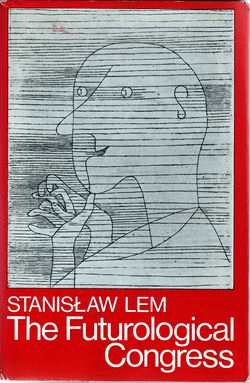
It has been a long time since I have read any science fiction, but while browsing in my local library, The Futurological Congress, a black humour science fiction novel by Polish author Stanisław Lem, caught my eye. I’ve long been interested in dystopian novels – 1984, Brave New World, etc – and I wondered what the future looked like in the early 1970’s, when 2026 seemed an impossibly long way away. It wasn’t a surprise that like most novels of its kind, some aspects of the future are captured with eerie precision and others are wildly wrong. Which always makes me wonder which of the technological innovations we think are inevitable – the rise of AI, self-driving cars, etc – will actually happen, and instead what undreamt of changes will occur in our future?

In The Futurological Congress, Lem’s protagonist, Ijon Tichy, attends the Eighth World Futurological Congress in Costa Rica. The novel is set in an indeterminate future (but not too far ahead, because a later time jump takes Tichy to 2039). The conference is being held to consider the world’s population crisis. Futurologists predict the future from existing trends – and at this point in humanity’s story all predictions for the future of the world are bleak.

Lem’s description of this future is at first dominated by absurdity. Tichy’s hotel room is ‘guaranteed bomb-free’ and includes a palm grove and an orchestra. Conference papers are distributed in hard copy (paper always seems very resilient when people thought about the future of business or education) but speakers call out paragraph numbers to save time. The hotel’s water supply is drugged with a chemical that makes the user profoundly good-natured.

Shortly after the start of the congress, the hotel it is being held at comes under attack by protestors. After an attempt to ignore the bombs Tichy and some other attendees and hotel staff take cover in a sewer beneath the hotel. From here he is evacuated only to realise he is still hallucinating. The next rescue attempt ends with the helicopter taking him away crashing. He wakes up in a hospital to find his brain has been transplanted into the body of a young black woman. This then happens all over again – waking up from a hallucination, attack by mysterious forces, rescue and body transplant – which would I suspect make most people wonder about the nature of reality they are experiencing, but Tichy seems accustomed to a world in which bizarre things happen as a matter of course. Finally, in yet another hospital, he is cryogenically frozen (cryonics was just becoming a ‘thing’ in the US in the late 60’s) and wakes up (in scenes familiar from Austin Powers, Futurama and Sleeper – take your pick) in the year 2039.

When the novel jumps forward to 2039, the tone switches dramatically from being a freewheeling comedy to a rather bleak dystopia. From this point the novel is written in the format of a journal. Initially, 2039 (presumably 2039 Costa Rica?) seems utopian. Everyone is happy, all society’s ills have been cured, war is no more, and everything is abundant. Drugs are used to control everyone’s perception of reality and can do just about anything:

“The most recent of the iamides, heavily advertised – authentium. Creates synthetic recollections of things that never happened. A few grams of dantine, for instance, and a man goes around with a deep conviction that he has written The Divine Comedy. Why anyone would want that is another matter and quite beyond me.”

But slowly Tichy becomes disillusioned with this chemically enhanced ‘paradise’. He stops taking any drugs but doesn’t realise that the air itself is suffused with perception-altering chemicals. Finally his friend, Professor Trottelreiner, tells him a terrible secret:

“By introducing properly prepared mascons (reality-masking chemicals) to the brain, one can mask any object in the outside world behind a fictitious image—superimposed—and with such dexterity, that the psychemasconated subject cannot tell which of his perceptions have been altered, and which have not. If but for a single instant you could see this world of ours the way it really is — undoctored, unadulterated, uncensored — you would drop in your tracks!”

A small dose of an unmasking drug allows Tichy to see the world as it really is: instead of being in a five-star restaurant he is in a dank concrete bunker eating “the most unappetizing gray-brown gruel, which stuck in globs to my tin“. No-one drives a car – they run in the road believing they are doing so, and instead of travelling up and down in lifts they climb the empty elevator shafts. Everyone lives in abject squalor eating horrible muck, all the time believing they are living in luxury. The world is being destroyed by over-population – the very problem that the original Futurological Congress was intending to address. Only a small number of soothseers know the real state of the world. This is Tichy’s red pill moment – the terrifying realisation that the world is actually squalid and disgusting. When finally he is returned to his original time, hiding in the sewers from the bombers attacking the conference, we are left in doubt as to whether this is a return to reality or yet another chemically induced nightmare.

As well as its bleak portrait of the future, the other predominant feature of The Futurological Congress is its experimental use of language. I can imagine that translating the text from Polish to English must have been challenging to say the least, and many of the words must surely be approximations, given that Lem made many of them up in the first place. Take a paragraph like this for example:

In just the last issue of Science Today there had been an article on some new psychotropic agents of the group of so-called benignimizers (the N,N-dimethylpeptocryptomides), which induced states of undirected joy and beatitude. Yes, yes! I could practically see that article now. Hedonidil, Euphoril, Inebrium, Felicitine, Empathan, Ecstasine, Halcyonal and a whole spate of derivatives. Though by replacing an amino group with a hydroxyl, you obtained instead Furiol, Antagonil, Rabiditine, Sadistizine, Dementium, Flagellan, Juggernol and many other polyparanoidal stimulants of the group of so-called phrensobarbs (for these prompted the most vicious behavior, the lashing out at objects animate as well as inanimate—and especially powerful here were the cannibal-cannabinols and manicomimetics).

In the 1970s Poland was still part of the Soviet bloc. The Futurological Congress is (at least in part) a commentary on the communist state that told its citizens they were living in a socialist utopia, but where their actual experience of life was of hardship and want. In 1984 George Orwell makes a similar point – in that novel, instead of chemicals, the state uses terror to force its citizens to believed that rations are being increased even as they are cut. Perhaps Lem was telling us to wake up and take over-population seriously, and not put our faith in political ideologies?

The Futurological Congress by Stanisław Lem, 1971

Aside