100 Best Novels Guardian list, 20 Books of summer, Book review, gay literature, Of Human Bondage, Somerset Maugham

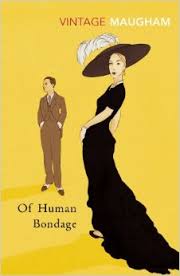
Of Human Bondage by Somerset Maugham, 1915

Customer in hairdressers: “What’s that book you’re reading, love?”

Rita: “Somerset Maugham, ‘Of Human Bondage’“.

Customer in Hairdressers: [knowingly] “Ohh, my husband’s got loads of books like that.”

(Educating Rita (film) 1983)

Somerset Maugham isn’t read very widely nowadays, despite having been a central figure in English writing for a large chunk of the twentieth century, and despite this name-check in Willy Russell’s much-loved play. My evidence for this sweeping statement is limited, of course, but certainly he is much neglected by film and television companies, which is one way nineteenth and twentieth century writers gain a new audience. I think the main reason must be the dated, slightly faded air of his work – if, that is, ‘Of Human BondagBette_Davis_and_Leslie_Howard_in_Of_Human_Bondagee’ is anything to go by.

‘Of Human Bondage’ is yet another bildungsroman. In the foreword Maugham describes it as “not a biography, but an autobiographical novel; fact and fiction are inextricably mingled”. The Maugham figure is a rather shabby anti-hero, the orphan Philip Carey. Philip has a club foot and a sensitive nature.  Losing his parents to the illnesses that carry characters in literature off so very easily, he is sent to live with his aunt and uncle in the thinly disguised “Blackstable”. Philip is then sent to boarding school in nearby “Tercanbury”, (why bother to change the town’s name so pointlessly – was it on the advice of lawyers perhaps? The school is not portrayed particularly sympathetically, but it is not Lowood College either!) . Philip’s uncle and aunt want him to go to Oxford and become a vicar, a calling suited to his precisely located lower middle class status, but he rebels, entering on a series of ill-considered and fruitless adventures. He goes to Germany to learn the language, but this comes to nothing. He then tries to become an accountant but doesn’t enjoy it. He tries to study art in France, but eventually realizes that he will never be good enough. On returning to England he starts to study medicine, but has to drop out when he loses all his money on some reckless speculation.

Philip’s romantic adventures are consistently unfortunate. In France a fellow art student develops an unrequited passion for him, and eventually commits suicide. In London he falls desperately in love with Mildred, a tea shop waitress, but she is an appalling woman who prefers prostitution to being with him. He has a rebound relationship with a writer, but drops her quickly when Mildred reappears. Eventually Philip’s personal life begins to settle from the traumas of his earlier years, as he is befriended by the eccentric family man, Thorpe Athelny, and his financial crises are finally resolved with the death of his uncle, and a modest inheritance. The novel closes on a slightly false “happy ever after” note, as Philip becomes engaged to Thorpe’s eldest daughter, Sally, even though this involves him abandoning his dreams of travelling the world as a ship’s doctor.

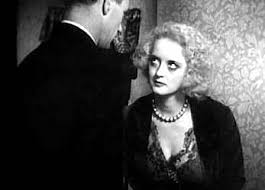
The three films of this novel, most memorably the Leslie Howard & Bette Davis version illustrated here, all sensibly edit out most of the story, starting instead with Philip’s time in France, and focusing on the poisonous relationship with Mildred, which forms the heart of the novel.OHB2
Maugham took the title of this novel from Spinoza. In the ‘Ethics’ Spinoza argued that man’s inability to control his emotions constituted a form of bondage. It is possible that Maugham may have been thinking of his homosexuality in the same way when he wrote this novel – as an uncontrollable feeling that felt like an imprisonment. Being gay in Edwardian England must have felt at times like being incarcerated. The ending of this novel, when Philip accepts that his long held desire to travel is a hopeless dream, and he has to settle for marriage to a woman he has just told the reader he does not love, may reflect the internal struggles Maugham faced.
OHBAlthough I have said the novel feels dated, to readers at the time it would obviously not have felt that way. Maugham has a frank approach to pre-marital sex – while it is never explicitly mentioned, and various euphemisms are used, the novel is very clear that Philip has sex with his various girlfriends, that Mildred becomes a prostitute, and that she contracts a venereal disease. This novel marks the transition from the Victorian novel where even suggesting men and women have sex with one another was taboo, to acknowledging its existence, however tangentially, and then to finally bringing it into the open in the 1930’s and beyond. This novel makes an interesting contrast with ‘The Rainbow which was published in the same year.

There is equally a frank approach to religion which in 1915 would have had much more of an impact. Philip becomes an atheist in the course of the novel, and the descriptions of his dawning realisation that there is no god are some of the most lyrical passages in the book:

“Man, no more significant than other forms of life, had come not as the climax of creation but a physical reaction to the environment…There was no meaning in life, and man by living served no end. It was immaterial whether he was born or not born, whether he lived or ceased to live. Life was insignificant and death without consequence” (601)

Finally, a quick word about anti-Antisemitism in this novel. It is almost standard in novels of this period, such as when it appears, along with racist or derogatory comments about black and Asian people; it is easy to pass it by. And it doesn’t play a significant part in this novel. But comments such as “the undertaker was a little fat jew with curly black hair, long and greasy, in black, with a large diamond ring on a podgy finger” (479) play to all the lazy racist stereotypes of the time. They leave a really unpleasant taste. I am not arguing for sanitising works of this kind, because that is a slippery slope, but it is the casual nature of the offence which is so obnoxious.
Standard
100 Best Novels Guardian list, 20th century Literature, A Single Man, Book review, Christopher Isherwood, gay literature

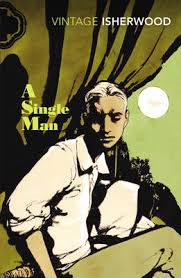
A Single Man by Christopher Isherwood, 1964

‘A Single Man’ is a portrait of a single day in the life of George, a lonely, late middle-aged Englishman living in Santa Monica and teaching at a university in LA. George is gay. Thus far, thus autobiographical. George has in the recent past lost his lover, Jim, in a car accident, and is slowly coming to terms with his loss. We follow him and his internal monologue through the course of a day as he gets up, drives to work, presents a lecture to a very diverse group of students, and then goes to the gym, all the while narrating his progress, and simply holding it together. One gets the impression of a man on the edge, terrified of growing old and being alone, conscious of the need to keep his sexuality, still taboo in America at this time, secret, but equally being struck by lust several times during the course of the day. He needs to grieve, but is unable to do so – indeed, he has told his neighbours that his ‘friend’, Jim, has simply moved away, rather than acknowledging his death and having to respond to their condolences.

This was brave stuff for a novel in the 1960’s. Homosexuality was illegal and while attitudes across America varied widely, and still do, Isherwood references some of the struggles gay men faced. (Remarkably, while gay marriage is not legal in the USA, “as of April 2014, 17 states either had not repealed their laws against sexual activity among consenting adults, or had not revised them to accurately reflect their true scope. Often, State laws were drafted to encompass other forms of sexual conduct such as bestiality, and no attempt has been made to separate them. Fourteen states’ statutes purport to ban all forms of sodomy regardless of the participants’ genders. Four states specifically target their statutes at same-sex relations only”) (With thanks to the wonderful Wikipedia, which knows all).
George is, in his grief, alienated from his environment. His students are “the male and female raw material which is fed daily into this factory” (ie the university) (page 32). He only really comes to life when sexually aroused, by the lithesome tennis players he sees, or when exercising in the gym next to a desirable if dangerously young man.  

There are some difficult scenes where Isherwood/George describes his disgust with the female body, including his dying ‘friend’, Doris, previously a short-term lover of his partner, Jim. He remembers her as:

“that big, arrogant animal of a girl…With that body which sprawled stark naked, gaping wide in shameless demand…gross insucking vulva, sly ruthless greedy flesh, in all the bloom and gloss and arrogant resilience of youth…I am Doris…I am Bitch-Mother nature.” (75)

There is plenty more in this vein. You could read this as George hitting out in his grief at someone who tried to steal his partner from him, but the visceral nature of the description reveals a nastier strain of misogyny. Heterosexuals generally get quite a hard time – children are described as appearing “litter after litter” (9) and even ‘Children at play’ traffic signs are seen as sinister. This is the interior narrative of a bitter sad, single man. His anger and resentment of the heterosexual families that encroach on his bohemian community is understandable, but nonetheless unpleasant.

George’s day, and the novel, concludes with a wild, improbable and drunken midnight swim, and finally with a heart attack, a gloomy, hopeless ending to a sad and bitter life. ‘A Single Man’ is an important landmark in gay literature, and is economically, sparsely written, but it has a sadness which made me quite glad to be leaving this world. Isherwood’s earlier novels may have been less polished that this, but they had an optimism and hope missing here.
Standard
100 Best Novels Guardian list, Book review, gay literature, http://schemas.google.com/blogger/2008/kind#post, Oscar Wilde, The Picture of Dorian Gray

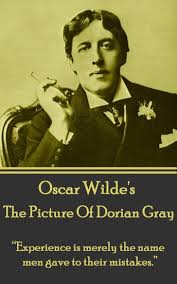
The Picture of Dorian Gray by Oscar Wilde, 1891

I know I don’t normally write about the publication history of the books I review, but the background to this one is more complex than usual, and quite relevant. It was published in full in Lippincott’s Monthly magazine in 1890 (in a significantly shorter version than the final novel). Wilde predicted “I think it will make a sensation” – which was a bit of an understatement. Prior to publication he made several edits to remove some of the more explicitly homo-erotic content, but he may as well not have bothered, because critics almost unanimously put two and two together, identified Wilde with his two main characters, and realised that some of the sins which they explore included gay sex. For the avoidance of any doubts Wilde drops clunking hints such as when he says “there are certain temperaments that marriage makes more complex…they are forced to have more than one life” (61) What can he mean? Later he refers to “such love as Michael Angelo had known, and Montaigne, and Winckelmann, and Shakespeare himself” (96). This was extraordinarily daring of Wilde – and his publishers – and he was of course to pay the price.

The plot is very familiar. Gorgeous, young, well-to-do and well-connected Dorian Gray has his portrait painted by a society painter, Basil Hallward. Dorian unknowingly makes a Mephistophilian pact to preserve his beauty, and for his portrait to bear the signs of aging and sin. He is taken in hand, and led astray, by Hallward’s friend, the dangerous Lord Henry Wotton. His treatment of a young actress, Sibyl Vane, who falls in love with him and who he brutally rejects, leading to her suicide, is the first time he notices a change in the painting. Gray is psychopathically narcissistic – everything is judged by its impact on him. He goes to the opera after hearing Sibyl has died, and when chastised for this says “Don’t talk about horrid subjects. If one doesn’t talk about a thing, it has never happened” (87) Accepting his fate, he hides the painting, eventually killing Hallward to avoid exposure, and dives into a life of excess, sin, and hedonism. Wilde goes as far as he can to describe this life, dropping hints about many of the elements, including some more conventional, heterosexual affairs, which frankly is fooling no-one.
There’s a unavoidable biographical element to this novel. Wilde’s own life followed the same self-destructive arc as Gray’s, although what is more remarkable is that the novel came first – Wilde was well aware where his recklessness would lead, but embraced his fate in any event. He foresees it all – the social ostracism (“when he used to reappear again in society, men would whisper to each other in corners, or pass him with a sneer, or look at him with cold, searching eyes, as though they were determined to discover his secret” (113) – the damage caused to friends and relatives – “Women who had wildly (note the choice of adjective) adored him, and for his sake had braved all social censure and set convention at defiance, were seen to grow pallid with shame or horror if Dorian Gray entered the room” (113), the damage to his health and (he believed) his soul, and yet could not steer a different course.
There are four great 19th century English horror novels (that is, novels written in English)  that explore identify and sexuality – ‘Frankenstein’, ‘Dracula’, ‘Dr Jekyll and Mr Hyde’, and ‘The Portrait of Dorian Gray.’ (In many ways ‘Dr Jekyll’ is probably the least flawed of this quartet, and I will aim to review it shortly to complete the set). All are in their different ways about the horror of the divided self. ‘Gray’ has many flaws – the sections where Wilde expanded the text for publication as a novel show strong signs of padding, for example, and the aphorisms, which individually are witty and clever, when they appear in such intensity have an artificial, false note. But despite these, this is a stunning novel, tragic in the light of what we now know about Wilde’s own fate, but also complex and brave. Superficially it is a parable about the price of sin, but in making Gray and Wotton such charismatic characters Wilde makes it clear where his sympathies and interests lie.
Standard
21st century literature, Alan Hollinghurst, Book review, Booker Prizewinner, gay literature, The Line of Beauty

The Line of Beauty by Alan Hollinghurst

Continuing in my attempt to catch up with the best part of a life time of not reading Booker prize winners, I recently finished, not without a fair amount of persistence, Alan Hollinghurst’s “The Line of Beauty”. Hollinghurst is a slow writer – he has only written half a dozen novels in total – and the only other work of his I have read is the “Swimming Pool Library” which feels like decades ago.

This novel is a leisurely portrait of the life of a rather pampered young man in mid 1980s London, when Thatcherism was at its most rampant and Aids was beginning to have a dramatic impact on the lives of gay men.

Nick Guest leaves Oxford and lodges with the family of one of his undergraduate friends, Toby. Toby’s father Gerald is a Conservative MP. Nick is a Guest in more ways than one – welcomed as a lodger, his homosexuality is acknowledged by the family but largely on a “don’t ask, don’t tell” basis. Their’s is a social liberalism that has some clearly defined limits.

Nick begins his sex life with a romance with a black Local Government worker, but his affection for Toby remains undimmed. In parallel the political life of the family father develops, culminating in a visit from Mrs Thatcher which is vividly realised – I wonder if this was all Hollinghurst’s imagination, or whether he was present at something similar. Nick them moves on to a clandestine relationship with another Oxford friend, who keeps up a front of heterosexuality, and introduces Nick to a cocaine dependency.

The third phase of the novel sees things all fall apart. Aids takes Nick’s first boyfriend, then his second, and again in parallel Gerald’s political career falters over a financial and then sexual scandal, something the conservative party seemed to specialise in in the 1980s. Finally Nick is thrown out of the lodgings he has enjoyed for far too long, and takes an Aids test which he expects to be positive.

As a portrait of gay privileged life in the 1980s this is probably the definitive work, for what it is worth. But the novel had other attractions for me. Hollinghurst is particularly good at the detailed nuances of social interaction – words and gestures are accurately dissected for their meaning. This isn’t just the fact with the wealthy – the visit to the black, evangelical family of his first lover, Leo, where his sexuality is quite literally the love that dare no speak its name, is captured perfectly in all its ambivalence.

i didn’t fall in love with this book – the central character is far too unlikeable and unsympathetic, almost narcissistic – and it didn’t make me want to turn to more of Hollinghurst’s works. The Booker short list for 2004 was weak by comparison with some years, although this novel did beat David Mitchell’s Cloud Atlas, which by comparison was far more innovative and readable. But I was left admiring Hollinghurst’s craftsmanship, which is more than I can say for many of the other novels that have won the Booker subsequently.

Standard