21st century literature, American literature, Book review, Jonathan Safran Foer

Here I Am, by Jonathan Safran Foer, 2017

As I may have mentioned once or twice, I keep this blog as a record of what I read. If I don’t blog it’s probably because I haven’t been reading, but occasionally there are novels that really challenge my ability to say something interesting. ‘Here I Am’, Jonathan Safran Foer’s third novel, is a case in point. I read it a couple of months ago, but found it so underwhelming that when I finally found the time to write this review I had to look the title up. What is more remarkable is that it seems to have taken the author 10 years or more to write it!

‘Here I Am‘ is the story of the Blochs, a very familiar dysfunctional American family. Julia, an architect, and husband Jacob, a TV screenwriter, live in Washington DC with their three sons, Sam, Max and Benjy. Their marriage is falling apart for all the usual reasons – boredom, disrespect, mid-life crises, infidelity. An extended family provides supporting cast members including Jacob’s grandfather Isaac, planning to defer death until after Sam’s bar mitzvah; Jacob’s parents, Irv and Deborah, and others.

The Guardian’s review described “Here I Am” as

a novel of diaspora, of the elasticity of its numerous possible meanings, and of the pain caused by both the presence and the absence of the homeland it invokes. It moves from the intimate dissection of a family that has ceased to become a home for its members to the question of what Israel means to American Jews, and what they might consider to be their duty in the face of its imperilment.”

Which is a useful thematic summary, but will also give you a strong flavour of the worthiness of the novel. Worthiness can be fatal to any attempt at comedy. Because despite the big themes, this is undoubtedly intended to be an albeit dark comic novel. Divided between writing a serious novel about the experience of being a Jewish American family (already very well-explored novelistic territory) and the more comic aspects of that experience (ditto) Safran delivers neither very well.

Part of the problem is that very little happens, and it takes a long time to not happen. Minor incidents become central plot elements. Sam leaves a list of “rude” words on his desk at school then denies doing so – it is not until near the end of the novel that we find out he did write the list, as a profoundly unrealistic exercise in intellectual curiosity. Jacob “loses” the secret mobile phone on which he and a producer have exchanged explicitly sexual texts, in a pretty pathetic attempt to make himself more interesting to his wife. As mid-life crises go this is mundane stuff.

The bulk of the narrative is conveyed through the family’s conversations. The repetitive dialogues and monologues may be realistic representations of the way families talk to one another, but it felt a bit like being harangued for 500 and more pages. Realising the novel needed something by way of incident or drama, Safran Foer goes “all-in”. An apocalyptic earthquake in the Middle East strikes Israel, gifting the surrounding states an opportunity to recover lost territories/invade, depending on your perspective. A domestic chronicle suddenly becomes a diary of this catastrophe, which ends with the Israeli prime minister’s absurdly unlikely call to the men of the Jewish diaspora to return “home”. As if a country struck by an earthquake needs an influx of untrained volunteers to defend it. Jacob’s half-hearted attempt to volunteer falls flat, being turned away at the airport due to him having nothing worthwhile to contribute. As a metaphor for the turbulence in the Bloch family the earthquake and ensuing crisis is clumsy in the extreme, and as a statement on the position in the Middle East it is at best irrelevant and worst tasteless.

And if you have found the preceding paragraphs an unsatisfactory account of this novel, well you can’t say I didn’t warn you!
Standard
21st century literature, adventure story, Book review

Where my heart used to beat, by Sebastian Faulks, 2015

It wasn’t until I noticed this novel lurking in the Times’s ‘ten best-sellers in paperback’ list last week that I remembered I had read it. Such is the depth of impression it made, and I had to quickly remind myself what it was about – I had a vague memory of the war being involved – by reading some online reviews. They were not overly kind – the New York Times called it “biscuit bland” (a wonderful phrase which I will surely steal); the Washington Post an “an unmeshed assemblage of case histories”; the Irish Times a rather tedious piece of retro-sexism; the Guardian “dithery” (although the quote from this review which the publisher chooses to focus on is “combining as it does the cultural narrative of a complex century forsaken by God and certainty, a serious investigation into the vulnerability of the human mind and an old-fashioned – in the best sense – story of love and war, this is an ambitious, demanding and profoundly melancholy book”. I think “dithery” is more concise!)

Briefly, Robert Hendricks, doctor who specialises in psychiatry, aged 60ish, lives alone and clearly has had problems forming long term relationships. Out of the blue he is contacted by a stranger who knew his father in the First World War and is looking for a literary executor. Intrigued Robert travels to a small mysterious island, and begins a series of reminiscences which slowly unfold the story of his life. The text is unnecessarily complex, with tales within tales. The mysterious island turns out not to be mysterious at all, just small (large enough to have a town, and a mayor, but not large enough to appear on maps). Hendricks is an unengaging character, in his mid-sixties and seemingly irresistible to women. What is it about novels by men of a certain age where women keep throwing themselves at the central male character, stripping off at the drop of a hat and offering him no-strings sex – even the prostitute he engages in the first chapter can’t resist him, and despite his reluctance she is “intent on a repeat”. Such a nuisance when there are some more war diaries to be read.

The reviewers are universally agreed that this novel really takes flight when the inevitable sections on the second world war arrive. I can’t disagree – the portrait of the attempted break out at Anzio is well-written, but there is nothing particularly new here, and the scenes of squalor and fear fit uneasily in the romantic and literary mystery that comprises the rest of the novel, a mystery that I found dull, clumsily plotted and episodic.

“Throughout my life,” Hendricks tells us at one point, “I had thought that if I could get through this section of it, then the pattern of a destiny would reveal itself.” I know how he feels. Was this quote an example of Faulks going all-post-modern on us, anticipating the inevitable criticism of this meandering novel, or just a happy coincidence?

Just as a post-script, I did find one point of interest in the novel. It is set in the early 1980’s.Hendricks is 60ish, which means he was old enough to have fought in the second world war. It was only at that moment that I belatedly realised out that the older adults around me when I was growing up in the 70’s were of the right age to have fought in that war – and that now so many of them are gone. It is an arresting thought that 1980 was nearer in time to the end of the second world war than it is to today. Faulks chose this point in time carefully, and well.


Standard
21st century literature, Book review, Cursed child, Harry Potter, J K Rowling

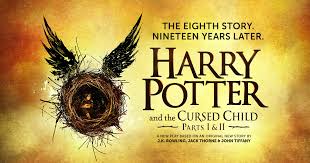
Harry Potter and the Cursed Child, 2016

For the avoidance of any doubt, this review will almost certainly contain spoilers. Not because I want to ruin anyone’s enjoyment or anticipation of this or any other book, but because this is a review, not a preview, and I can’t effectively self-censor simply to avoid giving away any details of the plot. You have been warned! If you don’t want to find out what happens in ‘Harry Potter and the Cursed Child’, stop reading now!Cursed child

There are a couple of fairly obvious things that need to be pointed out, just to get them out of the way. Continue reading

Standard
100 Best Novels Guardian list, 21st century literature, American literature, Song of Solomon, Toni Morrison

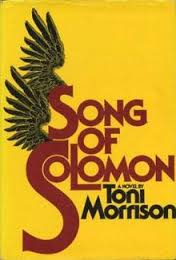
Song of Solomon by Toni Morrison, 1977

‘Song of Solomon’, makes an interesting companion text to Morrison’s later novel, ‘Beloved’ which I reviewed earlier this month. Both novels take as their subject matter the question of African American identity and experience, but while ‘Beloved’ looks unflinchingly at arguably the most difficult period of this experience, the nineteenth century, ‘Song of Solomon’ takes as its setting a later, less traumatic time span, approximately 1930-1963. SoSThe novel opens with the death of an insurance agent, Robert Smith, who believes he can fly. From this opening scene Morrison introduces her cast, the Dead family, who witness Smith’s death, along with the rest of the community of Not Doctor Street, The family derives their name from the period immediately after the end of slavery, when all former slaves had to register with the Freedmen’s Bureau, and when the answer to a question about the character’s father (who was deceased) was mistakenly entered as his name. Other unusual names are a motif throughout the novel, either as nicknames – Milkman, Guitar, Sweet – or as family names chosen at random from the bible – First Corinthians, Pilate, and Magdalene called Lena
At first the novel is a wide-ranging saga following the interwoven relationships of the Dead family across several generations. The structure is complex, with revelations about the family’s past being revealed slowly in flashback. However the novel changes pace at roughly half way, (the original New York Times review called it an “abrupt shift”) and in this latter section the narrative becomes more akin to a thriller or a detective story. Here the search for buried gold, a midnight hunt, a secret society and above all an emerging mystery surrounding the origins of the Dead family are breathlessly presented. Eventually the novel’s protagonist, Milkman, so-called because his mother breastfed him into early childhood, learns his great-grandfather Solomon was said to have escaped slavery by flying back to Africa, bringing the theme of flight full circle. Finally, another leap into flight leaves the novel to end on an ambiguous note. Morrison uses this theme –flight – as both a symbol of empowerment and escape, and of self delusion and suicide.

Morrison took a risk in making Milkman her central character – he is not very sympathetic, particularly in his relationships with women, not least his cousin Hagar, who eventually dies of (to all intents and purposes) a broken heart. He is heavily influenced by his parents, but takes most of his advantages and friendships for granted. One of the best scenes is where his sister, after decades of silence, finally lays into him:

“Where do you get the right to decide our lives? I’ll tell you where. From that little hog’s gut that hangs between your legs. Well, let me tell you something… you will need more than that. I don’t know where you will get it or who will give it to you, but mark my words, you will need more than that…. You are a sad, pitiful, stupid, selfish, hateful man. I hope your little hog’s gut stands you in good stead, and you take good care of it, because you don’t have anything else.”

I can admire Morrison’s obvious skill in this novel. She combines a compelling storyline with wonderfully crafted imagery and insights into complexities of the African American experience in twentieth century America. The skill in construction of the novel is obvious in little scenes like the following, where Milkman and Guitar spot a peacock white incongruously in the street:

“How come it can’t fly no better than a chicken?’ Milkman asked.

Too much tail. All that jewelry weighs it down. Like vanity. Can’t nobody fly with all that [stuff]. Wanna fly, you got to give up the [stuff] that weighs you down.’

In just a few lines the themes of flight, commercialism and the pursuit of wealth are neatly tied up in a brief sketch. Morrison’s penetrating insight is also shown in the portrayal of relationships between men and women, for example when Milkman describes a conquest as a “third beer”.

“She was the third beer. Not the first one, which the throat receives with almost tearful gratitude; nor the second, that confirms and extends the pleasure of the first. But the third, the one you drink because it’s there, because it can’t hurt, and because what difference does it make.”

So why the hesitation? The simple truth is that I admired and enjoyed this novel, but wasn’t blown away by it. It lacks some of the power of ‘Beloved’, and while many of the characters are memorable, not least Milkman’s aunt Pilate, yet Milkman himself is not the character the reader wants to follow. The change of tone is at the time welcome – who doesn’t enjoy the occasional midnight chase or escape from sudden death – but the uneasy shift in tone left me wanting to know more about some of the threads left dangling. Lastly, I’ve written elsewhere at my frustration with authors using the device of killing off a key character simply to provide a convenient resolution (rather than as the fulfilment of an inevitable fate)– I was surprised to see an author of Morrison’s calibre relying on this approach as well.

Standard
21st century literature, Ben Elton, Book review, Time and Time Again, time travel

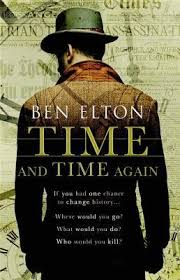
Time and Time Again by Ben Elton, 2015

Time travelling. Could there be a more tired, worn-out plot line than time travelling? If 50 years of Dr Who hasn’t explored every single crevice and wrinkle of the multiverse, Ben Elton decided to give it a go. And for 95% of the book he very nearly gets away with it.

Hugh Stanton, ex-special forces, and recently widowed, is asked by his old Cambridge history professor for a Christmas drink. Here he is inducted into a secret society preserving the mystery of time travel, and in fairly quick order he is off to 1914, to save Franz Ferdinand, and kill the Kaiser. We all by now know enough about chaos theory to know that the chances of it all going smoothly are slim, and sure enough, despite mission being (sort of) accomplished, the law of unintended consequences kicks in and things start to go pear-shaped.

Elton has clearly done a lot of research into the origins and causes of the first world war, and the assassination of Franz Ferdinand. Sarajevo and the events of the day of the assassination are recreated faithfully and realistically, as Stanton casually stalks Gabriel Princip.

In telling a time travel story the reader is invited to accept one huge implausibility. Having done so, with however much pseudo-scientific hoopla to provide a veneer of credibility, we then reasonably expect that the rest of the story will have an internal coherence, complying with the rules of common sense and order. So when Stanton is propositioned by a young woman on the train to Berlin, who proceeds to sleep with him at the first opportunity, something that in 1914 would have surely been pretty exceptional, alarm bells start to ring. This character, Bernadette, an Irish suffragette, is there to provide romantic interest and an opportunity for Elton to contrast 21st century social and sexual attitudes to those of 100 years earlier. It’s all a bit worthy and predictable.

Stanton is incidentally a rubbish time-traveller – he can’t avoid using 21st century slang, for example, and his lover stumbles across his laptop and guns.

The novel has some interesting things to say about history. When considering the question “if you could go back in time and change one thing, what would it be?” (Stanton actually changes two things, but that’s being picky) Stanton’s history professor proposes two alternative positions – either history is about individuals and the choices they make and the things they do, or it isn’t. if the latter is right, intervening in Sarajevo in 1914 will have little or no impact on the broad sweep of history. Elton proposes a third choice – that people can make a difference – Gabriel Princip clearly did for example – but chaos theory then kicks in, and the world can be dramatically different from just one simple action. Ray Bradbury did this so much better in ‘A Sound of Thunder’ (https://en.wikipedia.org/wiki/A_Sound_of_Thunder) to which this and all subsequent time travel stories owe a debt. If we can’t know whether our intervention will make things better or worse, then probably best to leave well alone, is the overall point being made. The problem with this analysis is that it doesn’t just apply to time travellers – it could equally apply to those of us living today. It’s an argument for political inactivity. For what it is worth, while Franz Ferdinand’s assassination was clearly the trigger for world war one, my view is that the European powers had been shaping up for a fight for a long time – hence the arms race – and if the assassionation had been prevented another reason would have come along soon enough.

At the end, the novel implodes in on itself, collapsing under the weight of its absurdities. (Avoid this next bit if you don’t like spoilers). We are asked to believe that Stanton is only the most recent in a long line of travellers returning to correct the future, each making it that little bit – or in Stanton’s case a hell of a lot – worse. We are asked to accept that each Master of Trinity would open Newton’s “this is what you need to know to travel in time” letter from 300 years previous, successfully form a secret society of supporters to organise the trip, that each time traveller would succeed in their mission, realise that things had not gone as planned, write a letter to the future warning them, but that none of these letters would be found. As usual, unless you skate over the timey-wimey stuff pretty quickly, the ice cracks and you fall in.

Elton writes well, and his short chapters and frequent changes of focus keep the reader engaged, even when we have a pretty good idea where it is all going. The desire to frustrate that predictability leads Elton up some dead ends but does ask an entirely reasonable question – given that the 20th century ended with the end of totalitarianism across almost the entire world, civil liberties making progress in most countries in a way Edwardians would find hard to believe (actually, time travellers from the 1970’s sometimes find it hard to believe) and technology that is as close to witchcraft as make no difference – why would we change anything? He invites us to consider whether the world wars and the Holocaust were the price of all this progress? I don’t accept that for one second,  nor that we are now living in the ‘best of all possible worlds’ century, but it’s a question worth asking.

Standard
21st century literature, Book review, David Nicholls, humour, The Understudy

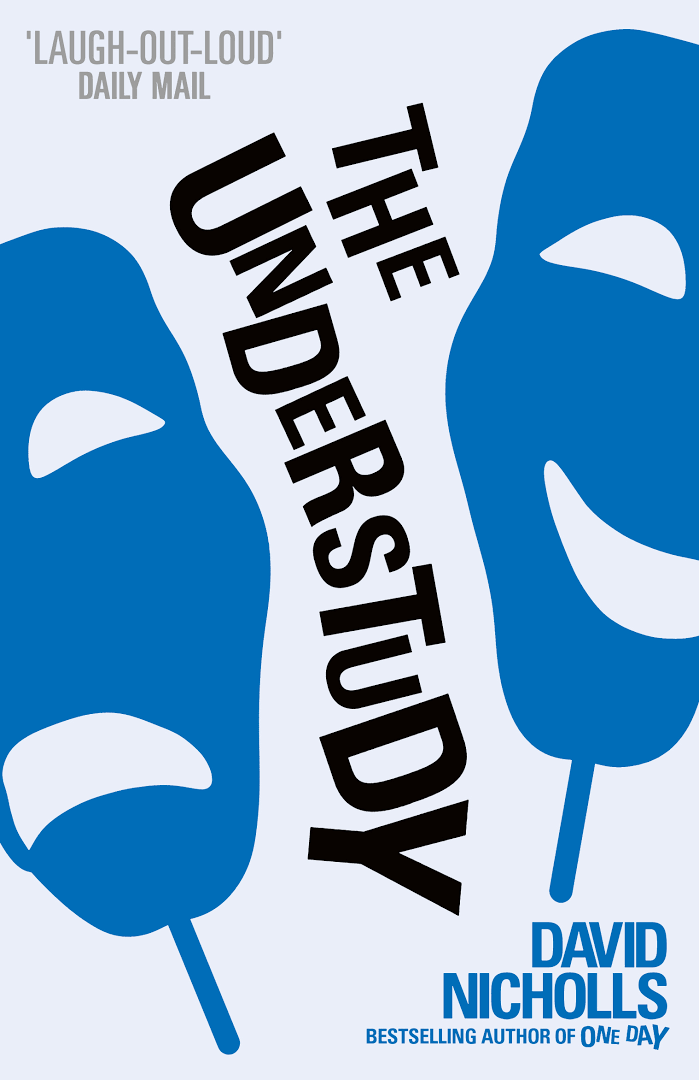
The Understudy by David Nicholls

Sometimes novels don’t quite work. They really ought to, but at the end you are left with a vague feeling that the author missed an opportunity to write an entertaining, satisfying relationship novel, and instead wrote three quarters of one. This was Nicholls’ second book after ‘Starter for Ten’, which has a single white young man as its central character, through whom we see the events of the novel, as does ‘The Understudy’. While the protagonist in ‘Starter for Ten’ is relatively easy to identify with – he is fallible, but charming (although I am not sure female readers would agree) – the central character in ‘The Understudy’ is far less engaging. For a start Nicholls has given him a silly name – Stephen McQueen – and the joke “Stephen with a ph” wears thin pretty early on. Each time it was repeating I was reminded of the fact that as an aspiring actor he would have adopted a different professional name after about 30 seconds. He is dishonest, unsuccessful, profoundly so, divorced, and quite bitter about his lack of success. 

I am not sure if we were supposed to identify with McQueen, or find him in any way endearing, but I didn’t. He is manipulated and walked all over by Josh, the obnoxious character he understudies (if Josh is a portrait of anyone Nicholls knew in real life, they should sue!). Nobody really likes him, his life is a complete mess, his pursuit of acting success at the cost of his marriage is quite clearly pointless, rather than noble, and while the novel ends with him recognising that, failure isn’t entertaining or funny. He does – kind of – get the girl – but the attraction is really hard to understand or believe, and only the abrupt ending prevents us from seeing the inevitable rejection. I suspect Nicholls’ made Stephen so unlikeable in an attempt to avoid the standard rom-com clichés, but he didn’t follow this through – the character may be creepy and unloveable, but the situations he finds himself in are predictable and lame, all informed by a self-consciousness and determination to demonstrate that this isn’t ‘Love Actually’, actually.

The plot revolves around McQueen’s part as an understudy in a successful stage play about Lord Bryon, in which Josh has the lead. Each night McQueen has little to do except hope Josh is ill or has an accident, which he never does. Josh invites him to a party – and the comedy set up here is that Josh is actually asking him to help out as a waiter, while Stephen thinks it is an actual invitation. I saw that coming a mile off, but it doesn’t make sense – if you are having a party professionally catered, you don’t supplement the staff with vaguely worded invitations to casual acquaintances. That gives you a good flavour of the comedy incidents that are scattered through the novel, and which aren’t really that funny. Nicholls does his best, and there are plenty of drinking to excess, unsexy sex scenes, and theatrical failures – but its all a bit laboured and predictable. As an example, Stephen accidentally steals (whilst drunk) a BAFTA trophy from Josh’s flat. You know that the chances of him returning it with an apology, anonymously if necessary, are nil, this being a relationship comedy. So it’s just a question of when, not if, this theft is discovered, and sure enough, the award is found at the back of a wardrobe just in time for it to be used as an impromptu weapon.

‘One Day’ and ‘Starter for Ten’ have both been made into reasonably successful films, and my suspicion is that ‘The Understudy’ would actually make a better film than a novel. Some of the physical comedy would work better – for example the scene with Stephen dressed up as a squirrel for a children’s ‘How to count’ film, which he has lied about to his family, describing it as a crime drama – and some of the dead wood could be pruned. But if you are looking for a follow-up for ‘One Day’, ‘Starter for Ten’ would be a much better (forgive me) starter for ten.

Standard
21st century literature, Book review, children's literature, Palacio, Wonder

Wonder, by R.J.Palacio, 2012

‘Wonder’ is an American children’s novel about August “Auggie” Pullman, and 11-year-old living in Manhattan. Auggie has a rare medical condition giving him a severe facial deformity. Until now, Auggie has been home-schooled by his mother, but the book opens at the point his parents decide to enrol him in a private school. It charts through a series of first person narratives his first year at senior school.

The book has become something of a word of mouth success, and I can certainly see why. It is incredibly heart-warming – a classic story of an outsider overcoming adversity. It is full of positive, reassuring aphorisms such as “funny how sometimes you worry a lot about something and it turns out to be nothing” and “When given the choice between being right or being kind, choose kind”.  

If the novel had just followed Auggie through his first year at school through his eyes only, the narrative might have become stale, but Palacio adopts an interesting structure to avoid this. After each few chapters the narrative baton is passed to another character. This person then recaps the previous events from their perspective, giving a new version of events, then takes the story forward. This structure keeps things moving, and together with the very short chapters, most no longer than three pages, often fewer, the books 250 odd pages zip by.

The author has some real insight into the challenges of living with a condition such as that Auggie has, and shows this in various ways. As an example. Auggie has been growing a braid for several years, similar to that worn by trainee Jedi apprentices in the Star Wars universe. In a symbolic act of growing up he cuts this braid off, in an attempt to gain acceptance from his schoolmates. All children, whether living with a disability or condition, or not, will have experienced similar pressures. Auggie is shunned by some of his classmates, bullied, spoken about behind his back, but with the support of his family, friends, and teachers, he overcomes, and ends the year with a school medal for bravery.

Auggie has an older sister just starting high school. She experiences similar challenges – fitting in, dealing with the cool kids, starting dating etc – which gives the book a broader appeal than the 9-12 year olds that will be the majority of its readers. But I suspect the book will not have a wider cross-over appeal into the adult market (despite it being chosen as a book group read according to some of the Amazon reviews I have looked at), unlike, say, ‘The Curious Incident’. It is, despite its subject matter, simply too safe and saccharine. Almost everyone is just so nice. Yes the kids shun Auggie at first, but ultimately it is the instigator of this treatment (Julian) who is the loser, and end up leaving the school. There is a scary piece of bullying by some 13-14 year olds at the end of the novel, but these are brushed off relatively easily, and end up paying the price. Auggie starts wearing a complicated hearing aid part way through the school year, which in any other school would have been the start of a tsunami of jokes about androids and aliens, but in the privileged halls of Beecher Prep goes without comment. The book lacks any serious menace or peril.

Despite these reservations, I would recommend the novel for any child about to change school, or faced with a challenging difference. They will find it reassuring and if just one child is persuaded to be kind instead of mean, it will be worth it.

Standard
100 Best Novels Guardian list, 21st century literature, Book review, Booker Prizewinner, Peter Carey, The true history of the Kelly gang

The True History of the Kelly Gang by Peter Carey, 2000

By coincidence, following on from my previous review of ‘In Cold Blood’, this is another novelisation of factual events. More specifically, this novel is (effectively) a biography of Ned Kelly, the famous Australian outlaw, written in the first person using Kelly’s own distinctive personal style.

Kelly was a first generation Australian, son of transported Irish Catholic parents. Part of a large family, Kelly’s life was troubled from the start, with his father being imprisoned and then dying when he was 12, and subsequently a long series of increasingly serious brushes with the law. If you establish a country peopled by former prisoners it is hardly surprising that there are one or two law and order challenges; add in nationalist resentments from the Irish community in Australia, the enmity between Catholics and Protestants, and the grinding poverty which characterised the settlement at the time (the 1880’s, chiefly) then it is hardly surprising that some people decided to live outside the law.
Carey follows what is known of Kelly’s early life with care. His descent into criminality is shown as being unavoidable – despite Kelly’s efforts to remain honest, his personal code doesn’t allow certain slights to go unrevenged. This is all portrayed from Kelly’s perspective, and the elements of self-justification are not hard to spot.
The main interest in Kelly’s story is how he became transformed from a horse thief to a national hero. There are many components to this transformation, and Carey captures them all. Kelly had a naïve belief in the power of the written word, and some of his attempts to justify his crimes have survived, such as the Jerilderie letter. Google this to see the original text – Carey has captured the spirit of Kelly’s style perfectly. Here’s a transcript of the first page of the Jerilderie letter from the Australian National Archives:
‘I wish to acquaint you with  some of the occurrences of the present past and future, In or about the Spring of 1870 the ground was very soft, a Hawker named Mr Gould got his waggon bogged, between Greta and my mother’s place house on the eleven mile creek, the ground was that rotten it would bog a duck in places so Mr Gould had to abandon his waggon for fear of losing his horses in the spewy ground he was stopping at my mother’s awaiting finer or dryer weather, Mr McCormack and his Wife, (Hawkers’ also) were camped in Greta and the mosquitoes were very bad which they generally are in a wet spring and to help them Mr Johns had a horse called Ruita Cruta, although a gelding was as clever as old Wombat or any other Stallion’
There are in this one page several wonderfully expressive phrases – that first line for example, or “as clever as old Wombat” (note, not anold wombat). All Carey had to do to copy this style was pretty much abandon punctuation, throw in lots of vernacular phrases, and plenty of seemingly irrelevant detail, and the job is done.
The other components of the national hero legend are equally obvious. Kelly had a wonderful turn of phrase – the letter ends ‘I am a Widow’s Son, outlawed and my orders must be obeyed’, and at his death it is claimed he said “Such is Life” – and very much in the Robin Hood tradition Kelly was the little guy fighting against an oppressive regime. The spectacular end to the story, when Kelly and his gang wearing their metal armour fight it out against a small army of armed police, gives the story the climax it deserves, although this ending is slightly thrown away in this novel, an inevitable consequence of the first person narrative. But Kelly emerges a charismatic leader, and it is entirely understandable that his legend is secured almost before his death. His crimes are not ignored, but the police murders/killings are shown in context as self defence.
There is a hunger in society for outlaw heroes. Bonnie and Clyde, immortalised in film but not, so far as I am aware, in a novel, are an example from American society. I wonder who will emerge as the outlaw hero of the early 21st century – Julian Assange, perhaps (perhaps not) or the more elusive hackers of the Internet movements?
Standard
21st century literature, Book review, Terry Pratchett, The Shepherd's Crown

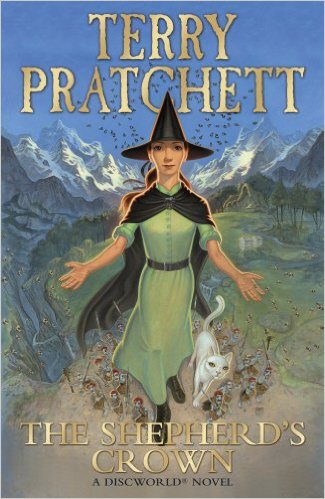
The Shepherd’s Crown (Discworld 41), Terry Pratchett. 2015

Sadly, ‘The Shepherd’s Crown’ will be the last Discworld novel*. I had in my head drafted a response to the critics who claimed that the impact of Terry’s illness can be traced in the overall quality of this novel. The problem with that way of reading the novel is that once you start to look for such connections you inevitably find them. But why stop there – can you find the pages in Great Expectations where Dickens had a heavy cold in 1861 (yes, I had to look that up), or the chapters in Mrs Dalloway where Virginia Woolf was feeling particularly depressed that day. The book is what it is. However, in a well meaning but ultimately unhelpful postscript to this edition, Rob Wilkins, Terry’s assistant, wrote “The Shepherd’s Crown has a beginning, a middle and an end, and all the bits inbetween. Terry wrote all of those. But even so, it was, still, not quite as finished as he would have liked when he died. If Terry had lived longer, he would almost certainly have written more of this book”. Once you know that, you can’t un-know it, and it influences the way you read the novel. You start to look for weaker passages of descriptive writing, jokes that fall slightly flatter than usual, plot lines that dwindle away. The fact that every Discworld novel has similar features seems irrelevant. It devalues what would otherwise have been a marvellous addition to the series – and which I stubbornly think it still is.
The Tiffany Aching series of Discworld novels was always positioned as Young Adult fiction. I am not sure whether if you didn’t know that, it would affect your overall enjoyment of the novel. This series is slightly less complex than the usual DW affair, and the level of menace toned down. But not much – this novel still has some seriously nasty elves who torture babies and dismember cuddly bunnies. These scenes are balanced by the way the elves are easily dispatched by Tiffany and her ragtag army of old men in sheds, part-time witches, and the glorious Mac Nac Feegles.
I’ve made no effort to avoid spoilers in this blog thus far, but I am going to make an exception here. One of Discworld’s best loved characters dies in the opening chapters of ‘The Shepherd’s Crown’, and if you don’t want to know who it is, look away now.

—————————————————————————————–

One of the reviews I read online in preparing this blog entry very insightfully observed that in describing Granny Weatherwax’s death, Pratchett was teaching us how to mourn. How right that is. These scenes are some of the best in the whole canon. Granny had fought Death tooth and nail at other points in the series, but here she accepts her fate with calm fortitude. The characters who survive her mourn her and then carry on doing the work that is in front of them, as we should.
Other things that are wonderful about this novel and the overall series:
1.     The highbrow jokes. Pratchett throws in casually some “English” jokes that might elude international readers. There is an extended reference to ‘Dad’s Army’, and at another point to Monty Python’s ‘Lumberjack’ sketch. Quotes from and allusions to Shakespeare echo throughout the series, and I even spotted a reference to Keats – one character’s reference to someone looking with “wild surmise” which is a quote from the sonnet “On First Looking into Chapman’s Homer”.
2.  Atypically for this genre, Discworld has many well developed female characters. Almost all of them are stronger in their own ways than the menfolk, and all are completely believable and convincing. They are flawed and often full of self doubt, which makes them all the more convincing.
3.     There’s a lack of sentimentality about the novels. People die, back guys do bad things, and while good always triumphs there is a price. ‘The Night Watch’ is a wonderful example of this.
4.     The novels fizz with ideas, some silly, some magnificent. In ‘The Shepherd’s Crown’ the world is changing, seeing the beginning of the Railway Age, and with it the beginning of the end of the world of magic. What better time and place for Terry to take his bow.
*Except of course it won’t be. The Discworld is far too vibrant not to survive the death of its author, and it will continue in fanfiction, incomplete work finished by others, and other work licensed by his estate and publishers.
Standard
21st century literature, Language, literature in translation

Supplementary: The Shadow of the Wind (2) – a note about some translation issues.


Occasionally when reading this novel I came across a few phrases that jarred, and sounded unnatural. I appreciate that translating is a very difficult process, capturing not just the sense of the original but the poetry, the complexity, and the idiomatic phrasing. I also recognise that any awkwardness of phrasing could be deliberate, to emphasis an aspect of a character’s nature for example. Having said all that, there were a few usages that felt just wrong.

Some examples:

he had augured that in her lifetime she would behold the death of everything she loved.” (268)

To use “augur” as an active verb meaning to forecast, rather than to simply signify a future event, may not technically be incorrect, but it feels archaic.

“Look here, Merceditas, because I know you’re a good person (though a bit narrow minded and as ignorant as a brick)” (Fermin) page 159,

Translating idiom is fantastically difficult, I appreciate, but “ignorant as a brick” is not an expression I recognise, and the internet hasn’t been able to provide me with any examples. OK, this is Fermin speaking, and his language is colourful, but not deliberately awkward surely?

“The downpour slithered like melted wax” (314).

Slithered is another very active verb – snakes and worms slither. It implies sideways movement, at pace – but melted wax may move sideways, but always slowly.

“What blessed innocence, Daniel, You’d even believe in the tooth fairy. All right, just to give you an example: the tall tale about Miguel Moliner that Nuria Monfort landed on you. I think the wench told you more whoppers than the editorial page of L’Osseratore Romano.”(231)

Just how wooden is this? “Landed on you”? You don’t land a tall tale on someone. And “more whoppers than the editorial page of L’Osseratore Romana” is never going to catch on!

“if he could lie better, he wouldn’t be teaching algebra and Latin; he’d be in the bishopric by now, growing fat in an office like a cardinal’s and plunging soft sponge cakes in his coffee.” (Fermin) (231).

I’ve two issues with this sentence. Firstly, wouldn’t “growing fat in a cardinal’s office” be better? I appreciate “in a cardinal’s office” is different to “an office like a cardinal’s”, but the distinction is slight, and the sentence as written is ugly and confusing – on a first read I thought there was a missing word after “cardinal’s” (hat?). The other issue is with the verb choice. Plunging is not something one does with soft sponge cakes. It is a violent, vigourous movement; surely the right choice would be “dunking”. Now obviously I haven’t read the original Spanish, and there could possibly be a reason why the author wanted us to imagine this priest aggressively shoving his soft sponge cakes into his coffee, but I doubt it.

What does all this add up to? Is this just a massive exercise in pedantry? If these were the only examples, perhaps, but there was a woodenness through the novel that was hard to escape. I sometimes rather fancifully pictured the characters talking as if in a badly dubbed movie. It made the disappointing experience of reading the novel just that little bit worse.
Standard