
You may be more familiar with this novel through the film adaptation (pointlessly retitled the Incredible Shrinking Man, as if the shrinking bit was otherwise credible). It tells the story of Scott Carey, caught in one of those freak nuclear accidents that were almost unavoidable in 1950s America. Instead of imbuing him with superpowers, he begins to shrink. Every day he loses one seventh of an inch in height and overall mass. Doctors are unable to halt his inexorable decline.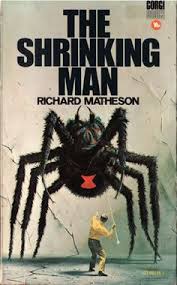
Matheson focuses his narrative on the end of Carey’s experience, when he is less than an inch tall, and is trapped in the family cellar, menaced by a Black Widow spider hungry for a snack. A lot of attention is paid to the practical detail of moving around when you are less than an inch tall, finding food, water and safety. In brief moments of calm Carey remembers his slow decline from a strong, six foot two husband and father, through an inverted adolescence, finally being housed in a doll’s house by his towering but ever faithful wife.
The novel cries out to be read as a parable. Carey’s emasculation, as he shrinks in both size and status, leading him to be more and more impotent, is a thoughtful commentary on the role of men in 1950’s American society. He is unable to provide for his family, and he becomes vulnerable first to a drunken paedophile and then teenage bullies. He briefly rediscovers his sexuality by spying on his daughter’s babysitter, who has a convenient propensity to remove her clothing and later has a brief affair with a fairground dwarf.
Size really does matter is the simple interpretation of this text, but to be honest I found the novel much more interesting if read as a commentary on the space race and the Cold War. Despite the seemingly impossible challenges Carey faces, he never gives up, and always ends up on top. He defeats his much larger enemies, and uses good old American pluck to win through. Each day’s shrinkage is another challenge to be confronted and beaten. At the end of the novel, he lies on his back looking up at the stars:
“How beautiful they were, like blue-white diamonds cast across a sky of inky satin. No moonlight illuminated the sky. There was only total darkness, broken by the flaring pin points of the stars. And the nicest thing about them was that they were still the same. He saw them as any man saw them, and that brought a deep contentment to him. Small he might be, but the earth itself was small compared to this.”
Just at this time the USA and the USSR were both planning to launch satellites, and were contemplating the vastness of the challenge in front of them. The space race was a proxy expression of the Cold War. Matheson seems to say here that nuclear weapons will present a challenge for America, but that no matter what is thrown at it, it will survive and go on to conquer. The novel ends on a remarkably positive note in language which anticipates some of the purple prose used by the first astronauts:
“If there were other bursts of radiation, other clouds drifting across seas and continents, would other beings follow me into this vast new world? So close — the infinitesimal and the infinite. But suddenly, I knew they were really the two ends of the same concept. The unbelievably small and the unbelievably vast eventually meet — like the closing of a gigantic circle. I looked up, as if somehow I would grasp the heavens. The universe, worlds beyond number, God’s silver tapestry spread across the night. And in that moment, I knew the answer to the riddle of the infinite. I had thought in terms of man’s own limited dimension. I had presumed upon nature. That existence begins and ends in man’s conception, not nature’s. And I felt my body dwindling, melting, becoming nothing. My fears melted away. And in their place came acceptance. All this vast majesty of creation, it had to mean something. And then I meant something, too. Yes, smaller than the smallest, I meant something, too. To God, there is no zero. I still exist!
Matheson came up with a superb idea here and has created one of the seminal 1950s science fiction texts (he also wrote ‘I am Legend’). Although the narrative can get bogged down with a “how tiny me climbed the side of the chair to recover some breadcrumbs” level of detail, I wasn’t too distracted by this, and enjoyed the adventure elements of the story.
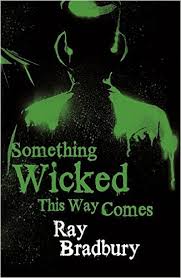 d 13 year old small-town American boys, and their visits to ‘Cooger and Dark’s Pandemonium Shadow Show’, a distinctly 1950’s American carnival. Sneaking into the carnival after it closes, they witness the proprietors using a spectral merry-go-round with supernatural powers, specifically the ability to age, or reduce the age of, anyone who rides it. Discovered, they are pursued by the carnival owners and their enslaved exhibits (the Dust Witch, the Skeleton, the Dwarf, and Mr Electrico). The rest of the novel tells the story of their pursuit and their struggles with the malevolent carnival characters.
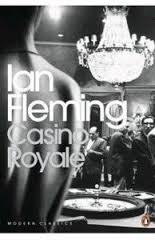 however brutal that may have been. Authors setting the events of their novels in the past have to make a difficult decision whether to have their characters talk ‘authentically’ – that is using offensive words that were common terms- or to sanitise their portrayal of how people spoke and thought. As a result of all this I’ve become a bit de-sensitised to authors using offensive terminology or hateful language. In any event I knew not to expect James Bond to be politically correct or sensitive to other people’s feelings and ideas. But the venom and sheer unpleasantness of his portrayal in ‘Casino Royale’ was still shocking.
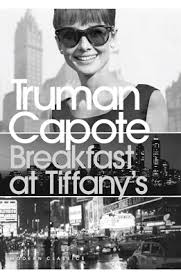 in 1940’s New York with the irrepressible Holly Golightly. Holly is an American geisha, a girl of negotiable friendship, who bursts into the narrator’s life one year, and is almost as quickly gone, flying off to Brazil to avoid having to give evidence against a gangster acquaintance. This is Holly’s story. She is vibrant and has an enormous appetite for life:
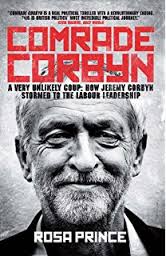 leadership of the Labour Party. read in a paperback edition updated with the events of the leadership challenge, although not the outcome, in 2016.
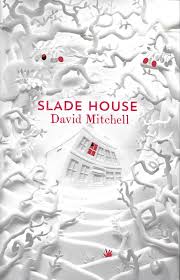 has still to settle on a preferred form, but a ghost story is a fitting addition to his ‘uber’ novel’, even if its origins in a short story are all too apparent. The theme he returns to time and again is the one in the foreground here, the paranormal. Slade House’ is a ‘sort-of’ sequel to ‘The Bone Clocks’, in that it continues the story of a psychic war of good against evil.
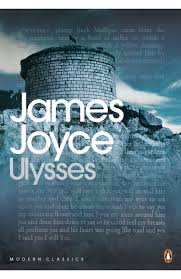 complex, allusive text, full of echoes, references, challenges and puzzles. Reading this novel passively, without paying full attention, is pretty pointless, and even with three weeks of concentrated reading, most readers, myself included, working without the benefit of one of the many guides available, will probably only scratch the surface of this novel’s complexity.
