20th century Literature, Book review, Evelyn Waugh, humour, Scoop

Scoop – Evelyn Waugh – 1938

Read in a Penguin Classics edition

Scoop is, by Waugh’s standards, a fairly light-hearted satire on Fleet Street, Government, and the British upper classes. Nobody dies or gets stranded in remote jungles; instead we have what comes closest to a happy ending, in which everyone gets what they wanted. I usually avoid writing at too much length about the context in which a novel was written, but given the date of publication (1938) you would expect the novel, with its themes of colonialism and Imperialism, whereby a proxy European war is fought over the resources of a remote African country, to be much darker than it is.

The plot is simplicity itself. By a confusion over names, William Boot, the Daily Beast’s rural affairs correspondent, is sent to cover a conflict in Ishmaelia, a North African country where gold has just been discovered, and where the European powers are struggling, through proxies, for control. War has yet to be declared – it never really is – and the journalists have little to do except follow one another around. Boot stumbles upon the real story by accident, and returns to acclaim, only for the case of mistaken identity to be repeated, leaving him in the countryside seclusion her prefers.

Waugh portrays Fleet Street as a wholly corrupt organisation, which an appallingly cynical approach to foreign news. Lord Copper, press magnate, and owner of the Daily Beast gives his new war correspondent some guidance on the conflict thus:

“The British Public has no interest in a war which drags on indecisively. A few sharp victories, some conspicuous acts of personal bravery on the Patriot side, and a colourful entry into the capital. That is the Best Policy for the war.”

If Fleet Street is shown as a irredeemably corrupt, Government doesn’t come out any better. The European countries trying to exploit Ishmaelia and its gold are incompetent and amateurish. Salter, the Beast’s foreign affairs editor, summarises he conflict by explaining:
“when you say black you mean red, and when you mean red you say white, and when the party who call themselves black say traitors they mean what we call blacks, but what we mean when we say traitors I really couldn’t tell you…..But, of course it’s really a war between Russia and Germany, and Italy and Japan who are all against one another on the patriotic side.” (43)

Elsewhere a fellow journalist explains in anecdote the power of the press, and why it should not be ignored:

“Once Jakes went out to cover a revolution in one of the Balkan capitals. He overslept in his carriage, woke up at the wrong station, didn’t know any different, got out, went straight to a hotel, and cabled off a thousand-word story about barricades in the streets, flaming churches, machine guns answering the rattle of his typewriter as he wrote. Well they were pretty surprised at his office, getting a story like that from the wrong country, but they trusted Jakes and splashed it in six national newspapers. That day every special in Europe got orders to rush to the new revolution. Everything seemed quiet enough, but it was as much their jobs were worth to say so, with Jakes filing a thousand words of blood and thunder a day. So they chimed in too. Government stocks dropped, financial panic, state of emergency declared, army mobilized, famine, mutiny — and in less than a week there was an honest to god revolution under way, just as Jakes had said. There’s the power of the press for you. They gave Jakes the Nobel Peace Prize for his harrowing description of the carnage”.
Boot is an ingénue, wandering through the conflict understanding little, but accidentally discovering the scoop that all his professional rivals are looking for.
So is it funny, and is it racist? Occasionally – the jokes are clever, but entirely predictable. The stereotypes that Waugh describes, such as the decaying Boot Magna with its retinue of servants having to fit in their duties around five meals a day, would, in the 1930’s, have been a lot fresher and more original than they are now. The racism is of course a more serious charge. On the one hand Waugh treats the Europeans trying to exploit the Ishmaeli’s as the inferior race – they invariably come off second best. It would have been remarkable given the context if Waugh had written respectfully about the Africans in his novel when everyone else is given such a hard time, and I can’t think of a novel of this period written by a European when the accepted racist attitudes towards “colonial races” are challenged. If you want to understand how most European’s thought about the people of Africa this is as good a starting point as any. Whether any of that is an acceptable excuse is for you to decide.
Standard
20th century Literature, Book review, Brideshead Revisited, Descriptions of sex in literature, Evelyn Waugh

Supplementary: Brideshead Revisited (2) – on the description of marital and extra-marital sex

There are some interesting descriptions of sex in Brideshead. Waugh avoids any explicit reference to gay sex, but he is slightly more comfortable with marital affairs, taking a quick peek into the bedroom. When Charles returns from his two-year long trip to South America, his reaction to meeting his wife could not be more off-hand if he tried. “There was also a daughter now, she remarked” (218) – noted in the same tone as if she had had the spare bedroom redecorated. When they are at last alone, the scene is described thus:
“She talked in this way while she undressed, with an effort to appear at ease,; then she sat at the dressing table, ran a comb through her hair, and with her bare back towards me, looking at herself in the glass, said “Shall I put my face to bed?”
It was a familiar phrase, one that I did not like; she meant, should she remove her make-up, cover herself with grease, and put her hair in a net.
“No” I said, “not at once”.
Then she knew what was wanted. She had neat, hygienic ways for that too, but there were both relief and triumph in her smile of welcome; later we parted and lay in our twin beds a yard or two distant, smoking”.
Waugh packs a huge amount of information in this brief scene of clinical, hygienic marital sex. When his wife offers herself – obliquely, but quite clearly – to her returning husband after two years apart, she can’t even look at him. She seems to disgust him somewhat – “cover herself with grease”- and his acceptance of her offer is equally half hearted – “not at once”. her relief and triumph derives from his acceptance of her offer. It is later implied that she has been unfaithful in his absence, and that he is aware of this – her relief derives from a mistaken belief that her infidelity has gone unreported, or is forgiven. This is a marriage where little needs to be said – later, when Charles decides to go to see Julia, his mistress, rather than his newly arrived daughter, signalling effectively the end of the marriage, all she says is “I wish it hadn’t got to happen quite this way” (256)

Sex with his mistress on the other hand is more tempestuous, with the storm raging on the Atlantic acting as a usual metaphor:
As we made our halting, laborious way forward…we were alternately jostled together, then strained, nearly sundered, arms and fingers interlocked as I held the rail and Julia clung to me, thrust together again, drawn apart, then in a plunge deeper than the rest, I found myself flung across her, pressing her against the rail, warding myself off her with the arms that held her prisoner on either side” (248)
This plunging and swooping goes on for some time. When the actual, non-metaphorical sex happens a little later, the language Waugh uses is quite extraordinary:
“Julia led me below. It was no time of the sweets of luxury; they would come, in their season, with the swallow and the lime flowers. Now in the rough water there was a formality to be observed, no more. It was as though a deed of conveyance of her narrow loins had been drawn and sealed. I was making my first entry as the freeholder of a property I would enjoy and develop at leisure”. (248)
So not only is this first sexual exchange portrayed in legalistic, commercial terms, but more precisely as a transaction relating to property. Julia eventually inherits Brideshead House, and if they had married Charles would have shared in this inheritance. (Incidentally I wonder if the reference to the “swallow” an accidental punning reference to oral sex? If that’s not too far for you, then this surely is: the mention of lime flowers could be an oblique reference to the fact that lime trees are hermaphroditic, with both male and female parts, suggesting Charles’s tastes are not solely confined to women, as by now we are almost certainly aware.

Portraying sex in novels in the first half of the twentieth century was a challenge – writers were pushing at the boundaries of what public taste and censors would allow, and of course sometimes – Lady Chatterley, Ulysses, The Well of Loneliness, etc – crossing the line. Waugh seems to me to be ambivalent in his references to heterosexual sex – it is treated almost as a necessary evil, but is far from comfortable compared to his treatment of the relationships between men.

Standard
20th century Literature, Book review, Brideshead Revisited, Evelyn Waugh

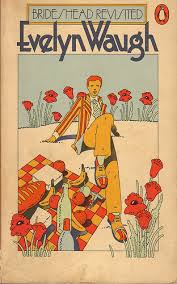
Brideshead Revisited by Evelyn Waugh, 1946

Why do I write this blog? Thinking about it there are four principal reasons, with one bonus justification.

  1. To keep a record of what I read. Simple as that – just to look back and see what I have read over 12-24 months is interesting, as my appetite for classic fiction wanes and is replaced by recent history, for example.
2.    To keep a note of what happens in the novels I read. I appreciate that probably sounds a bit daft at first, but if you think about it, how many times have you picked up a book and wondered whether you had read it or not? Writing down what happens helps fixed the main events of a story in my memory. Of course, re-reading books and rediscovering them can be great fun, but I find it frustrating not being able to remember what happens in a book even though I know I have read it.
3.    To make me a careful reader. This follows on very much from the above – if I know I am going to have to write something about a novel, I will read it more carefully than otherwise. I will even make marginal notes and highlight sections if I am being really conscientious. When I do this of course it means I am more likely to remember the detail of the book, but writing it down reinforces this.
4.    To have something interesting and original to say about the novel/book.
(The bonus reason is that I occasionally use this blog to write about something other than my reading. It’s harmless, and gives me somewhere to work out my thoughts, or maybe just show off a bit, even if just to myself.)
So when I finished Evelyn Waugh’s 1946 novel “Brideshead Revisited” and found I didn’t really have anything new or insightful to say about the novel, I was disappointed. Looking back on the list above however, I realised there are nevertheless plenty of reasons to blog about the novel, even if it won’t be as amusing or clever as I would have hoped – it still ticks three of the four boxes.
“Brideshead Revisited” is narrated by Charles Ryder, an upper middle class officer who is billeted in the grounds of an English country house at an indeterminate point in the second world war. He is startled to realise he knows the house well, having visited as a guest many times. The body of the novel is a series of reminiscences starting with Charles’s time at Oxford in the early 20’s, when he meets Sebastian Flyte, the younger son of the Brideshead family. The fact he is a younger son, and therefore unlikely to inherit the family title or house, is significant – he dedicates himself to a life of excess, ending as an alcoholic wreck. The surname Flyte is also telling – Sebastian is quintessentially flighty, a decadent aesthete interested in only what pleases him. The bond between Ryder and Flyte is strong and instantaneous, and their lives run in parallel until Sebastian’s alcoholism finally pulls them apart.

The sexual nature of their friendship is fairly explicit – bearing in mind that gay relationships were illegal in the UK before 1968, and only decriminalised in very specific circumstances thereafter. They have an openly gay friend – Antoine Blanche – who is accepted by them without judgment or any hint of censure. Waugh is as clear as possible on this point, dropping multiple hints. To give one example, Charles’s cousin, Jasper, visits him early on during his time at Oxford, and warns him “Beware of the Anglo-Catholics – they’re all sodomites” (28). The Flyte’s are one of England’s leading aristocratic Catholic families.

They grow apart, and Charles becomes an artist. He eventually marries, although his relationship with his wife is distant, and he has no interest in his children. He goes on an expedition into the South American jungle, and is away for two years – when he meets his wife after this absence their lack of affectionate is palpable. On the stormy Atlantic crossing home he begins an affair with Sebastian’s sister, Julia, but she ultimately rejects him in favour of her Catholic faith. In a book-ending chapter back at Brideshead, Ryder reveals he too has embraced Catholicism.
This is a complex novel with many themes. The loss of Edwardian England, preserved in part in Brideshead and Oxford, but torn apart by the devastation of the Great War. Waugh’s 1959 introduction to the novel talks about it being about the imminent loss of the great English country house, but that seems a minor theme to a 21st century reader. Catholicism, the Second World War, love, homosexuality – it makes it seem a worthy novel, and eventually it is, but the early scenes in Oxford in particular are extraordinarily evocative:
“Oxford, in those days, was still a city of aquatint. In her spacious and quiet streets men walked and spoke as they had done in Newman’s day; her autumnal mists, her grey springtime, and the rare glory of her summer days – such as that day – when the chestnut was in flower and the bells rang out high and clear over her gables and cupolas, exhaled the soft airs of centuries of youth. It was this cloistral hush which gave our laughter its resonance, and carried it still, joyously, over the intervening clamour.”
Standard
20th century Literature, Book review, Evelyn Waugh, Vile Bodies

Vile Bodies by Evelyn Waugh

Let’s start with the title. About ten years ago a film was made of this novel, but due to wrangles with the Waugh estate the film was called “Bright Young Things” not “Vile Bodies”. (This is from memory, unverified by Wikipedia). The name change mattered, because the irony of the phrase “Bright Young Things”” is easy to miss (or dismiss), whereas there is no missing the bitterness and bleakness of the original title. And make no mistake, this is a bitter, and unblinking bleak portrait of the mid-war, middle class world Waugh inhabited, where the humour underscores the emptiness of people’s lives rather than detracting from it.
This is satire at its crystalline, brilliant, best. The plot, such as it is, follows the misfortunes of Adam Symes and his assortment of friends, relatives and acquaintances. But the series of disjointed incidents portrayed is simply a vehicle for Waugh to shine a light on the shallow, broken society of mid-war Britain. There are several deaths, too many for them to be shrugged off, including an accident with a chandelier, a suicide, and Agatha Runcible’s descent into madness and thence death arising from a motor racing accident. (The choice of name here, from a nonsense word coined by Lear, points out the nonsensical nature of the lives of many of the characters. All of these deaths are passed over very lightly, almost in passing; Simon Balcairn’s suicide in particular is quite chilling – he gasses himself, and in putting his head in the oven he at first holds his breath, realises this is missing the point, then chokes, collapses and dies. 
It would be all too easy to take this as simply a light hearted portrait of the rich and stupid at play. There is some playfulness in the novel – for example in the way Symes creates characters and themes for his gossip column, which are then picked up and copied by fashionable London. But the novel is a much more damning critique of British mid war society than this. Waugh seems full of bile towards his subjects, constantly snatching any prospect of happiness or financial stability from them. The Bright Young Things portrayed are not happy or fulfilled – their relentless parties and jaunts are just a desperate attempt to district themselves from the emptiness of their lives. The final “Happy Ending” chapter, in which Chastity’s broken life casts her up in a war zone as part of the detritus of some devastating future conflict, is a chilling summary of where the country is heading – to death, dissolution, and decay. Instead of having partying young people on the front cover, a better illustration would be Munch’s “Scream”.
 
Standard
20th century Literature, A Handful of Dust, Book review, Evelyn Waugh

A Handful of Dust by Evelyn Waugh, 1934

First published in 1934, and read in a gorgeous Penguin Modern Classic Edition.  

Waugh is the great chronicler of mid-war upper class British life, and this is one of his bleakest, blackest novels. This savage, bitter comedy charts the end of a aristocratic marriage. The world the characters inhabit is not the comic, chaotic swirl of events seen in for example Vile Bodies, in which characters are not far from caricatures. Although all Waugh’s novel contain an element of bile, the taste here is particularly bitter – one would imagine the writer had experienced a relationship breakdown or divorce. There is a moment about half way through the novel when tragedy strikes. Even though I had read it before it still struck me with a visceral force, such is the quality of the writing and characterisation.


The title of the novel, in case you weren’t able to place it, is from the Waste Land:

“I will show you something different from either
Your shadow at morning striding behind you
or your shadow at evening rising to meet you;
I will show you fear in a handful of dust”
 

When I was taught Eliot at A level I was told I would find, or simply found, the Waste Land impenetrable, but looking back and re-reading it now I find lines like those above chillingly straightforward, even if they are open to many different readings. Here, a handful of dust can either be anything mundane – i.e. fear can be found in the everyday or ordinary, or the phrase can suggest the burial ritual, dust to dust.

 
The ending of the novel disappoints – there is a feeling of not knowing quite how to draw matters to a close, and it lapses almost into absurdity, as if the writer wanted to allow us to dismiss the novel as a straightforward, farcical comedy, rather than the tragedy which dominates the heart of the book.
 
If you haven’t read Waugh before this is probably not the best place to start, not because it is inaccessible – it is a compelling read – but because it is not the most representative of his writing. Try Vile Bodies or the Loved Ones for something less likely to leave you in quiet desperation.


Standard