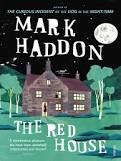
This was Haddon’s second novel, published in 2006 after his hugely successful “A Curious Incident”. I have reviewed his third novel, “The Red House” on this blog previously, and was optimistic that this would be equally readable. Largely it was – the very short chapters and frequent changes of narrative perspective meant the pages passed quickly, and I finished the near 500 pages in a couple of days. This would normally an indication that the novel was well written and enjoyable, but I finished this with a vague feeling that something wasn’t quite right. What could it be?
Well, to start with, there’s that awful title, a cheesy pun (the principal character has a spot which he thinks is cancerous, and which triggers a series depressive episode) reminiscent of a Norman Wisdom film or episode of Some Mothers (“Betty, I’m having a spot of bother”). The author avoids putting much effort into giving the characters a back story, which is sketched in very faintly, simply by making occasional reference to “that time the dog got run over in Rhyl” or “the time we crashed the mini in Copenhagen” (made up examples, but you get the idea). I flicked through the book at random and picked out these examples (not made up this time) and realised that Haddon uses this technique a lot more than I thought:
“several years ago when he had fallen from a stepladder, broken his elbow on the rockery, and passed out, a sensation which he remembered as being not unpleasant (a view from the Tamar bridge in Plymouth had featured prominently for some reason)” (page 1
“He had not felt like this since John Zinewski’s Fireball had capsized several years ago and he had found himself trapped underwater with his ankle knotted in a loop of rope.” (2)
“Betty’s brother, the one who died in that horrible factory accident, had made a hat out of a napkin.” (52)
“”Got pulled over by police on the M5 once…wingwalking on a Volvo roofrack”” (66)
“Coming home from university… spilling that paint over the cat, losing her passport in Malta.” (233)
And so relentlessly on. All families have disaster stories, enhanced over time, which cumulatively build the family history. They are important. But a novelist needs surely to make more of them than this. At first I thought we would get round to visiting these incidents and finding in them the key to the principal characters various neuroses – there has to be a reason why a bit of eczema causes George to have a full-blown nervous breakdown – but it never happens. I don’t mind doing a bit of work to fill in gaps left by an author, but this was too much – the characters were cut-outs who behaved as they did for no apparent reason, take it or leave it.
There is an attempt at farce here, reminiscent of Tom Sharpe. People mix anti-depressants and alcohol with inevitable results, dog poo is trodden in, a toddler’s toy is tripped over, a gay couple kiss and outrage the religious aunt and uncle, and so on. The wedding, which is the drawn-out climax of the novel ends in a fight, sex, and tears, as we always knew it would.
Being charitable, I prefer to think of this novel as a dry run for the much more controlled “Red House”.
PS: like most contemporary novels the cover and back cover are covered in quotes from reviewers. You get the sense that my luke-warm response was shared – the Guardian described the book as “readable” and “brisk”, the Telegraph “entertaining” and the Sunday Times “crisp, light” (like a white wine?). Damned with faint praise.