Book review

The Bookshop is set in the sleepy coastal Suffolk town of Hardborough — “an island between sea and river”. In 1959 the novel’s ‘heroine’ Florence Green opens a bookshop in the long-vacant property called Old House, one of the oldest properties in the town. There is surprisingly some local opposition to her venture. This opposition centres on local notable Violet Gamart who has been toying with “the idea of converting it (Old House) into some kind of centre — I mean an arts centre for Hardborough“. Old House is an unlikely location for an arts centre – it has stood empty for years, is quite small (from what we can tell) and is riddled with damp, not to say that it also seems occupied by a ‘tapper’, the local word for a poltergeist. Is there something more to Mrs Gamart’s plans than meets the eye – what is problematic with the idea of a bookshop?
Florence ignores Mrs Gamart and goes ahead and opens her shop, employing a young assistant, ten-year old Christine Gipping, to help out. Christine is by far the liveliest and most interesting character in the novel, although the author’s continual reference to her pre-pubescent state is a little creepy:

Christine replied that now the evenings were getting longer her elder sister would be up in the bracken with Charlie Cutts… ‘You don’t need to worry about anything like that with me” she added, “I shan’t turn eleven till next April. Mine haven’t come on yet.”

Lightly comedic episodes ensue as Florence struggles to make a success of her venture. She secures the patronage (of sorts) of Edmund Brundish, who is the nearest thing Hardborough has to aristocracy, and turns to him for advice when trying to decide whether to stock Vladimir Nabokov’s Lolita. The novel is a best-seller but the usual suspects are horrified at both the book’s subject matter and the shop’s subsequent success. I was hoping that the novel might explore the explosive impact Lolita would have had on a small-minded English town in the late 1950’s, but that opportunity is passed by.

I was quite harsh towards The Gate of Angels, Fitzgerald’s 1990 novella about a fictional Cambridge college, not least because of its lack of authenticity. Novels don’t have to be realistic, of course they don’t, and the author can introduce elements of fantasy for many different reasons. But novels that purport to realistically portray a social setting and believable characters need to at least aspire to being authentic, or alternatively to have a really good reason why authenticity is departed from. And time after time Fitzgerald fails this simple test. The poltergeist that haunts the bookshop is an obvious example – perhaps it represents the town’s hostility towards Florence’s enterprise (although it pre-dates the shop’s opening). But there is no real attempt to integrate the ‘rapper’ into the narrative – it is just there, then it is not. Another example relates to the portrait of ten-year old Christine. While she is a well-developed character, are we really expected to believe she chipped/lost her two front teeth by them being hit by frozen washing on the laundry line? That’s just nonsensical and not in the least amusing. Possibly it is intended to show how hard life is for the Gipping family, and how resilient they are despite everything thrown at them – but teeth broken by frozen laundry is such a clumsy unconvincing way of showing this. Similarly we are invited to believe that Christine is the first child in her family to not pass the eleven plus. She is instead assigned to the local technical college, which her mother describes as “what we call a death sentence. I’ve nothing against the Technical, but it just means this: what chance will she ever have of meeting and marrying a white-collar chap ?” Only about one in eight children passed the eleven-plus, so the idea that bright Christine would have been the old child in their family not to pass is hard to credit. There’s also a description of a new housing development built on the edge of quickly eroding cliffs – another instance where the novel forfeits all credibility for the sake of a clumsy metaphor.

Probably most ludicrous proposition in the novel is the idea that a ‘stupid’ backbencher could draft, propose and pass through all its Parliamentary stages a major change to planning law, including late amendments which allow compulsory purchase orders in a wide range of circumstances, which is then implemented in a matter of months, simply to find a mechanism to lever Florence out of her shop. A generous buy-out proposal from Mrs Gamart would have been infinitely simpler. I understand that Fitzgerald wants to demonstrate that life and the powers that be are unfair to well-meaning people like Mrs Green, but this is an incredibly heavy-handed way of making that point.

There are moments in the novel which almost bring it to life. I did enjoy for example Mr Brundish’s encounter with Mrs Gamart, when his lack of an internal monologue leads him to speak his mind openly to her:

‘”You had better offer me something” he said loudly, and then, in precisely the same tone: “The bitch cannot deny me a glass of brandy.”‘

There’s far too little of this character, and Fitzgerald kills him off casually almost immediately after this encounter in order for her primary scheme – the compulsory purchase of the shop – to go ahead. Instead we see far too much of Milo North, a lazy dilettante whose purpose in the novel never really comes into focus.

Fitzgerald is highly thought of and considered by some critics to be under-appreciated. I can’t agree. When you compare this slight, unconvincing novel to J L Carr’s A Month in the Country for example, you can see the huge gulf between them. Both are sketches of life in rural England, but Carr’s characters come alive, are recognisable and have interesting stories to tell. It would be unfair to say Fitzgerald’s don’t come to life in the same way but they are light sketches compared to the vividness of Carr’s portraits.
The Bookshop by Penelope Fitzgerald, 1978

Aside
Book review

This incredibly authoritative not to say weighty biography of Britain’s greatest novelist left me with a renewed respect for Dickens the author, but some of the revelations left me equally disappointed with Dickens the husband and father.

Slater’s biography follows the traditional format of all such works. Dickens’s early life is recorded in detail elsewhere, not least by Dickens himself in an autobiographical fragment published soon after his death by his close friend and first biographer, John Forster. Slater claims that the period when Dickens’s family went through hard financial times and had to withdraw him from school and send him to work, aged 14, in a blacking factory, was a key turning point in his life. It, Slater argues, haunted him for the rest of his life, and he constantly returns to it in his work, letters, and personal life. That point felt overstated, although I obviously defer to the author’s infinitely more detailed knowledge of Dickens’s life and work. Once these years are over, the text is focussed on composition of Dickens’s 14 novels which provide a structure for the text, although there is a vast amount of other works to be included, recorded, referenced and analysed.

Even if you know Dickens well this book will probably contain some surprises. I didn’t know for example that his early novels – including Pickwick, Oliver Twist, & Nicholas Nickleby – were essentially improvisational. While writing them Dickens had no clear plan where the plot was going, nor in the case of Pickwick whether the text was ever going to be printed as a novel at all, rather than remain as a serial, comparable to modern-day soap-operas. The idea of turning this series of stories with a common theme into a novel seems to have occurred to Dickens quite late in the day. As his work matured Dickens planned his novels more carefully with detailed notes on characters and plot-lines, but he rarely wrote more than a few weeks ahead of publication, sometimes cutting things very close indeed. Publishing his work in this way had an important impact on his plotting decisions. Any large scale editing is virtually impossible. Novelists who prepare their whole work prior to publication (i.e. virtually all of them today) can make substantial changes up until the last minute, deleting characters, going back to the beginning of the novel to provide subtle clues to the outcome, etc. While Dickens could fine tune his choice of words when the novels were published in volume form, major plot changes were impossible. (Authors who publish series of novels face a similar challenge – J K Rowling must surely have wanted to be able to go back to Philosopher’s Stone and add some more clues about Harry’s scar or tidy up the messy timeline of the first chapter, The Boy Who Lived?). This feature of his way of working imposed a discipline on Dickens’ plotting which he never seems to have worried about, but it would be interesting to read the novels in this light and look at his technique for avoiding painting himself into too many corners. One example which Slater points out is the strange opening to The Old Curiosity Shop, which begins in the voice of an unnamed first person narrator (“Although I am an old man, night is generally my time for walking” who quickly fades out of the text to be replaced by an omniscient narrator. According to Slater this is because the story started as a magazine sketch intended for only one or two editions, and when Dickens decided to adapt it as a longer form novel the switch in narrator was made at that point. The reader doesn’t really notice this switch in voice, but in retrospect is does appear unusual.

Dickens’s prodigious work ethic is another prominent feature of this biography. There was no point in his adult life when Dickens wasn’t working virtually flat out, at several points writing two novels at once. His novels are only a small part of his output: his collected journalism and letters run to many volumes, and he seems to take on major new projects even when he is completely overwhelmed with work. His was also a prodigious travellers, criss-crossing the country for his readings and popping over to France to see his young lady friend several times a month. In addition of course he also managed two major tours of the USA.

The weak copyright laws of the time meant that Dickens was openly plagiarised throughout his career, most typically in the form of stage adaptations. Slater tells us that “between March and December 1838 no less than five unauthorised adaptations of Oliver appeared in the London theatres.” (121 – for context, Oliver Twist was published in monthly instalments between February 1837 and January 1839). This issue only got worse – “no fewer than seventeen different stage versions (of his Christmas story The Cricket and the Hearth) appeared in London within a month of the book’s publication.“(239). There was an ironic twist to this plagiarism. In the rush to copy his work theatres would put on productions of his work before their serialisation had finished, forcing them to anticipate the novels’ endings. There is some evidence that Dickens used these versions of his works to give him ideas on how to end them – Slater cites evidence that in his composition of Little Dorrit Dickens “looked back for help with the plotting of an unauthorised dramatisation of the first part of the novel”.

This is an extraordinarily thorough account of Dickens’s life. Slater chooses to structure his text around his subject’s literary life, which his personal life less of a focus. His early romances, his marriage and ten children are all mentioned, as is the end of his marriage and his late romance with Ellen Ternan, but there is a sense of restraint in the narrative, a lack of speculation and a focus on the literary output and Dickens’s creative life. I did wonder whether the biography, structured as it is around the construction of the 14 principal novels, would have been such a compelling read if the reader was not familiar with Dickens’ work? But I guess no-one tackles a 600+ page biography without at least a certain familiarity with the novels.

I have written elsewhere about Dickens’ extraordinary consistency as a novelist. That comment was about his style – he seems to have landed on a discursive, dramatic and comic style of writing early on in his career and it remained with him largely unchanged throughout. My contention was that unless you knew the chronological sequence of his novels you would be hard pressed to tell, based on the writing alone, whether his work was early, middle or late period Dickens. But there is another way in which he was consistent, and that was in the length of his novels. All his novels were published in instalments – either weekly or monthly. The earlier novels did not have a predetermined plot nor number of instalments they were intended to fill, so their length varies significantly – Pickwick is almost twice as long as Oliver Twist. But once the format and number of instalments was settled down, the consistency of the length of the novels is extraordinary. Look at this list:

1.David Copperfield: 357,489
2. Dombey and Son: 357,484
3. Bleak House: 355,936
4. Little Dorrit: 339,870
5. Martin Chuzzlewit: 338,077
6. Our Mutual Friend: 327,727
7. Nicholas Nickleby: 323,722
8. The Pickwick Papers: 302,190
9. Barnaby Rudge: 255,229
10. The Old Curiosity Shop: 218,538
11. Great Expectations: 186,339
12. Oliver Twist: 158,631
13. A Tale of Two Cities: 137,000
14. Hard Times: 104,821
15. The Mystery of Edwin Drood: 96,178 (first 6 of 12 parts only)#

Yes, David Copperfield and Dombey and Son are almost identical lengths, to within 5 words in a total of over a third of a million. That’s an insane level of accuracy. Copperfield was published in 19 monthly one-shilling instalments, containing 32 pages of text and two illustrations, with the last instalment being a double-number (in other words, twenty instalments). Dombey followed the same pattern – 19 + 1 instalments, 32 pages, 2 illustrations. So it’s not surprising they are around the same length. But identical? The <10% variance in the top seven novels in this list can be explained by the length of the monthly instalments and the number of illustrations rather than any variation in Dickens’s plots or characterisations. Other authors were published in the same instalment formats as Dickens, indeed many of them in his magazines (Wilkie Collins and Elizabeth Gaskell, to name but two) and I would imagine their word length would be similar given the circumstances. But I confess I haven’t checked in any detail. (A quick look at the number of pages shown on Collins’s Goodreads page gives a range of 528 pages for The Moonstone to 672 pages for The Woman in White and 748 pages for No Name). There must surely be a strong case for arguing that no other author would have had Dickens’ discipline, to produce content week after week, month after month across almost all his adult life, to such a precise degree of accuracy.

I mentioned at the beginning of this review that I came away from this book feeling a little disappointed with Dickens the man. He discarded his wife with whom he had ten children, and ‘took up with’ a woman twenty years younger than him. We can’t be certain about the precise nature of this latter relationship but we can have a pretty good guess! He estranged his children from his wife, characterising her as a bad mother, and disrespected her in his will. His politics, particularly in relation to the trade union movement and issues of race, were not as progressive as they are often characterised. Slater is very open on this point – he doesn’t try to sugar-coat Dickens’s weak-spots, but neither does he over-emphasise them. Dickens was capable of change, and his approach to the way Fagin is characterised in Oliver Twist is a good case in point. He goes from being an openly hostile anti-Semitic caricature to in later editions a much more nuanced portrait, with far less emphasis on his race.

I’ve some way to go before I can claim to have read all of his novels, but this biography has given me a renewed appetite for continuing my tradition of an annual Dickens.

#(I found these statistics on the internet, and I haven’t separately verified them. I did a spot check of Copperfield and the word count was very close, with a small variation explainable by how you count the index, chapter headings, etc. )

Charles Dickens, by Michael Slater, 2009

Aside
Book review

I rarely use the term ‘must-read’, but if ever a book deserved the term it is Mary Ann Sieghart’s wonderfully powerful ‘The Authority Gap‘. It’s a difficult book to summarise, but at the same time one anecdote will tell you almost all you need to know. The author was once at a dinner party. She was sitting next to a banker, who asked what she did. She listed her career – political columnist, former associate editor of the Times, broadcaster, chair of a thinktank. Instead of responding with details of his own CV or with a follow-up question he replied “Wow, you’re a busy little girl!” She was 50.

Women will respond to this story and the many other anecdotes and statistics in this book with (I am sure) recognition and exasperation. Men on the other hand will quite possibly respond with astonishment – are things really that bad, are we really such monsters? Sorry guys, but yes, and yes, and Sieghart has the numbers to prove it.

“The authority gap” – the term Sieghart uses to describe the way women are not taken seriously in public and professional life – is documented by the author in scrupulous detail. We have all by now heard the term ‘unconscious bias’. None of us are free from the insidious effect of this phenomenon, men and women, but what I found genuinely shocking was just how pervasive this gap is. This book is full to the brim of appalling examples where women are undermined, undervalued, and discriminated against in all aspects of their lives – not in some remote primitive country but in the so-called advanced societies in the West. There’s no escape from this phenomenon, from the classroom where boys are given eight times more of their teacher’s attention than girls, to the US Supreme Court where female Justices are interrupted four times more often than male ones, 96% of the time by men?

Any parent can do a simple exercise to test their own bias. How clever are your kids? Are the boys brighter than the girls? I don’t know if this will work if you know the theme of this book, but when (British) parents were asked to estimate their child’s IQ the average score for boys was 115 and the average score for girls was 107? This is a vivid demonstration of the authority gap at work, but the effect is far more pervasive – for example the way children are described can shape their behaviour, as can the toys they are given to play with.

So that the text is not too dryly academic, Sieghart interviewed dozens of women at the top of public life including Hillary Clinton, Julia Gillard, Major General Sharon Nesmith and Lady Hale. All without exception had experienced examples of the authority gap in their public lives, despite having fought their way to the top of their professions. This approach lighten the text but is not without its difficulties – the author recognises that many of these women have risen to such seniority in their professions that they now do not face the barrage of sexism that most women experience – they are listened to when they speak, they are not interrupted or condescended and patronised. Well not always, because even the most senior women in the world reported being overlooked at time, judged on their appearance, or threatened with sexual violence by online trolls.

The text ends with a helpful checklist of things we can all do to address this issue. This final chapter entitled ‘No Need to Despair’ sets out the changes needed to close the gap, such as checking the language we use when speaking to our daughters and our sons, noticing if a woman is being interrupted or ignored in meetings, and yes, reading more books by women. On that final point, I was rude in an earlier post about the novels suggested to address the fact that most men read very few novels by women. What I hadn’t done is check whether I was guilty of this same imbalance in my reading habits. I was shocked when I finally got round to checking my ‘All reviews – by author‘ page to find that more than three quarters of the books I have reviewed over the last ten years were written by men. I wasn’t surprised there was an imbalance, but three quarters! I will ensure I read more works by women in the future, that is a promise to myself.

The Authority Gap is an obvious companion text to Caroline Criado Perez’s Invisible Women. Both books are meticulously researched and evidenced, and both illustrate without the possibility of equivocation the shocking ways in which society is biased towards men. Invisible Women exposed the inherent assumption in much design work that the default model of the human body is male – that it is the male which is important, and any adaptations to suit women are often an afterthought, if they happen at all. The Authority Gap (which I think is a less attention grabbing title, which is my one very minor criticism of the book) shows that women face bias in every aspect of their lives, a bias that is so deeply engrained even in what we like to think of as progressive societies that we often don’t notice it, or taken it for granted. It was shocking to see the extent of this issue laid out so clearly, but encouraging that it can be changed once the issue is acknowledged.

The Authority Gap by Mary Ann Sieghart 2021

Aside
Book review

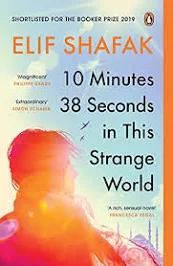
10 minutes and 38 seconds is estimated as the time it takes for a dying brain to shut down. The scientific basis for that estimate is neither here nor there. Shafak uses this as a starting point to explore the dying moments of sex worker “Tequila Leila”, whose body has been dumped in a bin on the outskirts of Istanbul. As her brain begins to shut down, Leila tells her life story in the ten minutes and thirty eight seconds she has left of consciousness.

She recalled things she did not even know she was capable of remembering, things she had believed to be lost for ever. Time became fluid, a free flow of recollections seeping into one another, the past and the present inseparable.

Here memories focus on the people who were important in her life. Along the way we find out how she became a sex-worker, coming from a rural, conservative Turkish family life where independent behaviour by women was severely curtailed, to live in the red-light district of Istanbul where she has a freedom, of sorts, and is able to develop a number of relationships and friendships. As the minutes of Leila’s life tick down we slowly learn more about her life, its tragedies and moments of joy. It’s a touching portrait of a difficult life where Leila’s ebullience manages to somehow overcome all that life can throw at her – until her brutal murder for being in the wrong place at the wrong time.

The second half of the novel has a very different tone and structure. Leila’s disparate group of friends who we have been introduced to in the first half – Sinan, with whom she grew up; Nalan, a trans woman who ran away from her family in Anatolia; Jameelah, a victim of human trafficking from Somalia; Zaynab, a Lebanese refugee with severe health issues; and Humeyra who was born in Mesopotamia and fled an abusive marriage – come together to rescue Leila’s body from the horrible cemetery were it has been effectively dumped, a place for only the poorest and most marginal members of society (a real location – as with most of the novel the places and events referred to are all real). They dig up her body and take it across Istanbul to be buried with proper respect. This part of the novel has a totally different feel to the first half – there’s almost a ‘mad-cap’ adventure aspect to the way the grave-robbing takes place with little planning or discussion of the risks.

This novel is a thought-provoking consideration of gender issues in modern Turkey. It comes as no surprise to read that Shafak has been investigated by Turkish prosecutors for addressing child abuse and sexual violence in her fiction writing, nor that she has moved to the UK recently in order to avoid this potential censorship. On that initial point, I’m not usually a great fan of trigger warnings, but if ever a novel needed a TW flag it’s ’10 minutes and 38 seconds‘. Early on it contains a description of child sexual abuse which plays an important part in the narrative structure of the novel, but which I found hard to read. This novel was shortlisted for the 2019 Booker Prize, and Shafak’s most recent novel The Island of Missing Trees is doing very well and has been shortlisted for the 2022 Women’s Prize for Fiction.

.

10 minutes and 38 seconds in this strange world by Elif Shafak 2019

Aside
Book review

As I have mentioned elsewhere, I am currently reading Michael Slater’s very detailed biography of Charles Dickens. One of my main ‘take-aways’ from the work thus far is that Dickens was so much more than a novelist, even if that is what he is predominantly remembered for today. He wrote an extraordinary volume of work, and no genre was beyond his reach – plays, poetry, short stories, journalism, writing for children, travelogues, and essays, as well as an amazing number of letters. This has encouraged me to explore some of his work outside his novels, which led me to The Chimes.

Following the success of A Christmas Carol (1843) Dickens wrote four further annual Christmas stories. The Chimes: A Goblin Story of Some Bells that Rang an Old Year Out and a New Year In, (1844) is the second in the series (The Cricket on the Hearth (1845), The Battle of Life (1846), and The Haunted Man and the Ghost’s Bargain (1848) complete the list).

The book was written during Dickens’s year-long visit to Italy. Its title is from Faust’s line in Henry 4th part 2 “We have heard the chimes at midnight, Master Shallow!” in which he reminisces about their adventures in their youth. There’s a tone of regret for days past in the line which forms a backdrop to the story. As with virtually all Dickens’s work there is also a campaigning purpose to the text, of sorts, as we shall see.

The story opens on New Year’s Eve. Trotty Veck, an ageing messenger (this is before the days of postmen) is cold and hungry, but cannot leave his post until he has earned something for his family. His work is casual and unpredictable – the gig economy is nothing new. He shelters in the shadow of the local church and his day is measured out by the sounding of the church bells, the chimes. His daughter Meg brings him some food, and announces that she and her fiancé Richard have decided to wait no longer and are to marry the next day. Their happiness is disrupted by the intrusion of the appalling Alderman Cute and his friends who make Meg and Richard feel that being poor they have no right to marry.

Trotty carries a letter for Cute to Sir Joseph Bowley MP. Bowley is spending the last hours of the year settling any debts to ensure a clean start to the new year, and advises Trotty to do the same. When the MP hears that he owes rent and other debts he berates him, showing no understanding of the position of the working poor. Again, sounds familiar? Trotty however tends to agree with him, indoctrinated as he is into thinking that the behaviour of the poor is the problem rather than their condition and circumstances. On his way home Trotty meets Will Fern, an impoverished agricultural worker, and his orphaned niece, Lilian. He kindly takes them home with him and shares what little food he has, in a genuine act of charity.

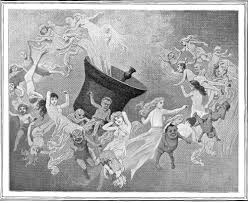
The midnight chimes are no occasion for celebration in this starving household. Instead they call to Trotty, who in a dreamlike state goes to the church and climbs the belltower. There he sees the spirits of the bells and their goblin attendants. This is an hallucinatory vision from something out of Dante or Bosch: these goblins are not bankers (a la Rowling) nor engineers (a la Pratchett) but menacing, supernatural figures who chastise Trotty for his lack of faith in mankind. It slowly becomes apparent that Trotty is now dead, having fallen from the belltower years before. The reader is left to wonder whether this vision is part of his eternal torture, or, as with A Christmas Carol, more in the way of a warning?

In a series of visions very similar to those shown by the Ghost of Christmas Yet to Come, Trotty is shown how the lives of his family play out in the future. Despite their best efforts to make a good life, Richard becomes an alcoholic, Will is unable to earn a living because of his earlier criminal convictions, which lock him into a cycle of imprisonment and brief release, and, in the absence of a loving family around her, Lilian becomes a prostitute. Meg is driven to the murder of her child and suicide, but is rescued at the last minute by Trotty’s ghostly intervention.

The story ends with Trotty waking up as the bells ring in the New Year. All he has seen has been a vision of a possible future, one which is not pre-ordained. Another future, in which Meg and Richard marry and in which his family and friends prosper is open to him, although how he will achieve that future without changes within wider society is unclear. The Chimes seems to suggest Trotty and his family, indeed his class, are masters of their own destiny; the goblins and the spirits of the chimes focus on his sins of condemning the fallen and poor:

‘Who turns his back upon the fallen and disfigured of his kind; abandons them as vile; and does not trace and track with pitying eyes the unfenced precipice by which they fell from good—grasping in their fall some tufts and shreds of that lost soil, and clinging to them still when bruised and dying in the gulf below; does wrong to Heaven and man, to time and to eternity. And you have done that wrong!’

Has he, or is it more Cute and Bowley, representatives of the judiciary and the legislature, that have failed the fallen and disfigured?

It’s hardly surprising that a story of such sinister ambiguity has not prospered compared to its predecessor. Although highly popular in its time – five different productions of The Chimes were on stage within weeks of publication and it sold 20,000 copies in the first three months – the story’s goblins are no longer part of our cultural landscape and have no Christmassy connotations whatsoever. The reader will be happy that Trotty and his family have survived another year, but their problems are as deep-rooted as ever and there’s no suggestion that Alderman Cute or Bowley MP are going to help them any more than they have previously – if help is going to come it needs to come from Trotty and family themselves. The fact that Trotty helps William Fern escape prosecution and offers him shelter offers some hope that by working together they can avoid the worst that Cute and Bowley can throw at them, but this is scant consolation in lives marked by cold, hunger and want.

I am not sure this is more than a curiosity rather than a representative of Dickens’ shorter form of writing – I will need to read more of that to make a call on that – but it’s not a story I could honestly recommend as being either heart-warming or particularly chilling. It has its moment, but the whole is less than the sum of the parts. At least Dickens wasn’t on auto-pilot here, just serving up generic Christmas related stories of poor people over-coming the odds – he genuinely tries to do something very different, although I suspect it may not have seemed as strange to mid-nineteenth century readers as it does to us today.

The Chimes, by Charles Dickens, 1844

Aside
Book review

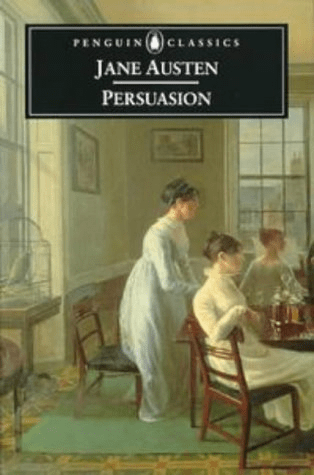
I think I need to reread Persuasion. The mood you are in and the time and care you dedicate to the process of reading can all have an impact on how you perceive a novel, and for whatever reason I was hugely disappointed with Persuasion, Austen’s last completed work, which I am sure says more about me than it does about this novel. But on this reading alone I’d go so far as to say the incomplete and hurried nature of the conclusion, and the short length of the work (around half the length of Pride and Prejudice, for example) is evidence of it being a late draft completed in the final months of her life (it was published after she died) which had she lived would have seen the extensive revision that was the hallmark of her methods of composition for earlier works.

Austen is unquestionably a writer of genius, her control of point of view and narrative technique is unparalleled, and not least critics love Persuasion, which all suggests the problem may have been with me, not the novel, and that I need to give it another chance.

The plot of Persuasion treads familiar romantic ground – young people in Regency England trying to find suitable partners to marry, but it has something of a new twist. Persuasion is about love the second time around. Anne Elliot, middle daughter of Sir Walter Elliot, baronet, lives in the shadow of her older sister Elizabeth, now in effect head of the household following their mother’s death, and Mary, her younger sister who has recently married a local minor aristocrat, Charles Musgrove. Charles had previously asked Anne to be his wife, and once rejected had moved on to the younger sister with that relentlessness and lack of sentimentality that characterised marriage making in this period. Anne is now 27, dangerously old for a woman of this era and at risk of spinsterhood. What is not widely known about Anne (within the novel) is that when she was 19 she had previously rejected an earlier marriage proposal, having been persuaded by her mother’s friend and her own confidante, the widow Lady Russell, that her suitor, Frederick Wentworth, was not good enough for her. Captain Wentworth, as he now is, was at the time without prospects or connections, and marrying for love was an improvident thing to do.

Wentworth re-enters Anne’s life when Sir Walter lets the family estate to Wentworth’s brother-in-law, Admiral Croft. Since their initial romance, Wentworth has fought in the Napoleonic Wars, been promoted to the rank of captain and amassed a significant fortune from capturing enemy ships – being in the Navy could at this time be a very dangerous but very well-rewarded profession. Once Wentworth is reintroduced it is clear he and Anne will end up together, but the only question is how they will be reunited, and which of the many available young women introduced into the plot he will mistakenly be thought to be in love with before the inevitable reconciliation. Visits to Lyme Regis and Bath feature along the way, where the plot’s false starts and red herrings are overcome and the multiple other threads quickly resolved, more in the manner of an early Shakespearean comedy than an elegantly plotted Austen romance.

There is an obvious temptation to see Austen using Anne’s story as a way of working through her own personal issues. Austen had been engaged at one point but hurriedly called it off, and it is possible she regretted choices made in her romantic life. For her there were to be no second chances, so writing a story in which a lost love is finally recaptured must have had at least some element of wish-fulfilment. Austen’s biographer Claire Tomalin described Persuasion as Austen’s “present to herself…. to all women who had lost their chance in life and would never enjoy a second spring.” I don’t find this way of looking at novels as semi-autobiography or therapy as particularly fruitful – Jane isn’t Anne any more than she is Elizabeth or Fanny.

So what are the concerns I have about the novel? It is clear from her correspondence that Austen wrote Persuasion during the illness which was to take her life. Her usual method of composition, working and reworking the text and plot, was simply not available to her – she didn’t have the time or the energy, and it shows. Plotlines are hurriedly disposed of without the usual care – the most obvious example being the way Mr William Elliot, Sir Walter’s heir, is introduced, courts Anne, and is exposed as a scoundrel. This Mr Elliot is a two-dimensional villain whose motivation is simply to ensure he inherits the ancestral home, which is due to do anyway, even without all the Machiavellian plotting. His precise role in the family structure – why he is the heir – is never clearly explained (unless I missed it!) and the way his deviousness and duplicity is exposed is clumsy in the extreme.

As a character, Anne is not as dull as Mansfield Park‘s Fanny Price, but she equally doesn’t come alive compared to an Elizabeth Bennet or Elinor Dashwood. At first she is described by the unsympathetic narrator as ‘faded and thin‘, as ‘haggard‘, and that ‘her bloom has vanished early‘. Captain Wentworth on his return to her company passes a similar devastating judgment, commenting (in a phrase Anne crushingly comes to hear) on ‘the years which had destroyed her youth and bloom‘. However, things aren’t as bad as these judgments might suggest, and some restorative sea air puts colour back into her cheeks. After a short while at Lyme (albeit in November) Anne is attracting the attentions of the passing William Elliott:

“As the passed, Anne’s face caught his eye, and he looked at her with a degree of earnest admiration, which she could not be insensible of. She was looking remarkably well; her very regular, very pretty features, having the bloom and freshness of youth restored by the fine wind which had been blowing on her complexion, and by the animation of eye which it had also produced. It was evident that the gentleman … admired her exceedingly.” (Chapter 12) (Sir Walter on the other had thinks ‘sharp winds‘ can make a women ‘grow coarse’, and on that basis decides not to buy his youngest daughter a new hat and pelisse in case it encourages her to go out in the wind!)

The chapters in Lyme and Bath had the feel of the characters treading water waiting for the reconciliation between Anne and Captain Wentworth. When this reconciliation finally happens it feels rushed – he overhears her speaking with a friend of his, and writes her a letter declaring his feelings, which she happily reciprocates. This was the one scene Austen is known to have re-written. The earlier version survives, in which Wentworth’s sister and brother-in-law take a much more active hand in engineering the couple’s reconciliation, which to me seemed a lot more believable and authentic.

Many of the other characters don’t step off the page. Anne’s younger sister Mary is better sketched than many, and while her hypochondria is a character trait Austen had used before, (with Mr Wodehouse) this is largely forgotten once the novel moves on. Elizabeth the older sister is barely two-dimensional and remains wooden and forgettable. Lady Russell, who advises Anne not to accept Wentworth’s original proposal, is equally and disappointingly weakly drawn. In fact none of the secondary characters are comparable to the wonderful sketches you see in earlier novels of characters such as endearing gossips such as Miss Bates, awful aristocrats like Lady Catherine de Bourgh or villains like Willoughby. Equally the plotting is disappointing. In the great Austen novels we are always aware of events ‘off-stage’, even when the central characters themselves are unaware. There are plenty of hints that there is more to Jane Fairfax and Frank Churchill’s relationship than Emma is aware of with a careful or second reading, and the way Austen charts Elizabeth Bennet’s journey from anger to love with Mr Darcy is utterly convincing, but there is nothing of comparable significance in Persuasion.

Or at least I didn’t find it on this read, which as I have said could easily be down to my reading of the novel rather than the novel itself. So I need to reread it. Of course I am not going to dive into it straight away, but find a time and place when I can give it the care it needs. Until then I would love to know whether you shared my concerns or can point me to where I have gone wrong.

Persuasion, by Jane Austen, 1817

Aside
Book review

I’m slowly making my way through Michael Slater’s biography of Charles Dickens at the moment, and at one point I came across a reference to Dickens’ fellow author Catherine Gore. I had not heard of Gore before. She was a prolific writer of what become known as ‘silver-fork‘ novels. The ever-reliable Wikipedia tells me that silver-fork novels:

“dominated the English literature market from the mid-1820s to the mid-1840s. They were often indiscreet, and on occasion “keys” would circulate that identified the real people on which the principal characters were based. Their emphasis on the relations of the sexes and on marital relationships presaged later development in the novel.”

The novels focus on the lives of the aristocracy and the manners of the high society, in particular that of the Regency period.

Other writers in the genre included Theodore Hook, Edward Bulwer-Lytton, Benjamin Disraeli, Lady Blessington and Lady Bury. Bulwer-Lytton is principally remembered for coining phrases such as “the great unwashed” and “the pen is mightier than the sword“, as well as the famously bad opening line “It was a dark and stormy night; the rain fell in torrents—except at occasional intervals.”

The purpose of this entry, which I am eventually getting to, is that until I fell down this particular internet rabbit-hole I had never heard of this genre of English fiction. Perhaps I should have but I suspect this is not just my blind-spot. Its novelists are to all intents and purposes no longer read; the vast popularity of their novels is forgotten and few of the books are still published (although they are readily available online, of course). Which made me wonder – will any of the popular genres of the early twenty-first century be completely forgotten in a couple of hundred years? Not just the books and the authors, but the whole category of works into which they fall? Will Young Adult literature still be considered a meaningful classification? Science Fiction? Real-life Crime?

The other question that occurred to me was – what other popular genres of literature have been forgotten? Now that is a rabbit-hole you could spend a long time down!

Finally, if you were wondering whether ‘silver-fork’ literature would be worth resurrecting, here’s a short summary of one of Edward Bulwer-Lytton’s novels, Zanoni:

“Zanoni, a timeless Rosicrucian brother, cannot fall in love without losing his power of immortality; but he does fall in love with Viola Pisani, a promising young opera singer from Naples, the daughter of Pisani, a misunderstood Italian violinist. An English gentleman named Glyndon loves Viola as well, but is indecisive about proposing marriage, and then renounces his love to pursue occult study. The story develops in the days of the French Revolution in 1789. Zanoni has lived since the Chaldean civilisation. His master Mejnor warns him against a love affair but Zanoni does not heed.”

Silver-fork novels

Aside
Book review

The Women’s Prize for Fiction is currently running a survey to find the top ten ‘essential books for men written by women’. The press release promoting the survey claims that “most men simply don’t read books by women”. Support for this claim is provided by research by Mary Ann Sieghart (who chairs the 2022 judges’ panel) in her book The Authority Gap. This research was based on the top ten bestselling female fiction authors including Jane Austen, Margaret Atwood and Agatha Christie which showed that only 19% of their readers were men and 81% women. For the top 10 bestselling male authors (including Dickens, Tolkien, Lee Child and Stephen King), the split was 55% men to 45% women. Whether you can extrapolate national reading habits from just 20 authors is debateable, but the general finding – that men read more men authors than women authors – seems right.

Why should that be – why don’t men read more women authors? The Women’s Prize approach seems to suggest that it is simply because there are loads of great women authors out there that men aren’t aware of. It has prepared a list of sixty books by 56 women and is inviting people to vote for their favourite. (The vote closes on June 6th 2022). Obviously this is a way of getting more attention for the prize itself, which is fair enough, but I wanted to consider the reasons why men don’t read women.

The list is interesting. The vast majority of the nominations are from the twentieth century or later. Jane Austen is ignored, as is Emily Bronte. Charlotte Bronte appears but her recommended novel is Villette, not Jane Eyre as you might expect. Arguably this is because everyone already knows about Pride and Prejudice or Wuthering Heights – the purpose of the exercise is to recommend less well-known works. It’s not surprising that there is a degree of well, to be blunt, virtue-signalling in some of the nominations: Ian McEwan nominates We Had to Remove this Post by Hanna Bervoets, which was published in May 2022, while Andrew Marr nominates Ali Smith’s Companion Piece, also published in May 2022. Andrew Billen nominates the relatively ancient The Candy House by Jennifer Egan which was published way back in April 2022. Several of the other novels nominated date back as far as 2018. Are these really novels that will attract men to read them, or do these nominations tell us more about the people making them?

So why don’t men read women authors? Is it simply that men haven’t come across the novels in this list before? That seems unlikely. The Handmaid’s Tale is not really obscure is it? The list includes three Booker Prize winning novels (Girl, Woman, Other, The Sea, The Sea, and Possession). Novels such as Elizabeth Strout’s Olive Kitteridge (which won the Pulitzer Prize) have sold vast quantities and surely need no further promotion. It’s not so much that the novels in the list aren’t the right ones (although authors such as Muriel Spark and Beryl Bainbridge should have been mentioned, and Maggie O’Farrell’s Hamnet should be on every must-read list) but that awareness isn’t the issue. Men know about women authors but choose to read male authors.

There aren’t any easy answers here but I wonder whether the issue can be traced to childhood reading habits. There’s evidence that boys read fewer books and spending less time reading than girls. Once genre reading patterns are established in the early years then they can be difficult to shift.

Men should read more women authors, but that’s not going to happen by exhortation alone. Perhaps this reading gap is a reflection of a more serious gap between the sexes in society?

Men Reading Women

Aside