
I rarely use the term ‘must-read’, but if ever a book deserved the term it is Mary Ann Sieghart’s wonderfully powerful ‘The Authority Gap‘. It’s a difficult book to summarise, but at the same time one anecdote will tell you almost all you need to know. The author was once at a dinner party. She was sitting next to a banker, who asked what she did. She listed her career – political columnist, former associate editor of the Times, broadcaster, chair of a thinktank. Instead of responding with details of his own CV or with a follow-up question he replied “Wow, you’re a busy little girl!” She was 50.
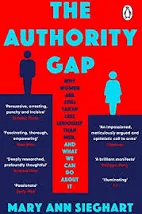
Women will respond to this story and the many other anecdotes and statistics in this book with (I am sure) recognition and exasperation. Men on the other hand will quite possibly respond with astonishment – are things really that bad, are we really such monsters? Sorry guys, but yes, and yes, and Sieghart has the numbers to prove it.
“The authority gap” – the term Sieghart uses to describe the way women are not taken seriously in public and professional life – is documented by the author in scrupulous detail. We have all by now heard the term ‘unconscious bias’. None of us are free from the insidious effect of this phenomenon, men and women, but what I found genuinely shocking was just how pervasive this gap is. This book is full to the brim of appalling examples where women are undermined, undervalued, and discriminated against in all aspects of their lives – not in some remote primitive country but in the so-called advanced societies in the West. There’s no escape from this phenomenon, from the classroom where boys are given eight times more of their teacher’s attention than girls, to the US Supreme Court where female Justices are interrupted four times more often than male ones, 96% of the time by men?
Any parent can do a simple exercise to test their own bias. How clever are your kids? Are the boys brighter than the girls? I don’t know if this will work if you know the theme of this book, but when (British) parents were asked to estimate their child’s IQ the average score for boys was 115 and the average score for girls was 107? This is a vivid demonstration of the authority gap at work, but the effect is far more pervasive – for example the way children are described can shape their behaviour, as can the toys they are given to play with.
So that the text is not too dryly academic, Sieghart interviewed dozens of women at the top of public life including Hillary Clinton, Julia Gillard, Major General Sharon Nesmith and Lady Hale. All without exception had experienced examples of the authority gap in their public lives, despite having fought their way to the top of their professions. This approach lighten the text but is not without its difficulties – the author recognises that many of these women have risen to such seniority in their professions that they now do not face the barrage of sexism that most women experience – they are listened to when they speak, they are not interrupted or condescended and patronised. Well not always, because even the most senior women in the world reported being overlooked at time, judged on their appearance, or threatened with sexual violence by online trolls.
The text ends with a helpful checklist of things we can all do to address this issue. This final chapter entitled ‘No Need to Despair’ sets out the changes needed to close the gap, such as checking the language we use when speaking to our daughters and our sons, noticing if a woman is being interrupted or ignored in meetings, and yes, reading more books by women. On that final point, I was rude in an earlier post about the novels suggested to address the fact that most men read very few novels by women. What I hadn’t done is check whether I was guilty of this same imbalance in my reading habits. I was shocked when I finally got round to checking my ‘All reviews – by author‘ page to find that more than three quarters of the books I have reviewed over the last ten years were written by men. I wasn’t surprised there was an imbalance, but three quarters! I will ensure I read more works by women in the future, that is a promise to myself.
The Authority Gap is an obvious companion text to Caroline Criado Perez’s Invisible Women. Both books are meticulously researched and evidenced, and both illustrate without the possibility of equivocation the shocking ways in which society is biased towards men. Invisible Women exposed the inherent assumption in much design work that the default model of the human body is male – that it is the male which is important, and any adaptations to suit women are often an afterthought, if they happen at all. The Authority Gap (which I think is a less attention grabbing title, which is my one very minor criticism of the book) shows that women face bias in every aspect of their lives, a bias that is so deeply engrained even in what we like to think of as progressive societies that we often don’t notice it, or taken it for granted. It was shocking to see the extent of this issue laid out so clearly, but encouraging that it can be changed once the issue is acknowledged.

