19th Century literature, Book review, Bronte, Bronte Sisters, The Tenant of Wildfell Hall

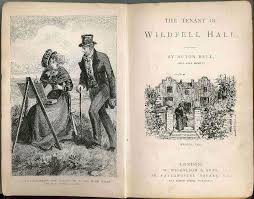
The Tenant of Wildfell Hall, by Anne Bronte, 1848

towh

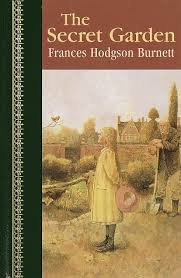
It is quite rare for me to open a classic Victorian novel and have almost no idea what it is going to be about. But that was the case here – I have somehow avoided television and radio adaptations, reviews, blogposts etc – and the kindle edition even removes the clues provided by the blurb and illustrations of the sort shown here. So what is ‘The Tenant’ as I shall now refer to it, about?

It is a traditional three part novel, with a narrative structure that may seem clumsy to a reader used to omniscient narration. Gilbert Markham, a gentleman farmer, writes to a friend about the arrival of a new tenant for the nearby and near derelict Wildfell Hall.. The novel’s opening subverts that used in ‘Pride and Prejudice’, in that instead of a male tenant arriving in a community and being the cause of local gossip and interest, here a mysterious widow, Mrs Helen Graham, is the newcomer. Mrs Graham fascinates and attracts Markham, even though she is the focus for local scandal, the detail of which is never spelt out explicitly but relates to an implied relationship with her landlord, Mr Lawrence.

The central section of the novel is recounted in Helen’s diaries, given to Gilbert to dispel his suspicions about her ‘affair’ with Lawrence, and presumably carefully transcribed by him into his letters. Helen is a much more moralistic character than Gilbert. She tells the history of her relationship with and marriage to Arthur Huntingdon. Huntingdon is a rake, and does little to disguise his flaws from Helen, who foolishly thinks she will be able to reform him. He boasts openly of his dissolute former life with its seductions and affairs:

His favourite amusement is to sit or loll beside me on the sofa and tell me stories of his former amours, always turning upon the ruin of some confiding girl or the cozening of some unsuspecting husband”. (Chapter 24)

The birth of their son, also called Arthur, exacerbates the problems with their relationship. Helen can stand Huntingdon’s drunkenness and openly conducted affairs, but when he encourages Arthur junior to drink and swear she begins to plan her escape.

The final section of the novel starts after Gilbert’s reading of the diary. By now his ardour for Helen is at full pitch, and the news that she is still married does not deter him. Her moralistic sermons have the desired affect however, and he promises to leave her alone, for six months at least. He complies but is shocked to find out, from her brother, that she has returned to her husband who has fallen seriously ill. Huntingdon dies a squalid if convenient death, leaving the path open for a reconciliation between the now rich widow and the farmer. Despite some minor confusions and misunderstandings, the lovers marry, retire to the country and live happily ever after. It is only at the novel’s conclusion that we learn that the letters have been written to Gilbert’s brother-in-law, a Mr Halford, in the form of a memoir.

In many way ‘The Tenant’ is a conventional romance, with a happy ever after marriage and children at the end of a complex courtship, where the characters slowly discover their feelings for one another. The long separation in the middle of the novel, followed by the reconciliation at the end, is reminiscent of the structure of ‘Jane Eyre’, where Jane exiles herself to avoid temptation. Helen is an extraordinarily strong woman, determined to keep her marriage vows, when she can, care for and protect her son, and keep true to her faith. True love is her reward for these sacrifices. Critics have long identified her defiance of her husband – albeit after years of psychological torment and abuse, including his conduct of an affair openly before her – as the actions of a proto-feminist. She’s certainly a strong determined character, but I think it is important to remember that she returns to her husband as soon as he needs her, putting duty to him above her personal interests, and remains faithful to him despite everything.

I had hoped that the wonderfully named Wildfell Hall would play a central role in the novel, and the portrait of it given by Markham in the novel’s opening chapter promises much:

Near the top of this hill, about two miles from Linden-Car, stood Wildfell Hall, a superannuated mansion of the Elizabethan era, built of dark grey stone, venerable and picturesque to look at, but doubtless cold and gloomy enough to inhabit, with its thick stone mullions and little latticed panes, its time-eaten air holes and its too lonely, too unsheltered situation – only shielded from the war of wind and weather by a group of Scotch firs, themselves half-blighted with storms, and looking as stern and gloomy as the Hall itself”.

The narrator then goes on to tell the reader how the garden has run to seed, and all the topiary bush animals have “spouted into such fantastic shapes as resembled nothing in heaven or earth but presented…a goblinish appearance that harmonised well with the ghostly legions and dark traditions…of the haunted hall”.

Who can read that portrait and not expected a traditional gothic novel to follow, with things that go bump in the night and half a dozen or more mad-women locked in the attic? If so they will have been disappointed, because Wildfell Hall is a minor character in the story, a haven for the escaping Helen rather than the venue for any Scooby-Doo style antics. Instead we have a disturbing story of unhappy marriages and domestic violence which must surely have been all the more shocking and transgressive when first published – rich people really didn’t do such things within the confines of marriage, or if they did we certainly didn’t read about it. We are not surprised when Heathcliff is violent towards animals, but when Huntingdon hits out at his favourite cocker spaniel – “He struck it off with a smart blow; and the poor dog squeaked, and ran cowering back to [Helen]. When he woke up half an hour after, he called it to him again; but Dash only looked sheepish and wagged the tip of his tail. He called again, more sharply, but Dash only clung closer to [Helen], and licked [her] hand as if imploring protection. Enraged at this, his master snatched up a heavy book and hurled it at its head” – the violence is a thinly veiled metaphor for domestic violence. This in many ways is more troubling for being hinted at rather than directly portrayed, for example in this sinister description of the casual violence of one of Huntingdon’s debauched friends towards his own wife: (chapter 32)

“I love thee Milicent, but I don’t adore thee’. In proof of his affection he clutched a handful of her light brown ringlets, and appear to twist them unmercifully. “Do you really Ralph?” murmured she, with a faint smile beaming through her tears, just putting up her hand to his, in token that he pulled rather too hard.”

Is ‘The Tenant of Wildfell Hall’ a good novel? Well of course it is a classic, but at the same time it is usually ranked below ‘Wuthering Heights’ and ‘Jane Eyre’. It shares many features with these novels, the slightly awkward narrative structures, the dark secrets, and troubled love affairs. But a distinct aroma of sanctimoniousness pervades ‘The Tenant’. Helen is rarely very loveable or off her guard, and goodness doesn’t she love to preach!

(Chapter 45) – We are children now; we feel as children, and we understand as children; and when we are told that men and women do not play with toys, and that our companions will one day weary of the trivial sports and occupations that interest them and us so deeply now, we cannot help being saddened at the thought of such an alteration, because we cannot conceive that as we grow up our own minds will become so enlarged and elevated that we ourselves shall then regard as trifling those objects and pursuits we now so fondly cherish, and that, though our companions will no longer join us in those childish pastimes, they will drink with us at other fountains of delight, and mingle their souls with our in higher aims and nobler occupations beyond our present comprehension, but not less deeply relished or less truly good for that, while yet both we and they remain essentially the same individuals as before”.

The supporting cast of minor characters is also weaker in ‘The Tenant’ – they tend to blur into one another and are less clearly differentiated. None of which really detracts from the overall power of the novel.

Two other brief observations. Firstly, this short scene caught my attention. It happens when Helen is running her fingers through Huntingdon’s hair:

“The head looked right enough, but when he placed my hand on the top of it, it sunk in a bed of curls, rather alarmingly low, especially in the middle”.

I can’t find that any critics have picked up on this description (which is not referred to again), but I find it hard to read any other way than that the author is suggesting Huntingdon has an ‘alarming’ depression in his cranium. What the Victorian pseudo-science of phrenology, referred to more extensively by Charlotte in ‘Jane Eyre’ would have made of that depression I can only imagine, but it surely is a heavy hint of the moral depravity to be exposed as the novel progresses, or possibly a propensity to addictive behaviours.

Finally, I am pretty sure I spotted a mistake in the novel’s portrait of the English countryside. In chapter 29 we are told “On a bright…day, in the beginning of July, I had taken little Arthur into the wood that skirts the park … and having gathered a handful of bluebells and wild-roses…”. Anne knew full well that bluebells are a spring flower, having written a poem in their praise, so is this just a simple slip, or something more interesting?
Standard
Book review, Bronte, children's literature, Edwardian literature, Frances Hodgson Burnett, Jane Eyre, The Secret Garden

The Secret Garden, by Frances Hodgson Burnett, 1911


burnettFrancis Hodgson Burnett’s ‘The Secret Garden’ is predominantly a children’s novel, but like all good children’s literature its appeal spreads far beyond this audience. I increasingly found myself admiring the author’s craftsmanship, even if I was able to resist some of the more sentimental aspects of the novel.
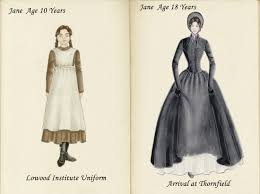
Set in a soon to disappear Edwardian Yorkshire, where England rules half the globe, servants know their place and doff their caps, the rural poor are apple-cheeked and breed with profusion, ‘The Secret Garden’ is, despite all this historical baggage, delightful. Ten year old Mary Lennox suffers the inevitable fate of all children in literature and is orphaned in the opening pages: “The cholera had broken out in its most fatal form and people were dying like flies.” Parents out of the way, she is whisked away from colonial India to live in a large country house where she wanders the empty corridors, seeing her remote and gruff uncle Archibald Craven just once before he leaves for an extended European tour. Continue reading

Standard
20th century Literature, Book review, Bronte, Empire, Jane Eyre, Jean Rhys, Slavery, Wide Sargasso Sea

Wide Sargasso Sea, by Jean Rhys, 1966

“There is always another side, always.”

As you may know, Jean Rhys’s ‘Wide Sargasso Sea’ tells the story from ‘Jane Eyre’ of Mr Rochester’s first wife, the ‘mad woman in the attic’, Bertha Mason.wide-sargasso-sea

The idea of giving a voice to a relatively minor character from a classic work of literature may not have been invented by Jean Rhys, but I can’t think of an earlier example.*

The thematic heart of this short novel is an attempt to understand Bertha’s descent into madness. Is Rochester’s description of her condition correct, or is she the victim of a loveless marriage and the brutal property and marriage laws of the time, which allowed a husband to treat an inconvenient wife as mere property? rhys reminds us that in this world wives have fewer rights than the recently emancipated slaves.

‘Wide Sargasso Sea’ opens with Bertha, known at this point as Antoinette, as a child, living on an estate in Jamaica. Slavery has recently been abolished, and the comfortable world order in which white plantation owners ruled unchallenged is under threat. Antoinette is mixed race, although her precise racial lineage is unclear – all we are told is that her mother is a ‘Creole’. In ‘Jane Eyre’ an association is clearly drawn between this racial background and the madness that runs in the family. Rochester in particular associates “madness” with Bertha’s racially “impure” lineage. He claims

Bertha Mason is mad [because] she came of a mad family;–idiots and maniacs through three generations! Her mother, the Creole, was both a mad woman and a drunkard!” (Jane Eyre, ch 26).

Rochester on the other hand is never vulnerable to this affliction, because he comes from undiluted racial stock:

“Her family wished to secure me because I was of good race” (JE ch 27).

‘Sargasso Sea’ never directly challenges this racist association, although it does contextualise it. Antoinette’s madness is given a much clearer explanation. It seems to derive from a combination of factors. A series of traumatic events in her childhood, not least the burning down of her family home, sets her illness in motion. (This scene of course echoes the end of Thornfield Hall.) The idea that her mother’s madness has played a part in Bertha’s condition is preserved in Rhys’s version of events – Rochester’s explanation that Bertha/Antoinette is mad because she came from a mad family is at least not wholly invented. Finally, Rochester’s cold and harsh treatment of Bertha plays a part in confirming and exacerbating her illness.

In renaming Antoinette, calling her Bertha for no apparent reason except that he seems to like the name, Rochester is treating her like a slave. The plantation’s slaves lost their African names and had easy to remember Christian names imposed upon them. This enslavement is perpetuated throughout the marriage – Bertha loses all her property rights and is eventually imprisoned and kept confined in a foreign land far from home.

In the second section of the novel, Rochester’s narrative voice intervenes. We have already heard his self-justifying version of events in the original novel, but by and large this account shows him to have been mainly honest in his portrayal of his engagement and marriage. Rhys may not have wanted to diverge too much from the original version, but at times I found this voice to be inauthentic. Rochester is admittedly an alien in this land, bewildered by the strange environment, language, and culture. But when he described the honeymoon period of his marriage, it sounds more like locker room boasting than the regretful reminiscences of a man who has lost his wife to illness:

“I watched her die many times. In my way, not in hers. In sunlight, in shadow, by moonlight, by candlelight. In the long afternoons when the house was empty. Only the sun was there to keep us company. We shut him out. And why not? Very soon she was as eager for what’s called loving as I was – more lost and drowned afterwards.”

I know I have only scratched the surface of this complex and compelling novel, and it probably merits a second, closer read. But I am glad that in giving a voice to the ‘mad woman in the attic’, Rhys gave the first Mrs Rochester a dignity and a depth of character that she is deprived of in ‘Jane Eyre’. In the original novel she is little more than a plot device, an inconvenience whose death is ultimately a cause for celebration. I can’t help thinking of other victims in literature who are denied a voice by their authors, and cry out for the right to be heard.

*Tom Stoppard’s ‘Rosencrantz and Guildernstern are Dead’, first produced in the same year that ‘Wide Sargasso Sea’ was published, takes a similar idea as its inspiration, but then goes in a very different, less naturalistic, direction.

Standard
19th Century literature, Book review, Bronte

Supplementary: Clothing in Charlotte Bronte’s ‘Jane Eyre’

It is probably a statement of the obvious that the clothes people wear can tell us a lot about them.  In Jane Eyre Charlotte Bronte uses descriptions of her characters’ clothing to give the reader ways of interpreting their roles and their relationships. One example of this is in the description of Jane’s clothing the first time she meets Mr Rochester (Chapter 12).

Continue reading
Standard
100 Best Novels Guardian list, 19th Century literature, 20 Books of summer, Book review, Bronte

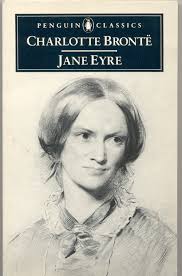
Jane Eyre, by Charlotte Bronte, 1847

jane Eyre

I think a case can be made for ‘Jane Eyre’ as the definitive nineteenth century novel. It has it all:

Romance – the scene in chapter 22 when Rochester teasingly proposes to Jane, and she slowly comes to realise he is serious, is as touching and effective as anything in Austen, and the final reconciliation in Ferndean House between Jane and the blinded Rochester would bring a tear to the eye of the hardest heart (but perhaps not St John Rivers);

Drama – spooky scenes in the middle of the night, the “I object” scene at the wedding, parties, house fires, tragic deaths and maiming, ‘Jane Eyre’ has pretty much got it all – although the only issue I have with the novel the extent to which it occasionally teeters into melodrama….

The supernatural – Jasper Fforde in the brilliant ‘The Eyre Affair’ has great fun with the ‘cosmic telephone’ that Rochester uses to communicate with Jane, but the novel just about gets away with this piece of nonsense without seeming too absurd;

Gothic elements – the spooky house, the mad woman in the attic, possession and long lost relatives appearing at inopportune moments;

Social commentary – education, the slave trade (tangentially), the condition of the poor; the emancipation of women;

Pathetic fallacy – after Rochester’s proposal the storm blows fiercely, the trees “writhed and groaned”, and thunder and lightening provide an ominous backdrop to the engagement;

A heroine to admire, with courage, principles, and determination, and a hero with a square jaw, deep-running passions, and a vulnerable side.

The novel is written in autobiographical form, and follows the eponymous heroine in five distinct phases of her life. An orphan, she is brought up by her abusive aunt, Mrs Reed. At the age of ten she is sent to a horrific boarding school, Lowood Grange, where she is lucky to survive. At eighteen she leaves Lowood to work at Thornfield Hall as a governess for Adele, the ward of the mysterious Mr Rochester. Running away from Thornfield to escape Rochester, who wants to marry her, but unfortunately already has a wife, albeit one who is mad and ineffectually imprisoned in his attic, Jane escapes to another secure refuge, Moor House, where she is taken in by St John Rivers and his sisters. Finally, Jane is reunited with the widowed but maimed Rochester at his back-up house, Ferndean, and “reader, I married him”.

At the heart of the novel is the relationship between the not-yet twenty governess Jane, and the almost twice her age Mr Rochester. They first meet in Chapter 12, when he falls from his horse. Despite struggling to help himself, he eventually has to rely on Jane for support: “I must beg of you to come here.” I came. “Excuse me,” he continued: “necessity compels me to make you useful.” He laid a heavy hand on my shoulder, and leaning on me with some stress, limped to his horse. Having once caught the bridle, he mastered it directly and sprang to his saddle; grimacing grimly as he made the effort, for it wrenched his sprain.” This incident, and in particular Rochester’s temporary disability, and his dependence on Jane, is not important for the plot, but it foreshadows the events later in the novel, first when Jane rescues him from his burning bed, and later when he is seriously injured, and depends on Jane more comprehensively.

Jane enjoys being helpful in this way, although it helps her calmness at their first meeting that Rochester is not particularly good looking:

“I traced the general points of middle height and considerable breadth of chest. He had a dark face, with stern features and a heavy brow; his eyes and gathered eyebrows looked ireful and thwarted just now; he was past youth, but had not reached middle-age; perhaps he might be thirty-five. I felt no fear of him, and but little shyness. Had he been a handsome, heroic-looking young gentleman, I should not have dared to stand thus questioning him against his will, and offering my services unasked”.

Their first conversation at Thornfield Hall is a little more relaxed, and although it largely takes the form of a cross-examination, it eventually warms to something closer to flirtation:

‘“Adele showed me some sketches this morning, which she said were yours. I don’t know whether they were entirely of your doing; probably a master aided you?” “No, indeed!” I interjected.

“Ah! that pricks pride. Well, fetch me your portfolio, if you can vouch for its contents being original; but don’t pass your word unless you are certain: I can recognise patchwork.”

“Then I will say nothing, and you shall judge for yourself, sir.”…..

He deliberately scrutinised each sketch and painting. Three he laid aside; the others, when he had examined them, he swept from him. “Take them off to the other table, Mrs. Fairfax,” said he, and look at them with Adele;–you” (glancing at me) “resume your seat, and answer my questions. I perceive those pictures were done by one hand: was that hand yours?”

“Yes.”. “And when did you find time to do them? They have taken much time, and some thought.”

“I did them in the last two vacations I spent at Lowood, when I had no other occupation.”

“Where did you get your copies?”  “Out of my head.”

“That head I see now on your shoulders?”  “Yes, sir.”

“Has it other furniture of the same kind within?”  “I should think it may have: I should hope–better.”

From this point conversations between Jane and Mr Rochester habitually adopt this teasing tone. Rochester clearly enjoys being stood up to by Jane, in contrast with the simpering women he is apparently used to. He constantly refers to Jane as something otherworldly – elf, fairy, sprite, and asks her for a spell to make him “a handsome man”. This playfulness continues to the end of the novel:

“Am I hideous, Jane?”

“Very, sir: you always were, you know

Jane’s gradual awareness of her feelings for Rochester, and her delight at coming to understand that her love is reciprocated, is done with a wonderful tenderness and lightness of touch.

This wouldn’t be an honest review if I did not mention the few reservations I have about the novel. At times it can be over-written, and some of the foreshadowing – constant references to fire, furnaces, burning etc for example – is heavy-handed. Mr Rochester’s behaviour, in retrospect, is absurd – he freely tells Jane about Adele’s illegitimacy and his affair with her mother, but hides the existence of his wife even when the evidence becomes overwhelming. The excuse offered for this – that knowledge of a madwoman in the house might deter prospective governesses from applying to look after Adele – doesn’t stand much scrutiny, when the resolution, to send her away to school, is readily at hand. The novel carries this all off with style – the romance at the heart of the novel is really all that matters, and that is done superbly.

‘Jane Eyre’ is much-loved, and understandably so. It is in the select group of novels one closes at the end with a satisfying sigh and is put somewhere safe in confident expectation of taking up again sometime soon.

Standard
100 Best Novels Guardian list, 19th Century literature, Book review, Bronte

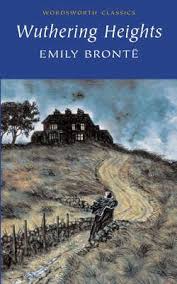
Wuthering Heights, by Emily Bronte, 1847

WH2

Wuthering Heights’ has over 22,000 reviews on Goodreads alone; one has to wonder what else I could possibly add to that overwhelming weight of opinion and consideration?

The dark and gothic tale is constructed with a complex variety of framing structures – at one point the narrative is told by Mr Lockwood, the tenant of Thrushcross Grange, recounting the story told him by Nelly Dean, the housekeeper of the Grange and the Heights, who in turn recounts details of a message from Isabella Heathcliff (nee Linton). People drop dead with alarming frequency, and nurture dark passions to the grave and beyond. The novel opens in 1801 with Lockwood’s neighbourly visit to the Heights, and the story is then told in a series of flashbacks/reprises. This means we have a clear picture of how things are going to end – until the final closing chapters, at least.

Continue reading
Standard
19th Century literature, Book review, Bronte, Bronte Sisters, Charlotte Bronte, http://schemas.google.com/blogger/2008/kind#post, The Professor

The Professor by Charlotte Bronte (2)

Written in 1846, although not published during her lifetime, The Professor is a largely autobiographical account of Charlotte’s two years teaching in Belgium. Her attempt to narrate the story through a male character is at best a mixed success. There is, as with Villette, a degree of wish fulfillment, as the romance is successfully concluded with marriage, a child, and a comfortable country cottage. Reader, I married him. If this was all The Professor had to offer then its obscurity would be understandable, however well drawn the romance is. However, there are other elements that draw the attention.

One of the minor characters is Mr Hunsden (if he is given a first name, I missed it), an acquaintance and latterly friend of Mr Crimsworth, the eponymous professor. Despite being relatively prosperous, Hunsden is undoubtedly a radical. He describes England in terms which would surely have been shocking to Victorian England in its Imperious pomp

“A little, corrupt, venal, lord-and-king-cursed nation, full of mucky pride… and helpless pauperism; rotten with abuses, worm-eaten with prejudices. ….Come to England and see ….examine the footprints of our august aristocracy; see how they walk in blood, crushing hearts as they go. Just put your head in at English cottage doors; get a glimpse of famine crouched torpid in black hearthstones, of Disease lying bare on beds without coverlets, of Infamy wantoning viciously with Ignorance, though indeed Luxury is her favourite paramour, and princely halls are dearer to her than thatched hovels”. 175
This is purple but very effective prose which Dickens and other observers of Victorian England’s darker side would hesitate to use. The speech is dismissed by Frances Henri, the Swiss teacher and fiance of the Professor to whom it is addressed, and the theme is largely dropped.
In contrast the novel also has a vigorous anti-Catholic element. Frances is the spokesperson for this point of view:
“I know nothing of the arcana of the Roman Catholic religion, and I am not a bigot in matters of theology, but I suspect the root of all this precocious impurity, so obvious, so general in Popish countries, is to be found in the discipline, if not the docutrines, of the Church of Rome. …These girls belonged to what are called the respectable ranks of society. They had all been carefully brought up, yet was the mass of the mentally depraved.” (page 71)
“ I long to live once more among Protestants. They are more honest than Catholics. A Romish school is a building with porous walls, a hollow floor, a false ceiling. Every room in this house Monsieur has eye holes and ear holes, and what the house is the inhabitants are – very treacherous.” (page 106/7)
It is easy to forget in liberal, 21st century Britain how virulent anti-Catholicism was in this country for centuries – only 60 years earlier London had been torn apart by the Gordon riots (http://en.wikipedia.org/wiki/Gordon_Riots) – Frances’s anti-Catholicism can presumably be read as a simple reflection of Charlotte’s own feelings.
Finally, there is room in the novel for Charlotte’s defence of her occupation as a novelist. She clearly felt the prejudice against women writers deeply, as she puts these words in the mouths of another female character:
“It appears to me that ambition, literary ambition especially, is not a feeling to be cherished in the mind of a woman. Would not Mlle Henri be much safer and happier if taught to believe that in the quiet discharge of scial duties consists her real vocation, than if stimulated to aspire after applause and publicity? She may never marry, scanty as are her resources, obscure as are her connections, uncertain as is her health (for I think her consumptive).” (page 111) How many times must she have heard these sentiments, or suspected them. The final parenthesis – “for I think her consumptive” is sadly chilling.
Standard
Book review, Bronte, Bronte Sisters, Charlotte Bronte, Descriptions of sex in literature, http://schemas.google.com/blogger/2008/kind#post, The Professor

Supplementary: The Professor by Charlotte Bronte – inadvertent smuttiness?

Here’s a fun game for anyone finding 19th century romantic literature just a little too slow – “spot the subconscious sexual metaphor”.

These novels invariably put young men and women in the prime of their lives in close proximity, and despite every attempt to restrain their sexual impulses, it just can’t help bursting through. Usually nature is the chosen vessel in which to convey their instincts, with tree buds bursting into blossom, waterfalls spouting, and so on, but I don’t think one needs to be too smutty minded to see this effect happening elsewhere. “The Professor” provides some excellent examples. The scenario is this: William Crimsworth is teaching English to Belgian schoolgirls in Brussels. There he meets a young woman Frances Henri – we are told she is 19 – , and eventually after some complications falls for her charms. He visits her archetypal ‘umble abode, and she lights a fire to warm the place. He is worried she is using up her limited supplies of firewood and coal, and wishes he could be in a position to help her:

“I am glad it is not yet winter, thought I, but in two months more come the winds and rains of November. Would to God that before then I could earn the right and the power to shovel coals into that grate ad libitum” (page 132). At his pleasure indeed.

Later he describes the moment he declares his affection for her, and instead of this being a stumbling, formal declaration in the manner of Mr Darcy and his peers, he grabs her and sits her on his knee:

 
“The frost of the master’s manner might melt; I felt the thaw coming fast, whether I would or not. ….There are impulses we can control, but there are others which control us, because they attain us with a tiger leap, and are our masters ere we have seen them”. (page 165).

The use of the term “our masters” is particularly significant here as Crimsworth is always described as Frances’s master, even after they are married. This is an arguably less-Freudian use of language – instead of the sexual metaphors jumping unbidden into the author’s head, this second example seems more deliberate. For a Victorian female novelist to write this frankly about sexual desire – a tiger leap – and to acknowledge the sexual frisson between husband and wife is unusual, if not unique. The initial submissiveness of their relationship matures into a flirtation which is preserved by Frances’s enjoyment of chastistement. William says at one point “I fear the choice of chastisement must have been injudicious, for instead of correcting the fault, it seemed to encourage its renewal”. (188)


Standard
19th Century literature, Agnes Grey, Anne Bronte, Book review, Bronte, Bronte Sisters, http://schemas.google.com/blogger/2008/kind#post, Victorian literature

Book review: Agnes Grey by Anne Bronte

There’s a Darwinism in play which determines whether novels continue to be read after the author’s death and the passage of a few decades. Authors that were once widely read and popular turn out over time to be of interest to only a very specific audience, and do not translate well into later periods. As the years pass the number of surviving and still read authors dwindles further, until even once great, Nobel-winning titles are only downloaded for £0.00 on the Kindle, to remain on aspirational reading lists but never quite got round to. But some novels buck the trend, going into hibernation for a century or more only to be rediscovered with a fresh relevance by a new generation. Agnes Grey undoubtedly is not one such novel. It is dull beyond comprehension, and only appears here a) because of the previously mentioned Kindle free availability, b) it is an AS text, c) it was written by a Bronte (Anne, her first novel).

There’s a Darwinism in play which determines whether novels continue to be read after the author’s death and the passage of a few decades. Authors that were once widely read and popular turn out over time to be of interest to only a very specific audience, and do not translate well into later periods. As the years pass the number of surviving and still read authors dwindles further, until even once great, Nobel-winning titles are only downloaded for £0.00 on the Kindle, to remain on aspirational reading lists but never quite got round to. But some novels buck the trend, going into hibernation for a century or more only to be rediscovered with a fresh relevance by a new generation. Agnes Grey undoubtedly is not one such novel. It is dull beyond comprehension, and only appears here a) because of the previously mentioned Kindle free availability, b) it is an AS text, c) it was written by a Bronte (Anne, her first novel).

A measure of the novel’s popularity is that it has never been adapted for television and screen. For good reasons – very little happens. We expect, from Wuthering Heights and Jane Eyre, for Bronte leading female characters to have some spirit, if not spunk, but Agnes is limp, passive, and dull. She gets her man in the end, but doesn’t really deserve him, AB simply rewarding patience and virtue with a predictable long foreseen happy ending which is a complete anti-climax. With most Bronte novels it’s not really about the destination, more about the journey, but with Agnes there is little if any self discovery or personal growth. Some novels deserve to be forgotten, not disinterred to torture A level students, when there is so much great literature out there waiting to be read and discovered. Sorry Anne.
Now I should end there, but I feel guilty. This novel must have some redeeming features, surely, and it is my self appointed task to seek them out. There’s a natural instinct to be protective towards Anne, a romantic figure over-shadowed by her sisters, dying tragically at a young age, a compelling part of the Bronte mythology. ( Forgive me, but I can’t resist mentioning here the academic discoveries of that great critic Mr Meyerburg who postulated, indeed demonstrated, that Bramwell was in fact the author of all the “Bronte sisters’ novels”, and that his alcoholism was all a heroic act to disguise the dissolute nature of his siblings.)

Agnes Grey, simply put, is juvenilia. It is an author learning her craft, using autobiography as material. No-one could possibly criticise Anne for writing this, following a path taken by many authors, but that doesn’t make the novel any more readable.

Standard