19th Century literature, Book review, George Orwell, H G Wells, science fiction', The Time Machine

The Time Machine by H G Wells,1895

Continuing with my Wells-athon, all of which have been quite short novels, I now turn to the hugely influential ‘The Time Machine’.

Time travel was not a new concept, but Wells’s novel was one of the earliest on this theme, and established some concepts and principles that remain with us. having said that, I found the behaviour of Wells’ s protagonist in many ways puzzling. If you had invented a time machine, what would you do? Where would you go? Would you go back to the nativity, to the Globe in 1605, to assassinate Hitler? Or would you travel 800,000 years into the future, as Wells’ time traveller does, without packing a sandwich, let alone a camera or a weapon? I know that is a ridiculously literal response to a science fiction story, but good science fiction is above all plausible. If I could forward travel in time I would like to know how society reshapes itself in 100 years, what new technology is developed, whether extra-terrestrial life is encountered, so many other things – but 800,000 years?? Given that the existing span of human civilization can be measured in single-figure thousands of years, it seems wildly optimistic to imagine that humans will still be around this far into the future.

I appreciate I am still being too literal – time travel is simply a device to allow Wells to speculate on how human society will evolve, and we need not get too absorbed with the precise date – this is simply the vaguely distant future. In this future humans have evolved into two distinct races, the Eloi and the Morlocks. The Morlocks live underground, and predate upon the simple-minded Eloi. Society is decaying terminally. Into this world the time traveller is pitched, loses his machine, and is forced to confront his slowly dawning realisation that this is no Utopia he had hoped man would have built for himself.

Wells’s conception of time travel is quaint. It doesn’t involve Government-led endeavours and vast resources – an independent inventor working in his shed is able to master the feat after a few years of study. He sets off in an extraordinarily blase fashion, making no preparation whatsover – this is a quick jaunt into the future, not an expedition risking life and limb, back in time for a quick bath and dinner at eight. Victorians were of course great explorers, and often quite eccentric into the bargain, but Wells’ s time traveller takes this to the extreme.

One of the most distinctive features of Wells’ writing is his focus on the personal, the everyday, even when his themes are global or astronomical. As I mentioned in my review of ‘War of the Worlds’, the Martian conflict is constrained within the English Home Counties, and described from the limited perspective of two individual observers. The scenes from ‘The Invisible Man’ are all rooted in suburban and rural England. Kipps and Mr Polly follow the same pattern – his protagonists are everymen. It is no coincidence that the central characters in ‘The War of the Worlds’ and ‘The Time Machine’ are both unnamed. This allows them to act as representatives of their class and time.

However, politically, ‘The Time Machine’ is a difficult book. Wells is commonly considered as a socialist, but his portrait of a future in which the working class has become a cannibalistic underground monster, preying on the weak and enfeebled middle classes, is profoundly pessimistic. It not only expresses “Wells’s horror at the realities of 19th-century class relations, but also his fears about what utopian socialism and communism were offering in their place” (Matthew Taunton). It is hard to travel back from the dystopia of 800,000 to 1895 and find a way to avoid this co-evolution and class war.

It’s been interesting to revisit Wells, but I remain ambivalent about his status as a writer. Influential, without question. I think his social comedies have aged less well than his science fiction. But if I ever am at a loss to put into words my thoughts and feelings about a novel or a writer, there is always one reliable solution, and that is to turn to George Orwell. Try it – he almost always has something sensible and interesting to say about any author of his time or before. Reliably, he puts his finger on this sense of unease. In ‘Wells, Hitler and the World State’, published in Horizon in 1941, he wrote:

Thinking people who were born about the beginning of this century are in some sense Wells’s own creation… I doubt whether anyone who was writing books between 1900 and 1920, at any rate in the English language, influenced the young so much. The minds of all of us, and therefore the physical world, would be perceptibly different if Wells had never existed.”

But he goes on to say

the singleness of mind, the one-sided imagination that made him seem like an inspired prophet in the Edwardian age, make him a shallow, inadequate thinker now…. Back in the nineteen-hundreds it was a wonderful experience for a boy to discover H. G. Wells….But because he belonged to the nineteenth century and to a non-military nation and class, he could not grasp the tremendous strength of the old world… He was, and still is, quite incapable of understanding that nationalism, religious bigotry and feudal loyalty are far more powerful forces than what he himself would describe as sanity. “

Orwell anatomises with extraordinary precision why Wells’s utilitarian version of socialism had not come to pass, even though the scientific advances he anticipated had been realised and indeed exceeded:

Creatures out of the Dark Ages have come marching into the present, and if they are ghosts they are at any rate ghosts which need a strong magic to slay them…Wells is too sane to understand the modern world. The succession of lower-middle-class novels which are his greatest achievement stopped short at the other war and never really began again, and since 1920 he has squandered his talents in slaying paper dragons. But how much it is, after all, to have any talents to squander.”

Creatures out of the Dark Ages have come marching into the present“. Wow.


Standard
19th Century literature, Book review, H G Wells, science fiction'

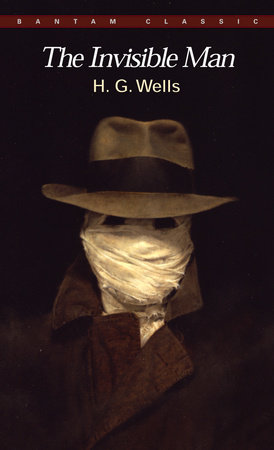
The Invisible Man, by H G Wells, 1897

The power to transform the human body using advances in scientific understanding. 9780553213539This was the theme that captured the imagination of many nineteenth century writers, including, among others, Mary Shelley in ‘Frankenstein‘, Robert Louis Stevenson in ‘Dr Jekyll and Mr Hyde‘, and H.G. Wells in ‘The Invisible Man‘. In this late Victorian novella, Wells explores the idea of what would happen if someone, somehow, managed to make themselves invisible. Continue reading
Standard

Conan Doyle’s ‘The Adventures of Sherlock Holmes’ contains 12 short stories, all originally published in the Strand magazine between June 1891 and July 1892. Some are better known than others, but all follow a fairly rigid format – a curious case is brought to Holmes’s attention by a flustered individual, often incognito, Watson’s support is engaged, and the case is then swiftly resolved. Disguises are often deployed, trusty service revolvers are pocketed, and Lestrade is ritually humiliated. In every story Holmes performs the deductions which are his hallmark, usually at the opening of the story, although rarely if ever are these deductions anything to do with the case in point.

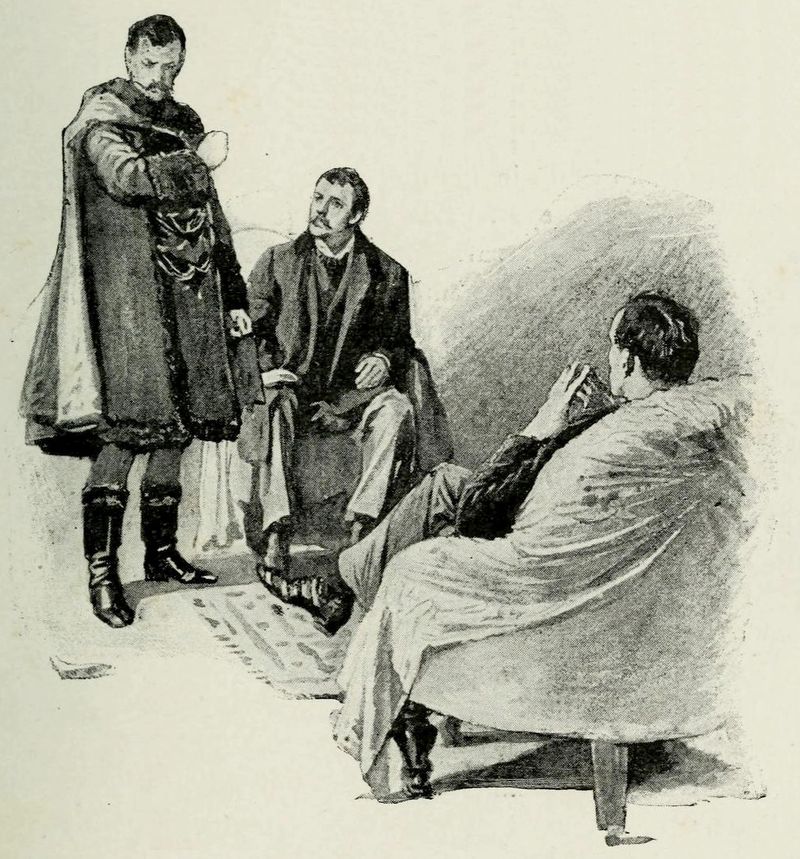
A Scandal in Bohemia is the story in which Irene Adler, ‘the woman’, makes her one and only appearance in Conan Doyle’s stories. It is a simple case of blackmail which is resolved without Holmes’s assistance, because Irene marries and decides not to pursue her victim. Holmes counts it as one of his very few failures, which suggests his definition of success is somewhat flexible, but there is no suggestion of any attraction between the two, more a mutual respect.800px-A_Scandal_in_Bohemia-04

The Red-Headed League is one of Holmes’s more ridiculous cases. A pawn broker is duped into leaving his store all day for several weeks to allow a tunnel to be dug from the premises to a nearby bank. The bank robbers could surely have found easier ways to do this than the invention of the League, which would have drawn a lot of attention to themselves, left clues all over the place, cost a lot of time and effort to establish, and could have fallen apart at any time.

A Case of Identity is one in which someone assumes a flimsy disguise, which Holmes sees through but fails to tell his client he has resolved the case. See ‘The Man with the Twisted Lip’

The Boscombe Valley Mystery. In this story Holmes bizarrely allows a murderer to go free, and a guilty man to spend months in prison, simply because the murderer is dying.

The Five Orange Pips sees Holmes allow his client to be brutally murdered and the murderers to escape the country, if not justice. Another great success!

The Man with the Twisted Lip. Someone assumes a flimsy disguise which Holmes sees through, again.

The Adventure of the Blue Carbuncle. In this story Holmes starts with the missing gem falling into his lap, and then working back to find out who stole it – an easier approach than the other way round I would have thought.

The Adventure of the Speckled Band. Conan Doyle thought this his finest Holmes story, but it is riddled with preposterous plot points.

The Adventure of the Engineer’s Thumb. A good headline, but a story in which Holmes detects absolutely nothing. Perhaps explains why this has not been an adaptor’s favourite.

The Adventure of the Noble Bachelor. A missing person story depending for its resolution of a previous relationship in America – the States is the setting for several of Holmes’s client’s backstories.

The Adventure of the Beryl Coronet. I think the real mystery – why a member of the royal family comes to pawn an incredibly valuable coronet for a fraction of its value – is ignored, instead focusing on whodunit in which footprints in the snow provide all the answers.

The Adventure of the Copper Beeches. A governess is recruited at highly inflated wages to impersonate a kidnapped heiress. Another case where the villains employ ridiculously complex means to pursue their villainy, when many other simpler options are available.

To Victorians, Holmes’s deductions and flashes of brilliance must have been dazzling, and to this day there are readers who hold Holmes in the highest possible regard. He is not the character most often portrayed on film for nothing. In recent years ‘Elementary’ and ‘Sherlock’ have given new life and new depths to the character. For me Holmes probably works best in this short story format where the weaknesses in his deductive method and approach aren’t too visible.

19th Century literature, Book review, Conan Doyle, Detective, Detective fiction, Holmes, Holmes and Watson, Sherlock

The Adventures of Sherlock Holmes, by Arthur Conan Doyle 1892

Gallery
19th Century literature, Book review, Bronte, Bronte Sisters, The Tenant of Wildfell Hall

The Tenant of Wildfell Hall, by Anne Bronte, 1848

towh

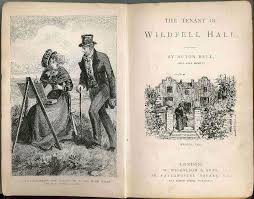
It is quite rare for me to open a classic Victorian novel and have almost no idea what it is going to be about. But that was the case here – I have somehow avoided television and radio adaptations, reviews, blogposts etc – and the kindle edition even removes the clues provided by the blurb and illustrations of the sort shown here. So what is ‘The Tenant’ as I shall now refer to it, about?

It is a traditional three part novel, with a narrative structure that may seem clumsy to a reader used to omniscient narration. Gilbert Markham, a gentleman farmer, writes to a friend about the arrival of a new tenant for the nearby and near derelict Wildfell Hall.. The novel’s opening subverts that used in ‘Pride and Prejudice’, in that instead of a male tenant arriving in a community and being the cause of local gossip and interest, here a mysterious widow, Mrs Helen Graham, is the newcomer. Mrs Graham fascinates and attracts Markham, even though she is the focus for local scandal, the detail of which is never spelt out explicitly but relates to an implied relationship with her landlord, Mr Lawrence.

The central section of the novel is recounted in Helen’s diaries, given to Gilbert to dispel his suspicions about her ‘affair’ with Lawrence, and presumably carefully transcribed by him into his letters. Helen is a much more moralistic character than Gilbert. She tells the history of her relationship with and marriage to Arthur Huntingdon. Huntingdon is a rake, and does little to disguise his flaws from Helen, who foolishly thinks she will be able to reform him. He boasts openly of his dissolute former life with its seductions and affairs:

His favourite amusement is to sit or loll beside me on the sofa and tell me stories of his former amours, always turning upon the ruin of some confiding girl or the cozening of some unsuspecting husband”. (Chapter 24)

The birth of their son, also called Arthur, exacerbates the problems with their relationship. Helen can stand Huntingdon’s drunkenness and openly conducted affairs, but when he encourages Arthur junior to drink and swear she begins to plan her escape.

The final section of the novel starts after Gilbert’s reading of the diary. By now his ardour for Helen is at full pitch, and the news that she is still married does not deter him. Her moralistic sermons have the desired affect however, and he promises to leave her alone, for six months at least. He complies but is shocked to find out, from her brother, that she has returned to her husband who has fallen seriously ill. Huntingdon dies a squalid if convenient death, leaving the path open for a reconciliation between the now rich widow and the farmer. Despite some minor confusions and misunderstandings, the lovers marry, retire to the country and live happily ever after. It is only at the novel’s conclusion that we learn that the letters have been written to Gilbert’s brother-in-law, a Mr Halford, in the form of a memoir.

In many way ‘The Tenant’ is a conventional romance, with a happy ever after marriage and children at the end of a complex courtship, where the characters slowly discover their feelings for one another. The long separation in the middle of the novel, followed by the reconciliation at the end, is reminiscent of the structure of ‘Jane Eyre’, where Jane exiles herself to avoid temptation. Helen is an extraordinarily strong woman, determined to keep her marriage vows, when she can, care for and protect her son, and keep true to her faith. True love is her reward for these sacrifices. Critics have long identified her defiance of her husband – albeit after years of psychological torment and abuse, including his conduct of an affair openly before her – as the actions of a proto-feminist. She’s certainly a strong determined character, but I think it is important to remember that she returns to her husband as soon as he needs her, putting duty to him above her personal interests, and remains faithful to him despite everything.

I had hoped that the wonderfully named Wildfell Hall would play a central role in the novel, and the portrait of it given by Markham in the novel’s opening chapter promises much:

Near the top of this hill, about two miles from Linden-Car, stood Wildfell Hall, a superannuated mansion of the Elizabethan era, built of dark grey stone, venerable and picturesque to look at, but doubtless cold and gloomy enough to inhabit, with its thick stone mullions and little latticed panes, its time-eaten air holes and its too lonely, too unsheltered situation – only shielded from the war of wind and weather by a group of Scotch firs, themselves half-blighted with storms, and looking as stern and gloomy as the Hall itself”.

The narrator then goes on to tell the reader how the garden has run to seed, and all the topiary bush animals have “spouted into such fantastic shapes as resembled nothing in heaven or earth but presented…a goblinish appearance that harmonised well with the ghostly legions and dark traditions…of the haunted hall”.

Who can read that portrait and not expected a traditional gothic novel to follow, with things that go bump in the night and half a dozen or more mad-women locked in the attic? If so they will have been disappointed, because Wildfell Hall is a minor character in the story, a haven for the escaping Helen rather than the venue for any Scooby-Doo style antics. Instead we have a disturbing story of unhappy marriages and domestic violence which must surely have been all the more shocking and transgressive when first published – rich people really didn’t do such things within the confines of marriage, or if they did we certainly didn’t read about it. We are not surprised when Heathcliff is violent towards animals, but when Huntingdon hits out at his favourite cocker spaniel – “He struck it off with a smart blow; and the poor dog squeaked, and ran cowering back to [Helen]. When he woke up half an hour after, he called it to him again; but Dash only looked sheepish and wagged the tip of his tail. He called again, more sharply, but Dash only clung closer to [Helen], and licked [her] hand as if imploring protection. Enraged at this, his master snatched up a heavy book and hurled it at its head” – the violence is a thinly veiled metaphor for domestic violence. This in many ways is more troubling for being hinted at rather than directly portrayed, for example in this sinister description of the casual violence of one of Huntingdon’s debauched friends towards his own wife: (chapter 32)

“I love thee Milicent, but I don’t adore thee’. In proof of his affection he clutched a handful of her light brown ringlets, and appear to twist them unmercifully. “Do you really Ralph?” murmured she, with a faint smile beaming through her tears, just putting up her hand to his, in token that he pulled rather too hard.”

Is ‘The Tenant of Wildfell Hall’ a good novel? Well of course it is a classic, but at the same time it is usually ranked below ‘Wuthering Heights’ and ‘Jane Eyre’. It shares many features with these novels, the slightly awkward narrative structures, the dark secrets, and troubled love affairs. But a distinct aroma of sanctimoniousness pervades ‘The Tenant’. Helen is rarely very loveable or off her guard, and goodness doesn’t she love to preach!

(Chapter 45) – We are children now; we feel as children, and we understand as children; and when we are told that men and women do not play with toys, and that our companions will one day weary of the trivial sports and occupations that interest them and us so deeply now, we cannot help being saddened at the thought of such an alteration, because we cannot conceive that as we grow up our own minds will become so enlarged and elevated that we ourselves shall then regard as trifling those objects and pursuits we now so fondly cherish, and that, though our companions will no longer join us in those childish pastimes, they will drink with us at other fountains of delight, and mingle their souls with our in higher aims and nobler occupations beyond our present comprehension, but not less deeply relished or less truly good for that, while yet both we and they remain essentially the same individuals as before”.

The supporting cast of minor characters is also weaker in ‘The Tenant’ – they tend to blur into one another and are less clearly differentiated. None of which really detracts from the overall power of the novel.

Two other brief observations. Firstly, this short scene caught my attention. It happens when Helen is running her fingers through Huntingdon’s hair:

“The head looked right enough, but when he placed my hand on the top of it, it sunk in a bed of curls, rather alarmingly low, especially in the middle”.

I can’t find that any critics have picked up on this description (which is not referred to again), but I find it hard to read any other way than that the author is suggesting Huntingdon has an ‘alarming’ depression in his cranium. What the Victorian pseudo-science of phrenology, referred to more extensively by Charlotte in ‘Jane Eyre’ would have made of that depression I can only imagine, but it surely is a heavy hint of the moral depravity to be exposed as the novel progresses, or possibly a propensity to addictive behaviours.

Finally, I am pretty sure I spotted a mistake in the novel’s portrait of the English countryside. In chapter 29 we are told “On a bright…day, in the beginning of July, I had taken little Arthur into the wood that skirts the park … and having gathered a handful of bluebells and wild-roses…”. Anne knew full well that bluebells are a spring flower, having written a poem in their praise, so is this just a simple slip, or something more interesting?

Standard
19th Century literature, Book review, Charles Dickens

Comment: Gammon

Just a quick follow up to yesterday’s post about ‘Nicholas Nickleby’.

Earlier this year there was a very slight fuss in the UK media about the use of the term “gammon” as a pejorative description of older white men who get red in the face when upset. The Urban Dictionary defines it disrespectfully as:

“A term used to describe a particular type of Brexit-voting, middle-aged white male, whose meat-faced complexion suggests they are perilously close to a stroke. The term ‘gammon’ is linked to the unhealthy pink skin tone of such stout yeomen, probably because of high blood pressure caused by decades of ‘PC gone mad’, being defeated in arguments about the non-existent merits of Brexit and women getting the vote. Gammon often make their appearance on BBC’s Question Time jabbing their porcine fingers at the camera while demanding immediate nuclear strikes against Remain-voting areas, people who eat vegetables and/or cyclists.
When gammon appears en masse it is often referred to as a “wall of gammon“.

The origin of the term is interesting. In ‘Moranthology’ Caitlin Moran claimed that David Cameron resembled “a slightly camp gammon robot” and “a C3PO made of ham”. However, the term appears in a very similar context some 150 years earlier in (you guessed it) ‘Nicholas Nickleby’.

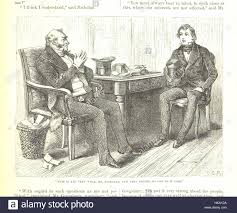
In a scene shoe-horned clumsily into the narrative for what I assume was intended but now lost satirical purposes, an angry political deputation (indeed, a mob) confront their humbugging MP, Mr Gregsbury. In the course of the argument

download (1)


“one gentleman in the rear did not scruple to remark aloud, that, for his purpose, it savoured rather too much of a ‘gammon’ tendency.”

“The meaning of that term—gammon,’ said Mr. Gregsbury, ‘is unknown to me. If it means that I grow a little too fervid, or perhaps even hyperbolical, in extolling my native land, I admit the full justice of the remark. I am proud of this free and happy country. My form dilates, my eye glistens, my breast heaves, my heart swells, my bosom burns, when I call to mind her greatness and her glory.”

Gregsbury is ‘Gammon and proud’ in other words.

Inevitably people have found earlier uses of the term, for example in the 1603 John Marston play ‘The Malcontent’ where someone gloriously is called a “sallow-Westphalian gammon-faced zaza”. So gammon has a proud old English heritage, ironically,

I think the term is a glorious addition (or rediscovery) to our lexicon. It calls to mind the physical response to distress or emotion in a certain group of individuals and as such is the perfect metaphor. It’s not just a term of abuse, although granted it isn’t a compliment, because as well as the physical similarity there is a shared intellectual mindset between the commentator and the cooked meat. As for the preposterous argument that it is in any way racist, phooey! Some people get red in the face when agitated – that has nothing to do with their ethnicity.

Words, like brexiteers, are fiercely independent, and can’t be bullied into or out of our language. The new definition of gammon might make it to the next edition of the OED, or it might not, but if it does I think Dickens would approve, and should certainly get some of the credit.


Standard
100 Best Novels Guardian list, 19th Century literature, Book review

Vanity Fair, by William Makepeace Thackeray, 1848

vanity-fair“Vanity Fair is a very vain, wicked, foolish place, full of all sorts of humbugs and falsenesses and pretensions.”
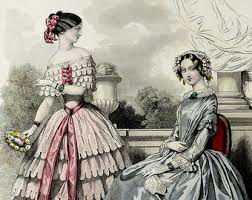
Thackeray’s ‘Vanity Fair’ draws its name from ‘The Pilgrim’s Progress’. It was published in nineteen monthly instalments, and as with many Victorian novels shows some evidence of padding – the scenes in continental Europe at the end of the novel in particular were quite obvious word-count filling.

Thackeray uses a distancing technique to allow him to present the story as a fair-ground puppet show. This allows him to present what would on some circumstances be seen as shocking or unrealistic behaviour – “it’s only a story” – but for almost all the novel the central characters are very real and present, and treated by the narrator as being genuine characters rather than archetypes. Continue reading

Standard
19th Century literature, Book review, Bronte

Supplementary: Clothing in Charlotte Bronte’s ‘Jane Eyre’

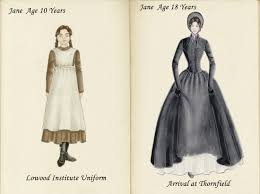
It is probably a statement of the obvious that the clothes people wear can tell us a lot about them.  In Jane Eyre Charlotte Bronte uses descriptions of her characters’ clothing to give the reader ways of interpreting their roles and their relationships. One example of this is in the description of Jane’s clothing the first time she meets Mr Rochester (Chapter 12).

Continue reading
Standard
100 Best Novels Guardian list, 19th Century literature, 20 Books of summer, Book review, Bronte

Jane Eyre, by Charlotte Bronte, 1847

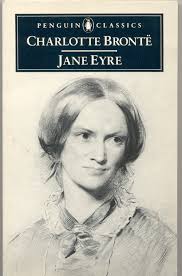
jane Eyre

I think a case can be made for ‘Jane Eyre’ as the definitive nineteenth century novel. It has it all:

Romance – the scene in chapter 22 when Rochester teasingly proposes to Jane, and she slowly comes to realise he is serious, is as touching and effective as anything in Austen, and the final reconciliation in Ferndean House between Jane and the blinded Rochester would bring a tear to the eye of the hardest heart (but perhaps not St John Rivers);

Drama – spooky scenes in the middle of the night, the “I object” scene at the wedding, parties, house fires, tragic deaths and maiming, ‘Jane Eyre’ has pretty much got it all – although the only issue I have with the novel the extent to which it occasionally teeters into melodrama….

The supernatural – Jasper Fforde in the brilliant ‘The Eyre Affair’ has great fun with the ‘cosmic telephone’ that Rochester uses to communicate with Jane, but the novel just about gets away with this piece of nonsense without seeming too absurd;

Gothic elements – the spooky house, the mad woman in the attic, possession and long lost relatives appearing at inopportune moments;

Social commentary – education, the slave trade (tangentially), the condition of the poor; the emancipation of women;

Pathetic fallacy – after Rochester’s proposal the storm blows fiercely, the trees “writhed and groaned”, and thunder and lightening provide an ominous backdrop to the engagement;

A heroine to admire, with courage, principles, and determination, and a hero with a square jaw, deep-running passions, and a vulnerable side.

The novel is written in autobiographical form, and follows the eponymous heroine in five distinct phases of her life. An orphan, she is brought up by her abusive aunt, Mrs Reed. At the age of ten she is sent to a horrific boarding school, Lowood Grange, where she is lucky to survive. At eighteen she leaves Lowood to work at Thornfield Hall as a governess for Adele, the ward of the mysterious Mr Rochester. Running away from Thornfield to escape Rochester, who wants to marry her, but unfortunately already has a wife, albeit one who is mad and ineffectually imprisoned in his attic, Jane escapes to another secure refuge, Moor House, where she is taken in by St John Rivers and his sisters. Finally, Jane is reunited with the widowed but maimed Rochester at his back-up house, Ferndean, and “reader, I married him”.

At the heart of the novel is the relationship between the not-yet twenty governess Jane, and the almost twice her age Mr Rochester. They first meet in Chapter 12, when he falls from his horse. Despite struggling to help himself, he eventually has to rely on Jane for support: “I must beg of you to come here.” I came. “Excuse me,” he continued: “necessity compels me to make you useful.” He laid a heavy hand on my shoulder, and leaning on me with some stress, limped to his horse. Having once caught the bridle, he mastered it directly and sprang to his saddle; grimacing grimly as he made the effort, for it wrenched his sprain.” This incident, and in particular Rochester’s temporary disability, and his dependence on Jane, is not important for the plot, but it foreshadows the events later in the novel, first when Jane rescues him from his burning bed, and later when he is seriously injured, and depends on Jane more comprehensively.

Jane enjoys being helpful in this way, although it helps her calmness at their first meeting that Rochester is not particularly good looking:

“I traced the general points of middle height and considerable breadth of chest. He had a dark face, with stern features and a heavy brow; his eyes and gathered eyebrows looked ireful and thwarted just now; he was past youth, but had not reached middle-age; perhaps he might be thirty-five. I felt no fear of him, and but little shyness. Had he been a handsome, heroic-looking young gentleman, I should not have dared to stand thus questioning him against his will, and offering my services unasked”.

Their first conversation at Thornfield Hall is a little more relaxed, and although it largely takes the form of a cross-examination, it eventually warms to something closer to flirtation:

‘“Adele showed me some sketches this morning, which she said were yours. I don’t know whether they were entirely of your doing; probably a master aided you?” “No, indeed!” I interjected.

“Ah! that pricks pride. Well, fetch me your portfolio, if you can vouch for its contents being original; but don’t pass your word unless you are certain: I can recognise patchwork.”

“Then I will say nothing, and you shall judge for yourself, sir.”…..

He deliberately scrutinised each sketch and painting. Three he laid aside; the others, when he had examined them, he swept from him. “Take them off to the other table, Mrs. Fairfax,” said he, and look at them with Adele;–you” (glancing at me) “resume your seat, and answer my questions. I perceive those pictures were done by one hand: was that hand yours?”

“Yes.”. “And when did you find time to do them? They have taken much time, and some thought.”

“I did them in the last two vacations I spent at Lowood, when I had no other occupation.”

“Where did you get your copies?”  “Out of my head.”

“That head I see now on your shoulders?”  “Yes, sir.”

“Has it other furniture of the same kind within?”  “I should think it may have: I should hope–better.”

From this point conversations between Jane and Mr Rochester habitually adopt this teasing tone. Rochester clearly enjoys being stood up to by Jane, in contrast with the simpering women he is apparently used to. He constantly refers to Jane as something otherworldly – elf, fairy, sprite, and asks her for a spell to make him “a handsome man”. This playfulness continues to the end of the novel:

“Am I hideous, Jane?”

“Very, sir: you always were, you know

Jane’s gradual awareness of her feelings for Rochester, and her delight at coming to understand that her love is reciprocated, is done with a wonderful tenderness and lightness of touch.

This wouldn’t be an honest review if I did not mention the few reservations I have about the novel. At times it can be over-written, and some of the foreshadowing – constant references to fire, furnaces, burning etc for example – is heavy-handed. Mr Rochester’s behaviour, in retrospect, is absurd – he freely tells Jane about Adele’s illegitimacy and his affair with her mother, but hides the existence of his wife even when the evidence becomes overwhelming. The excuse offered for this – that knowledge of a madwoman in the house might deter prospective governesses from applying to look after Adele – doesn’t stand much scrutiny, when the resolution, to send her away to school, is readily at hand. The novel carries this all off with style – the romance at the heart of the novel is really all that matters, and that is done superbly.

‘Jane Eyre’ is much-loved, and understandably so. It is in the select group of novels one closes at the end with a satisfying sigh and is put somewhere safe in confident expectation of taking up again sometime soon.

Standard
100 Best Novels Guardian list, 19th Century literature, Book review, Bronte

Wuthering Heights, by Emily Bronte, 1847

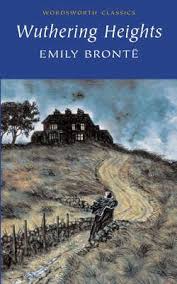
WH2

Wuthering Heights’ has over 22,000 reviews on Goodreads alone; one has to wonder what else I could possibly add to that overwhelming weight of opinion and consideration?

The dark and gothic tale is constructed with a complex variety of framing structures – at one point the narrative is told by Mr Lockwood, the tenant of Thrushcross Grange, recounting the story told him by Nelly Dean, the housekeeper of the Grange and the Heights, who in turn recounts details of a message from Isabella Heathcliff (nee Linton). People drop dead with alarming frequency, and nurture dark passions to the grave and beyond. The novel opens in 1801 with Lockwood’s neighbourly visit to the Heights, and the story is then told in a series of flashbacks/reprises. This means we have a clear picture of how things are going to end – until the final closing chapters, at least.

Continue reading
Standard
100 Best Novels Guardian list, 19th Century literature, Book review

Sybil, by Benjamin Disraeli, 1845

“Would he have made the cut if he had not become prime minister?”

asks Robert McCrum in his Guardian article explaining why he chose ‘Sybil’ for his “top 100 novels written in English” list. He goes on:

”his literary contemporaries such as Dickens, Thackeray, George Eliot, and even Anthony Trollope are much greater novelists. Disraeli’s plots are far-fetched, and his characters balsa-wood. At the same time, he has flashes of brilliance that equal these greats at their best.”

This is where McCrum and I part company. I found no flashes of brilliance in ‘Sybil’ (and I did look carefully) and I don’t think anyone else would either. McCrum provides no quotes to support his contention, and if you look at this selection in Wikiquote I don’t think you will find anything there which justifies this description either. The weight of evidence to demonstrate the opposite, the wooden, flat, simply bad nature of Disraeli’s prose is overwhelming. I obviously can’t flood this review out with bad prose, but here are a couple of examples, from the 400 pages of possibilities:   Continue reading

Standard