
Just a quick follow up to yesterday’s post about ‘Nicholas Nickleby’.
Earlier this year there was a very slight fuss in the UK media about the use of the term “gammon” as a pejorative description of older white men who get red in the face when upset. The Urban Dictionary defines it disrespectfully as:
“A term used to describe a particular type of Brexit-voting, middle-aged white male, whose meat-faced complexion suggests they are perilously close to a stroke. The term ‘gammon’ is linked to the unhealthy pink skin tone of such stout yeomen, probably because of high blood pressure caused by decades of ‘PC gone mad’, being defeated in arguments about the non-existent merits of Brexit and women getting the vote. Gammon often make their appearance on BBC’s Question Time jabbing their porcine fingers at the camera while demanding immediate nuclear strikes against Remain-voting areas, people who eat vegetables and/or cyclists.
When gammon appears en masse it is often referred to as a “wall of gammon“.
The origin of the term is interesting. In ‘Moranthology’ Caitlin Moran claimed that David Cameron resembled “a slightly camp gammon robot” and “a C3PO made of ham”. However, the term appears in a very similar context some 150 years earlier in (you guessed it) ‘Nicholas Nickleby’.
In a scene shoe-horned clumsily into the narrative for what I assume was intended but now lost satirical purposes, an angry political deputation (indeed, a mob) confront their humbugging MP, Mr Gregsbury. In the course of the argument
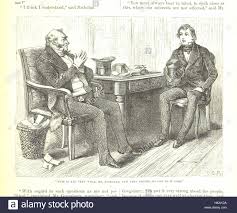
“one gentleman in the rear did not scruple to remark aloud, that, for his purpose, it savoured rather too much of a ‘gammon’ tendency.”
“The meaning of that term—gammon,’ said Mr. Gregsbury, ‘is unknown to me. If it means that I grow a little too fervid, or perhaps even hyperbolical, in extolling my native land, I admit the full justice of the remark. I am proud of this free and happy country. My form dilates, my eye glistens, my breast heaves, my heart swells, my bosom burns, when I call to mind her greatness and her glory.”
Gregsbury is ‘Gammon and proud’ in other words.
Inevitably people have found earlier uses of the term, for example in the 1603 John Marston play ‘The Malcontent’ where someone gloriously is called a “sallow-Westphalian gammon-faced zaza”. So gammon has a proud old English heritage, ironically,
I think the term is a glorious addition (or rediscovery) to our lexicon. It calls to mind the physical response to distress or emotion in a certain group of individuals and as such is the perfect metaphor. It’s not just a term of abuse, although granted it isn’t a compliment, because as well as the physical similarity there is a shared intellectual mindset between the commentator and the cooked meat. As for the preposterous argument that it is in any way racist, phooey! Some people get red in the face when agitated – that has nothing to do with their ethnicity.
Words, like brexiteers, are fiercely independent, and can’t be bullied into or out of our language. The new definition of gammon might make it to the next edition of the OED, or it might not, but if it does I think Dickens would approve, and should certainly get some of the credit.
 The Reading Bug
By a strange coincidence I just came across what seems to be a rather different slang use of this word in the novel I’m currently reading – Trollope’s fourth Chronicle of Barsetshire, Framley Parsonage. The vicar Mark Robarts is trying to explain in Ch. 4 to the unscrupulous sponger Mr Sowerby his reasons for not accepting an invitation to the castle of the notoriously rakish Duke of Omnium; he says he’s not a ‘man of leisure’ and has other duties to attend to; ‘Gammon! said Mr Sowerby.’ He repeats the expletive a page later (this is pp. 41 and 42 in my OWC paperback) in a similar context. Unlike the usage you mention this seems to be just a synonym for ‘rubbish’ (or something stronger). Here’s what OED online says under sense 3 (I’ve taken out some of the citations; Will Self’s is the ‘something stronger’ variety):
Absurd, worthless, or manifestly false talk or ideas; rubbish, nonsense. Cf. gammon and spinach at Phrases 3. Now somewhat arch.
1805 T. Harral Scenes of Life III. 105 ‘Come, come, none of your gammon!’ cried one, ‘tell us where the other black sheep is’.
1837 Dickens Pickwick Papers xxiv. 251 Some people maintains that an Englishman’s house is his castle. That’s gammon.
1845 B. Disraeli Sybil III. vi. iii. 175 Morley has got round them, preaching moral force and all that sort of gammon.
2008 W. Self Butt xiii. 262 ‘That’s all gammon, that is!’ Gloria expostulated. ‘Gammon?’ ‘Gammon—bloody bullshit.’
LikeLiked by 1 person
And the next definition in OED is perhaps more in line with the interjection by Sowerby:
3 B. int.
Expressing dismissive irritation and disbelief, in response to a statement which one thinks false or intended to deceive: ‘rubbish’, ‘nonsense’, ‘humbug’. Now arch. and in historical contexts.
1827 R. B. Peake Comfort. Lodg. i. iii Sir H. (Aside) Gammon!
1855 Thackeray Rose & Ring xv ‘Gammon!’ exclaimed his Lordship.
1885 ‘F. Anstey’ Tinted Venus 4 ‘Gammon!’ said Jauncey, ‘that isn’t it’.
1911 Outing Apr. 50/2 ‘Gammon!’ she cried, affecting great scorn.
Interesting to see both Dickens (in the previous comment) and Thackeray there, but not Trollope…
LikeLiked by 1 person
Bit of a minefield this one. There’s also the use of the phrase “gammon and spinach” meaning, approximately, nonsense, for example in David Copperfield or in the nursery rhyme ‘A Frog He Would A-Wooing Go’. For me the difference is that in the first usage – the insulting one – the word is being used metaphorically, whereas here it is hard to see it as anything other than a word plucked at random from the lexicon. Or have I missed a link between cooked ham and nonsense?
LikeLike
Pingback: Book review: Black Beauty, by Anna Sewell, 1877 | The Reading Bug