I have read approximately 30 books this year. That’s poor by most definitions, although par for me in recent years (I read a post recently from someone saying they ‘had only’ read 250 books this year, having chosen to prioritise quality over quantity!) My most popular post of those published this year was The Last Devil to Die, the 4th in Richard Osman’s cosy crime series, The ThursdayMurder Club. Puzzlingly the short supplementary post I wrote on Clothing in Jane Eyre remains my most popular post of all time.
2026
I still enjoy writing about books and find the discipline of ordering my thoughts about what I have read a useful one, so for now I plan to continue this blog, going into what I think will be year 14. One of my annual traditions at this time is the choice of Dickens novel for the coming year. I have only five left to read: Barnaby Rudge, Pickwick Papers, Martin Chuzzlewit, Little Dorrit and Our Mutual Friend (or six if you include the incomplete Mystery of Edwin Drood). This year the choice is an easy one, as I recently read Peter Ackroyd’s The Great Fire Of London which is based on, or inspired by, Little Dorrit. Other than this year’s Dickens and working my way through the extensive pile of Christmas and birthday presents, both of which I look forward to very much, my reading plans for 2026 are vague. I have shelved, for now, my attempt to read all the Booker Prize winners, despite there being only seven novels, including this year’s winner, Flesh, to go. I say every year I might go back to that challenge but realistically I am not sure I have the appetite for The Bone People or Sacred Hunger. To read more, to read more systematically and to include more women and international authors in my selections are all resolutions I could have made any of the last fourteen years but will continue to be aspirations. If you have read any of my posts, thank you. Comments are always welcome and an important part of the whole process. Guest posts are also very welcome – if you have read something interesting and would like somewhere to publish your thoughts on it let me know.
While doing some background reading for my review of Graham Swift’s short story collection, Learning to Swim, it occurred to me (and I accept this might be a banal statement of the obvious) that the short story form of writing is by far the most neglected when compared to others such as the novel, poetry, and drama.
It will come as no surprise that the Wikipedia entry for ‘short story’ defines the form primarily by its length, saying that it “can typically be read in a single sitting”. Can you imagine defining any other form of writing in this way? (of course I know sonnets have 14 lines and haiku have 17 syllables, but these are very specific forms within the much wider genre of ‘poetry’.) In terms of content, the entry goes on to say that a short story usually “focuses on a self-contained incident or series of linked incidents, with the intent of evoking a single effect or mood. The short story is one of the oldest types of literature and has existed in the form of legends, mythic tales, folk tales, fairy tales, tall tales, fables, and anecdotes in various ancient communities around the world.” This definition is flawed in several respects – Norse sagas were very long compared to other forms of prose, for example – but is probably as good a definition as we are going to get.
Are short stories neglected? Staying with statements of the obvious, the form doesn’t have a special word or term to describe it. Novels, poetry and plays are not ‘long stories’, ‘short stories that often rhyme’, and ‘stories told on stage by actors’. Well, they are, but the point is we have special words for them, whereas with short stories, that’s it. With the possible exception of Katherine Mansfield and Alice Munro there are very few writers who are best known for their short stories. By comparison I guess most people could name half a dozen novelists, poets and playwrights. Few writers specialise in the short story format. Many will have at one point or another written a short story, but there are few for whom it is their preferred format. And yet perversely the short story is probably the most common form of creative writing. The cliché that we all have a novel in us may or may not be true, but if creative writing groups are anything to go by we all have a couple of dozen short stories in us as well!
So why is this? When short stories are the form we are most familiar with from childhood, when many of the greatest stories ever told are short, why is this form of writing considered ‘less’ in so many ways? Is the issue one of length, that longer is better? Certainly with plays and poems that is not the case – Ode to a Nightingale is a better poem that Endymion (a 4000 line epic poem also by Keats and if you have not heard of it that makes my point); Daffodils is better than The Prelude. While plays have a ‘Cinderella’ length – too short and the audience can feel cheated, too long and we get bored and restless, novels can be too long – I would certainly put the nine volumes of Samuel Richardson’s Clarissa into that category. So no, longer is not better, and we therefore need to look elsewhere for an explanation for the neglect of this form of story-telling.
It’s possible that short stories are read more often than we think, simply that they are not read in book or collected form. Many short stories are published in magazines and will not feature in any charts or tables of book sales. The role of agents, editors and critics in pressuring writers to move away from the short story format and into novels may play a part in the marginalisation of this format. Lots of authors start out with short stories, finding it easier to have them published in magazines than getting a novel published, subsequently moving on to writing novels and abandoning the short story format.
All literary forms have periods of supremacy. In Shakespeare’s day poetry was consumed by the upper classes and plays were watched by the unwashed. The novel started its long march to ascendancy in the Eighteenth century, and became dominant when Dickens was publishing his works a chapter at a time (there might be a case for arguing that these were all short stories linked by a common set of characters and themes, and certainly the Pickwick Papers would fit that characterisation, but that can’t really be sustained as Dickens’s preferred form of publication was the exception rather than the rule). There was some speculation that the decreasing attention span brought about by social media and the advent of doom-scrolling might see a revival in popularity (and status) of the short story, but this hasn’t materialised. Perhaps short stories of a few thousand words are just too long for the tik-tok generation?
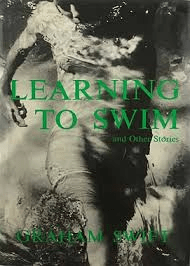
Learning to Swim and other stories by Graham Swift, 1982
I think it is more common than not for a modern short story to conclude without a formal ending. The reader is not told what ‘happens’ to the characters nor how any issues identified have been resolved. When did that start to be the case? Don’t Victorian short stories almost always have a formal ending in which murders are solved, mysteries unravelled and the problems or issues explored in the course of the story resolved? In the early decades of the twentieth century Modernist novelists rejected the idea that novels were just stories, but nonetheless formal endings remained the norm. There are of course always going to be exceptions to generalisations of this kind (there are a few modern novels that simply end, leaving everyone frozen in time and with their story lines unresolved, such as Penelope Fitzgerald’s Offshore or The Gate of Angels) but these are very much the exception), Look at it this way: would Ulysses have been the same novel if Leopold Bloom’s day ended before he returned home and without Molly’s dreams? The ending of Heart of Darkness may be ambiguous, but there’s no doubting that it is an ending rather than just an end. Nick Carraway leaves West Egg not really understanding the experience he has been through, but Gatsby’s story has ended. And so on.
Whereas with many modern short stories, the opposite is the case. The stories are sketches of a time and place, portraits of characters and situations, but there is no instinct for completion, no need to tell the reader what happens to the people who have been introduced. In many cases the stories simply stop. This is more challenging for the reader more familiar with novels that have formal endings. They may be left with a sense of frustration, wanting to know what happens next.
Which brings me to Graham Swift’s short story collection, Learning to Swim and other stories. These stories were published in various magazines from 1977 to the early 1980’s and predate Swift’s primary career as a novelist. His first novel The Sweet Shop Owner was published in 1980, and while today he is best known as a novelist, not least because his Last Orders won the Booker prize in 1996, he still writes short stories, and had the collection Twelve Post-War Tales published as recently as 2025.
Learning to Swim, named after the final story in the collection, is made up of eleven very varied tales. Some of the stand out stories include:
Seraglio is a portrait of an unhappy, childless marriage. A husband and wife are on holiday in Istanbul. Childless, they have frequent and expensive holidays as some form of compensation. The husband who narrates the story cannot understand his wife’s behaviour and when she tells him she has been assaulted by a hotel employee and wants to go home, he shows a lack of empathy in response. Swift almost taunts the reader wanting to know whether the couple remain together, or to know more about the assault in the hotel, saying “All stories are told, like this one, looking back at painful places which have become silhouettes, or looking forward, before you arrive, at scintillating facades which have yet to reveal their dagger thrusts, their hands in hotel bedrooms… One wants the moment of the story to go on for ever, the poise of parting or arriving to be everlasting. So one doesn’t have to cross to the other continent, doesn’t have to know what really happened, doesn’t have to meet the waiting blade.” The absence of a resolution in other words is the point of the story, rather than an omission.
In The Tunnel a narrator watches some youths digging a tunnel from the playground of a closed school out to wasteland. The tunnel acts a metaphor for pointless employment, the progress of children from school to the wider world, as well as invoking scenes from the first and second World Wars. This is a closely observed story in which every word counts. I wanted to know more about what happened to the narrator, his relationship with his runaway girlfriend, her mysterious uncle who may or may not be leaving her some money, and many other unresolved plot lines.
Hotel is a strange tale. A man recovers from a stay in a psychiatric hospital following his mother’s death. He then decides to run a hotel, which he eventually achieves. But when two guests who may be father and daughter, but the precise nature of their relationship is unclear, arrive, the foundation of his business begins to crumble. The narrator hints at the possibility of abuse or incest, but the story ends without an explanation of the couple’s situation.
The Watch is not really a science fiction story, but it does rest upon an element of the fantastic. A Polish watchmaker creates a pocket-watch which never needs winding and appears to grant eternal life to the owner. As it is passed down the generations to the current owner, the story’s narrator, it appears more of a curse than anything, as its owners all meet grisly fates. This is an almost Victorian horror story reminiscent of something by Edgar Allen Poe. It sits uncomfortably among the other modern sketches in the collection. Chemistry is a very similar, old-fashioned horror story in which the narrator accidentally causes the death of his grandfather. The story also features the ghost of the narrator’s father with other strong echoes of Hamlet (shipwreck, accidental poisoning, resentment of a step-father) thrown in for good measure.
The collection’s title story, Learning to Swim features another unhappy couple on holiday, thereby forming an effective bookend with the opening story, Holiday. While on vacation in Cornwall Mr Singleton is trying to teach his son Paul to swim, watched as he does so with judgment and contempt by his sunbathing wife. This felt as if it may have been an autobiographical story in which learning to swim becomes as symbol of a difficult childhood, in which the narrator finally decides to strike out on his own. The collection therefore ends on a positive note despite all the gloom and darkness that has come before.
Is it possible, just about, to make some generalisations about this collection and identify some overall themes. They all, to a greater or lesser extent, leave the reader with questions. Most of the stories are dark, featuring unhappy people. Infidelity and sexual trauma is hinted at in several of them and while never directly confronted, other stories feature the possibility of incest, bestiality and murder. Despite these topics this is not in any way a lurid collection – this is a sideways, oblique look at these issues.
Learning to Swim is still in print, more I suspect as an early work by someone who went on to write better things rather than in its own right. The 24 reviews of the collection on Goodreads, a tiny number by any measure, barely do it justice. I am not sure whether I am ever going to completely escape the need for a resolution and ending in the stories I read, and until I do I am always going to work hard to find positive things to say about this form. I appreciate that is my problem, not the authors, but I don’t think I am alone in that regard. The weaknesses of the short story format is something I will look at more closely on another day. For now I think I am going to return to the novel for my next read, albeit with a slight sense of guilt.
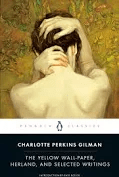
The Yellow Wallpaper and other selected writings by Charlotte Perkins Gilman
Even though you could read The Yellow Wallpaper in not much more time than it takes to drink a cup of coffee, it is widely perceived as both the author’s most significant work and a classic of its genre. The Penguin Classics edition of this story, published with Herland and other selected writings, has The Yellow Wallpaper as the lead text in its title.
The story is written as a collection of journal entries narrated by an unnamed woman whose physician husband has rented a mansion for the summer, to provide her with somewhere to recuperate. He forbids the narrator from working or writing and encourages her to rest. She is suffering from what he calls a “temporary nervous depression – a slight hysterical tendency”, a vague but common diagnosis in women at the time. As the journal entries continue the narrator slowly becomes obsessed with the yellow wallpaper in her room, convinced that it moves and that something is hiding behind it.
An important part of the context of the women’s physical and mental decline is that she has just given birth. We know little about her pregnancy other than it appears to have been the cause of her decline. Although she believes she is treated with care and consideration, the reader can infer that there is more to her confinement. She describes her room with its torn wallpaper, barred windows, metal rings in the walls, a floor “scratched and gouged and splintered”, a bed bolted to the floor – this is a cell in all but name. It will occur to most readers to wonder whether her husband has used his status and authority as a doctor to have her legally sectioned? I haven’t researched this issue thoroughly but it does appear as if women could be declared mentally ill and a danger to themselves and others simply on the word of their husband. If he happened to be a doctor as well then the chances of anyone questioning his decision were slim to non-existent. This is an interesting article on this topic from Time magazine https://time.com/6074783/psychiatry-history-women-mental-health/
The narrator’s morbid obsession with the wallpaper in the room comes to dominate the text and her thoughts. The wallpaper has a “sickly” color, a “yellow” smell, and a pattern like “an interminable string of toadstools, budding and sprouting in endless convolutions”. It leaves yellow smears on the skin and clothing of anyone who touches it. Her mental health rapidly declining, the narrator comes to believe that a woman is trapped behind the pattern in the wallpaper. To free the trapped woman she begins to strip the remaining paper off the wall. When her husband comes home, he finds the narrator rubbing herself against the wallpaper, saying “I’ve got out at last… in spite of you.”
The story is undoubtedly inspired in part by Gilman’s personal experience. When her daughter was born she suffered from postnatal depression. A doctor, considered the leading expert on women’s mental health, prescribed bed rest and forbade her from any form of work including reading, writing, or painting. She found this treatment made her condition worsen. The Yellow Wallpaper is a straightforward autobiographical account of this treatment with the addition of a supernatural component to the story, to provide a dramatic critique of these methods of male control of women’s bodies and lives.
TheYellow Wallpaper has become an important feminist text. The narrator’s attempts to control her environment, her health, and eventually her life by her interpretation of the wallpaper that surrounds her, act as a metaphor for the domestic environment, her body, her mind, and the many other lenses through which the story can be read. At the same time a simple interpretation of the text is elusive – the author scatters hints through the text, but a straightforward key – X = Y – is never provided.
Because of the significance of The Yellow Wallpaper in the canon of feminist literature, the rest of Gilman’s writing is often overlooked, or simply seen as ‘things that might be like, or provide additional information about,’ the primary text. Which is if course both wrong and a pity. Many of the short stories published in the Penguin Classics edition, together with a number available online, are intelligent thought-provoking pieces written from a progressive, feminist perspective. When I was a Witch is a fascinating account of someone being given the power to make wishes that come true, but being unable to use this power for the general improvement of the lives of women. If I were a Man must be the earliest ‘body swap’ story, in which a young woman wishes she were a man and finds herself in her husband’s body. She is fascinated by the different physical experience, and the different, secret attitudes men have towards women – some protective and loving, others base and sexual:
“In the minds of each (man) and all there seemed to be a two-story department, quite apart from the rest of their ideas, a separate place where they kept their thoughts and feelings about women. In the upper half were the tenderest emotions, the most exquisite ideals, the sweetest memories, all lovely sentiments as to ‘home’ and ‘mother,’ all delicate admiring adjectives, a sort of sanctuary, where a veiled statue, blindly adored, shared place with beloved yet commonplace experiences. In the lower half–here that buried consciousness woke to keen distress–they kept quite another assortment of ideas. Here, even in this clean-minded husband of hers, was the memory of stories told at men’s dinners, of worse ones overheard in street or car, of base traditions, coarse epithets, gross experiences–known, though not shared.”
The Giant Wistaria and The Rocking Chair are both conventional, sub-Jamesian ghost stories. While containing traditional gothic elements they are fairly predictable, although The Giant Wistaria still manages to include a feminist portrait of an early American settler woman choosing to commit suicide instead of submitting to an enforced marriage with a cousin. Bee Wise is an early working out of some of the ideas to find expression in Herland, describing a utopian and largely female community established on strongly egalitarian grounds. His Mother and The Vintage are fascinating treatments of social evils affecting the lives of women – the white slave trade and syphilis respectively. His Mother tells the story of a woman tracking down and handing over to the police her son, who has been a key figure in a gang procuring vulnerable young women for prostitution. The Vintage describes in distressing terms the impact untreated syphilis can have down the generations. These were topics that were not widely discussed in ‘polite society’ nor written about outside the pages of medical journals. I find it hard to imagine how brave it would have been for Gilman to have published these stories with their clear and unambiguous treatment of these issues.
Gilman’s personal story is in many ways as fascinating as her writings, and this https://www.neh.gov/article/charlotte-perkins-gilman-did-more-write-one-classic-short-story is a good starting point if you are interested. I agree with the article’s conclusion – Gilman is definitely worth reading beyond The Yellow Wallpaper, although that in itself is a great starting point.