Book review

While doing some background reading for my review of Graham Swift’s short story collection, Learning to Swim, it occurred to me (and I accept this might be a banal statement of the obvious) that the short story form of writing is by far the most neglected when compared to others such as the novel, poetry, and drama.

It will come as no surprise that the Wikipedia entry for ‘short story’ defines the form primarily by its length, saying that it “can typically be read in a single sitting”. Can you imagine defining any other form of writing in this way? (of course I know sonnets have 14 lines and haiku have 17 syllables, but these are very specific forms within the much wider genre of ‘poetry’.) In terms of content, the entry goes on to say that a short story usually “focuses on a self-contained incident or series of linked incidents, with the intent of evoking a single effect or mood. The short story is one of the oldest types of literature and has existed in the form of legends, mythic tales, folk tales, fairy tales, tall tales, fables, and anecdotes in various ancient communities around the world.” This definition is flawed in several respects – Norse sagas were very long compared to other forms of prose, for example – but is probably as good a definition as we are going to get.

Are short stories neglected? Staying with statements of the obvious, the form doesn’t have a special word or term to describe it. Novels, poetry and plays are not ‘long stories’, ‘short stories that often rhyme’, and ‘stories told on stage by actors’. Well, they are, but the point is we have special words for them, whereas with short stories, that’s it. With the possible exception of Katherine Mansfield and Alice Munro there are very few writers who are best known for their short stories. By comparison I guess most people could name half a dozen novelists, poets and playwrights. Few writers specialise in the short story format. Many will have at one point or another written a short story, but there are few for whom it is their preferred format. And yet perversely the short story is probably the most common form of creative writing. The cliché that we all have a novel in us may or may not be true, but if creative writing groups are anything to go by we all have a couple of dozen short stories in us as well!

So why is this? When short stories are the form we are most familiar with from childhood, when many of the greatest stories ever told are short, why is this form of writing considered ‘less’ in so many ways? Is the issue one of length, that longer is better? Certainly with plays and poems that is not the case – Ode to a Nightingale is a better poem that Endymion (a 4000 line epic poem also by Keats and if you have not heard of it that makes my point); Daffodils is better than The Prelude. While plays have a ‘Cinderella’ length – too short and the audience can feel cheated, too long and we get bored and restless, novels can be too long – I would certainly put the nine volumes of Samuel Richardson’s Clarissa into that category. So no, longer is not better, and we therefore need to look elsewhere for an explanation for the neglect of this form of story-telling.

It’s possible that short stories are read more often than we think, simply that they are not read in book or collected form. Many short stories are published in magazines and will not feature in any charts or tables of book sales. The role of agents, editors and critics in pressuring writers to move away from the short story format and into novels may play a part in the marginalisation of this format. Lots of authors start out with short stories, finding it easier to have them published in magazines than getting a novel published, subsequently moving on to writing novels and abandoning the short story format.

All literary forms have periods of supremacy. In Shakespeare’s day poetry was consumed by the upper classes and plays were watched by the unwashed. The novel started its long march to ascendancy in the Eighteenth century, and became dominant when Dickens was publishing his works a chapter at a time (there might be a case for arguing that these were all short stories linked by a common set of characters and themes, and certainly the Pickwick Papers would fit that characterisation, but that can’t really be sustained as Dickens’s preferred form of publication was the exception rather than the rule). There was some speculation that the decreasing attention span brought about by social media and the advent of doom-scrolling might see a revival in popularity (and status) of the short story, but this hasn’t materialised. Perhaps short stories of a few thousand words are just too long for the tik-tok generation?
Short Stories – a neglected form of writing?

Aside
Book review

Learning to Swim and other stories by Graham Swift, 1982

I think it is more common than not for a modern short story to conclude without a formal ending. The reader is not told what ‘happens’ to the characters nor how any issues identified have been resolved. When did that start to be the case? Don’t Victorian short stories almost always have a formal ending in which murders are solved, mysteries unravelled and the problems or issues explored in the course of the story resolved? In the early decades of the twentieth century Modernist novelists rejected the idea that novels were just stories, but nonetheless formal endings remained the norm. There are of course always going to be exceptions to generalisations of this kind (there are a few modern novels that simply end, leaving everyone frozen in time and with their story lines unresolved, such as Penelope Fitzgerald’s Offshore or The Gate of Angels) but these are very much the exception), Look at it this way: would Ulysses have been the same novel if Leopold Bloom’s day ended before he returned home and without Molly’s dreams? The ending of Heart of Darkness may be ambiguous, but there’s no doubting that it is an ending rather than just an end. Nick Carraway leaves West Egg not really understanding the experience he has been through, but Gatsby’s story has ended. And so on.

Whereas with many modern short stories, the opposite is the case. The stories are sketches of a time and place, portraits of characters and situations, but there is no instinct for completion, no need to tell the reader what happens to the people who have been introduced. In many cases the stories simply stop. This is more challenging for the reader more familiar with novels that have formal endings. They may be left with a sense of frustration, wanting to know what happens next.

Which brings me to Graham Swift’s short story collection, Learning to Swim and other stories. These stories were published in various magazines from 1977 to the early 1980’s and predate Swift’s primary career as a novelist. His first novel The Sweet Shop Owner was published in 1980, and while today he is best known as a novelist, not least because his Last Orders won the Booker prize in 1996, he still writes short stories, and had the collection Twelve Post-War Tales published as recently as 2025.

Learning to Swim, named after the final story in the collection, is made up of eleven very varied tales. Some of the stand out stories include:

Seraglio is a portrait of an unhappy, childless marriage. A husband and wife are on holiday in Istanbul. Childless, they have frequent and expensive holidays as some form of compensation. The husband who narrates the story cannot understand his wife’s behaviour and when she tells him she has been assaulted by a hotel employee and wants to go home, he shows a lack of empathy in response. Swift almost taunts the reader wanting to know whether the couple remain together, or to know more about the assault in the hotel, saying “All stories are told, like this one, looking back at painful places which have become silhouettes, or looking forward, before you arrive, at scintillating facades which have yet to reveal their dagger thrusts, their hands in hotel bedrooms… One wants the moment of the story to go on for ever, the poise of parting or arriving to be everlasting. So one doesn’t have to cross to the other continent, doesn’t have to know what really happened, doesn’t have to meet the waiting blade.” The absence of a resolution in other words is the point of the story, rather than an omission.

In The Tunnel a narrator watches some youths digging a tunnel from the playground of a closed school out to wasteland. The tunnel acts a metaphor for pointless employment, the progress of children from school to the wider world, as well as invoking scenes from the first and second World Wars. This is a closely observed story in which every word counts. I wanted to know more about what happened to the narrator, his relationship with his runaway girlfriend, her mysterious uncle who may or may not be leaving her some money, and many other unresolved plot lines.

Hotel is a strange tale. A man recovers from a stay in a psychiatric hospital following his mother’s death. He then decides to run a hotel, which he eventually achieves. But when two guests who may be father and daughter, but the precise nature of their relationship is unclear, arrive, the foundation of his business begins to crumble. The narrator hints at the possibility of abuse or incest, but the story ends without an explanation of the couple’s situation.

The Watch is not really a science fiction story, but it does rest upon an element of the fantastic. A Polish watchmaker creates a pocket-watch which never needs winding and appears to grant eternal life to the owner. As it is passed down the generations to the current owner, the story’s narrator, it appears more of a curse than anything, as its owners all meet grisly fates. This is an almost Victorian horror story reminiscent of something by Edgar Allen Poe. It sits uncomfortably among the other modern sketches in the collection. Chemistry is a very similar, old-fashioned horror story in which the narrator accidentally causes the death of his grandfather. The story also features the ghost of the narrator’s father with other strong echoes of Hamlet (shipwreck, accidental poisoning, resentment of a step-father) thrown in for good measure.

The collection’s title story, Learning to Swim features another unhappy couple on holiday, thereby forming an effective bookend with the opening story, Holiday. While on vacation in Cornwall Mr Singleton is trying to teach his son Paul to swim, watched as he does so with judgment and contempt by his sunbathing wife. This felt as if it may have been an autobiographical story in which learning to swim becomes as symbol of a difficult childhood, in which the narrator finally decides to strike out on his own. The collection therefore ends on a positive note despite all the gloom and darkness that has come before.

Is it possible, just about, to make some generalisations about this collection and identify some overall themes. They all, to a greater or lesser extent, leave the reader with questions. Most of the stories are dark, featuring unhappy people. Infidelity and sexual trauma is hinted at in several of them and while never directly confronted, other stories feature the possibility of incest, bestiality and murder. Despite these topics this is not in any way a lurid collection – this is a sideways, oblique look at these issues.

Learning to Swim is still in print, more I suspect as an early work by someone who went on to write better things rather than in its own right. The 24 reviews of the collection on Goodreads, a tiny number by any measure, barely do it justice. I am not sure whether I am ever going to completely escape the need for a resolution and ending in the stories I read, and until I do I am always going to work hard to find positive things to say about this form. I appreciate that is my problem, not the authors, but I don’t think I am alone in that regard. The weaknesses of the short story format is something I will look at more closely on another day. For now I think I am going to return to the novel for my next read, albeit with a slight sense of guilt.

Learning to Swim and other stories by Graham Swift, 1982

Aside
Book review

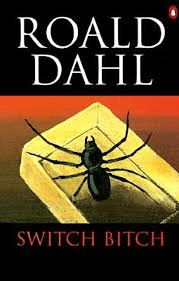
Switch Bitch by Roald Dahl, 1974

A few years ago I reviewed Patrick Suskind’s Perfume. It’s fair to say I didn’t like it very much. One commenter pointed out the similarities between Suskind’s novel and Bitch, a much earlier short story by Roald Dahl. So when I finally got round to reading Switch Bitch, the collection of four Dahl stories that includes Bitch (and apologies for the misogynistic language by the way, on which more later) there was the resounding and much-delayed sound of a penny dropping. Because Perfume isn’t just inspired by Bitch, it robs it of its central premise unashamedly. Dahl’s story tells of a scientist who develops a scent that robs men of all sexual inhibition whatsoever – they become animals who have only one thought in their heads, to have sex with the nearest available woman. Nothing, including a gun to the head, can stop them. The scent triggers an animalistic response long-buried in our Neanderthal brains. Sounds familiar? This is the central concept of Perfume. Just one more reason, were it needed, to despise Suskind’s novel.

As well as sharing a central idea, both stories are profoundly sexist. If you didn’t know it you nevertheless could easily guess that the Dahl story was written for Playboy, a soft porn magazine from the days when there were such things as soft porn magazines, which included occasional stories to give readers a break from the soft-focus photography. Their purpose was solely to titillate the invariably male reader. Dahl’s writing for adults is often characterised by unexpected endings – this was the whole premise of the long-running television series “Tales of the Unexpected” which were originally based on his short stories of the same name. But there’s an obvious problem with this structure = once it’s established the twist to each tale becomes more and more obvious. The same problem applies to the stories in this collection – there is no real surprise when the denouement of each is revealed. As the reader has known for some time, Bitch ends with the scent being accidentally discharged. This leads to a profoundly unattractive woman being ravaged, and apparently enjoying the experience. It’s horrible.

There are three other stories in this collection. In The Visitor the narrator’s uncle Cornelius, (by his own account) a preposterously successful philanderer, finds himself stranded in Egypt while on his way to Jerusalem. He is offered a room for the night by a local businessman who has built a luxurious mansion in the desert. Cornelius suspects his car has been tampered with to cause him to be stranded and meet the businessman, although why is unclear. While there Cornelius meets the man’s wife and daughter and sets out to seduce them – he likes a challenge. The inevitable sexual encounter that night happens in silence and complete darkness, (of course it does) leaving Cornelius unsure which woman he has ‘bedded’. If you don’t work out who he actually sleeps with you haven’t been paying much attention.

Our understanding of what constitutes sexual assault has evolved a lot in recent years. At the time it was published I don’t think many people would have understood that the central premise of The Great Switcheroo, in which two men devise a (profoundly improbable) plan whereby each man has sex with the other’s wife (without either wife realising the deception) is clearly a case of rape, rather than some ‘light-hearted’ fun. The sting in the tail/tale – that one wife enjoys the sex with her neighbour so much more than she does with her husband – is in part intended to ameliorate the grossness of the husband’s behaviour. He finds out his wife has hated having sex with him all their married life, so the ‘joke’ is on him. This is a modern version of the bed-trick, (which Dahl had already employed in a more conventional form in The Visitor) the principal difference being that in traditional literature it is almost always the woman who is substituted for another (the implication being that men are unable to tell who they are having sex with as long as it is dark). When this story was first published, again in a soft porn magazine, the idea of a husband tricking his wife into having sex with another man, only for the plan to blow up in his face, was mildly whimsical – some fifty years on it is appalling, distressing and hard to read. The story is told from the perspective of the husband who initiates the plan (his neighbour goes along with it enthusiastically) and ends up finding out he is a dud in bed, an anti-hero who we are invited to laugh at rather than a proto-rapist.

In The Last Act a widow reconnects with the man she left for her husband years earlier. The man is a gynaecologist, recently separated, and harbours a grudge for her breaking off their relationship. He seduces and humiliates her, and it is suggested that this makes her commit suicide. This is another appalling story – even Dahl’s biographer said it should have been scrapped.

Charlie and the Chocolate Factory had been published in 1964, well before these stories were published in Playboy. I mention this because I can almost understand a working writer selling cheap, tawdry stories to a men’s magazine simply to pay the bills. But Dahl obviously wasn’t in that position, and even if he was he could have chosen not to subsequently publish the stories in this format in 1974, by when he was also writing for films and obviously very well off.

Don’t read Switch Bitch. I always reject the idea that you can tell what an author was like as a person by his or her works, but sometimes the challenge of joining the dots between the two is almost irresistible.

Switch Bitch by Roald Dahl, 1974

Aside
Book review

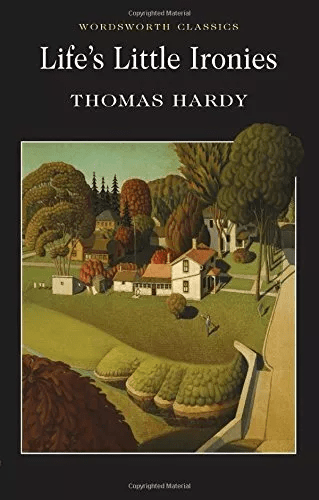
Life’s Little Ironies by Thomas Hardy, 1894

I confess I’ve never been a particular fan of Hardy. I’ve not really worked out why, but I don’t think his novels have aged well, even if various film and television adaptations have postponed any risk of obscurity. I thought I would try some of his short stories to see if they could offer something different. Life’s Little Ironies is a collection put together by the author and his publisher shortly before Hardy published his last novel (Jude the Obscure) and went into self-imposed poetical exile. All the stories had originally been published in various Victorian magazines and this is reflected in their length and subject matter.

If you didn’t know this collection was by Hardy it would take a matter of seconds to work it out. The settings are very familiar – Melchester, Casterbridge, etc – and the characters are all eminently recognisable – honest, hard-working rural folk prone to making unfortunate choices. The theme that links the stories, we are invited to accept, is that they are sketches of ironic moments in people’s lives, although the irony is quite often hard to identify.

An Imaginative Woman opens the collection with the story of a woman who conducts an affair with a young writer entirely in her imagination, but does so so convincingly that her husband strongly suspects her of having cuckolded him. Ella Marchmill is bored in her marriage to an older, unsympathetic man, and when she finds out that the previous tenant of the seaside rooms they are renting was an author she admires, she begins to spin a fantasy in which they meet and run away together. Despite her tentative efforts to reach out to the writer they never actually meet, but she leaves enough clues behind her when she dies in childbirth to cause her husband to suspect that the child is not his and to reject him. Is this ironic? Contrived certainly, depending on “a known but inexplicable trick of Nature (whereby) there were undoubtedly strong traces of resemblance to the man Ella had never seen...” What trick of nature is that then? Surely the author’s convenient plot device trick?

The Son’s Veto is again quintessential Hardy. It’s a complex little tale of disappointed love, with the main character’s happiness being frustrated by the wishes of her son. (hence the title). The story is also about class, and how marrying outside of one’s class can cause complications. It’s a polished, densely packed story barely longer than ten pages, and one of the stronger, more complete tales of the collection.

For Conscience’ Sake is another tale in which the central character has left Wessex and returns to complete unfinished business, in this case driven by his conscience. Mr Millbourne left Wessex when he fled from a relationship, leaving the young woman alone and pregnant – “the old story”. Pregnancy out of wedlock is a theme Hardy returns to frequently, but here the protagonist is determined to right the wrong even though many years have passed. Sadly he learns that the past cannot be rewritten and some wrongs cannot be righted.

A Tragedy of Two Ambitions follows two dour young men trying to carve out a career in the priesthood. Their ambitions are frustrated by their drunken reprobate of a father. How they deal with him when his appearance threatens to ruin them is rather predictable but becomes a heavy burden for them to bear.

On the Western Circuit could easily have been expanded into a novel. It tells of Charles Bradford Raye a London lawyer who while travelling to courts in the Western Circuit (for judicial purposes England and Wales is divided into six or seven ‘circuits’ i.e. regions) meets Anna, a pretty young servant girl, something of a Hardy stereotype. Normally he would not have considered Anna a suitable wife, and instead pursues her for less honourable purposes, but while they are apart her letters persuade him she is far more educated and sophisticated than she actually is – her letter are drafted for her by her employer, Mrs. Edith Harnham, the wife of a wine merchant, who is attracted to Raye and uses these letters as a form of literary infidelity. Raye finds out too late that he has been fooled and accepts his fate with resignation. This is a variant of the Cyrano de Bergerac story in which someone falls in love with a false representation of their partner, although in fact the Hardy story actually pre-dates the French play. It is a sophisticated and complex story which once again features an out of wedlock pregnancy, euphemistically described thus: “she made confession that the result of her relations with her lover it would soon become necessary to disclose”. The story also pivots around class differences – Raye would never consider marrying his lover if he knew she was a barely literate working girl as it would seriously impede his career, as if eventually does.

To Please his Wife is a short tragic story in which a seaman chooses a wife unwisely, and pays the price. Another unhappy marriage ending in tragedy – not a collection of stories to cheer anyone up!

The Fiddler of the Reels. The concept of a fiddler with quasi-demonic powers, able to charm people into dancing manically or against their will, can be found in folk-lore. Hardy draws on this idea to weave a tale of a fiddler who uses his mastery of his instrument to be seduce young women. This folk element of the story is interwoven with an account of a local mechanic who, disappointed in love, leaves rural Wessex to go and work in London, his young lady having become besotted with Wat ‘Mop’ Ollamoor, the charismatic fiddle player. This happens at the time the great Exhibition of 1851 is on in London, and this event is described as more than a background to event, but as a central marker in the country’s history, as important as the Norman Conquest. Several years later he receives a letter from his young lady, asking for a second chance, but it is only when she arrives (by an open-carriage train) that he discovers she has a young daughter, the result of an affair with Mop: “I was so unlucky to be catched the first time he took advantage o’ me“. Nevertheless he accepts the proposed reconciliation, marries her and accepts the child as his own. When they eventually return to Wessex a re-encounter with Mop is inevitable, although the precise outcome is unexpected and troublingly ambiguous.

A Few Crusted Characters concludes the collection and is comprised of a series of recollections of local characters and the often mysterious events of their lives. The stories are told by the passengers on a stage coach – there is a nod to Chaucer in the structure of the work. Each has a slightly incomplete feel, as if they were drafts of intended longer works that had been set aside but kept just in case they were to be of any use, and are finally set to work here.

Overall, these stories don’t improve on Hardy’s status as an author, but neither do they diminish it. They didn’t make me want to rush back to the novel and they lack of variety in the subject matter and themes was a little disappointing. As an introduction to Hardy you could do a lot worse.

Life’s Little Ironies by Thomas Hardy, 1894

Aside
Book review

Short stories by Robert Louis Stevenson: The Body-Snatcher, A Lodging for the Night, Markheim, Thrawn Janet & The Misadventures of John Nicholson

These stories were included in the Vintage edition of Dr Jekyll and Mr Hyde (and other stories), which I finally got round to reading several years after the event. (That is, I read the short stories long after having read Dr Jekyll). To what extent they were ‘padding’ to make the original novella into a fuller length text, or were stories worth republishing in their own right, is something I will consider in this review.

The website devoted to all aspects of Stevenson’s life and works, (‘The RLS website) says

“Stevenson has an important place in the history of the short story in the British Isles: the form had been elaborated and developed in America, France and Russia from the mid-19th century, but it was Stevenson who initiated the British tradition.”

Which is a bold claim when you think about the short stories and novellas Dickens wrote, to give just one example. The site also claims that many of his stories:

“have an affinity with the Strange Case of Dr Jekyll and Mr Hyde in their setting in the labyrinthine modern city, and the subject matter of crimes and guilty secrets involving respectable members of society.” 

The Body-Snatcher is definitely one such dark, gothic tale. The title tells you almost all you need to know – it is set in Edinburgh at the time of the Burke and Hare murders when corpses were in such demand for dissection by medical students that grave robbing become common-place and eventually led to murder to provide more bodies. The story is told from the perspective of a laboratory assistant who unwittingly becomes embroiled in the cadaver trade. The story’s climax comes on a ubiquitously dark and stormy night when a corpse is robbed from a remote country churchyard and supernatural events intervene. It’s a classic horror story that must have chilled Stevenson’s Victorian audience and would make a highly atmospheric radio play.

A Lodging for the Night, subtitled A Story of Francis Villon is another gothic morality tale. Rather far-fetched claims have been made by some critics that this story can be precisely identified as the first modern version of the genre – I have to say that sounds implausible. There’s nothing dramatically original about the form or content. The story opens with the narrator describing a snow-covered Parisian night in 1456. Francis Villon, a poet is drinking and gambling in a small cabin in the grounds of a cemetery with a few friends. While Villon tries to compose a poem, the gambling turns sour and one of the participants is stabbed and murdered. His corpse is robbed and although Villon apparently had no part in the murder he takes his share of the robbery. He flees into the night, but not before his purse is stolen, leaving him destitute. He eventually seeks refuge in a stranger’s home. The remainder of the story is a protracted exchange between the amoral Villon and his host, a former knight who lives by a strict code of conduct. When Villon finally leaves he appears to have learnt nothing from his host.

Markheim is set in a pawn shop. The titular character visits to buy a gift but when the opportunity arises he murders the pawnbroker with a view to stealing from him. While he tries to decide what to do next, someone enters the house, looks briefly into the room Markheim and the body are in, “looked at him, nodded and smiled as if in friendly recognition, and withdrew again.” Markheim cries out, and the stranger returns, asking “Did you call me?”. Again the rest of the story is an exchange between this other-worldly visitor and the murderer. The visitor offers to tell Markheim where the pawnbroker’s money can be found. It soon becomes clear that he knows all about Markheim’s descent into criminality, and has no faith in his ability to change the course of his life. He even offers to help him escape when the pawnbroker’s maid returns home unexpectedly early. But there is wonderful twist in the tale which I won’t spoil for you. This is a genuinely innovative story that subverts the readers expectations without a hint of sentimentality. It’s the gem of the collection.

Thrawn Janet is written in a broad Scottish dialect, and I have to admit at times I struggled with the language. It is not that it is impenetrable. In sentences such as “There was Janet … wi’ her neck thrawn … like a body that has been hangit, and a girn on her face like an unstreakit corp. ” most of the language is conventional English words, and others are simply transliteration of other everyday terms – “hangit” for “hanged”, “corp” for “corpse”, and so on. There are occasional words that need to be looked up – thrawn means twisted for example – but usually the sense is clear. (There is incidentally a version of the story available on the internet ‘translated’ into English, which seems a bit unnecessary!). Janet is housekeeper to a young Scottish preacher. The local people suspect her of being a witch. When they try to prove it by dunking her in the local pond, the preacher intervenes and makes her publicly swear she is not in league with the devil. From that point, Janet’s appearance is changed – twisted neck like someone who has been hanged. Later, after meeting a strange “black man” (the implication being this is the devil), the preacher finds Janet hanging dead in her room. As with Markheim, the supernatural is portrayed as being a tangible and real presence in people’s lives.

The collection ends with what is conventionally known as a shaggy dog story, although I can’t be sure it was conceived as such. The Misadventures of John Nicholson has the eponymous central character go through a series of mishaps, but always ends up on his feet, able to rely on either dumb luck or his family to bail him out. Even though his implicated in at least two series robberies and a murder, he walks away without any series consequences. It’s a weak ending to the collection with no gothic elements, a loose narrative structure and not much point.

So were these stories just padding, or are they worth reading in their own right? Yes and no. Dr Jekyll is such a powerful story because it has something to say about the nature of humanity, civilisation, and the duality of good and evil. It’s also a genuinely interesting story. Some of these shorter stories have interesting insights into similar issues. Clearly none have the same impact as Dr Jekyll, and some are disappointingly predictable, others, particularly Markheim with its clever subversion of the reader’s expectations, are definitely worth reading in their own right rather than simply as companion texts.

Short stories by Robert Louis Stevenson

Aside
Book review

BloodyChamber.jpg

The first edition of The Bloody Chamber, published by Gollancz

Angela Carter’s The Bloody Chamber is her breakthrough 1979 collection of short stories in which several well-known fairytales are updated and given a modern twist. Several of the stories had previously been published elsewhere – only two were original to this collection. At the time of publication there was some debate about whether Carter had imposed a feminist interpretation on these stories; some forty years on that debate seems a bit irrelevant – the ten very varied stories can stand in their own right without the imposition of such limiting categorisation.

The first and longest of the tales is The Bloody Chamber, which is loosely based on the traditional story of Bluebeard. A teenage girl marries a wealthy French Marquis for his money. He seduces her with ostentatious gifts including

a choker of rubies, two inches wide, like an extraordinarily precious slit throat

and whisks her off to his mysterious castle. Left on her own she explores the library, quickly discovering his disturbing collection of pornography. This is a warning of what is to follow. After their first night together he is called away to business in New York, leaving her again alone in the castle. Before leaving he gives her the keys to the castle and tells her she can go anywhere except to one forbidden room, the bloody chamber of the book’s title. Guess what she does? She of course breaks her promise and promptly goes to his secret room, where she discovers the murdered bodies of his earlier wives, all gruesomely presented as trophies. But the latest wife, our narrator, is not going to go without a fight. Bluebeard has met his match. This story hints at the close relationship (for some) between violence and sex, without perhaps ever going the full Fifty Shades, observing

“There is a striking resemblance between the act of love and the ministrations of a torturer.”

The Courtship of Mr Lyon faithfully follows the traditional narrative of the Beauty and the Beast story. The only concession to modernity is that Beauty’s father seeks assistance at the Beast’s chateau after having car trouble rather than merely getting lost in the woods. But this conformity with the original story is presented as a contrast with the next iteration of the tale, The Tiger’s Bride. Here a woman is lost to the Beast (in the shape of a tiger) in the form of a gambling debt. In an ending to which Shrek owes a debt, instead of true love transforming the beast into a man, it is the heroine who transforms into a tiger.

The next story, Puss-in-Boots, is a comic interlude in the increasingly dark stories. Puss, a sardonic narrator of the story, helps his young dissolute companion seduce a young woman kept in a tower by a her miserly, older husband.

In The Erl-King a young woman is seduced by the sinister Erl-King, who plans to imprison her by turning her into a bird. She avoids this fate by strangling him with his own hair. If one were looking for feminist reworking of folklore outside the principal story this would be a good place to start – the Erl-King is a sexual predator and his intended victim a strong woman who sees past his sexuality and is happy to use violence to protect herself.

The Snow Child is the shortest and for me the most disturbing story in the collection. It is also the most heavily symbolic and allegorical. A Count and Countess ride out in deepest winter. The Count wishes for a child “as white as snow”. A young woman magically appears at the side of the road; she picks a rose, is pricked by a thorn and dies. Perhaps she is killed by the magic of the jealous countess?  

The Lady of the House of Love is a retelling of the vampire myth. A soldier, travelling by cycle through Romania, is lured to a mansion where a beautiful vampire tries to seduce him. His virginity somehow protects him from her, and he escapes only to have to face the greater horror of World War I.

The final three stories are variants on the Little Red Riding Hood story. In The Werewolf A girl is attacked by a wolf on the way to see her grandmother. She cuts its paw off, but when she reaches her grandmother’s house it is revealed that the grandmother was the werewolf. She is stoned to death by the villagers, who were are told are always quick to dispose of older women suspected of witchcraft in this manner. The Red character is here an unreliable narrator, and the suspicion lingers that she has attacked her grandmother in order to secure her cottage for herself. The next version of this story is The Company of Wolves which of course was turned into a feature film directed by Neil Jordan. This is a complex narrative with a number of stories within the story.  A witch turns a wedding congregation into wolves. A young couple are about to have sex on their wedding night, but the husband goes outside, never to return. She eventually remarries and has children, only for her first husband to finally reappear in wolf form. In the final story within the story yet another version of Red this time the wolf masquerades as the hunter before eating the grandmother. Red refuses to be scared by the wolf, and seduces him.

“See! Sweet and sound she sleeps in granny’s bed, between the paws of the tender wolf.”

In the collection’s final story, Wolf-Alice, Red is now a feral child raised by wolves. She lives with a vampiric Duke. When the duke is shot and wounded by the inevitable angry villagers, Alice saves him by tenderly licking the blood and dirt from his face.

In The Bloody Chamber Carter breaks multiple genre boundaries. On their own the stories are carefully crafted little gems, but the cumulative impact is unsettling and powerful.


The Bloody Chamber, by Angela Carter, 1979

Aside
Book review

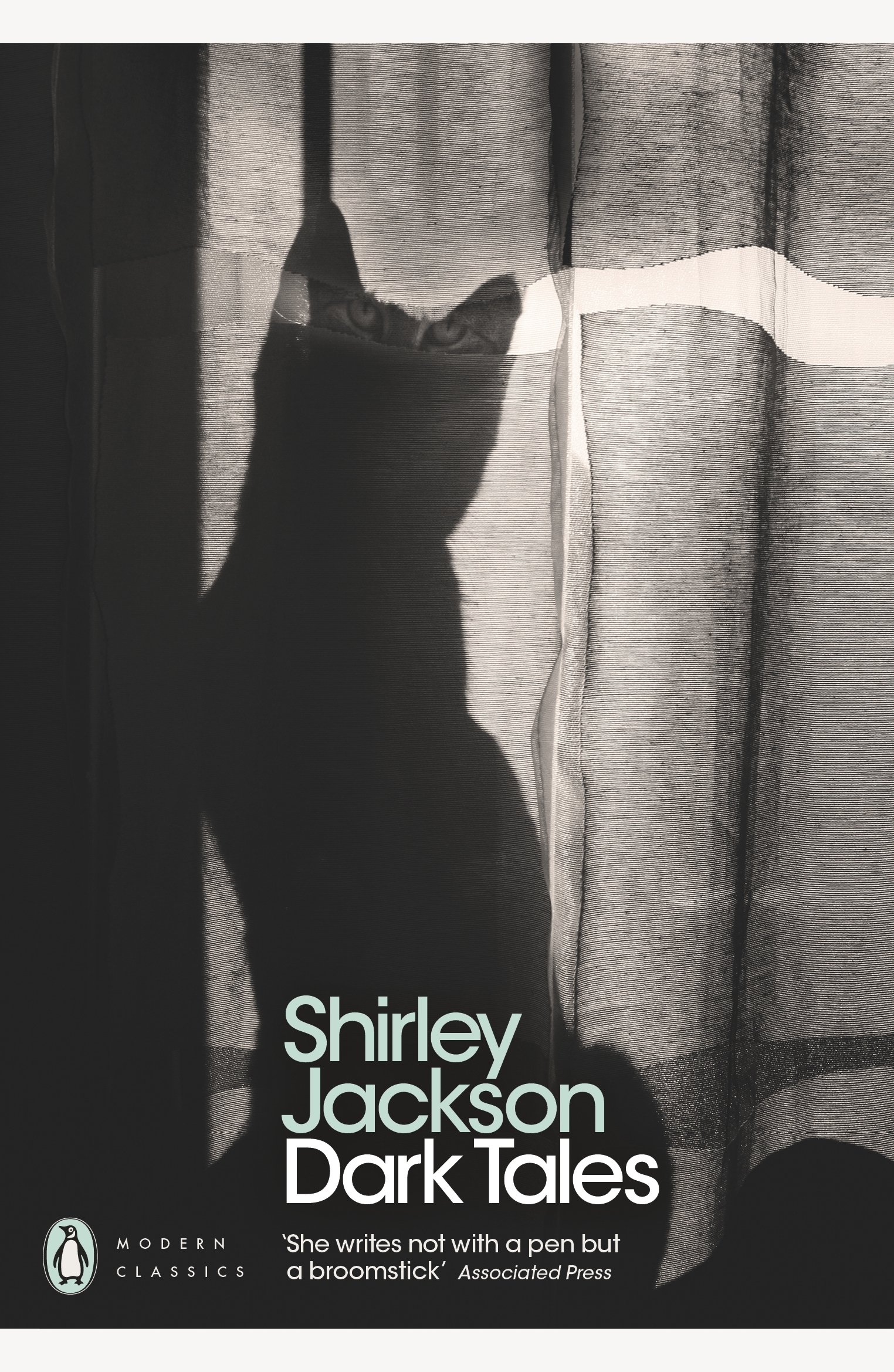
Dark Tales, by Shirley Jackson, 2017

Shirley Jackson established a reputation as a horror writer with the publication of her haunting short story ‘The Lottery‘ in the New Yorker in 1948. This anthology of stories drawn from across her writing career includes a wide variety of gothic tales. The publishers describe them as “deliciously dark stories” which I think both doesn’t do them justice and at the same time over-states their value. Which I know is contradictory, but I’ll try and explain what I mean.

When the stories are effective – principally when they do not rely on the supernatural – then they are far more than “deliciously dark”, which is more suited as a description for chocolate than a short story. The opening tale, for example, The Possibility of Evil, is a portrait of an old lady who writes poison-pen letters to her fellow townsfolk, mainly out of boredom and a sense of her own superiority. This story contains not a hint of the supernatural, but is very effective, with a wonderful, punchy ending. Louisa, Please Come Home was another story that made an impact on me. In it a teenager runs away from home – why it is not clear – and when she is found after living in a nearby town for several years, only to be rejected by her family as not their real daughter.

Other stories in the collection are not as strong. They often lean too heavily on the supernatural to provide the surprise element of the story. In The Bus is a good example of this weaker category. A stranded woman gets a lift to a familiar house that turns out to be her childhood home and she can’t escape it. Home boils down to a pair of ghosts who like to sit in cars. 

Jackson’s style can come over as formulaic when the stories are read in a single volume of this kind. She opens with mundane, everyday settings, then slowly introduces the creepier elements, usually without announcement, blurring the lines between the supernatural and the real world. The first person narrative helps to confuse the reader – is this “really” happening or is the narrator having a dream or vision? The menace of small town America is a common theme throughout this volume but overall it doesn’t bear comparison to Jackson at her best.

Standard
Book review

The Lottery, and other stories, by Shirley Jackson, 1949

I haven’t checked but I think this may well be the first collection of short stories I have reviewed in over 400 posts. That must at least be in part because I focused on the Guardian’s top 100 novels for a long time, but it is probably also a comment on the limitations of the short story as a literary form. Most publishers, even in this case, feel compelled to gather them together in a quasi-novel format of approximate novel length.

Having said that, this collection works well as a whole, and the use of The Lottery as a conclusion gives the whole text a strong collective punch. The Lottery is by far Jackson’s best known short story, and rightly so – it is an extraordinary, bleak portrait of rural America descended into a controlled, ritualistic form of Taliban-style barbarism. The citizens of a small, unnamed farming community gather on 27th June for a traditional ceremony involving the drawing of lots, the purpose of which is only fully revealed in the story’s closing lines. The ceremony is a harvest sacrifice – “Lottery in June, corn be heavy soon” – of the kind practised by primitive societies. Whilst the story is chillingly bleak, there is some hope offered in the asides that confirm that some communities are abandoning what is obviously a long-established tradition of human sacrifice by stoning to death.

Originally published in 1948 The Lottery revealed the potential for savagery lurking under the veneer of civilisation in America. I understand it is read widely in American schools, although in the UK it is not, by comparison, well known. If I was teaching English teenagers I would definitely use this powerful exploration of how we in the West think of ourselves as so advanced but how we are just one step away from the jungle. The tiny details in The Lottery are what give it its power – the calm, bucolic portrait of the villagers gathering in good cheer, chatting quietly to one another about this and that, the officials fussing about getting things underway, and then slowly the panic builds as the lottery starts.

I am sure this point has been made many times before, but there are strong echoes between The Lottery and The Hunger Games. Instead of a simple sacrifice the later novel uses the concept of a lottery as the starting point for a to-the-death gladiatorial contest, but the random selection of an ordinary person chosen for the sacrifice is such a powerful concept that I can understand why Collins would have been inspired by it.

None of the other short stories in this collection feature such a gruesome turn of events as that in The Lottery. They are mainly set in domestic, suburban settings, in which housewives, often newly wed or with small children, struggle to settle into new homes. Usually there is a sinister undertone to the stories, a sense of repressed threat which finally explodes in the Lottery, thus justifying its place at the climax of the collection. Sometimes the stories are simply sketches of brief if unsettling incidents, such as The Witches, in which an old man on a train disturbs a family with inappropriately gruesome reference to witchcraft. Other longer stories feature women past their prime living lives of quiet desperation, with the minutiae of everyday life becoming oppressive.

Jackson links these 25 stories thematically and in terms of their setting – they all seem to take place at roughly the same period of time, and in the same middle-American setting. They are linked further by the use of the same name for several characters across the different stories – indeed the original title of the collection was going to be ‘The Lottery and the Adventures of James Harris’. This unsettles the reader – are we following different events in the lives of the characters, or unrelated stories featuring people who just happen to share a common name? Is there any continuity between the stories? This is a world in which the supernatural still lurks beneath the surface of everyday life, a world where the memory of Salem Witch trials still troubles, and where people believe in daemons.

Jackson is a fine stylist. Not a word is wasted. If you want to dip into her work The Lottery is a great if atypical starting point, but I would recommend this collection as a more representative selection of her writing.

Standard