
Switch Bitch by Roald Dahl, 1974
A few years ago I reviewed Patrick Suskind’s Perfume. It’s fair to say I didn’t like it very much. One commenter pointed out the similarities between Suskind’s novel and Bitch, a much earlier short story by Roald Dahl. So when I finally got round to reading Switch Bitch, the collection of four Dahl stories that includes Bitch (and apologies for the misogynistic language by the way, on which more later) there was the resounding and much-delayed sound of a penny dropping. Because Perfume isn’t just inspired by Bitch, it robs it of its central premise unashamedly. Dahl’s story tells of a scientist who develops a scent that robs men of all sexual inhibition whatsoever – they become animals who have only one thought in their heads, to have sex with the nearest available woman. Nothing, including a gun to the head, can stop them. The scent triggers an animalistic response long-buried in our Neanderthal brains. Sounds familiar? This is the central concept of Perfume. Just one more reason, were it needed, to despise Suskind’s novel.
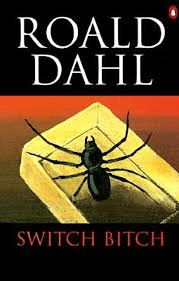
As well as sharing a central idea, both stories are profoundly sexist. If you didn’t know it you nevertheless could easily guess that the Dahl story was written for Playboy, a soft porn magazine from the days when there were such things as soft porn magazines, which included occasional stories to give readers a break from the soft-focus photography. Their purpose was solely to titillate the invariably male reader. Dahl’s writing for adults is often characterised by unexpected endings – this was the whole premise of the long-running television series “Tales of the Unexpected” which were originally based on his short stories of the same name. But there’s an obvious problem with this structure = once it’s established the twist to each tale becomes more and more obvious. The same problem applies to the stories in this collection – there is no real surprise when the denouement of each is revealed. As the reader has known for some time, Bitch ends with the scent being accidentally discharged. This leads to a profoundly unattractive woman being ravaged, and apparently enjoying the experience. It’s horrible.
There are three other stories in this collection. In The Visitor the narrator’s uncle Cornelius, (by his own account) a preposterously successful philanderer, finds himself stranded in Egypt while on his way to Jerusalem. He is offered a room for the night by a local businessman who has built a luxurious mansion in the desert. Cornelius suspects his car has been tampered with to cause him to be stranded and meet the businessman, although why is unclear. While there Cornelius meets the man’s wife and daughter and sets out to seduce them – he likes a challenge. The inevitable sexual encounter that night happens in silence and complete darkness, (of course it does) leaving Cornelius unsure which woman he has ‘bedded’. If you don’t work out who he actually sleeps with you haven’t been paying much attention.
Our understanding of what constitutes sexual assault has evolved a lot in recent years. At the time it was published I don’t think many people would have understood that the central premise of The Great Switcheroo, in which two men devise a (profoundly improbable) plan whereby each man has sex with the other’s wife (without either wife realising the deception) is clearly a case of rape, rather than some ‘light-hearted’ fun. The sting in the tail/tale – that one wife enjoys the sex with her neighbour so much more than she does with her husband – is in part intended to ameliorate the grossness of the husband’s behaviour. He finds out his wife has hated having sex with him all their married life, so the ‘joke’ is on him. This is a modern version of the bed-trick, (which Dahl had already employed in a more conventional form in The Visitor) the principal difference being that in traditional literature it is almost always the woman who is substituted for another (the implication being that men are unable to tell who they are having sex with as long as it is dark). When this story was first published, again in a soft porn magazine, the idea of a husband tricking his wife into having sex with another man, only for the plan to blow up in his face, was mildly whimsical – some fifty years on it is appalling, distressing and hard to read. The story is told from the perspective of the husband who initiates the plan (his neighbour goes along with it enthusiastically) and ends up finding out he is a dud in bed, an anti-hero who we are invited to laugh at rather than a proto-rapist.
In The Last Act a widow reconnects with the man she left for her husband years earlier. The man is a gynaecologist, recently separated, and harbours a grudge for her breaking off their relationship. He seduces and humiliates her, and it is suggested that this makes her commit suicide. This is another appalling story – even Dahl’s biographer said it should have been scrapped.
Charlie and the Chocolate Factory had been published in 1964, well before these stories were published in Playboy. I mention this because I can almost understand a working writer selling cheap, tawdry stories to a men’s magazine simply to pay the bills. But Dahl obviously wasn’t in that position, and even if he was he could have chosen not to subsequently publish the stories in this format in 1974, by when he was also writing for films and obviously very well off.
Don’t read Switch Bitch. I always reject the idea that you can tell what an author was like as a person by his or her works, but sometimes the challenge of joining the dots between the two is almost irresistible.

