“They burned down the market the day Vivek Oji died.” So begins the tragedy of Vivek Oji, a young man living a double life in modern-day Nigeria. Born on the day of his grandmother’s death, Vivek is seen by some of his family members as her incarnation, marked out by the same starfish-shaped scar.
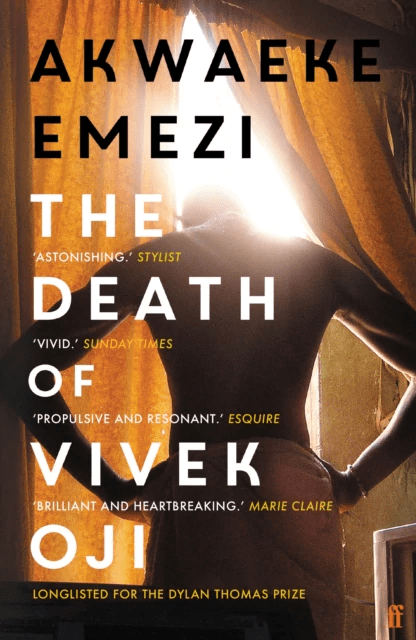
Vivek’s death marks both the beginning and the end of the novel. It tells the story of his short life, using memories from family and friends alongside his own narration. The fragmented narrative and complex time structure slowly builds into a picture of a life that is brimming with potential but is also, as the reader knows throughout, doomed to be cut tragically short. The main figures in his life are his over-protective mother and his cousin, Osita. It’s hard to pinpoint the precise moment that Vivek’s life begins to unravel, but perhaps it is when he allows his hair to grow down beyond his shoulders. This is a breach of convention in his traditionalist home and community. It troubles his family and his neighbours. Vivek’s aunt becomes convinced that a demon is possessing him, and he is traumatised by a violent attempt at exorcism at her church. The unspoken fear of his parents is that it is an outward sign of femininity and that he is gay, which is taboo in Nigerian society. The context here is vital. Homosexuality is not just taboo in Nigeria, it is illegal. The Same-Sex Marriage (Prohibition) Bill passed in 2014 in response to the legalisation of gay marriage in the West, prohibits marriage between persons of the same sex, forbids any cohabitation between same-sex sexual partners and bans any “public show of same sex amorous relationship.” It imposes a 10-year prison sentence on anyone who “registers, operates or participates in gay clubs, societies and organization” or “supports” the activities of such organizations. Even having long hair is sufficient to spark suspicion, and suspicion is all that is needed.
Much of the novel is told through the eyes of Vivek’s mother, Kavita. Her grief drives her to relentlessly try to find out how her son died. At the novel’s climax she succeeds in this quest and finds some sort of peace knowing that he lived at least part of his life happily and on his own terms.
My initial reaction to this novel was that it was an example of the ‘bury your gays’ trope. But I was wrong, and it might be worth explaining why. My understanding of this trope was that gay people in literature, film, television etc are often denied happy relationships, and frequently die just at the point that a fulfilling relationship or personal happiness is in sight. This article discusses the trope in a lot more detail. While the trope originated as a means to allow gay relationships to be portrayed without overstepping social taboos, it developed over time and now more simply represents the expendability of gay characters, particularly in film and on television. At first it looks as if Vivek’s death might fall into this category. But there are a number of reasons why it doesn’t apply here. First, the author doesn’t explicitly describe Vivek as gay. He has sex with other men, but he also wears women’s clothing and make-up, and adopts a female gender identify at times. It is in these moments that Vivek seems happiest and most fulfilled. He doesn’t adopt a specific gender identity (or perhaps to be more precise, the author doesn’t mention one). This may be because he doesn’t have time to explore this aspect of his identity fully, but also because conservative Nigerian society doesn’t allow him the space to do so. For much of the novel the reader is led to believe that Vivek is murdered by a rioting mob because he is ‘caught’ in public wearing female clothes and make-up. The final revelation about his much more mundane death serves to undercut these expectations – what we think we know about people is wrong, and making judgments based upon those assumptions is equally wrong.
This was a thought provoking if somewhat sad novel about the challenges facing gay, non-binary and trans people in modern-day Nigeria. It’s great that authors such as Emezi are now finding their voices and publishers to promote their work.