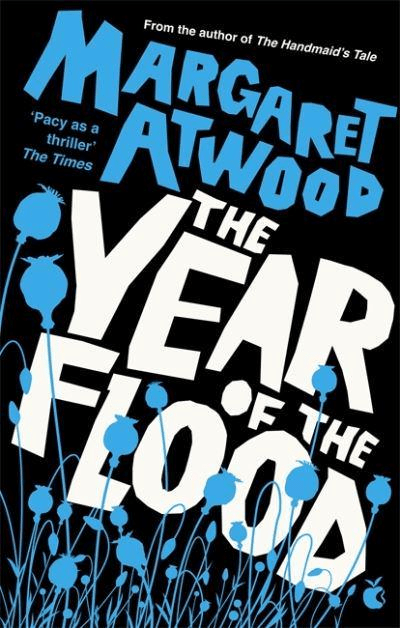
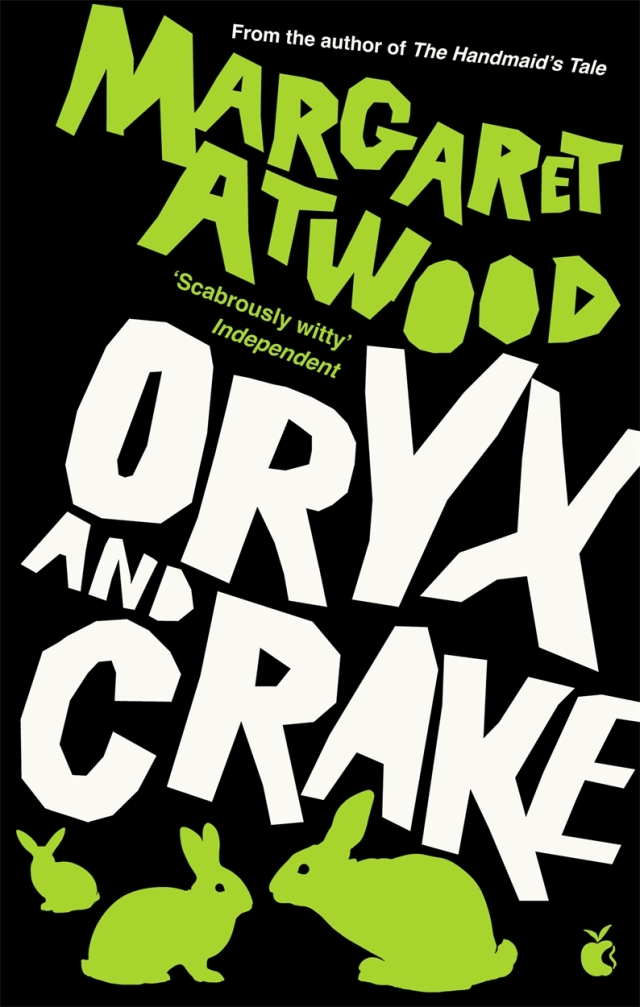
MaddAddam is the third and final novel in (and also gives its name to) the MaddAddam trilogy. It continues the story of the characters introduced in Oryx and Crake and The Year of the Flood, and opens in traditional manner of sequels: two survivors of the apocalypse, Ren and Toby, (the principal characters of The Year of the Flood), set out to rescue their friend Amanda, another of God’s Gardeners, the survivalist millennial cult who has been kidnapped. During their search they met up with other survivors including several former members of the God’s Gardeners, who were either all extremely lucky or somehow developed an immunity to the man-made virus that triggered the pandemic. They also meet Snowman Jimmy (principal narrator of Oryx and Crake) and his ‘Crakers’, modified humanoids genetically designed to survive the apocalypse and prosper in the new, post-human world. Together they form a small defensive compound, pooling their resources and skills and protecting themselves against the hostile wildlife, as well as the two ‘painball’ (a form of gladiatorial combat) kidnappers.
As with the previous books in the trilogy, Atwood combines present tense narratives with long, detailed flashbacks. In this novel we learn a lot more – possibly a shade too much – about Zeb’s background. He and his brother, Adam, who we later find out is the founder of the God’s Gardeners, escape from an abusive father and step-mother, and go on the run. Zeb adopts a bewildering series of different identities, at each stage crossing the paths of other characters already featured. Or as the New Stateman’s reviewer put it:
A penchant for coincidence began to emerge in The Year of the Flood and by this instalment it’s running as amok as the pigoons. All the survivors have known each other for years and keep bumping into each other in the post-apocalyptic landscape, while rarely encountering anyone who didn’t appear in the first two books.
The improbable coincidences pile up as Zeb moves from job to job, all of them ‘manly’ roles such as pilot and bouncer for a sex club (the one Ren and Amanda work at, of course). Zeb has adventure after adventure (at one point he is mistaken for Bigfoot, which I think was intended as comedic relief?). I had the impression Atwood was writing these asides as a form of therapy, an escape from ‘serious’ writing and that she could have gone on almost indefinitely.
Humour is also provided by the naivety of the blue-skinned, penis-waving Crakers. They are like toddlers constantly asking “why?” insisting on being told stories, and then interrupting them. This joke is quite amusing the first time it is used, but it doesn’t bear that many repetitions.
When it was originally published MaddAddam was met with some confusion. Why was Atwood still writing about this society which had already been explored in considerable depth? Was there anything particularly new to say about the apocalypse? There’s a degree of condescension in this attitude – as if science fiction is not worthy of the attention of an author of Atwood’s status – but this is nevertheless quite derivative stuff. The lack of originality in the novel’s core concept – ‘the end of the world, and what happens to the plucky group of survivors’ – is certainly a weakness which becomes all the more apparent by this stage of the series. There’s no sense of peril in the conflict with the Painballers – the novel’s bad guys – and the final showdown is told almost entirely ‘off-screen’ through the confused eyes of one of the Crakers, who doesn’t really understand what is going on.
Atwood hints that the Crakers may not be the primitive creatures we have been led to believe. One of the younger humanoids learns how to write and gains an understanding of some of the simpler human concepts. Is this a sign of the Crakers’ beginning to evolve and throw of their genetic limitations, or not? We don’t find out because this element of the story remains unresolved.
In the novel’s acknowledgements, Atwood wrote: “Although MaddAddam is a work of fiction, it does not include any technologies or biobeings that do not already exist, are not under construction, or are not possible in theory”. (my emphasis). The final clause in this sentence is doing a lot of the heavy lifting. A lot of things are theoretically possible but still thousands of years away from being developed. To imply that the technology in MaddAddam is in some way imminent is misleading: psychic pig/human hybrids are not going to happen any time soon. Of course what Atwood is doing quite deliberately is referencing a similar point she made about The Handmaid’s Tale – that everything described there had happened to women at some point in human history. This is an attempt to make the text more vivid and real, a warning rather than speculative fiction. Whether she needed to do that or not is a moot point – without it does the text stands on its own well enough as fiction? Most dystopian fiction doesn’t need the protective cover of an ‘it could happen, really’ justification.
Atwood prescience happens where I suspect she least expected it – not in the development of genetic engineering, but in an aside on one of Zeb’s early jobs:
“His first employer was Ristbones, an outfit that specialised in the hacking of electronic voting machines. That had been easy in the first decade of the century, and also profitable – if you controlled the machines you could slip in whichever candidate you wanted”.
I detected some conservative themes in the previous novels in this series – opposition to gun control, and a suggestion that the apocalypse could in some way be an opportunity for a new start for humanity – but I didn’t expect to see Trumpian lines about electoral fraud being anticipated so accurately.