Book review

I am pretty ambivalent about horror as a genre, and The Haunting of Hill House has done little to change my mind about this one way or the other. While bad horror is virtually unreadable, good horror needs to tap into some primeval fear for it to make any impact at all and avoid the cardinal sin of being ridiculous. I wasn’t convinced that The Haunting managed to swerve that pitfall.
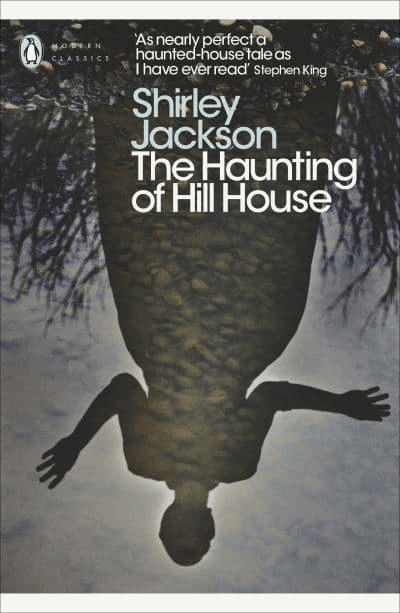
This novel is an unusual example of the genre in that is is without a monster – no aliens or creatures from the black lagoon. While other 1950’s American authors were being inspired by the Cold War, the space race and the march of technology (see for example Richard Matheson’s 1956 The Shrinking Man, or John Wyndham’s 1951 The Chrysalids) here Shirley Jackson falls back to one of horror’s earliest forms, the haunted house story.

Hill House is a mansion somewhere remote in the USA – a precise location is obviously never specified – which although relatively recently built, has acquired a reputation for being cursed or haunted:

“Hill House, not sane, stood by itself against its hills, holding darkness within; it had stood so for eighty years and might stand for eighty more. Within, walls continued upright, bricks met neatly, floors were firm, and doors were sensibly shut; silence lay steadily against the wood and stone of Hill House, and whatever walked there, walked alone.”

Jackson, or her narrator, is clear – there is something about the precise architecture of Hill House that is evil:

“No human eye can isolate the unhappy coincidence of line and place which suggests evil in the face of a house, and yet somehow a maniac juxtaposition, a badly turned angle, some chance meeting of roof and sky, turned Hill House into a place of despair, more frightening because the face of Hill House seemed awake, with a watchfulness from the blank windows and a touch of glee in the eyebrow of a cornice.”

and later

“Almost any house, caught unexpectedly or at an odd angle, can turn a deeply humorous look on a watching person; even a mischievous little chimney, or a dormer like a dimple, can catch up a beholder with a sense of fellowship; but a house arrogant and hating, never off guard, can only be evil.”

Four brave/foolhardy souls decide to stay at the house overnight to investigate the persistent reports of the place being haunted: Dr. John Montague, an paranormal investigator; Eleanor Vance, a young woman escaping her oppressive family; Theodora, an artist; and Luke Sanderson, heir to Hill House. Eleanor and Theodora have been chosen by Dr Montague, who is leading the experiment, because they have had previous encounters with the paranormal. Clearly the assumption is that they will find something strange about the house – and of course they immediately do.

Apart from Dr Montague these are not the typical cast of characters found in a haunted house story. Eleanor is timid and an extremely unlikely ghost-hunter; Theodora is, it is broadly hinted, a lesbian, and while I am not suggesting for one second that lesbians can’t hunt ghosts, it is definitely not a typical piece of casting; and Luke – well to be honest Luke is not a very well developed character at all – he is principally there to make up the numbers. Only Dr Montague conforms to his eccentric scientist trope.
The cast assembles in the way that groups of people going to haunted houses do and the scene is set for the haunting to begin, along with the obligatory creepy housekeeper. Strictly on cue the scary happenings kick-off. All of the inhabitants begin to experience ‘strange events’ while in the house and its grounds, including violently loud noises, freezing cold doorways, sinister messages being scrawled on the walls and spectral figures glimpsed out of the corner of the eye.

Is this all really happening, or are the loud noises etc being produced by the residents themselves? Alternatively, are they imagining them? Maybe even both? The narrative carefully avoids any possibility of the reader knowing what is really happening, and this undermines the attempts at realism in the story. We can’t be scared of what we know is not real after all, and the willing suspension of disbelief needs a convincing appearance of reality.

Approximately two-thirds of the way through, as the daily routine of general spookiness is beginning to settle down, the novel is given a massive injection of life by the late arrival of the magnificent Mrs. Montague and her side-kick Arthur Parker, a no-nonsense headmaster. This pair are wonderfully comedic – Mrs Montague relentlessly and unreasonably hen-pecks her husband, and Mr Parker’s attempts at being the alpha-male are farcical:

I shall make my headquarters in the small room just this side of the nursery, well within shouting distance. I shall have with me a a drawn revolver – do not take alarm, ladies, I am an excellent shot – and a flashlight, in addition to a most piercing whistle…You may all sleep quietly I assure you.

The ending is sadly predictable, but after all the range of choices available to the author of horror stories are fairly limited:

a) Ghost are real;

b) It was the spooky caretaker/groundskeeper in a mask after all (i.e. there is a logical explanation of some kind to all the apparently supernatural activity); or

c) The horror is psychological – the haunting etc is all in the mind.

H. P. Lovecraft said of horror writing that “the oldest and strongest emotion of mankind is fear, and the oldest and strongest kind of fear is fear of the unknown”. Jackson picks up on this concept here:

“Fear,” the doctor said, “is the relinquishment of logic, the willing relinquishing of reasonable patterns. We yield to it or we fight it, but we cannot meet it halfway.”

Jackson does a good job of keeping the threat imposed by Hill House largely unknown – it’s never really clear what is going on at any particular time. The confusing layout of the house, which leads to the characters getting lost all the time, makes good use of this concept. But I needed to be persuaded to willingly relinquish my grasp on reasonableness before experiencing anything like fear and I never quite succumbed.
The Haunting of Hill House by Shirley Jackson, 1959

Aside
Book review

Dark Tales, by Shirley Jackson, 2017

Shirley Jackson established a reputation as a horror writer with the publication of her haunting short story ‘The Lottery‘ in the New Yorker in 1948. This anthology of stories drawn from across her writing career includes a wide variety of gothic tales. The publishers describe them as “deliciously dark stories” which I think both doesn’t do them justice and at the same time over-states their value. Which I know is contradictory, but I’ll try and explain what I mean.

When the stories are effective – principally when they do not rely on the supernatural – then they are far more than “deliciously dark”, which is more suited as a description for chocolate than a short story. The opening tale, for example, The Possibility of Evil, is a portrait of an old lady who writes poison-pen letters to her fellow townsfolk, mainly out of boredom and a sense of her own superiority. This story contains not a hint of the supernatural, but is very effective, with a wonderful, punchy ending. Louisa, Please Come Home was another story that made an impact on me. In it a teenager runs away from home – why it is not clear – and when she is found after living in a nearby town for several years, only to be rejected by her family as not their real daughter.

Other stories in the collection are not as strong. They often lean too heavily on the supernatural to provide the surprise element of the story. In The Bus is a good example of this weaker category. A stranded woman gets a lift to a familiar house that turns out to be her childhood home and she can’t escape it. Home boils down to a pair of ghosts who like to sit in cars. 

Jackson’s style can come over as formulaic when the stories are read in a single volume of this kind. She opens with mundane, everyday settings, then slowly introduces the creepier elements, usually without announcement, blurring the lines between the supernatural and the real world. The first person narrative helps to confuse the reader – is this “really” happening or is the narrator having a dream or vision? The menace of small town America is a common theme throughout this volume but overall it doesn’t bear comparison to Jackson at her best.

Standard
Book review

The Lottery, and other stories, by Shirley Jackson, 1949

I haven’t checked but I think this may well be the first collection of short stories I have reviewed in over 400 posts. That must at least be in part because I focused on the Guardian’s top 100 novels for a long time, but it is probably also a comment on the limitations of the short story as a literary form. Most publishers, even in this case, feel compelled to gather them together in a quasi-novel format of approximate novel length.

Having said that, this collection works well as a whole, and the use of The Lottery as a conclusion gives the whole text a strong collective punch. The Lottery is by far Jackson’s best known short story, and rightly so – it is an extraordinary, bleak portrait of rural America descended into a controlled, ritualistic form of Taliban-style barbarism. The citizens of a small, unnamed farming community gather on 27th June for a traditional ceremony involving the drawing of lots, the purpose of which is only fully revealed in the story’s closing lines. The ceremony is a harvest sacrifice – “Lottery in June, corn be heavy soon” – of the kind practised by primitive societies. Whilst the story is chillingly bleak, there is some hope offered in the asides that confirm that some communities are abandoning what is obviously a long-established tradition of human sacrifice by stoning to death.

Originally published in 1948 The Lottery revealed the potential for savagery lurking under the veneer of civilisation in America. I understand it is read widely in American schools, although in the UK it is not, by comparison, well known. If I was teaching English teenagers I would definitely use this powerful exploration of how we in the West think of ourselves as so advanced but how we are just one step away from the jungle. The tiny details in The Lottery are what give it its power – the calm, bucolic portrait of the villagers gathering in good cheer, chatting quietly to one another about this and that, the officials fussing about getting things underway, and then slowly the panic builds as the lottery starts.

I am sure this point has been made many times before, but there are strong echoes between The Lottery and The Hunger Games. Instead of a simple sacrifice the later novel uses the concept of a lottery as the starting point for a to-the-death gladiatorial contest, but the random selection of an ordinary person chosen for the sacrifice is such a powerful concept that I can understand why Collins would have been inspired by it.

None of the other short stories in this collection feature such a gruesome turn of events as that in The Lottery. They are mainly set in domestic, suburban settings, in which housewives, often newly wed or with small children, struggle to settle into new homes. Usually there is a sinister undertone to the stories, a sense of repressed threat which finally explodes in the Lottery, thus justifying its place at the climax of the collection. Sometimes the stories are simply sketches of brief if unsettling incidents, such as The Witches, in which an old man on a train disturbs a family with inappropriately gruesome reference to witchcraft. Other longer stories feature women past their prime living lives of quiet desperation, with the minutiae of everyday life becoming oppressive.

Jackson links these 25 stories thematically and in terms of their setting – they all seem to take place at roughly the same period of time, and in the same middle-American setting. They are linked further by the use of the same name for several characters across the different stories – indeed the original title of the collection was going to be ‘The Lottery and the Adventures of James Harris’. This unsettles the reader – are we following different events in the lives of the characters, or unrelated stories featuring people who just happen to share a common name? Is there any continuity between the stories? This is a world in which the supernatural still lurks beneath the surface of everyday life, a world where the memory of Salem Witch trials still troubles, and where people believe in daemons.

Jackson is a fine stylist. Not a word is wasted. If you want to dip into her work The Lottery is a great if atypical starting point, but I would recommend this collection as a more representative selection of her writing.

Standard
Book review

We Have Always lived in the Castle by Shirley Jackson, 1962

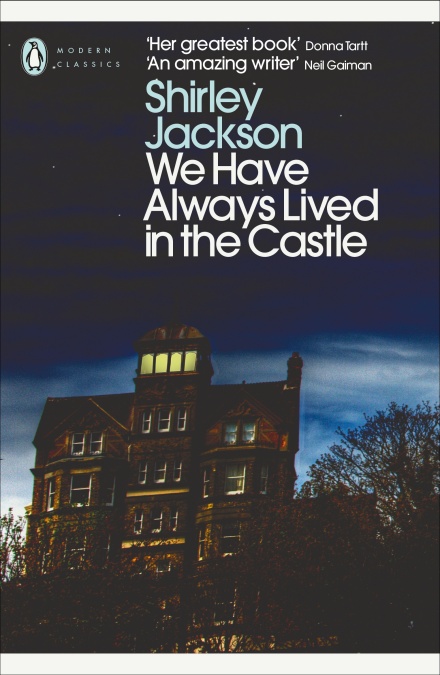
I’m trying to read more authors I haven’t read before. Shirley Jackson is a writer I have heard about mainly through references to her chilling short story, The Lottery. As I understand it, The Lottery is widely read in American schools, although it is much less well known in the UK. We Have Always Lived in the Castle was Jackson’s final novel, published three

we have always

years before her death, and tells the story of two sisters, Mary Katherine (Merricat) and Constance Blackwood, who live with their aging and infirm uncle Julian in their isolated home in New England. The Blackwoods were and are a prosperous family. They remain aloof from the common people of the village and make them walk around their property to reach the main road rather than allowing them a short cut across their estate. This creates tension between the villagers and the Blackwoods, tension which turns ugly later in the novel.

Merricat narrates the tale, and it is clear from the opening that this is not a normal family:

“My name is Mary Katherine Blackwood. I am eighteen years old, and I live with my sister Constance. I have often thought that with any luck at all, I could have been born a werewolf, because the two middle fingers on both my hands are the same length, but I have had to be content with what I had. I dislike washing myself, and dogs, and noise. I like my sister Constance, and Richard Plantagenet, and Amanita phalloides, the death-cup mushroom. Everyone else in our family is dead.”

Older sister Constance never ventures further than the garden in the grounds of the family home. We soon learn why – she was tried and acquitted of murdering her family by poisoning their sugar bowl. Although sometimes described as a mystery, it doesn’t take Holmesian powers of deduction to work out who the real poisoner is – the character with the morbid obsession with death, who has sadistic fantasies about the people of the village who taunt her on her twice weekly shopping trips:

“I am walking on their bodies”

“I am going to put death in all their food and watch them die”

“I would have liked to come into the grocery some morning and see them all… lying there crying with the pain and dying”.

Merricat is a troubled young woman. She uses a primitive, childish form of witchcraft to protect her family, marking the boundary of their property with fetishes and totems. She is consumed with harmful thoughts and haunted by OCD rituals. At this point in the story Constance’s mental health, in particular her agoraphobia, appears to be recovering. She welcomes visitors and talks of going down to the village. Merricat feels threatened by this change, but this is nothing compared to her reaction when Cousin Charles, clearly more interested in the contents of the Blackwood family safe than the sisters themselves, comes to visit. Merricat’s murderous fantasies become even more vivid :

I wanted to stamp on him after he was dead, and see him lying dead on the grass.”

“I could wish him dead until he died. I could fasten him to a tree and keep him there until he grew into the trunk and bark grew over his mouth. I could bury him in the hole where my box of silver dollars had been so safe until he came; if he was under the ground I could walk over him stamping my feet.”

Charles’s arrival disturbs the delicate equilibrium of the house and Merricat’s mental health, and things quickly deteriorate. As Merricat desperately tries to drive him away she starts a fire which goes on to destroy much of the house, transforming it into the castle of the novel’s title, with an upper floor open to the elements like battlements. Uncle Julian dies in the fire and Charles flees. Merricat and Constance make a home in the ruins of their house, and this is where the story eventually leaves them, hidden from the rest of the world but finally accepted by the villagers.

We Have Always Lived in the Castle is a troubling tale which leaves the reader with many questions. Why did Constance not find her psychopathic sister the help that she so obviously needs? Why did no-one in the village work out the fairly simple puzzle about the identity of the family’s killer? How are the sisters going to survive in their ruins?

Merricat is an absorbing portrait of mental illness – but is We Have Always more than that? Does it have anything to say about American society, and about the way it treats outsiders? Merricat’s narrative voice is powerful, and can easily distract the reader into thinking that her account of the novel’s events, flawed though it is, is authentic, rather than seen through the distorting lens of her mental illness. We never get to know what precipitated her murderous attack on her family, but it is safe to say it was probably something trivial that lead to her being sent to her room that day. She certainly doesn’t see herself as a mass murderer; in many ways she is still a child, without any understanding of the consequences of her actions. She starts the fire that destroys their home, and although the volunteer firemen of the village put it out, saving the ground floor, they then go on to trash the house.

While the novel ends on a happy-ever-after note for Merricat and Constance, we can tell that their isolated way of life will not last long. Is this a parable for American society, that has survived the chaos and destruction of the second world war, but is living on borrowed time?

Standard