Book review

The New York Times called Barbara Kingsolver’s Demon Copperhead ‘a close retelling of Charles Dickens’s “David Copperfield,”’, concluding that this was ‘either a baffling choice or an ingenious manoeuvre’. That’s the question I am struggling with: why use Charles Dickens’s David Copperfield as the outline structure for your novel? Was this in some undefined way a form of ‘cheating’, a tribute to Dickens, or simply a case of an author using the well-established technique of borrowing a structure to provided an outline for the events of the novel?
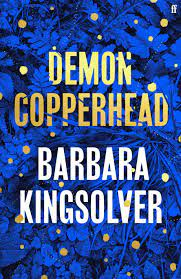
First I need to overcome the vague sense of unease that using someone else’s plot outline is against the ‘rules’ of novel writing. Of course there are no such rules, and while plagiarism is something else entirely, this is nowhere near that level of imitation. Authors have used the plots from other authors from the year dot – Shakespeare’s plots are virtually all borrowed from earlier (or even contemporaneous) texts, and the practice continues to the present day, Ian McEwan’s Nutshell being a very successful adaptation of Hamlet for example. But while borrowing someone’s plot structure and characters may not be against any rules, the author still needs to have a reason for doing this, some original approach that respects the source text but does something new with it – if not that that’s still just copying! There’s a further complication here in that Copperfield is a very personal novel in which Dickens drew upon elements of his own personal life story. David is Charles in some respects, in the way Demon certainly is not Barbara! So does Demon Copperhead does something new with the material of David Copperfield while respecting the original text? I think it does, although I have some reservations, which I will come to.

“You know, sometimes you hear about these miracles, where a car gets completely mangled in a wreck. But then the driver walks out of it alive? I’m saying you are that driver.”

Kingsolver’s hero and endearingly honest narrator is Damon Fields, known as Demon and nicknamed Copperhead for his red hair. Demon is the living definition of trailer-trash, born to a drug-using teenage single mother in Virginia. Lee County is in the heart of the Appalachians, a community of largely white folk who are the butt of all American jokes about rednecks and hillbillies. Wikipedia says this of the stereotyping of Appalachian people:

“Appalachian individuals are perceived largely to be impoverished, white, rural, lazy, and rough around the edges. Appalachians are also stereotyped to be hillbillies. NPR describes the stereotypical portrayal of Appalachians as “children in sepia-toned clothes with dirt-smeared faces. Weathered, sunken-eyed women on trailer steps chain-smoking Camels. Teenagers clad in Carhartt and Mossy Oak loitering outside long-shuttered businesses.” Other common Appalachian stereotypes include inbreeding, poor dental hygiene, and wearing no shoes.”

Kingsolver clearly finds this stereotype offensive and empathises with Demon and his community, but she does little to challenge the oversimplified portrait – the novel is full of people who fit this description! Not everyone is an ill-educated redneck, of course, but there are more than enough. Demon is from a sub-category of this community – he identifies as a Melungeon, a dark-skinned ethnic group specific to this region and descended from Europeans, Native Americans, and sub-Saharan Africans originally brought to America as indentured servants and slaves. His life is blighted by poverty and discrimination. His early childhood follows the template of the source novel quite closely: an ineffectual mother, a long-dead father and a violent stepfather. When his mother dies of an overdose, he is taken into the ‘care’ of the authorities who do an appalling job of looking after him, putting him into foster homes where he suffers neglect and abuse in equal measure. Finally he tracks down his grandmother who helps him find a home with Coach Winfield and his daughter Agnes. He becomes a successful American football player until he suffers a career ending injury. This injury is the catalyst for the next phase in Demon’s life as he struggles with a crippling opioid addiction. Almost all his peers succumb to the same addiction and several of their lives are destroyed by this new plague. Kingsolver writes powerfully about the impact of this drug and the responsibility of the pharmaceutical companies for engineering the crisis, seeing the issue from the perspective of those involved and affected rather than sitting in judgment from outside the issue:

“What’s an oxy, I’d asked. That November it was still a shiny new thing. OxyContin, God’s gift for the laid-off deep-hole man with his back and neck bones grinding like bags of gravel. For the bent-over lady pulling double shifts at Dollar General with her shot knees and ADHD grandkids to raise by herself. For every football player with some of this or that torn up, and the whole world riding on his getting back in the game. This was our deliverance. The tree was shaken and yes, we did eat of the apple.

In most of his novels Dickens championed ideas of social justice. He led specific campaigns against child labour, baby farming, money lending and the various other ills that blighted Victorian England. Kingsolver uses the same basic narrative and setting of the source text to address more recent social issues in the United States – the appallingly underfunded social care system, the failing education system, racism and of course the opioid epidemic. In this respect the ‘borrowed’ narrative is effective, although it could be argued that a novel about these issues and in this place and time didn’t really needed the overlay of a Dickensian narrative.

I mentioned earlier I had some reservations about the author’s reimagining of the source material. One issue is in the portrait of the modern-day Micawbers, Kingsolver’s McCobbs family. Micawber may be a weak and ineffectual man, but he is also kind-hearted. The McCobbs on the other hand are just plain unpleasant. Steerforth is a much more nuanced character than his Kingsolver equivalent, the sporting bully Fast Forward. There’s a wider issue with the Dickensian origins of the novel – sometimes it becomes a distraction. I found myself trying to recognise scenes, characters and parallels with the source material rather than focussing on the novel itself. This isn’t a big issue – because I don’t know Copperfield that well I was able to just read Copperhead on its own terms, as an American novel about an orphan who struggles to find a safe home in the world.

I am still not sure the Copperfield parallels were entirely necessary. With or without them this is a powerful story about an American underclass that so far as I know has not previously had a champion. The novel ends on a positive note for Demon and his relationship with Agnes, which suggests the author is also positive for the rednecks, hillbillies and trailer trash she vividly humanises, rescuing them from the ignominy of being the butt of the endless incest and poor dental hygiene jokes.

Demon Copperhead by Barbara Kingsolver, 2022

Aside
Book review

The Water Dancer is a novel about slavery in America during the early nineteenth century. Anyone choosing to write about this topic has to decide early on how to convey the horror of slavery and how to bring the very familiar facts of the subject to life in a new way. Like Colson Whitehead in The Underground Railroad and Toni Morrison in Beloved, to name two relatively recent examples, Coates uses the supernatural to look afresh at this issue.

The Water Dancer (Coates novel).png

The novel is narrated by Hiram (Hi) Walker. Hi was born into slavery on a tobacco plantation in Virginia, the son of the white plantation owner and his black mother. His mother was sold when Hiram was young, as are increasing numbers of the plantation’s slaves as the value of the tobacco crop dwindles. Hiram has a photographic memory, with one big exception – he can remember almost nothing about his mother.

The novel opens when Hiram is in his late teens. Driving a carriage across a bridge he has a vision of his mother, which causes the carriage to crash into the river below, drowning his half-brother Maynard.

And I could only have seen her there on the stone bridge, a dancer wreathed in ghostly blue, because that was the way they would have taken her back when I was young, back when the Virginia earth was still red as brick and red with life, and though there were other bridges spanning the river Goose, they would have bound her and brought her across this one, because this was the bridge that fed into the turnpike that twisted its way through the green hills and down the valley before bending in one direction, and that direction was south.

Hiram miraculously survives, seemingly by being transported out of the river onto the bank. This incident introduces Hiram’s super-power which Coates calls ‘conduction’, the ability to use memory to transport himself and others through space, a power that he eventually uses to rescue himself and others from slavery.

I must admit to feeling conflicted about this unusual metaphor. The real members of the underground railroad did not have super-powers. Escaping from slavery must have been a terrifyingly dangerous undertaking. Does it diminish the risks people took to describe them in this way? Aren’t the bare facts of the enterprise sufficiently dramatic without the need to overlay a supernatural element to what happened? In all other respects the novel is entirely naturalistic, (Wikipedia ridiculously calls it ‘surrealist’, which is just plain wrong) and it is only with this one element, which it takes Hiram a long time to harness, that the paranormal is invoked. I had no similar concerns with Whitehead’s The Underground Railroad, in which the railroad was strikingly imagined as a literal train, so why the reservations here? I assume the point being made is that remembering one’s ancestry is the key to a person’s strength and thus to one’s freedom. But is it? Remembering where we came from is important, of course, but freedom for the enslaved in nineteenth century Virginia was a much more urgent, practical matter of life and death, an urgency that seems largely missing in The Water Dancer, where freedom can be gained by holding hands and wishing hard. Remembering the past is surely far more important to today’s descendants of the enslaved – although even as I write that I recognise it is hardly my place to tell them what is and isn’t important to them!

Appropriately, the plot of The Water Dancer meanders. There’s nothing hurried in the series of events which takes Hiram out of Virginia into the underground railroad organisation, where he meets Harriet Tubman, who like him can ‘conduct’ people to freedom. Tubman – an almost mythical figure known as Moses – is convincingly sketched, and becomes a mentor to Hiram. He eventually makes his way back To his father’s plantation, with a plan to help others escape from slavery, but settles into a role as his father’s carer and seems in no hurry to leave.

Sadly I just really didn’t care that much about Hiram. He didn’t come alive as a character (unlike Harriet Tubman – she was very well realised and I would have been happy to spend a lot more time following her adventures). The horrors of slavery are not directly confronted in this novel – even to the extent of the euphemistic indirect language used. Being enslaved is described as being ‘tasked’, which seems to drain much of the historic impact from the original term. Similarly enforced prostitution is described as going to ‘the fancy’. In this version of slavery, when slaves run away they are captured and resold rather than the brutality described in other accounts of the period. Hiram is not recognised legally as his father’s son, but is called his son nonetheless, and given privileges that are closer to those of a domestic servant rather than a slave. Perhaps that’s the point. At one stage he attends an abolitionist rally and meets people campaigning for many other types of freedom – marriage, gender, work, religion. Coates identifies an early version of white guilt amongst the abolitionists Hiram meets in the North:

All of these fanatics were white. They took slavery as a personal insult or affront, a stain upon their name. They had seen women carried off to fancy, or watched as a father was stripped and beaten in front of his child, or seen whole families pinned like hogs into rail-cars, steam-boats, and jails. Slavery humiliated them, because it offended a basic sense of goodness that they believed themselves to possess. And when their cousins perpetrated the base practice, it served to remind them how easily they might do the same. They scorned their barbaric brethren, but they were brethren all the same. So their opposition was a kind of vanity, a hatred of slavery that far outranked any love of the slave.”

Once Hiram discovers his conduction powers he does very little with them – it takes him almost all of the novel to perfect his abilities, and even then only one person is rescued. Similarly his photographic memory features only briefly in the novel – he uses it as a party trick before a gathering of Virginian slave-owners, who are impressed with his expertise. This scene like many others did not ring wholly true – surely the racist Southern gentry would have felt threatened by such an obvious demonstration of the enslaved’s intelligence, when their whole existence was predicated on the ideology that black people were sub-human?

I’ve got to be honest about my feelings about this book. There was plenty to enjoy, but the whole was much less than the sum of the parts. It had little or no suspense despite the extraordinarily dramatic setting, the plot dragged, and the supernatural elements seemed shoe-horned in for interest rather than forming the core of the novel. I hope there’s a lot more to come from this author and we can look back at this as a good first attempt, but of course that’s never guaranteed – we shall see.

The Water Dancer by Ta-Nehisi Coates, 2019

Aside
Book review

“In the morning it was morning and I was still alive.
Maybe I’ll write a novel, I thought.
And then I did.”

Post Office is an almost entirely autobiographical account of Bukowski’s years working for the US Postal Service in Los Angeles throughout the 1950’s and 60’s. It was written over the course of three weeks immediately following his decision to leave the Post Office and write full-time. “I have one of two choices – stay in the post office and go crazy … or stay out here and play at writer and starve. I have decided to starve.” Bukowski had written poetry and for magazines since the 1940’s, (he was born in 1920) but this was to be his first novel. It contains a lot of detail about the role of an American postman, and as such there is an unlikely parallel with another memoir of someone working in this role at about the same time in the UK, Alan Johnson’s Please Mr Postman.

Post Office (Charles Bukowski novel - front cover).jpg

The speed with which the text was written and its reliance on his personal experiences are the dominant features of the novel. These are both positives and weaknesses. The unfiltered nature of the narrative – Bukowski is brutally frank about all aspects of his life, his gambling, drinking and womanising – gives the text a raw immediacy. But there is a contradiction between the image Bukowski projects of his life as a complete nihilist and the fairly mundane existence of a postman and mail clerk. There is enough detail in the novel for the reader to understand that Bukowski – or strictly speaking, Chinaski, the author’s avatar here – took his work as a postman seriously, and kept working hard at his job despite being badly treated by an unsympathetic supervisor, terrible weather, and the ubiquitous ankle-biting dogs. Chinaski may have gone to work with a hangover every day, smelling of booze, he may have cheated at his postal service exams, he may have been written up for insubordination and lateness all the time, but he stuck at the job for a decade or more.

In terms of its plot, Post Office is insubstantial. Chinaski gets a job as a substitute post man, which he works half-heartedly at for a few years until he quits to become a professional ambler. Inevitably this can’t last forever, however scientific his approach, so he goes back to working for the Post Office as a mail clerk. His relationships during this period are casual and based on a shared enthusiasm for alcohol. The novel ends with copies of disciplinary letters sent to him – I think it is fair to say these were almost certainly replicas of letters Bukowski would have received – warning him against lateness etc, and finally with his decision to quit and become a full-time writer. But the plot is not really the point of the novel – it is a sketch of a counter-cultural life-style, living within the system (because where else is there?) but rejecting its norms and standards. Getting drunk becomes an act of rebellion; not trying hard at work a blow against society.

John Martin, the founder of Black Sparrow Press, who was responsible for launching Bukowski’s career, has explained that “he is not a mainstream author and he will never have a mainstream public.” This is an odd thing to say about a poet who sold millions of books and has been translated into more than a dozen languages. Bukowski has been more recently been called “an established part of the 20th-century literary canon“, an observation which I suspect he would have hated. The New Yorker in a recent review called him “the man who occupies the most shelf space of any American poet”. That’s the contradiction inherent in the life of any writer or artist who struggles to live and work outside the mainstream of society but whose success eventually leads to them being courted and adopted by the very same society they reject.

It’s always difficult for a modern reader when out-dated attitudes are portrayed uncritically in texts. There’s the temptation to offer excuses – the author is just reflecting the consensus of views at the time, and one should not confuse the views of the characters with those of the author, however closely we are encouraged to see the two. Sometimes these points are sustainable, but I don’t think they will stand up to any scrutiny here. Yes Post Office is a product of its time, as are all novels, and yes it is a work of fiction, but there are some painful misogynistic attitudes represented in the novel, including a scene where Chinaski appears to rape a woman on his post round. This is an integral and difficult part of the dark, farcical element which overshadows Bukowski’s prose. He is arguably the post-war heir to Henry Miller. Both their work was self-consciously rule-breaking, transgressive, nihilistic and focused on people living on the margins of society. They also share a brutal attitude towards women. Of course Miller was writing in the 1930’s when there were a lot more taboos about discussing sex than there were thirty years and one World War later. The question I am not sure about is whether Bukowski had anything more to say than Miller, and whether his work has stood the test of time imposed by the last fifty years or so?

Post Office by Charles Bukowski, 1971

Aside
Book review

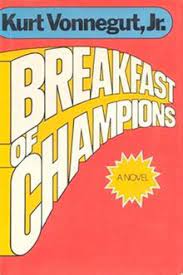
Breakfast of Champions has sat on my bookshelves for so long I somehow fooled myself into thinking I had read it. How it came to be there unopened and unread will remain a mystery. It is a chaotic novel about writing a novel, the most ‘meta’ work I think I have ever read. Vonnegut doesn’t just tell the reader they are reading a novel, he kicks down the fourth wall and dances on the rubble. It’s also illustrated on almost every page with very simple drawing that to be honest add little to teh narrative but fill in some space.

The narrative structure is based around a series of events that lead up to the meeting between one of Vonnegut’s regular characters, Kilgore Trout, a prolific and heroically unsuccessful and unappreciated science fiction writer, and Dwayne Hoover, a businessman who is slowly going insane.

But this is not really a novel that can accurately be described as being ‘about’ anything, certainly nothing as simple as a story of characters doing things in a linear ‘this, then this’ fashion. It’s far too anarchic for that. The time structure is random, even though the traditional ordering of cause and effect keeps trying to reassert itself. Ostensibly the novel tells how Trout travels to the Midland City Arts Festival. Even though his stories are usually published as filler in pornographic magazines, he has one supporter who also happens to be a sponsor the Arts festival and who arranges for Trout to be a guest speaker at the event. He travels there via New York where he gets beaten up by “The Pluto Gang” (I couldn’t work out why, it just feels like a scene inserted at random) and then hitchhikes to the festival. Meanwhile in Midland City Hoover’s mental health deteriorates. They finally meet at the Holiday Inn where Trout’s bizarre behaviour seems to trip Hoover over the edge. He goes berserk, attacking people at random, biting Trout’s finger off, and ends up being committed to an asylum. The novel ends with Trout meeting the narrator author, who demonstrates his omniscience by sending Trout through space and time.

This is a strongly political novel. Trout sees America from the point of view of an outsider. He is acutely aware of the ridiculous elements of society, its injustices and not least its obsession with sex (every male character is introduced with a description of the length and girth of their penis – every female character is introduced with a description of the dimensions of the husbands/boyfriend’s penis). This is Vonnegut’s/the narrator’s explanation for the obsessive description of every mundane object he encounters, the rejection of any element of traditional storytelling:

As I approached my fiftieth birthday, I had become more and more enraged and mystified by the idiot decisions made by my countrymen. And then I had come suddenly to pity them, for I understood how innocent and natural it was for them to behave so abominably, and with such abominable results: They were doing their best to live like people invented in story books. This was the reason Americans shot each other so often: It was a convenient literary device for ending short stories and books.
Why were so many Americans treated by their government as though their lives were as disposable as paper facial tis-sues? Because that was the way authors customarily treated bit-part players in their made-up tales.
And so on.Once I understood what was making America such a dangerous, unhappy nation of people who had nothing to do with real life, I resolved to shun storytelling. I would write about life. Every person would be exactly as important as any other. All facts would also be given equal weightiness. Nothing would be left out. 

Racism is a persistent theme in Breakfast of Champions. The black characters are treated appallingly (and upsettingly) by many of the white characters and are described as being used “for machinery, and, even after slavery was eliminated, because it was so embarrassing, they and their descendants continued to think of ordinary human beings as machines.” This is probably why Vonnegut casually and repeatedly uses the n-word in a way that writers working today simply would not consider. It makes it an uncomfortable read.

description

The other central theme in the novel is the concept that humans are all simply machines, all of us that is except Vonnegut or perhaps Trout or the narrator. This idea, that we are all really just meat machines without free will, is one of the oldest philosophical conundrums in existence. Vonnegut introduces the idea as a statement of fact rather than a debating point, and it underlines his sense of alienation from his characters – we the readers are all just characters without autonomy in a story told by an idiot who doesn’t really understand the world.

This is a very unconventional novel. It has some of the trappings of a traditional story – two characters destined to meet at the end of the novel, having adventures on the way – but the reader is consistently reminded the are just reading a story, that the characters and settings aren’t real, and that the author can capriciously change their fates whenever he so chooses. The insistent definitions of mundane objects underlines this pointlessness. It all combines to make Breakfast of Champions a challenging and interesting read, but not one I would be able to really recommend. It many ways it is not a novel at all, but a book of random thoughts and ideas, strung together round a storyline which even the author doesn’t find interesting.

Breakfast of Champions by Kurt Vonnegut, 1973

Aside
Book review

Bartleby the Scrivener, by Herman Melville, 1853

Herman Melville’s ‘Bartleby the Scrivener, A Story of Wall Street‘ tells the curious story of a scrivener – a copyist – who gives up on work and life, responding to all requests for him to do anything with the simple “I would prefer not to“. The narrator, his employer, knows almost nothing about Bartleby – he remains an enigma throughout the story. His reasons for declining specific tasks and then for stopping work altogether are let to the reader to decide.

The story opens with an introduction by the narrator, an elderly New York lawyer. He employs two clerks, Nippers and Turkey, to copy legal documents by hand. Nippers and Turkey are, as their names suggest, comic figures, both with substance abuse issues. The narrator, looking to expand his business, hires Bartleby, partly in the hope that he will moderate the extremes of temperaments of the other two. Initially Bartleby is an exemplary worker, but one day, when asked to help proofread a document, he answers with what soon becomes his catchphrase:

“I would prefer not to”.

Bartleby slowly shuts down, completing less and less work and spending long periods of time staring out one of the window at a brick wall. All attempts to persuade him to do some work or to leave fail, so eventually the narrator himself moves out. The new tenants come to him to ask for help in removing Bartleby, who now sits on the stairs all day and sleeps in the building’s doorway. Finally Bartleby is forcibly removed and imprisoned where he dies of starvation. The story closes with the narrator’s refrain, “Ah Bartleby! Ah humanity!”. (This phrase reminded me of the words of the newscaster at the explosion of the Hindenburg).

This is an enigmatic story, not what I was expecting at all from the author of Moby Dick. It’s an intense psychological piece reflecting on the pointlessness of the human condition that could easily have come from a French existentialist author. It is also a very personal piece – for an author to imagine a character who thinks writing – scrivening – is a pointless, empty activity is in some ways quite shocking. Melville is very much ahead of his time in other ways – Bartleby can be read as a warning of the industrialisation of office work in which people are hemmed into ever smaller cubicles without any personal life outside the office, eating meagre meals at their desk, performing menial repetitive tasks for little reward (Bartleby moves into the lawyers office and never seems to leave).

“Ah, Bartleby, Ah humanity”.

Bartleby is a short story but an immensely impactful and surprising piece that I am very glad to have read – it gives another dimension to one of America’s most significant authors who I had previously only known through Moby Dick.

Standard
Book review

An Occurrence at Owl Creek Bridge, by Ambrose Bierce, 1890

Recently I came across this gem of a post on the ever-wonderful LitHub about the best short stories ever written and it prompted me to guiltily read more of this neglected (by me) genre (although this is a great list, there are some obvious omissions; Ray Bradbury’s A Sound of Thunder is missing for a start. A Sound of Thunder is the “butterfly effect” story in which time-travellers to the age of the dinosaurs inadvertently affect the future.) Most of the stories on this list can easily read in less than an hour and they are usually available for free on the internet.

An Occurrence At Owl Creek Bridge eBook: Ambrose Bierce: Amazon.co.uk:  Kindle Store

I started with An Occurrence at Owl Creek Bridge for reasons of nostalgia. I have a vivid memory of being shown the film adaptation of this story in school one day – I have no idea in what lesson – and to this day it seems a very dark film to show schoolchildren.

An Occurrence is a/the near perfect short story. The title is carefully understated, but we soon learn the nature of the occurrence due to happen on the bridge – a man is to be hung. You probably are familiar with the story and its wonderfully executed (forgive me) twist, but just in case you aren’t I am going to avoid summarising the plot – with the whole story running to only a handful of pages any summary would be largely redundant anyway.

Kurt Vonnegut famously described An Occurrence as “that greatest American short story….a flawless example of American genius“. Without wanting to pick an argument with Mr Vonnegut there’s nothing uniquely American about the story nor its conception. Being just an American story would diminish it. Its universality lies in the use of point of view narration. The reader trusts the story we are being told by the captured (and clearly guilty) plantation owner about to be hung from the bridge because we have been taught to trust narrators. Why would someone about to die mislead us about what happens. His apparent escape from his fate is plausible simply because of the conventional understanding that he must have survived in order to tell his tale.

The narrative emphasises the mundane and everyday nature of what is happening. This is an occurrence, nothing more. A man is about to die, but this is something that in war happens all the time. The setting is just Owl Creek Bridge, an insignificant bridge over an insignificant stream. Everyone involved in the execution is calm and business-like, even the condemned man himself. Everything is ordered and well-prepared.

A man stood upon a railroad bridge in northern Alabama, looking down into the swift water twenty feet below. The man’s hands were behind his back, the wrists bound with a cord. A rope closely encircled his neck. It was attached to a stout cross-timber above his head and the slack fell to the level of his knees. Some loose boards laid upon the ties supporting the rails of the railway supplied a footing for him and his executioners—two private soldiers of the Federal army, directed by a sergeant who in civil life may have been a deputy sheriff. At a short remove upon the same temporary platform was an officer in the uniform of his rank, armed. He was a captain. A sentinel at each end of the bridge stood with his rifle in the position known as “support,” that is to say, vertical in front of the left shoulder, the hammer resting on the forearm thrown straight across the chest—a formal and unnatural position, enforcing an erect carriage of the body. It did not appear to be the duty of these two men to know what was occurring at the center of the bridge; they merely blockaded the two ends of the foot planking that traversed it.

The execution is being carried out with military precision, so it is a shock when, remarkably, an opportunity to escape appears:

All at once, with terrible suddenness, the light about him shot upward with the noise of a loud splash; a frightful roaring was in his ears, and all was cold and dark. The power of thought was restored; he knew that the rope had broken and he had fallen into the stream. There was no additional strangulation; the noose about his neck was already suffocating him and kept the water from his lungs. To die of hanging at the bottom of a river!—the idea seemed to him ludicrous. He opened his eyes in the darkness and saw above him a gleam of light, but how distant, how inaccessible! He was still sinking, for the light became fainter and fainter until it was a mere glimmer. Then it began to grow and brighten, and he knew that he was rising toward the surface—knew it with reluctance, for he was now very comfortable.

An Occurrence is much more than a commentary on war and what men will do for their country. It reminds us that life is short and sweet, and that our perception of time can be strangely distorted in the moment. It also teaches us that narrators and authors can be misleading, and that wishful thinking is a powerful thing. It is also an object lesson in the importance of close and careful reading. If you just engage with this text as an adventure story you will almost certainly miss the clear indications that there is more to this story than the narrator tells us. Bierce wrote about “bad readers—readers who, lacking the habit of analysis, lack also the faculty of discrimination, and take whatever is put before them”. I don’t think there is such a thing as a bad reader, but we can all read more carefully and analytically, not taking at face value what we are told, whether it be a short story, a novel, or the news on our screens, and An Occurrence is an object lesson in why this an important skill.

An Occurrence at Owl Creek Bridge, by Ambrose Bierce, 1890

Aside
Book review

The Underground Railroad, by Colson Whitehead, 2016

The Underground Railroad is a powerful exploration of the experiences of slaves in the USA in the first decades of the nineteenth century. It vividly brings to life the brutality of that period in images that will be hard for some readers to stomach.

The history of the real underground railroad has been extensively documented, so the challenge for any author is how to bring the lives of the slaves and those that assisted them to life. Whitehead’s ingenious idea is to conceive of the railroad as a literal, physical underground railroad, with engines and tracks running from the Southern states to the free North.

“The stairs led onto a small platform. The black mouths of the gigantic tunnel opened at either end. It must have been twenty feet tall, walls lined with dark and light colored stones in an alternating pattern. The sheer industry that had made such a project possible. Cora and Caesar noticed the rails. Two steel rails ran the visible length of the tunnel, pinned into the dirt by wooden cross-ties. The steel ran south and north presumably, springing from some inconceivable source and shooting toward a miraculous terminus.”

The story is told by the third-generation slave Cora, who has been born and brought up on a cotton plantation in deep South Georgia. There are one or two chapters narrated by other characters – Cora’s mother Mabel, and the slavecatcher Ridgeway, for example – but Cora’s is the predominant voice. Escape from the plantation is thought to be extremely improbable and dangerous – it is believed (wrongly, as it happens) to have been achieved only once before, and the punishments meted out to anyone who even tries to escape are barbaric in the extreme. Bounty hunters roam the land tracking down escaping slaves and recapturing them even years after their escape. But the advent of a new plantation owner, and the prospect of even more vicious abuse leads Cora to reconsider the escape plans of fellow slave Caesar. Caesar believes he knows how to make contact with a station manager on the fabled underground railroad.

Although their escape is beset with challenges, Cora and Caesar eventually make it to South Carolina, and begin life as free people for the first time in their lives. In this version of American history South Carolina is the site of an enormous and complex social experiment. Here the benevolent state government buys the freedom of slaves and then gives them jobs, medical treatment and social housing. While this seems utopian compared to the bloodthirsty existence on the plantation back in Georgia, there is a sinister element to this approach to the slavery question. Concerned that blacks are beginning to outnumber whites, the State government is sterilising black women and using black men to track the spread of syphilis. This is one of a number of theoretical approaches to slavery and the social problems it caused that are explored in the novel. How could a society dependent on black labour for the basis of its agrarian economy transition to a new model while preserving its prosperity? Although there were forced sterilization programmes across the USA in the twentieth century, evidence of this being an approach to slavery is hard to find. In fact quite the opposite happened – because slaves were so valuable, particularly after restrictions began to be applied to the transatlantic slave trade, female slaves were given fertility treatment to increase the number of children they had. Just to be clear, this is not a criticism of the novel’s exploration of this issue. It is in many ways best seen as an alternative history approach to considering the experience of slavery, even if many of the events described are drawn from real-life testimonies.

Throughout the novel Cora is relentlessly pursued by a bounty hunter named Ridgeway. Ridgeway failed to catch Cora’s mother, Mabel, and is determined to right this wrong by recapturing Cora, whatever the cost. He tracks her to South Carolina where she escapes at the last minute, leaving Caesar behind to be lynched by a mob. She ends up in North Carolina and is offered refuge by the son of a former railroad station operator. North Carolina has a different approach to slavery from its southern neighbour. Seeing the growing black population as a threat, North Carolina has launched what amounts to a holocaust against all black people, together with any who support or shelter them. Slaves have been replaced with mainly Irish indentured servants instead, just one step above slaves themselves. Any black people found in the State, irrespective of their legal status, are summarily executed, with a long series of bodies displayed across the State in a so-called Freedom Trail. (I had to look up whether this was a real thing or not – the brutality of slavery was such that it wouldn’t have surprised me if it was, although it is more an image drawn from Ancient Rome than the American South). Lynching black people has become a ritualised part of North Carolina’s society. Cora hides in the former station-master’s attic for several months, but is once again captured by Ridgeway when her presence is betrayed by the family servant. (The echoes between Cora’s time in the attic and the experiences of Anne Frank are clear, as are the wider points of reference between the slave-owners and the Nazis.)

Ridgeway tries to take Cora back to her owner in Georgia, but en-route she is rescued by some escaped slaves and taken to a free black farming community in Indiana. This is another, more positive alternative to life under slavery. Living on land once stolen from native Americans, freed and runaway slaves supported by abolitionists live in a community of equals.

“The land she tilled and worked had been Indian land. She knew the white men bragged about the efficiency of the massacres, where they killed women and babies, and strangled their futures in the crib. Stolen babies working stolen land. It was an engine that did not stop, its hungry boiler fed with blood.”

But it is clear this success cannot last, threatened from without by worried white neighbours, alarmed at the growing number of people living on the farm, and from within by nervous residents who disagree with the policy of offering sanctuary to runaways. This debate – whether progress in the fight for freedom for slaves can be achieved by radical challenges to the status quo or a gradualist, legal approach – was one of the many discussions in the novel that echoes the issues faced by modern African Americans .

This was a compelling read. The elements of magical realism in the novel, in particular the vision of the railway itself, and the discussions of some of the alternative responses to slavery, blending compellingly realistic descriptions with more fantastical concepts to make a gripping whole. In writing about this shameful period of American history a fine line has to be navigated between under-stating the barbaric nature of the treatment of slaves and exploiting those experiences for their shock value (in the way that, for example, Django Unchained does). Whitehead strikes that balance carefully – he doesn’t look away from some of the distressing scenes, but neither does he linger upon them. His characters are all well-rounded, believable individuals, even Ridgeway the remorseless Ahab-like bounty hunter.

Standard
Book review

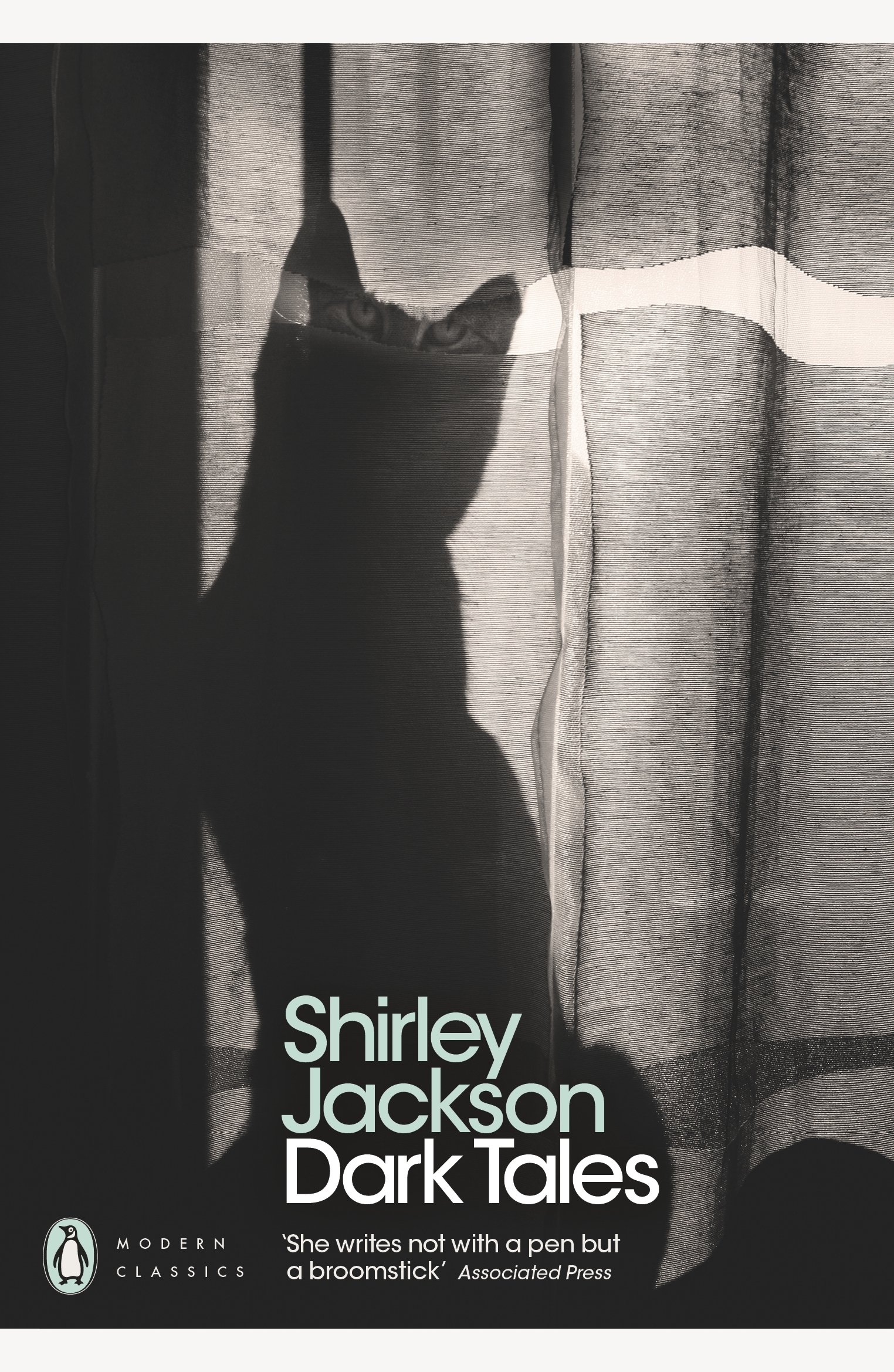
Dark Tales, by Shirley Jackson, 2017

Shirley Jackson established a reputation as a horror writer with the publication of her haunting short story ‘The Lottery‘ in the New Yorker in 1948. This anthology of stories drawn from across her writing career includes a wide variety of gothic tales. The publishers describe them as “deliciously dark stories” which I think both doesn’t do them justice and at the same time over-states their value. Which I know is contradictory, but I’ll try and explain what I mean.

When the stories are effective – principally when they do not rely on the supernatural – then they are far more than “deliciously dark”, which is more suited as a description for chocolate than a short story. The opening tale, for example, The Possibility of Evil, is a portrait of an old lady who writes poison-pen letters to her fellow townsfolk, mainly out of boredom and a sense of her own superiority. This story contains not a hint of the supernatural, but is very effective, with a wonderful, punchy ending. Louisa, Please Come Home was another story that made an impact on me. In it a teenager runs away from home – why it is not clear – and when she is found after living in a nearby town for several years, only to be rejected by her family as not their real daughter.

Other stories in the collection are not as strong. They often lean too heavily on the supernatural to provide the surprise element of the story. In The Bus is a good example of this weaker category. A stranded woman gets a lift to a familiar house that turns out to be her childhood home and she can’t escape it. Home boils down to a pair of ghosts who like to sit in cars. 

Jackson’s style can come over as formulaic when the stories are read in a single volume of this kind. She opens with mundane, everyday settings, then slowly introduces the creepier elements, usually without announcement, blurring the lines between the supernatural and the real world. The first person narrative helps to confuse the reader – is this “really” happening or is the narrator having a dream or vision? The menace of small town America is a common theme throughout this volume but overall it doesn’t bear comparison to Jackson at her best.

Standard
Book review

Paradise by Toni Morrison, 1997

Paradise has a gripping opening:

They shoot the white girl first, but the rest they can take their time. No need to hurry out here.

The rest of this complex, challenging novel is all about unpicking this first sentence – what has driven these men to attack these women? 

They are 17 miles from a town which has 90 miles between it and any other. Hiding places will be plentiful in the convent, but there is time, and the day has just begun. They are nine. Over twice the number of the women, they are obliged to stampede or kill, and they have the paraphernalia for either requirement–rope, a palm leaf cross, handcuffs, mace, and sunglasses, along with clean, handsome guns.”paradise

Readers of Morrison’s previous novels might be expecting the “they” in this opening paragraph to be white racists attacking a black community, perhaps in the civil rights period if not earlier. Any expectations of this kind are quickly confounded. It soon becomes clear that this is an exclusively black community brutally cleansing itself of the inhabitants of a troublesome women’s communal shelter.

Ruby, a town of some 360 souls, was founded as a refuge for its inhabitants, in recognition that black communities were always going to face racism from white neighbours and authorities. This retreat into isolation and seclusion followed a brief period after the civil war when some black community leaders rose to positions of prominence, only to be stripped of those roles as part of the removal of civil rights that in turn took many decades to restore. Ruby is a successor community to the earlier Haven, also a black-only town, intended (as the name implies) to create a place free from racism and prejudice. As part of the building of the community the founding fathers constructed a communal oven of brick and iron. This oven carries a heavy symbolic burden representing everything the people of Ruby have achieved. The name of the new town, originally “New Haven” derives from that of a young woman who died when she was refused medical attention because of her race. The town has no jail or cemetery because, it is claimed, it has never needed either, although this is what is known surely as tempting fate?

Anxiety about Ruby’s future comes to crystallise in concerns about the nearby “convent”, a refuge for women with nowhere else to go, a mirror image of the town.  The building sense of crisis comes to be crystallised around  plans to change the slogan on the Oven: though it now says only “… the Furrow of his Brow”, the town elders claim it used to say “Beware” at the beginning, whereas the younger generation wishes to make it “Be the Furrow of his Brow”. In parallel to learning the history of Ruby we learn the back-stories of the inhabitants of the ‘convent’, a mansion ominously designed like the cartridge of a gun. The description ‘convent’ is colloquial but incorrect – the house was originally a boarding school for native American girls until it closed and became the refuge of today. (In writing this post I am struggling with tense – “is” or “was” – this is at least in part because the narrative is so fluid in terms of time, jumping freely from decade to decade.) The tipping point in the troubled relationship between the town and the convent comes when some men in the town are scandalized when the Convent women make a rowdy appearance at a wedding between members of two of Ruby’s founding families

This is a classically “difficult” novel. There is little exposition – a sequence of point-of-view narrators tell their stories, explaining little and only slowly coming to the point at which their lives bring them to Ruby. Some things are never explained – for instance one character, Mavis, flees an abusive husband and family following the death by suffocation of her young twins. These deaths are almost too horrific for her to consider face-on, so we only get brief snippets of information about how they came to die or be killed, and about her culpability or otherwise for their deaths. The memories and reminiscences of the multiple narrators range freely over time, and it can often be hard to tell when and where the events being described happened. It’s a little like looking at a jigsaw before the pieces are assembled. If you read a traditional review of this novel it will normally try to pieces these pieces together for you, or at least join up the edges, and lay them before you in a sequential narrative – this happens, then this happens, etc. But reading the novel is obviously a very different experience – we find things out, if ever, when the author tells us, and it can be many pages between a scene or situation being described and us finding out what may have happened. This complexity is further compounded by the scale and ambition of the novel. There are dozens of characters involved in the narrative, and I defy any reader on a first reading to keep track of who they are and the complex web of family relationships between them. I can only assume that the author knew we would be unable to retain all this information on a first read. So is the experience of reading this novel intended to be muddled and unclear, or are we being invited to return for further readings?

I have written about complexity in novels many times before, such as here, and I should be clear and re-emphasise that complexity isn’t inherently either good or bad. I have tried to read books where the complexity was such I gave up, but that was my failure rather than that of the author. Complex books can be rewarding in ways that straightforward narratives are not, however frustrating they can be at the time. Which is a way of avoiding the question of whether the complex nature of Paradise makes it a rewarding read or not. Initially I couldn’t make my mind up, so I read some reviews.

The New York Times was pretty savage:

“Paradise” is everything that “Beloved” was not: it’s a heavy-handed, schematic piece of writing, thoroughly lacking in the novelistic magic Ms. Morrison has wielded so effortlessly in the past. It’s a contrived, formulaic book that mechanically pits men against women, old against young, the past against the present.

Zoe Heller in the London Review of Books was less strident but still had serious reservations:

 At some point, all Morrison’s major novels seem to lose patience with the finicky business of recording moral blur, choosing to swerve off into the realm of moral fable and preacherly uplift. Often, as in Paradise, the change is marked by an onset of gloopily ‘miraculous’ events.

Adam Mars Jones in the Guardian agreed with the LRB’s concerns about the mysticism in the novel

If Morrison had resisted the temptation to bring in possession, ghosts and amateur miracles, Paradise might have attained the status of masterpiece. As it is, reading the book is too often like standing next to someone with a pair of powerful binoculars trained on a distant view. From her impassioned commentary on what is going on you long to share her vision, but when she passes the binoculars across, the focus wheel is missing or jammed.

This is a novel that confounds readers’ expectations. It is not an easy read, and I am not yet convinced that the complexity works in the way it does in, for example, the work of William Faulkner, of which I kept getting strong echoes throughout the novel. I can certainly understand the reservations of the reviewers quoted here, that frustration with a novel that never fully comes into focus.

It would be wrong of me to close this post without paying tribute to the author who died last month aged 88. Her life was one of remarkable achievement, culminating in the Nobel Prize in Literature in 1993. In 2012 she was also awarded the Presidential Medal of Freedom, and in 2016 she received the PEN/Saul Bellow Award for Achievement in American Fiction. She was unquestionably a giant of American literature, and through her work provided a way for America to come to terms, at least in a small way, with its past.


Standard
Book review

Tarzan of the Apes, by Edgar Rice Burroughs, 1912

Tarzan of the Apes is unquestionably pulp fiction, but it is also great fun, if you can stomach the appalling colonialist attitudes. Tarzan has become one of those archetypal characters from fiction – Dracula, Frankenstein, Sherlock Holmes – with a life far beyond the confines of their original story. Rice Burroughs went on to really milk the most possible value from the original success of his story of the ape-man, with around 25 sequels including Tarzan and the Foreign Legion and Tarzan at the Earth’s Core to name just a couple.

I am sure you know the bones of the Tarzan story. Newly-wed Lord Greystoke, an English aristocrat and his young wife are marooned on a deserted African shoreline following a mutiny by the crew. Here they create a mini-Eden, building a thatched hut with all-mod cons. Lady Greystoke gives birth to an heir, only to succumb to a fit of the vapours following a lion attack. Lord Greystoke quickly follows his wife, leaving young Tarzan to be adopted and brought up by the apes of the jungle. Interestingly these are not gorillas – Rice Burroughs is very specific on that point. This (invented) species of ape bears many similarities to the gorilla, but can speak a primitive language. Tarzan grows up among them, acquiring his physical prowess. He also discovers his parents’ hut and his father’s knife, which allows him to win a series of battles with the alpha-males in his troupe, as well as other beasts, finally becoming king of the jungle.

In parallel Tarzan teaches himself (improbably) to read and write and discovers more about his ancestry and the world beyond his jungle. Rice Burroughs was obviously taken with the idea of white people being marooned on the coast of Africa by mutinous sailors, because he re-uses this plot-device to introduce Jane Porter, lovely young American heiress, her eccentric father Professor Porter, and her suitor Clayton, Lord Greystoke. Yes, another Lord Greystoke, Tarzan’s cousin, has pitched up on the same shore in the same manner, twenty years on. This sums up the laziness of Rice Burroughs writing. Why bother inventing a new plot device when there’s a perfectly good one available that is only 15 chapters old?     

You won’t be surprised to hear that this novel is profoundly racist. The African natives Tarzan encounters are uncivilised, superstitious cannibals and they are wiped out by the French sailors towards the end of the novel without compunction.  Jane’s maid, Esmerelda, is a cliched American  lawks-a mercy caricature, always using clumsy malapropisms in a very unfunny manner and fainting every few minutes. The novel appears to accept an evolutionary link between man and beast, but the natural order in which white men are superior to dark-skinned men and beasts, and aristocratic white men are superior to all, is insisted on throughout.

Only in the novel’s portrayal of sex is there any hint of transgression. When Jane is first kidnapped by one of the apes, it is made explicitly clear that he intends to rape her.

“The tribe had kept his women. He must find others to replace them. This hairless white ape would be the first of his new household, and so he threw her roughly across his broad, hairy shoulders and leapt back into the trees” (Chapter 19)

Jane’s response to Tarzan when he rescues her is intensely sexual.

Jane—her lithe, young form flattened against the trunk of a great tree, her hands tight pressed against her rising and falling bosom, and her eyes wide with mingled horror, fascination, fear, and admiration—watched the primordial ape battle with the primeval man for possession of a woman—for her.

As the great muscles of the man’s back and shoulders knotted beneath the tension of his efforts, and the huge biceps and forearm held at bay those mighty tusks, the veil of centuries of civilization and culture was swept from the blurred vision of the Baltimore girl.

When the long knife drank deep a dozen times of Terkoz’ heart’s blood, and the great carcass rolled lifeless upon the ground, it was a primeval woman who sprang forward with outstretched arms toward the primeval man who had fought for her and won her.

And Tarzan? He did what no red-blooded man needs lessons in doing. He took his woman in his arms and smothered her upturned, panting lips with kisses. For a moment Jane lay there with half-closed eyes. For a moment—the first in her young life—she knew the meaning of love.

Note Jane’s response is in part to Tarzan’s muscles, but also to his violence, and she goes to him – indeed springs towards him. This would have been titillating to Rice Burrough’s Edwardian audience. This is not a novel for nice young women, but an adventure story for frustrated young men. The erotic emphasis on Tarzan’s musculature is relentless.

A feeling of dreamy peacefulness stole over Jane as she sank down upon the grass where Tarzan had placed her, and as she looked up at his great figure towering above her, there was added a strange sense of perfect security. As she watched him from beneath half-closed lids, Tarzan crossed the little circular clearing toward the trees upon the further side. She noted the graceful majesty of his carriage, the perfect symmetry of his magnificent figure and the poise of his well-shaped head upon his broad shoulders.

What a perfect creature! There could be naught of cruelty or baseness beneath that godlike exterior. Never, she thought had such a man strode the earth since God created the first in his own image.

However I am not sure how transgressive this actually is – while sexual activity between a young woman and a jungle man would have been taboo, we are never allowed to forget Tarzan’s aristocratic origins.

If you enjoy reading origin stories out of a sense of curiosity (in what way does the popular culture version of the character differ from the original?) Tarzan will keep you diverted for a couple of hours, but I doubt few if any readers will feel compelled to read any further in Tarzan’s adventures, which I suspect are simply reiterations of this template.

Standard