Book review

The trouble began long before June 9, 1976, when I became aware of it, but June 9 is the day I remember. It was my twenty-sixth birthday. It was also the day I met Rufus – the day he called me to him for the first time.

Dana and Kevin have just moved into their new apartment in Los Angeles, California. Out of nowhere, Dana starts to feel dizzy and faint, and before she knows it…

“The house, the books, everything vanished. Suddenly I was outdoors kneeling on the ground beneath trees. I was in a green place. I was at the edge of a woods. Before me a was a wide tranquil river, and near the middle of that river was a child, splashing, screaming….Drowning!”
Dana has been transported to somewhere where she is needed, where she can save the life of the drowning child, whose name we later find out is Rufus. But the boy’s parents are not grateful – far from it, they seem to think Dana is responsible for his accident – the father aims a shotgun at her and angrily confronts her. She fears for her life, and in that moment she is transported back to her apartment, where a puzzled Kevin tells her that only moments have passed.

At first the reader thinks they are in a simple time travel novel, where the principal character is summoned into another time and place to intervene in the life of someone with whom they have some kind of connection. Yes and no, because in a moment of dreadful realisation Dana finds out something terrible about the challenge fate has presented her with – the time she is travelling back to is the 1820’s, in the South of the United States of America, and Dana is black. The young boy whose life she is fated to save – she is summoned from the present every time his life is at risk – is the son of a slave-owner. He lives on a plantation. Worse, Dana has no control over when she is summoned nor when she is returned. She works out that she will return to her own time – where time passes at a completely different rate from that in the 1820’s, so several months can pass in the past but only hours in the present – when her own life is threatened. She cannot choose when to return, and putting her own life deliberately at risk seems far too dangerous.

The only positive side to this appalling situation is that, unlike the form of time travel in the Time Traveller’s Wife (for example) she is able to take objects with her into the past, anything she happens to be touching at the time she is summoned, including her partner Kevin. She quickly assembles a small bag of useful items, including a knife and some painkillers, knowing she could be whisked back to the nineteenth century at any time. I would have been tempted to take a gun, preferably a rifle, but I am probably taking the time travel conventions a little too literally! On her subsequent journey to the 1820’s Kevin goes or is taken with her, and after she saves the young man’s life once again, the plantation owner assumes Dana is Kevin’s slave. Dana, recognising names from the family tree in her bible, quickly works out that Rufus is one of her distant relatives, and that she needs to keep him alive long enough for him to father one of her ancestors. But Rufus is white, and she is not, horrifyingly suggesting that the ancestor she is waiting to arrive is the product of an abusive relationship between slave-owner and enslaved.

Novels that attempt to portray the horrors of slavery are faced with an immediate challenge – how to convey the many terrible things that happened – the brutality of every day life, the appalling treatment of the enslaved, the families torn apart by slave-owners simply for monetary gain – without looking away or in any way softening the edges of the realities of the form of chattel slavery of this period, but at the same time not making the novel impossible to read, capturing the reality of what living through this period must really have been like. To take someone from the 1970’s and transplant them into this environment is a brilliant way of making the reader imagine what being in this time must have been like – these are no longer long-dead people who it is easy to think of as statistics, but real, living family members and friends.

Butler takes one step further than just presenting afresh the trauma of slavery, by asking the question – how does one accommodate oneself to living in that situation, living as an enslaved person? Dana is trapped in the nineteenth century for long periods, too far away from the Northern states where slavery was no longer practised or widespread (slavery in the Northern states of the USA ended gradually over several decades; Vermont banned slavery in 1777 and Massachusetts in 1783; other Northern states passed gradual emancipation laws that freed existing slaves slowly, meaning complete freedom for all enslaved people in the North took until the early-to-mid 1800s – and even then ‘runaways’ were subject to the punitive conditions of the Fugitive Slaves Act). Dana is forced to come to terms with the conditions and compromises of her enslavement. Her partner Kevin is trapped in this time period for several years when she is returned to the twentieth century unexpectedly and this experience changes him as well (Dana perceives) even though he commits himself to helping runaway and escaped slaves.

Quite early on Rufus learns of Dana’s origins – he can hardly find a natural explanation for her appearing out of thin air every time his life is at risk – and has to accept the undeniable supernatural element of her existence. Dana slowly comes to an understanding with Rufus – he depends on her to save his life, therefore he must treat her with respect and care for her, protecting her from the unstable temper of his father. But time and again Rufus’s contempt for black people resurfaces – he never gets out of the habit of using the n-word for example, even though he knows he needs Dana to save his regularly threatened life (Rufus is very accident-prone!).

Kindred has an incredibly strong narrative structure. The reader (or this one at least) cares for and wants to find out what happens to Dana, Kevin and even Rufus. I understand why the author included a prologue which effectively spoils the ending of the novel for the reader – we know some important details about the outcome of the novel through this short opening chapter – but personally I don’t think it added anything and removed much of the suspense from the novel’s ending and I would have not used it had I been the author. But even though this is a very strong story, that’s not the primary reason for this being such a ‘must read’ – that derives from its unblinking portrait of the horrors of American chattel slavery.
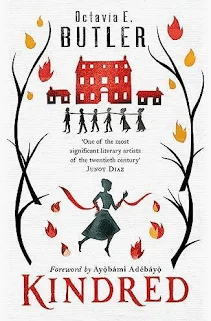
Kindred by Octavia Butler, 1979

Aside
Book review

The Underground Railroad, by Colson Whitehead, 2016

The Underground Railroad is a powerful exploration of the experiences of slaves in the USA in the first decades of the nineteenth century. It vividly brings to life the brutality of that period in images that will be hard for some readers to stomach.

The history of the real underground railroad has been extensively documented, so the challenge for any author is how to bring the lives of the slaves and those that assisted them to life. Whitehead’s ingenious idea is to conceive of the railroad as a literal, physical underground railroad, with engines and tracks running from the Southern states to the free North.

“The stairs led onto a small platform. The black mouths of the gigantic tunnel opened at either end. It must have been twenty feet tall, walls lined with dark and light colored stones in an alternating pattern. The sheer industry that had made such a project possible. Cora and Caesar noticed the rails. Two steel rails ran the visible length of the tunnel, pinned into the dirt by wooden cross-ties. The steel ran south and north presumably, springing from some inconceivable source and shooting toward a miraculous terminus.”

The story is told by the third-generation slave Cora, who has been born and brought up on a cotton plantation in deep South Georgia. There are one or two chapters narrated by other characters – Cora’s mother Mabel, and the slavecatcher Ridgeway, for example – but Cora’s is the predominant voice. Escape from the plantation is thought to be extremely improbable and dangerous – it is believed (wrongly, as it happens) to have been achieved only once before, and the punishments meted out to anyone who even tries to escape are barbaric in the extreme. Bounty hunters roam the land tracking down escaping slaves and recapturing them even years after their escape. But the advent of a new plantation owner, and the prospect of even more vicious abuse leads Cora to reconsider the escape plans of fellow slave Caesar. Caesar believes he knows how to make contact with a station manager on the fabled underground railroad.

Although their escape is beset with challenges, Cora and Caesar eventually make it to South Carolina, and begin life as free people for the first time in their lives. In this version of American history South Carolina is the site of an enormous and complex social experiment. Here the benevolent state government buys the freedom of slaves and then gives them jobs, medical treatment and social housing. While this seems utopian compared to the bloodthirsty existence on the plantation back in Georgia, there is a sinister element to this approach to the slavery question. Concerned that blacks are beginning to outnumber whites, the State government is sterilising black women and using black men to track the spread of syphilis. This is one of a number of theoretical approaches to slavery and the social problems it caused that are explored in the novel. How could a society dependent on black labour for the basis of its agrarian economy transition to a new model while preserving its prosperity? Although there were forced sterilization programmes across the USA in the twentieth century, evidence of this being an approach to slavery is hard to find. In fact quite the opposite happened – because slaves were so valuable, particularly after restrictions began to be applied to the transatlantic slave trade, female slaves were given fertility treatment to increase the number of children they had. Just to be clear, this is not a criticism of the novel’s exploration of this issue. It is in many ways best seen as an alternative history approach to considering the experience of slavery, even if many of the events described are drawn from real-life testimonies.

Throughout the novel Cora is relentlessly pursued by a bounty hunter named Ridgeway. Ridgeway failed to catch Cora’s mother, Mabel, and is determined to right this wrong by recapturing Cora, whatever the cost. He tracks her to South Carolina where she escapes at the last minute, leaving Caesar behind to be lynched by a mob. She ends up in North Carolina and is offered refuge by the son of a former railroad station operator. North Carolina has a different approach to slavery from its southern neighbour. Seeing the growing black population as a threat, North Carolina has launched what amounts to a holocaust against all black people, together with any who support or shelter them. Slaves have been replaced with mainly Irish indentured servants instead, just one step above slaves themselves. Any black people found in the State, irrespective of their legal status, are summarily executed, with a long series of bodies displayed across the State in a so-called Freedom Trail. (I had to look up whether this was a real thing or not – the brutality of slavery was such that it wouldn’t have surprised me if it was, although it is more an image drawn from Ancient Rome than the American South). Lynching black people has become a ritualised part of North Carolina’s society. Cora hides in the former station-master’s attic for several months, but is once again captured by Ridgeway when her presence is betrayed by the family servant. (The echoes between Cora’s time in the attic and the experiences of Anne Frank are clear, as are the wider points of reference between the slave-owners and the Nazis.)

Ridgeway tries to take Cora back to her owner in Georgia, but en-route she is rescued by some escaped slaves and taken to a free black farming community in Indiana. This is another, more positive alternative to life under slavery. Living on land once stolen from native Americans, freed and runaway slaves supported by abolitionists live in a community of equals.

“The land she tilled and worked had been Indian land. She knew the white men bragged about the efficiency of the massacres, where they killed women and babies, and strangled their futures in the crib. Stolen babies working stolen land. It was an engine that did not stop, its hungry boiler fed with blood.”

But it is clear this success cannot last, threatened from without by worried white neighbours, alarmed at the growing number of people living on the farm, and from within by nervous residents who disagree with the policy of offering sanctuary to runaways. This debate – whether progress in the fight for freedom for slaves can be achieved by radical challenges to the status quo or a gradualist, legal approach – was one of the many discussions in the novel that echoes the issues faced by modern African Americans .

This was a compelling read. The elements of magical realism in the novel, in particular the vision of the railway itself, and the discussions of some of the alternative responses to slavery, blending compellingly realistic descriptions with more fantastical concepts to make a gripping whole. In writing about this shameful period of American history a fine line has to be navigated between under-stating the barbaric nature of the treatment of slaves and exploiting those experiences for their shock value (in the way that, for example, Django Unchained does). Whitehead strikes that balance carefully – he doesn’t look away from some of the distressing scenes, but neither does he linger upon them. His characters are all well-rounded, believable individuals, even Ridgeway the remorseless Ahab-like bounty hunter.

Standard
Book review

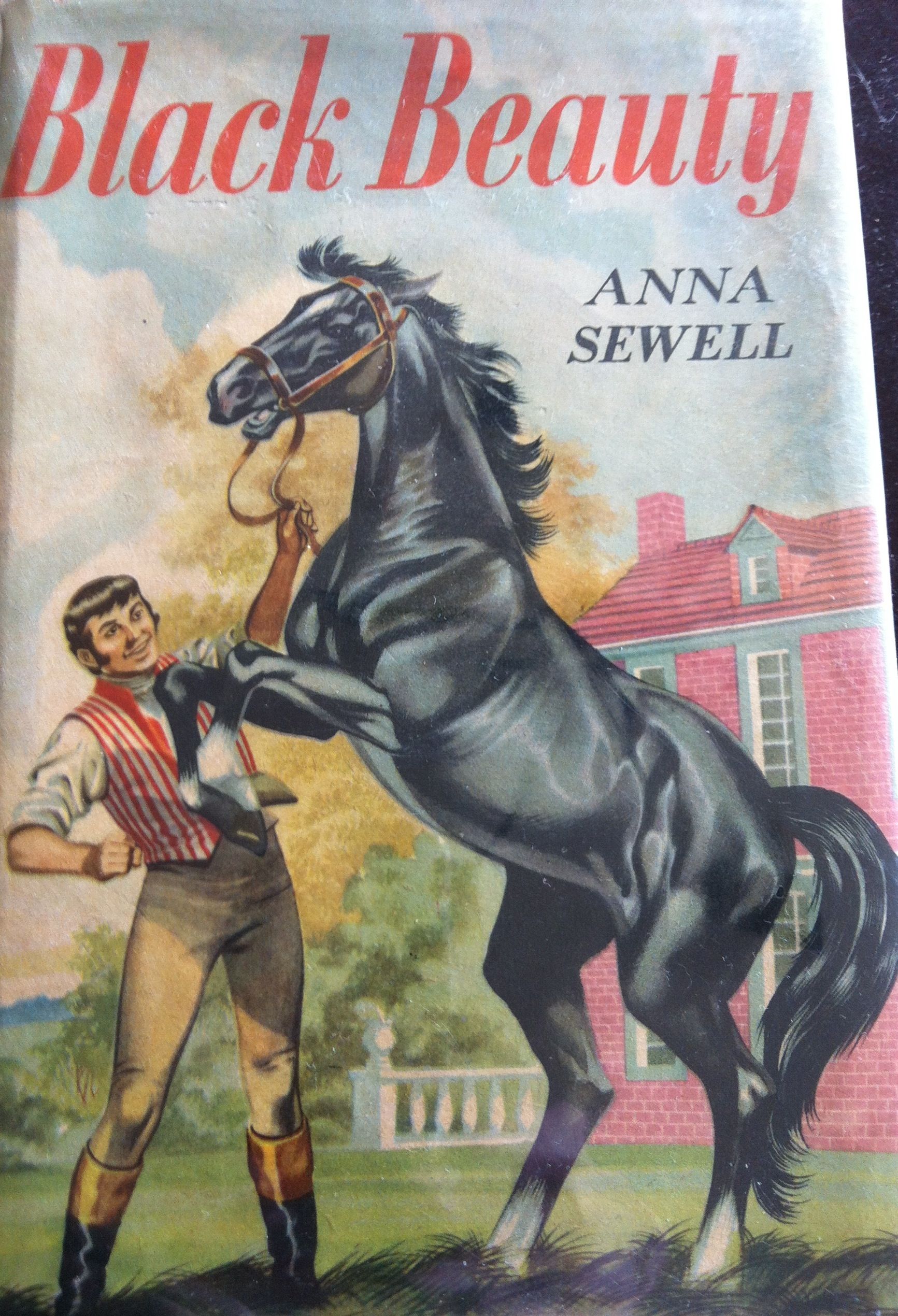
It is often an instructive experience to revisit ‘children’s’ stories occasionally. Rereading them as an adult can reveal layers of meaning not obvious to a younger reader. As a child I wasn’t initially aware of the Christian allegory in the Narnia stories, for example (until being beaten round the head with the idea in The Last Battle). Similarly, books like Alice in Wonderland and Gulliver’s Travels both work successfully as adventure stories for children and as more complex novels for adults.Black Beauty by Anna Sewell - First Edition - c. 1950s - from ...

Anna Sewell’s Black Beauty is another case in point. Written as a first person narrative by the title character, it was originally conceived as a plea for compassion in the treatment of working horses (in much the same way as The Water Babies was a campaigning tract about the treatment of child chimney sweeps). Sewell wanted to bring the plight of working horses to public awareness and in particular to end the practice of unnaturally raising carriage horses’ heads with the “bearing rein”. Stripped of its social and historical context it is now a straightforward story about the life of a horse.

But I was struck on reading the novel how clearly it also reads as an anti-slavery tract. Forget for a minute that this is a book about horses, and read these lines from early in chapter one:

Our master was a good, kind man. He gave us good food, good lodging, and kind words; he spoke as kindly to us as he did to his little children. We were all fond of him, and my mother loved him very much….I was a dull black, so he called me Darkie.”

As long as Black Beauty is well cared for he accepts his enslavement with resignation. He describes how he is broken into wearing reins and a bridle:

I had of course long been used to a halter and a headstall, and to be led about in the fields and lanes quietly, but now I was to have a bit and bridle; my master gave me some oats as usual, and after a good deal of coaxing he got the bit into my mouth, and the bridle fixed, but it was a nasty thing! Those who have never had a bit in their mouths cannot think how bad it feels; a great piece of cold hard steel as thick as a man’s finger to be pushed into one’s mouth, between one’s teeth, and over one’s tongue, with the ends coming out at the corner of your mouth, and held fast there by straps over your head, under your throat, round your nose, and under your chin; so that no way in the world can you get rid of the nasty hard thing; it is very bad! yes, very bad!

There’s no attempt to disguise the distress Beauty experiences during his “breaking in” (a phrase also used to describe the brutal treatment of slaves until they came to accept their captivity). But however accepting of his condition, Beauty is aware that he is still a possession, vulnerable to being sold to a new, less kind master at any time:

I was quite happy in my new place, and if there was one thing that I missed it must not be thought I was discontented; all who had to do with me were good and I had a light airy stable and the best of food. What more could I want? Why, liberty! …Straps here and straps there, a bit in my mouth, and blinkers over my eyes. Now, I am not complaining, for I know it must be so. I only mean to say that for a young horse full of strength and spirits, who has been used to some large field or plain where he can fling up his head and toss up his tail and gallop away at full speed, then round and back again with a snort to his companions—I say it is hard never to have a bit more liberty to do as you like.

He also knows that if he breaks down physically and becomes no longer useful or wanted he is likely to be disposed of, either sold on to ever more difficult work, or sent to “the dogs” – that is to say slaughtered and sold as dog food. When his friend Merrylegs the pony is sold to a neighbour it is seen as a kindness that

“it was on the condition that he should never be sold, and that when he was past work he should be shot and buried. “

(This line of argument, that Black Beauty is a form of slave narrative, is developed by the wonderfully named Bonnie Blossom in this article.)

I am not arguing that Black Beauty is an anti-slavery tract, not least because slavery had been abolished in the USA a decade before it was published, and much earlier in the UK – the moral argument had been won. But awareness of the brutality of slavery was still very much in the public imagination, and viewing our treatment of domestic animals as being analogous to the way slaves were once treated, adopting some of the traditional narratives and characteristics of slave stories, gives a powerful emphasis to Sewell’s argument for kinder treatment of horses. Putting it simply, we feel for the mistreated horses in the novel because they are treated like slaves.

This is a progressive novel in other ways. Sewell argues forcefully for the retention of the Sabbath as a day of rest. Beauty’s driver, Jerry, is tempted to work on Sunday’s for a reliable customer, but turns down the work as he wants to preserve his time with his family:

“If working  men don’t stick to their Sunday … they’ll soon have none left; it is every man’s right and every beast’s right. By God’s law we have a day of rest, and by the law of England we have a day of rest; and I say we ought to hold to the rights these laws give us and keep them for our children.”

This initial position of not working on the Sabbath for religious considerations is then generalised into a wider argument for the protection of working men’s conditions of employment, and their collective power through industrial action, specifically withholding their labour (a later chapter is called “A Strike for Liberty”):

“That may sound well enough, but it won’t do; every man must look after his own soul; you can’t lay it down at another man’s door like a foundling  and expect him to take care of it; and don’t you see, if you are always sitting on your box waiting for a fare, they will say, ‘If we don’t take him some one else will, and he does not look for any Sunday.’ Of course, they don’t go to the bottom of it, or they would see if they never came for a cab it would be no use your standing there; but people don’t always like to go to the bottom of things; it may not be convenient to do it; but if you Sunday drivers would all strike for a day of rest the thing would be done.”

Elsewhere Sewell argues from a moral standpoint that:

“With cruelty and oppression it is everybody’s  business to interfere when they see it”

This is typical of the muscular Christianity that informs much of the reforming literature of the Victorian era.

The novel also contains a striking portrait of the Charge of the Light Brigade in the Crimean War, told from the perspective of Captain, “An Old War Horse”. We are not told directly that his reminiscences are of this battle, but the descriptions are unmistakeable:

“I cannot tell all that happened on that day, but I will tell of the last charge that we made together; it was across a valley right in front of the enemy’s cannon. By this time we were well used to the roar of heavy guns, the rattle of musket fire, and the flying of shot near us; but never had I been under such a fire as we rode through on that day. From the right, from the left, and from the front, shot and shell poured in upon us. Many a brave man went down, many a horse fell, flinging his rider to the earth; many a horse without a rider ran wildly out of the ranks; then terrified at being alone, with no hand to guide him, came pressing in among his old companions, to gallop with them to the charge.

“Fearful as it was, no one stopped, no one turned back. Every moment the ranks were thinned, but as our comrades fell, we closed in to keep them together; and instead of being shaken or staggered in our pace our gallop became faster and faster as we neared the cannon…..

our gallant company was cruelly overpowered, and those who remained alive after the fierce fight for the guns came galloping back over the same ground. Some of the horses had been so badly wounded that they could scarcely move from the loss of blood; other noble creatures were trying on three legs to drag themselves along, and others were struggling to rise on their fore feet, when their hind legs had been shattered by shot. After the battle the wounded men were brought in and the dead were buried.”

I said, “I have heard people talk about war as if it was a very fine thing.”

“Ah!” said he, “I should think they never saw it. No doubt it is very fine when there is no enemy, when it is just exercise and parade and sham  fight. Yes, it is very fine then; but when thousands of good brave men and horses are killed or crippled for life, it has a very different look.”

The enemy must have been awfully wicked people, if it was right to go all that way over the sea on purpose to kill them.”

This vivid description of the battle makes an interesting contrast to the jingoism of Tennyson’s better known account. Sewell uses the apparent naivety of the horses to point out the simplicity of seeing war as ourselves versus “awfully wicked people”.

There is also a fascinating description of Beauty’s reaction to his first encounter with a steam train, which captures much of the Victorian shock at the force of this new technology.

I shall never forget the first train that ran by. I was feeding quietly near the pales which separated the meadow from the railway, when I heard a  strange sound at a distance, and before I knew whence it came—with a rush and a clatter, and a puffing out of smoke—a long black train of something flew by, and was gone almost before I could draw my breath. I turned and galloped to the further side of the meadow as fast as I could go, and there I stood snorting with astonishment and fear. In the course of the day many other trains went by, some more slowly; these drew up at the station close by, and sometimes made an awful shriek and groan before they stopped. I thought it very dreadful, but the cows went on eating very quietly, and hardly raised their heads as the black frightful thing came puffing and grinding past.

Reading the novel as a form of slave narrative, chapters on the Crimean War and the coming of the steam train – these are all points of interest. But the novel as a whole is repetitive. Beauty is sold to a new owner, he gets to know him and his new role, there is an encounter with another horse, and then an incident that leads to the next owner. Repeats over forty or more chapters. Events are described through the child-like innocent eyes of Beauty or his friends, with sufficient context for the reader to identify the wider commentary implicit and explicit in the narrative. All washed down with a gentle Christian sensibility (at one point a human watches a character leave and says to himself “Inasmuch as ye have done it to one of the least of these”, which as I am sure you know is from Matthew in the King James text of the Bible). There’s a banality to the repetition of the story arc over time which leaves the reader restless for the inevitable happy ever after. 

Footnote

A while back I wrote about the use of the word “gammon” as a term of disrespect. There is another instance here where it is used as a euphemism for “hypocrite”. Beauty’s driver takes a fare for an urgent job having previously refused one. Asked how much he earned he replies:

A good deal more than I generally get…..what he gave me will keep me in little comforts for several days.”

“Gammon!” said one.

“He’s a humbug,” said another; “preaching to us and then doing the same himself.”

Black Beauty, by Anna Sewell, 1877

Aside