Book review

ArthurRansome SwallowAndAmazons.jpg

Children’s novels read by adults often seem very different from one’s memories when you read them the first time around. Swallows and Amazons is no exception to this rule. In my memory the novel described a long summer spent messing around in boats – in fact it only lasts a little over a week. It features the four lively and imaginative Walker children – John, Susan, Titty and Roger. They camp out on a small island in a lake (the lake is never named but it is clearly based upon Lake Coniston, where Ransome once spent a summer teaching the children of some friends to sail) and have adventures. Later they are joined by the Blackett children, two girls (the Amazons) who they initially feud with but quickly befriend. Their island – Wild Cat Island – seems small to adult eyes – they can run from one end to the other in minutes – and is close to home. It is a tribute to the author’s ability to capture the children’s imaginative play so realistically that younger readers join in and are able to see the adventures through the children’s eyes.

Age and gender determines role of the crew of the Swallow – John is captain, Susan first mate (which seems mainly to involve cooking and washing up), Titty (renamed Tatty when the novel was dramatised for television recently) is able-seaman, and Roger is the ship’s boy. As the eldest John assumes a leadership role, and is stiff-upper-lipped even in moments of crisis. He gets upset when his integrity is challenged by an adult, but manages to suppress his emotions. A discrete word with his mother on one of her visits to the island helps him overcome this upsetting experience. Susan embraces the domestic role she is allocated, bossing the other children around and at one point declining to join in their play because she has too much tidying up to do. Titty is a stereotypical tom-boy, and it is no surprise that it is her adventurousness that helps the Swallows win their war. Roger the youngest is often told he is not allowed to do things (such as hold the matches) but he accepts these constraints without too many protests – he knows his place.

As is almost always the case in novels of this genre, parents are conspicuous by their absence. The Walker children’s father is in the Navy, in Malta on route to Hong Kong, although he remains in charge of the major decisions such as whether to allow the children to camp out on the island, answering in typically brusque fashion “Better drowned than duffers, if not duffers won’t drown.” The Blackett children’s father is never mentioned. But they aren’t left to run as wild as they believe – their Australian mother (who obviously is quite relaxed about the risks they take sailing on the lake) drops in on them regularly, and the people at the local farm where they get milk every day report back to her on their activities.

The Swallows challenge the Amazons to a war to decide leadership of their group. This is quickly won by the Swallows, due to Titty’s bravery, and they then agree to join forces against a common enemy – the Blacketts’ uncle Jim who they call Captain Flint. Hostilities with Captain Flint have been declared because he won’t play with them, deciding instead to write his memoirs. The Amazons start the war by letting off a firework on his houseboat roof, although the Swallows end up getting the blame for this. This was a more innocent time when an adult playing pirates with children was not a cause for concern or comment.

There is a lot of nautical detail in the novel, with long sections devoted to the minutiae of sailing which I make no apologies for skipping occasionally. Does this make much sense to you?

Nancy took a length of rope from the stern and made a noose at one end of it. Then she and Peggy hove up the barrel till it rested on the gunwale in the bows. John and Susan held it there, while the Amazons came ashore with the rope and one of the oars. Nancy fixed the rope round one end of the barrel and made it fast so that it could not slip. Then she took two turns of the rope round the oar and brought the rope down and through the loop, then along the top of the barrel and round it, to make another noose at the end, then twice round the oar and down again, and made it fast.”

The structure of the novel is strongly reminiscent of the Famous Five/Secret Seven books by Enid Blyton – rosy-cheeked English children roam freely across the idyllic countryside eating unpleasant pre-war food and drinking ‘pop’, yearning for adventure and eventually stumbling across it. Class prejudice is not as obvious as in the Blyton books, but is implicit in the children’s attitude towards the locals, who they refer to as savages. Fortunately there is none of the casual racism that often mars Blyton’s stories. There is some sexual stereotyping, particularly as regards Susan’s domestic role-playing, but this is offset by Titty and the Blackett’s tomboyish approach to play.

I always start these blog posts with the novel’s title, the author’s name, and the date of publication. If I am not sure of the date I will pencil in a guess, then check it and correct as required. My first guess at when Swallows and Amazons was published was 1905, 25 years earlier than when it came out. Why so badly wrong? The simple explanation is that the novel has a distinctly almost overwhelmingly Edwardian atmosphere. The children are all irrepressibly middle class, incredibly well spoken and highly independent. Their families are clearly prosperous – the Walker children’s baby sister, Vicky, is looked after by a nurse (aka a nanny), and the Blackett children (the Amazons) have a cook. Domestic servants were fairly common in middle class families in the nineteenth century, but by 1930 they were increasingly rare. The First World War and alternative work opportunities thereafter for women in retail and clerical roles led to a dramatic fall in numbers of servants, although the interwar slump had started to reverse that trend before the outbreak of the second World War ended it for good. Overall there is an old-fashioned feel to the novel, suggesting that it is set in an earlier age when children could run wild and be trusted with sail-boats, matches and axes without social services being called to investigate. It’s possible the novel is set in the pre-War period although there are no time references to indicate that – which in turn gives it a nostalgic timelessness.

Ransome went on to write a whole series of Swallows and Amazons novel. This might be unfair but I suspect they are all very similar – why change a winning formula? I was expecting something more nuanced and interesting from someone who spied for Britain in revolutionary Russia and who met some of the key protagonists personally, but I don’t think this was just a matter of Ransome writing children’s stories to pay the bills – it seems as if Swallows and Amazons was the book he always wanted to write, and his obvious affection for sailing and the Lakes shines through.

Swallows and Amazons by Arthur Ransome, 1930

Aside
Book review

Harry Potter and the Deathly Hallows, J K Rowling, 2007

(Last post on Harry Potter for a while – promise!)

And so it all came down to this, the final novel in the series, in which J K Rowling was faced with the monumental task of drawing together the threads of the previous six novels, resolving all the puzzles and storylines and giving everyone an ending, of sorts.

The earlier novels adhered to a format structured around the school year – they start during the summer holidays, Harry has an adventure of some sort before returning to Hogwarts, and then his life is dominated by the demands of lessons, homework, sports and meals in the Great Hall. This is the backdrop against which all his adventures have been set, and it became familiar and comforting – no matter what happened, you knew in a few months/chapters Hagrid would be decorating the school with trees from the forest, Christmas jumpers from Mrs Weasley would arrive, and the clock continue to tick down to the denouement with whichever iteration of Voldemort was in play that year.

So it was quite a shock that Rowling abandoned this structure in Deathly Hallows. I didn’t expect it at all, although in hindsight how Harry could have returned to Hogwarts after the end of Half Blood Prince I am not sure. The opening is one of those rare (and therefore all the more striking) non-Harry scenes I mentioned in my review of Half Blood Prince. Set at Malfoy Manor it sees Voldemort revelling in his return to power, surrounded by sycophantic Death Eaters, killing the Hogwarts Muggle Studies Professor, Charity Burbage and feeding her body to Nagini. If Hogwarts professors are unsafe this is obviously a dangerous world – this is reinforced quickly by the deaths of Hedwig and Mad-Eye Moody. A taste of things to come obviously, but I wonder how younger children would have reacted to the unmitigated bleakness of these chapters? There’s no ambiguity about the choices Rowling made here. She could have written seven children’s stories using the template of Philosopher’s Stone, but instead decided to age the novels with her readers. This was a really innovative approach and had the effect of ensuring that her core readership didn’t grow away from the series, even if it did mean a possible loss of readers at the younger end of the scale.

After a brief moment of relaxation at Bill and Fleur’s wedding, the trio are off hunting the four remaining horcruces (or is it horcruxes?) (two, the diary and the ring, already having been destroyed) with only the barest amount of information to go on. As well as the memories and training provided by Dumbledore, they also have three gifts from their headmaster’s will – his deluminator, the first snitch Harry ever caught, and a copy of the Tales of Beadle the Bard. I am sure Rowling will have explained why Dumbledore didn’t give them as much help as possible, but the reader shares the trios frustration at how difficult he made this task. Remus Lupin offers to help, but Harry sends him back to his new family – for Harry, who never really had one, family is everything. With so little to go on the trio spend a long time aimlessly travelling around the country, and it is in these scenes where the novel lags, although all is forgiven and forgotten when the action accelerates at the end of the novel.

Speculation prior to the novel’s publication focussed on discussing the many clues – and of course red herrings – that were scattered through the previous six novels. I can remember being convinced that one of the horcruxes would be found in Borgin and Burkes, where Voldemort worked after leaving Hogwarts. Wrong, of course. The central mystery of the series, the relationship between Voldemort, Harry, and his scar, was workoutable, but everything else including the location of the remaining horcruxes and the identity of the Deathly Hallows was virtually impossible to guess, which was typical of the way Rowling had structured her puzzles throughout the series.

There is an element of ‘greatest hits’ about some of the scenes in Deathly Hallows – a return to several of the key locations (eg the Shrieking Shack, the Chamber of Secrets, Gringotts) and characters (eg Ollivander, Dobby, Griphook) encountered in previous novels. But there are also new locations, notably Godric’s Hollow, new characters (Aberforth finally emerges from the shadows) and Dumbledore’s extensive back story is explored. The novel’s climax, the long-awaited Battle of Hogwarts, is epic and memorable. Rowling is ruthless in despatching much-loved characters from the series, her justification being ‘this is war, people die’. The political themes of the novels finally emerge unambiguously – Voldemort and the Death Eaters are racists, blood-purists, and have to be beaten no matter the cost.

I know some readers were disappointed with the epilogue set nineteen years after the battle, in which Harry and friends are shown seeing their children off on the Hogwarts Express to continue the story. However this scene matters because it gives the author the chance to quell any doubts about the outcome: “The scar had not pained Harry for nineteen years. All was well.”

The Harry Potter series was a phenomenon, and I suspect we have yet to see the end of it – the Fantastic Beasts films, the stage play The Cursed Child, (which must be turned into a film soon, surely?) and numerous other commercial ventures have all contributed to keeping the revenues rolling in and the franchise alive.

For years now I have been trying to work out why a series that is in many ways so wholly unoriginal had such an impact. It could be that the magic of Harry Potter is actually derived from that lack of originality. I wouldn’t go so far as to say even non-magical Harry is an everyman character, but he is in many ways unexceptional – a point he constantly makes in fact. When he enters the magical world we Muggles go with him, and see the magic with the same renewed sense of wonder, even if we have seen wizards waving wands so many times before. This world is at the same time both extraordinary and everyday, rooted in the things we all have to deal with, combining the fantastical with the ordinary and created something unique. Her decision to make the novels darker and more mature as Harry passes through the school years was also unquestionably a master-stroke. Seven different versions of The Philosopher’s Stone would have been fun eventually quite boring.

Just one last thought – is there a best way to read the Harry Potter novels? As a teenager? As they were published? In audio-book form? Unusually I think there is a right answer to this one, which is: out loud, to a child or children of the right ages. If you are privileged enough to be able to do this you will experience the wonder Rowling weaves through their eyes, as well as being able to appreciate the novels in your own terms.

Standard
Book review

Harry Potter and the Order of the Phoenix, 2003

Returning to Harry Potter and the Order of the Phoenix after almost 20 years was an interesting experience. Since reading the novel when it was first published I have seen the film version several times, so it is that version that dominates my memory. Broadly speaking the film is true to the spirit of the book, and many of the cuts made to accommodate the running time are for the better.

Order of the Phoenix is in some ways misnamed (as of course are others in the series – Goblet of Fire is really not about the goblet at all, which makes one brief appearance and plays no functional role in the novel; the deathly hallows are a wild goose chase which bear little relevance to the struggle to track down the horcruxes. But I am getting ahead of myself!). It’s not really about the Order – neither Harry nor his schoolmates are members, and they are excluded from knowing much if anything about its wider membership, activities or purpose. Off-screen the order is no doubt busy recruiting and trying to disrupt the work of the Death Eaters, but we hear very little about this. Sticking firmly to Harry’s point of view, we instead focus for large parts of the novel on the fairly mundane minutiae of boarding school life – lessons and homework (incidentally, I noticed that each lesson follows the same pattern – the teacher sets a task, often by writing magically on the blackboard (no fancy whiteboards for Hogwarts!), the children then complete the task throughout the rest of the lesson either reading or practising a spell. The amount of teaching done is minimal – only Professor Binns, the ghostly History of Magic teacher, delivers lessons in the former of lectures, and these lessons are universally considered deathly dull.)

This is Harry’s year fifth year at Hogwarts in which he is due to sit his first set of exams, and for long periods this becomes a traditional school story in which the pressures of homework, avoiding fights with bullies and the first stirrings of teenage hormones combined to make Harry an extremely grumpy teenager. The point about this being a traditional boarding school story needs to be emphasised, because Rowling sticks rigidly to the conventions of a genre that many of her younger readers will be unaware of – the novels of Angela Brazil, Enid Blyton and others. You see this reflected in what Rowling doesn’t mention as much as what she does – the children never use the bathroom (despite their importance in plot terms within several of the novels) or shower at the start or end of the day; teenage romances are described very hesitantly, and while girls are allowed in the boy’s dormitories we find out in this novel that any boy trying to go up the stairs to the girls’ dorm finds the stairs transform into a slide – a little nod to the slippery-slip in the Faraway Tree?

The food served in the Great Hall is (I suspect) the diet of Rowling’s childhood – sausages and mash, liver and onions, pork chops, Yorkshire puddings and treacle tart. Not a pizza or pasta dish in sight. There’s even one incident where someone uses a dial-phone, which I am certain younger readers around the world would need to have explained to them but would look something like this. 

The opening of the novel is very similar to Deathly Hallows – Harry is collected by a group of Order of the Phoenix members who escort him on broomsticks to a safe location, in this case the Order headquarters in Grimauld Place. I always enjoyed Rowling’s ‘dad’ joke puns like this – Diagon Alley and Knockturn Alley being two other obvious examples – and Grimmauld Place is a fine addition to the Potterverse, the ancestral Black family home, haunted by the screeching portrait of Sirius’s mother and their horribly grumpy house elf, Kreacher. As in The Chamber of Secrets, Harry is accused of breaking wizarding laws by using magic while under-age – (the Ministry’s ability to detect the use of magic to a precise location, but not work out who did it, is one of those discrepancies that younger readers won’t care a damn about). This time the Ministry’s response is a lot less understanding, and the fascistic tendencies of the Wizarding World (we never hear about elections of any kind, for example) come to the fore. Harry is cleared at a full hearing of the Wizengamot, despite the obvious attempts to convict him. The Minister for Magic, Cornelius Fudge, refuses to believe Voldemort has returned to his powers, and is doing everything he can to undermine Harry and Dumbledore.

As part of this campaign Fudge appoints Dolores Umbridge to the role of teacher of Defence Against the Dark Arts. Umbridge is one of children’s literature great monsters, and I found the scenes were she tortures Harry extremely uncomfortable. Harry just accepts his ‘punishment’ in silence. I worry that this sent the wrong message to the millions of young children who saw him as a role model – children should be taught that if an adult hurts them they should tell someone in authority they trust, not just allow the abuser to continue and hurt others. It’s a rare misstep for Rowling who almost always teaches children to do the right thing in these stories. Fred and George’s resistance to Umbridge’s tyranny is one of the highlights of both the novel and the film, and shows that bullies can be stood up to.

Harry is having increasingly troubling dreams in which the connection between him and Voldemort is becoming all the more inescapable. While dreaming he sees the corridors of the Ministry of Magic through Voldemort’s eyes, and comes to realise these are not just dreams when an attack on Mr Weasley occurs in real-life as well as his dreams. Lessons with Snape in Occlumency, to try to close his mind to external intrusion, go disastrously badly, and are abandoned.

Phoenix is often described as the transition novel in the series, when Rowling stopped “writing the stories for children and start writing them for everyone, as Mark Twain did when he moved from Tom Sawyer to Huckleberry Finn and Lewis Carroll did when he moved from Alice in Wonderland to Through the Looking-Glass”. This quote is from the Stephen King review where he describes the “process — mostly subconscious — that began with volume 3 (Azkaban) and hit warp speed in volume 4 (Goblet of Fire). By the time we finish The Order of the Phoenix, with its extraordinary passages of fear and despair, the distinction between “children’s literature” and plain old “literature” has ceased to exist.”

In the same review King memorably described Order of the Phoenix as “The Catcher in the Rye, minus the dirty words and the drinking”. Certainly Harry is at his hormonally grumpiest in this novel, and that, combined with the novel’s length (it is the longest of the series, and that’s saying something) and the absence of any significant action for large parts of the school year, means it drags at some points. This is all forgotten in the novel’s extraordinary climax, in which all the elements Rowling has been putting into place during the slow build up finally pay off. The battle scenes in the Department of Mysteries, sadly truncated in the film version, end in tragedy. In many ways this has been a wasted year – the prophecy is not that important in the wizarding war, certainly not a weapon as it is described at several points, and most readers will wonder what Voldemort has been up to since coming back to life at the end of Goblet. The final scenes of the novel are anti-climatic, with a return to the Dursley’s and a conspicuous absence of any counselling for a clearly traumatised Harry and friends.

It’s important to always remember these are novels written principally for children. Rowling chose – subconsciously or otherwise – to age the novel with her readers and her characters, meaning that at moments there is a tension between her story-writing instincts – to increase the tension and horror in the novel – and the setting. Magic can always be invoked to make any problem disappear (where are the time turners when you need them!) so when magic finally proves futile, and a good shotgun or pistol would be much more effective, the suspension of disbelief comes under increasing pressure. There is much for younger (say 8-12) readers here, moments of slapstick and silliness (Flitwick is often the target of these jokes, and the novel also sees the introduction of the wonderful Luna Lovegood) but the darkness is closing in, and there is worse to come.

Standard
Book review

The Voyage of the Dawn Treader, by C S Lewis, 1952

The Voyage of the Dawn Treader is the third story in the Narnia series (other numbering sequences are available, but ignore them and read these novels either to yourself or your children in publication sequence). To my mind it’s the last of the really great Narnia novels – I think the series divides into a) the first three novels, which are all quite magical, b) the next three novels, which are wonderful but mainly for existing Narnia fans, and not as well constructed or engaging as the first three, and c) the Last Battle, which is the Narnian equivalent of series 8 of Game of Thrones.

The Voyage of the Dawn Treader

Following the structure established in The Lion, the Witch and the Wardrobe and Prince Caspian, the Pevensie children are summoned into Narnia to help with a quest. This time it is only Lucy and Edmund, the two younger children, who make the journey – Peter and Susan were warned at the end of Caspian that they would not be returning because they were getting too old. At the time Lucy and Edmund are staying with their aunt and uncle Scrubb in Cambridge. These relatives are ‘progressive parents’, and there are lots of not so subtle comments on their parenting style. (I wonder whether Lewis, a long term Oxford academic, was having a little dig at Cambridge in making it the home of the appalling Scrubb family?) Peter is studying for an exam with Professor Kirke, the kindly old gentleman who featured in the first novel, and sister Susan, clearly her parents’ favourite, is travelling with them in America. Cousin Eustace Scrubb is a brat and a bully, and clearly needs some time in Narnia to grow up. I have quoted the novel’s opening line before, but it still packs a punch:

There was a boy called Eustace Clarence Scrubb, and he almost deserved it.

The magic obliges, and the children travel to Narnia through a picture of a ship at sea. The three children land in the ocean near the Dawn Treader, and are taken aboard.

TheVoyageOfTheDawnTreader(1stEd).jpg

And thus begins the adventure of The Voyage of the Dawn Treader. The ship belongs to Caspian the Tenth, King of Narnia, who the Pevensie children helped gain the throne in Prince Caspian. This time only three years has passed since the children were last in Narnia. In that time Caspian has brought peace to his realm, conquered the Ice Giants of the frozen North, and is now undertaking a quest to fulfil his coronation oath to sail east to find the seven lost Lords of Narnia. These lost lords were first mentioned in Prince Caspian, described as having sailed east on a voyage mainly to avoid King Miraz, Caspian’s evil uncle, showing the extent to which Lewis planned the series well in advance.

Eustace appears to not understand he is in Narnia, rejects the evidence of his own eyes in the form of talking animals etc, and asks to be put ashore at the nearest place that has a British consulate. Reepicheep, the magnificent talking mouse who I somehow forgot to mention in my notes about Prince Caspian, teaches Eustace some sharp lessons about politeness. Once the voyage is underway the novel becomes a fairly straightforward adventure story. The Dawn Treader sails steadily east, visits a series of islands, and on each the children and crew have an adventure and discover one or more of the missing lords. They are captured as slaves, attacked by a sea-serpent, meet mer-people, find a magic stream that can turn anything dipped in it into gold, and so on. On Dragon Island Eustace is transformed magically into (you guessed it) a dragon, and this transformative experience does much to turn him into a nicer person, helped by a personal encounter with Aslan. On Duffers’ Island Lucy removes an invisibility spell from the Dufflepuds, comic creatures with one foot. There’s an element of silliness about this chapter which will appeal to younger readers, although the subtext about colonialism – the Dufflepuds are too stupid to manage their own affairs, and need to be governed by a patriarchal wizard – is fairly uncomfortable. The religious symbolism in the novel remains largely under control, although it surfaces unambiguously once more at the end. Apart from the children’s instalment-friendly adventures on each island the main attraction of the novel is Eustace’s steady transformation under the positive influence of Narnia from an appalling brat and a bully to a much more thoughtful considerate young man.

Partly to justify my reading children’s stories I have been trying to work out why these novels were so compelling (and memorable) when I was a child, and why the remain popular to this day. Lewis’s world-building is wonderful – Narnia is utterly believable, and while it avoids being derivative it is immediately recognisable. The children are the heroes of each story, and behave and are treated as adults. Peter fights a king in Caspian, and almost wins. At the end of The Lion, The Witch and the Wardrobe the children grow up, reign as adults and the girls are courted by princes from other countries – adult experiences which seem quickly forgotten when they return to our world. What child doesn’t want to imagine a world in which they are the equal of adults, with no bedtimes, no school, and unlimited Turkish delight? The sense of peril in the novels is carefully contained – while the White Witch is a serious villain, she is swept aside when Aslan gets serious (prompting adults to wonder why it took him a hundred years to get round to returning to Narnia?) and later novels don’t have antagonists on the same scale. No-one dies in Voyage, and the battles in Prince Caspian go on for days with only bruises and cuts to show for it. (The account of one of the battles at Aslan’s How, before the children arrive, ends with the line “The best of the Bears had been hurt, a Centaur terribly wounded, and there were few in Caspian’s party who had not lost blood.”

There are many comic, slapstick moments in the series that will appeal to children, such as Mrs Beaver’s madcap approach to packing for a flight in the snow (insisting on taking her sewing machine!), or the comedy turn that is the Dufflepuds. There’s also a strong moralistic tone to the novels which children respond to (or should I say responded to?) – not least Eustace’s journey from being a nasty spoiled brat to where at the end of the novel “back in our own world everyone soon started saying how Eustace had improved, and how “You’d never know him for the same boy”: everyone except Aunt Alberta, who said he had become very commonplace and tiresome and it must have been the influence of those Pevensie children.

I wonder whether these novels have aged well? Are they still read with the same sense of wonder by children of the internet age? Is the Christian allegory just a bit too insufferable? It would be a bit sad if that were to be the case. Certainly they all remain in print, and the films of the first three novels few years back were reasonably successful, but part of me suspects they will have lost some of their shine.

Standard
Book review

Prince Caspian, by C S Lewis, 1951

A return to Narnia was promised the Pevensie children when they left at the end of The Lion the Witch and the Wardrobe, and they don’t have too long to wait until that promise is fulfilled. Prince Caspian, the second novel in the series, starts with a boring train journey back to school (it is one of those golden rules of 1950s children’s literature that all children attend boarding school) being interrupted by a magical summons to Narnia.

PrinceCaspian(1stEd).jpg

Not that they realise at first where they are, because they end up on a beach on an overgrown island, with no obvious signs of the thriving civilisation they left behind. They explore the island and find the ruins of an old castle. One of the many pleasures of the novel is the dawning realisation for both the children and the reader (hopefully the reader catches on slightly earlier than the children) that the ruin is of Cair Paravel, where they once ruled as Kings and Queens of Narnia. Cair Paravel is not described in any detail in The Lion, the Witch and the Wardrobe, but it was home to the children for many years, so the ruins are familiar to them if not us. They quickly explore the castle and find their magical treasures (gifts from Father Christmas you will recall) in an old vault.

Susan’s magical horn, used for summoning help, is missing, as she left it in the woods the day they returned to England at the end of The Lion. We find out later that the horn is what has summonsed the children back to Narnia, which is in crisis. While trying to leave the island and work out why Cair Paravel is now a deserted ruin, they see a row-boat. In it two soldiers are bringing a dwarf to be executed on the isolated island. They rescue him, and from him hear the tale within the tale of Prince Caspian. This involves a short history lesson covering the millennium since they were last in Narnia. (The fact that everyone they knew is long dead isn’t mentioned!) The land has been conquered by men from a neighbouring country, Telmarine and is ruled by evil King Miraz, who took the throne by killing his brother, King Caspian IX. Shades of Hamlet there do you think? The rightful heir, Prince Caspian, was brought up to be king because Miraz did not have a son, but once one was born, Caspian’s life was in immediate danger.

Caspian is a romantic teenager who has been brought up being told what he thinks are fairy stories about Old Narnia, in which animals can talk and where magical creatures such as centaurs and giants exist. Lewis cleverly has Caspian share the readers longing for this impossible world. Caspian flees for his life, and once in the forest meets Trufflehunter, a talking badger, and two dwarfs, Nikabrik and Trumpkin. They introduce him to the surviving Old Narnians, hiding in the forest in isolated communities. They use Susan’s magical horn, rescued by Caspian’s tutor, Doctor Cornelius, but any help they summon is slow to arrive. There is a snatch of dialogue from the debate about whether to use the horn or not that stayed with me for decades. One character advises against using the horn, on the basis that things may get even worse in the days to come.

“If your Majesty is ever to use the Horn,” said Trufflehunter, “I think the time has now come.” …. “We are certainly in great need,” answered Caspian. “But it is hard to be sure we are at our greatest. Supposing there came an even worse need and we had already used it?”

“By that argument,” said Nikabrik, “your Majesty will never use it until it is too late.”

Interesting that these words of wisdom come from Nikabrik, who is later proven to not be a true friend of Narnia.

The third section of the novel tells of the children’s journey to meet up with Caspian’s forces as he tries to hold the line against Miraz and his army. This is a long and difficult trek, and the novel flags a bit at this point. Aslan appears to the children, but only Lucy can see him, a sign of the strength of her faith. Aslan isn’t going to help out as freely as he did in the battle against the White Witch. In a scene very reminiscent of the summoning of the Ents in Lord of the Rings, Aslan calls to life the sleeping spirits of the Narnian trees:

What Lucy and Susan saw was a dark something coming to them from almost every direction across the hills. It looked first like a black mist creeping on the ground, then like the stormy waves of a black sea rising higher and higher as it came on, and then, at last, like what it was—woods on the move. All the trees of the world appeared to be rushing towards Aslan. But as they drew nearer they looked less like trees, and when the whole crowd, bowing and curtsying and waving thin long arms to Aslan, were all around Lucy, she saw that it was a crowd of human shapes. Pale birch-girls were tossing their heads, willow-women pushed back their hair from their brooding faces to gaze on Aslan, the queenly beeches stood still and adored him, shaggy oak-men, lean and melancholy elms, shock-headed hollies (dark themselves, but their wives all bright with berries) and gay rowans, all bowed and rose again, shouting, “Aslan, Aslan!” in their various husky or creaking or wave-like voices.

The novel’s climax comes with battle between the forces of true Narnia and the Telmarines – which is never going to end well for the Talmarines. The natural order is quickly and joyously restored, and Aslan opens another magic door back to the children’s world. Peter and Susan are told they will not be coming back to Narnia. This was a poignant moment in any of the novels, more about growing up than loss of faith, but the reader is comforted by the consolation that they will be able to return no matter what their age!

The religious symbolism in the novel is kept carefully under check but Lewis is less careful to disguise his traditionalist world view. This emerges most clearly in the strange scenes when Aslan, accompanied by Pan and Bacchus and their entourage, process through the towns and villages instead of joining the battle against Miraz and his army. These are quite long quotes, but the small-mindedness emerges in little ways – notice how the unpleasant people are all fat, ugly and pig-like:

The first house they came to was a school: a girls’ school, where a lot of Narnian girls, with their hair done very tight and ugly tight collars round their necks and thick tickly stockings on their legs, were having a history lesson. The sort of “History” that was taught in Narnia under Miraz’s rule was duller than the truest history you ever read and less true than the most exciting adventure story. “If you don’t attend, Gwendolen,” said the mistress, “and stop looking out of the window, I shall have to give you an order-mark.” “But please, Miss Frizzle——” began Gwendolen. “Did you hear what I said, Gwendolen?” asked Miss Frizzle. “But please, Miss Frizzle,” said Gwendolen, “there’s a LION!”

Take two order-marks for talking nonsense,” said Miss Frizzle. “And now——” A roar interrupted her. Ivy came curling in at the windows of the classroom. The walls became a mass of shimmering green, and leafy branches arched overhead where the ceiling had been. Miss Frizzle found she was standing on grass in a forest glade. She clutched at her desk to steady herself, and found that the desk was a rose-bush. Wild people such as she had never even imagined were crowding round her. Then she saw the Lion, screamed and fled, and with her fled her class, who were mostly dumpy, prim little girls with fat legs. Gwendolen hesitated.

“You’ll stay with us, sweetheart?” said Aslan.

“Oh, may I? Thank you, thank you,” said Gwendolen. Instantly she joined hands with two of the Maenads, who whirled her round in a merry dance and helped her take off some of the unnecessary and uncomfortable clothes that she was wearing.

It’s that stripping of unnecessary and uncomfortable clothes that doesn’t feel right in a children’s novel, least of all a Christian allegory – I don’t think it is simply Gwendolen’s ‘comfort’ the maenads have in mind! Gwendolen isn’t the only person to be liberated from a boring school:

At a little town half-way to Beaversdam, where two rivers met, they came to another school, where a tired-looking girl was teaching arithmetic to a number of boys who looked very like pigs. She looked out of the window and saw the divine revellers singing up the street and a stab of joy went through her heart. Aslan stopped right under the window and looked up at her.

“Oh, don’t, don’t,” she said. “I’d love to. But I mustn’t. I must stick to my work. And the children would be frightened if they saw you.”

“Frightened?” said the most pig-like of the boys. “Who’s she talking to out of the window? Let’s tell the inspector she talks to people out of the window when she ought to be teaching us.”

“Let’s go and see who it is,” said another boy, and they all came crowding to the window. But as soon as their mean little faces looked out, Bacchus gave a great cry of Euan, euoi-oi-oi-oi and the boys all began howling with fright and trampling one another down to get out of the door and jumping out of the windows. And it was said afterwards (whether truly or not) that those particular little boys were never seen again, but that there were a lot of very fine little pigs in that part of the country which had never been there before.

“Now, Dear Heart,” said Aslan to the Mistress: and she jumped down and joined them.

I don’t think these scenes need to be taken too seriously – Lewis is obviously just having some fun mixing his mythologies – but they were (understandably) deleted from the film of the novel, which focussed instead and at length on the battle which in these scenes is happening elsewhere. Lewis was to return time after time to the issue of ‘modern’ schooling methods, most notably in The Silver Chair – perhaps it was a sensitive subject for him, or perhaps he thought it would appeal to his readers.

Enough nostalgia for now – back to some grown-up novels from the ever-growing ‘To Be Read’ list!

PS I just read an excellent three-word review of this novel on Goodreads: “Hamlet with badgers”!!

Standard
Book review

Harry Potter and the Prisoner of Azkaban, by J K Rowling, 1999

I had the huge pleasure of reading Prisoner to my sons a few years back, and it was that experience which finally persuaded me to take J K Rowling seriously as an author.

Harry Potter and the Prisoner of Azkaban.jpg

Philosopher’s Stone and Chamber of Secrets had been fun, with dark moments but plenty of silliness as well, and it seemed the level of peril Harry was going to face was never going to be that serious. He certainly didn’t seem to need the help of adults to face down Voldemort once a year. His plot armour was unbreakable and extended to all his companions. While there is also a strong case to be made for Goblet of Fire being the turning point in the series, where there are key character deaths and the novels begin to grow much longer, I think Prisoner is equally a significant milestone in the series.

First, Prisoner is a much darker novel than its predecessors. Sirius Black has been built up through out the novel as a psychotic and dangerously powerful killer, the only wizard to ever escape from Azkaban (even though his attempts to break into the castle and the Gryffindor common room and bedrooms have not seen anyone killed or even hurt). Having been told relentlessly that he is an extremely dangerous character, we have no reason to believe he is not the novel’s principal villain. After all, who else could it be? In the novel’s climax n the Shrieking Shack the trio are ‘captured’ by Black, Ron is seriously injured, and the only possible help, Professor Lupin, seems to be a traitor. It’s hard to see a way back for them at that point.

The darkness of the novel is underlined by introduction of dementors, a disturbing new element to the narrative. While much of the landscape of Hogwarts is familiar, drawn from traditional stories – ghosts, goblins, giants, unicorns and centaurs – dementors are something new and very scary.

Dementors are among the foulest creatures that walk this earth. They infest the darkest, filthiest places, they glory in decay and despair, they drain peace, hope, and happiness out of the air around them… Get too near a Dementor and every good feeling, every happy memory will be sucked out of you. If it can, the Dementor will feed on you long enough to reduce you to something like itself… soulless and evil. You will be left with nothing but the worst experiences of your life.

What’s worse in many ways is that the dementors are ostensibly on the ‘good’ side – the Ministry employs them to run Azkaban where psychological torture is the state-sanctioned fate of all, to act as security guards around Hogwarts once the threat to Harry from Sirius becomes understood and to execute prisoners without benefit of trial or sentence in the most appallingly cruel fashion, using the Dementor’s Kiss. They are the stuff of nightmares:

Where there should have been eyes, there was only thin, grey, scabbed skin, stretched blankly over empty sockets. But there was a mouth … a gaping, shapeless hole, sucking the air with the sound of a death-rattle.

Fluffy falls asleep when you sing to him, Aragog is Hagrid’s friend, and the basilisk is pecked out of action by Fawkes – but the dementors will eat your soul.

Second, the climax of the novel following Buckbeak’s ‘execution’ is a sustained, extraordinarily breathless series of reveals, twists, and surprises. Reading these chapters (from seventeen to the end of the novel) I found it virtually impossible to find a natural place to find somewhere to pause for the night – each one ends with a cliff-hanger that demands you read on. It’s brilliantly constructed. Prisoner is still an adventure novel for children and young adults, but the shift in tone and quality from the earlier novels is apparent.

Third, complexity. In the course of this novel that Rowling is able to sustain dramatic tension and build a world of depth and complexity, demanding that we look again at the first two novels, re-evaluating references, incidents, and even casual apparently throwaway lines for new importance. You can start to see her cash in some of the investment made in earlier novels. Scabbers, for example, introduced on that first ride on the Hogwarts Express as Ron’s rather pathetic hand-me-down pet, suddenly becomes a much more important character. Equally, the passing reference to Sirius in the opening chapter of Philosopher’s becomes strikingly poignant when it is revealed he is Harry’s godfather. (Incidentally it is surprising that suspicion did not fall on Sirius immediately following the attack at Godric’s Hollow. Dumbledore knew James and Lily were hiding under the protection of a secret-keeper and believed that person to be Sirius – hence his willingness to let Sirius rot in Azkaban for 12 years. But when he hears that Sirius lent Hagrid his motorbike to convey Harry to Privet Drive – no reaction!)

The case against Prisoner revolves mainly around the use of the time-turner as a plot device. It’s a classic deus ex machina, and invites the question why the Ministry allowed a school-girl to casually use such a powerful magical device for relatively trivial purposes. Within the context of the novel however these questions usually don’t occur to the reader, and the time-travel resolution of the plot seems neatly done. Again, if we can suspend our disbelief to allow the existence of magic, magical creatures, and the whole wizarding world, why can’t we allow for time travel as well, and just skate on past any awkward paradoxes?

These elements build into a powerful combination, using the characters, locations and structures that Rowling established in the first two novels, but beginning to explore the wider wizarding world. These are still school-children, struggling with homework, exams, and the awkwardness of teenage friendships (Ron spends a long time sulking when he thinks Crookshanks has eaten Scabbers). Prisoner begins the transition to the darker, more mature themes that dominate the rest of the series.

Standard
Book review


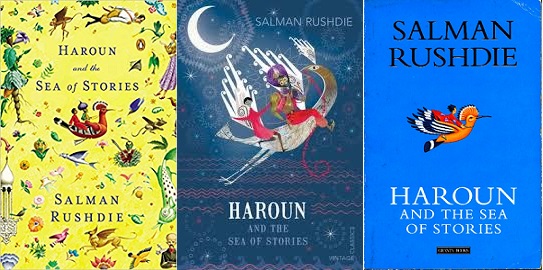
Book Review: Haroun and the Sea of Stories by Salman Rushdie ...

I didn’t realise when I picked Haroun and the Sea of Stories as my next read that it was a children’s book. Despite the publisher’s description of it as such, I’m still not convinced. Granta is not widely known as a publisher of children’s literature, and the front cover of the edition I read (the version on the right) is not particularly child-like. It doesn’t contain any illustrations and the font is a traditional size.

The concept of ‘children’s literature’ is one I often struggle with. When I find ‘children’s novels’ on a reading list I am torn – the completist in me wants to read the whole list, but is reading books specifically written for children a good use of my time? More to the point, the definition of children’s literature changes (quite rapidly actually) over time, and categorisations widely accepted in one generation look out-moded and ridiculous a few years later. There are books written with the intention to be read by children; books to be read to children; picture books; comics; books that were written for children but read by adults (for example the Harry Potter series) and books written for adults that are read by children (e.g Alice in Wonderland). That’s not to mention the whole arena of “young adult” fiction, a relatively recent concept, which bridges many of the gaps between books for children and those for adults. Other novels are re-categorised over time – originally intended for adult readers they eventually become perceived as children’s novels (Black Beauty for example).

Content is obviously what drives the categorisation of a novel as being suitable for children or otherwise; themes, language, and complexity are all factors. As society changes, what is considered acceptable in one generation would have caused apoplexy in an earlier age. Similarly language or attitudes in older novels make them challenging for modern readers (for example the extensive use of the n-word in Huckleberry Finn).

Where does Haroun and the Sea of Stories fit on this spectrum? There’s no doubt it was written for children, more specifically for a child, Rushdie’s son, from whom he was separated while in hiding due to the fatwa pronounced upon him by the Ayatollah Khomeini. Knowledge of this fact gives the story an added poignancy. Like all great children’s books, Haroun works on many levels. For younger children it is a fantastical adventure story. Young Haroun Khalifa looks up to his father Rashid, who is a famous storyteller. Rashid uses his narrative ability to campaign for various corrupt and untrustworthy politicians. One terrible day Haroun’s mother runs away from home with their neighbour, and Rashid is struck dumb, unable to tell his stories. You will probably have spotted by now the allegorical message regarding censorship underlying the narrative. Rashid and Haroun  travel to the ‘Valley of K’ to speak for ‘Snooty Buttoo’, a local politician. On the way Haroun  meets Iff, a Water Genie’, who has been sent to disconnect Rashid’s imagination. Thus begins a fantastical journey to the ‘Sea of Stories’ in the Kingdom of Gup. The Sea is slowly being poisoned by Khattum-Shud, a fairly sinister character, who very young readers might find scary. The conflict between the forces of good and bad is over quickly, and I don’t think it will spoil the book for you if I reveal it ends with a happy ever after. 

This is a charming and very readable little parable. The humour is mainly ‘dad” jokes, appropriately – there are ‘Plentimaw’ fish in the sea for example – and adults will find the articulate defence of freedom of speech and the importance of story-telling quite touching. Younger readers and the read-to will be entertained. Eventually whether this is a children’s novel or not probably doesn’t really matter, but I wonder whether in years to come it will be read mainly by adults for its commentary rather than by children for its whimsy.


Haroun and the Sea of Stories, by Salman Rushdie, 1990

Aside
Book review

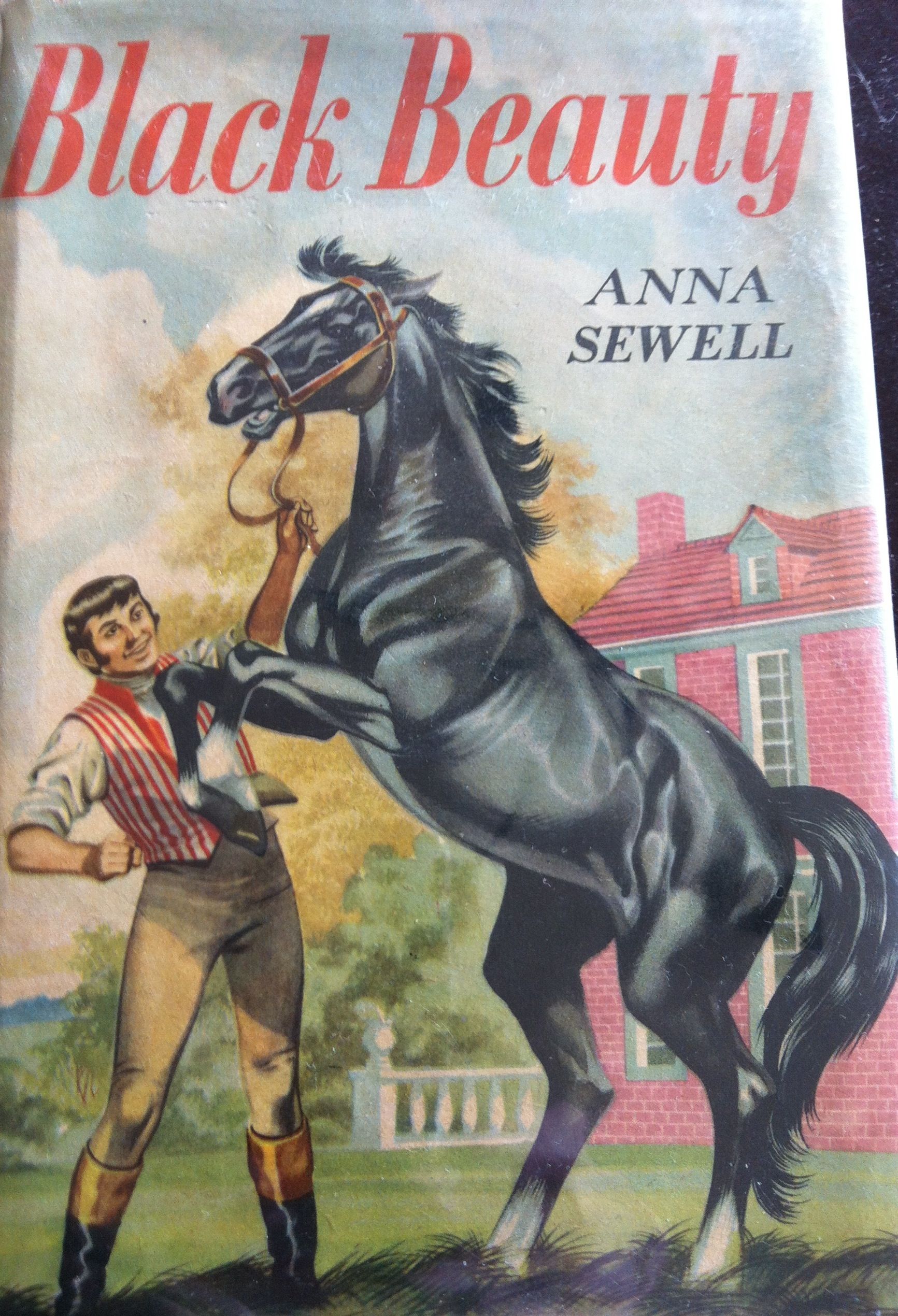
It is often an instructive experience to revisit ‘children’s’ stories occasionally. Rereading them as an adult can reveal layers of meaning not obvious to a younger reader. As a child I wasn’t initially aware of the Christian allegory in the Narnia stories, for example (until being beaten round the head with the idea in The Last Battle). Similarly, books like Alice in Wonderland and Gulliver’s Travels both work successfully as adventure stories for children and as more complex novels for adults.Black Beauty by Anna Sewell - First Edition - c. 1950s - from ...

Anna Sewell’s Black Beauty is another case in point. Written as a first person narrative by the title character, it was originally conceived as a plea for compassion in the treatment of working horses (in much the same way as The Water Babies was a campaigning tract about the treatment of child chimney sweeps). Sewell wanted to bring the plight of working horses to public awareness and in particular to end the practice of unnaturally raising carriage horses’ heads with the “bearing rein”. Stripped of its social and historical context it is now a straightforward story about the life of a horse.

But I was struck on reading the novel how clearly it also reads as an anti-slavery tract. Forget for a minute that this is a book about horses, and read these lines from early in chapter one:

Our master was a good, kind man. He gave us good food, good lodging, and kind words; he spoke as kindly to us as he did to his little children. We were all fond of him, and my mother loved him very much….I was a dull black, so he called me Darkie.”

As long as Black Beauty is well cared for he accepts his enslavement with resignation. He describes how he is broken into wearing reins and a bridle:

I had of course long been used to a halter and a headstall, and to be led about in the fields and lanes quietly, but now I was to have a bit and bridle; my master gave me some oats as usual, and after a good deal of coaxing he got the bit into my mouth, and the bridle fixed, but it was a nasty thing! Those who have never had a bit in their mouths cannot think how bad it feels; a great piece of cold hard steel as thick as a man’s finger to be pushed into one’s mouth, between one’s teeth, and over one’s tongue, with the ends coming out at the corner of your mouth, and held fast there by straps over your head, under your throat, round your nose, and under your chin; so that no way in the world can you get rid of the nasty hard thing; it is very bad! yes, very bad!

There’s no attempt to disguise the distress Beauty experiences during his “breaking in” (a phrase also used to describe the brutal treatment of slaves until they came to accept their captivity). But however accepting of his condition, Beauty is aware that he is still a possession, vulnerable to being sold to a new, less kind master at any time:

I was quite happy in my new place, and if there was one thing that I missed it must not be thought I was discontented; all who had to do with me were good and I had a light airy stable and the best of food. What more could I want? Why, liberty! …Straps here and straps there, a bit in my mouth, and blinkers over my eyes. Now, I am not complaining, for I know it must be so. I only mean to say that for a young horse full of strength and spirits, who has been used to some large field or plain where he can fling up his head and toss up his tail and gallop away at full speed, then round and back again with a snort to his companions—I say it is hard never to have a bit more liberty to do as you like.

He also knows that if he breaks down physically and becomes no longer useful or wanted he is likely to be disposed of, either sold on to ever more difficult work, or sent to “the dogs” – that is to say slaughtered and sold as dog food. When his friend Merrylegs the pony is sold to a neighbour it is seen as a kindness that

“it was on the condition that he should never be sold, and that when he was past work he should be shot and buried. “

(This line of argument, that Black Beauty is a form of slave narrative, is developed by the wonderfully named Bonnie Blossom in this article.)

I am not arguing that Black Beauty is an anti-slavery tract, not least because slavery had been abolished in the USA a decade before it was published, and much earlier in the UK – the moral argument had been won. But awareness of the brutality of slavery was still very much in the public imagination, and viewing our treatment of domestic animals as being analogous to the way slaves were once treated, adopting some of the traditional narratives and characteristics of slave stories, gives a powerful emphasis to Sewell’s argument for kinder treatment of horses. Putting it simply, we feel for the mistreated horses in the novel because they are treated like slaves.

This is a progressive novel in other ways. Sewell argues forcefully for the retention of the Sabbath as a day of rest. Beauty’s driver, Jerry, is tempted to work on Sunday’s for a reliable customer, but turns down the work as he wants to preserve his time with his family:

“If working  men don’t stick to their Sunday … they’ll soon have none left; it is every man’s right and every beast’s right. By God’s law we have a day of rest, and by the law of England we have a day of rest; and I say we ought to hold to the rights these laws give us and keep them for our children.”

This initial position of not working on the Sabbath for religious considerations is then generalised into a wider argument for the protection of working men’s conditions of employment, and their collective power through industrial action, specifically withholding their labour (a later chapter is called “A Strike for Liberty”):

“That may sound well enough, but it won’t do; every man must look after his own soul; you can’t lay it down at another man’s door like a foundling  and expect him to take care of it; and don’t you see, if you are always sitting on your box waiting for a fare, they will say, ‘If we don’t take him some one else will, and he does not look for any Sunday.’ Of course, they don’t go to the bottom of it, or they would see if they never came for a cab it would be no use your standing there; but people don’t always like to go to the bottom of things; it may not be convenient to do it; but if you Sunday drivers would all strike for a day of rest the thing would be done.”

Elsewhere Sewell argues from a moral standpoint that:

“With cruelty and oppression it is everybody’s  business to interfere when they see it”

This is typical of the muscular Christianity that informs much of the reforming literature of the Victorian era.

The novel also contains a striking portrait of the Charge of the Light Brigade in the Crimean War, told from the perspective of Captain, “An Old War Horse”. We are not told directly that his reminiscences are of this battle, but the descriptions are unmistakeable:

“I cannot tell all that happened on that day, but I will tell of the last charge that we made together; it was across a valley right in front of the enemy’s cannon. By this time we were well used to the roar of heavy guns, the rattle of musket fire, and the flying of shot near us; but never had I been under such a fire as we rode through on that day. From the right, from the left, and from the front, shot and shell poured in upon us. Many a brave man went down, many a horse fell, flinging his rider to the earth; many a horse without a rider ran wildly out of the ranks; then terrified at being alone, with no hand to guide him, came pressing in among his old companions, to gallop with them to the charge.

“Fearful as it was, no one stopped, no one turned back. Every moment the ranks were thinned, but as our comrades fell, we closed in to keep them together; and instead of being shaken or staggered in our pace our gallop became faster and faster as we neared the cannon…..

our gallant company was cruelly overpowered, and those who remained alive after the fierce fight for the guns came galloping back over the same ground. Some of the horses had been so badly wounded that they could scarcely move from the loss of blood; other noble creatures were trying on three legs to drag themselves along, and others were struggling to rise on their fore feet, when their hind legs had been shattered by shot. After the battle the wounded men were brought in and the dead were buried.”

I said, “I have heard people talk about war as if it was a very fine thing.”

“Ah!” said he, “I should think they never saw it. No doubt it is very fine when there is no enemy, when it is just exercise and parade and sham  fight. Yes, it is very fine then; but when thousands of good brave men and horses are killed or crippled for life, it has a very different look.”

The enemy must have been awfully wicked people, if it was right to go all that way over the sea on purpose to kill them.”

This vivid description of the battle makes an interesting contrast to the jingoism of Tennyson’s better known account. Sewell uses the apparent naivety of the horses to point out the simplicity of seeing war as ourselves versus “awfully wicked people”.

There is also a fascinating description of Beauty’s reaction to his first encounter with a steam train, which captures much of the Victorian shock at the force of this new technology.

I shall never forget the first train that ran by. I was feeding quietly near the pales which separated the meadow from the railway, when I heard a  strange sound at a distance, and before I knew whence it came—with a rush and a clatter, and a puffing out of smoke—a long black train of something flew by, and was gone almost before I could draw my breath. I turned and galloped to the further side of the meadow as fast as I could go, and there I stood snorting with astonishment and fear. In the course of the day many other trains went by, some more slowly; these drew up at the station close by, and sometimes made an awful shriek and groan before they stopped. I thought it very dreadful, but the cows went on eating very quietly, and hardly raised their heads as the black frightful thing came puffing and grinding past.

Reading the novel as a form of slave narrative, chapters on the Crimean War and the coming of the steam train – these are all points of interest. But the novel as a whole is repetitive. Beauty is sold to a new owner, he gets to know him and his new role, there is an encounter with another horse, and then an incident that leads to the next owner. Repeats over forty or more chapters. Events are described through the child-like innocent eyes of Beauty or his friends, with sufficient context for the reader to identify the wider commentary implicit and explicit in the narrative. All washed down with a gentle Christian sensibility (at one point a human watches a character leave and says to himself “Inasmuch as ye have done it to one of the least of these”, which as I am sure you know is from Matthew in the King James text of the Bible). There’s a banality to the repetition of the story arc over time which leaves the reader restless for the inevitable happy ever after. 

Footnote

A while back I wrote about the use of the word “gammon” as a term of disrespect. There is another instance here where it is used as a euphemism for “hypocrite”. Beauty’s driver takes a fare for an urgent job having previously refused one. Asked how much he earned he replies:

A good deal more than I generally get…..what he gave me will keep me in little comforts for several days.”

“Gammon!” said one.

“He’s a humbug,” said another; “preaching to us and then doing the same himself.”

Black Beauty, by Anna Sewell, 1877

Aside
Book review

Little Women, by Louisa May Alcott, 1868 & 1869

The Guardian top 100 novels in English has led me to some strange reading experiences, but there are few novels I would have been less likely to read than this, Alcott’s semi-autobiographical tale of growing up in a strangely unreal nineteenth century America.

‘Little Women’ was originally published in two volumes in 1868 and 1869. Alcott wrote the books rapidly over several months at the request of her publisher, and follows the lives of four sisters—Meg, Jo, Beth, and Amy March— from childhood to womanhood. The novel is extraordinarily saccharine – the girls/women rarely err, and if they do so it is only for the mother – ‘Marmee’ – to intervene with a moralising lecture on the Christian thing to do, which immediately puts things to right – for example.

“My child, the troubles and temptations of your life are beginning, and may be many; but you can overcome and outlive them all if you learn to feel the strength and tenderness of your Heavenly Father as you do that of your earthly one. The more you love and trust Him, the nearer you will feel to Him, and the less you will depend on human power and wisdom. His love and care never tire or change, can never be taken from you, but may become the source of lifelong peace, happiness, and strength. Believe this heartily, and go to God with all your little cares, and hopes, and sins, and sorrows, as freely and confidingly as you come to your mother.”

There is a really vast amount of this improving stuff.

The first half of the novel, published as a separate book but now considered the first half of the wider work, is set during the American Civil War. The family’s father is away serving in the Union army as a chaplain, and even though he re-joins the family at the end of the first novel, he remains a vaguely defined character with barely half a dozen lines of his own across the whole novel. The absent father is of course one of the most dominant tropes in children’s stories, but this lack of definition pervades the whole novel – the setting is Concord, Massachusetts, but the town and environment is so weakly explored that it could really be anywhere. The war is distant and has no impact on the lives of the characters other than the men who slip away to fight and reappear in passing a few chapters later – their stories are not allowed to intrude. While the March family is portrayed as poor, the golden rule of Victorian literature – that no family is too poor not to have servants – still applies, and the family are also able to patronise with charitable endeavours the local dirt-poor German and Irish immigrants of the town.

As what is effectively an updated version of ‘Pilgrim’s Progress’ (there are lots of references to Bunyan throughout ‘Little Women’) this novel formed the template for generations of children’s, and specifically girls stories. To give her credit, Alcott does have the guts to kill of one of her main characters, but the dying is done so gracefully and with such patience that it seems more like a blessing than a tragedy.

What possible reason could any 21st century reader have for revisiting this novel? Are there any redeeming features or points of interest? Frankly, I struggled to find any. Some critics have claimed it as a feminist tract – the March family are mostly strong independent women, but they all find fulfilment in marriage (apart from the sister that dies, of course). The gender constraints they face are accepted as a fact of life, and even the feisty Jo, the character closest to Alcott, who herself did not marry, succumbs to a proposal from a father figure in the end.

But I will just have to accept that I am not and never was the target audience for this novel, and that my inability to appreciate it should take nothing away from those who enjoy it as younger readers, and continue to return to it for its comforting familiarity.

Standard