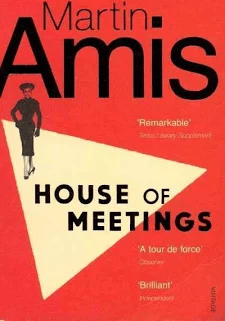
I can’t remember the last time I did not finish a book. Over the course of this blog I have probably left unfinished fewer than four or five books – the only one that springs to mind is Lies Inc by Philip K Dick, which was unreadable. So I think it says something that I came very close to abandoning House of Meetings some forty pages from the end. Only sheer stubbornness kept me going. It’s not that it is a bad book, it was just not very interesting. Which is fairly extraordinary – how could any writer make Stalin’s gulags dull?
House of Meetings is also at times harrowing. It is a historical novel framed as a prolonged confession by an unnamed, eighty-four-year-old Russian narrator. Addressed to his American stepdaughter, Venus, the text is an attempt to explain and come to terms with the narrator’s turbulent life – his violent past and the destructive relationships that defined his youth. If you impose a chronological order on the novel, the narrative begins in late 1940s Moscow, where the narrator and his younger half-brother, Lev, both fall in love with Zoya, a striking nineteen-year-old Jewish woman. Of course that is not what happens on the page, where the narrative is fragmented, told in snatches of memory, interspersed with commentary on contemporary events such as the Beslan school shootings.
The narrator is a handsome, (he says) and physically strong World War II veteran who has been deeply hardened emotionally by the conflict, including having participated in the brutal mass rapes and other atrocities committed by the Red Army during its advance through Germany. These crimes are described as just something that happened – the narrator takes no moral responsibility for his behaviour and even seems to think it was justified in some way. (“In the last months of the war, when I raped in uniform – we were, by then, so full of death (and the destruction of everything we had and knew) that the act of love, even in travesty, felt like a spell against the riot of murder.”) Lev, by contrast, is a frail, stuttering poet, a pacifist, and an idealist. Zoya chooses the gentler brother, marrying Lev just before the Soviet state begins a fresh reign of terror which sees the brothers thrown into a gulag.
The narrator adapts quickly to the lawless, violent hierarchy of the camp, but Lev suffers immensely despite the narrator’s attempts to shield him. In 1956, during a period of relaxed rules following Stalin’s death, Lev is granted a highly prized conjugal visit. Zoya travels thousands of miles to meet him in a designated wooden cabin known as the “House of Meetings.” The narrator, consumed by envy, is tormented by not knowing what happens in the House, even though this surely requires very little imagination.
Following their eventual release, the brothers’ lives diverge. The narrator defects to the West, eventually settling in America. Here he improbably becomes a wealthy arms dealer. Lev returns to Zoya, but he is broken by his time in the gulag, and their marriage does not survive. The novel ends in 2004, as the elderly narrator travels back to Siberia and the camp, this time as a tourist. During this final voyage he opens a long ignored letter from Lev telling him what happened in the House of Meetings, something that has haunted the narrator for some reason. Far from being a climax this is simply an ending, with nothing of interest being revealed.
This novel was ill-conceived and ill-advised. There is an extensive literature of the gulag written by survivors to which this adds nothing. His commentary on contemporary Russian politics is dated and dull, and the narrator’s portrait of the gulags is strangely banal. The references to the atrocities being committed by Chechen terrorists are thrown in casually and do not serve any function – if we are supposed to infer that little changes in Russia and it remains as barbaric as ever, then the point is moot and badly put. I did not care about the characters in the novel, and apart from the brothers none of them were drawn with any care or interest. Zoya in particular was very one-dimensional with no real existence outside her role as the third element of the love triangle. No doubt that is because that is how the narrator saw here – just as a woman rather than as a real person, and why he obsessed with what she did or didn’t do in the House of Meetings with his brother. Just what he thought they did, and why he could not get over that brief visit, I could not understand nor care about.
I’d like to find something positive to say about this novel to conclude this review, but I have racked my brains and I can’t. I’ve looked back at some of my reviews of earlier novels by Amis (who died in 2023) and find that I loathed Lionel Asbo and Yellow Dog, so I suppose the fact that I found House of Meetings merely banal represents something of an improvement!
“It is just after eight o’clock in the morning of a dark February day, in this year of grace nineteen hundred and fifty-two. An atmospheric depression has combined with the coal smoke from a million chimneys to cast a pall over London. A cold drizzle is falling on he narrow nondescript streets north of Soho, south of the Euston Road. Inside the church of Our Lady and St Judge, a greystone, neo-gothic edifice squeezed between a bank and a furniture warehouse, it might still be night.“
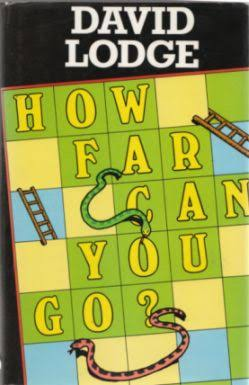
How Far Can You Go? charts the lives of a group of English Catholic students from the early 1950’s to the late 1970’s, a period of dramatic change in the UK and within the church. The novel is organised chronologically into themed chapters that track the group’s lives within the context of the social and theological changes of the period with a particular focus on the evolution of Catholic teaching. The novel opens by introducing the group of students as they gather at a cold and dark Catholic church for an early-morning mass prior to lectures at University College London. All the students have been taught and believe the church’s teachings on sin, guilt, and sexual abstinence. Compliance with the teachings of the church is compared to a twisted board game (hence the illustration on the novel’s front cover):
The name of the game was Salvation, the object to get to heaven and avoid Hell. It was like Snakes and Ladders: sin sent you plummeting down towards the Pit; the sacraments, good deeds, acts of self-mortification, enabled you to climb back towards the light.” The author is the unnamed eleventh character in the novel, regularly intruding into the narrative by breaking the fourth wall.
‘How They Lost Their Virginities’ is the (self-explanatory) next section of the novel which details how the awkward, guilt-ridden students transition from youthful chastity into their early sexual experiences and marriages. Or most of them do – one character becomes a nun, with the inevitable vow of chastity that involves, and another is a closeted gay man who is scared of sex, worrying that it will damn his soul. Most of the other students wait until marriage before having sex, largely due to the same fear of damnation. In some cases they wait for several years, with the stress and anxieties this inevitably brings.
‘How Things Began To Change’ takes the novel into the 1960s. The characters marry, have children, and begin a long struggle with the strict Church ban on ‘artificial’ contraception. Hopes for a relaxation of the church’s teachings on this issue are dashed in ‘How They Lost The Fear Of Hell’ with the publication of the papal encyclical Humanae vitae (HV) in 1968, which reaffirmed the ban. The young people, now not so young, have increasingly large families, and the burden of near constant pregnancy or abstinence puts pressure on their compliance with the church’s teachings. Around them society grows more permissive and some of them abandon ‘natural’ contraception for methods that actually work, feeling liberated when doing so.
From here, the fairly linear story begins to fragment as the characters’ lives go their different ways, each of them finding their place in the world and ways to reconcile their faith with their day-to-day lives. Some get divorced, have affairs, suffer mental breakdowns, or experiment with charismatic, personalised versions of faith. One couple, Dennis and Angela, have a child with Down’s Syndrome. The references to the child being a ‘Mongol’ are a shocking remind of how, until quite recently, people with Down’s were commonly referred to. The birth of a child with Down’s Syndrome is presented as a curse from God and this is followed shortly by the death of their daughter, Anne, when she is run down in the road by a car. Here the author once again breaks the fourth wall:
“I have avoided a direct presentation of this incident because frankly I find it too painful to contemplate. Of course, Dennis and Angela and Anne are fictional characters, they cannot bleed or weep, but they stand here for all the real people to whom such disasters happen with no apparent reason or justice. One does not kill off characters lightly, I assure you, even ones like Anne, evoked solely for that purpose”.
This intrusion of the author into the narrative might have seemed very modern or even post-Modern in 1980, but it has not aged well. It is largely redundant (we know Dennis and Angela and Anne are fictional characters, but have chosen to temporarily engage with them as ‘real’ characters as part of the experience of reading the novel) and intrusive, reminding the reader that this is just a novel and that we have no real reason to care about the characters – other than as avatars for anyone we know who has ever suffered. Lodge anticipates this response: “People who find religious belief absurd are often upset if a novelist breaks the illusion of reality he has created”. No, I was not upset, just mildly irritated at the unnecessary intrusion of another, no less illusory character, the author.
The novel ends with a transcript of the documentary filmed at a progressive Catholic retreat organised by some of the characters. The film causes a minor scandal, showing as it does people pushing at the boundaries of the church’s teaching on how religious observance is to be conducted (that is, seriously, without celebration, music or fun).
Underpinning the narrative is a liberal assumption that the course of the church’s teaching is fixed and inevitable, and in particular that sooner or later the rules about contraception will be relaxed. This is presented as something that is simply unavoidable, a matter of time, and I am sure that is how it must have felt in the 1960’s and ’70’s. Lodge’s characters would I think have been shocked to find out that in 2026 the Catholic Church still maintains that artificial contraception is an ‘intrinsic evil’ – it is “always morally wrong and can never be justified by any good intention or difficult situation”. There was nothing inevitable about the liberalisation of Catholic teaching, however it must have seemed half a century ago. Which, unless you are a dogmatic, committed Catholic, makes How Far Can You Go? rather sad. “Thus far and no further” is the answer none of Lodge’s characters, nor I suspect Lodge himself, would have expected.
Why am I (still) reading David Lodge? He was an important figure in the British literary scene in the 1980’s and was nominated and shortlisted twice for the Booker Prize in that decade. I think his standing has diminished significantly since then and his work is commonly perceived as outdated. Which I think is right, but I find it hard to resist a first edition hardback in a second-hand bookshop for just a couple of pounds, so here we are.
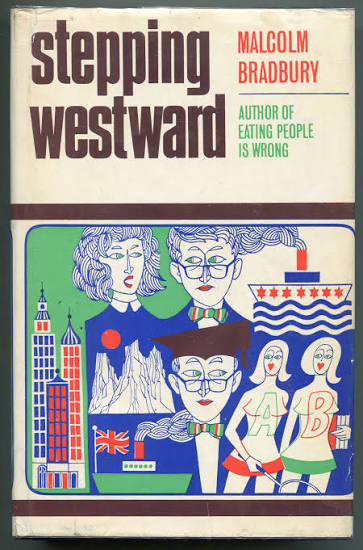
Stepping Westward is an early example of the campus novel, although for some reason Wikipedia does not include it in its list of examples of the genre. Bradbury is still a well-known author, largely on the basis of the television adaptation of The History Man but this, his second novel, has been almost forgotten – it doesn’t have its own entry in Wikipedia, has only one review on Amazon, nine other fairly desultory reviews on Goodreads and is out of print. And yet it is head and shoulders above many other examples of the genre including the novel it obviously had a significant influence on, David Lodge’s Changing Places (1975).
Bradbury took his novel’s title from the Wordsworth poem of the same name, which opens thus:
‘T would be a wildish destiny, If we, who thus together roam In a strange land, and far from home, Were in this place the guests of Chance
And it is this spirit of exploration, even wanderlust, that inspires and infuses the novel. On the Malcolm Bradbury website the author wrote (in an unpublished afterword):
Stepping Westward is my second novel. I wrote it, mostly in the United States, at the beginning of the Sixties, when I and the world were both visibly changing… It was a time when Americanization was passing through Europe like what many of the young in those days still had to take – a dose of salts. Britain was losing an Empire and gaining a washing machine, and America was where, it seemed, everything that was best came from – the best jazz, the best novels, the best ice-cream, the best cars, the best films. In fact America, the America of Arthur Miller and Marilyn Monroe, J.D. Salinger and Dave Brubeck, Jack Kerouac and Allen Ginsberg, Elvis and the Kelvinator, haunted the imaginations of the Fifties young. The old myth of European liberation in the New World never seemed stronger, and adventurous journeys to the new frontier were very much in order. So one day, when my thesis was finished, I put down my Leavis, put on my Levis, and sailed for the United States.
This is the mood that fills this novel, and I hope it seems like a joyous one.
I think it does.
James Walker lives a drab life in Nottingham with three modestly successful novels to his name. Unhappily married and with a young daughter, he takes little joy in life. He doesn’t think much of himself as a husband, father, writer or man. Largely because of lazy reviewers his work has been lumped into the category of ‘angry young man’ novels, even though he had no conception of this when writing them. Out of the blue he is offered and accepts a one-year Creative Writing Fellowship at Benedict Arnold University in the town of Party, located in the undefined West but in the shadow of the Rockies. We see this offer being made from the American perspective and know that he is part of a wider game of campus politics being played by the cynical Bernard Froelich.
Walker sails to America instead of flying, which feels anachronistic even for the 1960s. The journey drags somewhat (for the reader – Walker enjoys himself). We soon learn that Walker has no intention of remaining faithful to his wife – these are the sixties after all – as he pursues one of the American students sharing his journey, a member of an unlikely bagpipe band that has been touring Europe. Once arrived in Party he struggles to navigate the complexities of American campus life and politics. The bumbling Englishman abroad material is hardly original and much of the content here is laboured. Most of the humour derives from cliches about American hostility to the English, American food, and campus politics (including elements of lingering McCarthyism). The crunch comes when his stubborn Britishness leads him to resist signing the university’s mandatory loyalty oath. His speech to the whole university explaining his reasons for this (in a scene very reminiscent of the climax of Kingsley Amis’s Lucky Jim) makes him something of a civil rights celebrity, but also paints a target on his back.
Tempted by the improbably named Julie Snowflake, the young woman he met on the boat over, Walker travels further west during the Christmas break. At first their journey is exciting – he contemplates leaving his wife and marrying Ms Snowflake – but when he fails to act decisively during a mechanical breakdown in Mexico, he realises he is not cut out for this life. He quits his job and sails back home to England and his family.
The novel unquestionably has its issues. The portrayal of campus politics has long lost any interest and seems as dated as the ocean crossing by liner. The sexism in the novel is problematic. Walker seems obsessed with the tight fitting nature of the clothing of every single female student and whenever any woman is introduced he always notices and comments on their ‘sunburnt skin’ or their ‘finely cantilevered bosoms’. Watching students becomes a hobby:
“From their offices the members of the faculty could see the co-eds flouncing past the windows,,,On fine days they wore neat blouses and skirts, tight at the rump, or else cut-off jeans with the Greek letters of their sororities painted in white across their behinds; on wet ones they wore slickers in red and blue and yellow, or, if it was cold, quilted or fur-lined jackets with hoods. ,,, Walker spent a good deal of time peering through the fly-screens on his windows at this campus display.”
In part this is a reflection of the time – the depiction of women and casual sexism reflects the mid-1960s academic and societal landscape. Bradbury’s satirical aspirations, aimed at exposing the hypocrisies of British and American cultures, may have been laudable, but his treatment of female characters often falls into the trap he aims to critique. His fictional academia is a profoundly male-centred world – there are very few female professors or tutors. Women are marginalised as either wives, hostesses, or romantic targets. Julie Snowflake is a modern American young woman, but she serves mainly to act as Walker’s romantic interest. At times she seems his intellectual equal, challenging him, but he never treats her as such. Most other women in the novel are the faculty wives, relegated to supporting roles and judged by how well they “pour tea, manage the donors, and keep their opinions to themselves“. Bradbury is of course critiquing this treatment of women but he does nothing other than portray it – positive female role models that challenge this status quo are hard to find.
The novel ends with a whimper. It fizzles out with most of the plot lines forgotten or abandoned. Walker feels disenchanted with America and when his relationship with Julie stalls he runs away back home. The last time we see him he is climbing onto the liner back to Southampton. In a postscript the university decides to discontinue its Creative Writing fellowship and spend the money more wisely.
Despite all this, I would still encourage anyone interested in the campus novel genre to read Stepping Westward. It is a confident, thoughtful work, a product of its time, no doubt, but it has interesting things to say about the awkward relationship between the UK and America. While Walker is a frustratingly limited anti-hero, the novel deserves a wider audience and to be recognised as an important contribution to the genre.
PS. In preparing this review I looked up some information about Bradbury’s first novel, Eating People is Wrong. Lazily I did not include the words ‘Bradbury’ or ‘novel’ in my search, and the engine’s AI thought I was asking whether cannibalism was legal!
In an interview in 1960, Muriel Spark gave this account of the origins of Memento Mori:
“It happened that a number of old people I had known as a child in Edinburgh were dying from one cause or another, and on my visits to Edinburgh I sometimes accompanied my mother to see them in hospital. When I saw them I was impressed by the power and persistence of the human spirit. They were paralysed or crippled in body, yet were still exerting characteristic influences on those around them and in the world outside.”
Author’s stories about the origins of their novels always have to be taken with a pinch of salt, but if this account is correct then it suggests that Spark approached her story and her characters with empathy and compassion. Older people, in this account, are impressive and even dignified, they are “exerting characteristic influences on those around them” – which is rather an ambiguous turn of phrase don’t you think? Spark went on to say “I saw a tragic side to this situation and a comic side as well”.
I think anyone who has spent time with people coming to the end of their lives can appreciate that the tragedy of death can on occasion be illuminated by moments of black or even absurd comedy, which relieves the sadness of the situation. But dying people are still people and I am not sure that Spark delivers on her intention of illustrating the complexity of this situation in her portraits of her characters, many of whom are rather awful. To be fair the smaller number of younger characters are all pretty appalling as well!
The plot of Memento Mori revolves around a group of older (aging, but not dying, other than in the sense that we are all dying sooner or later) metropolitan people: brothers and sisters, husbands and wives, and friends and lovers. The extensive cast includes at its core Dame Lettie Colston, her brother Godfrey, retired head of a brewing company, his wife Charmian, a successful novelist, and Charmian’s former maid, Jean Taylor. Apart from Mrs Taylor, these are upper-middle class people who can afford maids and housekeepers. Mrs Taylor is bedridden and lives in a nursing home, the ‘Maud Long Medical Ward’, with eleven other “grannies”. Grannies is the slightly disparaging title given to the patients by the staff, not all of who are happy with the description:
“Miss or Mrs Reewes-Duncan threatened for a whole week to report anyone who called her Granny Duncan. She threatened to cut them out of her will and to write to her MP. The nurses provided writing paper and a pencil at her urgent request.”
Calling someone by a title they don’t choose or like is disrespectful and a mild form of bullying. The ‘grannies’ exercise the little autonomy they have in their lives by threatening to change their wills whenever anyone crosses them, even though most of them have little or nothing to bequeath. Life in the ward is reduced to the bare essentials, a dull routine of meals and conversation, most of which revolves around discontent with the nursing staff or the daily horoscopes read out for them all by Granny Valvona. These characters act as a form of chorus to the rest of the events of the novel. Outside the ward, former lovers and old friends call in for tea and something stronger and little happens to disturb their calm and pleasant existence – until the day Lettie starts to receive anonymous phone calls with the message “Remember you must die.” Instead of taking this reminder as an encouragement to live life to the full while you can, Lettie finds it menacing and upsetting. Other members of the group start to receive similar calls and respond in the same way. The police are baffled and begin to suspect that no such calls are being made. Is this a shared delusion or just a childish prank? A retired policeman is hired to investigate, but makes no progress and falls under suspicion himself. Eventually a new normal emerges in which the calls are mostly accepted as part of the routine of life, and any menace they contained is thus neutralised.
Most readers will have anticipated that one of the peripheral characters – and there are plenty of possible suspects – would at some point be exposed as the mystery caller, but this never happens. The caller is never identified nor caught. It is suggested that there might be a supernatural or psychological explanation for the calls, but this is not followed up. I felt rather short changed by this lack of a resolution. If you build your novel round a mystery then surely you need to have an outcome in which the mystery is explained? I appreciate that is very old-fashioned of me. I know Godot never arrives, that the world is not neat and tidy and mysteries remain unsolved. But this is not an existential novel on the unknowingness of the universe, it is a domestic comedy in which the anonymous calls are a central part of the plot. Imagine reading a version of The Hound of the Baskervilles, at the end of which Holmes and Watson wander off shrugging their shoulders saying, “Yeah, it might have been a dog, who knows”.
Other subsidiary plot lines are less frustrating and in some respects compensate for this decision. Lisa Brooke, a friend of the group, dies early in the novel, leaving a substantial estate to be argued over by her husband, her siblings and her housekeeper, Mrs Pettigrew. Mrs Pettigrew is the novel’s villain, blackmailing the people she looks after, nosing her way into their secrets and forcing them to change their will or risk exposure.
Writing in the Guardian in 2010, David Lodge agreed with Martin Stannard’s conclusion in his 2009 biography of Spark that Memento Mori “remains one of the great novels of the 1950s,” I can’t agree. I admire Spark as a writer but this is one of the least interesting of her novels that I have read. It patronises and looks down on the elderly and treats them as disposable objects rather than well-rounded characters. Instead of giving a voice to the elderly, rarely centred in fiction, it objectifies them. I kept being reminded of Kingsley Amis’s The Old Devils, which has many of the same flaws but at least invests the elderly characters with some passion and lust for life. It is not a coincidence that Amis was a lot closer in age to his characters than Spark was, and could therefore portray them with more empathy. To illustrate this point consider the following exchange between Godfrey, his wife Charmain and his sister Lettie. Bear in mind that Charmian has suffered a stroke, possibly several, and is struggling with cognitive decline, made all the worse by the fact that she was once a successful author:
“Would you like me to read you the obituaries, dear?” Godfrey said . . .
“Well, I should like the war news,” Charmian said.
“The war has been over since nineteen forty-five,” Dame Lettie said. “If indeed it is the last war you are referring to. Perhaps, however, you mean the First World War? The Crimean perhaps . . .?”
Is this funny, in a ‘you have to laugh’ way, or is it mocking someone with memory loss? Arguably Charmian has the last laugh – her books are reissued, she is ‘rediscovered’ and becomes popular, and recovers much of her cognition. Spark ends her novel with a quick summary of what happens to all her characters after the events of the novel, and unsurprisingly (almost) all of them die one way or another. Memento Mori indeed.
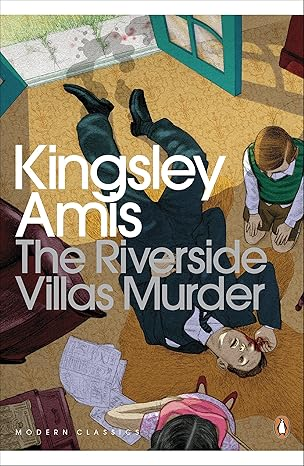
The Riverside Villas Murder by Kingsley Amis, 1973
The Riverside Villas Murder was written in the 1970’s, is set in the 1930’s, and is infused with the dominant social attitudes of the 1950s. Which all adds up to an uncomfortable mix. The story is told principally through the eyes of 14-year-old schoolboy Peter Furneaux. He is a typical 14 year-old, unable to go more than a few minutes at a time without thinking about sex. The mystery element of the story begins with a burglary at a local museum, where a mummified body and some Roman coins are stolen. Later, at a village dance, one of the Riverside Villas residents, a Mr Inman, provokes his neighbours by suggesting he has damaging information about them. During the dance, Mrs Trevelyan, a bored housewife, dances with Peter. Later she invites him to tea at her home, where she ‘seduces’ him. In the 1970’s this may have seemed comical, but fifty years on the scene is quite shocking in many ways. While it is Peter’s first sexual experience, Amis treats it as slapstick comedy: “What he had imagined so often and so long, and what actually happened on Mrs Trevelyan’s bed, resembled each other about as much as a fox-terrier and a rhinoceros.”
A few days later, Inman is murdered. He staggers into the Furneaux home, soaking wet from having fallen into a nearby river and bleeding from a head wound. Peter calls Mrs Trevelyan for help, but Inman dies shortly after. The rest of the novel comprises the police investigation, led by a cast of policemen who I think we are supposed to find comic but to me were one-dimensional and unconvincing and whose investigation is chaotic.
As a murder-mystery the novel is dull – the explanation as to whodunnit, when it is finally revealed, manages to be both predictable, because it follows the traditions of the genre, and at the same time impossible to deduce, given that the murder weapon turns out to be an improbable Heath-Robinson contraption that no-one could possibly have foreseen. The murderer’s motives are also transparently thin.
But there is a much more serious problem with the novel. Amis clearly set out to write a traditional detective novel, with the central character being a young teenage boy. It follows all the tropes of the genre quite carefully, as if the novel were an exercise in nostalgia. The 1930’s setting – Amis was born in 1922, so would have been a teenager himself in the thirties and therefore very familiar with the popular culture reference which litter the novel – allows him to wallow in nostalgia for an England where murderers are executed, housewives are almost invisible unless they are sexual predators and gay men are the object of scorn and disgust. The novel also contains a scattering of casual uses of the n-word and gay slurs, which, when placed in the mouths of old-fashioned men such as Peter’s father or the police provide the excuse of authenticity but at the same time allow Amis to break social taboos. In other words the novel is pointedly offensive. This isn’t social observation, it is autobiography.
Which poses two questions: why read a book with such objectionable ideas, and why review it? I loved Lucky Jim, and while I have developed a much better understanding of some of its problematic aspects, I still have a fondness for it. Amis can craft a striking phrase – the fox-terrier/rhinoceros quote above for example – and he did go on to win the Booker Prize. So it is hard to dismiss him as an author, and I still read him occasionally to see if he could ever recapture the brightness and humour of Lucky Jim. So far there have only been glimpses. As to the question of why one would review a book that deserves to go out of print and remain so, that’s more straightforward. These are not recommendations but posts noting what books I have read. No more no less. I don’t post about every single book I read (although I should according to my self-imposed rules) but I try to miss as few as possible. And if I have saved anyone the experience of reading the Riverside Villas Murder then it will have been worth it.
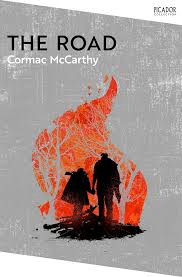
The Road is a pretty traumatic read – if books came with trigger warnings, this would have lots of them. It is set in the nearish future after an environmental or some other disaster that has wiped out almost all plant and animal life on earth. The sun is blocked by clouds and ash covers everything. The landscape is hellish, blasted and burnt. The few human survivors hunt one another for food.
The story is told through the eyes of ‘the man’ and his son, survivors in an unremittingly bleak and hostile landscape. The only other survivors they meet want to kill them and eat them, or are enslaved and due to meet the same fate. At one point they see from a hiding point
“An army in tennis shoes, tramping. Carrying three foot lengths of pipe with leather wrappings. Lanyards at the wrist. Some of the pipes were threaded through with lengths of chain fitted at their ends with every manner of bludgeon…The phalanx following carried spears or lances tasselled with ribbons, the long blades hammered out of trucksprings in some crude forge upcountry…Behind them came wagons drawn by slaves in harness and piled with goods of war and after that the women, perhaps a dozen in number, some of them pregnant, and lastly a supplementary consort of catamites illclothed against the cold and fitted in dogcollars and yoked each to each.”
The son was born just after the end of the world. Initially his mother was with them for some time, but in one of the novel’s many disturbing scenes the man remembers his final conversation with her where she confirms her decision to take her own life:
“Sooner or later they will catch us and kill us. They will rape me. They’ll rape him. They are going to rape us and kill us and eat us and you won’t face it. You would rather wait for it to happen. But I can’t. I can’t.”
The novel is a dystopian version of the classic journey/quest story, its title ironically referencing Kerouac’s On the Road. While Kerouac’s characters travelled freely through a sunny, prosperous American landscape, the man and his son are on foot, hunted and starving. They travel south looking for a warmer climate, with the vague destination of the coast, when they can go no further, and an equally vague hope that they might meet a community of non-cannibals willing to take them in and help them. They carry their small amount of food and possessions in a shopping trolley, which explains the need to stay on the road rather than heading across country. The road is largely deserted but also very dangerous – it is where they are most likely to meet other, equally hungry and desperate people.
The boy – he is around ten years old – constantly asks his father questions, principally to seek reasurance and comfort. He believes his father when told that they will find food, somewhere warm, and people to help them, even though every day proves how profoundly unlikely this seems. As all plant life is dead, the only food left is tinned and this is obviously in very short supply. All the other necessities of life, including shelter, clothes and clean water, are equally hard to come by. At several points they come close to starvation; at many others they are nearly captured or killed. After every step they get colder, hungrier, thirstier. The world they live in is so vividly realised that the reader shares in the feeling of trauma. Hellish doesn’t begin to describe it. The only thing that keeps them going is one another, and the small, unspoken hope that somewhere there is a place of refuge. Extraordinarily, at one point they find just such a place, an emergency bunker full of food and other resources, but the man refuses to stay, refusing to believe they will be safe, even though the road is a much more dangerous environment.
Despite everything, the boy preserves a core of integrity. He wants to help people they encounter, and cannot accept the hard decisions his father has to constantly make. He is the voice of compassion, the conscience of a lost world he knows only through the memories of his father, which in hindsight seems a paradise:
“Once there were brook trout in the streams in the mountains. You could see them standing in the amber current where the white edges of their fins wimpled softly in the flow. They smelled of moss in your hand. Polished and muscular and torsional. On their backs were vermiculate patterns that were maps of the world in its becoming. Maps and mazes. Of a thing which could not be put back. Not be made right again. In the deep glens where they lived all things were older than man and they hummed of mystery.”
I enjoy dystopian fiction, and will watch just about anything involving zombies or end of the world catastrophes. Usually these involve a suspension of disbelief – the characters often survive for long periods without any obvious sign of food or water, for example, or find weapons in abundance just when they are needed. The Road offers no such false comforts. This is a terrifying world in which death seems an attractive alternative to the hardships of daily life. I read The Road compulsively in just over a day, all the time anticipating the end which I thought was inevitable – this novel was not going to have a happy ending. I am going to avoid spoilers and let you decide what you think about the ending, but whatever you do don’t read The Road unless you are feeling quite psychologically strong. Keep telling yourself it is only a story.
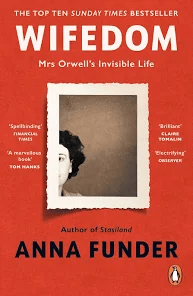
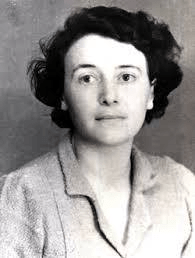
I started Anna Funder’s Wifedom, her 2023 book about George Orwell’s first wife, Eileen, with a considerable sense of unease. I had read reviews of the book when it came out which raised some concerns about the methodology used and the conclusions reached; the book’s blurb heightened the sense that I was likely to be reading a hit-job on one of my favourite authors. At the same time I wanted to try and keep an open mind – after all I knew that Orwell was hardly a saint, and if the author had something new to say about his life, his relationships and his work, then I wanted to learn.
The first puzzle to unpick was – what kind of book is this? It’s not a biography – it seemed obvious to me that Funder had originally been working on a conventional biography of Eileen, but that her fox had been thoroughly shot by the publication in 2020 of Sylvia Topp’s Eileen – the Making of George Orwell.Wifedom is also not a novel, although at one point Funder claims she considered making it one. It’s not a memoir, but there are several points at which the author discusses her own personal circumstances, her memories, her status as a wife and mother and her dissatisfaction with the sharing of household tasks within her marriage. In fact the book is all of the above, and more. Helpfully Funder uses the term ‘counterfiction’ to describe the text. The internet defines counterfiction as “a story or narrative that challenges dominant views, mainstream beliefs, or official accounts by presenting an alternative, often marginalized, perspective, aiming to disrupt established realities or norms through fictionalized elements”. This concept was key to me understanding what Funder was trying to achieve. The fictionalised elements in Wifedom are Funder’s attempts to ventriloquise her subject, creating diary entries for Eileen as she drafts the letters to Norah Myles that serve as the author’s inspiration for this account.
Initially this approach – essentially ‘making things up’ – only served to exacerbate my unease. But I quickly realised that was the point – the author wants to challenge the reader and the recreated internal monologues, the streams of consciousness that record Eileen’s private thoughts and ideas as she goes about her day and writes her letters are acts of imagination, attempts to construct Eileen and George’s married life in the absence of more direct, first-hand evidence. As long as the reader remembers that – this is just Funder’s best efforts at imagining what Eileen might have thought – then the intention is successfully achieved. A conventional biography would rarely be so bold as to creatively reconstruct a subject’s thoughts and feelings, but Funder is not constrained by such conventionalities. If these exercises help us see the hidden Eileen more clearly, then the job is done.
The question then is whether this is the case – whether the Eileen and George created by the author here is plausible and convincing? There is of course plenty of evidence that tells us about this couple’s married life. Letters, diaries, and a whole catalogue of personal memoirs by the people who knew them. These accounts are fairly unanimous – this was an unconventional but surprisingly happy marriage. Both George and Eileen said as much over and over again and despite various infidelities, suspected and actual, there is no suggestion they ever considered separation – and of course they adopted a baby in 1944, a signal of the strength of their bond.
Funder presents a very different account of their marriage. Her evidence rests heavily on two primary sources – the accounts of Eileen’s friend, Lydia Jackson, who it would be fair to say never looked kindly on Orwell (she once told an interviewer “I was always sorry that Orwell married Eileen”) and the ‘Norah’ letters. These six letters written from Eileen to a university friend, Norah Myles, who so far as I can tell never met Orwell, and whose replies did not survive, were not “newly discovered” as claimed in the paperback edition of the book’s blurb (I recognise that the author almost certainly did not write the blurb, and may not even have approved the text, but they are part of the book nonetheless.) In fact these letters were ‘discovered’ in 2005, almost 20 years before Wifedom was published, and appear in Peter Davison’s supplement to his collected works, The Lost Orwell. As a number of critical reviews have pointed out, Funder notices every time the passive voice is used to erase Eileen’s contribution to Orwell’s work, but uses it here to imply or suggest that the discovery of Eileen’s letters was by herself. At one point she actually uses the phrase “I found the letters” – from the context the reader will be unclear whether this is the original discovery or whether she simply means “I came across…”.
But to return to the question I posed earlier, is Funder’s recreation of Eileen’s life and marriage plausible and convincing? To consider that question let’s look at the first letter to Norah, written during a visit to Orwell’s parent’s home in Southwold, a rather lovely coastal town in Suffolk, six months after the couple married in 1936. In it appears the following now rather famous line:
“I lost my habit of punctual correspondence during the first few weeks of marriage because we quarrelled so continuously and really bitterly that I thought I’d save time and just write one letter to everyone when the murder or separation had been accomplished”.(My emphasis)
Most critics take that comment to be a joke. To me that’s so obvious as to not need stating. It’s a pointed joke, of course, but unquestionably an attempt at humour. In her biography of Eileen, Sylvia Topp calls it ‘banter’. Richard Blair, George and Eileen’s adopted son, thought it was “obviously tongue in cheek”. Funder is not so sure – for her this comment is to be taken seriously, a sign of the immense distress Eileen must have been experiencing, her letter a cry for help. And as a result the version of Eileen Funder imagines regrets her decision to marry, resents the burden of domestic work, and is constantly irritated by George. I think the reader can decide for themself which is the more plausible interpretation.
Funder’s overall thesis, summed up in the book’s subtitle, Mrs Orwell’s Invisible Life, is that Eileen’s contribution to Orwell’s life and work has been erased by the patriarchy and in particular by Orwell himself and his cabal of all-male biographers. Her task therefore is to bring Eileen back into the light and if some imaginative reconstruction of what probably happened is required to achieve that result, then so be it.
As an example of this erasure, the “wicked magic trick” by which Eileen has been made to disappear, Funder takes a careful look through Orwell’s memoir of his time in Spain during the Civil War, Homage to Catalonia. She starts with the surprising statement that
“I had read Homage twice and never registered that Eileen was in Spain. No-one I have ever asked remembers her.”
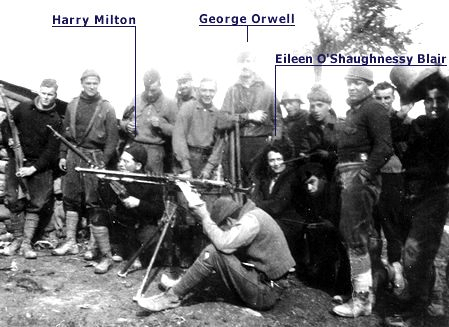
To which the only possible response to this confession is “Really!!??” Given the centrality of Eileen’s role in the key events of Homage (she even visited him at the front, an event captured on camera (see below)) and the multiple references to ‘my wife’ throughout the text, this is surprising. If Orwell was genuinely trying to avoid letting people know that Eileen was in Barcelona for most of the time that he was in Spain, he did a poor job of doing so. Granted, he does not refer to her by name, for reasons that could be as banal as it being conventional not to do so, or the more serious security reasons some suggest, but as Eileen typed the manuscript (and according to Funder, and others, contributed extensive editorial suggestions) it would have been a job of moments to have added or reinserted her name. Later, attempting to explain why she never noticed Eileen was in Spain, Funder claims (with traces of bitterness?) that the word “wife” is a “job description” (181) rather than a way of describing a relationship. Eileen is “in this story only in a way no one will ever see, like scaffolding, or a skeleton, something disappeared or covered over in the end result”. It reflects poorly on Funder as an Orwell scholar and more broadly as a reader that she did not notice (on either reading) the multiple references to Eileen in Homage – the scene when her hotel room is being searched and she hides documents under her bed, avoiding them being found because the Spanish soldiers were being overly polite towards her, is tragically comic, and one of many very memorable scenes from the book.
The phenomenon of women’s erasure from history is undeniable and there is a convincing case to be made that Eileen suffered from just such an experience. She has been a shadowy, lightly-sketched figure in many Orwell biographies. Sylvia Topp’s work was an important start at correcting that failure. But was the erasure of Eileen a mass conspiracy instigated by Orwell and supported by his biographers and the patriarchy? Perhaps Eileen is not a clear example of this phenomenon, or perhaps Funder’s counter-fictional approach is not the best way of revealing Eileen’s role in Orwell’s life and work.
As an aside, I found the author’s use of unnumbered endnotes, referenced only by page number, really frustrating, particularly when they were used for important content such as her thoughts on the Topp biography. An endnote is simply a list of additional notes on the text, mainly sources, listed by page number. When reading Wifedom you cannot tell whether the author has included a source or comment on the text without constantly checking the endnotes, which of course you quickly stop doing. Why she chose this approach I found baffling.
After finishing Wifedom, but before putting pen to paper to record my thoughts, I read some reviews of the book online. Most of the reviews in the broadsheets were broadly positive. The Guardian called it “a brilliant reckoning with George Orwell to change the way you read”. The review on the Orwell Society website asks more serious questions. But then I came across (‘discovered’) Matthew Clayfield’s cleverly titled ‘She Can’t Tell Norah That’ which makes a compelling case that Funder’s methodology and central thesis is flawed. He argues that the ‘recently discovered’ letters to university friend Norah, although relied on by Funder as a springboard for the text’s speculative counterfiction episodes, do not support any of her conclusions. Funder’s explanation for this is that the letters have to be read creatively, looking for the things Eileen wanted to say but could not. In other words, she could not ‘tell Norah that’. The obvious alternative explanation is that she doesn’t tell Norah things in these otherwise frank and revealing letters is because she didn’t believe them or they didn’t happen. I commend this analysis to anyone interested in reading more about the issues with Wifedom. It is so comprehensive that I was tempted to abdicate any attempt to review the book and just leave the link here, but I don’t think in all honesty I can do that. Crucially, this article also contains in postscripts details of emails from the son of Georges Kopp (Orwell’s commander in Spain, a long term friend of the couple, and according to many biographers, Eileen’s lover) and from Richard Blair himself (George and Eileen’s adopted son) expressing serious concerns about the accuracy and intentions of the author (Funder). Richard writes to Clayfield about Funder’s “(deliberate) misplaced understanding of the dynamic between Eileen and George.”
Another finely detailed critical review can be found here.
Why the hostility towards Wifedom from this group of reviewers? I think the answer is simple, and no it is not ‘the patriarchy’! It is that the Orwell Funder presents us is never given the benefit of the doubt. If there is any explanation of his behaviour offered, any interpretation of his work or his actions, it is always the most critical, the most damning. Orwell emerges as a crude monster, an attempted rapist who abuses his wife, constantly and callously betrays her, takes her ideas and contributions to his work without giving her any credit, contributes if not causes her early death, and avoids every responsibility in their marriage. He is totally unrecognisable from the man that emerges from his novels, letters, essays and journalism. At every turn Funder sits in judgment waiting for Orwell to do something horrible or unthinking. Any love or affection in their marriage is ignored. Rather than the complex, flawed man many of us respect and admire, we are left with a travesty which not only diminishes Orwell but also Eileen as well.
Or to quote one final review which again makes the point far more cogently that I ever could:
“Wifedom is more intent on condemnation than comprehension. With no interest in Eileen’s life before Orwell, the book focuses on Eileen solely as an example of “how a woman can be buried first by domesticity and then by history.” Funder enlists her to buttress her assertion that there “is not one place on the planet where women as a group have the same power, freedom, leisure or money as their male partners.” That may well be true, but the uniqueness of Eileen O’Shaughnessy Blair disappears amid the abstraction of “wifedom.” Appropriating her merely as an exhibit in a polemic against patriarchy is the same as erasing her.”
I have a theory: I suspect that early drafts of The Long Shoe were planned as a sequel to The Satsuma Complex (2022) and The Hotel Avocado (2024) – in all probability with a fruit-based title. But this plan had to be abandoned, because The Long Shoe‘s plot needed the central female character, Harriet (Emily in the first two novels) to have a job that runs the risk of her being kidnapped, and Mortimer just couldn’t make the plot work within the constraints of her ‘legacy’ occupation.
So a new context and setting was required. Apart from the change of occupation the novels are strikingly similar, with the protagonist Matt (Gary) a rather feckless character drifting through life (he is a recently unemployed bathroom salesman) living in a London suburb, taking walks in the park, drinking coffee, talking to his pet cat/pigeon/quirky animal of choice, and enjoying a casual relationship with his girlfriend while taking her commitment for granted. The novels’ themes are also similar – mysteries involving organised crime, a violent villain who is physically menacing and a bit disturbed, and a climax in which Gary confronts the bad guys in a clumsy, endearing manner.
This theory would also explain the irrelevance of the novel’s title. The long shoe referred to here is a comically long wooden model of a shoe, purchased from a market stall specialising in quirky conversation pieces. It could have easily been swapped into the novel on a find and replace basis for a whimsical fruit-based object of a similar scale.
Having said all that, it really doesn’t matter if this theory is right or not. The Long Shoe works well enough as a standalone novel, just one that will feel very familiar if you have read the author’s previous two. The premise is simple, if familiar: Matt’s relationship with Harriet is in trouble, as she questions whether they have a long-term future together. She leaves him for a short break to consider her feelings. While she is away Matt is offered out of the blue a caretaking job. which comes with the benefit of a heavily discounted flat in Satsuma Heights, (a little nod to novel one, of course). The new job and flat are all the more welcome as they were having to leave their existing flat in a few weeks. Harriet’s farewell note is ambiguous and Matt is not sure if she has left him for good, or is just taking some time out. Improbably she has also neglected to tell her employer, the Crown Prosecution Service, that she is taking leave, and she stops answering her phone. Instead of reporting her absence to the police, Matt tries to track her down.
The novel’s minor characters include Carol, a deeply unpleasant neighbour who has designs on Matt, Hot Dog, one of Matt’s new neighbours in Satsuma Heights, and a very underwritten waitress who never really emerges as a distinctive character at all (in my alternative version of this novel this character has a more fleshed out role but with all the old plot elements stripped from her she is left hollowed out(.
Around halfway through the novel we discover that Harriet has been kidnapped and over the course of the rest of the novel her predicament is revealed and her rescue effected. The mystery – who has kidnapped her, and why – is well-managed, and the novel’s rather violent climax is genuinely exciting. The novel’s humour is more whimsical than laugh out loud – with Bob I think much of the charm of his humour is in the performance, so on the page the jokes are wryly amusing rather than belly laughs. So overall this novel is amusing and a pleasant enough read, but will not linger long in the mind.
I have read approximately 30 books this year. That’s poor by most definitions, although par for me in recent years (I read a post recently from someone saying they ‘had only’ read 250 books this year, having chosen to prioritise quality over quantity!) My most popular post of those published this year was The Last Devil to Die, the 4th in Richard Osman’s cosy crime series, The ThursdayMurder Club. Puzzlingly the short supplementary post I wrote on Clothing in Jane Eyre remains my most popular post of all time.
2026
I still enjoy writing about books and find the discipline of ordering my thoughts about what I have read a useful one, so for now I plan to continue this blog, going into what I think will be year 14. One of my annual traditions at this time is the choice of Dickens novel for the coming year. I have only five left to read: Barnaby Rudge, Pickwick Papers, Martin Chuzzlewit, Little Dorrit and Our Mutual Friend (or six if you include the incomplete Mystery of Edwin Drood). This year the choice is an easy one, as I recently read Peter Ackroyd’s The Great Fire Of London which is based on, or inspired by, Little Dorrit. Other than this year’s Dickens and working my way through the extensive pile of Christmas and birthday presents, both of which I look forward to very much, my reading plans for 2026 are vague. I have shelved, for now, my attempt to read all the Booker Prize winners, despite there being only seven novels, including this year’s winner, Flesh, to go. I say every year I might go back to that challenge but realistically I am not sure I have the appetite for The Bone People or Sacred Hunger. To read more, to read more systematically and to include more women and international authors in my selections are all resolutions I could have made any of the last fourteen years but will continue to be aspirations. If you have read any of my posts, thank you. Comments are always welcome and an important part of the whole process. Guest posts are also very welcome – if you have read something interesting and would like somewhere to publish your thoughts on it let me know.
I realised fairly early on that I had made a mistake in choosing to read this book, despite it having been on my shelves for (literally) several decades. The mistake lay in the fact that the novel is a retelling of Charles Dickens’s Little Dorrit, and Little Dorrit is one of the very few, possibly the only, Dickens novel that I haven’t read. To be fair, a novel called The Great Fire of London (1666) isn’t an obvious retelling of a novel set in Victorian England, but perhaps I am missing something? I was certainly going to miss all of the subtle references to the source material in Ackroyd’s novel, and was therefore faced with the decision – to push on regardless, or wait until I had read the original?
I pushed on. Little Dorrit is now top of my list of Dickens novels to be read and I will surely experience the slightly bizarre sensation of reading a source novel and spotting influences in reverse. I will let you know how it goes of course. But could The Great Fire of London stand on its own as a novel worth reading?
Yes and no. The novel tells the story of a film-maker producing Little Dorrit in the London streets of its original setting, with a varied cast of eccentric characters, many of which almost certainly have Dickensian originals. It is very short – less than 200 pages – which is very unDickensian – and mildly entertaining. The characters were largely unlikeable and didn’t come to life – I didn’t really care what happens to them. We don’t spend enough time with any of them to get to know them properly and they remained essentially caricatures. In any case what happens to them is usually telegraphed well in advance – an abusive affair ends badly, a gay romance fizzles out, the planned film is incomplete due to production problems, and so on – even the Great Fire we were promised in the novel’s title was as predictable as the iceberg in Titanic. And the novel’s title is misleading – this story has nothing to do with the Great Fire of London – and while the story ends of a conflagration of the film set, that simply acts as a convenient climax for the plot rather than anything more symbolic or meaningful.
So far I appreciate I haven’t found much positive to say about the novel. It seemed burdened by its source material rather than inspired by it. There are only glimpses of the author that Ackroyd was to develop into, and I am not surprised the novel is no longer in print. I occasionally pop over to Goodreads to see what other reviewers have thought of things, as a sense check as much as anything. This succinct review stood out: “A pretentious, miserable book about pretentious, miserable people.” Bizarrely the reader gave the novel two stars! Another reviewer claimed the novel is a “Fictionalised account of the great fire of London. Not too bad, but also not really all that good, or so I thought.” which suggests they really didn’t read it at all (or reviewed the wrong book!)