Book review

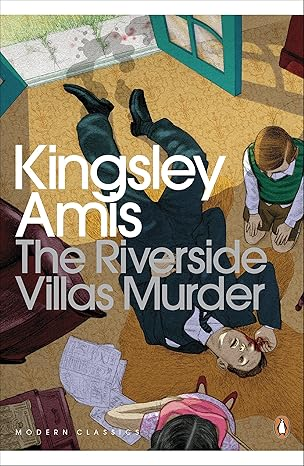
The Riverside Villas Murder by Kingsley Amis, 1973

The Riverside Villas Murder was written in the 1970’s, is set in the 1930’s, and is infused with the dominant social attitudes of the 1950s. Which all adds up to an uncomfortable mix. The story is told principally through the eyes of 14-year-old schoolboy Peter Furneaux. He is a typical 14 year-old, unable to go more than a few minutes at a time without thinking about sex. The mystery element of the story begins with a burglary at a local museum, where a mummified body and some Roman coins are stolen. Later, at a village dance, one of the Riverside Villas residents, a Mr Inman, provokes his neighbours by suggesting he has damaging information about them. During the dance, Mrs Trevelyan, a bored housewife, dances with Peter. Later she invites him to tea at her home, where she ‘seduces’ him. In the 1970’s this may have seemed comical, but fifty years on the scene is quite shocking in many ways. While it is Peter’s first sexual experience, Amis treats it as slapstick comedy: “What he had imagined so often and so long, and what actually happened on Mrs Trevelyan’s bed, resembled each other about as much as a fox-terrier and a rhinoceros.”  

A few days later, Inman is murdered. He staggers into the Furneaux home, soaking wet from having fallen into a nearby river and bleeding from a head wound. Peter calls Mrs Trevelyan for help, but Inman dies shortly after. The rest of the novel comprises the police investigation, led by a cast of policemen who I think we are supposed to find comic but to me were one-dimensional and unconvincing and whose investigation is chaotic.

As a murder-mystery the novel is dull – the explanation as to whodunnit, when it is finally revealed, manages to be both predictable, because it follows the traditions of the genre, and at the same time impossible to deduce, given that the murder weapon turns out to be an improbable Heath-Robinson contraption that no-one could possibly have foreseen. The murderer’s motives are also transparently thin.

But there is a much more serious problem with the novel. Amis clearly set out to write a traditional detective novel, with the central character being a young teenage boy. It follows all the tropes of the genre quite carefully, as if the novel were an exercise in nostalgia. The 1930’s setting – Amis was born in 1922, so would have been a teenager himself in the thirties and therefore very familiar with the popular culture reference which litter the novel – allows him to wallow in nostalgia for an England where murderers are executed, housewives are almost invisible unless they are sexual predators and gay men are the object of scorn and disgust. The novel also contains a scattering of casual uses of the n-word and gay slurs, which, when placed in the mouths of old-fashioned men such as Peter’s father or the police provide the excuse of authenticity but at the same time allow Amis to break social taboos. In other words the novel is pointedly offensive. This isn’t social observation, it is autobiography.

Which poses two questions: why read a book with such objectionable ideas, and why review it? I loved Lucky Jim, and while I have developed a much better understanding of some of its problematic aspects, I still have a fondness for it. Amis can craft a striking phrase – the fox-terrier/rhinoceros quote above for example – and he did go on to win the Booker Prize. So it is hard to dismiss him as an author, and I still read him occasionally to see if he could ever recapture the brightness and humour of Lucky Jim. So far there have only been glimpses. As to the question of why one would review a book that deserves to go out of print and remain so, that’s more straightforward. These are not recommendations but posts noting what books I have read. No more no less. I don’t post about every single book I read (although I should according to my self-imposed rules) but I try to miss as few as possible. And if I have saved anyone the experience of reading the Riverside Villas Murder then it will have been worth it.

The Riverside Villas Murder by Kingsley Amis, 1973

Aside
Book review

I mentioned this novel in passing in my review of Howard Jacobson’s The Finkler Question earlier this month, so when I came across it in a local second-hand bookshop it seemed like fate. I’ve gone off Kingsley Amis over the years. I started out as a big fan – I loved Lucky Jim – but the more I read of him, and about him, the less I liked his attitudes to women and ethnic minorities and the more I saw those attitudes reflected in his novels, particularly those he published towards the end of his career. These novels, such as Stanley and the Women and Jake’s Thing often degenerated into self-parodies in which the central character bore a strong resemblance to Amis himself, who always wound up in bed with the young and attractive women characters.

TheAlteration(1stEd).jpg

I am glad to say The Alteration is an exception to that rule. It is an alternative history novel set in an England where the reformation never took place. Writers of alternative histories usually chose more recent historical events as the moment from which to diverge their timelines. Sarajevo 1914 perhaps, the various turning points of the second world war (for example, Philip K Dick’s The Man in the High Castle) or the rise of fascism in the 1930’s (for example Sinclair Lewis’s It Can’t Happen Here or Philip Roth’s The Plot Against America). Here Amis goes all the way back to Tudor England. Henry 7th first son, Arthur Tudor, Prince of Wales, married Catherine of Aragon in 1501 and died less than a year later, leaving Henry 8th to inherit the throne. Whether their marriage was ever consummated became a fierce point of contention after Arthur’s death and Catherine’s remarriage to Henry. Amis imagines that Arthur didn’t die prematurely and that he and Catherine went on to have a son who becomes king. This is the butterfly effect moment from which a whole series of changes to English and world history flow – no break with Rome, no Church of England, and no Reformation.

The world of 1976 is recognisable but very different to our own as these changes have rippled across the world. Catholicism is the dominant religion across Western Europe, with a muted version of Protestantism existing only in North America, now the Republic of New England. Ireland is “West-England” and Scotland “North-England”. The English Isles are a theocracy run by the priesthood with church law brutally enforced by the Holy Office, a secret police. In this timeline Himmler and Beria are mentioned as priests doing god’s work by suppressing dissent and punishing apostasy – Amis’s point being evil will always find means of coming to the surface.

Europe has emerged very differently without the Reformation. Royal families still rule Portugal, Sweden, France and Russia, and the Italian and Germany nation-states have not formed (due, it is implied, to the strength of the Papacy). Western Europe is in perpetual conflict with the Ottoman Empire, in a manner very reminiscent of both the wars of 1984 and the Cold War. This long-running conflict serves to give the people a common enemy and even more cynically acts as a way of keeping the population in check. The novel portrays the papacy as a brutal manipulator of geo-political forces, cynically engineering war to help keep the population under control when more direct biological warfare experiments have failed.

Culture and the arts have also developed very differently in this alternative world, although again Amis insists that the great artists would have emerged one way or another. Shakespeare’s plays are banned but survived and are performed in New England. Shelley, Mozart, Beethoven, Blake, Hockney and Holman Hunt are all named-checked but are now religious writers or musicians in the service of the Church. The other significant difference in this world is the approach to technology. “Science” is disapproved of by the church, electricity is banned, and planes are yet to be invented. Instead steam is the dominant technology – this is literally a steam-punk world.

This is all by way of background to the fairly slight plot. The title refers not simply to the altered world but also to one specific person in it, namely Hubert Anvil, a ten-year old chorister. He has the voice of an angel and the Church decides to preserve it from the predations of puberty by castrating him. The history of castrati and the involvement of the Catholic Church in the practice of castrating young men to preserve their high voices is a fascinating one – the last known castrati died only 100 years ago. This is not a novel where the pros and cons of allowing young boys to be castrated are weighed carefully – Amis is clear this is an abomination, a form of abuse derived from the Church’s distorted attitudes towards sex. (The vows of chastity taken by members of the church and its hierarchy are widely ignored.) The narrative core of the novel follows Hubert’s attempts to evade this fate, running away to London and seeking help from the New England ambassador. Amis deploys a crude deus ex machina to end the novel, suggesting that he loses interest in his characters once his points about the church and its damaging role in society had been scored.

Amis really commits to his concept, and paints a very detailed picture of life at all levels in his alternative timeline. It’s this exploration that seems to interest him and the narrative in which Hubert runs away is not that exciting or convincing. The author makes his views on the Catholic church’s attitudes towards sexuality very clearly and the reader is left in no doubt about the dangers of mixing church and state. The absence of adulterous middle-aged avatars for Amis and his friends was a bit of a relief, even if The Alteration was to prove a short term diversion from the main business of grumpily chronicling yet another alcoholic affair.

The Alteration by Kingsley Amis, 1976

Aside
Book review

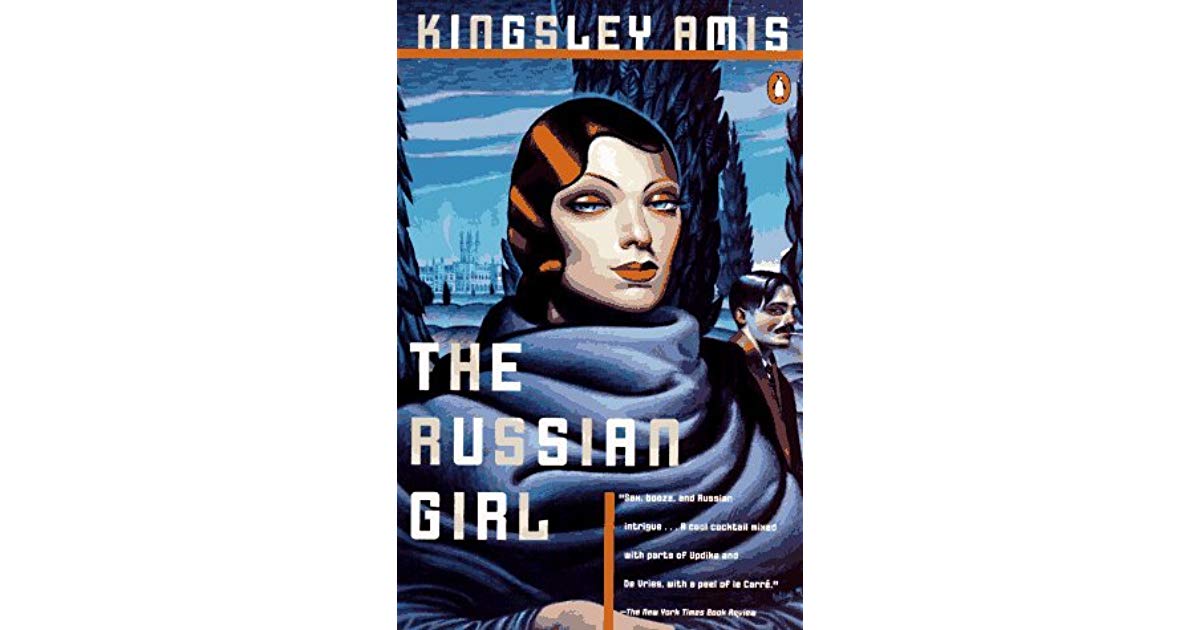
The Russian Girl, by Kingsley Amis, 1992

366437._UY630_SR1200,630_This is late Amis: The Russian Girl was published in 1992, just three years before his death. Amis is one of those novelists who essentially wrote the same novel over and over again, with slight changes of character and the setting thinly disguised. But this novel was an exception to that rule – instead of the older cast of characters bickering, having tired affairs and drinking themselves to death, The Russian Girl’s central character, Dr Richard Vaisey, is in his forties, and vaguely behaves like it. His inevitable love interest, Anna Danilova, the titular Russian girl, is in her twenties. An older academic having an affair with an exotic Russian girl (note girl, not woman; Amis was never going be that up to date) – what an original plot? But the scenario isn’t what redeems this novel.  Continue reading

Standard
Book review

The Old Devils, by Kingsley Amis, 1986

It is only human nature to assume that reasonable people will agree with you. So when I finished The Old Devils I looked for reviews in the expectation that they would broadly align with my thoughts – that the novel had stolen the 1986 Booker prize from The Handmaid’s Tale, that it was the work of an embittered writer at the end of his career publicly working out many of his frustrations and grievances with the modern world and his own mortality, and that time would not have been kind to critical reception of the novel.

But I was wrong.

When it was first published The Old Devils was lauded with praise, winning the aforementioned Booker but also being widely recognised as a late-flowering of Amis’s comic genius. John Bayley wrote an extraordinary florid paean to the novel in the London Review of Books which is worth reading in full for its hyperbole, its use of obscure language (fauteuil, donnée), its name dropping (Elizabeth Bowen, William Trevor, Anthony Powell, Henry James, Patrick Hamilton, Jane Austen (whom Amis has never much cared about”), A.N. Wilson and a “long ago purveyor of Gothic novels, Mrs Barbauld” are all name-checked) all without ever managing to put his finger on the elusive nature of Amis’s comic genius.

More recently a reviewer in the Guardian’s book column in 2010 wrote

“Kingsley Amis’s success at the 1986 Booker prize seems like the natural culmination of a long and distinguished writing career. One of the finest comic writers of his generation – century even – had done the natural thing and written a bloody brilliant book”

The Wales Art Review (? me neither) called the novel

“his greatest single creative achievement” and (together with Lucky Jim)

“Two of the greatest novels of the twentieth century without doubt”

V.S. Prichett, writing in The New Yorker described the novel as being in

the old, robust masculine tradition of British comedy from Fielding and Smollett”.

And of course son Martin thought that the novel

stands comparison with any English novel of the century.”

Would that weight of critical opinion sway me?

Not a vast amount happens in The Old Devils. Alun Weaver, a writer and minor celebrity, (we are told he is a writer, but he doesn’t seem to have written very much, and the extent of his celebrity is very much open to debate) returns to his native Wales with his wife, Rhiannon. Many years ago before the Weavers left Wales their friendship group had gone through the various re-configurations that happen among younger people. In particular Rhiannon had once been loved by Alun’s old friend and now enormously, comically fat Peter Thomas. Alun and Rhiannon resume life with their close knit group of friends almost as if they have never been away – there is no suggestion they would look for other social groups – which stirs up long dormant feelings amongst former lovers. That’s pretty much it. Time is spent drinking heroic amounts of alcohol that in the non-fictional world would leave people falling over drunk in a fraction of the time sustained here. not least because there seems little else to do. Amis concludes the novel with a death and a wedding, the latter between two younger characters who have been largely ignored during the previous chapters.

I have always thought of Amis as a good bad writer, one who writes clumsy, poorly constructed sentences simply as a way of drawing attention to their deliberate awkwardness. Take this sentence for example:

“As they stood, or with some minor surgery, they were supposed to be, he had striven to make them, his devout hope was that they were, the opening section of the only really serious piece of prose he had written since his schooldays.”

These are the faltering thoughts of Alun Weaver considering the opening pages of a novel he has just started, and which turns out to be, by consensus, rubbish. No doubt it took a lot of care and craft to make the sentence so unclear and scrappy, and it does admittedly reflect Alun’s thoughts and apparently his gifts as an author. But it’s still a horrible sentence, no matter how many times you read it.

Here’s another example:

All sorts of stuff, for instance what had been taking place a little earlier, seemed much as before, or at any rate not different enough to start making a song and dance about. This state of affairs might well not last for ever, but for the moment, certainly, the less it changed the more it was the same thing, and the most noticeable characteristic of the past, as seen by him, at least, was that there was so much more of it now than formerly, with bits that were longer ago than had once seemed possible.

Ultimately you can choose to read this as a gentle meditation on aging, or the cliche-ridden (song and dance, state of affairs) muttering of someone growing old disgracefully.

The humour in the novel is intended to derive from Amis’s portraits of flawed human nature. People are pompous, lecherous, complacent, stupid, and all manner of human weakness is on display for our entertainment. But I really struggled to care about these largely unpleasant people. There were several points in the novel where I was unable to work out who was speaking in a passage of dialogue, and then suddenly realised it didn’t really matter because I didn’t care.

Here’s Amis’s unflattering portrait of Malcolm, one of the group of friends, dressed to impress an old flame:

“When he had got out of his very shiny bright-blue car and at a second attempt shut its driver’s door, Malcolm revealed himself to be wearing a hacking jacket in dark red, green and fawn checks that were too large by an incredibly small amount, cavalry-twill trousers he must have been uncommonly fond of, a pale green I’m-going-out-for-the-the-day-with-my-old-girlfriend cravat or ascot, and, thank goodness, a plain shirt and ordinary brown lace-up shoes.”

Is this brilliantly observant, or crudely done? Older people don’t dress very smartly, even when they are trying hard to impress. The point of view judgment in this analysis comes from Rhiannon, the old-girlfriend in question, who gives thanks for the plain shirt and ordinary shoes. Amis deploys these subtle changes of point of view with the skill of an experienced writer, unquestionably, but I am not convinced that there is much humour here, even if there is less spite than earlier late Amis either.

I appreciate I am edging round the question of whether I actually thought The Old Devils was any good. Let’s put it this way – I have my doubts. Without question the praise I have referenced earlier in the post is over the top. This is not a classic or a masterpiece or anything like it. Most of the time I managed a wry smile, at best, and much of the time I was bored. The characters are hard to like – Amis goes out of his way to make them unattractive and unappealing, and they are poorly delineated, particularly the women who Amis struggles to distinguish between other than by their physical features.

My principal source of irritation with this novel is its dishonesty. Amis had at this point in his career developed a reputation as a declining writer focused on personal themes – his serial adultery, his alcoholism, his declining health. He has sketched out a series of characters with these qualities or attributes, then ventriloquized through them on his tired personal and political hobby-horses – homosexuality, the ridiculousness of compulsory Welsh/English language public signage, faux-Welshness, trade-unionists and so on. Of course one must always be careful to distinguish between the personal views of an author and their characters, but there is a strong case for concluding that Amis shares many of the prejudices his characters articulate – he repeats these views consistently in a series of later novels, he attempts to make the characters articulating these views sympathetic and invariably shows only the reasons why they are justified in these views – opposing views are ignored. Reviewers seem relieved that this is not the openly misogynistic rant of Stanley and the Women or Jake’s Thing, but that doesn’t make it Lucky Jim either.

Finally, and for me most seriously, there is what I think of as the “shagger” issue. (apologies for the language but it seems appropriate in the context, and any euphemism wouldn’t quite meet the mark). There is a recurring character in many of Amis’s novels who is an appalling chauvinist with nevertheless a mysterious and limitless powers of seduction. He is always on the lookout for an opportunity for random sexual encounters, however inappropriate or untimely, always “up for it” irrespective of time, place or situation. He will sleep with anyone at anytime, and inexplicably has the power to persuade the women in his life, invariably married to someone else – to sleep with him with the minimum of seduction/persuasion/courtship. They just jump into bed with him – because the narrator can portray them doing so, not because these powers are in any way realistic or believable. So Alun Weaver has not been back in Wales many hours before he pops in to visit Sophie, wife of an old-friend, in the expectation of a casual encounter. The conversation is initially hostile but Alun charms his way into Sophie’s bedroom, and slowly the quotation marks are interrupted by rows of dots suggesting intimacy is underway. They only confirmation that the seduction has succeeded is the phrase “Much too late to spoil it the telephone-bell rang on the landing”, “it” in this context being Amis’s coy euphemism for sex.

This is all a long-winded way of explaining why I think the critics I cited earlier in this post were wrong, and why this novel has aged poorly. I looked at the Goodreads reviews for this novel to see if contemporary opinion of the lay reader was closer to mine. This is obviously a question of me seeking evidence for a previously determined position, because if these statistics had not confirmed my conclusions I would probably not have included them, but here they are. Goodreads reviewers gave The Old Devils an average score of 3.33 out of 5. That’s below average for most Booker prize winning novels. I sampled a number of others at random and only Anne Enright’s The Gathering scored lower at 3.07. (Full results as follows:)

The Sense of an Ending Julian Barnes 3.72

The Sea John Banville 3.51

White Tiger Aravind Adiga 3.73

Life of Pi Yann Martell 3.90

How Late it was, how late James Kelman 3.57

Paddy Clarke, Ha, Ha, Ha Roddy Doyle 3.76

Wolf Hall Hilary Mantel 3.86

The Seige of Krishnapur J.G. Farrell 3.90

A Brief History of Seven Killings Marlon James 3.87

The Milkman Anne Burns 3.61

The Sellout Paul Beatty 3.77

Lincoln on the Bardo George Saunders 3.77)

So on average the good readers of Goodreads agree with me, which is a comfort, of sorts.

Standard
Book review

The Green Man, by Kingsley Amis, 1969

Kingsley Amis spent his whole career not writing a successful follow up to his great first novel,  ‘Lucky Jim’. I loved ‘Lucky Jim’ when I first read it several decades ago, and while the passage of years has eroded that affection somewhat, at the time it lead me to read as much Amis as I could get my hands on. That’s not to say Amis’s later novels were bad – the Booker prize for ‘The Old Devils’, as well as a couple of other shortlisting, attests to that. ‘The Green Man’ stood out at the time as something very different from Amis’ s usual portraits, so when the opportunity to revisit it came up I took it, wondering whether it would be as good, and as strange, as I remembered it?the-green-man

I am glad to say it was. The Green Man of the title is an inn owned and managed, after a fashion, by Maurice Allington, a another thinly disguised Amis self-portrait. The inn dates back to the 14th century, and comes with the usual stories of hauntings and the occult. Strange things start to happen. Allington sees what we are lead to believe are ghosts, although the heroic scale of his alcoholism leaves open the distinct possibility that there are just hallucinations. His elderly father suffers a stroke, which if anything spurs Allington on to even greater peaks of drinking. Nothing seems to dent his self-destructive urges, and on the day of his father’s funeral he pursues an affair with his neighbour, and persuades her to have a ménage à trois with his wife. As with many novels written by middle aged men, his sexual allure is irrestistible, and this plan succeeds, to a point – the orgy happens, but he finds it hard to get involved, and eventually gives in and goes off and has another drink.

Refusing to believe they are simply hallucinations, Maurice somehow finds the time to investigate the hauntings. He uncovers the long lost diaries of Thomas Underhill, a local scholar and former owner of the inn, who he believes to be the identity of the ghost. These diaries reveal that Underhill used the supernatural to seduce and or ravish young girls from the village, and may be the explanation for the current events. The paranormal themes of the novel now take centre stage, as it becomes clear that the ghosts are not simply the product of Maurice’s drinking (even if he is unable persuade anyone else of their authenticity). Underhill emerges from the shadows and persuades Maurice to unearth his nearby grave, in which he finds an ancient silver figurine, which in turn leads to a rather clumsy scheme which will cause the death of Maurice’s teenage daughter. Maurice frustrates this plan at the last minute, in part due to an intervention by another supernatural figure who we are led to understand is a manifestation of God. If this sounds bizarre, it is, although Amis’s undoubted skills as a story teller allow him to carry it off.

The Green Man is traditionally portrayed as a benevolent figure, and Amis’ s idea to transform him into a sinister, lumbering killer is inspired. It is a mark of a confident writer that he can combine genres – the comedy of the drunken, lecherous innkeeper frozen out of his own orgy – with the supernatural Underhill narrative. Allington is ultimately a bit of a tragic albeit resilient figure, and as usual with Amis it is the underwritten women characters who one would like to have seen more of, rather than just playing bit parts as figures of sexual interest. Overall however I was pleased to find this novel still in print, despite Amis being very much an author no longer in vogue, and enjoyed the nostalgic re-read.

Standard