Initially I thought Bliss, Carey’s first novel, might be interesting in the way authors’ early work often is, giving an insight into the author they are going to become. Northanger Abbey for example is in some ways quite an unremarkable novel, but it does show glimpses of the writer who was going to go on and give us Pride and Prejudice. Would it still be in print if it was the only novel written by Austen? Possibly not (although comments in defence of NA are more than welcome!)
But Bliss is much more than just an early novel of an author showing promise. It is a mature, complex work – had I not know it was Carey’s first I would never have been able to tell. There are characteristics of his work in terms of complexity and also thematically, but few signs of immaturity or anything else to show this is a first novel.
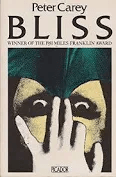
All the reviews of Bliss I have been able to find on the internet agree on one thing – this is a darkly comic novel. While that’s a fair observation it is a lot more than that. The novel’s central character is Harry Joy, an Australian advertising executive. At the start of the novel, Harry suffers a near-fatal heart attack and for a few minutes he is technically dead. When revived he becomes convinced that he is still dead and is now in Hell. The world he once knew— his wife Bettina, his children, and his job in the advertising industry— now feels hellish and grotesque. He is convinced that his family and friends are devils acting as part of his torture. This delusion is aggravated when he simultaneously discovers his wife is having an affair with his business partner and his teenage children are having incestuous, exploitative sex. How can that world not be hell? Seen through this new lens Harry re-evaluates his life. He decides to walk away, seeking the ‘bliss’ of the novel’s title with Honey Barbara, a free-spirited hippie and environmentalist who lives in an off the grid community.
Bliss is a not particularly subtle satire of consumer society; at one point Harry agonises over whether to work with petroleum companies knowing their products are harmful – they eventually are revealed to have given his wife cancer. Harry only comes to life when he walks away and moves to the hippie commune. Bliss is both tragic and redemptive. Harry’s quest for spiritual rebirth brings him a form of peace but he loses his family in the process. Can genuine happiness – “bliss”— only be achieved by rejecting the trappings of modern life?
When Bliss was first published, it was hailed as a major breakthrough in Australian fiction. It won the Miles Franklin Award and was adapted into a film and even an opera. It is one of the strongest first novel’s I have read in quite some time and a clear indication of the author’s abilities, a promise fulfilled in novel’s such as the Booker Prize winning The True History of the Kelly Gang.
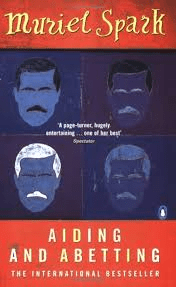
Aiding and Abetting was Muriel Spark’s penultimate novel. It is a retelling of the notorious case of ‘Lucky’ Lucan, a British aristocrat who in the 1970’s murdered his children’s nanny, battered his wife almost to death (she having been his original target) and then went on the run, never to face justice. He is the recurring subject of tabloid stories, being ‘discovered’ living in the Australian outback or South Africa every few years.
Spark tells this story through the unusual lens of Dr Hildegard Wolf, a fake-psychiatrist ‘practising’ in Paris, who is consulted by two men, both of whom claim to be Lucan. They have discovered that she, like them, has a secret – in a previous incarnation she was Beate Pappenheim, a ‘fake stigmatic’ – someone who claimed to experience the wounds Christ suffered on the cross, wounds which mysteriously heal and reappear periodically. Using this story Beate/Hildegard took charitable donations from the faithful and the gullible, and when her fraud (she used period blood to simulate her wounds) was uncovered, fled the country. assuming a new identity.
It’s never clear whether the Lucan claimants are intending to blackmail Wolf – they need the money, their supporters who have kept them secure from the law for decades finally beginning to run out – or whether they enjoy the experience of being able to tell their story free from any risk of exposure. Wolf quickly works out that the men are working together, one being the real Lucan and the other a decoy, helping collect donations of support while leading the police and others astray. But this is all largely a framework within to tell or retell the notorious story of Lucan’s murder of Sandra Rivett, the Lucans’ nanny, and attempted murder of his wife. Lucan sees this as a Shakespearean tragedy instigated by his wife’s legal battle for custody of their children (they were divorcing), made worse by his constant gambling losses. He is the victim in his version of the story. The protection he is offered by friends in escaping justice is his god-given right.
When reading Aiding and Abetting I was left with the impression that it was poorly written, with a lot of repetition and sub-plots that peter out. Poorly written by Spark’s standards that is – she is normally a very intelligent writer with intricate plots, well developed characters and deft control of her material, none of which could be found here. I went back to the text several times to try and find evidence for this impression, but came up empty-handed. Perhaps I was looking for something that wasn’t there? As a reader you have to both trust and challenge your instincts – trust them as first impressions, but nevertheless check them just in case they are prejudices bobbing to the surface. Always give the author the benefit of the doubt (OK- not always; there are some authors who just don’t deserve the benefit of the doubt. E L James comes to mind, as do Jeffrey Archer and Dan Brown. But that’s just about it). If you are left with an impression, try and work out why. Well, for a start in Aiding and Abetting Spark doesn’t really have anything new or interesting to say about the Lucan case. She uses it as the structure for her story, but ends up leaning against it lazily. Spark claimed the novel’s theme was ‘blood’ and while there is plenty of blood in the novel, multiple references don’t add up to a theme. None of the novel’s characters are engaging – some are pretty forgettable – and the story doesn’t do justice to the real victim, the children’s nanny, who remains a largely one-dimensional and voiceless figure. (As part of my background reading for this review I was pleased to note that more recently, in 2019, Jill Dawson wrote The Language of Birds which tells the events of the Lucan murder from the point of view of the victim). If I felt ambivalent about the novel, the appallingly predictable and unfunny ending, a tribute of sorts to Evelyn Waugh but with none of the wit and about seventy years too late, left me in no doubt that this was a bit of a dud.
I really hesitate to suggest that Spark, in her early 80’s when this was written, was running out of steam, but I can’t find any other reason why an author usually so careful in her construction and characterisation would not live up to those standards. Perhaps I should read her final novel, The Finishing School, to see if that hypothesis stands up?
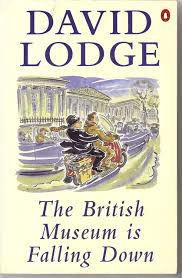
This novella is a comic pastiche of James Joyce’s Ulysses. That makes it sound more substantial than it actually is. Lodge was flexing his literary muscles as a professor of English literature here, and he did so by inserting throughout the novel a series of literary references. Ten distinct sections of the novel are written in the style of a range of authors including Conrad, Woolf and Kafka. I would argue that these actually add little to the novel overall. In other words there’s an element of showing off here, where the reader might be vaguely aware that the novel’s style has shifted and that they should be getting the joke, (the Kafka and the Joyce sections are unmissable; the others less so) but uncomfortably aware that they are failing the test being set by the much cleverer than them author.
Strip away the contrived literary references and this is simply a straightforward mid-sixties comic novel on that most sixties of themes, sex. Adam Appleby, a father of three and a student of English literature spends a single day failing to do any work at the British Museum (not) researching his thesis “The Structure of Long Sentences in Three Modern English Novels”. Instead he gets into a series of what it is hard to avoid calling ‘scrapes’ familiar to anyone who watched British sitcoms (especially those, ironically, from the 1970s) – he accidentally calls the fire brigade out to a non-existent fire at the museum, he is the subject of an attempted seduction by a frustrated seventeen year-old virgin (a common experience for the male subjects of English post-war comic novels), he gets drunk at a cocktail party, and his scooter bursts into flames. The scene where he tries to buy some condoms but can’t do so because his priest enters the medical appliances shop at precisely the wrong moment is appallingly cliched. Throughout the novel Appleby, a thinly disguised avatar for the author, is haunted by the fear that his wife is pregnant with their fourth child, because being Roman Catholics and this being before the widespread availability of the pill, they are forbidden from using any but the most unreliable methods of contraception. This leaves Appleby permanently frustrated and at the same time petrified that their personal complicated game of Vatican Roulette has been lost once again.
As well as the explicit references to other authors, there are some strong echoes of Kingsley Amis here. The ‘seduction’ scenes is an obvious example. Appleby’s persistent worries about money and the way these are resolved by the intervention of a wealthy American at the end of the novel was strongly reminiscent of the way Amis concludes Lucky Jim. The getting inappropriately drunk at a party scene, the ‘seduction’ scene, and the many petty minor frustrations of academic life, all echo the earlier Amis novel. So yes, in a nutshell, this is heavily derivative, so much so that by the end their is no attempt to disguise Lodge’s borrowing, and it is simply chalked up as pastiche.
In many ways this is a very typical mid-Sixties comic novel, but what sets it apart are Lodge’s literary pretentions. And in case you were wondering, no, the title doesn’t make sense – Lodge explains in an afterword written for a 1980 reprinting that he had originally wanted to call the novel “The British Museum Had Lost Its Charm” but as this is a quote from a Gershwin song and he couldn’t get permission to use it, the alternative title had to be used. There is a clearly late addition to the text to explain the alternative title he ended up using, with its reference to London Bridge, which Lodge may have got away with if he hadn’t written about the original title in the afterword.
I really enjoyed reading Birnam Wood, until the end, when I didn’t, which retrospectively spoiled the whole novel for me. Don’t you hate it when that happens?
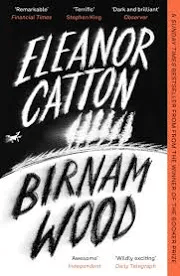
First. just to get one thing out of the way, this novel has nothing to do with Macbeth. You could work hard at trying to find some parallels, but they won’t work. Which is just one of those minor disappointments that could have easily have been overlooked if the novel’s ending worked, which it didn’t, as I may have mentioned.
The author invites us to believe that a New Zealand community gardening project, with the mildly amusing name of Birnam Wood, is covertly a much more subversive, radical project threatening the status quo – or so some of its members believe (others just like gardening). For wildly complex and improbably reasons, this group gets involved with Robert Lemoine, an American billionaire, who decides to sponsor and support the group. He’s a psychopath, so the reasons he gives for sponsoring BW are nonsensical, but we are invited to accept them anyway because billionaires spend their money on whimsical projects as the fancy takes them. don’t they.
“I know how easy it was,’ said Lemoine. Mira didn’t follow. How easy what was?’ All of it,’ he said, shrugging. Getting rich. Staying rich. Winning. It was all so easy. I just took what I wanted, and it was mine. I said what I wanted, and people got it for me. I did what I wanted, and nobody stopped me. So simple. And if it was easy for me, then it could be easy for anybody, and that’s a very frightening thought. Apart from anything else, it would be untenable, Everyone can’t be on top, or it wouldn’t be the top any more, would it? That’s just a fact. And I’ve been in the citadels of power,’ he added. I’ve eaten at the high tables; I’ve seen behind the doors that never open. Everyone’s the same. You reach a certain level and it’s all exactly the same: it’s all just luck and loopholes and being in the right place at the right time, and compound growth taking care of the rest. That’s why we’re all building barricades. It’s in case the rest of you ever figure out how incredibly easy it was for us to get to where we are.
Lemoine invites the group to start gardening in the grounds of an estate he is considering buying and of course they accept, the whole deal sweetened by the promise of much more money to come once the garden is established and he gets to know them better. No, that doesn’t make any sense, does it? Obviously I have summarised the ‘logic’ behind his investment unfairly, because I am irritated by the fact that a central plot point in the novel makes no sense, but it gets worse. Because secretly this one-dimensional evil genius is drilling for rare earth minerals in the national park around the home he is about to buy and having a group of hippies on site is just what any illegal covert mining operation needs.
Despite all of the above, I enjoyed at least three quarters of the novel. It was well-paced, the non-billionaire characters were well-sketched, and I was interested to find out what happened to everyone. As the remaining pages dwindled and the multitude of plot lines remained stubbornly unresolved, I wondered how the author was going to bring everything together. At one point I genuinely thought we were going to be set up for a sequel, there was so much left incomplete. Instead, Catton totally blows the ending. She uses a crude device to bring to a sudden halt some of the plot lines, and leaves a few dangling uncertainly. One central character, Shelley, seems to be forgotten entirely. The climax is rushed, unconvincing, and the reader is left to sketch in most of what happens themselves, with little to go on. Most of the dramatic events happen off-screen (as it were) with the reader left to join the dots from scattered clues. Imagine Hamlet from Fortinbras’s perspective and you get a rough idea of how the potential drama of the climax is thrown away.
Birnam Wood aspires to being a thoughtful novel of ideas, and there are prolonged sections in which characters discuss the decline of late stage capitalism, mostly in a millennial argot in which the word ‘like’ is sprinkled through the speeches every other sentence, in a redundant attempt at authenticity.
“Shelley said “I was just thinking about it. Like, no one ever actually knows that the right thing to do is. I mean, you can think that you know what’s right, and you can tell yourself that you know, but at the point that you make your choice, like, in the moment, you’re never really certain. Yu just hope. You just act and you hope for the best…But, like, the wrong thing to do, that’s often much clearer. Wrong is, like, easier to se than right, a lot of the time. It’s more definite – like, this is the line I know I will not cross. “
I get it that some people do speak like that and I understand that it is just the twenty-first century equivalent of um’s and er’s, but on the page it is wearisome. The ideas being discussed never really come into focus and are quickly forgotten when the action sequences in the novel kick in.
In a promotional interview the author said that she aspired to write a twenty-first century equivalent of Jane Austen’s Emma. I don’t think I have ever read a more absurd comparison in a very long time. It’s like Dan Brown comparing the Da Vinci Code to Middlemarch. Austen is the most precise, careful writer – Birnam Wood is ultimately a soggy mess. Which proves one thing – that thrillers are not as easy to write as you might think.
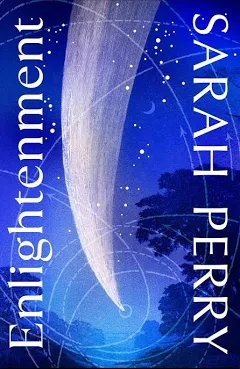
Enlightenment is very recognisably a Sarah Perry novel. It contains many of the same elements and themes of her earlier novels, The Essex Serpentand Melmoth* although it is probably her most autobiographical novel to date.
It opens in the winter of 1997 in the Essex town of Aldleigh, a thinly disguised version of Chelmsford where Perry grew up. Thomas Hart writes a column for the local newspaper and attends Bethesda, a strict Calvinist church of the kind that somehow survives into the present day in small pockets of Essex. Hart is gay but keeps his private life private, knowing it would be frowned upon by the unforgiving people of Bethesda. When his sexuality is eventually ‘exposed’ he is told that he is “an affront to God” and effectively expelled from the congregation.
The chapel is next to Lowlands House, a crumbling stately home and park, slowly being restored by the local museum. Potters Field, an area of scrub and wasteland is also adjacent to the chapel and provides a metaphorical counterpoint to its order and structure.
One day James Bower, curator of the local museum, writes to Thomas about some correspondence that has been found during the renovations of Lowlands House. James thinks the letters might be a clue to the local legend of the Ghost of Lowlands, who he identifies as Maria Vaduva, an elusive nineteenth-century resident of Lowlands. The pursuit for the mysterious Maria and the truth about what she discovered in the night’s sky forms the central narrative of the novel.
Thomas is also an amateur astronomer and the link he shares with Maria drives him to discover her story, scattered as it is through the novel in the form of long-lost letters, some hidden in the fabric of Lowlands, others in private papers in the museum. The other main character in the novel is Grace Macauley, the pastor’s daughter, who when the novel opens is about to turn 18. Thomas feels paternal towards Grace and one thing keeping him in Bethesda and Aldleigh is his determination to watch over her. Grace starts a romantic relationship with Nathan, a local lad not associated with the church, but Thomas sabotages their friendship, an act for which he is never fully forgiven.
Enlightenment is slow-paced and luxurious and at times almost Dickensian. The sense of place is vivid, no doubt in part due to the autobiographical elements of the story.
“Monday: late winter, bad weather. The River Alder, fattened by continuous rain, went in spate through Aldleigh and beyond it, taking carp and pike and pages torn from pornographic magazines past war memorials and pubs and new industrial estates, down to the mouth of the Blackwater and on in due course to the sea. Toppled shopping trolleys glistened on the riverbank; so also did unwanted wedding rings, and beer cans, and coins struck by empires in the years of their decline. Herons paced like whitecoated orderlies in the muddy reeds; and at half past four a fisherman caught a cup untouched since the ink was wet on The Battle of Maldon, spat twice, and threw it back.
Late winter, bad weather: the town oppressed by cloud as low as a coffin lid. A place spoken of in passing, if at all: neither Boudicca nor Wat Tyler had given it a second glance when they took their vengeances to London; and war had reached it only as an afterthought, when a solitary Junkers discharged the last of its ordnance and extinguished four souls without notice.”
The novel clearly owes a significant debt to A S Byatt’s Possession, but I didn’t find that at all problematic. Some novels are like other novels, and draw inspiration from one another, but that doesn’t mean they are derivative.
Many book bloggers structure their posts around categories such as publication data, information about the author, a plot summary and so on. I’ve never been organised enough to do this, but if I were ever to do so one category I would include would be “How easy was the novel/text to read?” Authors can make their texts easier to read in lots of ways: very short chapters and a large font is the approach adopted by writers such as Richard Osman for example. But of course the reader can make things difficult for themselves – reading late at night, leaving large gaps between each reading session so remembering what is happening gets tricky, and so on. I found Enlightenment a little hard to read. The narrative progression is slow and the events that do happen are often predictable. Some plot devices, such as the finding of very old letters in the fabric of Lowlands House, are a bit too convenient. We were never not going to find out what happens to Maria. Thomas is not a compelling character – he is very introspective and reserved – and while Grace is a more interesting character her life proves aimless until she is able to be reunited, temporarily, with Nathan.
I enjoyed Enlightenment but I can’t resist the feeling that the author’s best novel is still to come.
*Perry also wrote After Me Comes the Flood (2014) which I have yet to read.
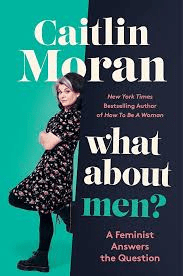
What indeed? Caitlin Moran is an excellent columnist. I enjoy her writing; it is usually insightful and broadly progressive. But does her style of writing – pithy, with a punchline every few hundred words – convert well into a book that grapples with the serious question of the crisis of modern masculinity?
There are multiple issues with this book that undermine its overall impact and effectiveness. Stuart Jefferies, reviewing the book in the Guardian, does an extremely good job of identifying these issues and I am not going to try and duplicate his points, almost all of which I support (although re-reading the review at a later date he does give Moran both barrels and doesn’t take much time looking for any redeeming features). While reading the text I constantly found myself disputing Moran’s observations and not in a good way. They were not thought-provoking so much as smugly wrong. To offer one example, when the author uses the term ‘men’ she appears to refer to a very specific sub-set of men, largely defined as ‘blokes I know’. They are almost all in her age group, heterosexual, and British. A chapter about porn-addiction, based on an interview with a twenty-something young man, stands out because it gives a voice to a different group. Claims such as “your T-shirt collection is, to you, as your wife’s lovingly collated wardrobe of second-hand Chanel, designer jeans and Zara brogues is to her” just aren’t funny because they don’t derive from any observable reality. Isn’t that observation only true of Moran’s husband and their mates? Not many women I know have a collection of second-hand Chanel designer jeans and I am reasonably close to Moran’s demographic. I appreciate this is intended as tongue in cheek humour, but it falls at the first hurdle because it is neither funny nor relatable.
Which is a huge pity, because the subjects Moran writes about – the crisis of toxic masculinity in this country – is profoundly serious. It is literally killing men, through suicide, differential life expectancy, and poor health care. Moran addresses all these subjects, but rarely gets to grips with them before a punchline is required.
Perhaps the fault is mine, in reading this book as a text rather than a series of chapters grouped around the same topic. A fine distinction perhaps but what I mean is What About Men might work better if read one chapter a week rather than straight through like a novel. Some of the more
There is, unquestionably, a dialling it in aspect to this book. Her habit of twitter-sourcing content doesn’t inspire confidence that the book has been carefully researched for example. Most of the conclusions she draws about men are simply stating the obvious – the amount of original insight is minuscule. As a quick gallop through the main issues of modern masculinity, a starter text if you like, this would be fine for someone who hadn’t read a newspaper or spoken to a man in the last few years. Perhaps that’s the real audience – teenagers? But the problem with that idea is that in my experience teenagers are profoundly better informed on issues of sexuality and gender that 99.9% of people of Moran’s generation. I think, in fact I am pretty sure, that most teenagers would be appalled if they read her generalisations on sex, gender and masculinity. Her real audience is obviously the people who buy books and give them to one another for birthdays and Christmas without really expecting them to be read. Why would you bother properly researching a book if you know most people are going to skip to the chapters about sex?
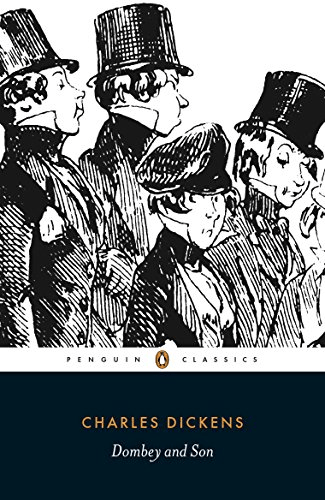
Any reader of Dombey and Son is presented with a puzzle – why isn’t it any good? I knew before I started it that the novel was one of Dickens’ ‘lesser’ works: not lesser in length, unfortunately – it runs to nearly 1000 pages – but poorly thought of, by both critics and general readers alike. It is not widely read any more (it has 1,000 reviews on Goodreads, but Great Expectations has 22,000!) doesn’t appear on many academic reading lists, and has never been filmed. Even Andrew Davies abandoned an attempt to turn it into a television series despite having made successes of less obvious material. So as I read I was looking out for the flaws or weaknesses that would explain this lack of popularity. I didn’t have to look far.
(Incidentally, I am aware that this might seem a very negative way of reading any novel. Surely it would be better to be positive, to look for the novel’s strength and good points? Of course. But I’d make two points about this: a) I can’t unknow what I know about the novel and b) I am simply being honest about my mindset – this blog is not about presenting myself as some kind of idealised reader, burning their way through the classics, but an honest description of the books I read and what I think about them. I did look for the positives in Dombey and Son – nothing would have given me more pleasure than to have discovered an overlooked Dickens masterpiece, but that isn’t what happened. Because it isn’t.)
The plot is very limited despite the novel’s length. Not much happens, and the small number of events that do occur are heavily telegraphed. For example: Walter, an office boy sent to work overseas by his company (Dombey and Son) goes missing when his ship capsizes in a storm. There can’t have been a reader on the planet who did not expect Walter to re-emerge – the only surprise was just how long it took Dickens to bring him back. Similarly when Walter first meets the novel’s proto-heroine, Florence, his uncle Sol and his uncle’s friend Captain Cuttle both predict what will happen – that one day Walter and Florence will marry. And guess what?
Everything you expect to find in a typical Dickens novel is present. A huge cast of characters (over 50), long rambling plot lines that are sewn together conveniently at the end, comic scenes of extreme behaviour, all set in a foggy London that is undergoing rapid change due to the arrival of the railways. In fact the parts of the novel describing the arrival of the railways are some of the most interesting in the book:
“The first shock of a great earthquake had, just at that period, rent the whole neighbourhood to its centre. Traces of its course were visible on every side. Houses were knocked down; streets broken through and stopped; deep pits and trenches dug in the ground; enormous heaps of earth and clay thrown up; buildings that were undermined and shaking, propped by great beams of wood. Here, a chaos of carts, overthrown and jumbled together, lay topsy-turvy at the bottom of a steep unnatural hill; there, confused treasures of iron soaked and rusted in something that had accidentally become a pond. Everywhere were bridges that led nowhere; thoroughfares that were wholly impassable; Babel towers of chimneys, wanting half their height; temporary wooden houses and enclosures, in the most unlikely situations; carcases of ragged tenements, and fragments of unfinished walls and arches, and piles of scaffolding, and wildernesses of bricks, and giant forms of cranes, and tripods straddling above nothing. There were a hundred thousand shapes and substances of incompleteness, wildly mingled out of their places, upside down, burrowing in the earth, aspiring in the air, mouldering in the water, and unintelligible as any dream. Hot springs and fiery eruptions, the usual attendants upon earthquakes, lent their contributions of confusion to the scene. Boiling water hissed and heaved within dilapidated walls; whence, also, the glare and roar of flames came issuing forth; and mounds of ashes blocked up rights of way, and wholly changed the law and custom of the neighbourhood.
In short, the yet unfinished and unopened Railroad was in progress; and, from the very core of all this dire disorder, trailed smoothly away, upon its mighty course of civilisation and improvement.”
This is Dickens giving it both barrels, over-writing to the extreme, but just about getting away with it. Despite this characterisation of the railway as a destructive phenomenon, later descriptions show the positive benefits of the coming of rail – in particular the Toodles family prosper from its construction. Later still the railway is to have a decisive role in the fate of the novel’s principal villain, Mr Carker.
The plot centres on the hubris of the industrialist, financier and merchant Paul Dombey. Dombey wants a son to continue the family name and business. He is obsessed with this ambition and as a result neglects his daughter simply because her sex, particularly once his second child, a son, is born. However Paul junior is a weak and sickly child who eventually dies a characteristically Dickensian death, fading away slowly but inevitably. Having lost his wife in Paul’s birth Dombey disastrously remarries. His second wife, Edith, is effectively sold by her mother on the marriage market, and can’t stand her new husband, and refuses to make any pretence at doing so. We can safely assume their marriage is loveless and unconsummated. He uses Carker to act as a go-between between himself and his new wife, to disastrous effect. As a villain, Carker is a failure. He plots and schemes and positions himself at the heart of Dombey’s business, but then has no real plan other than adultery, and that fails miserably. If he is driven by passion rather than a Machiavellian cunning then there is no sign of it.
Dombey is a deeply unpleasant character, proud and arrogant, and devoid of any love or affection. He doesn’t have a convincing redemption story – he is eventually reconciled with his daughter, and is shown being affectionate towards his grandchildren, but for the reader this is far too little too late. His second wife, Edith, is equally proud and unrelenting, and her (step)maternal bond with Florence is all too brief. Both characters are brought low by their pride.
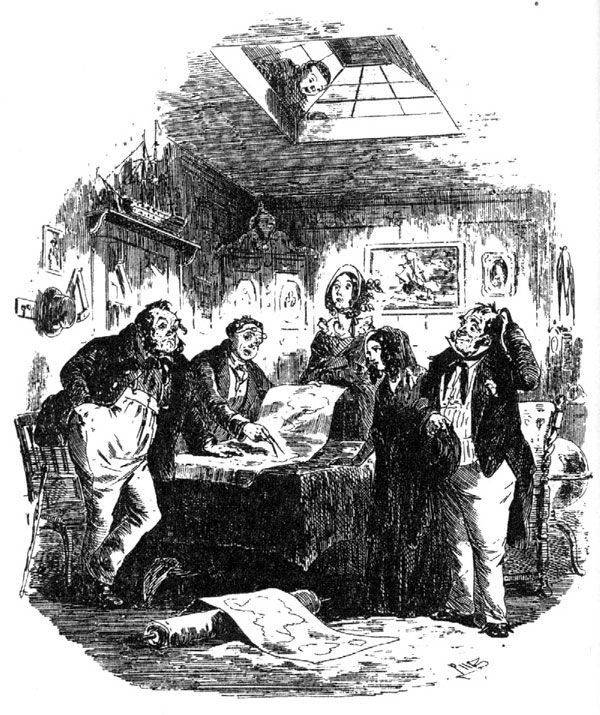
The novel’s principal sub-plot tells the story of Walter Gay and his uncle Solomon Gills, owner of a profoundly unsuccessful nautical instruments shop, and Sol’s friend, an old seaman named Captain Cuttle. Walter and family act largely as a counterpoint to the emotionally sterile Dombey household, but also provide most of the comedic scenes of the novel. There is another, lightly sketched and under-developed sub-plot involving Mr Carker’s older brother, his sister, and one of Carker junior’s former lovers. This sub-plot fizzles out with a resolution, of sort, but not one the reader feels in any way invested in. It is clearly intended as a counterpoint to the main Dombey/Edith storyline, but fails to do anything other than simply echo it.
Were there any redeeming features in the novel, anything to recommend it? The minor characters are entertaining, including those already mentioned, to which I would add the endearing Mr Toots and the indefatigable Susan Nipper, who almost alone amongst the novel’s characters is prepare to give Mr Dombey a piece of her mind. The railway descriptions are interesting records of the first flourishes of the age of steam. But that’s pretty much it. There are unquestionably many better Dickens’ novels and I can really only recommend Dombey for completists. Its reputation is unfortunately justified.
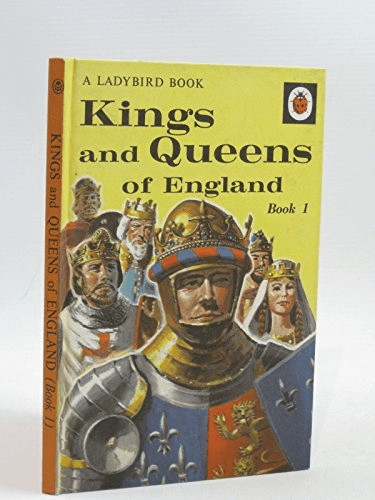
All books are themselves the product of earlier books, however original they may be. I’m not suggesting that all books are copies of earlier works, but they all have dna, texts which have influenced them and without which they couldn’t exist. Some reveal their origins more obviously than others. Unruly makes very little attempt to disguise its sources and influences, which are a fairly straightforward combination of Horrible Histories and the ladybird books that gave you one king per page, with an illustration summarising the one thing you needed to remember about him or her. Add in a little 1066 and All That and a lot of swearing (and I will come back to the swearing), and there you have it.
Which as always begs the inevitable question – why? What made David Mitchell think that writing a book about the queens of England from Anglo-Saxon days to the end of the Tudor period, a pretty long span of history in anyone’s books, was a good idea? Certainly there is a very well established tradition of celebrities writing books. And Mitchell studied history at Cambridge, albeit quite a while ago. My hunch is that this is a lockdown book, something the author filled his hours with when going out or recording game shows wasn’t an option.
There’s not much original research here – none in fact – and anyone with a reasonable grasp of English royal history won’t learn a great deal. A canter through six hundred years of royal history was always going to be somewhat superficial. Even if Mitchell’s reasons for writing the book can be surmised, that in itself doesn’t explain why anyone should read it. There are a few reasons, although whether these justify the whole exercise I am not so sure.
Firstly, there’s the swearing. For someone who has developed a whole comedic persona around being posh, here Mitchell swears freely and extensively. For example, writing about King Stephen and Queen Matilda, he says: “They were both twats. They may not have been able to help being twats – the mores and values of their times and of their class may have made them twats. But they were twats and terrible things happened as a result.” (This is a more family-friendly example). The comedy here derives from the repetition of the word twat rather than its shock value – just in case you hadn’t spotted that. Despite his best efforts not much comedy is wrung from the humour of King Cnut’s name sounding a little like a spelling mistake. But it lightens the tone and makes it clear that Mitchell isn’t taking the exercise all that seriously.
The main interest and where the text really comes alive is in Mitchell’s observations about the nature of monarchy. He argues compellingly that monarchs aren’t in any way special people:
“Ultimately the reverence shown to monarchs is a mockery, a joke. It’s pretending they’re something they are not. This is a bitter and clear reduction of kingship to its essentials: an office accepted only because an unjust hierarchy is preferable to anarchy. Out of the gangsterism of the lawless post-Roman land of Britannia, a few local bigshots emerged, their power gradually coalescing into kingship.” (396).
That’s the book’s thesis in a nutshell – once the Romans left Britain there was a period of lawlessness, local thugs took control of small areas, slowly killed one another and grew in power and influence until the concept of ‘king’ was invented. That power was then cemented with “ceremonial and religious elements giving kingship an aura of legitimacy and sanctity. But it was just made up. At some point someone with a sociopathic dislocation from the truth had to start asserting it, like the first conspiracy theorist who said that 5G masts spread Covid”. All of this is rather brilliantly summarised in the book’s final chapter, Bookends. This final chapter also contains a rather remarkable few paragraphs about Shakespeare. Mitchell writes with passion about Shakespeare’s brilliance, and concludes “He’s where this book has been heading, it turns out…Shakespeare is a good reason to stop writing about kings, because his brilliance makes them seem silly.” I wish he had come to that realisation a few hundred pages earlier and turned his intelligence and learning towards a subject that obviously interests him far more than kings and queens, and one on which has some valuable insights.
The book ends by making it clear that although the exercise could be repeated for the Stuarts, Hanoverians etc, it won’t be. The excuse offered is that kingship had by the end of Elizabeth’s reign become less important and therefore less interesting (tell that to Cromwell). I’m not buying it for an instant. I hope Mitchell’s next book is about a subject he obviously has a real passion for and which according to this book he shares with his wife – if she were to help him out with it all the better!
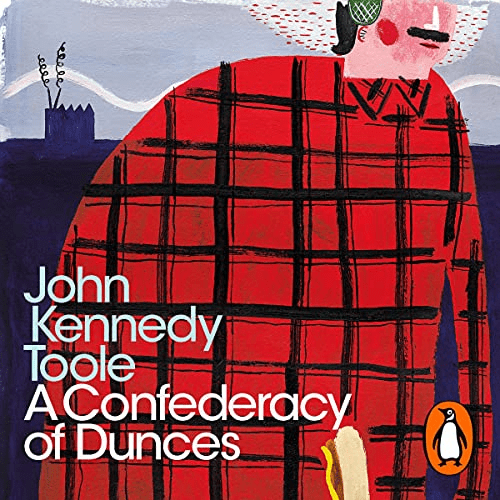
A Confederacy of Dunces, by John Kennedy Toole, 1980
I had come across A Confederacy of Dunceson various lists of ‘best’ novels without having any preconceived idea what it was about. I’m still not entirely sure to be honest. The novel follows the adventures of Ignatius J. Reilly, an obese and extraordinarily self-centred young man living with his mother is early-1960s New Orleans.
Ignatius is a “slob extraordinary, a mad Oliver Hardy, a fat Don Quixote, a perverse Thomas Aquinas rolled into one—who is in violent revolt against the entire modern age, lying in his flannel nightshirt, in a back bedroom on Constantinople Street in New Orleans, who between gigantic seizures of flatulence and eructations is filling dozens of Big Chief tablets with invective.”
He returned from college several years previously and since then done little other than bicker with his mother and her friends and neighbours. He writes in his journal, eats and masturbates. He considers himself a medievalist, although there’s little sign of him ever doing any reading on the topic.
One afternoon while shopping in town Ignatius is approached by a police officer and asked for identification, on the grounds he appears a suspicious character. Ignatius over-reacts to this request, inevitably, appealing to a gathering crowd for assistance and loudly denouncing the officer and all police. An elderly man’s attempts to help goes badly wrong when he accuses the officer of being a communist, and he is arrested, allowing Ignatius to escape with his mother into a nearby bar.
Mrs. Reilly proceeds to get drunk and on the way home she crashes her car. The bill for the accident is over a thousand dollars, and to pay the costs of the accident Mrs O’Reilly is finally pushed into forcing her son out to work. Ignatius is profoundly unsuited to any sort of responsible employment. He first finds a job in an office where the throws away all the filing he is given to do, conspires to undermine his supervisor and employer, and then writes a libellous letter in the name of his employer to a supplier. He is a nightmare of an employee:
“I have taken to arriving at the office one hour later than I am expected. Therefore, I am far more rested and refreshed when I do arrive, and I avoid that bleak first hour of the working day during which my still sluggish senses and body make every chore a penance. I find that in arriving later, the work which I do perform is of a much higher quality.”
Brief spells of ‘work’ are interrupted by regular visits to the movies, where he spends all his time berating the performances and productions:
“Filth!’ Ignatious shouted, spewing wet popcorn over rows. ‘How dare she pretend to be a virgin. Look at her degenerate face. Rape her!”
Finally dismissed from his office job, long beyond the point at which any employer would have tolerated his behaviour, Ignatius then becomes a hot dog vendor, eating many times more than he sells. The novel ends on an optimistic note with Ignatius finally breaking free from his inertia, heading off on an adventure with a college friend. The likelihood of this all ending badly and Ignatius returning home to complain for years about the discomfort or indignity of some minor aspect of his journey is high, but the reader wishes him well.
A Confederacy is one of that small group of novels where the history of its publication is as well known as the story itself. In brief, Toole killed himself before it was published, and there is reason to believe that his suicide was at least in part associated with the manuscript’s rejection by multiple publishers. It was only through the subsequent persistence of his mother that finally saw the novel published. The plot of the novel is little more than a framework for the portrait of the monstrous narcissist that is Ignatius. So you either enjoy spending time with this deeply unpleasant, but admittedly comical character, or you don’t. He is frankly an idiot, a giant toddler unable to foresee the obvious consequences of his actions, ever confident that any problem put in his way can be overcome by shouting at anyone who objects to his behaviour. Mostly this works because of his indulgent mother and employers desperate for help. The more his offences are indulged, the more he offends. I found this mildly amusing, but it quickly gets tired. The portrait of New Orleans that provides a backdrop to Ignatius’s tantrums is not one that the city should be particularly proud of, despite which a statue of Ignatius has been erected there. The author is not really interested in the city, its culture and history, and I got the impression that the novel really could have been set anywhere.
The novel has a cast of supporting characters all of whom revolve around Ignatius. The portrait of Jones, the black janitor for the “Night of Joy” who holds on to his below-minimum wage job to avoid being arrested for vagrancy tiptoed very close to racism – Jones narrates his thoughts in a stream of consciousness creole that according to some reviews captures wonderfully the authentic voice of New Orleans, or alternatively is a crude parody of the way black people speak and think:
“Look at that. She think I got siphlus and TB and a hard-on and I gonna cut her up with a razor and lif her purse. Ooo-wee.”
I’ll say this for A Confederacy – there really isn’t any other text in modern literature that does what Toole tries to do. That’s probably for a good reason – it remains a one-off, a stand alone that no-one has tried to emulate. I am still trying to decide whether I actually enjoyed the novel or not – while on the one hand I appreciate the uncompromising nature of the portrait of Ignatius, on the other he is a profoundly unpleasant person. Toole brings him vividly to life, no question, but was the effort worth it? Is this the work of genius that Toole’s suicide seems to suggest it ought to be? No, sadly not. You have to wonder what Toole would have written if he had allowed himself the chance.
How They Broke Britain comprises ten essays on familiar characters from early twenty-first century British politics, constructed round the framing device that all of those portrayed have contributed to the degradation of political life in the UK. Some are very well known – it is surprising that O’Brien found anything new to say about Rupert Murdoch for instance – others much less so, for example the recently ennobled Matthew Elliott.
Very little of what O’Brien writes will be new to anyone who has been paying attention to the news over the last thirteen years. That’s not to say it is not convenient to have so much detail collected together in this way – in some respects this will probably work better as a reference book than as an attempt to change anyone’s mind. Conservative supporters will either not read this in the first place, or will do so with the specific intention of finding flaws and weaknesses. The Telegraph review, for example, described it as a ‘wild polemic’, both weak and childish, and hilariously finds fault that O’Brien has not correctly understood the hierarchy of the English aristocracy (“He’s wrong: the rank below an earl is viscount.”)
O’Brien’s style invites disagreement, so here goes. Firstly, the breaking of Britain (and it is really difficult to argue with the proposition that the country has been deeply wounded in recent years) is not the result of the behaviours and characters of ten or so individuals. There are systemic, structural flaws in the way our nation is constructed and organised, and basing his analysis on the ten people in question means O’Brien doesn’t really have to address those structural issues. In fact there’s no real attempt at all to understand or identify what’s gone wrong other than through the characters of the people portrayed. But without an understanding of these issues then any attempt to address them is doomed – there’s every chance we will end up with another set of chancers and crooks running our country and its institutions, even if we were to clear out the existing cabal.
Second, keeping a modern political commentary up to date is admittedly really difficult, because O’Brien is charting something that is happening right now. There’s never a right time to end the analysis, never a point at which he or any other commentator can say (along with Andrew Lincoln) “enough”. This was really driven home to me when I read that Matthew Elliot, Chief Executive of the TaxPayers Alliance and latterly the Vote Leave campaign, the subject of chapter three of this book, has been nominated for a life peerage by Liz Truss in her ‘I’m no longer Prime Minister’ honours list.
Third, O’Brien argues that the bad behaviour he records, the lying, bullying, abuse of power, is all the more egregious because by and large the people doing it got away with it unpunished. This is clearly wrong. Boris Johnson and Liz Truss were both hounded from office and Johnson had to resign from Parliament when found guilty of breach of parliamentary procedure by the Privileges Committee. Johnson was also fined by the police over Partygate, as was Rishi Sunak (who doesn’t, yet, merit his own chapter, although I suspect later editions may remedy that omission). Johnson may have behaved as if he was above the rules that the rest of us had to comply with and some of his more egregious behaviour may have still to be addressed (by, for example, the Covid enquiry), but the idea he got away with everything without consequence is demonstrably incorrect. Jeremy Corbyn is a surprise inclusion in the text, perhaps thrown in for ‘balance’, but more likely because O’Brien holds him personally accountable for the Brexit referendum outcome. Corbyn never really came close to power during his five years as leader of the Labour Party, and now sits as a independent backbencher having been thrown out of the Parliamentary Labour Party – again hardly the best example of someone getting away with bad behaviour.
This is not a book for reading at one sitting. Take it a chapter at a time and allow yourself plenty of breaks to absorb the detail and for your blood pressure to reset. The piling on of fact upon fact in intense detail can at times be hard to absorb and at moments almost becomes incoherent. The overall effect can feel like being shouted at by someone almost desperate to convey their point but struggling to overcome the weight of detail and present compelling evidence and argument. History won’t be kind to Liz Truss, Boris Johnson, Dominic Cummings and Nigel Farage, all of them currently a long way from the levers of power and likely to stay that way (even though Rishi Sunak was reportedly flirting with the idea of returning Dominic Cummings to Number 10 to run the election campaign, a truly bizarre idea if ever there was one), and history may use How They Broke Britain as a reference work when judgment is being passed and obituaries are written. Until then I would recommend this book to anyone looking to get their heads around how this country has so badly lost its way, even if it won’t really help in finding any answers on how we find out way out of this mess.
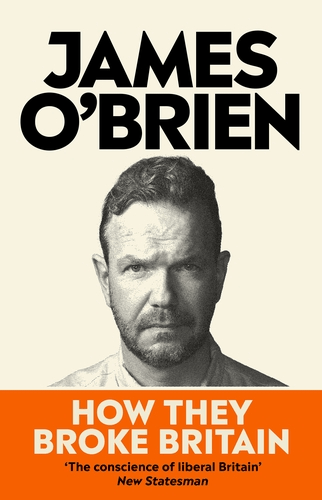
It’s worth noting that the hardback version of this book uses a large picture of O’Brien on its front cover, and a supportive quote about the author rather than the book (“The conscience of Liberal Britain” – the New Statesman). It wouldn’t have been difficult to have come up with a cover that used mugshots of the ten people featured in ‘Usual Suspects’ style (just for example – the kind of thing Private Eye front covers do so well). This approach exposes O’Brien to criticisms that this is just an ego trip, preaching from a public pulpit while unprepared to accept the same level of challenge in return, other than to rage bait callers to his LBC show. But the ‘O’Brien brand’ sells well, and How they Broke Britain will have sold by the lorry load over Christmas.