
Enlightenment by Sarah Perry, 2024
Enlightenment is very recognisably a Sarah Perry novel. It contains many of the same elements and themes of her earlier novels, The Essex Serpent and Melmoth* although it is probably her most autobiographical novel to date.
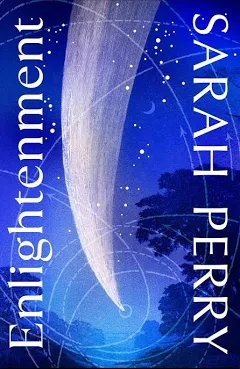
It opens in the winter of 1997 in the Essex town of Aldleigh, a thinly disguised version of Chelmsford where Perry grew up. Thomas Hart writes a column for the local newspaper and attends Bethesda, a strict Calvinist church of the kind that somehow survives into the present day in small pockets of Essex. Hart is gay but keeps his private life private, knowing it would be frowned upon by the unforgiving people of Bethesda. When his sexuality is eventually ‘exposed’ he is told that he is “an affront to God” and effectively expelled from the congregation.
The chapel is next to Lowlands House, a crumbling stately home and park, slowly being restored by the local museum. Potters Field, an area of scrub and wasteland is also adjacent to the chapel and provides a metaphorical counterpoint to its order and structure.
One day James Bower, curator of the local museum, writes to Thomas about some correspondence that has been found during the renovations of Lowlands House. James thinks the letters might be a clue to the local legend of the Ghost of Lowlands, who he identifies as Maria Vaduva, an elusive nineteenth-century resident of Lowlands. The pursuit for the mysterious Maria and the truth about what she discovered in the night’s sky forms the central narrative of the novel.
Thomas is also an amateur astronomer and the link he shares with Maria drives him to discover her story, scattered as it is through the novel in the form of long-lost letters, some hidden in the fabric of Lowlands, others in private papers in the museum. The other main character in the novel is Grace Macauley, the pastor’s daughter, who when the novel opens is about to turn 18. Thomas feels paternal towards Grace and one thing keeping him in Bethesda and Aldleigh is his determination to watch over her. Grace starts a romantic relationship with Nathan, a local lad not associated with the church, but Thomas sabotages their friendship, an act for which he is never fully forgiven.
Enlightenment is slow-paced and luxurious and at times almost Dickensian. The sense of place is vivid, no doubt in part due to the autobiographical elements of the story.
“Monday: late winter, bad weather. The River Alder, fattened by continuous rain, went in spate through Aldleigh and beyond it, taking carp and pike and pages torn from pornographic magazines past war memorials and pubs and new industrial estates, down to the mouth of the Blackwater and on in due course to the sea. Toppled shopping trolleys glistened on the riverbank; so also did unwanted wedding rings, and beer cans, and coins struck by empires in the years of their decline. Herons paced like whitecoated orderlies in the muddy reeds; and at half past four a fisherman caught a cup untouched since the ink was wet on The Battle of Maldon, spat twice, and threw it back.
Late winter, bad weather: the town oppressed by cloud as low as a coffin lid. A place spoken of in passing, if at all: neither Boudicca nor Wat Tyler had given it a second glance when they took their vengeances to London; and war had reached it only as an afterthought, when a solitary Junkers discharged the last of its ordnance and extinguished four souls without notice.”
The novel clearly owes a significant debt to A S Byatt’s Possession, but I didn’t find that at all problematic. Some novels are like other novels, and draw inspiration from one another, but that doesn’t mean they are derivative.
Many book bloggers structure their posts around categories such as publication data, information about the author, a plot summary and so on. I’ve never been organised enough to do this, but if I were ever to do so one category I would include would be “How easy was the novel/text to read?” Authors can make their texts easier to read in lots of ways: very short chapters and a large font is the approach adopted by writers such as Richard Osman for example. But of course the reader can make things difficult for themselves – reading late at night, leaving large gaps between each reading session so remembering what is happening gets tricky, and so on. I found Enlightenment a little hard to read. The narrative progression is slow and the events that do happen are often predictable. Some plot devices, such as the finding of very old letters in the fabric of Lowlands House, are a bit too convenient. We were never not going to find out what happens to Maria. Thomas is not a compelling character – he is very introspective and reserved – and while Grace is a more interesting character her life proves aimless until she is able to be reunited, temporarily, with Nathan.
I enjoyed Enlightenment but I can’t resist the feeling that the author’s best novel is still to come.
*Perry also wrote After Me Comes the Flood (2014) which I have yet to read.

