Book review

After Me Comes the Flood, by Sarah Perry, 2014

After Me Comes the Flood was Sarah Perry’s promising first novel, published two years before her breakthrough work, The Essex Serpent. After Me tells a deceptively simple story: five weeks into a heatwave, the novel’s central character, John Cole, shuts his customer-less London bookshop and sets out to visit his brother on the Norfolk coast. When his car breaks down somewhere in Norfolk, he leaves his car and wanders into a wood where he stumbles upon a large house. Knocking with the intent of asking for help, he is welcomed by the members of the household – strangely it seems he is expected and is welcomed by name. They mystery is quickly explained – this is a group of friends who previously lived together in a mental health clinic nearby and who now look after one another. A new group member with a very similar name to John’s was due to arrive, although has been delayed and John is mistaken for him. He sustains the idea that he is the other John Cole, although there is every indication that the household would have welcomed him if he explained the misunderstanding.
There is a mysterious gothic quality to John’s stay at this house. The residents are introduced slowly, telling how they came to live in this unusual sanctuary. Hester is in her sixties and is the matriarch of the house. John consistently describes her as ugly, saying she appears “poorly assembled, as though she had been put together from left over pieces” (which is a bit mean!). Eve is a pianist; Elijah a former preacher who has lost his faith; Claire and Alex, brother and sister, are childish and childlike (John initially mistakes Claire for a young girl) and finally there’s Walker, an accountant who met the others at the hospital but who was not a patient there. Near the house is a reservoir and Alex is frightened that the bank holding it in place might at some point burst, and that the house will be swept away in the ensuing biblical flood. This threat looms over the rest of the novel increasing the sense of menace.

It would be fair to say that After Me is definitely an atmospheric and character-driven novel, but at the same time not very much happens. The events of the novel, such as they are, are spread over one week, with each chapter representing a day. John gets to know the residents, and slowly gets comfortable with his deceit, reminding himself daily to either tell them the truth or leave, but never quite getting round to doing either. One day the household takes a trip to the coast and Alex briefly goes missing with a young boy he had befriended while playing innocently on the beach. The suspicion cast on him by the boy’s mother throws a shadow over the day and upsets Alex more than the others realise. This is probably the nearest the novel comes to anything that could be described as incident.

Perry’s subsequent novels rest heavily on supernatural themes. Here such things are hinted at but there are naturalistic explanations for all the strangeness John initially encounters. There is also an under-developed theme running through the novel relating to the short Anglo-Saxon poem Wulf and Eadwacer which is never really resolved. We find out who has been sending the poison-pen letters to Alex which have caused him so much distress, but the reasons for the obscure classic illusion remain unclear.

I do have a issue with the novel’s ending. The threatening reservoir looms over the novel like the sword of Damocles and it would have been a shock had it not played a central role in the novel’s resolution. It is hard to resist the impression that having assembled her characters, drawn all the lines between them, and placed them in a moderately interesting setting, Perry was at a loss as to what to do with them all next. The novel’s ending felt far too convenient and obvious, a simple way to bring matters to a close.

I am conscious that I haven’t found anything interesting to say about After Me, which I am disappointed about. But I can’t help wondering whether the problem is mine as a reviewer or the author’s as a novelist. This is after all a novel in which not much happens, the characters are not really engaging and where the ending is very predictable. The prose is perfectly adequate, but I don’t think I can recall a single line or phrase that jumped out and asked to be remembered. If I appeal to the jury of the internet to decide where the problem lies I think it is revealing that on Goodreads this novel has an average reader score of 2.78, by far the lowest score for any of her subsequent novels, and has twice as many one-star reviews as five-star.. Many of those one-stars will have been by disappointed readers of The Essex Serpent looking for more of the same, which is of course a bit unfair. If you have read After Me and found more in it than I managed to find, I would love to hear from you in comments. What am I missing?
After Me Comes the Flood, by Sarah Perry, 2014

Aside
Book review

Enlightenment by Sarah Perry, 2024

Enlightenment is very recognisably a Sarah Perry novel. It contains many of the same elements and themes of her earlier novels, The Essex Serpent and Melmoth* although it is probably her most autobiographical novel to date.

It opens in the winter of 1997 in the Essex town of Aldleigh, a thinly disguised version of Chelmsford where Perry grew up. Thomas Hart writes a column for the local newspaper and attends Bethesda, a strict Calvinist church of the kind that somehow survives into the present day in small pockets of Essex. Hart is gay but keeps his private life private, knowing it would be frowned upon by the unforgiving people of Bethesda. When his sexuality is eventually ‘exposed’ he is told that he is “an affront to God” and effectively expelled from the congregation.

The chapel is next to Lowlands House, a crumbling stately home and park, slowly being restored by the local museum. Potters Field, an area of scrub and wasteland is also adjacent to the chapel and provides a metaphorical counterpoint to its order and structure.

One day James Bower, curator of the local museum, writes to Thomas about some correspondence that has been found during the renovations of Lowlands House. James thinks the letters might be a clue to the local legend of the Ghost of Lowlands, who he identifies as Maria Vaduva, an elusive nineteenth-century resident of Lowlands. The pursuit for the mysterious Maria and the truth about what she discovered in the night’s sky forms the central narrative of the novel.

Thomas is also an amateur astronomer and the link he shares with Maria drives him to discover her story, scattered as it is through the novel in the form of long-lost letters, some hidden in the fabric of Lowlands, others in private papers in the museum. The other main character in the novel is Grace Macauley, the pastor’s daughter, who when the novel opens is about to turn 18. Thomas feels paternal towards Grace and one thing keeping him in Bethesda and Aldleigh is his determination to watch over her. Grace starts a romantic relationship with Nathan, a local lad not associated with the church, but Thomas sabotages their friendship, an act for which he is never fully forgiven.

Enlightenment is slow-paced and luxurious and at times almost Dickensian. The sense of place is vivid, no doubt in part due to the autobiographical elements of the story.

“Monday: late winter, bad weather. The River Alder, fattened by continuous rain, went in spate through Aldleigh and beyond it, taking carp and pike and pages torn from pornographic magazines past war memor­ials and pubs and new industrial estates, down to the mouth of the Blackwater and on in due course to the sea. Toppled shopping trolleys glistened on the riverbank; so also did unwanted wedding rings, and beer cans, and coins struck by empires in the years of their decline. Herons paced like white­coated orderlies in the muddy reeds; and at half past four a fisherman caught a cup untouched since the ink was wet on The Battle of Maldon, spat twice, and threw it back. 

Late winter, bad weather: the town oppressed by cloud as low as a coffin lid. A place spoken of in passing, if at all: nei­ther Boudicca nor Wat Tyler had given it a second glance when they took their vengeances to London; and war had reached it only as an afterthought, when a solitary Junkers discharged the last of its ordnance and extinguished four souls without notice.” 

The novel clearly owes a significant debt to A S Byatt’s Possession, but I didn’t find that at all problematic. Some novels are like other novels, and draw inspiration from one another, but that doesn’t mean they are derivative.

Many book bloggers structure their posts around categories such as publication data, information about the author, a plot summary and so on. I’ve never been organised enough to do this, but if I were ever to do so one category I would include would be “How easy was the novel/text to read?” Authors can make their texts easier to read in lots of ways: very short chapters and a large font is the approach adopted by writers such as Richard Osman for example. But of course the reader can make things difficult for themselves – reading late at night, leaving large gaps between each reading session so remembering what is happening gets tricky, and so on. I found Enlightenment a little hard to read. The narrative progression is slow and the events that do happen are often predictable. Some plot devices, such as the finding of very old letters in the fabric of Lowlands House, are a bit too convenient. We were never not going to find out what happens to Maria. Thomas is not a compelling character – he is very introspective and reserved – and while Grace is a more interesting character her life proves aimless until she is able to be reunited, temporarily, with Nathan.

I enjoyed Enlightenment but I can’t resist the feeling that the author’s best novel is still to come.

*Perry also wrote After Me Comes the Flood (2014) which I have yet to read.

Enlightenment by Sarah Perry, 2024

Aside
Book review

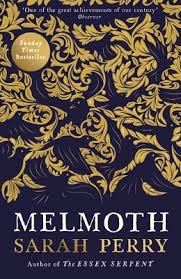
Melmoth, by Sarah Perry, 2018

“Perry’s masterly piece of postmodern gothic is one of the great literary achievements of our young century and deserves all the prizes and praise that will be heaped upon it.

That was the Guardian’s lavish view of Perry’s 2018 follow up to the extraordinarily successful The Essex Serpent, although the quote is edited slightly on the front cover of the paperback edition (“One of the great achievements of our century” (see below). See what they did there, cutting out the words “literary” and “young” – I bet they thought they would get away with that, because who would check? Me!). Nevertheless, the bar had been set.Melmoth

Helen Franklin, a translator of tedious technical articles, lives in exile in Prague, trying to put her mysterious past behind her and at the same time paying penance for her unspecified sin. Her social circle is very limited, in fitting with her ascetic life of isolation, but she has two friends Thea and Karel. Karel has been researching the folklore tale of Melmoth, a mythical figure who walks the earth witnessing sin. His collection of manuscripts has begun to haunt Karel, so he leaves Prague, Thea, and pretty much the novel, for a fresh start as an activist against immigration enforcement. Yep, that’s what people do. This is shoe-horned in to make a heavy-handed point – in life we should not just witness wrong being done, but do something about it. Being a passive witness is as bad as being a participant in the offence, as stories from Karel’s collection testify.

The individual stories in this collection are compelling – scenes from the German occupation of Czechoslovakia, and the subsequent retribution towards the occupying forces; memories of the Armenian massacres/holocaust in the first world war, and Helen’s own story, eventually revealed, of a terrible crime in Malaya. But these are relatively brief testimonies that create a fractured narrative. The over-arching story – Helen and her haunting by Melmoth – is not that interesting, and I found the novel only sparked into life when the stories within the story were being told. The supernatural element of the novel left me cold – horror when well done can be effective if it draws upon our deep-rooted fears of the real world, but here it becomes predictable and unthreatening very quickly. We know Melmoth is going to be lurking around somewhere, but don’t really care.

I came extremely close to abandoning this novel at around the three-quarter point, and it was really only the knowledge that I would have to confess to doing so here, together with a dollop of stubbornness, that kept me going. I am glad I did because Helen’s tragic story, revealed toward the end of the novel, and its denouement, was worth the wait, but the effort in getting there was considerable. This novel has none of the pace or compelling characters of the Essex Serpent. It’s not a bad novel, and Perry is not a bad writer, but this misfires and allows the message to drive the story, not the other way round as it surely should be. The experiment with structure is not the problem – it is an absence of characters we have any real interest in that lets the novel down badly. The discussion element of the novel – can we be a bystander in life, or do we have to actively resist oppression, because if we don’t we become complicit in it, however unwittingly – is a serious attempt to engage in this issue, and I am sure has sparked a lot of worthy book-club discussions (this edition had “suggested topics for your book club” as an endpiece) but for me wasn’t enough to redeem the novel or drive the narrative. Sorry! I feel a bit of a cad for being so negative about this novel because there are a lot of positives in there, but the heart of the novel – an interesting story – is missing.

For getting this far, here’s a couple of cookies:

  • Melmoth the Wanderer is the name of Humbert Humbert’s car in Vladimir Nabokov’s Lolita
  • Sebastian Melmoth was a pseudonym used towards the end of his life by Oscar Wilde

And finally, I found this spoof in a Goodreads review which I thought was exquisitely well done and pricks the pomposity of the original – apologies for the plagiarism!

“Melmoth the Wanderer meets Winnie the Pooh

It is I, Melmoth, known as Melmotka, wanderer of the centuries of man’s sufferings. My child, my Winnie, whom I have longed for, from whom my eyes have never wandered, at last I am come, as you knew I must, I who have watched over you from the hour of your birth until now, that you may be delivered from torment! I, Melmoth!

“Would you like some honey?” Said Winnie, known as The Pooh. “I found it, you see, so now I am… eating it. It is nice. You could have a bit. Just a little bit.”

Melmoth the Wanderer meets Mary Poppins

It is I, Melmoth, known as Melmotka, wanderer of the centuries of man’s sufferings. My child, my Mary, whom I have longed for, from whom my eyes have never wandered, at last I am come, as you knew I must, I who have watched over you from the hour of your birth until now, that you may be delivered from torment! I, Melmoth!

“Well now, Mrs did you say Melmoth? It’s an odd name you know. Please don’t stand there like a large fish with legs. You are welcome to accompany us to the Botanical Gardens but you’ll have to move a little faster than that.”

Melmoth the Wanderer meets Shrek

It is I, Melmoth, known as Melmotka, wanderer of the centuries of man’s sufferings. My child, my Shrek, whom I have longed for, from whom my eyes have never wandered, at last I am come, as you knew I must, I who have watched over you from the hour of your birth until now, that you may be delivered from torment! I, Melmoth!

“So let me get this straight. You’re jist gonna stand there and watch me? Well, are ye quite sure about that? Because your likely going to be seeing some pretty disgusting things if you do. You know, I knew a Melmoth once. Oh no, right, I knew Mel the Moth. He was a moth.”

Standard
Book review

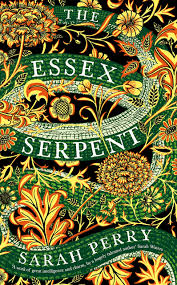
The Essex Serpent by Sarah Perry, 2016

When Cora Seaborne’s bully of a husband thankfully dies, she begins her new life as a widow with a sense of relief. Cora is our story’s heroine, an intelligent free-thinker, interested in the ideas of Marx and Darwin, ill-suited for the role of society wiEssex serpent 2fe. Seeking a change of scenery following the funeral, Cora moves to Essex, first Colchester then coastal Aldwinter, accompanied by her eleven-year old son, Francis, and his nanny, Martha.

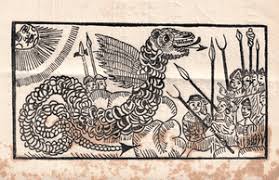
Here we are introduced to the legend of the titular serpent, a wonderfully ambiguous and flexible metaphor for the unknown, sexuality, and more. The serpent is rumoured to have returned to haunt the coast after an earthquake brought it back to the surface, a folk-tale which has just enough plausibility to intrigue Cora. She becomes convinced that what the local people think is a mythical sea beast may be a previously undiscovered species. This is a time when the undiscovered was being explored and pinned down by hyper-active Victorians all the time.

The romantic element to the story is introduced when she meets the local vicar Will Ransome, who has a different, faith-based interpretation of the serpent legend. To Will and his flock the serpent has strong echoes of an earlier satanic snake. A strong wider cast slowly introduced to us, and one of the many pleasures of the novel is getting to know the people of Aldwinter and Cora’s other friends and relatives.

There’s much to admire in this novel, a late Victorian Gothic horror/romance. It fizzes with ideas and incident, interesting characters and accurately evoked settings.  Set in 1893, a time in which the ideas of Marx and Darwin were moving from being shocking and challenging to much more accepted and mainstream, but where superstition still governed the lives of many; where human relationships begin to test the boundaries of the constraints of marriage (for example shown here in the relationship between Martha and Edward Burton). Martha can be introduced as a socialist in company without that causing shock or dismay.

This is a society in flux, approaching the end of the Victorian era and the nineteenth century, set just two years before the trials of Oscar Wilde, and where social activism on the state of the slums in East London is much more than a matter of public health. Medicine is also leaping forward into the twentieth century, with Luke Garrett, jokingly (?) nicknamed “the imp”. a surgeon and suitor of Cora’s who begins to explore the possibilities of heart surgery.Essex serpent

The writing is strong. The point of view narration sweeps between characters seamlessly so we can tell from moment to moment how each is feeling as each scene unfolds, something that only novels can really do this well. The influence of Dickens and Hardy in particular is pervasive and explicitly acknowledged. Take this paragraph for example which to my mind is almost heroically Dickensian in its use of pairings and contrasts:

One o’clock on a dreary day and the time ball dropped at the Greenwich Observatory. There was ice on the prime meridian, and ice on the rigging of the broad-beamed barges down on the busy Thames. . . . Time was being served behind the walls of Newgate jail, and wasted by philosophers in cafes on the Strand; it was lost by those who wished the past were present, and loathed by those who wished the present past. . .

In Lincoln’s Inn and Middle Temple lawyers eyed their calendars and saw statues of limitations expire; in rooms in Camden and Woolwich time was cruel to lovers wondering how it got so late so soon, and in due course was kind to their ordinary wounds. Across the city in terraces and tenements, in high society and low company and in the middle classes, time was spent and squandered, eked out and wished away; and all the time it rained an icy rain.

If I have a criticism of this novel, churlish though it may be, it is that the ending is weak. The serpent itself was always going to be a disappointment, but the resolution is anti-climactic, to say the least, and a little ludicrous (the scene with ‘Gracie’). The resolution of the interwoven relationships is also a little disappointing – almost as if the ground is being laid for a sequel. Certainly I felt as if Cora, Michael, Martha and families had more stories to tell, and I would happily read more about their lives. I am equally convinced that this would make a hugely popular television series in the right hands.

If I am honest it was the awkward portrayal of sex in the novel that troubled me the most. The descriptions creep close to being a pastiche or parody of the way Hardy would have written them. Here for example is the time towards the end of the novel (spoiler alert) where Will and Cora finally consummate their relationship:

moving aside the folds of her coat he tugged her shirt where it was tucked into the waist, in the place where once he’d touched her and been disgraced by it. But the disgrace this time kept its distance: it seemed to him that to keep apart from her now would be obscene; how could it be possible to seek out each fold and turn of her mind and not grow familiar with the particular patina of her skin, the scent and taste of it. Not to touch her now would be to breach a natural law. Back she lay against the soft green stair in the thickening dusk and fixed her eyes on his, unsurprised, daring him: he raised he short and there in the split between the black cloth of her clothes he found her soft belly, very white, marked with the silver lines her son had made: he kissed it once and could not stop, and rolled against him in delight.

The sun slid down….She met his gaze then, levelly as she always had, and felt herself go rushing to meet him like a river in spate; ‘Please,’ she said, pulling at her skirt:’Please’, and he heard it like a command. He found her easily, and his hand slipped and moved in her, and her bright head drooped, and she was silent. He showed her his hand, and how she gleamed there; he put a forefinger to his mouth and hers, and they had an equal share”. 

Ignoring the fact that her shirt gets pulled out twice, which I suppose I can forgive, my main reaction to reading this paragraph was – really? They had an equal share?? That’s my nominee for the Bad Sex in Literature Award sorted. I was also irked by the deliberate archaism of “back she lay” rather than “she lay back” – why?

Earlier, Will goes for a long walk, the traditional remedy for sexual frustration, his mind boiling with thoughts of Cora:

He walked on to the mouth of the estuary, not knowing what to do with his desire, only that he could not take it to Stella; he knew he’d touch her and find her for the first time slight and insubstantial – he had in mind something more like fighting, and it appalled him; he went out to the water’s edge and with quick movements spent himself on the black marsh with something like a bark and with a dog’s joy”

The boatload of day-trippers from Clacton would have had something to talk about on the way back that day!

Or here:

“The windows in her room were open and light was fading on the wall. She said, ‘There may be blood,’ and he said, ‘Better that way – better’; and it was Cora’s mouth he kissed, and Cora’s hand he placed where she wanted it most. Each was only second best: they wore each other like hand-me-down coats.”

I am not sure if this is beautiful or over the top. ‘There may be blood’ sounds like a bad western, or an ominous line from a Tarantino film, but the reference to wearing one another like hand-me-down coats is lovely, and picks up on the constant references to Cora wearing a man’s coat (and many other references to the coats people wear – in fact there is probably a whole essay to be teased out of clothing in this novel alone, such is its depth and richness).

This is not the only example of overwriting, spectacular though it is. 

“He felt his faith deeply, and above all out of doors, where the vaulted sky was his cathedral nave and the oaks its transept pillars: when faith failed, as it sometimes did, he saw the heavens declare the glory of God and heard the stones cry out.”

But I am being churlish. Writing of this nature always tiptoes on the edge of hyperbole, and it is easily forgiven. I will close with a positive example of how the author evokes the Essex countryside – has it ever been described with such affection?

“Then it carried me in spate to the Essex shore, to all the marsh and shingle, and I tasted on my lips the salt air which is also like the flesh of oysters, and I felt my heart cleaving, as I felt it there in the dark wood on the green stair and as I feel it now: something severed, and something joined.”

Perry is a writer of enormous promise. The Essex Serpent was massively popular throughout 2016 and beyond, and has won prizes and sold huge amounts of copies – at times you couldn’t turn around in a bookshop without bumping into piles of it. One of the benefits of such ubiquity is that second hand copies are easy to find, and my £1 charity bookshop copy was a gleefully pounced upon treasure.


Standard