
When Cora Seaborne’s bully of a husband thankfully dies, she begins her new life as a widow with a sense of relief. Cora is our story’s heroine, an intelligent free-thinker, interested in the ideas of Marx and Darwin, ill-suited for the role of society wi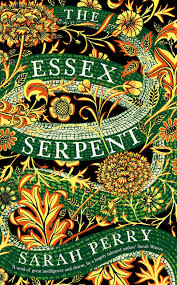 fe. Seeking a change of scenery following the funeral, Cora moves to Essex, first Colchester then coastal Aldwinter, accompanied by her eleven-year old son, Francis, and his nanny, Martha.
Here we are introduced to the legend of the titular serpent, a wonderfully ambiguous and flexible metaphor for the unknown, sexuality, and more. The serpent is rumoured to have returned to haunt the coast after an earthquake brought it back to the surface, a folk-tale which has just enough plausibility to intrigue Cora. She becomes convinced that what the local people think is a mythical sea beast may be a previously undiscovered species. This is a time when the undiscovered was being explored and pinned down by hyper-active Victorians all the time.
The romantic element to the story is introduced when she meets the local vicar Will Ransome, who has a different, faith-based interpretation of the serpent legend. To Will and his flock the serpent has strong echoes of an earlier satanic snake. A strong wider cast slowly introduced to us, and one of the many pleasures of the novel is getting to know the people of Aldwinter and Cora’s other friends and relatives.
There’s much to admire in this novel, a late Victorian Gothic horror/romance. It fizzes with ideas and incident, interesting characters and accurately evoked settings. Set in 1893, a time in which the ideas of Marx and Darwin were moving from being shocking and challenging to much more accepted and mainstream, but where superstition still governed the lives of many; where human relationships begin to test the boundaries of the constraints of marriage (for example shown here in the relationship between Martha and Edward Burton). Martha can be introduced as a socialist in company without that causing shock or dismay.
This is a society in flux, approaching the end of the Victorian era and the nineteenth century, set just two years before the trials of Oscar Wilde, and where social activism on the state of the slums in East London is much more than a matter of public health. Medicine is also leaping forward into the twentieth century, with Luke Garrett, jokingly (?) nicknamed “the imp”. a surgeon and suitor of Cora’s who begins to explore the possibilities of heart surgery.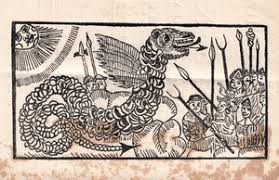
The writing is strong. The point of view narration sweeps between characters seamlessly so we can tell from moment to moment how each is feeling as each scene unfolds, something that only novels can really do this well. The influence of Dickens and Hardy in particular is pervasive and explicitly acknowledged. Take this paragraph for example which to my mind is almost heroically Dickensian in its use of pairings and contrasts:
One o’clock on a dreary day and the time ball dropped at the Greenwich Observatory. There was ice on the prime meridian, and ice on the rigging of the broad-beamed barges down on the busy Thames. . . . Time was being served behind the walls of Newgate jail, and wasted by philosophers in cafes on the Strand; it was lost by those who wished the past were present, and loathed by those who wished the present past. . .
In Lincoln’s Inn and Middle Temple lawyers eyed their calendars and saw statues of limitations expire; in rooms in Camden and Woolwich time was cruel to lovers wondering how it got so late so soon, and in due course was kind to their ordinary wounds. Across the city in terraces and tenements, in high society and low company and in the middle classes, time was spent and squandered, eked out and wished away; and all the time it rained an icy rain.
If I have a criticism of this novel, churlish though it may be, it is that the ending is weak. The serpent itself was always going to be a disappointment, but the resolution is anti-climactic, to say the least, and a little ludicrous (the scene with ‘Gracie’). The resolution of the interwoven relationships is also a little disappointing – almost as if the ground is being laid for a sequel. Certainly I felt as if Cora, Michael, Martha and families had more stories to tell, and I would happily read more about their lives. I am equally convinced that this would make a hugely popular television series in the right hands.
If I am honest it was the awkward portrayal of sex in the novel that troubled me the most. The descriptions creep close to being a pastiche or parody of the way Hardy would have written them. Here for example is the time towards the end of the novel (spoiler alert) where Will and Cora finally consummate their relationship:
“moving aside the folds of her coat he tugged her shirt where it was tucked into the waist, in the place where once he’d touched her and been disgraced by it. But the disgrace this time kept its distance: it seemed to him that to keep apart from her now would be obscene; how could it be possible to seek out each fold and turn of her mind and not grow familiar with the particular patina of her skin, the scent and taste of it. Not to touch her now would be to breach a natural law. Back she lay against the soft green stair in the thickening dusk and fixed her eyes on his, unsurprised, daring him: he raised he short and there in the split between the black cloth of her clothes he found her soft belly, very white, marked with the silver lines her son had made: he kissed it once and could not stop, and rolled against him in delight.
The sun slid down….She met his gaze then, levelly as she always had, and felt herself go rushing to meet him like a river in spate; ‘Please,’ she said, pulling at her skirt:’Please’, and he heard it like a command. He found her easily, and his hand slipped and moved in her, and her bright head drooped, and she was silent. He showed her his hand, and how she gleamed there; he put a forefinger to his mouth and hers, and they had an equal share”.
Ignoring the fact that her shirt gets pulled out twice, which I suppose I can forgive, my main reaction to reading this paragraph was – really? They had an equal share?? That’s my nominee for the Bad Sex in Literature Award sorted. I was also irked by the deliberate archaism of “back she lay” rather than “she lay back” – why?
Earlier, Will goes for a long walk, the traditional remedy for sexual frustration, his mind boiling with thoughts of Cora:
He walked on to the mouth of the estuary, not knowing what to do with his desire, only that he could not take it to Stella; he knew he’d touch her and find her for the first time slight and insubstantial – he had in mind something more like fighting, and it appalled him; he went out to the water’s edge and with quick movements spent himself on the black marsh with something like a bark and with a dog’s joy”
The boatload of day-trippers from Clacton would have had something to talk about on the way back that day!
Or here:
“The windows in her room were open and light was fading on the wall. She said, ‘There may be blood,’ and he said, ‘Better that way – better’; and it was Cora’s mouth he kissed, and Cora’s hand he placed where she wanted it most. Each was only second best: they wore each other like hand-me-down coats.”
I am not sure if this is beautiful or over the top. ‘There may be blood’ sounds like a bad western, or an ominous line from a Tarantino film, but the reference to wearing one another like hand-me-down coats is lovely, and picks up on the constant references to Cora wearing a man’s coat (and many other references to the coats people wear – in fact there is probably a whole essay to be teased out of clothing in this novel alone, such is its depth and richness).
This is not the only example of overwriting, spectacular though it is.
“He felt his faith deeply, and above all out of doors, where the vaulted sky was his cathedral nave and the oaks its transept pillars: when faith failed, as it sometimes did, he saw the heavens declare the glory of God and heard the stones cry out.”
But I am being churlish. Writing of this nature always tiptoes on the edge of hyperbole, and it is easily forgiven. I will close with a positive example of how the author evokes the Essex countryside – has it ever been described with such affection?
“Then it carried me in spate to the Essex shore, to all the marsh and shingle, and I tasted on my lips the salt air which is also like the flesh of oysters, and I felt my heart cleaving, as I felt it there in the dark wood on the green stair and as I feel it now: something severed, and something joined.”
Perry is a writer of enormous promise. The Essex Serpent was massively popular throughout 2016 and beyond, and has won prizes and sold huge amounts of copies – at times you couldn’t turn around in a bookshop without bumping into piles of it. One of the benefits of such ubiquity is that second hand copies are easy to find, and my £1 charity bookshop copy was a gleefully pounced upon treasure.

