Book review

Jack Maggs, by Peter Carey, 1997

I can’t tell you precisely how long Peter Carey’s Jack Maggs has sat on my bookshelves waiting to be read, but it is a long time – I was seriously considering abandoning any intent of reading it and regifting it to the charity shop from whence it came. I am so glad that I did not and instead on a whim started this original and entertaining novel.
When I first started it I wasn’t aware that Jacks Maggs was based on Dickens’ Great Expectations and was feeling rather smug when I identified the character Tobias Oates as being a portrait of the young Dickens. Oates is 24 and has had one successful novel published (Captain Crumley, a version of the Pickwick Papers). Oates is married but is already getting bored with his wife and is having a passionate affair with his eighteen-year old sister-in-law. There are close parallels with Dickens’ life here and he doesn’t come out of the novel well at all. Dickens did eventually separate from his wife after she had borne his many children and his relationships with his sisters-in-law don’t stand up to too much scrutiny. This speculative portrait of the early years of his marriage suggest that his affections for his wife were waning even at this stage.

The novel opens with the titular character returning from a life-sentence of transportation to Australia. Whilst imprisoned as a convict his life in Australia was brutally hard, but eventually he was freed and went on to earn a comfortable living and a place in respectable society by becoming a brickmaker. He uses some of this money to trace his young son, abandoned back in England, and provide him with a good education. This of course is essentially the storyline of Great Expectations, but seen from Magwitch/Maggs’s point of view. On returning to England to find his son, leaving a young family back in Australia, Maggs risks the death penalty which faced all those who left Australia after a life sentence. He finds his son’s house empty – he has fled to his club after being forewarned of his father’s intention to come calling – and takes a job as a footman in the household of Mr Percy Buckle, the next door neighbour. His predecessor in the role has recently died by suicide and one of the novel’s mysteries and sub-plots is the background to this death. Maggs is a brutal man, vividly realised by the author, and quite unsuited to the subservient role of footman. In this role he encounters Oates, a dinner guest in the Buckle household, who is intrigued by the rough character who is attending table. Oates offers to hypnotise Maggs to help him with a painful tic that has developed in his face, a result of his being brutally whipped. Oates real intention is to discover Maggs’ backstory, which he quickly does, much to Maggs’s anger when he finds out his identity has been revealed. Maggs only agrees to be hypnotised if Oates will tell him how to find a notorious thief-taker who he believes will help him track down his son.

The novel slightly stalls at this point. The Great Expectations storyline has been left some way behind, and the characters and events repeat themselves while waiting for the deadline by which Oates has agreed to reveal the identity of the thief taker to come around. Maggs discovers his identity has been revealed, and reacts with anger, effectively taking Buckle’s household and Oates along with it hostage. Maggs doesn’t follow a plan or behave in any way strategically – he just uses cunning and the threat of violence to get his way. A trip to Gloucester to find the thief-taker is a wild-goose-chase which doesn’t seem to serve any particular purpose in the narrative (unless it was following a story-line in GE that I have managed to forget!) and puts off the climax in which all the characters come together in a dangerous and potentially violent end to the novel. Dickens was always careful to give his villains an ending that Victorian civic society would approve of, however charismatic they might be, but Carey is less anxious to comply with Victorian morality and (spoiler alert) allows Maggs a happy ending that for much of the novel appears deeply unlikely. Oates on the other hand suffers a painful loss that runs parallel with a similar loss in Dickens’ life, showing that not all immoral behaviour escapes judgment, even if the judgment is delivered on a young woman rather than Dickens/Oates himself.

I thought it would be an interesting to compare this novel with a more recent reimagining of Dickens, Barbara Kingsolver’s Demon Copperhead. Google’s AI tells me that the latter novel is the more radical reinterpretation of the two, set as it is in the Appalachians in modern times, and focussing on the opoid epidemic. But it was also in other ways a traditional and fairly close retelling of the Dickens novel, albeit updated, whereas I thought Carey’s novel, while retaining the original setting, was a more imaginative narrative. It uses the Dickens text as a jumping off point but also blends the events of Great Expectations with episodes from Dickens’ life itself. It also uses what I think of as the ‘Rosencrantz and Guildenstern’ technique of showing the events of the novel from an entirely new perspective, revealing depths to the original that were previously unexplored. I think on balance I found the Carey text the more impressive of the two (compared that is with the Kingsolver novel, not the Dickens!) although in terms of critical and popular reaction Demon Copperhead has been far more successful. It is interesting that two very well established authors chose to turn to Dickens for inspiration (of course there are many others doing the same thing) rather than crafting entirely new narratives.
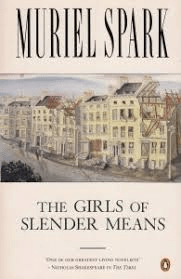
Jack Maggs, by Peter Carey, 1997

Aside
Book review

The Girls of Slender Means, by Muriel Spark, 1963

Utterly wonderful. Truly superb and written with extraordinary economy, so that even every word of the title is working hard. I haven’t read anything close to this this good in the novella format since J L Carr’s A Month in the Country.

That’s the short review: the full review is going to be a bit longer. I’ve written before about how when one summarises ‘what happens’ in a novel the tendency is to present it as a chronological sequence of events, a straightforward ‘this happens then that happens’ narrative. But of course many novels simply aren’t like that at all and such summaries while useful in some respects do the novel a disservice. They undermine the complexity of the structure and in this case the extremely clever way Spark slowly reveals her plot. It’s so well done that this is one of those novels that you immediately turn to the opening pages once you have finished (which doesn’t take long, this is less than 140 pages) and start again, looking at the text in a completely different light. I don’t want to spoil that experience for you, so if you have any intention of reading this one I’d avoid the section of this review marked ‘Spoilers’ – but it would be great if you would come back once you have read it and see if you agree with what I have said.

Muriel Spark is one of those writers whose books I always buy if I come across them in second-hand or charity stores. She is always interesting. The Girls of Slender Means was her next novel after The Prime of Miss Jean Brodie, and I am convinced it is its equal – perhaps Jean Brodie gets the accolades because of the exceptional film version. It is set in the May of Teck Club, a hostel for young women, just after the end of the war in Europe in 1945. It follows the adventure of the residents of the hostel, young women navigating life in a suddenly changed world, in which the carelessness and danger of the war years is being replaced by something less clear. The election of Attlee’s radical Labour Government is mentioned and forms a backdrop to the novel, but it’s not just politics that is changing. The role of women in society changed radically during the war years – young women went out to work and had romantic adventures – but it is not obvious whether these changes will be sustained or whether things will go back to the way they were. Against this backdrop the small dramas of the women’s lives unfold and come to a crisis point focussing on, of all things, the bathroom window that leads to the secluded rooftop shared with the hotel next door. Only the slenderest of girls can manage to wriggle through this window onto the rooftop but this seemingly insignificant fact goes on to become a key turning point in the story.

This is a gem of a novel, perfectly formed and full of interesting things to say about the changing role of women in society, religion, sex, and so much more. I can’t recommend it highly enough, and it definitely has found its way into the top ten or even five best novellas that I have read. Admittedly not much happens before the crisis that it has been leading up to and arguably some of the characters are only lightly sketched, and well, those are the only minor negatives I can come up with! Against that the novel sparkles with wit and interest and humour.

Spoilers

I wanted to talk about some of the techniques Spark uses to draw the reader into the novel. It opens with a description of the club and some of its residents. There’s some heavy foreshadowing in the opening paragraph:

“The streets of the cities were lined with buildings in bad repair or in no repair at all, bomb-sites piled with stony rubble, houses like giant teeth in which decay had been drilled out, leaving only the cavity. some bomb-ripped buildings looked like the ruins of ancient castles until, at a close view, the wallpapers of various quite normal rooms would be visible, room above room, exposed, as on a stage, with one wall missing; sometimes a lavatory chain would dangle over nothing from a fourth or fifth-floor ceiling”.

It’s no coincidence that the narrator notices a lavatory chain dangling from a fourth floor – the key moments of the novel happen in just such a room. Later, on the novel’s second page, there is more ominous foreshadowing:

The May of Teck Club stood …in one of a row of tall houses which had endured, but barely; some bombs had dropped nearby, and in a few back gardens, leaving the buildings cracked on the outside…but habitable for the time being.

Although we are encouraged to see this as a slightly flippant comment on life in post-Blitz, war weary London, the threat of unexploded ordnance was very real, even in the time of the novel’s publication (1963) and was to be for a long time afterwards. (Unexploded bombs still crop up from time to time, especially during construction and tunnelling works.)

Once the scene is set the text is then broken by that most cryptic of punctuation marks, the asterisk. The following paragraph starts thus:

*

“‘I’ve got something to tell you’ said Jane Wright, the woman columnist.” (Interesting that she is the woman columnist, not just the columnist, suggesting that women in these roles is still something of a novelty.) Jane speaks on the telephone to a friend, Dorothy “owner of the flourishing model agency” (again, ‘the’ not ‘a’) about a third friend, Nicholas Farringdon, who has been killed while on a missionary mission in Haiti. They knew him when he came to the May of Teck Club “just after the war“. A careful reader will put some pieces together at this point and conclude that the asterisk marked a time jump, and that this conversation is being held years after the setting of the first paragraphs. Another asterisk takes us straight back to 1945, and an announcement by the club’s management about the new wallpaper in the drawing room, setting off a faint echo of the exposed and torn wallpaper mentioned in the description of the bombed buildings that the novel opens with.

At one point a pretentious poet, commenting on the end of the war, quotes the Greek poet C F Cavafy:

“Now what’s going to happen to us without barbarians? Those people were a kind of solution.”

We are invited to mock the young man with his now rather redundant copy of Peace News and his condescending manner, but the point is actually a very serious one – the war against the Nazis did give the country a purpose, a ‘kind of a solution’ and the future was uncertain at that moment after the certainties of total war.

We are introduced to a series of characters in the opening chapters, and it’s easy to just assume we will get to know these characters better as the novel progresses. Another interpolated paragraph marked by asterisks records a phone call from Jane, this time to ‘Anne’, repeating the news about Nicholas. Anne asks if ‘Selina’ has been told the news, but “You know what Selina is like these days, she won’t answer the phone personally, you have to go through thousands of secretaries or whatever they are“. So whoever Selina is, and we will meet her in 1945 shortly, she has done well for herself.

Amongst the detailed description of the Club we are told about the top floor of the house:

“Nothing but the rooftops lay above this floor, now inaccessible by the trap-door in the bathroom ceiling – a mere useless square since it had been bricked up long ago before the war after a girl had been attacked by a burglar or a lover who had entered by it – attacked or merely confronted unexpectedly, or found in bed with him as some said“. The fact this closes off an escape route is noticed: “‘If there was a fire we’d be stuck'” said Selina Redwood who was exceedingly beautiful.” Selina and the others are reassured that there is a fire escape, so the bricked up trap-door is left closed.

The last quarter of the novel is compressed into a few minutes, as the returns on all this development – the unexploded bombs, the bricked up trapdoor and the bathroom window so narrow that only the slenderest of girls can squeeze through – come together in an unlikely yet breathlessly dramatic finale.

You will have worked out by now that I loved this novel. It’s intelligent, interesting, daring, and challenging. I will definitely be looking out for more of her novels.

The Girls of Slender Means, by Muriel Spark, 1963

Aside
Book review

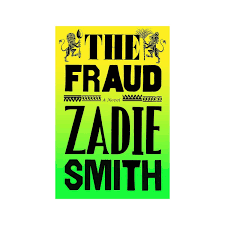
The Fraud, by Zadie Smith, 2023

I have the whimsical notion that Zadie Smith was one day reading a novel combining two plot lines across different time scales (Possession, perhaps, or Alias Grace) and thought “hold my coat”. Because The Fraud combines three different plot and time lines. Firstly and centrally we have the fascinating story of the ‘fraud’ of the title, also known as ‘the claimant’ or ‘the Tichborne heir’. This is Arthur Orton, who in 1866 came forward to claim to be the missing heir to the Tichborne baronetcy and the estate that came with the title.

Roger Tichborne, heir to the family’s title and fortunes, went missing after the ship he was travelling in in South America was shipwrecked with the loss of all on board. His mother refused to believe her son was dead, and after hearing rumours that he had survived and somehow travelled to Australia, she advertised for him in Australian newspapers, offering a reward. Years later a butcher from Wagga Wagga came forward claiming to be Tichborne. He was accepted by Lady Tichborne as her son, although other family members were unconvinced. Imposters claiming to be long lost nobility are nothing new, but this story had just the right combination of elements, at just the right time. It quickly because a case people identified with, a battle between the ‘common man’ and ‘the establishment’. This is of course bizarre, because if Orton was Tichborne as he claimed he was a quintessential part of the establishment, but then again that hasn’t stopped Donald Trump portraying himself as an outsider or Nigel Farage as a man of the people. (In the additional material provided in the Waterstones edition of the hardback, Smith specifically mentions Trump as a source of inspiration for the novel, and while she isn’t explicit about this it is surely in the hysterical way people support Trump/Tichborne no matter how outrageous his lies). Because the striking things about the Tichborne claimant was the profound unlikelihood of his claim. He was strikingly different from every report of the heir including in his dramatically different appearance, the languages he spoke, and his knowledge of his early life and family. His claim in other words was laughably implausible, but that didn’t stop thousands of people believing in him utterly, donating large amounts of money to his cause, travelling to his public rallies, and agitating on his behalf. The more his lies were exposed the more people believed in him, seeing every bit of evidence against him as further proof of a grand conspiracy to deprive him of his legacy. As well as the comparisons with Trump there are also similarities with the flat-earth conspiracy theorists who see every photograph of the curvature of the earth as proof of NASA’s far-reaching ability to control ‘fake news’.

The story of the Tichborne case is told from the perspective of Mrs Touchet, a regular attendee at his two, long-running trials, first to hear his original claim to the baronetcy, and subsequently his criminal trial for perjury. This is our way into the second storyline, following the history of the family of the (real) Victorian novelist William Ainsworth. Ainsworth was a contemporary of Dickens, Thackeray, Disraeli, Walter Scott and a host of other figures from Victorian literary society. Mrs Touchet is his cousin, housekeeper and occasional lover. By the time of the trial Ainsworth is a forgotten figure, still churning out worthless novels (he had over 40 published in his lifetime). Mrs Touchet portrays him as rather pathetic by this stage, even though authors such as Thackeray wrote large numbers of novels largely for the income they provided without becoming a figure of ridicule. Several extracts from his novels are held up to the reader for examination with the implication that they are terrible. This felt unfair – taken out of context this is not a difficult trick to play on just about any author. Every generation will have their jobbing writers whose work fades away quickly after their death, and sometimes before. But you would never know from reading Mrs Touchet’s account that Ainsworth remains in print to this day and first editions of his better known works are available from booksellers for thousands of pounds. Not the cringingly bad literary failure she describes him as, a judgment in which Smith seems to concur – nothing is ever offered by way of corrective to Mrs Touchet’s criticisms.

Mrs Touchet is a widow, and sees in the Tichborne trials (although she is convinced Orton/Tichborne is a fraud) some reflections of her own, rather diminished situation, always in the shadow of her child-like cousin. Mrs Touchet is a political radical and a passionate supporter of the anti-slave trade movement, which continued to campaign long after slave trading was abolished across the British Empire (initially slave trading was abolished, and it was not until several years later that slave ownership was criminalised). One of the Claimant’s long-standing advocates was a former slave and then manservant working for the Tichborne family, Mr Andrew Bogle. Mrs Touchet takes him for lunch and slowly persuades him to tell his story, which becomes the third element of the novel – an account of slavery on a Jamaican plantation in the years either side of abolition. This segment of the novel felt a bit disconnected from the main narrative, dropped into the central storyline as an extended cutaway – and I did wonder if this was a separate work that the author decided to include in this novel simply in order to use it?

Apart from the extended diversion into the Jamaican section of the novel, the other narrative threads are woven tightly together. The novel jumps lightly from one time period to another and back again. If there is a ‘now’ it is the 1870’s and the time of the criminal Tichborne trial, by which time Mrs Touchet is a slightly cranky widow, often looking back nostalgically on the times when Ainsworth was a much more successful and popular novelist (we are reminded more than once that his novel Jack Shephard in its day outsold Oliver Twist) and could afford a higher standard of living. She also suffers with forbearance his new and much younger wife who is very common and a source of some slapstick comedy. Her internal monologue drives most of the narrative – she is cynical and more than a little embittered, frustrated by the lack of opportunities available for women, especially those such as herself on the brink of independence, but never quite ready to take that final step (she has an additional inheritance of £100 a year, doubling her income, which she never claims unless to finally give it away).

The novel ends on something of an anti-climax. Ainsworth dies never really having expressed any further feeling for his cousin who has loved him for decades without hope or expectation, watching his literary talents dwindle away without him ever realising it. The novel portrays him as a failure compared to his literary peers, which as I have said felt unfair. The trial ends in the claimant’s conviction for perjury, a long prison sentence, and an ignominious death in poverty. Of the protagonists it is probably Bogle who lives the most rewarding life, ironically given his origins as a slave.

That’s what happens, but the question you probably came her for is whether the novel is any good? It’s not a demanding read – there’s never much doubt as to who is narrating, what’s happening, who is sleeping with who and so on. The storyline moves on quickly enough and the writing is unobtrusively good, without ever being demonstrative or flashy. I didn’t warm to Mrs Touchet, which would have helped, and her cynical digs at her cousin, Dickens, Cruickshank and the whole Victorian literary circle seemed mean spirited. Perhaps it was a boy’s club that never really confronted the main social issues of the day, but the idea that there was therefore no literary merit in their work (as is suggested) is uncharitable. The claimant himself remains an elusive presence in the novel, barely speaking and only ever described through his supporters or companions. There may well still be a novel to be written about Tichborne/Orton that centralises his story and tries to understand its strange grip on Victorian England rather than just using it as background ‘colour’.

The Fraud, by Zadie Smith, 2023

Aside
Book review

A Confederacy of Dunces, by John Kennedy Toole, 1980

I had come across A Confederacy of Dunces on various lists of ‘best’ novels without having any preconceived idea what it was about. I’m still not entirely sure to be honest. The novel follows the adventures of Ignatius J. Reilly, an obese and extraordinarily self-centred young man living with his mother is early-1960s New Orleans.

Ignatius is a “slob extraordinary, a mad Oliver Hardy, a fat Don Quixote, a perverse Thomas Aquinas rolled into one—who is in violent revolt against the entire modern age, lying in his flannel nightshirt, in a back bedroom on Constantinople Street in New Orleans, who between gigantic seizures of flatulence and eructations is filling dozens of Big Chief tablets with invective.”

He returned from college several years previously and since then done little other than bicker with his mother and her friends and neighbours. He writes in his journal, eats and masturbates. He considers himself a medievalist, although there’s little sign of him ever doing any reading on the topic.

One afternoon while shopping in town Ignatius is approached by a police officer and asked for identification, on the grounds he appears a suspicious character. Ignatius over-reacts to this request, inevitably, appealing to a gathering crowd for assistance and loudly denouncing the officer and all police. An elderly man’s attempts to help goes badly wrong when he accuses the officer of being a communist, and he is arrested, allowing Ignatius to escape with his mother into a nearby bar.

Mrs. Reilly proceeds to get drunk and on the way home she crashes her car. The bill for the accident is over a thousand dollars, and to pay the costs of the accident Mrs O’Reilly is finally pushed into forcing her son out to work. Ignatius is profoundly unsuited to any sort of responsible employment. He first finds a job in an office where the throws away all the filing he is given to do, conspires to undermine his supervisor and employer, and then writes a libellous letter in the name of his employer to a supplier. He is a nightmare of an employee:

“I have taken to arriving at the office one hour later than I am expected. Therefore, I am far more rested and refreshed when I do arrive, and I avoid that bleak first hour of the working day during which my still sluggish senses and body make every chore a penance. I find that in arriving later, the work which I do perform is of a much higher quality.”

Brief spells of ‘work’ are interrupted by regular visits to the movies, where he spends all his time berating the performances and productions:

“Filth!’ Ignatious shouted, spewing wet popcorn over rows. ‘How dare she pretend to be a virgin. Look at her degenerate face. Rape her!”

Finally dismissed from his office job, long beyond the point at which any employer would have tolerated his behaviour, Ignatius then becomes a hot dog vendor, eating many times more than he sells. The novel ends on an optimistic note with Ignatius finally breaking free from his inertia, heading off on an adventure with a college friend. The likelihood of this all ending badly and Ignatius returning home to complain for years about the discomfort or indignity of some minor aspect of his journey is high, but the reader wishes him well.

A Confederacy is one of that small group of novels where the history of its publication is as well known as the story itself. In brief, Toole killed himself before it was published, and there is reason to believe that his suicide was at least in part associated with the manuscript’s rejection by multiple publishers. It was only through the subsequent persistence of his mother that finally saw the novel published. The plot of the novel is little more than a framework for the portrait of the monstrous narcissist that is Ignatius. So you either enjoy spending time with this deeply unpleasant, but admittedly comical character, or you don’t. He is frankly an idiot, a giant toddler unable to foresee the obvious consequences of his actions, ever confident that any problem put in his way can be overcome by shouting at anyone who objects to his behaviour. Mostly this works because of his indulgent mother and employers desperate for help. The more his offences are indulged, the more he offends. I found this mildly amusing, but it quickly gets tired. The portrait of New Orleans that provides a backdrop to Ignatius’s tantrums is not one that the city should be particularly proud of, despite which a statue of Ignatius has been erected there. The author is not really interested in the city, its culture and history, and I got the impression that the novel really could have been set anywhere.

The novel has a cast of supporting characters all of whom revolve around Ignatius. The portrait of Jones, the black janitor for the “Night of Joy” who holds on to his below-minimum wage job to avoid being arrested for vagrancy tiptoed very close to racism – Jones narrates his thoughts in a stream of consciousness creole that according to some reviews captures wonderfully the authentic voice of New Orleans, or alternatively is a crude parody of the way black people speak and think:

“Look at that. She think I got siphlus and TB and a hard-on and I gonna cut her up with a razor and lif her purse. Ooo-wee.”

I’ll say this for A Confederacy – there really isn’t any other text in modern literature that does what Toole tries to do. That’s probably for a good reason – it remains a one-off, a stand alone that no-one has tried to emulate. I am still trying to decide whether I actually enjoyed the novel or not – while on the one hand I appreciate the uncompromising nature of the portrait of Ignatius, on the other he is a profoundly unpleasant person. Toole brings him vividly to life, no question, but was the effort worth it? Is this the work of genius that Toole’s suicide seems to suggest it ought to be? No, sadly not. You have to wonder what Toole would have written if he had allowed himself the chance.

A Confederacy of Dunces, by John Kennedy Toole, 1980

Aside
Book review

The Marriage Portrait opens with the following ‘Historical Note’:

“In 1560, fifteen-year-old Lucrezia di Cosimo de’ Medici left Florence to begin her married life with Alfonso II d’Este Duke of Ferrara.

Less than a year later, she would be dead.

The official cause of death was given as ‘putrid fever’, but it was rumoured that she had been murdered by her husband”.

This note is followed by a quote from Robert Browning’s chilling poem “My Last Duchess‘. Although only a few lines from the poem are quoted, together with the introduction on the hardback edition’s cover they are sufficient breadcrumbs for the reader to have a clear understanding of the novel they are about to read, one in which the finale has, apparently, already been spoiled for them by the author themselves. So either these clues are actively misleading, or this is a novel where the interest lies not in what happens, but how it comes to happen.

Most reviews of this novel mention these items of context, but ignore the quote from Boccaccio’s Decameron that comes immediately after the Browning:

“The ladies…are forced to follow the whims, fancies and dictates of their fathers., mothers, brothers and husbands, so that they spend most of their time cooped up within the narrow confines of their rooms, where they sit in apparent idleness, wishing one thing and at the same time wishing its opposite, and reflecting on various matters…”

This quotation manages our expectations effectively – as well as a murder story, (if not a mystery) this is also going to be about a world where young aristocratic women are traded like livestock between the houses of their parents and their prospective husbands, with the clear expectation that their role is solely to produce offspring. They will have little individual liberty, and while they will want for nothing in the way of material things, freedom will be unattainable. Sex will be a matter of duty with the sole aim of procreation, practiced in Lucrezia’s case under the advice of a doctor with strange ideas about fertility and conception. (“No excitement, no dancing, no music, no creative endeavours, no reading, except for religious texts”). Uxoricide is a very real threat if they misbehave or fail to produce any offspring.

The novel is narrated by Lucrezia and opens one year into her already strained marriage. She has a sudden realisation that her husband intends to kill her. While this feels implausible from a historical perspective – Alfonso would have abandoned any attempt to conceive after just a year as well as risked conflict with the powerful Medici dynasty, when sudden death was a fact of life for all medieval people, irrespective of their status (Lucrezia’s sister dies suddenly from a chill early in the novel) – but we are not invited to question this conclusion. Lucrezia is treated as her husband’s disposable possession and we are invited to think it entirely possible that he would kill her if she did not meet his requirements. Much of the rest of the novel is told in flashback showing us her pampered but constrained childhood and the early days of her marriage.

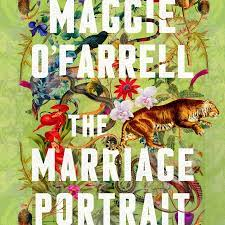
O’Farrell’s 2020 novel Hamnet was one of the best things I have read in a very long time, so my expectations for The Marriage Portrait were very high. The hardback edition is beautifully illustrated with a brightly coloured jungle scene full of birds, flowers and snakes. The tiger that plays an important symbolic role in Lucrezia’s childhood tiptoes off the side of the page, and the inside is illustrated with another wonderfully real and dangerous snake. O’Farrell’s prose is sumptuous and she handles the suspense and atmosphere of Renaissance Italy with authority.

But the Guardian’s review expressed some serious and (partially) valid concerns that need to be addressed:

“high production values cannot disguise the fact that this is melodrama reworked to appeal to a progressive 21st-century audience. The book’s evil deeds are committed by evil people because they are evil. No one acts unpredictably or without foreshadowing….I couldn’t help marvelling at how a novel that’s so richly descriptive could feel so limited in its range of expressiveness.”

This review is not an outlier – a number of critics has similar reservations about the novel’s structure and plausibility. Let’s look at these comments:

“Melodrama” – “a sensational dramatic piece with exaggerated characters and exciting events intended to appeal to the emotions”? I’ve got to concede that some characters were two-dimensional, particularly the evil Duke Alfonso, who switches quickly from being an attentive husband to being a brutal tyrant, and who has his chief of guards strangled to death for having an affair with his (the Duke’s) sister. There’s no real attempt to understand Alfonso’s motivation, the difficulty of ruling over a troubled country threatened on all sides by enemies, menaced from within by assassins, and all the time under pressure to produce an heir when he feels much more comfortable in the company of his male friends. No I’m not hinting he is presented as gay – he’s not really presented at all, other than a sinister villain. But there are many other characters with a lot more depth to them, not least the painter brought in to produce the marriage portrait that gives the novel its title, and his fascinating crew of assistants, including one, Jacopo, who everyone assumes is mute but just stays silent because no one speaks his native dialect. Alfonso’s sisters – Elisabetta and Nunciata – are admittedly straight out of Cinderella, but other secondary characters including Lucrezia’s caring maids are brought to life more fully.

“Reworked to appeal to a progressive 21st-century audience”? This charge is unconvincing. Audiences from most centuries would surely support the young woman sold into marriage and suffering an early death over her husband. This is not a politically correct novel. Renaissance people are convincingly imagined and their different ways of looking at the world are recognised and acknowledged. At the same time they are still people with fears and ambitions like our own.

“No-one acts unpredictably or without foreshadowing”? If foreshadowing is done in a heavy-handed way I completely accept it can be irritating. But I didn’t feel that was the case here, It’s hard to accuse a novelist of foreshadowing (which isn’t automatically a bad thing – we need to understand why people make the choices they make and do the things they do) when we have been told the novel’s outcome on the opening page. Yes we know the likely outcome from the start. This is not a novel of many plot twists or surprises, but it never pretends or aspires to be.

“Limited in its range of expressiveness”? I’m not entirely sure what this means to be honest, but if the critic is suggesting that O’Farrell’s writing is in any way dull or repetitive then that is absolutely not the case. This was an enjoyable read. At moments it is slightly over-written, but arguably this was necessary to describe the opulent of aristocratic renaissance life. Here for example we experience Lucrezia’s discomfort in her fantastical wedding dress:

“The gown rustles and slides around her, speaking a glossolalia all of its own, the silk moving against the rougher nap of the underskirts, the bone supports of the bodice straining and squealing against their coverings, the cuffs scuffing and chafing the skin of her wrists, the stiffened collar hooking and nibbling at her nape, the hip supports creaking like the rigging of a ship. It is a symphony, an orchestra of fabrics, and Lucrezia would like to cover her ears, but she cannot.”

Any suspense in the novel was admittedly deflated by the author’s spoiler – I think we would have ben a lot more engaged as readers if we were left wondering what happens to Lucrezia – but this gives the novel’s surprise ending an even greater impact. The novel is lushly illustrated throughout with vivid imagery. We have already met the tiger that seems to prowl through the novel’s pages, but there is also for example the use of embroidery as a metaphor for Lucrezia’s ability to see beyond the world as it is presented to her:

“She has always had a secret liking for this part of the embroidery, the ‘wrong’ side, congested with knots, striations of silk and twists of thread. How much more interesting it is, with its frank display of the labour needed to attain the perfection of the finished piece.”

I’d also like to acknowledge what I think O’Farrell is trying to do here and in Hamnet: to give a voice to women who while not forgotten by history, have not been able to tell us their version of events. We know very little about Anne Hathaway other than in relation to the works of her husband, and we know even less about Lucrezia de Medici other than the rumours about her death. She – and the class of brave women she represents – are brought to life in the Marriage Portrait. This is much more than the conventional novelisation of historical events, it is a vivid recreation of those events through the eyes of its participants.

The Marriage Portrait by Maggie O’Farrell, 2022

Aside