Book review

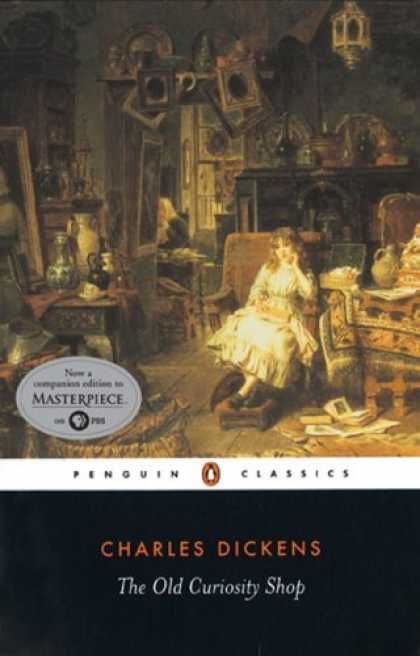
The Old Curiosity Shop, by Charles Dickens, 1841

bddc59cb6cfe0934384e2d9efd57b7ca

The Old Curiosity Shop tells the story of Nell Trent, an orphan, cared for by  her grandfather in his antique (old curiosity) shop. Unfortunately the old man has a gambling addiction, which quickly drives them into poverty. He borrows money to fund his habit from the deliciously evil Daniel Quilp, a hunchbacked dwarf who has to be one of Dickens’ finest, funniest, most grotesque villains. Quilp repossess the shop and contents, leaving Nell and her grandfather on the streets. They embrace this as a freedom from oppression, and go on a long aimless journey that essentially lasts the rest of the novel. The shop is quietly forgotten as a motif or location in the novel – this must be one of Dickens’ most inappropriately named works!

Written as most if not all of Dickens’s novels were, in serial form, the structure of the novel is of necessity rambling, and therefore well suited to both the ‘on the road’ format of Nell and her grandfather’s journey, and the many other threads of the story that Dickens weaves into the rest of the narrative.

Probably the best known feature of this novel, and therefore not constituting a spoiler, is Nell’s eventual tragic death, succumbing to the mysterious wasting illness that ends so many young lives in nineteenth century novels. The story of people waiting at the New York docks and calling out to ask the sailors whether Nell lives is probably apocryphal, but it is a great story nonetheless, and demonstrates Dickens’ superstar status at the time. In fact Dickens signposts Nell’s fate throughout the novel, so much so that when one knows the outcome it seems a little heavy handed – lots of meditations on death, a preoccupation with the graves of younger children, several other deaths of children featuring, and so on – but Dickens obviously had to soften the blow. It was still a bold choice – he could easily have saved Nell and was under pressure to do so – but held his nerve. So perhaps not all that sentimental after all?

The real star of the show however is the demonic Quilp

Slight and ridiculous as the incident was, it made him appear such a little fiend, and withal such a keen and knowing one, that the old woman felt too much afraid of him to utter a single word, and suffered herself to be led with extraordinary politeness to the breakfast-table. Here he by no means diminished the impression he had just produced, for he ate hard eggs, shell and all, devoured gigantic prawns with the heads and tails on, chewed tobacco and water-cresses at the same time and with extraordinary greediness, drank boiling tea without winking, bit his fork and spoon till they bent again, and in short performed so many horrifying and uncommon acts that the women were nearly frightened out of their wits, and began to doubt if he were really a human creature.” 

Quilp is hunting for the runaways and at the same time pursuing a vendetta against Kit, their former assistant, who is saved by the evidence of Dick Swiveller and ‘the Marchioness’ – their relationship forming some of the most touching scenes in the novel.

Just a few perhaps somewhat random thoughts about the novel. First,  I don’t think it can be a coincidence that Dickens tells us that Nell is “not quite fourteen”. Juliet is almost exactly the same age, just two weeks short of fourteen, and Dickens, whether subconsciously or not, is inviting the reader to compare and link the two characters – Juliet also suffers a tragically early tragic death of course, another hint that this is to be Nell’s fate as well. But it also reminds the reader that Nell, while invariably described as a girl, is also seen by several men in the novel as on the cusp of becoming a young woman. She is spoken of at several points in sexualised terms. Early on her brother looks to marry her off to Richard Swiveller:

“You saw my sister Nell?’

‘What about her?’ returned Dick.

‘She has a pretty face, has she not?’

‘Why, certainly,’ replied Dick. ‘I must say for her that there’s not any very strong family likeness between her and you.’

‘Has she a pretty face,’ repeated his friend impatiently.

‘Yes,’ said Dick, ‘she has a pretty face, a very pretty face. What of that?’

‘I’ll tell you,’ returned his friend. ‘It’s very plain that the old man and I will remain at daggers drawn to the end of our lives, and that I have nothing to expect from him. You see that, I suppose?’

‘A bat might see that, with the sun shining,’ said Dick.

‘It’s equally plain that the money which the old flint—rot him—first taught me to expect that I should share with her at his death, will all be hers, is it not?’

‘I should said it was,’ replied Dick; ‘unless the way in which I put the case to him, made an impression. It may have done so. It was powerful, Fred. ‘Here is a jolly old grandfather’—that was strong, I thought—very friendly and natural. Did it strike you in that way?’

‘It didn’t strike him,’ returned the other, ‘so we needn’t discuss it. Now look here. Nell is nearly fourteen.’

‘Fine girl of her age, but small,’ observed Richard Swiveller parenthetically.

‘If I am to go on, be quiet for one minute,’ returned Trent, fretting at the slight interest the other appeared to take in the conversation. ‘Now I’m coming to the point.’

‘That’s right,’ said Dick.

‘The girl has strong affections, and brought up as she has been, may, at her age, be easily influenced and persuaded. If I take her in hand, I will be bound by a very little coaxing and threatening to bend her to my will. Not to beat about the bush (for the advantages of the scheme would take a week to tell) what’s to prevent your marrying her?’

To his credit, Dick is shocked

“‘And she “nearly fourteen”!’ cried Dick.”

Incidentally I love the way Dick is casually rude to Fred here.

The odious Quilp also plans to marry Nell when he has arranged an unfortunate accident for his first wife, and is constantly drawing attention to her attractiveness in a sexualised way:
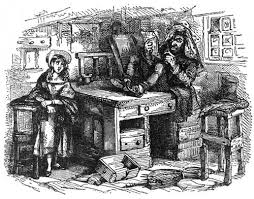
nell and quilp

‘Such a fresh, blooming, modest little bud, neighbour,’ said Quilp, nursing his short leg, and making his eyes twinkle very much; ‘such a chubby, rosy, cosy, little Nell!’ . ‘so small, so compact, so beautifully modelled, so fair, with such blue veins and such a transparent skin, and such little feet, and such winning ways”

Dickens’s issues with much younger women have been well covered elsewhere. I appreciate that he is believed to have been working through his grief at the sudden death of his 17 year old sister-in-law when writing about Nell, but these scenes are unquestionably uncomfortable, and it is a relief when the focus moves off this aspect of the character.

Another significant feature of The Old Curiosity Shop that I noticed during this read is the frequency with which characters are anonymised. I don’t think we are ever told the name of Nell’s grandfather or great-uncle, who are known as the old man and the single man respectively. The Marchioness doesn’t know her own name, or possibly doesn’t have one, representing the depths of her abuse by the Brasses; the gentleman who offers Nell shelter at the end of the novel is referred to by all as ‘the bachelor’; even the man who offers Nell a place by his furnace is left unnamed. Why Dickens does this is unclear – in an industrial society people are often stripped of their identity as part of their reduction into the working components of their body – hence the way the term “hands” is used to describe factory workers for example – but some of the more affluent characters in the novel are treated in the same way.

Dickens is an extraordinary novelist, and despite his unquestioned status amongst English writers it could be argued he still doesn’t get the credit he deserves. Yes his characters can be two dimensional – but many are much more rounded and complex than this characterisation would suggest, Quilp being an excellent example. Yes his story lines can meander, but the way he controls his plots despite sometimes writing two novels for weekly publication at the same time is little short of amazing. He may have had issues with the sexualisation of younger women, but he created a huge range of believable and strong women characters. His writing can often be innovative and highly sophisticated, even though it was written for mass consumption. And not least, his support for the poor and down-trodden of Victorian England was authentic – he is the best advocate for social reform the working classes could have wanted:

“If they would but think how hard it is for the very poor to have engendered in their hearts, that love of home from which all domestic virtues spring, when they live in dense and squalid masses where social decency is lost, or rather never found … and [those who rule] strive to improve the wretched dwellings in bye-ways where only Poverty may walk … In hollow voices from Workhouse, Hospital, and jail, this truth is preached from day to day, and has been proclaimed for years.”

Standard
Book review

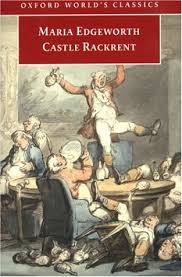
Castle Rackrent by Maria Edgeworth, 1800

Maria Edgeworth was, in her time, an extremely successful author, and is claimed as an influence on a number of other writers, not least of which is Jane Austen. ‘Castle Rackrent’ is an early work, a short novella with a title suggestive of the gothic, but actually totally devoid of anything mysterious, other-worldly or supernatural. 

Castle Rackrent is the tale of how four generations of Rackrent heirs mismanage and squander their estate. The narrative is told through the family steward, Thady Quirk, who is sometimes cited as an example of an early if not the first unreliable narrator. Thady has only a limited grasp of what is going on most of the time; his one dominant interest is loyalty to his master, whoever that happens to be. The heirs are variously spendthrifts, litigious, gamblers and careless with money, but the end result is always a continuation of the slow decline of the castle and its estate.

There is very little here by way of a plot. Each Rackrent inherits the castle, makes a mess of it is fairly quick time, then expires. As a satire on the land-owning classes of the English aristocracy in Ireland the novel has some limited interest, but it is gentle satire indeed. When the novel was published the UK and Ireland were working to formalise a political union, and Edgeworth clearly illustrates the dangers or weaknesses of English dominance of Ireland, so the satire had some immediate relevance which has long since faded.

The novel is bookended by a preface and conclusion by an anonymous editor, as well as being interspersed with footnotes which provide an ironic commentary on the text. This has a distancing effect – the reader is invited to treat the novel more as a second-hand artefact, a personal memoir rather than as a narrative. Thady himself appears as only an otherwise minor character in the novel, and his voice seems unauthentic – there is little attempt to capture the accent or language of an Irish native. The text has some examples of local dialect but these seem shoe-horned into the text for local ‘colour’ rather than with any authenticity. 

The text also has a breath-taking example of anti-semitism. This is how Thady, admittedly not the most reliable observers, describes his first meeting with his master’s new bride:

I got the first sight of the bride; for when the carriage door opened, just as she had her foot on the steps, I held the flam full in her face to light her, at which she shut her eyes, but I had a full view of the rest of her, and greatly shocked I was, for by that light she was little better than a blackamoor, and seemed crippled; but that was only sitting so long in the chariot…‘Will I have a fire lighted in the state-room to-night?’ was the next question I put to her, but never a word she answered; so I concluded she could not speak a word of English, and was from foreign parts. The short and the long of it was, I couldn’t tell what to make of her; so I left her to herself, and went straight down to the servants’ hall to learn something for certain about her. Sir Kit’s own man was tired, but the groom set him a-talking at last, and we had it all out before ever I closed my eyes that night. The bride might well be a great fortune—she was a JEWISH by all accounts, who are famous for their great riches. I had never seen any of that tribe or nation before, and could only gather that she spoke a strange kind of English of her own, that she could not abide pork or sausages, and went neither to church or mass. Mercy upon his honour’s poor soul, thought I; what will become of him and his, and all of us, with his heretic blackamoor at the head of the Castle Rackrent estate? I never slept a wink all night for thinking of it; but before the servants I put my pipe in my mouth, and kept my mind to myself, for I had a great regard for the family; and after this, when strange gentlemen’s servants came to the house, and would begin to talk about the bride, I took care to put the best foot foremost, and passed her for a nabob in the kitchen, which accounted for her dark complexion and everything.

This bride then refuses to surrender her family jewels to her husband, so he proceeds to lock her in her room for seven years, until he finally dies in a duel and she is released, to quite understandably fly the country. 

I appreciate this description is Thady’s, not the author’s, and is being presented to the reader as an example of his prejudice and backwardness. The principle intent here seems to present the reader with a comedic situation rather than satirise or comment on attitudes towards anti-semitism or indeed the relationships between abusive husbands and their wives. Compare how Anne Bronte compassionately deals with the latter issue a few years later in ‘The Tenant of Wildfell Hall‘. 

Edgeworth’s novels remain widely in print, and seem to be read if Goodreads reviews are anything to go by. So far I have yet to see the attraction. If you have read any of her other novels that you can recommend please let me know. 

Standard
Anthony Trollope, Barsetshire, Book review, Classics, The Warden

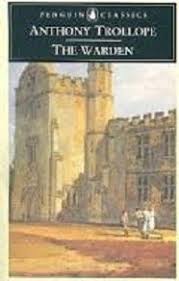
The Warden, by Anthony Trollope, 1855

‘The Warden’ tells the story of a chapter in the life of Mr Septimus Harding, warden of Hiram’s Hospital and precentor of Barchester cathedral. (Readers requiring an wardenexplanation of the term ‘precentor’ may already be getting the impression that they are not the target audience for this novel). An introduction of this kind would normally refer to the “adventures of Mr Septimus..” etc but readers of Trollope will expect no such thing. Adventure, indeed incident, is devoid from this novel. Trollope almost seems to disdain the need for such things. Portraits, conversations, lectures – these are the principal building blocks of ‘The Warden’. Continue reading
Standard
Book review, gothic fiction, Jane Austen, Northanger Abbey, satire

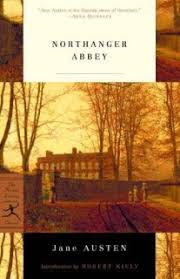
Northanger Abbey, by Jane Austen, 1818

I think Jane Austen is one of our greatest authors. ‘Pride and Prejudice‘ is a masterpiece of controlled writing that has few if any equals, with ‘Emma‘ a close second on any list of classic novels. While ‘Northanger Abbey‘ may not be in the same league, a careful read can uncover many signs of the great author Austen was to become.

Northanger

The central weakness of the novel resides with our heroine, Catherine Morland.

Continue reading
Standard
19th Century literature, Book review, Bronte, Bronte Sisters, The Tenant of Wildfell Hall

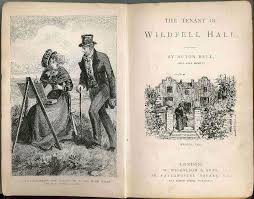
The Tenant of Wildfell Hall, by Anne Bronte, 1848

towh

It is quite rare for me to open a classic Victorian novel and have almost no idea what it is going to be about. But that was the case here – I have somehow avoided television and radio adaptations, reviews, blogposts etc – and the kindle edition even removes the clues provided by the blurb and illustrations of the sort shown here. So what is ‘The Tenant’ as I shall now refer to it, about?

It is a traditional three part novel, with a narrative structure that may seem clumsy to a reader used to omniscient narration. Gilbert Markham, a gentleman farmer, writes to a friend about the arrival of a new tenant for the nearby and near derelict Wildfell Hall.. The novel’s opening subverts that used in ‘Pride and Prejudice’, in that instead of a male tenant arriving in a community and being the cause of local gossip and interest, here a mysterious widow, Mrs Helen Graham, is the newcomer. Mrs Graham fascinates and attracts Markham, even though she is the focus for local scandal, the detail of which is never spelt out explicitly but relates to an implied relationship with her landlord, Mr Lawrence.

The central section of the novel is recounted in Helen’s diaries, given to Gilbert to dispel his suspicions about her ‘affair’ with Lawrence, and presumably carefully transcribed by him into his letters. Helen is a much more moralistic character than Gilbert. She tells the history of her relationship with and marriage to Arthur Huntingdon. Huntingdon is a rake, and does little to disguise his flaws from Helen, who foolishly thinks she will be able to reform him. He boasts openly of his dissolute former life with its seductions and affairs:

His favourite amusement is to sit or loll beside me on the sofa and tell me stories of his former amours, always turning upon the ruin of some confiding girl or the cozening of some unsuspecting husband”. (Chapter 24)

The birth of their son, also called Arthur, exacerbates the problems with their relationship. Helen can stand Huntingdon’s drunkenness and openly conducted affairs, but when he encourages Arthur junior to drink and swear she begins to plan her escape.

The final section of the novel starts after Gilbert’s reading of the diary. By now his ardour for Helen is at full pitch, and the news that she is still married does not deter him. Her moralistic sermons have the desired affect however, and he promises to leave her alone, for six months at least. He complies but is shocked to find out, from her brother, that she has returned to her husband who has fallen seriously ill. Huntingdon dies a squalid if convenient death, leaving the path open for a reconciliation between the now rich widow and the farmer. Despite some minor confusions and misunderstandings, the lovers marry, retire to the country and live happily ever after. It is only at the novel’s conclusion that we learn that the letters have been written to Gilbert’s brother-in-law, a Mr Halford, in the form of a memoir.

In many way ‘The Tenant’ is a conventional romance, with a happy ever after marriage and children at the end of a complex courtship, where the characters slowly discover their feelings for one another. The long separation in the middle of the novel, followed by the reconciliation at the end, is reminiscent of the structure of ‘Jane Eyre’, where Jane exiles herself to avoid temptation. Helen is an extraordinarily strong woman, determined to keep her marriage vows, when she can, care for and protect her son, and keep true to her faith. True love is her reward for these sacrifices. Critics have long identified her defiance of her husband – albeit after years of psychological torment and abuse, including his conduct of an affair openly before her – as the actions of a proto-feminist. She’s certainly a strong determined character, but I think it is important to remember that she returns to her husband as soon as he needs her, putting duty to him above her personal interests, and remains faithful to him despite everything.

I had hoped that the wonderfully named Wildfell Hall would play a central role in the novel, and the portrait of it given by Markham in the novel’s opening chapter promises much:

Near the top of this hill, about two miles from Linden-Car, stood Wildfell Hall, a superannuated mansion of the Elizabethan era, built of dark grey stone, venerable and picturesque to look at, but doubtless cold and gloomy enough to inhabit, with its thick stone mullions and little latticed panes, its time-eaten air holes and its too lonely, too unsheltered situation – only shielded from the war of wind and weather by a group of Scotch firs, themselves half-blighted with storms, and looking as stern and gloomy as the Hall itself”.

The narrator then goes on to tell the reader how the garden has run to seed, and all the topiary bush animals have “spouted into such fantastic shapes as resembled nothing in heaven or earth but presented…a goblinish appearance that harmonised well with the ghostly legions and dark traditions…of the haunted hall”.

Who can read that portrait and not expected a traditional gothic novel to follow, with things that go bump in the night and half a dozen or more mad-women locked in the attic? If so they will have been disappointed, because Wildfell Hall is a minor character in the story, a haven for the escaping Helen rather than the venue for any Scooby-Doo style antics. Instead we have a disturbing story of unhappy marriages and domestic violence which must surely have been all the more shocking and transgressive when first published – rich people really didn’t do such things within the confines of marriage, or if they did we certainly didn’t read about it. We are not surprised when Heathcliff is violent towards animals, but when Huntingdon hits out at his favourite cocker spaniel – “He struck it off with a smart blow; and the poor dog squeaked, and ran cowering back to [Helen]. When he woke up half an hour after, he called it to him again; but Dash only looked sheepish and wagged the tip of his tail. He called again, more sharply, but Dash only clung closer to [Helen], and licked [her] hand as if imploring protection. Enraged at this, his master snatched up a heavy book and hurled it at its head” – the violence is a thinly veiled metaphor for domestic violence. This in many ways is more troubling for being hinted at rather than directly portrayed, for example in this sinister description of the casual violence of one of Huntingdon’s debauched friends towards his own wife: (chapter 32)

“I love thee Milicent, but I don’t adore thee’. In proof of his affection he clutched a handful of her light brown ringlets, and appear to twist them unmercifully. “Do you really Ralph?” murmured she, with a faint smile beaming through her tears, just putting up her hand to his, in token that he pulled rather too hard.”

Is ‘The Tenant of Wildfell Hall’ a good novel? Well of course it is a classic, but at the same time it is usually ranked below ‘Wuthering Heights’ and ‘Jane Eyre’. It shares many features with these novels, the slightly awkward narrative structures, the dark secrets, and troubled love affairs. But a distinct aroma of sanctimoniousness pervades ‘The Tenant’. Helen is rarely very loveable or off her guard, and goodness doesn’t she love to preach!

(Chapter 45) – We are children now; we feel as children, and we understand as children; and when we are told that men and women do not play with toys, and that our companions will one day weary of the trivial sports and occupations that interest them and us so deeply now, we cannot help being saddened at the thought of such an alteration, because we cannot conceive that as we grow up our own minds will become so enlarged and elevated that we ourselves shall then regard as trifling those objects and pursuits we now so fondly cherish, and that, though our companions will no longer join us in those childish pastimes, they will drink with us at other fountains of delight, and mingle their souls with our in higher aims and nobler occupations beyond our present comprehension, but not less deeply relished or less truly good for that, while yet both we and they remain essentially the same individuals as before”.

The supporting cast of minor characters is also weaker in ‘The Tenant’ – they tend to blur into one another and are less clearly differentiated. None of which really detracts from the overall power of the novel.

Two other brief observations. Firstly, this short scene caught my attention. It happens when Helen is running her fingers through Huntingdon’s hair:

“The head looked right enough, but when he placed my hand on the top of it, it sunk in a bed of curls, rather alarmingly low, especially in the middle”.

I can’t find that any critics have picked up on this description (which is not referred to again), but I find it hard to read any other way than that the author is suggesting Huntingdon has an ‘alarming’ depression in his cranium. What the Victorian pseudo-science of phrenology, referred to more extensively by Charlotte in ‘Jane Eyre’ would have made of that depression I can only imagine, but it surely is a heavy hint of the moral depravity to be exposed as the novel progresses, or possibly a propensity to addictive behaviours.

Finally, I am pretty sure I spotted a mistake in the novel’s portrait of the English countryside. In chapter 29 we are told “On a bright…day, in the beginning of July, I had taken little Arthur into the wood that skirts the park … and having gathered a handful of bluebells and wild-roses…”. Anne knew full well that bluebells are a spring flower, having written a poem in their praise, so is this just a simple slip, or something more interesting?

Standard
Book review, Charles Dickens, Nicholas Nickleby

Nicholas Nickleby, by Charles Dickens, 1838-9

In her reading diary Jacob’s Room is full of books’ Susan Hill describes her habit of reading one Dickens novel a year. This struck me as an eminently sensible habit – if you tried to read them all in one you would go a bit mad, and I suspect the novels would start to bleed into one another. One a year on the other hand allows plenty of time for other reading and would leave most readers with a realistic prospect of working their way through the whole canon. So I thought I would give this practice a go, starting with one of the more accessible novels, ‘Nicholas Nickleby’.nn

Nicholas Nickleby’ was Dickens’s third novel, published in monthly instalments over 18 months in 1838 and 1839. In many ways it is quintessential Dickens. Almost all of the features of a typical Dickens novel appear – the episodic switching between narrative threads, the mysterious stranger who reveals a long buried secret, fortunes lost and re-won, child-like romances, and the long drawn out death of consumptive innocents. Probably the one other most distinctive feature of all Dickens’ work is his concern with social justice. This aspect of his work is already fully formed in this novel, as for example here in this extraordinary meditation by Nicholas:

But now, when he thought how regularly things went on, from day to day, in the same unvarying round; how youth and beauty died, and ugly griping age lived tottering on; how crafty avarice grew rich, and manly honest hearts were poor and sad; how few they were who tenanted the stately houses, and how many of those who lay in noisome pens, or rose each day and laid them down each night, and lived and died, father and son, mother and child, race upon race, and generation upon generation, without a home to shelter them or the energies of one single man directed to their aid; how, in seeking, not a luxurious and splendid life, but the bare means of a most wretched and inadequate subsistence, there were women and children in that one town, divided into classes, numbered and estimated as regularly as the noble families and folks of great degree, and reared from infancy to drive most criminal and dreadful trades; how ignorance was punished and never taught; how jail-doors gaped, and gallows loomed, for thousands urged towards them by circumstances darkly curtaining their very cradles’ heads, and but for which they might have earned their honest bread and lived in peace; how many died in soul, and had no chance of life; how many who could scarcely go astray, be they vicious as they would, turned haughtily from the crushed and stricken wretch who could scarce do otherwise, and who would have been a greater wonder had he or she done well, than even they had they done ill; how much injustice, misery, and wrong, there was, and yet how the world rolled on, from year to year, alike careless and indifferent, and no man seeking to remedy or redress it; when he thought of all this, and selected from the mass the one slight case on which his thoughts were bent, he felt, indeed, that there was little ground for hope, and little reason why it should not form an atom in the huge aggregate of distress and sorrow, and add one small and unimportant unit to swell the great amount.

This is classic Dickens, with its clinical and yet at the same time passionate dissection of the social ills of Victorian Britain, but sadly also without offering any hope or constructive solutions. Yes the bad guys always come to a messy end in his novels, either the gallows, deportation or similar, and the central characters find happiness and prosperity through the bequests of long lost relatives, but the poverty disease and degradation are still all there.

The other source of enjoyment I find in Dickens is his wonderfully perceptive portraits of the fallibility of human nature. In this he probably has no peer other than Jane Austen. Mrs Nickleby is a particular favourite, bringing to mind her obvious predecessors Mr Woodhouse and Mrs Bennett, where the author’s use of reported speech conveys the full impact of her rambling complaints, without us having to work our way through them all:

To this, Mrs. Nickleby only replied that she durst say she was very stupid, indeed she had no doubt she was, for her own children almost as much as told her so, every day of her life; to be sure she was a little older than they, and perhaps some foolish people might think she ought reasonably to know best. However, no doubt she was wrong; of course she was; she always was, she couldn’t be right, she couldn’t be expected to be; so she had better not expose herself any more; and to all Kate’s conciliations and concessions for an hour ensuing, the good lady gave no other replies than Oh, certainly, why did they ask her?, her opinion was of no consequence, it didn’t matter what she said, with many other rejoinders of the same class.

There’s no denying the fact that Dickens’s villains are two dimensional, with very few shades of grey in their character, but what wonderfully wicked villains they are. Even if you have not read any Dickens, you will be able to get a good idea of the character of the schoolmaster Wackford Squeers simply through his name alone.

So why isn’t ‘Nicholas Nickleby’ considered in the top rank of Dickens’ work? That assessment is open to debate of course, but I think it reflects a consensus. Dickens had five novels in the BBC Big Read list of the 100 most loved novels (‘Bleak House’, ‘A Tale of Two Cities’,David Copperfield’, ‘Great Expectations’ and ‘A Christmas Carol’) but Nickleby was omitted. My theory is that this is because the scenes of peril in the novel are rarely sustained. The dangers characters face at different points is never very serious, and is usually resolved quickly. (This is reminiscent of the ‘fake’ deaths at the end of many Disney films: the scene in which a character appears to die, only to revive moments later is a feature of many children’s films, and it is a very reliable rule that the quicker they revive (think of Baloo surviving the fight with Shere Khan in ‘Jungle Book’, or the brief moment in ‘Robin Hood’ when we think he has been shot with an arrow and drowned) the younger the target audience.

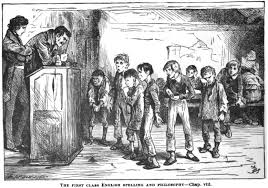
From this perspective Nicholas lives a charmed life. When his father dies unexpectedly, rather than ending up in the workhouse, his family has a rich uncle Frank to turn to. He easily gets a job as a teacher despite his lack of qualifications. While Dotheboys Hall is a nightmarish place for the boys, for Nicholas it is far less uncomfortable, and when his patience is pushed too far he can simply beat Wackford and walk away, something of which the boys can only dream.

His sister Kate and their mother are given lodgings free of charge by the villainous uncle, and Kate is found a perfectly respectable job as a milliner’s assistant. When this does not work out another equally respectable job, as a lady’s companion, appears quickly enough. The trauma of the subsequent assault on Kate by Sir Mulberry Hawk is obviously serious, but is quickly stopped by Ralph.

Nick’s good fortune however continues. He finds a job on the stage in Portsmouth and debuts almost immediately as Romeo. Later, compelled to return to London, he again finds well-paid work straight away with the lovable merchants, the Cheeryble the brothers. Nicholas has been accompanied on his adventures by Smike, an orphan runaway from Dotheboys. Smike has the misfortune to run into Squeers, who kidnaps him, but is rescued within hours. A subsequent attempt to reclaim Smike by the use of forged documents to the effect that he is the long-lost son of a man named Snawley is avoided by the simple expedient of ignoring it.

Inevitably, romantic interest intervenes. Nicholas nobly tries to avoid making Madeline Bray, the penniless daughter of a debtor, fall in love with him, but it comes as no surprise when this plan fails. There is a far-fetched plan to marry Madeline off to Arthur Gride, an early iteration of Fagin, in return for the promise of paying off her father’s debts to be foiled. This scheme falls apart on the day of the wedding when her father drops conveniently dead. The happily-ever-after then comes in a rush as all the plots against Nicholas fall away as so much background noise.

There is much more sustained threat in Dickens’ later novels. Imagine how more scary being a pupil at Dotheboys would have been compared to being a master? Indeed, Dickens gives us this comparative experience himself with David Copperfield’s experiences at Salem House, and those of Oliver Twist in the workhouse. Ultimately, this lack of genuine peril is what makes this novel considered suitable for children. if you are looking for an introduction to Dickens for a younger reader this is an excellent place to start.


Standard