The third of the Austen novel fragments I have been reading recently is her last, incomplete work, Sanditon, written in the months prior to her tragically early death in 1817. As with the other fragments (The Watsonsand Lady Susan) the interest of the text lies more in its composition than its status as a story. As such we have the advantage of the original draft (see below) with all its revisions and hesitations. You can see the manuscript online here. Someone has kindly transcribed the manuscript amendments and all, showing every change Austen made. We can see the creative process at work. Only twelve chapters long, the manuscript shows that Austen edited as she wrote – rather than writing the full text then going back to the beginning and editing, she has made substantial changes to each page. This would have meant that once complete the manuscript would have been largely ready for type-setting and publication.
The novel fragment focuses on Charlotte Heywood, one of the daughters of the Heywood family from Willingden, Sussex. The narrative opens in uncharacteristically dramatic fashion when the carriage of Mr and Mrs Parker of Sanditon crashes near the Heywood home. Mr Parker is slightly injured in the crash, and very kindly the Heywoods offer hospitality to the Parkers for two weeks until his ankle is healed. Mr Parker is what we would now think of as a property developer – he has ambitious plans to transform Sanditon, a fishing village, into a fashionable seaside resort. Once his foot is healed the Parkers return to Sanditon, taking Charlotte with them as their guest. This is in part a return of the hospitality shown them by the Heywoods, but it is also possible Mr Parker wants to show off Sanditon to as many people as possible.
The residents of Sanditon are introduced in familiar slightly breathless Austen fashion. Lady Denham, a twice-widowed woman who received a fortune from her first husband and a title from her second, lives here with her niece Clara Brereton, as does Sir Edward Denham and his sister Esther, nephew and niece to Lady Denham by her second husband. The Parkers are joined by two of Mr Parker’s sisters, his younger brother, Arthur, and finally his middle brother Sidney. There are indications that Austen planned to call this novel ‘The Brothers’ which some critics have interpreted as a potential shift of focus to a more male perspective. We will never know if that was going to be the case, but the extant chapters are all firmly written through Charlotte’s eyes as she meets this dazzling array of new characters. The whole Parker family appears to be part of the enterprise to develop Sanditon. News of a wealthy family from the Caribbean arriving shortly in the town and a girls school intending to relocate to the coast causes a stir, although it soon becomes apparent that these two parties are one and the same. The new arrivals consist of Miss Lambe, a teenaged Antiguan-English heiress, whom Austen describes as ‘half-mulatto’ and the two Miss Beauforts, English girls just arrived from the West Indies.
It is striking how complex this cast of characters is in so few chapters. Relationships between the eligible young people both planned and actual are suggested and as with the other fragmentary novels it is possible to speculate with some confidence the direction the novel was heading.
In addition to the speculation about the extent to which the novel’s original title was to be its focus, critics have also pointed to several other departures from Austen’s standard template. Sanditon, a speculative property development, is clearly going to be the novel’s primary location, and there is little to compare it to in the rest of the canon. It’s not a stately home (c.f. Mansfield Park, Northanger Abbey) but a commercial enterprise. The ambitious Parker family, looking to profit from the sea-bathing enthusiasm of Regency Britain, don’t really have any parallels in Austen’s other stories. And the introduction of a mixed race character is also a departure for Austen. We see very little of Miss Lambe in the novel, but she is intriguing:
“Mrs. Griffiths … supported herself by receiving such great girls and young ladies as wanted either masters for finishing their education or a home for beginning their displays. She had several more under her care than the three who were now come to Sanditon, but the others all happened to be absent. Of these three, and indeed of all, Miss Lambe was beyond comparison the most important and precious, as she paid in proportion to her fortune. She was about seventeen, half mulatto, chilly and tender, had a maid of her own, was to have the best room in the lodgings, and was always of the first consequence in every plan of Mrs. Griffiths.”
Miss Lambe’s mixed race is clearly no objection to acceptance into Georgian society, and Lady Denham immediately starts to plan her engagement to her nephew by marriage, Sir Edward. It would have been fascinating to see how Austen handled this sensitive issue.
Austen was an extraordinary, subtle and skilful novelist, with a profound understanding of human nature and a wonderful sense of humour. There are plenty of flashes of her brilliance in this fragment. She has a lot of mischievous fun in describing the self-identified invalid Arthur Parker for example. It is in paragraphs such as this that we see glimpses of the author’s authentic voice. It opens with Arthur describing his health:
“I am very nervous. To say the truth, nerves are the worst part of my complaints in my opinion. My sisters think me bilious, but I doubt it.”
“You are quite in the right to doubt it as long as you possibly can, I am sure.”
“If I were bilious,” he continued, “you know, wine would disagree with me, but it always does me good. The more wine I drink in moderation the better I am. I am always best of an evening. If you had seen me today before dinner, you would have thought me a very poor creature.”
Charlotte could believe it. She kept her countenance, however, and said, “As far as I can understand what nervous complaints are, I have a great idea of the efficacy of air and exercise for them—daily, regular exercise—and I should recommend rather more of it to you than I suspect you are in the habit of taking.”
“Oh, I am very fond of exercise myself,” he replied, “and I mean to walk a great deal while I am here, if the weather is temperate. I shall be out every morning before breakfast and take several turns upon the Terrace, and you will often see me at Trafalgar House.”
“But you do not call a walk to Trafalgar House much exercise?”
“Not as to mere distance, but the hill is so steep! Walking up that hill, in the middle of the day, would throw me into such a perspiration! You would see me all in a bath by the time I got there! I am very subject to perspiration, and there cannot be a surer sign of nervousness.”
They were now advancing so deep in physics, that Charlotte viewed the entrance of the servant with the tea things as a very fortunate interruption.
The Watsons is an abandoned fragment of a novel started by Austen in 1803 but only published in 1871. It contains themes and characters reminiscent of those in her completed works and reveals aspects of her methods of composition and construction of her novels. As a fragment of probably less than a quarter of a novel it has very little merit in its own rights, but as an insight into her working processes it is fascinating.
The epistolary format adopted in Lady Susan has been abandoned, and Austen begins experimenting with a third person narrator, although much of the narrative is told through conversation. We are introduced to the Watson family through the perspective of the youngest daughter, Emma, (who bears no similarity to the character who was to later have her own novel). Emma has been brought up by a wealthy aunt in one of those informal adoption arrangements which appears, if Austen’s portrait of the gentry of the Regency period is to be relied upon, quite common (see also Mansfield Park of course, as well as the example from real life of Austen’s older brother). Children seemed to be loaned to other families almost indefinitely largely but not exclusively for reasons of convenience. This aunt has now remarried and moved to Ireland, (in the views of the family this remarriage is highly inappropriate, already establishing the idea that making a good marriage is more important than making any kind of marriage at all) forcing Emma to return to the embrace of her now unfamiliar family. She struggles to adapt to the change in circumstances, not least because her family is significantly less well off than her aunt. We have only brief introductions but it is clear her sisters are actively seeking partners as a route out of the family home, as are almost all the daughters she was to go on to write about.
We are also introduced to the Osbornes, a titled family living nearby. Emma is quickly thrown into the social life of the community and while attending a ball in the nearby town she meets the young and rather awkward Lord Osborne. It is difficult to tell if this relationship was going to be the core of the novel – quite possibly but one can’t be sure. Emma dances with a young boy attending the ball as a kindness after he is let down by another potential partner (I don’t know enough about the social conventions of these social occasions to be able to tell whether the attendance of a ten year old, albeit one with quasi-aristocratic status, was usual or simply here as a plot device to illustrate Emma’s kindness.)
This kindness introduces a Mrs Blake, who in turn introduces Emma to her brother, Mr Howard, vicar of the parish church near Osborne Castle. It seems most likely that Mr Howard was to become Emma’s primary romantic interest – less well off than Lord Osborne, and of a lower social status, but more mature and more reliable, a classic Austen hero.
Shortly thereafter the novel ends. An Austen family memoir hints at how it was to continue:
“Mr Watson was soon to die; and Emma to become dependent for a home on her narrow-minded sister-in-law and brother. She was to decline an offer of marriage from Lord Osborne, and much of the interest of the tale was to arise from [the dowager] Lady Osborne’s love for Mr Howard, and his counter affection for Emma, whom he was finally to marry.”
Other than these glimpses of the novelist Austen was to become, there are only limited points of interest in the story for anyone other than an Austen completist. One is the author’s description of Emma:
“Emma Watson was not more than of the middle height, well made and plump, with an air of healthy vigour. Her skin was very brown, but clear, smooth, and glowing; which, with a lively eye, a sweet smile, and an open countenance, gave beauty to attract, and expression to make that beauty improve on acquaintance.”
Skin tone here is not a racial indicator but used as a mark of social standing and value. A very brown face could derive from long periods spent outdoors, something more commonly associated with farm labour, or it could derive from long periods spent abroad in the Americas. Conversely paleness was commonly associated with a withdrawn isolated but aristocratic lifestyle. But equally there were associations with healthiness or lack thereof and a robust ‘healthy vigour’ is in many cases preferable in a potential partner if children were planned. Austen notes that Emma’s skin is very brown but is nevertheless clear, smooth and glowing – in other words she looks attractive despite the brownness of her skin.
One day I might do a deep dive into this issue and see how skin tone is used to portray characters in other nineteenth century novels. The one example of a dark-skinned character that I do recall is Heathcliff, where the author repeatedly connects his dark skin with his demonic character – Nelly Dean recounts him being “as dark almost as if it came from the devil.“
I confess I had largely written off Jane Austen’s juvenilia as stories that should probably have remained unpublished – largely I think on the basis of a very small sample size taken many years ago – but I was wrong. Lady Susan, written when Austen was 18 – in other words to all intents and purposes an adult and meaning therefore that it is hard to label Lady Susan as juvenilia anyway – is a mature, witty and sophisticated novella. It is written in the epistolary form, which quickly illustrates the shortcomings and disadvantages of the structure and is an important step in Austen’s evolution of the third-person omniscient narrative format which she perfected in her mature novels. Written in around 1794 or so the internet tells me, but not published until 1871, it is a gem!
The plot and characters
The format of the novel means that the reader has to spend time in working out the relationships of the characters. Without a narrator to spell things out for us, the clues in the opening letters give an incomplete picture. Epistolary novels were the default format for novels in the eighteenth century and Austen may have simply been following convention in adopting this style.
The novella’s central character is Lady Susan Vernon, a recent widow in her mid-thirties, (a relatively old woman in other words, for the purposes of a Georgian romantic novel) who sees herself as a liberated, independent woman. We soon find out that many of her wider family see her very differently. The story opens with a letter from our anti-heroine announcing her intention to visit her brother-in-law and his wife, Charles and Catherine Vernon, at Churchill, their country residence. Catherine’s following letter to her mother reveals that she is is far from pleased by this announcement, partly because Lady Susan had tried to prevent her marriage to Charles and partly because her guest has a reputation as a woman of negotiable affections. It is strongly implied that Lady Susan has been having a romantic liaison with the married Mr. Manwaring and is having to leave his household, where she was staying as a guest, in a hurry, the affair having been exposed. Nevertheless Charles accepts this self-invitation, less apprehensive about Lady Susan than his wife and less willing to give any credence to the rumours about his sister-in-law, his brother being Lady Susan’s recently deceased husband. (If at this point it feels like you should be taking notes then that accurately sums up the experience of reading the letters between the characters the first time around).
Catherine’s brother Reginald comes to visit Churchill and despite warnings about Lady Susan begins to be attracted to her. Lady Susan is planning to remarry once a reasonable length of time has passed since her late husband’s demise, but is keeping her options open, considering the attractions of a number of potential suitors. She also factors into her calculations the need to marry off her sixteen year old daughter Frederica to one of the several eligible young men in her sphere of influence, while reserving the choice of the crop for herself. In other words, Lady Susan is something of a monster, in the context of a romantic novel, an appalling mother and an adulteress. She is almost wholly immoral. She is also greatly charming persuasive, at least to men – other women seem to see straight through her. Her letters to her confidante, Mrs Johnson, expose her true nature and immorality, but the face she presents to the outside world is charming. It is unusual for Austen to have as her central character someone so wholly without redeeming features, even if Lady Susan can at times be a charming companion (or so she tells us), and it is obviously a mark of her development as an author that her later heroines are more complex, less two-dimensional characters. (That’s not to say that later Austen novels don’t feature characters that are close to being caricatures, but not her central figures).
The constraints of the epistolary format soon become apparent as the novel develops. Austen uses the contrast between the viewpoints of the different correspondents to allow the reader to make judgments about their trustworthiness, veracity etc, but the novel is effectively abandoned after around sixty pages with a short summary by a narrator much more recognisably Austen in tone and voice. The novella’s characterisations are more straightforward than Austen would later develop – Lady Susan is pretty (“I have seldom seen so lovely a woman as Lady Susan. She is delicately fair, with fine grey eyes and dark eyelashes; and from her appearance one would not suppose her more than five and twenty, though she must in fact be ten years older.”) but scheming and amoral; the novel’s ‘hero’, Reginald, is weak-willed, easily led and rather pathetic. There are very few letters in the novel from him and he is more a plot-device than a well-developed character. Certainly he is no Mr Darcy or Mr Knightley!
But there are many glimpses of the author Austen was to become. The language she uses is complex and nuanced. Many of the themes that dominate her mature work are present, not least a young woman’s need to make a good marriage with a man of an appropriate income. Susan is sexually liberated, immoral, and as such very much ahead of her time. She manipulates those around her shamelessly and very effectively, particularly the men in her life, and the novel’s ending suggests that she lands on her feet in the end, making a match with an impressionable, wealthy and much younger man.
I am glad I revisited Lady Susan. It provides an interesting contrast to Austen’s mature works. I do wonder whether had her health been better if she would one day have revisited the manuscript and fleshed out the narrative? Lady Susan is one of literatures lesser well known villainesses, but a compelling one nonetheless.
I think I need to reread Persuasion. The mood you are in and the time and care you dedicate to the process of reading can all have an impact on how you perceive a novel, and for whatever reason I was hugely disappointed with Persuasion, Austen’s last completed work, which I am sure says more about me than it does about this novel. But on this reading alone I’d go so far as to say the incomplete and hurried nature of the conclusion, and the short length of the work (around half the length of Pride and Prejudice, for example) is evidence of it being a late draft completed in the final months of her life (it was published after she died) which had she lived would have seen the extensive revision that was the hallmark of her methods of composition for earlier works.
Austen is unquestionably a writer of genius, her control of point of view and narrative technique is unparalleled, and not least critics love Persuasion, which all suggests the problem may have been with me, not the novel, and that I need to give it another chance.
The plot of Persuasion treads familiar romantic ground – young people in Regency England trying to find suitable partners to marry, but it has something of a new twist. Persuasion is about love the second time around. Anne Elliot, middle daughter of Sir Walter Elliot, baronet, lives in the shadow of her older sister Elizabeth, now in effect head of the household following their mother’s death, and Mary, her younger sister who has recently married a local minor aristocrat, Charles Musgrove. Charles had previously asked Anne to be his wife, and once rejected had moved on to the younger sister with that relentlessness and lack of sentimentality that characterised marriage making in this period. Anne is now 27, dangerously old for a woman of this era and at risk of spinsterhood. What is not widely known about Anne (within the novel) is that when she was 19 she had previously rejected an earlier marriage proposal, having been persuaded by her mother’s friend and her own confidante, the widow Lady Russell, that her suitor, Frederick Wentworth, was not good enough for her. Captain Wentworth, as he now is, was at the time without prospects or connections, and marrying for love was an improvident thing to do.
Wentworth re-enters Anne’s life when Sir Walter lets the family estate to Wentworth’s brother-in-law, Admiral Croft. Since their initial romance, Wentworth has fought in the Napoleonic Wars, been promoted to the rank of captain and amassed a significant fortune from capturing enemy ships – being in the Navy could at this time be a very dangerous but very well-rewarded profession. Once Wentworth is reintroduced it is clear he and Anne will end up together, but the only question is how they will be reunited, and which of the many available young women introduced into the plot he will mistakenly be thought to be in love with before the inevitable reconciliation. Visits to Lyme Regis and Bath feature along the way, where the plot’s false starts and red herrings are overcome and the multiple other threads quickly resolved, more in the manner of an early Shakespearean comedy than an elegantly plotted Austen romance.
There is an obvious temptation to see Austen using Anne’s story as a way of working through her own personal issues. Austen had been engaged at one point but hurriedly called it off, and it is possible she regretted choices made in her romantic life. For her there were to be no second chances, so writing a story in which a lost love is finally recaptured must have had at least some element of wish-fulfilment. Austen’s biographer Claire Tomalin described Persuasion as Austen’s “present to herself…. to all women who had lost their chance in life and would never enjoy a second spring.” I don’t find this way of looking at novels as semi-autobiography or therapy as particularly fruitful – Jane isn’t Anne any more than she is Elizabeth or Fanny.
So what are the concerns I have about the novel? It is clear from her correspondence that Austen wrote Persuasion during the illness which was to take her life. Her usual method of composition, working and reworking the text and plot, was simply not available to her – she didn’t have the time or the energy, and it shows. Plotlines are hurriedly disposed of without the usual care – the most obvious example being the way Mr William Elliot, Sir Walter’s heir, is introduced, courts Anne, and is exposed as a scoundrel. This Mr Elliot is a two-dimensional villain whose motivation is simply to ensure he inherits the ancestral home, which is due to do anyway, even without all the Machiavellian plotting. His precise role in the family structure – why he is the heir – is never clearly explained (unless I missed it!) and the way his deviousness and duplicity is exposed is clumsy in the extreme.
As a character, Anne is not as dull as Mansfield Park‘s Fanny Price, but she equally doesn’t come alive compared to an Elizabeth Bennet or Elinor Dashwood. At first she is described by the unsympathetic narrator as ‘faded and thin‘, as ‘haggard‘, and that ‘her bloom has vanished early‘. Captain Wentworth on his return to her company passes a similar devastating judgment, commenting (in a phrase Anne crushingly comes to hear) on ‘the years which had destroyed her youth and bloom‘. However, things aren’t as bad as these judgments might suggest, and some restorative sea air puts colour back into her cheeks. After a short while at Lyme (albeit in November) Anne is attracting the attentions of the passing William Elliott:
“As the passed, Anne’s face caught his eye, and he looked at her with a degree of earnest admiration, which she could not be insensible of. She was looking remarkably well; her very regular, very pretty features, having the bloom and freshness of youth restored by the fine wind which had been blowing on her complexion, and by the animation of eye which it had also produced. It was evident that the gentleman … admired her exceedingly.” (Chapter 12) (Sir Walter on the other had thinks ‘sharp winds‘ can make a women ‘grow coarse’, and on that basis decides not to buy his youngest daughter a new hat and pelisse in case it encourages her to go out in the wind!)
The chapters in Lyme and Bath had the feel of the characters treading water waiting for the reconciliation between Anne and Captain Wentworth. When this reconciliation finally happens it feels rushed – he overhears her speaking with a friend of his, and writes her a letter declaring his feelings, which she happily reciprocates. This was the one scene Austen is known to have re-written. The earlier version survives, in which Wentworth’s sister and brother-in-law take a much more active hand in engineering the couple’s reconciliation, which to me seemed a lot more believable and authentic.
Many of the other characters don’t step off the page. Anne’s younger sister Mary is better sketched than many, and while her hypochondria is a character trait Austen had used before, (with Mr Wodehouse) this is largely forgotten once the novel moves on. Elizabeth the older sister is barely two-dimensional and remains wooden and forgettable. Lady Russell, who advises Anne not to accept Wentworth’s original proposal, is equally and disappointingly weakly drawn. In fact none of the secondary characters are comparable to the wonderful sketches you see in earlier novels of characters such as endearing gossips such as Miss Bates, awful aristocrats like Lady Catherine de Bourgh or villains like Willoughby. Equally the plotting is disappointing. In the great Austen novels we are always aware of events ‘off-stage’, even when the central characters themselves are unaware. There are plenty of hints that there is more to Jane Fairfax and Frank Churchill’s relationship than Emma is aware of with a careful or second reading, and the way Austen charts Elizabeth Bennet’s journey from anger to love with Mr Darcy is utterly convincing, but there is nothing of comparable significance in Persuasion.
Or at least I didn’t find it on this read, which as I have said could easily be down to my reading of the novel rather than the novel itself. So I need to reread it. Of course I am not going to dive into it straight away, but find a time and place when I can give it the care it needs. Until then I would love to know whether you shared my concerns or can point me to where I have gone wrong.
(And more specifically, does her legal status within the Bertram household offer the reader any insight into her character?)
Was Fanny adopted? Strictly speaking, no. Adoption as a legal concept did not exist in the UK until the twentieth century. The first legislation relating specifically to adoption was not passed until the 1920s. Before then the legal status of anyone brought up as the child of another family was unclear. The construction of non-nuclear families was often a necessity given how common early death was in nineteenth-century Britain, but the law was rarely involved in the process.
Why does this matter? I think it’s because it introduces another way of looking at Mansfield Park. It can be read as a story of profound childhood trauma. A child is uprooted from her family home, her parents and many siblings and taken halfway across the country to live with an aunt, uncle and cousins she has never met before. Apart from periodic letters from her brother William she has no further contact with her family until she is eighteen. She is treated moderately well in her new home, but is never considered a full member of the family. When she does finally return to her family after eight years their poverty alienates her further (although even the Prices are not above having at least two servants! I have mentioned before the phenomenon whereby no matter how poor people become in nineteenth century literature they are always still able to employ a servant or two).
We are not told anything directly about Fanny’s feelings about her move to Mansfield Park, but there are some hints in the text about how traumatic it might have been. When considering her return to Portsmouth Fanny wonders at the reception she will receive from her mother “who had certainly shown no remarkable fondness for her formerly”. Fanny is sure this lack of maternal affection (and by extension the decision to send her away) must be her fault:
“She had probably alienated love by the helplessness and fretfulness of a fearful temper, or been unreasonable in wanting a larger share than any one among so many could deserve. Now, when she knew better how to be useful and how to forebear, and when her mother could no longer be occupied by the incessant demands of a house full of little children, there would be leisure and inclination for every comfort.” (Chapter 37):
In other words she has understood all this time that the decision to send her to live with her aunt and uncle was a rejection of her by her parents, a punishment for an unknown fault. She has carried the burden of this belief in her unworthiness since the age of ten. She has also had to live with constant reminders of her lack of intelligence, grace and attractiveness compared to her older cousins. This is how she is introduced at the opening of the second chapter:
“Fanny Price was at this time just ten years old, and though there might not be much in her first appearance to captivate, there was, at least, nothing to disgust her relations. She was small of her age, with no glow of complexion, nor any other striking beauty; exceedingly timid and shy, and shrinking from notice; but her air, though awkward, was not vulgar, her voice was sweet, and when she spoke her countenance was pretty.”
Fanny is defined here by a flood of negatives. From this point on she is treated as a second-class member of the family – whenever her cousins arrange an outing or activity, Fanny is left behind to sit with her docile aunt.
Fanny had no share in the festivities of the season…as to her cousins’ gaieties, she loved to hear an account of them, especially of the balls, and whom Edmund had danced with; but thought too lowly of her own situation to imagine she should ever be admitted to the same,
The details of her move from Portsmouth to Mansfield Park are arranged so hurriedly in the novel’s opening chapter that they are easy to overlook. Initially when Mrs Price approaches her sister for help she asks
Her eldest was a boy of ten years old, a fine spirited fellow, who longed to be out in the world; but what could she do? Was there any chance of his being hereafter useful to Sir Thomas in the concerns of his West Indian property? No situation would be beneath him; or what did Sir Thomas think of Woolwich? or how could a boy be sent out to the East?
It seems as if help is indeed given to find William a situation in the navy, but in addition:
“What if they were among them to undertake the care of her eldest daughter, a girl now nine years old, of an age to require more attention than her poor mother could possibly give? The trouble and expense of it to them would be nothing, compared with the benevolence of the action.”
Sir Thomas is more cautious about the idea of bringing an unknown child into his family. He has the foresight to see some of the potential complications, even if not the sense to act on his doubts:
Sir Thomas could not give so instantaneous and unqualified a consent. He debated and hesitated;—it was a serious charge;—a girl so brought up must be adequately provided for, or there would be cruelty instead of kindness in taking her from her family. He thought of his own four children, of his two sons, of cousins in love, etc.;—but no sooner had he deliberately begun to state his objections, than Mrs. Norris interrupted him with a reply to them all, whether stated or not.
“My dear Sir Thomas….you know I am a woman of few words and professions….I don’t say she would be so handsome as her cousins. I dare say she would not…do not you know that, of all things upon earth, that is the least likely to happen, brought up as they would be, always together like brothers and sisters? It is morally impossible. I never knew an instance of it. It is, in fact, the only sure way of providing against the connexion….. Breed her up with them from this time, and suppose her even to have the beauty of an angel, and she will never be more to either than a sister….
Of course these are prophetic words, in that the risk of an attraction between cousins is not ultimately negated by the children having been brought up together.
When Fanny finally returns to Portsmouth (in chapter 39), she finds herself alienated from her family, and can no longer consider it her home. The Price family home in Portsmouth is, in Fanny’s eyes, an “abode of noise, disorder, and impropriety. “ Fanny thinks her mother to be “a partial, ill-judging parent, a dawdle, a slattern, who neither taught nor restrained her children, whose house was the scene of mismanagement and discomfort from beginning to end, and who had no talent, no conversation, no affection towards herself; no curiosity to know her better, no desire of her friendship, and no inclination for her company that could lessen her sense of such feelings.”
Fanny’s status in Mansfield Park is profoundly ambiguous. There are few precedents for a relationship of this nature, and it is for Fanny and the Bertrams, with the ever-helpful advice of Mrs Norris, to negotiate. Bringing a young man into a family to inherit a family estate and name was not unknown, and long term fostering of a child was necessary from time to time, but always with a clear objective – either to provide an heir (in which case a name change was also necessary) or to provide respite to the child’s birth parents. Jane had first-hand experience of the former type of adoption – her brother Edward having been ‘adopted’ by the Knight family, changed his name, (although retaining the Austen as a middle name) and made their legal heir. Wikipedia describes this adoption of sorts rather bluntly
“When Edward was twelve years old he was presented to Thomas and Catherine Knight, who were relatives of his father and were wealthy. Thomas had given George Austen (jane’s father) the living at Steventon in 1761.They were childless and took an interest in Edward, making him their legal heir.”
Here the reasons for providing a home to Fanny are less clear-cut – essentially it is to help her parents financially, although offering some money would have done the job just as easily. This decision, so central to the novel, seems lightly done.
Mrs Norris attempts to delineate Fanny’s status in the Bertram household by her allocation of sleeping quarters:
I suppose, sister, you will put the child in the little white attic, near the old nurseries. It will be much the best place for her, so near Miss Lee, and not far from the girls, and close by the housemaids, who could either of them help to dress her, you know, and take care of her clothes, for I suppose you would not think it fair to expect Ellis to wait on her as well as the others. Indeed, I do not see that you could possibly place her anywhere else.”
Lady Bertram made no opposition.
Fanny is placed with particular precision, nearer the governess (Miss Lee) than the daughters, and close by the maids. She may not be a servant but neither is she a member of the family.
Sir Thomas also frets about the question of Fanny’s status in his household:
“There will be some difficulty in our way, Mrs. Norris,” observed Sir Thomas, “as to the distinction proper to be made between the girls as they grow up: how to preserve in the minds of my daughters the consciousness of what they are, without making them think too lowly of their cousin; and how, without depressing her spirits too far, to make her remember that she is not a Miss Bertram. I should wish to see them very good friends, and would, on no account, authorise in my girls the smallest degree of arrogance towards their relation; but still they cannot be equals. Their rank, fortune, rights, and expectations will always be different. It is a point of great delicacy, and you must assist us in our endeavours to choose exactly the right line of conduct.”
The novel’s silence on Fanny’s feelings about her move to Mansfield Park leaves it to the reader to construct this part of the narrative. Are we intended to assume that her distress at removal from her family is brief, and she easily comes to terms with the changes in her life? Or does it emotionally cripple her, causing her to withdraw into herself and become the passive observer of life we see her as?
I tried. I really did try to enjoy Mansfield Park. If ever a writer deserved the benefit of the doubt it is the author of the extraordinaryPride and Prejudice. But I wasn’t able to love this novel. There are without question scenes of fine writing and much to admire throughout, but it would make this blog pretty pointless if I tried to ignore its serious flaws. And yes, those flaws are the ones people always mention – the central character, Fanny Price, and the novel’s hurried and unconvincing ending.
As these flaws have been anatomised many times before I am not going to dedicate too much time to them. I will try to make this post mainly be about what is good about Mansfield Park – but I won’t be able to ignore the problems and I suspect I might find myself writing more about them than I intend to.
First, a quick plot summary. Mansfield Park tells the story of our heroine, Fanny Price. Aged ten she leaves her family to live with her wealthy uncle and aunt, Sir Thomas and Lady Bertram. She grows up very meek and mild. The Bertrams have four children of their own – daughters Maria and Julia, both mainly interested in making a good marriage, and sons Tom and the Edmund. Oldest son Tom is a bit of a playboy; Edmund is planning to enter the priesthood. These young people looking for excitement and romance quickly find it in the persons of Mary and Henry Crawford, siblings of the wife of the local vicar. Romantic entanglements ensue, as you would expect.
It might help structure things more clearly if I address some of my concerns about the novel, get them out of the way, and then come to its strengths. So, firstly, there’s something about Fanny……
The events of the novel are told by a narrative voice which aligns closely with Fanny’s perspective. Only rarely are other points of view used and when they are they stand out. Fanny is the novel’s central consciousness and at one point she is described as the “quiet auditor”. In other words she is not just a passive observer, she also sits in judgement on the other characters.
Fanny looked on and listened, not unamused to observe the selfishness which, more or less disguised, seemed to govern them all, and wondering how it would end”.
The criticism implicit here is always present – Fanny can’t help but silently judge the behaviour of her cousins and their friends, waiting for mistakes and moments of indecorum or indelicacy. There is a strong alignment between Fanny’s perspective and the narrator’s – we are in almost all instances invited to accept her judgment as correct. Unlike Austen’s other flawed heroines, where differences between the judgment of the central character and what the narrator shows the reader allows us to see their mistakes and misunderstandings, Fanny is apparently always right. Even advocates for the novel accept there is an issue with Austen’s portrait of her heroine. Kathryn Sutherland, editor of the Penguin Classic edition of the novel, agrees that
“Fanny Price…embodies so many of the reader’s difficulties with the novel.”
(I note Sutherland’s use of the singular, universal ‘reader’ as opposed to acknowledging any spectrum of views on the issue).
I think the reader is intended to see Fanny’s growth into a young woman over the course of the novel and to appreciate the woman she becomes, not the timid girl she starts out as. Certainly other characters change their view of her. Initially she is treated almost as an invalid – Edmund is always noticing how pale or tired she looks, and urging her not to exert herself. Lady Bertram meanwhile treats her like her companion “I could not do without my Fanny”. She is not considered as a woman in her own right until Sir Thomas returns from the Caribbean and notices she has matured during his absence:
“observing with decided pleasure how much she was grown!…He led her nearer the light and looked at her again – inquired particularly after her health, and then correcting himself, observed that he need not inquire, for her appearance spoke sufficiently on that point.” (Chapter 19).
Once Maria and Julia are no longer on the scene to distract him Henry Crawford makes the same discovery and decides to ‘make’ Fanny fall in love with him. Her resistance increases her attractiveness, and there comes a point towards the end of the novel where the reader is genuinely unsure whether his persistence will work. In this regard Mansfield Park differs from its predecessors where there is never really any serious doubt as to the outcome. Here the reader cannot be certain that Fanny will marry Edmund, even though it is established as early as the fourth chapter of the novel that she worships him:
She regarded her cousin as an example of everything good and great, as possessing worth which no one but herself could ever appreciate, and as entitled to such gratitude from her as no feelings could be strong enough to pay.
But I didn’t find much growth in Fanny. There are no moments of self-realisation, unless you count her recognition that she no longer belongs in her parents’ world in Portsmouth. She makes her mind up and it stays made up, whether it is her judgment on Henry Crawford or her longing for her cousin, Edmund. That she is finally proven right about Henry and ends up married to Edmund really does nothing to help the reader see Fanny in any other way.
The novel’s ending is all the more disappointing for its clumsiness, in contrast to much of the earlier subtlety of the novel. Henry abandons his attempts to woo Fanny and instead runs away with the now married Maria Rushworth nee Bertram. We are told very little about this dramatic and shocking affair, and it comes with minimal build-up – we know Maria despises her husband, but would she really abandon her status and wealth and break the strong moral codes of the time for a man she surely knows does not love her? There was never going to be a happy-ever-after ending for Maria and Henry. I can’t be the only reader who would have enjoyed reading about this affair so much more than the depressing scenes of Fanny moping around in Portsmouth?
As for Fanny’s marriage to Edmund, what can I say? He has always seen her as a younger sister, and by all accounts continues to do so. Fanny’s devotion helps him to recover from his disappointment in Mary , and
“Scarcely had he done regretting Mary Crawford, and observing to Fanny how impossible it was that he should ever meet with such another woman, before it began to strike him whether a very different kind of woman might not do just as well, or a great deal better: whether Fanny herself were not growing as dear, as important to him in all her smiles and all her ways, as Mary Crawford had ever been; and whether it might not be a possible, an hopeful undertaking to persuade her that her warm and sisterly regard for him would be foundation enough for wedded love.
Loving, guiding, protecting her, as he had been doing ever since her being ten years old, her mind in so great a degree formed by his care, and her comfort depending on his kindness, an object to him of such close and peculiar interest, dearer by all his own importance with her than any one else at Mansfield, what was there now to add, but that he should learn to prefer soft light eyes to sparkling dark ones. (Chapter 48)
Cousin marriage remains to this day a sensitive issue, but here the relationship is effectively between adoptive siblings. Although Fanny is never formally adopted by the Bertrams, the distinction is a technical one – she is brought up by them and always turns to Edmund for brotherly support. He considers her his sister in all but name for 99% of the novel and it is not until his relationship with Mary Crawford breaks down and he turns to Fanny for consolation does he slowly begin to see her in another way. Admittedly close relatives marrying one another was not unheard of in nineteenth-century society (and fiction) and both George IV and Victoria married their cousins. Despite this Fanny and Edmund’s marriage seems simply inappropriate to many modern readers, sufficiently so to spoil any sense of romantic satisfaction at the novel’s conclusion.
The natural thing to do when faced with such a passive and dull central character is to look for interest elsewhere. The novel is not short on alternative heroines and heroes. There’s a Shakespearean element to the romantic comedy scenes in which sisters Maria (already engaged to Mr Rushworth) and Julia Bertram are competing for the affections of Henry Crawford, who ends up trying to marry Fanny. His sister Mary is attracted to younger brother Edmund Bertram for whom Fanny also secretly yearns. The complexities of these romances are narrated from Fanny’s watchful perspective. The echoes of Midsummer Night’s Dream in particular were for me reinforced by Henry Crawford comments about the preparations for a play they plan to put on:
“It is as a dream, a pleasant dream!” he exclaimed, breaking forth again, after a few minutes’ musing. “I shall always look back on our theatricals with exquisite pleasure.”
Two scenes stand out in the novel as examples of this subtle drawn romantic comedy – the visit to Sotherton, Mr Rushworth’s estate, and the preparations for the play, Lovers’ Vows.
Chapter 10 describes the visit to Sotherton. I think of this chapter as ‘The Curious Case of the Ha-Ha’, for reasons which will become obvious. By this point in the novel, Maria Bertram is engaged to the rich but dim Mr Rushworth. Despite this she is clearly becoming more and more attracted to the dashing Henry Crawford. She is young enough to want to have her cake and eat it, but seems close to breaking off her relatively recent engagement with Mr Rushworth if she gets a sign from Mr Crawford that this is more than just a flirtation.
Not a picture of Sotherton, which is fictional
Unusually, Fanny is included in the party to Sotherton. Normally she would be excluded from trips of this nature, but she is needed as an observer of the young people’s antics, to sit and quietly pass judgment on their behaviour. Both Julia and Maria have already been flirting with Henry prior to this day out, but the trip presents opportunities for a closer acquaintance away from the constraints of Mansfield Park and the watching eyes of Sir Thomas. After a tour of the house the party goes for a walk in the extensive grounds, which include a “wilderness” – an area of the park deliberately allowed to grow wild. There is a similar area in Pride and Prejudice (“a prettyish kind of little wilderness on one side of your lawn”) where Lady Catherine confronts Elizabeth about the rumours of her engagement with Darcy. These areas of the grounds, contrasting with the well-manicured lawns and beds of the formal gardens, act as a mini-Eden, an area where some of the normal rules of social behaviour are disapplied, and people feel free to act on their more natural instincts without some of the constraints usually applied. Edmund and Miss Crawford are the first to set off into this area, leaving Fanny sitting on a bench. Maria Bertram, Mr Rushworth, and Henry Crawford join her. Miss Bertram sends Mr Rushworth back to the house to find a key for a gate locking them out of part of the park – this is a blatant excuse to get rid of him. As soon as he is gone, she starts to flirt with Mr Crawford. The flirting is obvious enough to make Fanny uncomfortable. Maria asks, “Do you not you find the place (Sotherton) altogether worse than you expected?” This is a not so subtle hint at her disappointment in her choice of fiancé in which the house represents the man. His reply continues the flirtation:
“No, indeed, far otherwise. I find it better, grander, more complete in its style, though that style may not be the best. And to tell you the truth,” speaking rather lower, “I do not think that I shall ever see Sotherton again with so much pleasure as I do now. Another summer will hardly improve it to me.”
Because within a year she will be married – in other words he derives pleasure from her company as an unmarried woman. He drops his voice to attempt to prevent Fanny from overhearing this compliment. Miss Bertram takes it as intended:
“After a moment’s embarrassment the lady replied, “You are too much a man of the world not to see with the eyes of the world. If other people think Sotherton improved, I have no doubt that you will.”
“I am afraid I am not quite so much the man of the world as might be good for me in some points. My feelings are not quite so evanescent, nor my memory of the past under such easy dominion as one finds to be the case with men of the world.”
This was followed by a short silence. Miss Bertram began again. “You seemed to enjoy your drive here very much this morning. I was glad to see you so well entertained. You and Julia were laughing the whole way.”
Miss Bertram teases him by suggesting he is attracted to her younger sister, Julia;
Your prospects, however, are too fair to justify want of spirits. You have a very smiling scene before you.”
“Do you mean literally or figuratively? Literally, I conclude. Yes, certainly, the sun shines, and the park looks very cheerful. But unluckily that iron gate, that ha-ha, give me a feeling of restraint and hardship. ‘I cannot get out,’ as the starling said.” As she spoke, and it was with expression, she walked to the gate: he followed her. “Mr. Rushworth is so long fetching this key!”
The iron-gate has by this point assumed a symbolic significance. It represents a barrier between their current constrained behaviour and lives, and a more unrestrained, freer life beyond, without barriers or rules. It is also Mr Rushworth personified – he is the barrier to their future together. But they have to make a conscious decision to pass this barrier – and face the dangers it represents.
“And for the world you would not get out without the key and without Mr. Rushworth’s authority and protection, or I think you might with little difficulty pass round the edge of the gate, here, with my assistance; I think it might be done, if you really wished to be more at large, and could allow yourself to think it not prohibited.”
He is goading her here – with his assistance, he says she will be able to circumvent the barriers between them. It can be done if she wants it enough.
Fanny, feeling all this to be wrong, could not help making an effort to prevent it. “You will hurt yourself, Miss Bertram,” she cried; “you will certainly hurt yourself against those spikes; you will tear your gown; you will be in danger of slipping into the ha-ha. You had better not go.”
Fanny sets out the series of dangers facing Miss Bertram – she will hurt herself on the spikes of the gate, she will damage her gown, and she might fall into the ha-ha. If Miss Bertram abandons her engagement with Mr Rushworth she will potentially expose herself to similar dangers – physical harm, economic harm, and a metaphorical fall – the fall from grace that Adam and Eve experienced. A fallen woman was a common usually term to describe someone who had sex outside of marriage, and was often used as a euphemism for prostitute. Of course this warning is unheeded, and eventually Maria and Henry face the fate they have been warned against. Young people are not very good at listening to words of warning when they stand in the way of something they want:
“Her cousin was safe on the other side while these words were spoken, and, smiling with all the good-humour of success, she said, “Thank you, my dear Fanny, but I and my gown are alive and well, and so good-bye.”
Julia, the younger sister arrives, and is vexed when Fanny tells her what has happened. She describes Maria’s behaviour as sinful “I am not obliged to punish myself for her sins.” This is a clear acknowledgement that Maria and Henry are contemplating sinfulness if not exactly behaving sinfully at this point. In quick and undignified order (“she immediately scrambled across the fence”) she heads off after them – she has not given up in her quest to snare Mr Crawford.
Mr Rushworth arrives with the key. Fanny tells him what has happened, and
“though she made the best of the story, he was evidently mortified and displeased in no common degree. At first he scarcely said anything; his looks only expressed his extreme surprise and vexation, and he walked to the gate and stood there, without seeming to know what to do.
…. “I do not believe I shall go any farther,” said he sullenly; “I see nothing of them. By the time I get to the knoll they may be gone somewhere else. I have had walking enough.” And he sat down with a most gloomy countenance by Fanny.”
Mr Rushworth may be slow-witted but even he is aware that Mr Crawford is a rival for his fiancé’s affections, hence his gloominess. He takes petty revenge by insulting Henry’s stature and appearance:
“Pray, Miss Price, are you such a great admirer of this Mr. Crawford as some people are? For my part, I can see nothing in him.”
Fanny is happy to agree: “I do not think him at all handsome.”
“Handsome! Nobody can call such an undersized man handsome. He is not five foot nine. I should not wonder if he is not more than five foot eight. I think he is an ill-looking fellow. In my opinion, these Crawfords are no addition at all. We did very well without them.”
A small sigh escaped Fanny here, and she did not know how to contradict him.
She feels the same way, perceiving Miss Crawford as a rival for her affection for Edmund.
This is all masterfully done. Fanny knows full well what is going on – the various flirtations and rivalries – and is appalled by it all. She does not need to narrate her reactions – the narrator lets us know through simply describing the scenes with the occasional sigh or adjective to guide the reader through. There is no sympathy shown for Maria, trapped in an early engagement with a man she no longer respects, and now attracted to the charismatic Henry. Fanny sees what is going on, thinks it is appalling and immoral, but the other characters either understand the various attractions in play and believe them to be harmless, or simply don’t notice.
Not long after the trip at Sotherton, the young people are joined by a friend of Tom Bertram, Mr Yates, and decide to put on a play at Mansfield Park. This is for their own amusement – they are bored. Sir Thomas has been away in the West Indies looking after his mysterious business affairs there, and his children and their friends feel a freedom from paternal restraint they would not otherwise enjoy. The play they eventually settle on, Lovers’ Vows, is a romance, and gives them the opportunity to build upon the flirtations started at Sotherton. Henry and Maria manipulate matters so that they play lovers in the performance, leaving Mr Rushworth feeling rejected and confused. Edmund is persuaded against his better judgment to play opposite Mary Crawford, leaving Fanny equally jealous and resentful. She condemns the whole affair, and is horrified when they try to get her involved. Soon the romance between Maria and Henry is spoken of openly between Mrs Grant (Henry’s older sister) and Mary:
“I would not give much for Mr. Rushworth’s chance if Henry stept in before the articles were signed.”
“If you have such a suspicion, something must be done; and as soon as the play is all over, we will talk to him seriously and make him know his own mind; and if he means nothing, we will send him off, though he is Henry, for a time.”
Sir Thomas’s unexpected return means the well-advanced plans for the performance have to be abandoned, but the damage in terms of the romantic attraction between Henry and Maria and Edmund and Mary is done. However, Henry leaves Mansfield Park without declaring his feelings towards Maria, as she had been hoping he would. For one of the very few times in the novel the narrative point of view switches from Fanny to Maria. We are told of not only her actions and words, but also her feelings:
“Maria was in a good deal of agitation. It was of the utmost consequence to her that Crawford should now lose no time in declaring himself, and she was disturbed that even a day should be gone by without seeming to advance that point.”
Henry is described as “the man she loved”
As the Crawfords leave Mansfield, the narration is entirely from Maria’s point of view: (note the emphasis on his hands and his touch:
To her he soon turned, repeating much of what he had already said, with only a softened air and stronger expressions of regret. But what availed his expressions or his air? He was going…the hand which had so pressed hers to his heart! the hand and the heart were alike motionless and passive now! Her spirit supported her, but the agony of her mind was severe…He was gone—he had touched her hand for the last time, he had made his parting bow, and she might seek directly all that solitude could do for her. Henry Crawford was gone.
These are just two of the fine, carefully crafted scenes in Mansfield Park. There are others, and some of the character portraits are wonderful, not least the monstrous Mrs Norris (after whom J.K. Rowling named Argus Filch’s cat). Jane Austen was an extraordinary writer and I so wanted to like this novel, but ultimately its strengths couldn’t for me overcome the central flaws. Even the contemporary responses to the novel that Jane collected from family and friends (who would after all be expected to pull their punches!) recognise clearly that this is not her best work (I agree with her mother that Fanny is “insipid”. If you can’t bring yourself to love Fanny you will struggle to love Mansfield Park.
*With thanks and love to Mr Flay the Cat thrower for editorial and proof-reading assistance.
As I read ‘Sense and Sensibility‘ earlier this month I was struck by the many similarities between the novel and ‘Pride and Prejudice‘. My initial theory was that ‘Sense‘ was an early draft of ‘Pride‘, but that didn’t withstand much research – as Claire @ nerdslikeme.co.uk pointed out in a comment on an earlier post, although ‘Pride‘ was published second it was written first. Nevertheless, ‘Sense‘ is, to me, the junior or lesser work. Components of ‘Sense‘ which work well are even more impressive when portrayed in ‘Pride‘.
Both novels focus on the romantic affairs of a family of women, in which a father figure is to all intents and purposes missing. Mr Bennet is of course alive, but disastrously abdicates any involvement in his daughters’ romances, until in Lydia’s case it is too late. In both novels the families’ inheritance situation is precarious – if Mr Bennet dies the family will have to leave Longbourn; Mr Dashwood’s death leaves his second family in a position where they have to leave their home and take a cottage donated by a charitable family member, taking at the same time a large step down the social ladder.
The events of the novels are each described through the narrative perspective of an older sister. Elinor and Elizabeth are both sensible, mature young women who are embarrassed and scandalised by the conduct of their younger sisters. They are not completely reliable narrators – they withhold information from the reader and perhaps themselves, but their judgment is the one we are invited to trust. In terms of the family dynamics they take the place of their mothers who are portrayed as less intelligent and lacking in mature judgment. Younger teenage sisters are a cause of drama in each household. Marianne nearly engages herself to an unsuitable young man; Lydia does so, and goes further. Willoughby is immature and flirts with Marianne while never seriously contemplating an engagement – his financial affairs and his profligacy means he has to marry well; Wickham is equally focused on marrying for money while having fun as a single man, with little concern for the feelings of the women he dallies with.
Each novel also has a spare sister. Margaret Dashwood plays little or no part in ‘Sense’, in terms of the plot nor as a commentator or observer; Mary Bennet plays arguably a slightly more important role in Pride, but is easily forgotten amongst the noise generated by her siblings.
Secrets and lies are at the heart of both novels. Much of what occurs in the texts is hidden from the reader. Marianne has no idea why Willoughby leaves Devon so suddenly, nor why he gives her the cold shoulder when they meet in London; all Mr Darcy’s efforts to salvage the situation with Lydia and Wickham is equally hidden from the Bennet family until near the end of the novel. Elinor has to bear the secret of Mr Ferrars’ engagement with Lucy Steele until it is finally broken; at least Elizabeth has someone to share her secrets with in her sister, Jane.
Finally, it all comes down to money. This is the central obsession of both novels. Many conversations revolve around character’s income, their savings, the inheritance they are likely to receive, etc. In ‘Pride’ there is an inflation of expectations – the sums Mrs Bennet talks about as being suitable for her daughters’ prospective and theoretical husbands gradually increase through the course of the novel. The despicable Mr Collins explains to Elizabeth that he is prepared to overlook her relative poverty, and later Mr Darcy makes a similar point, with broadly the same result. The same conversations dominate ‘Sense’; we are never far away from speculation about the worth of an individual in terms of income and savings, and Willoughby’s marriage to an heiress allows other characters scandalised by his behaviour towards Marianne to quickly overcome their scruples.
In comparing the novels I am not of course suggesting that Austen has recycled her material. She famously accepted that her work was narrow in scope, once writing:
“What should I do with your strong, manly, spirited sketches, full of variety and glow? How could I possibly join them on to the little bit (two inches wide) of ivory on which I work with so fine a brush, as produces little effect after much labour?”
It is her ultimate achievement that she produced such stunning novels with such fine material. Van Gogh painted sunflowers many times, but each painting is unique. In considering ‘Pride‘ the more successful novel, that’s a personal view mainly in relation to how the central romance is portrayed – I enjoy the love story of Elizabeth and Darcy, while Edward and Elinor never really go through the same journey or face the same challenges. What do you think?
Much has been written about the invisibility of servants in society, an invisibility that is apparent in Austen’s novels. The middle class families that we follow in these texts are supported by a large cast of characters who wash their clothes, clean their houses and cook their food, but whose existence is barely acknowledged and who are largely silent. Convention of the time and for decades to come dictated that the upper classes act as if the servants attending them did not exist. Because many employers disliked seeing servants at work, housework had to be done before the family or their guests breakfasted. In larger houses to avoid awkward encounters between master and servants the latter used special entrances and corridors. Doors linked to connecting corridors were covered by screens, fake bookcases or wallpaper, so that servants could appear quietly and efficiently when called. The concept of a tradesman’s entrance at the back of a house has persisted to the present day in many parts of the UK.
There is a really striking example of this phenomenon in ‘Sense and Sensibility’. It’s worth first reading this extract from chapter 16. I have edited it slightly but I think you will spot what I mean:
“One morning, about a week after his (Willoughby’s) leaving the country, Marianne was prevailed on to join her sisters in their usual walk. …Amongst the objects in the scene, they soon discovered an animated one; it was a man on horseback riding towards them. In a few minutes they could distinguish him to be a gentleman.“
Marianne, in a case of wishful thinking, mistakes the man for her missing lover, even though Elinor warns her that “The person is not tall enough for him, and has not his air.” It turns out the gentleman in question is Edward Ferrars, who on reaching the ladies “dismounted, and giving his horse to his servant, walked back with them to Barton, whither he was purposely coming to visit them.”
So at the risk of stating the obvious, let’s analyse what happens there. They spot a man on horseback coming towards them. He is unquestionably alone. Not a man and his companion or servant, just a man. As he gets nearer there is something about his appearance – we are not told what – that allows the ladies to deduce that he is a gentleman. This could be his clothing, his bearing (air), his horse, or something else. A few yards later, all of a sudden he has acquired a servant, who can take care of his horse for him.
I suppose there are any number of theoretical explanations for this sudden appearance, but for me the most obvious one is that the servant was there all the time, but is just notconsideredworthy of mention. He is so unimportant he just doesn’t count, or is effectively invisible.
There is a further example of this phenomenon towards the end of the novel, (chapter 47) when the rumour of Edward Ferrars’ marriage reaches the Dashwood ladies. What is striking in this extract is that it is one of the few instances in all Austen where a servant gets to speak at length to his employers. The phrases in brackets are my annotations, of course.
“Their man servant had been sent one morning to Exeter on business; and when, as he waited at table, he had satisfied the inquiries of his mistress as to the event of his errand, this was his voluntary communication—
“I suppose you know, ma’am, that Mr. Ferrars is married.”
(This in itself is pretty remarkable. Although the anonymous servant has thus far been replying to questions from the ladies, his comment about Mr. Ferrars is a “voluntary communication” – he offers up this information without being asked. In many other households this would have been considered impertinent – you speak when you are spoken to, and not before.)
“Marianne gave a violent start, fixed her eyes upon Elinor, saw her turning pale, and fell back in her chair in hysterics. (Again) Mrs. Dashwood, whose eyes, as she answered the servant’s (still no name) inquiry, had intuitively taken the same direction, was shocked to perceive by Elinor’s countenance how much she really suffered, and a moment afterwards, alike distressed by Marianne’s situation, knew not on which child to bestow her principal attention.
The servant (still), who saw only that Miss Marianne was taken ill, had sense enough to call one of the maids, (who also has no name) who, with Mrs. Dashwood’s assistance, supported her into the other room. By that time, Marianne was rather better, and her mother leaving her to the care of Margaret and the maid (ok, you get the point), returned to Elinor, who, though still much disordered, had so far recovered the use of her reason and voice as to be just beginning an inquiry of Thomas, (at last!) as to the source of his intelligence. Mrs. Dashwood immediately took all that trouble (all that trouble? hardly a day’s shift down the mines, is it?) on herself; and Elinor had the benefit of the information without the exertion (stretching the definition of the term exertion here) of seeking it.
“Who told you that Mr. Ferrars was married, Thomas?”
“I see Mr. Ferrars myself, ma’am, this morning in Exeter, and his lady too, Miss Steele as was. (we can tell Thomas is working class because he makes grammatical mistakes in his verb cases) They was (were, young man) stopping in a chaise at the door of the New London Inn, as I went there with a message from Sally at the Park to her brother, who is one of the post-boys. I happened to look up as I went by the chaise, and so I see directly it was the youngest Miss Steele; so I took off my hat, and she knew me and called to me, and inquired after you, ma’am, and the young ladies, especially Miss Marianne, and bid me I should give her compliments and Mr. Ferrars’s, their best compliments and service, and how sorry they was they had not time to come on and see you, but they was in a great hurry to go forwards, for they was going further down for a little while, but howsever, when they come back, they’d make sure to come and see you.” (very little sentence structure, another indication of Thomas’s lack of formal education).
“But did she tell you she was married, Thomas?”
“Yes, ma’am. She smiled, and said how she had changed her name since she was in these parts. She was always a very affable and free-spoken young lady, and very civil behaved. So, I made free to wish her joy.”
Thomas is then grilled in detail as to what he see, what happened, etc. Finally:
“Mrs. Dashwood could think of no other question, and Thomas and the tablecloth, now alike needless, were soon afterwards dismissed.”
Yes, you read that right, Thomas and the tablecloth were alike needless. A servant and a piece of linen are lumped together, inanimate objects, both worthless.
Is Austen reflecting the contemptuous attitudes towards servants of her class, or satirising them? It is hard to tell – Mrs Dashwood can be thoughtless but she is never cruel or impolite, even to servants.
Six years after Trafalgar, while the Peninsular War rages on the continent and social discontent stirs at home, Jane Austen turned her attention to the challenges facing a very specific class of young women in Georgian England.
A complex will, and the early death of the family’s father, see the widowed Mrs Dashwood, and daughters, Elinor, Marianne and Margaret, left with a small income and no residence. John, half brother to the sisters and heir to the family home, undertakes to care for his half-siblings, but quickly reneges on the promise in one of those acts of self-persuasion in which Austen’s characters specialise. Treated as unwelcome guests in what has been until recently their family home, the Dashwoods relocate to to Barton Cottage in Devon , near the home of their relative, Sir John Middleton, although not before oldest daughter Elinor has ‘formed an attachment’ with Edward Ferrars, brother of their half-brother’s wife. I hope you are following this because there will be a quiz. (In following the narrative it helps to understand the convention that if there are two or more unmarried sisters, the eldest will be Miss Dashwood, and the younger Miss Marianne Dashwood, etc. A pen and paper help as well).
Settling into their modest new home in Devon, the Dashwood ladies also settle into what constitutes Devon society, assisted by Sir John, his wife, Lady Middleton, his mother-in-law, the rather common Mrs Jennings, and family friend, Colonel Brandon. The Colonel is attracted to Marianne, although she finds the almost twenty-year age gap off-putting. To be fair she is only sixteen, so you can understand her concerns.
While out walking one day, Marianne sprains her ankle, and is carried home by a charming young rescuer, John Willoughby. Willoughby and Marianne quickly become very close, and their intimate behaviour soon suggests to Mrs Dashwood and Elinor that they are engaged. Willoughby takes Marianne to see the home he expects to inherit one day, and cuts off a lock of her hair. Taking a lock of hair is a traditionally symbolic and intimate act. But the long awaited engagement fails to materialise. Then out of the blue Willoughby informs the family that has to go to London on business,and is unlikely to return within the year. Marianne is devastated.
One beau is replaced by another. Edward Ferrars comes to visit. Remember him? Mysteriously, his earlier intimacy with Elinor is missing. He is restrained and diffident. Shortly after his puzzling visit, the Misses Steele, Anne and Lucy, cousins of Mrs. Jennings, come visiting, and in the first of many plot twists Lucy secretly tells Elinor she is engaged to Edward. Unable to see any wrong in a man who had apparently wooed her just a few months earlier, Elinor speculates that this is a loveless engagement which Edward’s sense of honour will not allow him to end.
At this point the speed of events accelerates. The Dashwood sisters (apart from the near invisible Margaret) travel with Mrs Jennings to London, to join the parties and dances that are a way of passing the time for the idle rich. Knowing him to be in town, Marianne writes to Willoughby, trying to arrange an assignation, but her letters go unanswered. Several days later, as Marianne’s distress at his silence escalates, they meet by chance at a dance, and Willoughby, with another woman, brushes Marianne off coldly. A blunt letter follows which claims that there was never any substance to their relationship, and telling her than he is now engaged to another woman. Young heiresses are a stock figure in these novels, along with cads, bluff uncles, giddy younger sisters and indulgent fathers. Marianne is once again devastated, and falls into a decline in which her health suffers. In a self-interested attempt to help, Colonel Brandon reveals to Elinor that Willoughby is a scoundrel who has previously seduced, impregnated, then abandoned Brandon’s young ward, Miss Eliza Williams.
Meanwhile, the Steele sisters have come to London as guests of Mrs Jennings. Unable to keep a secret, talkative Anne Steele betrays Lucy’s engagement to Edward. Chaos ensues. The Misses Steele are turned out of the house, and Edward is ordered by his wealthy mother to break off the engagement. He refuses and is promptly disinherited in favour of his brother, Robert.
So where does that leave the Dashwood ladies. Elinor’s love Edward is marrying someone beneath him, and who she suspects he does not love. Marianne’s love Willoughby is by now married to his heiress, and forever out of reach. And the novel is in its concluding chapters, so the author needs to hurry up and sort this out!
Marianne, moping over Willoughby, catches a cold and becomes dangerously ill. Colonel Brandon goes to fetch Marianne’s mother to her bedside. Unexpectedly, in a moment of what I suspect is intended to be high drama, Willoughby arrives. He confesses all to Elinor – his love for Marianne was genuine and having married for money he is now miserable. This is all well and fine but doesn’t really explain away his seduction of Colonel Brandon’s niece does it? Elinor softens somewhat but there’s not much she can say to him by way of comfort – he has made his choices.
Happily, Marianne recovers from her illness, and is told of Willoughby’s visit. Marianne, showing a maturity sadly missing only weeks earlier, tells her family that she could never have been happy with Willoughby, and dedicates herself to a monastic life of study and good work. Here the sound of ends being tied up becomes deafening. Edward arrives and reveals that Lucy has implausibly married his now wealthy younger brother, Robert. Edward and Elinor marry, and finally Marianne comes to terms with his advanced old age and marries Colonel Brandon.
Nobody reads Austen for the car chases and the suspense. We know what is going to happen, and little gets in the way of the long-awaited happy ever after. So the entertainment value of the novel, and in many ways in all of Austen’s work, resides not in incident but in the portraits of human nature she sketches. She is particularly good at catching the stifling nature of the lives of middle class women, unable to join the men in hunting, so condemned to sketching, music, reading (Marianne claims to have read everything in her family library, and anticipates reading six hours a day) and so bored. All they have to do is gossip, size up the value of people’s estates and income, and plan romances between the younger people.
Austen’s portraits of her minor characters is a particular strength of this novel. For example, Mrs Palmer, second daughter of Mrs Jennings, (Chapter 19)
“was several years younger than Lady Middleton, and totally unlike her in every respect. She was short and plump, had a very pretty face, and the finest expression of good humour in it that could possibly be. Her manners were by no means so elegant as her sister’s, but they were much more prepossessing. She came in with a smile, smiled all the time of her visit, except when she laughed, and smiled when she went away.”
Her wonderfully grumpy husband clearly has little or no respect for his kind wife; he:
“was a grave looking young man of five or six and twenty, with an air of more fashion and sense than his wife, but of less willingness to please or be pleased. He entered the room with a look of self-consequence, slightly bowed to the ladies, without speaking a word, and, after briefly surveying them and their apartments, took up a newspaper from the table, and continued to read it as long as he staid.
The interaction between Mr Palmer and his wife is comedy gold:
“Well! what a delightful room this is! I never saw anything so charming! Only think, Mama, how it is improved since I was here last! I always thought it such a sweet place, ma’am! (turning to Mrs. Dashwood) but you have made it so charming! Only look, sister, how delightful every thing is! How I should like such a house for myself! Should not you, Mr. Palmer?”
Mr. Palmer made her no answer, and did not even raise his eyes from the newspaper.
“Mr. Palmer does not hear me,” said she, laughing; “he never does sometimes. It is so ridiculous!”
When it is revealed that Mrs Palmer is pregnant (“in her situation“), Lady Middleton is shocked that such matters are openly discussed, and
“could no longer endure such a conversation, and therefore exerted herself to ask Mr. Palmer if there was any news in the paper.
“No, none at all,” he replied, and read on.”
Austen can at times be harsh with her characters. She creates some wonderful monsters that are never just caricatures. Lady Middleton is described as having “a kind of cold hearted selfishness” and Mrs. Ferrars was “a little, thin woman, upright, even to formality, in her figure, and serious, even to sourness, in her aspect. Her complexion was sallow; and her features small, without beauty, and naturally without expression; …She was not a woman of many words; for, unlike people in general, she proportioned them to the number of her ideas”.
The other obsession everyone seems to have is with money. One’s worth is weighed in savings and income to the nearest penny, and futures are decided on the basis of who has how much. Willoughby does not seriously consider marrying Marianne because of her relative poverty, but his wife has:
“Fifty thousand pounds, my dear. Did you ever see her? a smart, stylish girl they say, but not handsome. I remember her aunt very well, Biddy Henshawe; she married a very wealthy man. But the family are all rich together. Fifty thousand pounds! and by all accounts, it won’t come before it’s wanted; for they say he is all to pieces. No wonder! dashing about with his curricle and hunters! Well, it don’t signify talking; but when a young man, be who he will, comes and makes love to a pretty girl, and promises marriage, he has no business to fly off from his word only because he grows poor, and a richer girl is ready to have him.” (Chapter 30)
Writing about boredom without being boring is difficult. Austen uses her observations of how ridiculously people behave in these situations, drawing humour from the absurdity. Here for example the women are discussing the heights of their children,
“Harry Dashwood, and Lady Middleton’s second son William, who were nearly of the same age. Had both the children been there, the affair might have been determined too easily by measuring them at once; but as Harry only was present, it was all conjectural assertion on both sides; and every body had a right to be equally positive in their opinion, and to repeat it over and over again ……The two mothers, though each really convinced that her own son was the tallest, politely decided in favour of the other.
The two grandmothers, with not less partiality, but more sincerity, were equally earnest in support of their own descendant.
Lucy, who was hardly less anxious to please one parent than the other, thought the boys were both remarkably tall for their age, and could not conceive that there could be the smallest difference in the world between them; and Miss Steele, with yet greater addressgave it, as fast as she could, in favour of each.
Elinor, having once delivered her opinion on William’s side, by which she offended Mrs. Ferrars and Fanny still more, did not see the necessity of enforcing it by any farther assertion; and Marianne, when called on for hers, offended them all, by declaring that she had no opinion to give, as she had never thought about it.”
Austen is also one of the greatest users of narrative point of view. Most of the novel’s events are shown through Elinor’s eyes – we know what she is thinking and feeling, but events elsewhere are effectively “off-screen”. When this perspective shifts, as it does occasionally, the reader knows to sit up and pay attention, such as in this scene where the point of view switches to that of Mrs Jennings, observing Elinor and the Colonel having a private conversation (Marianne is playing the piano making it hard to overhear:
“on Elinor’s moving to the window …he followed her to it with a look of particular meaning, and conversed with her there for several minutes. The effect of his discourse on the lady too, could not escape her observation, for though she was too honourable to listen, and had even changed her seat, on purpose that she might NOT hear, to one close by the piano forte on which Marianne was playing, she could not keep herself from seeing that Elinor changed colour, attended with agitation, and was too intent on what he said to pursue her employment.”
She assumes there has been a proposal. Austen gives us a “what really happened” explanation very shortly thereafter. There is a similar and even more dramatic shift of perspective in the novel’s concluding chapters when Edward comes to tell Elinor he is a free man, and to propose to her.
“His errand at Barton, in fact, was a simple one. It was only to ask Elinor to marry him;—and considering that he was not altogether inexperienced in such a question, it might be strange that he should feel so uncomfortable in the present case as he really did, so much in need of encouragement and fresh air. How soon he had walked himself into the proper resolution, however, how soon an opportunity of exercising it occurred, in what manner he expressed himself, and how he was received, need not be particularly told. This only need be said;—that when they all sat down to table at four o’clock, about three hours after his arrival, he had secured his lady” (Chapter 49).
“need not be particularly told”! I beg to differ. There is another example of this turning aside at the last minute and leaving the fictional lovers a moment of intimate privacy at the point of engagement in Northanger Abbey. Perhaps this was a literary convention of the time, although if it was Austen ignores it in Pride and Prejudice for example.
The novel concludes with a wrapping up of events that the reader has expected from the start, albeit with a touch of regret for the loss of innocence in Marianne
“Instead of falling a sacrifice to an irresistible passion, as once she had fondly flattered herself with expecting,—instead of remaining even for ever with her mother, and finding her only pleasures in retirement and study, as afterwards in her more calm and sober judgment she had determined on,—she found herself at nineteen, submitting to new attachments, entering on new duties, placed in a new home, a wife, the mistress of a family, and the patroness of a village.”
Notice how almost all the verbs used to describe Marianne’s future are passive – she falls. remains, submits, and is placed in a new home. You have to wonder what element of choice she genuinely exercises, even though the answer is of course none, because she is fictional!
Two final thoughts on what is already an overly long review:
I can’t help but wonder what happens to poor forgotten younger sister Margaret?
You may have noticed that I have not illustrated this review with a copy of the novel’s book cover – this is because they were all universally awful!
I think Jane Austen is one of our greatest authors. ‘Pride and Prejudice‘ is a masterpiece of controlled writing that has few if any equals, with ‘Emma‘ a close second on any list of classic novels. While ‘Northanger Abbey‘ may not be in the same league, a careful read can uncover many signs of the great author Austen was to become.
The central weakness of the novel resides with our heroine, Catherine Morland.

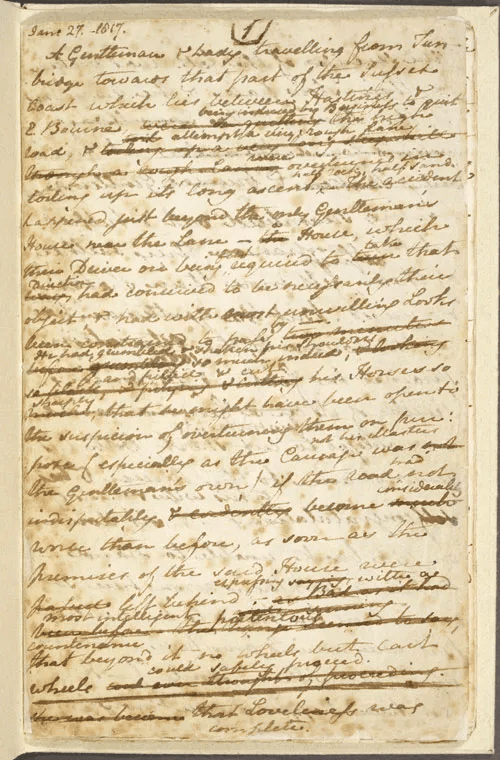

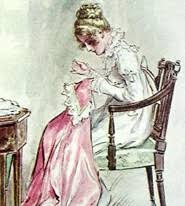
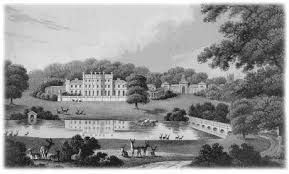
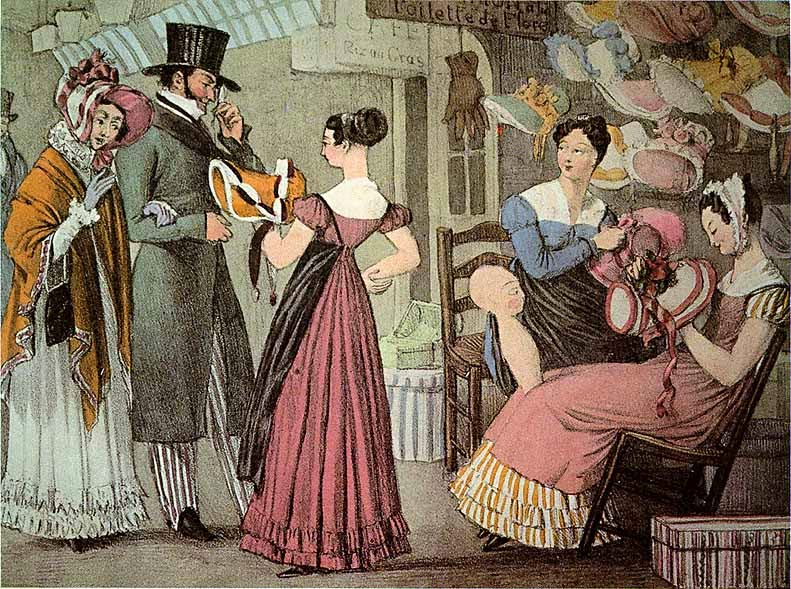
 The Reading Bug