
I tried. I really did try to enjoy Mansfield Park. If ever a writer deserved the benefit of the doubt it is the author of the extraordinary Pride and Prejudice. But I wasn’t able to love this novel. There are without question scenes of fine writing and much to admire throughout, but it would make this blog pretty pointless if I tried to ignore its serious flaws. And yes, those flaws are the ones people always mention – the central character, Fanny Price, and the novel’s hurried and unconvincing ending.
As these flaws have been anatomised many times before I am not going to dedicate too much time to them. I will try to make this post mainly be about what is good about Mansfield Park – but I won’t be able to ignore the problems and I suspect I might find myself writing more about them than I intend to.
First, a quick plot summary. Mansfield Park tells the story of our heroine, Fanny Price. Aged ten she leaves her family to live with her wealthy uncle and aunt, Sir Thomas and Lady Bertram. She grows up very meek and mild. The Bertrams have four children of their own – daughters Maria and Julia, both mainly interested in making a good marriage, and sons Tom and the Edmund. Oldest son Tom is a bit of a playboy; Edmund is planning to enter the priesthood. These young people looking for excitement and romance quickly find it in the persons of Mary and Henry Crawford, siblings of the wife of the local vicar. Romantic entanglements ensue, as you would expect.
It might help structure things more clearly if I address some of my concerns about the novel, get them out of the way, and then come to its strengths. So, firstly, there’s something about Fanny……
The events of the novel are told by a narrative voice which aligns closely with Fanny’s perspective. Only rarely are other points of view used and when they are they stand out. Fanny is the novel’s central consciousness and at one point she is described as the “quiet auditor”. In other words she is not just a passive observer, she also sits in judgement on the other characters.
Fanny looked on and listened, not unamused to observe the selfishness which, more or less disguised, seemed to govern them all, and wondering how it would end”.
The criticism implicit here is always present – Fanny can’t help but silently judge the behaviour of her cousins and their friends, waiting for mistakes and moments of indecorum or indelicacy. There is a strong alignment between Fanny’s perspective and the narrator’s – we are in almost all instances invited to accept her judgment as correct. Unlike Austen’s other flawed heroines, where differences between the judgment of the central character and what the narrator shows the reader allows us to see their mistakes and misunderstandings, Fanny is apparently always right. Even advocates for the novel accept there is an issue with Austen’s portrait of her heroine. Kathryn Sutherland, editor of the Penguin Classic edition of the novel, agrees that
“Fanny Price…embodies so many of the reader’s difficulties with the novel.”
(I note Sutherland’s use of the singular, universal ‘reader’ as opposed to acknowledging any spectrum of views on the issue).
I think the reader is intended to see Fanny’s growth into a young woman over the course of the novel and to appreciate the woman she becomes, not the timid girl she starts out as. Certainly other characters change their view of her. Initially she is treated almost as an invalid – Edmund is always noticing how pale or tired she looks, and urging her not to exert herself. Lady Bertram meanwhile treats her like her companion “I could not do without my Fanny”. She is not considered as a woman in her own right until Sir Thomas returns from the Caribbean and notices she has matured during his absence:
“observing with decided pleasure how much she was grown!…He led her nearer the light and looked at her again – inquired particularly after her health, and then correcting himself, observed that he need not inquire, for her appearance spoke sufficiently on that point.” (Chapter 19).
Once Maria and Julia are no longer on the scene to distract him Henry Crawford makes the same discovery and decides to ‘make’ Fanny fall in love with him. Her resistance increases her attractiveness, and there comes a point towards the end of the novel where the reader is genuinely unsure whether his persistence will work. In this regard Mansfield Park differs from its predecessors where there is never really any serious doubt as to the outcome. Here the reader cannot be certain that Fanny will marry Edmund, even though it is established as early as the fourth chapter of the novel that she worships him:
She regarded her cousin as an example of everything good and great, as possessing worth which no one but herself could ever appreciate, and as entitled to such gratitude from her as no feelings could be strong enough to pay.
But I didn’t find much growth in Fanny. There are no moments of self-realisation, unless you count her recognition that she no longer belongs in her parents’ world in Portsmouth. She makes her mind up and it stays made up, whether it is her judgment on Henry Crawford or her longing for her cousin, Edmund. That she is finally proven right about Henry and ends up married to Edmund really does nothing to help the reader see Fanny in any other way.
The novel’s ending is all the more disappointing for its clumsiness, in contrast to much of the earlier subtlety of the novel. Henry abandons his attempts to woo Fanny and instead runs away with the now married Maria Rushworth nee Bertram. We are told very little about this dramatic and shocking affair, and it comes with minimal build-up – we know Maria despises her husband, but would she really abandon her status and wealth and break the strong moral codes of the time for a man she surely knows does not love her? There was never going to be a happy-ever-after ending for Maria and Henry. I can’t be the only reader who would have enjoyed reading about this affair so much more than the depressing scenes of Fanny moping around in Portsmouth?
As for Fanny’s marriage to Edmund, what can I say? He has always seen her as a younger sister, and by all accounts continues to do so. Fanny’s devotion helps him to recover from his disappointment in Mary , and
“Scarcely had he done regretting Mary Crawford, and observing to Fanny how impossible it was that he should ever meet with such another woman, before it began to strike him whether a very different kind of woman might not do just as well, or a great deal better: whether Fanny herself were not growing as dear, as important to him in all her smiles and all her ways, as Mary Crawford had ever been; and whether it might not be a possible, an hopeful undertaking to persuade her that her warm and sisterly regard for him would be foundation enough for wedded love.
Loving, guiding, protecting her, as he had been doing ever since her being ten years old, her mind in so great a degree formed by his care, and her comfort depending on his kindness, an object to him of such close and peculiar interest, dearer by all his own importance with her than any one else at Mansfield, what was there now to add, but that he should learn to prefer soft light eyes to sparkling dark ones. (Chapter 48)
Cousin marriage remains to this day a sensitive issue, but here the relationship is effectively between adoptive siblings. Although Fanny is never formally adopted by the Bertrams, the distinction is a technical one – she is brought up by them and always turns to Edmund for brotherly support. He considers her his sister in all but name for 99% of the novel and it is not until his relationship with Mary Crawford breaks down and he turns to Fanny for consolation does he slowly begin to see her in another way. Admittedly close relatives marrying one another was not unheard of in nineteenth-century society (and fiction) and both George IV and Victoria married their cousins. Despite this Fanny and Edmund’s marriage seems simply inappropriate to many modern readers, sufficiently so to spoil any sense of romantic satisfaction at the novel’s conclusion.
The natural thing to do when faced with such a passive and dull central character is to look for interest elsewhere. The novel is not short on alternative heroines and heroes. There’s a Shakespearean element to the romantic comedy scenes in which sisters Maria (already engaged to Mr Rushworth) and Julia Bertram are competing for the affections of Henry Crawford, who ends up trying to marry Fanny. His sister Mary is attracted to younger brother Edmund Bertram for whom Fanny also secretly yearns. The complexities of these romances are narrated from Fanny’s watchful perspective. The echoes of Midsummer Night’s Dream in particular were for me reinforced by Henry Crawford comments about the preparations for a play they plan to put on:
“It is as a dream, a pleasant dream!” he exclaimed, breaking forth again, after a few minutes’ musing. “I shall always look back on our theatricals with exquisite pleasure.”
Two scenes stand out in the novel as examples of this subtle drawn romantic comedy – the visit to Sotherton, Mr Rushworth’s estate, and the preparations for the play, Lovers’ Vows.
Chapter 10 describes the visit to Sotherton. I think of this chapter as ‘The Curious Case of the Ha-Ha’, for reasons which will become obvious. By this point in the novel, Maria Bertram is engaged to the rich but dim Mr Rushworth. Despite this she is clearly becoming more and more attracted to the dashing Henry Crawford. She is young enough to want to have her cake and eat it, but seems close to breaking off her relatively recent engagement with Mr Rushworth if she gets a sign from Mr Crawford that this is more than just a flirtation.
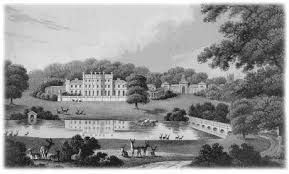
Unusually, Fanny is included in the party to Sotherton. Normally she would be excluded from trips of this nature, but she is needed as an observer of the young people’s antics, to sit and quietly pass judgment on their behaviour. Both Julia and Maria have already been flirting with Henry prior to this day out, but the trip presents opportunities for a closer acquaintance away from the constraints of Mansfield Park and the watching eyes of Sir Thomas. After a tour of the house the party goes for a walk in the extensive grounds, which include a “wilderness” – an area of the park deliberately allowed to grow wild. There is a similar area in Pride and Prejudice (“a prettyish kind of little wilderness on one side of your lawn”) where Lady Catherine confronts Elizabeth about the rumours of her engagement with Darcy. These areas of the grounds, contrasting with the well-manicured lawns and beds of the formal gardens, act as a mini-Eden, an area where some of the normal rules of social behaviour are disapplied, and people feel free to act on their more natural instincts without some of the constraints usually applied. Edmund and Miss Crawford are the first to set off into this area, leaving Fanny sitting on a bench. Maria Bertram, Mr Rushworth, and Henry Crawford join her. Miss Bertram sends Mr Rushworth back to the house to find a key for a gate locking them out of part of the park – this is a blatant excuse to get rid of him. As soon as he is gone, she starts to flirt with Mr Crawford. The flirting is obvious enough to make Fanny uncomfortable. Maria asks, “Do you not you find the place (Sotherton) altogether worse than you expected?” This is a not so subtle hint at her disappointment in her choice of fiancé in which the house represents the man. His reply continues the flirtation:
“No, indeed, far otherwise. I find it better, grander, more complete in its style, though that style may not be the best. And to tell you the truth,” speaking rather lower, “I do not think that I shall ever see Sotherton again with so much pleasure as I do now. Another summer will hardly improve it to me.”
Because within a year she will be married – in other words he derives pleasure from her company as an unmarried woman. He drops his voice to attempt to prevent Fanny from overhearing this compliment. Miss Bertram takes it as intended:
“After a moment’s embarrassment the lady replied, “You are too much a man of the world not to see with the eyes of the world. If other people think Sotherton improved, I have no doubt that you will.”
“I am afraid I am not quite so much the man of the world as might be good for me in some points. My feelings are not quite so evanescent, nor my memory of the past under such easy dominion as one finds to be the case with men of the world.”
This was followed by a short silence. Miss Bertram began again. “You seemed to enjoy your drive here very much this morning. I was glad to see you so well entertained. You and Julia were laughing the whole way.”
Miss Bertram teases him by suggesting he is attracted to her younger sister, Julia;
Your prospects, however, are too fair to justify want of spirits. You have a very smiling scene before you.”
“Do you mean literally or figuratively? Literally, I conclude. Yes, certainly, the sun shines, and the park looks very cheerful. But unluckily that iron gate, that ha-ha, give me a feeling of restraint and hardship. ‘I cannot get out,’ as the starling said.” As she spoke, and it was with expression, she walked to the gate: he followed her. “Mr. Rushworth is so long fetching this key!”
The iron-gate has by this point assumed a symbolic significance. It represents a barrier between their current constrained behaviour and lives, and a more unrestrained, freer life beyond, without barriers or rules. It is also Mr Rushworth personified – he is the barrier to their future together. But they have to make a conscious decision to pass this barrier – and face the dangers it represents.
“And for the world you would not get out without the key and without Mr. Rushworth’s authority and protection, or I think you might with little difficulty pass round the edge of the gate, here, with my assistance; I think it might be done, if you really wished to be more at large, and could allow yourself to think it not prohibited.”
He is goading her here – with his assistance, he says she will be able to circumvent the barriers between them. It can be done if she wants it enough.
Fanny, feeling all this to be wrong, could not help making an effort to prevent it. “You will hurt yourself, Miss Bertram,” she cried; “you will certainly hurt yourself against those spikes; you will tear your gown; you will be in danger of slipping into the ha-ha. You had better not go.”
Fanny sets out the series of dangers facing Miss Bertram – she will hurt herself on the spikes of the gate, she will damage her gown, and she might fall into the ha-ha. If Miss Bertram abandons her engagement with Mr Rushworth she will potentially expose herself to similar dangers – physical harm, economic harm, and a metaphorical fall – the fall from grace that Adam and Eve experienced. A fallen woman was a common usually term to describe someone who had sex outside of marriage, and was often used as a euphemism for prostitute. Of course this warning is unheeded, and eventually Maria and Henry face the fate they have been warned against. Young people are not very good at listening to words of warning when they stand in the way of something they want:
“Her cousin was safe on the other side while these words were spoken, and, smiling with all the good-humour of success, she said, “Thank you, my dear Fanny, but I and my gown are alive and well, and so good-bye.”
Julia, the younger sister arrives, and is vexed when Fanny tells her what has happened. She describes Maria’s behaviour as sinful “I am not obliged to punish myself for her sins.” This is a clear acknowledgement that Maria and Henry are contemplating sinfulness if not exactly behaving sinfully at this point. In quick and undignified order (“she immediately scrambled across the fence”) she heads off after them – she has not given up in her quest to snare Mr Crawford.
Mr Rushworth arrives with the key. Fanny tells him what has happened, and
“though she made the best of the story, he was evidently mortified and displeased in no common degree. At first he scarcely said anything; his looks only expressed his extreme surprise and vexation, and he walked to the gate and stood there, without seeming to know what to do.
…. “I do not believe I shall go any farther,” said he sullenly; “I see nothing of them. By the time I get to the knoll they may be gone somewhere else. I have had walking enough.” And he sat down with a most gloomy countenance by Fanny.”
Mr Rushworth may be slow-witted but even he is aware that Mr Crawford is a rival for his fiancé’s affections, hence his gloominess. He takes petty revenge by insulting Henry’s stature and appearance:
“Pray, Miss Price, are you such a great admirer of this Mr. Crawford as some people are? For my part, I can see nothing in him.”
Fanny is happy to agree: “I do not think him at all handsome.”
“Handsome! Nobody can call such an undersized man handsome. He is not five foot nine. I should not wonder if he is not more than five foot eight. I think he is an ill-looking fellow. In my opinion, these Crawfords are no addition at all. We did very well without them.”
A small sigh escaped Fanny here, and she did not know how to contradict him.
She feels the same way, perceiving Miss Crawford as a rival for her affection for Edmund.
This is all masterfully done. Fanny knows full well what is going on – the various flirtations and rivalries – and is appalled by it all. She does not need to narrate her reactions – the narrator lets us know through simply describing the scenes with the occasional sigh or adjective to guide the reader through. There is no sympathy shown for Maria, trapped in an early engagement with a man she no longer respects, and now attracted to the charismatic Henry. Fanny sees what is going on, thinks it is appalling and immoral, but the other characters either understand the various attractions in play and believe them to be harmless, or simply don’t notice.
Not long after the trip at Sotherton, the young people are joined by a friend of Tom Bertram, Mr Yates, and decide to put on a play at Mansfield Park. This is for their own amusement – they are bored. Sir Thomas has been away in the West Indies looking after his mysterious business affairs there, and his children and their friends feel a freedom from paternal restraint they would not otherwise enjoy. The play they eventually settle on, Lovers’ Vows, is a romance, and gives them the opportunity to build upon the flirtations started at Sotherton. Henry and Maria manipulate matters so that they play lovers in the performance, leaving Mr Rushworth feeling rejected and confused. Edmund is persuaded against his better judgment to play opposite Mary Crawford, leaving Fanny equally jealous and resentful. She condemns the whole affair, and is horrified when they try to get her involved. Soon the romance between Maria and Henry is spoken of openly between Mrs Grant (Henry’s older sister) and Mary:
“I would not give much for Mr. Rushworth’s chance if Henry stept in before the articles were signed.”
“If you have such a suspicion, something must be done; and as soon as the play is all over, we will talk to him seriously and make him know his own mind; and if he means nothing, we will send him off, though he is Henry, for a time.”
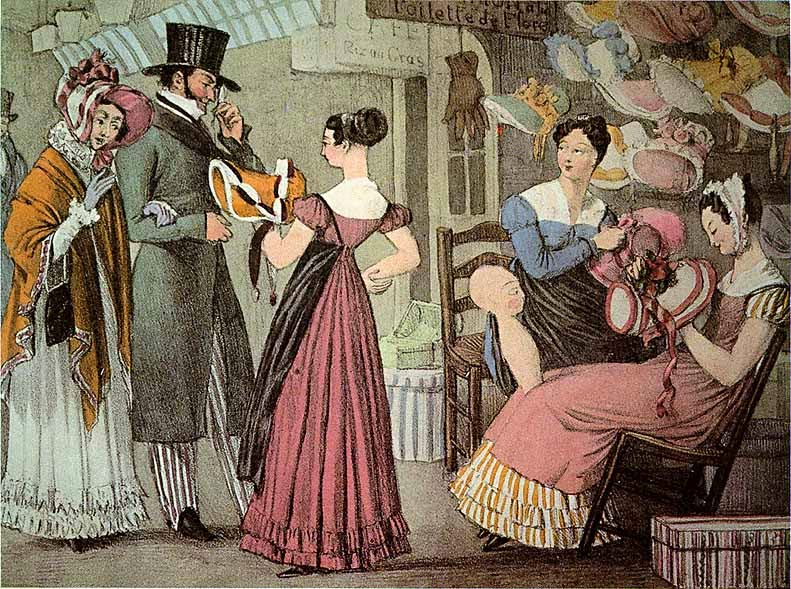
Sir Thomas’s unexpected return means the well-advanced plans for the performance have to be abandoned, but the damage in terms of the romantic attraction between Henry and Maria and Edmund and Mary is done. However, Henry leaves Mansfield Park without declaring his feelings towards Maria, as she had been hoping he would. For one of the very few times in the novel the narrative point of view switches from Fanny to Maria. We are told of not only her actions and words, but also her feelings:
“Maria was in a good deal of agitation. It was of the utmost consequence to her that Crawford should now lose no time in declaring himself, and she was disturbed that even a day should be gone by without seeming to advance that point.”
Henry is described as “the man she loved”
As the Crawfords leave Mansfield, the narration is entirely from Maria’s point of view: (note the emphasis on his hands and his touch:
To her he soon turned, repeating much of what he had already said, with only a softened air and stronger expressions of regret. But what availed his expressions or his air? He was going…the hand which had so pressed hers to his heart! the hand and the heart were alike motionless and passive now! Her spirit supported her, but the agony of her mind was severe…He was gone—he had touched her hand for the last time, he had made his parting bow, and she might seek directly all that solitude could do for her. Henry Crawford was gone.
These are just two of the fine, carefully crafted scenes in Mansfield Park. There are others, and some of the character portraits are wonderful, not least the monstrous Mrs Norris (after whom J.K. Rowling named Argus Filch’s cat). Jane Austen was an extraordinary writer and I so wanted to like this novel, but ultimately its strengths couldn’t for me overcome the central flaws. Even the contemporary responses to the novel that Jane collected from family and friends (who would after all be expected to pull their punches!) recognise clearly that this is not her best work (I agree with her mother that Fanny is “insipid”. If you can’t bring yourself to love Fanny you will struggle to love Mansfield Park.
*With thanks and love to Mr Flay the Cat thrower for editorial and proof-reading assistance.

