Book review

Pride and Prejudice in ten key paragraphs (Part 2)

austen 2Chapter 43 This chapter opens with the fateful visit to Pemberley, where Elizabeth is so anxious to avoid accidentally bumping into Darcy that she travels halfway across the country to visit his family home.

Elizabeth, as they drove along, watched for the first appearance of Pemberley Woods with some perturbation; and when at length they turned in at the lodge, her spirits were in a high flutter.

The park was very large, and contained great variety of ground. They entered it in one of its lowest points, and drove for some time through a beautiful wood stretching over a wide extent.

Elizabeth’s mind was too full for conversation, but she saw and admired every remarkable spot and point of view. They gradually ascended for half-a-mile, and then found themselves at the top of a considerable eminence, where the wood ceased, and the eye was instantly caught by Pemberley House, situated on the opposite side of a valley, into which the road with some abruptness wound. It was a large, handsome stone building, standing well on rising ground, and backed by a ridge of high woody hills; and in front, a stream of some natural importance was swelled into greater, but without any artificial appearance. Its banks were neither formal nor falsely adorned. Elizabeth was delighted. She had never seen a place for which nature had done more, or where natural beauty had been so little counteracted by an awkward taste. They were all of them warm in their admiration; and at that moment she felt that to be mistress of Pemberley might be something!

Indeed, later (ch. 59) Elizabeth tells Jane, only half joking, and in an attempt to persuade Jane that her acceptance of Darcy is sincere, that it was not until she saw Pemberley that she loved him:

“My dearest sister, now be serious. I want to talk very seriously. Let me know every thing that I am to know, without delay. Will you tell me how long you have loved him?”

“It has been coming on so gradually, that I hardly know when it began. But I believe I must date it from my first seeing his beautiful grounds at Pemberley.”

We are of course seeing Pemberley through Elizabeth’s admiring eyes. Her language predominantly uses adjectives relating to size and scale:

“very large, great variety, for some time, stretching over a wide extent, a considerable eminence, a large, handsome stone building, standing well on rising ground, swelled into greater”

No wonder that this demonstration of Darcy’s wealth and power has such a profound impact on her feelings, even if only to persuade her to accept what she has thus far been denying.

Chapter 56 – Lady Catherine comes to confront Elizabeth with the rumours of Darcy’s intentions towards her. Rudely she arrives unannounced, and ignores the rest of the family, instead asking her for a private conversation outside.

Miss Bennet, there seemed to be a prettyish kind of little wilderness on one side of your lawn. I should be glad to take a turn in it, if you will favour me with your company”.

Preserving a corner of one’s grounds for a kind of little wilderness was a Regency fashion, one which wildlife enthusiasts of today would approve. But what is interesting is Lady Catherine’s decision to stage her confrontation in this particular part of the garden, diametrically opposite the more formal manicured lawns of Longbourn. This is a gloves-off challenge, a jungle arena where the usual conventions of language and class are deliberately albeit temporarily set aside. This allows Elizabeth to tap into her inner goddess, and give Lady Catherine a furious response when she attempts to bully her into promising to reject any proposal from Darcy.

Chapter 58 The climatic renewal of Mr Darcy’s proposal:

“You are too generous to trifle with me. If your feelings are still what they were last April, tell me so at once. My affections and wishes are unchanged; but one word from you will silence me on this subject for ever.”

Darcy does not directly profess his love, and the narrator does not tell us Elizabeth’s direct response, only that she

“feeling all the more than common awkwardness and anxiety of his situation, now forced herself to speak; and immediately, though not very fluently, gave him to understand, that her sentiments had undergone so material a change, since the period to which he alluded, as to make her receive with gratitude and pleasure, his present assurances.”

The formality and clumsiness of the narrators presentation of the scene is a brilliant touch – it begins the process of pulling away from the couple and respecting their privacy, and recognises that Elizabeth is not at her most articulate at this point, choked up with emotion rather than formality. It is a wonderful end to the story arc, and shows yet again Austen’s genius in presenting this most compelling of romances.


Standard
Book review

Pride and Prejudice in ten key paragraphs (part one)

I thought I would take a different approach to writing about this classic to end all classics, by picking out ten key paragraphs from the novel and paying them some careful attention. This analysis assumes a familiarity with the key events and characters of the novel. Incidentally, despite the misleading headline description of this post, I am not suggesting that these are the only ten paragraphs that you need to read to understand P&P – that would be ridiculous. The novel is so rich and rewardingly complex that almost any ten paragraphs plucked at random would be worth studying. But these are ten that jumped out at me on a recent rereading.austen
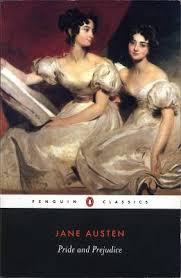
Chapter 10 – Jane, the eldest of the five Bennet sisters, has paid a visit to nearby Netherfield, in the course of which she has been caught in a rain shower. Walking instead of going in a coach is in itself significant – the Bennet’s have a coach, but it is not available. This helps precisely locate their social status – a one-coach family. Jane inevitably catches a cold, and second daughter Elizabeth has to go to Netherfield to care for her (this time the coach is available). This is just the first of several occasions when fate conspires to bring Elizabeth and Darcy together. Elizabeth is a family guest, but one with a special status, invited to care for her sister but not otherwise part of the party. This makes her a little detached from the others. It is unusual for someone to be a house-guest (i.e. staying overnight) on such a brief acquaintance.

In the evening the company gathers for dinner, followed by witty conversation and music. Elizabeth and Darcy spar; she is aware of his reputation as a gruff, unfriendly character, which was confirmed by his rudeness about her at the recent ball. But her attitudes begin to soften during the course of their conversation:

“Elizabeth, having rather expected to affront him, was amazed at his gallantry; but there was a mixture of sweetness and archness in her manner which made it difficult for her to affront anybody; and Darcy had never been so bewitched by a woman as he was by her. He really believed that were it not for the inferiority of her connections he should be in some danger.”

It is interesting to follow Austen’s masterful use of the narrative point of view here. In the first phrase the narrator gives us Elizabeth’s perspective – she is amazed by Darcy’s gallantry, confounding her earlier perception of him as someone gruff and rude. The next phrase is a more general observation about how Elizabeth is usually perceived – as both sweet and arch. We then are given Darcy’s confession – he is bewitched by her. Although we traditionally think of this romance as one in which the characters gradually fall in love, and struggle with their feelings, the reality is quite different – their mutual attraction is apparent from an early point, and from then it is only a question of navigating the various hurdles in their way, not least Darcy’s scruples about Elizabeth’s poorly connected family.

Chapter 15. Mr Collins, heir to Longbourn, the Bennet family home, comes to visit with the explicit intention of engaging himself to one of the Bennet daughters. Two preliminary points before I come to the paragraph in question. Firstly, I suspect ‘Longbourn’ is a little joke, referencing the phrase ‘long borne’, as in long suffered or tolerated. Precisely who is long suffering is another matter – most if not all of the Bennet household would probably lay claim to the phrase. The other more complex point relates to the business of the entail of Longbourn. When Mr Bennet dies the property will be left to his cousin, Mr Collins, not his daughters. This is the infamous ‘entail’.

We are given very little information about this entail – it is presented as an unfortunate fact of life about which little can be done, and Mrs Bennet is mocked for protesting about it and not understanding the details. Commentaries (I am sure correctly) claim that the practice of leaving a property to a single male heir was intended to avoid family wealth and estates being dissipated amongst numerous heirs, or going out of the family entirely through the female line. But that explanation doesn’t really help here – the effect of this will is that the Longbourn estate while preserved in its entirety is going out of the family, to a distant cousin with a different family name. If preserving the integrity of the modest estate is critical (and it is not a grand country house, after all, so the importance of this is less than it would be for Pemberly or Netherfield, for example) then Mr Bennet could simply leave the estate to his eldest daughter. It’s also unclear precisely who has imposed the entail on the estate – some commentaries suggests that the entail is like a long lease or another condition of occupation, imposed by a long-dead ancestor. But that can’t surely be right – can entails persist across the generations in the way this implies? It must be in Mr Bennet’s legal power to change the terms of his will and bequeath his property where he sees fit.

In the end of course the point becomes moot, because both Elizabeth and Jane marry well and into money, and are likely to produce a male heir to inherit Longbourn in any event.

Nevertheless, for now Mr Collins is the heir, and he is seeking to heal family rifts and keep the property in the family by marrying one of the sisters. His fancy alights on Jane, as the eldest, but when told by Mrs Bennet that she is likely to be engaged, his change of heart is swift:

Mr Collins only had to change from Jane to Elizabeth – and it was soon done – done while Mrs Bennet was stirring the fire.

Affection is as ephemeral as that, a matter of simple choice rather than anything more complex – as long as Elizabeth is young enough to bear an heir, she will do. When she declines his kind offer the change to Charlotte Lucas is made with similar speed and as little disturbance. The casual brutality of his transferable affections here tells us all we need to know about Mr Collins, one of Austen’s great comic monsters.

Chapter 24. Jane and Elizabeth are discussing Charlotte Lucas’s marriage to the insufferable Mr Collins. Jane, as always seeing the positive in any situation, says that Charlotte “may feel something like regard and esteem for our cousin”. Elizabeth’s rejection of this is absolute

Were I persuaded that Charlotte had any regard for him (Mr Collins) I should only think worse of her understanding than I now do of her heart…Mr Collins is a conceited, pompous, narrow-minded, silly man….the woman who married him cannot have a proper way of thinking”

Charlotte Lucas’s decision to accept Mr Collins’s proposal is a pragmatic decision, in which affection, regard or esteem plays no part. She needs a husband with a reasonable income and Mr Collins is available. Aged 27, without a significant income of her own, and not being regarded as a beauty, it is hard not to see Charlotte as a portrait of the choices women, not least of course Austen herself, had to make all the time in Regency England. Not everyone was lucky enough to snare themselves an English country gentleman. Despite Elizabeth’s incredulity, the signs are that Charlotte has made a comfortable life for herself in the Rosings rectory.

Mr Collins is indeed a monster, but I don’t think the reader is invited to share Elizabeth’s judgment or condemnation of Charlotte. Charlotte’s decision to settle for Mr Collins plays an important part in the narrative, as it leads Elizabeth to re-evaluate her own attitudes towards her choice of a life partner.

Chapter 28. Elizabeth has gone to Kent to visit her newly married friend, Charlotte Collins nee Lucas. A carriage stops outside the Rectory – it contains Miss Anne de Bourgh, Lady Catherine de Bourgh’s daughter, and her governess. These are two of the numerous almost invisible and silent women that people the background of this novel. While Charlotte speaks to the carriage’s occupants, Elizabeth looks on:

“I like her appearance, said Elizabeth, struck with other ideas. “She looks sickly and cross. Yes, she will do for him very well. She will make him a very proper wife”.

That Anne is intended as Darcy’s wife, by familial arrangement rather than by way of formal engagement, is not something that has publicly discussed with Maria Lucas, so Elizabeth seems to be speaking more to herself than Maria. Darcy pops into Elizabeth’s thoughts at the sight of Anne- she refers to him as “him” here, not by name. The narrator tells us plainly that Elizabeth is in denial – while she says she like’s Anne’s appearance, she is actually “struck by other ideas”. She evaluates Anne, whether she realises it or not, as a competitor, and is pleased that she is not to be feared.

This aside almost certainly goes over the head of Maria Lucas, one of Charlotte’s younger sisters who is Elizabeth’s companion on this visit. Maria Lucas is another of the walk-on parts scattered throughout the novel, and while she is given a few lines of her own, she mainly acts as a foil to the more mature, more intelligent Elizabeth.

Chapter 31. The setting for this scene is a gathering at Rosings, Lady de Bourgh’s home. Elizabeth is playing the piano, and Mr Darcy comes over to observe her play. Archly, Elizabeth says:

“You mean to frighten me, Mr. Darcy, by coming in all this state to hear me? I will not be alarmed though your sister does play so well. There is a stubbornness about me that never can bear to be frightened at the will of others. My courage always rises at every attempt to intimidate me.”

“In all this state” is an ambiguous phrase. It could mean in an agitated state, or it could mean “in all this stateliness”. There is no indication in the text that Darcy is in any kind of a state – leaving the reader to infer either he is showing his emotions, and the narrator has chosen not to describe these, or that he is perfectly composed, but that Elizabeth is teasing him. This is the matter of fact paragraph which precedes this comment:

“Colonel Fitzwilliam reminded Elizabeth of having promised to play to him; and she sat down directly to the instrument. He drew a chair near her. Lady Catherine listened to half a song, and then talked, as before, to her other nephew; till the latter walked away from her, and making with his usual deliberation towards the pianoforte stationed himself so as to command a full view of the fair performer’s countenance. Elizabeth saw what he was doing, and at the first convenient pause, turned to him with an arch smile, and said:..

One of the reasons Elizabeth is so loved by readers, is that she stands up for herself, brilliantly and fiercely against Lady Catherine, but also here when Darcy attempts to put her off her piano playing simply by his presence. We see Elizabeth’s courage rise again when someone foolishly tries to intimidate her.

Standard
Book review, Jane Austen

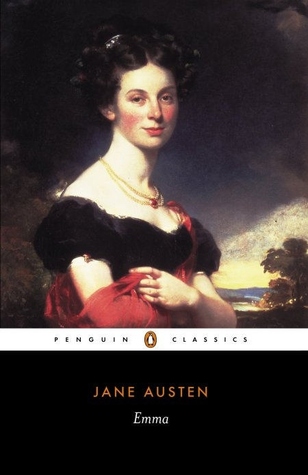
Emma, by Jane Austen, 1815

Emma, by Jane Austen, 1815

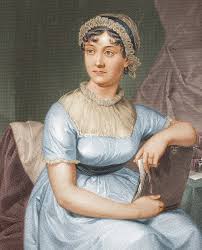
Of all the authors I have written about over the last three years, Jane Austen is arguably the one who generates the fiercest loyalties and the most ardent passions. This can’t all simply be down to Colin Firth’s impromptu dip in the television adaptation of ‘Pride and Prejudice’, surely? While her novels are admittedly eminently suitable for television serialisation, they are so much more than that – for me they stand out as some of the greatest works of the nineteenth century, and I am going to use this review of ‘Emma’ to try to explain why.

Austen is an unparalleled miniaturist – the scope of her novels is usually very tightly confined inemma

time and place, yet within these constraints the portrait of utterly convincing characters is what makes the novels so successful. Her characters find such a strong place in people’s affections. They are believable and recognisable, none more so than those in ‘Emma’.

Emma’ tells the story of a year or so in the life of Emma Woodhouse, a prosperous young women living with her father in Surrey. Her social circle is small, and she is clearly bored, her former governess Miss Taylor having just married a neighbour, Mr Weston, leaving her with time on her hands. She fills this time with matchmaking, first trying to match her friend Harriet Smith to Mr Elton, the local vicar. This and all subsequent efforts are disastrous, although ultimately do little long term damage. Into this settled and neatly circumscribed world come two new characters – Frank Churchill, Mr Weston’s son from his first much earlier marriage and Jane Fairfax, the orphan niece of Miss Bates, one of Emma’s neighbours. The plotting is as adept as a murder mystery, and it all plays against the comic backdrop of misunderstanding and romance.

On one level, the novel can be enjoyed simply as a light hearted romance, with a happy ending and marriages, the social order preserved with everyone marrying at the right level of social status. The status quo prevails and is passed down to the next generation. A political reading of ‘Emma’ is appealing, but has been done very well elsewhere, so in the interests of trying to find something new to say I am not going to rework that interpretation here. 

Another way of looking at ‘Emma’ is to consider Austen’s extraordinarily sophisticated control and use of point of view narration. The narrator views the events of the novel largely from Emma’s perspective – we see what she sees and have access to her internal monologue, her thoughts and feelings. But this is not a first person narration – the point of view is one step distant from Emma herself, and allows the reader just enough separation from her perspective to spot when she is being self deluding or simply wrong. I have read that Austen was the first novelist to use this technique (which I am going to take on trust) – certainly she uses it masterfully, the subtlety of which only really emerges with a re-reading (which this was) when the reader knows the denouement and the varies twists in the plot and can spot when Emma is mistaken. There are no moments when the reader is hit over the head with “plot device happening here” warning signals – apart from, arguably, the “blunder” scene, when a secret romance is nearly revealed. The point towards the end of the novel where the narrator strays from Emma’s perspective, when we are shown Mr Knightley’s thoughts, stands out starkly and prompts the reader to consider his ideas and comments all the more carefully, such a contrast as they are from Emma’s speculations and fancies, which by now the reader has come to mistrust.

Emma’s capacity for self-deception is extensive and shown most clearly in her response to the thought of Mr Knightley marrying Harriet Smith:

She could see nothing but evil in it. It would be a great disappointment to Mr. John Knightley; consequently to Isabella. A real injury to the children—a most mortifying change, and material loss to them all;—a very great deduction from her father’s daily comfort—and, as to herself, she could not at all endure the idea of Jane Fairfax at Donwell Abbey. A Mrs. Knightley for them all to give way to!—No—Mr. Knightley must never marry. Little Henry must remain the heir of Donwell.”

The extent of her genuine concern for her nephew little Henry’s interests are shown at the end of the novel, when they occur to her as an afterthought which is quickly discarded.

The character portraits in ‘Emma’ are astonishingly acute, not least in the portrayal of two contrasting chatterboxes, Mrs Elton, the new wife of the vicar, and the adorable Miss Bates, Jane Fairfax’s aunt (“Unluckily, I had mentioned it before I was aware”). It is interesting to contrast these portraits, which Austen achieves using similar techniques. First, the narrator gives us this monologue as Mrs Elton picks strawberries at Mr Knightley’s party:

The best fruit in England—everybody’s favourite—always wholesome. These the finest beds and finest sorts.—Delightful to gather for one’s self—the only way of really enjoying them. Morning decidedly the best time—never tired—every sort good—hautboy infinitely superior—no comparison—the others hardly eatable—hautboys very scarce—Chili preferred—white wood finest flavour of all—price of strawberries in London—abundance about Bristol—Maple Grove—cultivation—beds when to be renewed—gardeners thinking exactly different—no general rule—gardeners never to be put out of their way—delicious fruit—only too rich to be eaten much of—inferior to cherries—currants more refreshing—only objection to gathering strawberries the stooping—glaring sun—tired to death—could bear it no longer—must go and sit in the shade.”

Note the progress from ‘never tired’ to ‘tired to death’! Later, as Miss Bates arrives for the ball at the Crown Inn, her comments are similarly fractured, but there is not an ounce of malice or self aggrandizement in them:

Thank you, my mother is remarkably well. Gone to Mr. Woodhouse’s. I made her take her shawl—for the evenings are not warm—her large new shawl— Mrs. Dixon’s wedding-present.—So kind of her to think of my mother! Bought at Weymouth, you know—Mr. Dixon’s choice. There were three others, Jane says, which they hesitated about some time. Colonel Campbell rather preferred an olive. My dear Jane, are you sure you did not wet your feet?—It was but a drop or two, but I am so afraid:—but Mr. Frank Churchill was so extremely—and there was a mat to step upon—I shall never forget his extreme politeness.”

This is stream of consciousness writing in its most sophisticated and economical, 100 years before Joyce and Woolf, and while mainly about the characterisation manages to progress the plot as well.

There are several characters in the novel who do not step fully into the light until late in the day. Mr Knightley, Emma’s brother-in-law (her older sister married his younger brother, apparently some years earlier – they have five children) and neighbour is referred to as present in several scenes, but has very few lines to himself and remains enigmatic for much of the novel. (I confess, when I first read ‘Emma’ several years ago I did not understand the convention of naming the eldest son Mr Knightley and the younger son Mr John Knightley, which caused considerable confusion) until Emma’s schemes force him to intervene. Jane Fairfax is if anything even more undefined, having very few lines of dialogue and only being shown through Emma’s distorted perspective. Both characters ultimately emerge as central to the novel’s conclusion.

I can’t end without mentioning the comic masterpiece that is Mr Woodhouse, hypochondriac (and yes, I accept that getting a chill was something much more serious in this period than it is today) and control freak par excellence. Emma surely derives her capacity for self delusion – the world is as I wish it to be – from her father.

As a romance ‘Emma’ must take second place in Austen’s works behind ‘Pride and Prejudice’, but as a comic novel, and as a masterpiece of controlled story-telling, I think it comes out just ahead. Happily, we do not have to choose between the two!

Standard