
Lady Susan by Jane Austen, 1794/1871
I confess I had largely written off Jane Austen’s juvenilia as stories that should probably have remained unpublished – largely I think on the basis of a very small sample size taken many years ago – but I was wrong. Lady Susan, written when Austen was 18 – in other words to all intents and purposes an adult and meaning therefore that it is hard to label Lady Susan as juvenilia anyway – is a mature, witty and sophisticated novella. It is written in the epistolary form, which quickly illustrates the shortcomings and disadvantages of the structure and is an important step in Austen’s evolution of the third-person omniscient narrative format which she perfected in her mature novels. Written in around 1794 or so the internet tells me, but not published until 1871, it is a gem!
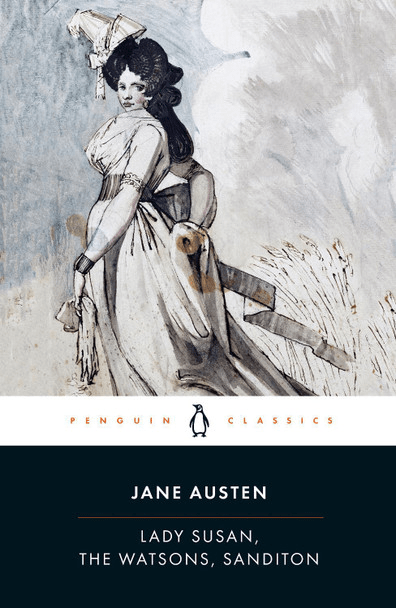
The plot and characters
The format of the novel means that the reader has to spend time in working out the relationships of the characters. Without a narrator to spell things out for us, the clues in the opening letters give an incomplete picture. Epistolary novels were the default format for novels in the eighteenth century and Austen may have simply been following convention in adopting this style.
The novella’s central character is Lady Susan Vernon, a recent widow in her mid-thirties, (a relatively old woman in other words, for the purposes of a Georgian romantic novel) who sees herself as a liberated, independent woman. We soon find out that many of her wider family see her very differently. The story opens with a letter from our anti-heroine announcing her intention to visit her brother-in-law and his wife, Charles and Catherine Vernon, at Churchill, their country residence. Catherine’s following letter to her mother reveals that she is is far from pleased by this announcement, partly because Lady Susan had tried to prevent her marriage to Charles and partly because her guest has a reputation as a woman of negotiable affections. It is strongly implied that Lady Susan has been having a romantic liaison with the married Mr. Manwaring and is having to leave his household, where she was staying as a guest, in a hurry, the affair having been exposed. Nevertheless Charles accepts this self-invitation, less apprehensive about Lady Susan than his wife and less willing to give any credence to the rumours about his sister-in-law, his brother being Lady Susan’s recently deceased husband. (If at this point it feels like you should be taking notes then that accurately sums up the experience of reading the letters between the characters the first time around).
Catherine’s brother Reginald comes to visit Churchill and despite warnings about Lady Susan begins to be attracted to her. Lady Susan is planning to remarry once a reasonable length of time has passed since her late husband’s demise, but is keeping her options open, considering the attractions of a number of potential suitors. She also factors into her calculations the need to marry off her sixteen year old daughter Frederica to one of the several eligible young men in her sphere of influence, while reserving the choice of the crop for herself. In other words, Lady Susan is something of a monster, in the context of a romantic novel, an appalling mother and an adulteress. She is almost wholly immoral. She is also greatly charming persuasive, at least to men – other women seem to see straight through her. Her letters to her confidante, Mrs Johnson, expose her true nature and immorality, but the face she presents to the outside world is charming. It is unusual for Austen to have as her central character someone so wholly without redeeming features, even if Lady Susan can at times be a charming companion (or so she tells us), and it is obviously a mark of her development as an author that her later heroines are more complex, less two-dimensional characters. (That’s not to say that later Austen novels don’t feature characters that are close to being caricatures, but not her central figures).
The constraints of the epistolary format soon become apparent as the novel develops. Austen uses the contrast between the viewpoints of the different correspondents to allow the reader to make judgments about their trustworthiness, veracity etc, but the novel is effectively abandoned after around sixty pages with a short summary by a narrator much more recognisably Austen in tone and voice. The novella’s characterisations are more straightforward than Austen would later develop – Lady Susan is pretty (“I have seldom seen so lovely a woman as Lady Susan. She is delicately fair, with fine grey eyes and dark eyelashes; and from her appearance one would not suppose her more than five and twenty, though she must in fact be ten years older.”) but scheming and amoral; the novel’s ‘hero’, Reginald, is weak-willed, easily led and rather pathetic. There are very few letters in the novel from him and he is more a plot-device than a well-developed character. Certainly he is no Mr Darcy or Mr Knightley!
But there are many glimpses of the author Austen was to become. The language she uses is complex and nuanced. Many of the themes that dominate her mature work are present, not least a young woman’s need to make a good marriage with a man of an appropriate income. Susan is sexually liberated, immoral, and as such very much ahead of her time. She manipulates those around her shamelessly and very effectively, particularly the men in her life, and the novel’s ending suggests that she lands on her feet in the end, making a match with an impressionable, wealthy and much younger man.
I am glad I revisited Lady Susan. It provides an interesting contrast to Austen’s mature works. I do wonder whether had her health been better if she would one day have revisited the manuscript and fleshed out the narrative? Lady Susan is one of literatures lesser well known villainesses, but a compelling one nonetheless.


Pingback: Sanditon by Jane Austen, 1817 | The Reading Bug