
I’m usually pretty comfortable with novels that ask the reader to do all the heavy-lifting; that only give the barest context and leave it to us to fill in the gaps. Mieville takes this idea close to if not beyond its limits in This Census-Taker, a 2016 novella in which almost all of the details that a reviewer would normally set out in this point in a review are missing.
This is a first-person story where the narrator unsettlingly changes voice (from third to first person) and tense, but eventually settles down to a more conventional narrative about an unnamed child (the narrator) and a series of disturbing incidents from his childhood. Throughout the tale we are left with a series of unresolved questions – what has happened to his mother, is his father a murderer and what are the mysterious, quasi-magical keys that his father makes all about? The novella uses a combination of the fantastical, such as the scenes where the inhabitants of the local town suck mildly narcotic blood from the legs of giant beetles, or what one reviewer described as
“an unspecific but eerily well-realised terrain of soft apocalypse”
and a more realistic element in which the boy’s experience are recognisably those of a sad, lonely refugee or perhaps survivor. There is a lot of narrative incident, but little of it serves much apparent purpose – things just happen, then other things happen; in particular people disappear regularly, with the father looming menacingly over all events. If he is a murderer nothing can be proven, so after the mother disappears things return to a strange version of normal. The protagonist finds a substitute family of street children but they cannot replace his missing mother, and he remains trapped with his father. This is bleak indeed. The entrance of the enigmatic census taker at the close of the novel does little to resolve this mystery or sense of tension.
Eventually through a brief reversion to a future present, we are shown that the events of the novel are being recorded by a a much older version of the narrator, although what his future holds is frustratingly ambiguous, like so much else of this novel. This is not the grand reveal or resolution we may have optimistically been hoping for.
Fantasy is a wonderfully flexible genre, that can accommodate novels such as this at its fringes, and at the extreme the work of a much more mainstream writer such as Terry Pratchett, who I will be returning to next with, I admit, a small and undignified sense of relief after the challenges of This Census Taker.
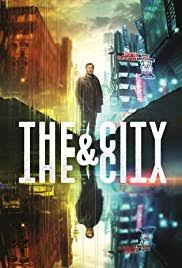 universally agreed definition of what constitutes a spoiler in the first place). ‘The City and the City‘ is particularly difficult to review without reference to the central concept. If you avoid blurbs, plot summaries, reviews, tv adaptations etc, and read this novel without any preconceptions (I would agree by the way that a ‘pure’ approach to reading any novel is impossible – the reader will be influenced by their knowledge of the author, the cover illustration, etc) you become slowly aware that there is something unusual about the setting.
