
This was a holiday, ‘I need something to read that isn’t too serious’ read, but to be honest it is not the kind of novel I would usually bother with, even notwithstanding the endorsement of the Zoe Ball Book Club. This is one of those novels where the book cover and blurb tell you almost everything you need to know:
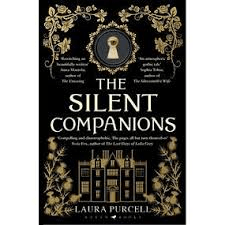
“When newly widowed Elsie is sent to see out her pregnancy at her late husband’s crumbling country estate, The Bridge, what greets her is far from the life of wealth and privilege she was expecting . . .”
I appreciate that sometimes dramatic clichés are hard to avoid. But this novel embraces them with ardour.
In Jane Austen’s satire on this genre, ‘Northanger Abbey’, the heroine Catherine Morland describes why she is not frightened to be visiting the Abbey, despite her romantic fancies:
“Besides, it has never been uninhabited and left deserted for years, and then the family come back to it unawares without giving any notice, as generally happens“.
You have guessed it, this is precisely what happens at the opening of ‘The Silent Companions’, when with her husband dead just weeks after their marriage, Elsie returns to the spooky ancestral home with only her husband’s cousin for company. Or so she thinks. The husband’s cousin has been dispossessed by the marriage and siring of an heir, so one would expect her to be a figure of suspicion when the inevitable mysterious and eerie events start to occur. But of course that never happens.
You have to wonder whether Austen would have thought her satirical observations on the gothic novel would remain relevant 200 years on?
Locked doors, painted wooden figures that bear a striking resemblance to other characters and whose eyes follow you around the room, a moody housekeeper, sullen villagers, mental asylum patients struck dumb with fear, things that almost literally go bump in the night – there really isn’t a cliché left unmined in this gothic horror story. Oh, not forgetting the shop that mysteriously appears and then can’t be found the next day – isn’t that borrowed from ‘Gremlins’?
The author never quite decides if she is writing a crime novel or a supernatural thriller. There is an entirely predictable, common-sense whodunit ending in which we are led to believe that the novel’s events are all wrapped up, but a moment’s consideration reminds the reader that many of those events have in fact not been explained, and could only have had a supernatural explanation, making the attempt to provide a realistic explanation redundant.
It will be clear by now this is not a recommended read. It is lazy generic fiction and a waste of the reader’s time.
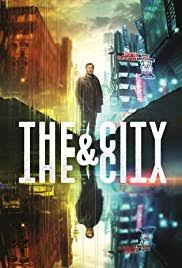 universally agreed definition of what constitutes a spoiler in the first place). ‘The City and the City‘ is particularly difficult to review without reference to the central concept. If you avoid blurbs, plot summaries, reviews, tv adaptations etc, and read this novel without any preconceptions (I would agree by the way that a ‘pure’ approach to reading any novel is impossible – the reader will be influenced by their knowledge of the author, the cover illustration, etc) you become slowly aware that there is something unusual about the setting.
