Having recently broken my short story review duck, I decided to read another collection, this time by the Edwardian modernist E. M. Forster. This edition, available as a Penguin 20th Century classic, is a good introduction to Forster, because it so clearly demonstrates what is wrong with his work, avoiding the need (if you are lucky enough to start here) to go on and read the novels.
The problem is essentially one of perspective. All of these stories, and I think this comment also applies to many if not all of the novels, are written from the narrow upper-middle class point of view from which Forster is never able to move away, no matter how he tries. All his point of view characters are to a greater or lesser extent prosperous, never seem to have to work, have servants or paid companions, and can afford long, indulgent if apparently unenjoyable journeys across southern Europe. Working class people and foreigners do appear in Forster, but the world is never seen from their perspective, and to be blunt they always seem two-dimensional participants.
Forster does, to be fair, consistently side with the people who are polite and condescending to these “others”. In novels such as Howards End and Where Angels Fear to Tread this extends as far as being able to contemplate relationships across class and national divides, but these relationships almost always end in tragedy or violence. Howard Bast is murdered, (Howards End) Gino loses his wife and baby (Where Angels) and Dr Aziz (Passage to India) has his life ruined by the false accusations made against him. Here the Greek family who are kind to Mr Lucas in The Road from Colonus are wiped out in a freak accident the day he moves on.
I don’t know whether Forster was unable to see the world through the eyes of the people who obviously fascinated and attracted him, or simply chose to write about what he knew. The relentlessness of yet another group of fussy English people settling into yet another picturesque Southern European town, with its hotels, its funny foreigners, the stereotypical alpha-male trying to assert himself by speaking English loudly, the older women, often in pairs, fussy about their luggage, eventually becomes wearisome.
Forster kept his sexuality a well-guarded secret in his lifetime, refusing to publish Maurice until after his death, but the homo-erotic gaze is also apparent here, not least in The Story of the Siren where a young Italian diver entrances the narrator:
“With a jerk he became alive, seizing my arm and saying “…I will show you something beautiful”….He drew me away from the light till I was standing on the tiny beach of sand…there he left me with his clothes…for a moment he stood naked in the brilliant sun…the man is past all description. His effect was that of a silver statue.”
(I’ve edited some text here to emphasis the point. Quite why he needs to be naked to go diving to recover a book, which surely would have floated anyway (thus avoiding the need for the naked diving) is unclear.)
These stories differ from the novels in one important way, and that is in their handling of the supernatural. In the introduction to the 1947 edition Forster describes them as “fantasies”. An element of the other-worldly is introduced in most tales. In some it is creatures such as Pan, fauns or sirens; in others it is the afterlife – one character goes to heaven, finds it boring, and leaves. Another character escapes from a boorish fiance by becoming a tree. At some points these injections of fantasy seem largely whimsical, and to this reader at least a little nauseatingly so. Elsewhere the allegorical nature of the tale is more obvious. In The Other Side of the Hedge for example, life is described in Bunyanesque terms as a walk beside a hedge, on one side of which is a hard-paced race with no obvious end in sight, and on the other an Elysian paradise of fields and recreation.
The Story of a Panic, the first story in the collection, demonstrate many of the inherent problem in Forster’s use of the fantasy genre. It is a silly melodramatic story about a sulky teenage boy, Eustace, (possibly the inspiration for Eustace Scrubb?) who one day, while on a walk in the ubiquitous Italian countryside, is possessed by the spirit of Pan. Instead of narrating the story in a way that is at least marginally sympathetic to the child, giving us some insight into what happens to him, Forster narrates the tale through the eyes of an older English tourist, who insists on being addressed formally, and looks sneeringly down on the Italians working in the hotel. This strange little mis-firing tale establishes the template for many of the other stories in the collection, where essentially the same mystical experience is predictably repeated using the same set of characters and features. The tiresome and repetitive nature of these motifs almost became too much for me by the end of the collection, to the point where I didn’t want to read on because a) I knew what was coming, and b) I felt patronised by it. The most interesting story in the collection, The Machine Stops, which I reviewed earlier this year, is an exception to the fantasy genre, and is all the more refreshing for it.
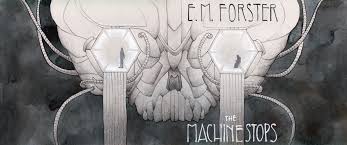
The Machine Stops is a strangely prescient Edwardian novella by an author better known for his writing on the delicate nuances of class behaviour amongst English people abroad. I tend to think of Forster as a modernist, but this text is closer to the Victorian science fiction of Wells and Verne than it is of the Bloomsbury authors Forster is commonly associated with.
In The Machine Stops Forster describes a world set far in the future, where humanity lives underground, all their needs met by the omnisicient, all powerful, ‘Machine’. People live alone in isolated cells and only communicate using a version of skype (obviously Forster doesn’t call it that, he wasn’t that far-seeing, but that’s what it in effect is, even down to the fact that nuances of expression are lost on the video screens) and avoid all physical interaction with one another. They also appear scared of the sun, which I believe is intended to remind us of Wells’s troglodyte Morlocks in ‘The Time Machine’.
Vashti, a “swaddled lump of flesh”, is the character we follow through the eyes of an omniscient narrator. The story opens thus:
“Imagine, if you can, a small room, hexagonal in shape, like the cell of a bee.”
Who is it that is inviting us to imagine this room? Someone is telling us a story about a time set a long way in our future, but also I would suggest, in the past of his hypothetical audience, when cell-living, near universal in the time of the Machine, is no longer the norm, so much so that it has to be pictured rather than just known. Thinking of an hexagonal room requires no great feat of imagination unless it is or has become something out of the ordinary. Is this Forster inviting his 1909 readers to imagine a future, or the narrator looking back on the time of the Machine before its stopped?
Some of this writing is clumsy – ‘hexagonal in shape’ – is tautology surely? “Hexagonal” would have sufficed. However the room’s shape leads the narrator to the text’s first, complex, image – it is like both a cell and simultaneously like part of a beehive. The use of the word cell suggests that Vashti – and everyone else living in the control of the machine – is its prisoner, entirely dependent on it for food, water, light etc. At the same time the room is part of a hive community, in which everyone has a pre-determined role in life and little choice in their future.
Vashti is contacted unexpectedly one day by her son Kuno, who has a mysterious message he can only tell her face to face. Against her best instincts she travels by plane to his cell, where he outlines his concerns about the Machine and the soullessness of existence underground. He hints that the surface world is not, in fact, uninhabitable, as people have been led to believe.
Vashti rejects her son’s confidences, and returns to her empty life of routine and order. Rather than stopping suddenly the machine slowly begins to fail over a period of years, before an final cataclysmic collapse in which Vashti, Kuno, and everyone else living underground dies.
The topicality of Forster’s observations about the risks of mankind becoming overly dependent on technology need hardly be spelled out. We are now all highly reliant on machines, (rather than a machine), but we are still vulnerable to the kind of technical or mechanical failure Forster anticipates. We also live very sheltered, sedentary lives compared to our grandparents, and are retreating from nature. In other words technology is a mixed blessing. Forster also anticipates the rise of social media, and its impact on social relationships. He notes of Vashti that
“she knew several thousand people; in certain directions human intercourse had advanced enormously.”
But is the text ultimately anything more than a curiosity? Certainly it is that, without doubt, but I am not surprised Forster moved on to novels about middle class people and their subtle class distinctions, because as a story The Machine Stops is a failure. The two main characters are two-dimensional. The ending is sign-posted in the title, so hardly comes as a surprise. And as social commentary the story is a little preachy. When you compare what Wells was able to do with similar ideas one begins to appreciate how little Forster makes of his unquestionably original insights.
I first read Forster’s Where Angels forty years ago as one of my ‘O’ level texts. It was interesting to reflect on what I remembered and what had not survived the loss of brain cells over the years. The basic plot outline was still there, although the ending came as a pretty unpleasant surprise. Strangely one sentence about the novel’s protagonist, Philip, one of the fools rushing in where angels fear to tread, remained crystal clear:
“He might be a puppet’s puppet, but he knew exactly the disposition of the strings”.
This was the type of quote that we all were taught to underline and memorise, as a key to understanding Philip’s character. Looking back I am not so sure it works that way, although certainly Forster suggests as much by the heavy handed language (in what way is Philip a puppet’s puppet – who is the puppet who is controlling him – his mother? Hardly a puppet surely, more a very headstrong woman, another fool rushing in without thought or consideration. And ‘he knew exactly’ rather than ‘he knew the exact’ is a clumsy formulation which again serves to make the sentence stand out.)
‘Where Angels’ is a slight novel, chosen I suspect as an ‘O’ level text because of its length rather than any particular intrinsic literary value or its interest to teenagers. Lilia Herriton is widowed in her early thirties, and undertakes a Grand Tour of Italy at the suggestion of her in-laws, who appear keen to get rid of her for a while, despite the fact that she leaves behind a young daughter, Irma. Her travelling companion, Caroline Abbott, a younger single woman, is intended to act as a chaperone, but fails miserably to prevent Lilia from falling in love with and marrying a much younger Italian man, Gino. The Herriton’s suspect Gino is a Mediterranean cad – his father is a dentist for goodness sake!
“A dentist! A dentist at Monteriano. A dentist in fairyland! False teeth and laughing gas and the tilting chair at a place which knew the Etruscan League, and the Pax Romana, and Alaric himself, and the Countess Matilda, and the Middle Ages, all fighting and holiness, and the Renaissance, all fighting and beauty! He thought of Lilia no longer. He was anxious for himself: he feared that Romance might die.”
(I recognise, of course, that this over-the-top reaction is supposed to be funny, pricking Philip’s pomposity. I am not sure it is though.)
Arguably this is the first of several instances of fools rushing in, but it is quickly followed as Lilia’s brother-in-law Philip hurries to Italy to try to prevent the marriage, arriving too late and leaving ineffectually empty-handed. Philip feels partly responsible for this inappropriate marriage – he was very enthusiastic about the idea of Lilia going on an Italian tour, being something of a connoisseur of all things Italian.
Lilia finds life in Italy much less romantic and interesting than she anticipated – Gino is a stereotypically unfaithful Latin lover, and she is effectively confined to her house in a small provincial town. Forster sometimes uses deus ex machina techniques such as a sudden death to inject drama to his novels, and he succumbs to this plot device again when Lilia dies in childbirth. This felt as if Forster was laboriously setting up the novel’s denouement, getting his pieces in play for the final scene, rather than an integral part of the narrative, and her death is announced casually. The reaction back in England is at first to ignore the new born (who is not a blood relative of the Herritons). Quixotically they change their minds – or more specifically Mrs Herriton, the family matriarch, changes her mind – when she hears that Caroline has decided to go back to Italy to ‘save’ the child from the horror of being brought up motherless, and worse, Italian. Philip follows Caroline accompanied by his scary sister Harriet aiming to gazump Caroline and effectively buy the baby from Gino.
Gino is not interested in selling his son, of course and is planning to remarry to provide him with a mother. In a melodramatic finale Harriet kidnaps the baby and flees for the coast. Racing to meet the train, their coach crashes and the baby is killed. The aftermath of the crash is painful to all. Philip eventually realises that he is in love with Caroline but she is still in love with Gino, having been so all along.
There is a soap opera element to the repeated overnight journeys to Italy and back, the sudden deaths and unsuitable and unrequited romances. In an otherwise positive essay for the Guardian back in 2002, Zadie Smith wrote “there is a lot in Forster that fails, is both cloying and banal” – which made me wonder what she would have said if she really didn’t like his work. I quote her here because this phrase resonated with me – there is a lot in Where Angels that doesn’t work, is sentimental, over-written and dull. When it was first published over 100 years ago the Guardian then called it (again in another not altogether hostile review) “a sordid comedy culminating, unexpectedly and with a real dramatic force, in a grotesque tragedy.” The two elements, humour and tragedy, sit uncomfortably together – the novel is neither a gentle comedy about silly English people and their class distinctions, nor a tragedy about how good intentions can go wrong. Ultimately I found it melodramatic and not in a good way.
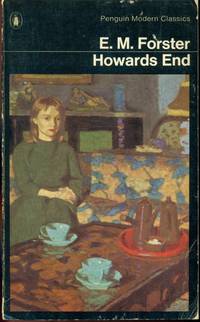
Set in Edwardian England at the beginning of the 20th century, during that brief but now seen as idyllic decade when the full horrors of the twentieth century were yet to emerge, ‘Howards End’ concerns three families: the Wilcoxes, the Anglo-German Schlegels, and the Basts. Each family is very precisely defined in terms of their class. The Wilcoxes are the more prosperous family, but their money derives from business rather than inheritance. Mrs Wilcox is differentiated from the rest of her family by her inheritance of the family home, the ‘Howards End’ of the novel’s title. The Wilcoxes are determinedly conservative and patriarchal, fiercely rejecting women’s suffrage and ordering their servants around brusquely. The Schlegels sisters, Margaret and Helen, are more urban and liberal, interested in the arts and living on inherited money without having to work for a living. The Basts are working class, and while Leonard is an insurance clerk he has aspirations for a life of culture. His wife appears only briefly in the novel, but plays a crucial part in one of its moment of melodrama.
After the Schlegels and Wilcoxes meet on holiday in Germany, Helen visits the Wilcoxes at their country home, (Howards End), where the novel opens. Impetuously she becomes engaged to the younger son, Paul, although they both almost immediately realise this has been a silly mistake, and call the whole thing off. The Wilcoxes move to London, abandoning Howards End until the end of the novel, into an apartment close to the Schlegels’ home. Margaret Schlegel and Ruth Wilcox become unlikely friends, but this friendship is cut short by Mrs Wilcox’s unexpected death. On her deathbed she bequeaths Howards End to Margaret but the bequest is informal and Margaret does not become aware of it until many years later. The Wilcox’s burn the note and agree never to speak of it, considering it a betrayal.
In a parallel plot line, the Schlegel sisters meet Leonard Bast at a concert. Leonard is an impoverished clerk about to marry a much older woman. Leonard yearns for a life of culture and the arts. Mr Wilcox warns the sisters that the insurance Leonard works for is likely to go bust – they in turn warn Leonard, who quits his job for something less well paid, only for that advice to turn out to be completely wrong.
Another time jump, and Henry Wilcox, the family patriarch and widower, and Margaret (the older Schlegel sister) become friends. Unsuited for the life of a bachelor, Henry proposes to Margaret. This is a marriage of opposites, and it is uncomfortable to a modern reader to see Margaret bullied into submission by her boorish husband, devoid as their relationship is of any outward sign of affection or compatibility. (In a horrible parody of affection, Henry refers to Margaret as “it” – “What a practical little woman it is! What’s it been reading” (chapter 31). Henry’s children are unhappy with this marriage – Margaret is an outsider, and their opposition is focussed on a suspicion that this is a long term plan to claim her rights to Howards End.
The melodrama really starts in earnest at the fateful wedding of one of Mr Wilcox’s children, Evie, in Shropshire. Distressed by finding the Bast’s living in poverty, and blaming Mr Wilcox for their situation, she bizarrely drags them to Shropshire to confront him. Unsurprisingly that doesn’t go well – in fact it goes horribly wrong, and from this point the events of the novel spiral badly out of control.
Forster is usually considered a liberal novelist, a defender of the arts and liberal values against the barbarism of the Wilcoxes and their ilk. Certainly the Schlegels are the more sympathetic personalities in the novel, but the whole thrust of the narrative is an attempt to reconcile the different aspects of the national character, bridging the gap between progressive and conservative, rich and poor, rural and urban – all of which is brought together in the novel’s central location, Howards End, and the very modern blended family that eventually comes to live there.
‘Howards End’ is usually considered a “state of the nation” novel, in which the central theme concerns how the country is emerging from the Victorian period to face the challenges of the twentieth century. In this reading the Wilcoxes can be seen as the confident, bullying imperialist, always ordering the working classes about. Mrs Wilcox represents the aristocracy, unifying the disparate elements of the novel through her house, ‘Howards End’. The Schlegels are the cultural life of the country, and Leonard Bast the apologetic and slightly pathetic representative of the working class. I’ve picked out a few quotes which illustrate this discussion of class:
“Dear Margaret, do come into the library and shut the door. Your maids are dusting the banisters”. (Chapter 2)
This is Mrs Munt, the sisters’ aunt, speaking. There are a number of things that jumped out at me when reading this sentence. First, they have a library. This is a novel in which lots of contrasting homes feature, and this is one of the central locations. The dimensions of the Schlegel’s London home in Wickham Place (a fleeting reference to Austen perhaps?) are never given. But it must be a decent size to have a library. Second – and this point is made several times elsewhere in the novel – it is not the done thing to speak of private or personal matters in front of staff. But third, and possibly most noticeably, the sisters have at least two, and possibly more, maids. Servants feature extensively in ‘Howards End’, although they are rarely given a voice (I think one of the chauffeurs might have a line or two) but essentially they are a servile underclass treated as disposable items of equipment. There is a passing indication that employing and retaining servants is something that is becoming increasingly hard in Edwardian England, and of course that situation was to get markedly worse during and after the Great War, but there is a strong line linking the maids, valets and butlers of Austen’s Regency novels and the Schlegel’s and Wilcox’s domestics nearly 100 years later.
“’Esprit de classe’…was strong in Mrs Munt. She sat quivering while a member of the lower orders deposited a metal funnel, a saucepan, and a garden squirt beside the roll of oilcloth.”
(Chapter 3)
Mrs Munt is essentially comic relief in this novel, and we are presumably intended to find her sense of outrage at the way she is being treated, her silent impotence, amusing. There certainly is something comic in the list of miscellaneous objects being loaded in to the car from the ironmongers – but class and class instincts are never far below the surface in ‘Howards End’. Here the shop-keeper is a representative of the lower orders, in front of whom class spirit dictates that emotions, particularly those of women, must be strictly checked.
“She (Mrs Wilcox) approached just as Helen’s letter had described her, trailing noiselessly over the lawn, and there was actually a wisp of hay in her hands. She seemed to belong not to the young people and their motor, but to the house, and to the tree that overshadowed it. One knew that she worshipped the past, and that the instinctive wisdom the past can alone bestow had descended upon her – that wisdom to which we give the clumsy name of aristocracy.” (Chapter 3).
Forster returns to the issue of class, claiming here that aristocracy is ‘the instinctive wisdom of the past’ – which is why the country and its assets should be left in the hands of the upper classes, not people with pretensions above their stations such as Leonard Bast. This is profoundly conservative perspective, and there is little reason to believe it is not the author’s as well as the narrator’s. incidentally, that wisp of hay in Mrs Wilcox’s hands makes a reappearance almost 300 pages later in chapter 43, as Margaret considers the aftermath of the confrontation at Howards End between Charles Wilcox and Leonard. “Life was a deep, deep river, death a blue sky; life was a house, death a wisp of hay”. This echo from the novel’s opening to its conclusion can’t be an accident (death is not, after all, a wisp of hay) and I suspect is Forster’s way of linking the opening scenes at Howards End with the novel’s conclusion.
At Mrs Wilcox’s funeral the narrator describes a woodcutter high in a tree, looking down at the ceremony. “With a grunt he descended, his thoughts no longer on death, but on love, for he was mating”. I can’t recall any ever reading about someone engaged in an ongoing sexual relationship – which is what Forster means – described in this way. It is coarse and animalistic – it implies that is all he is doing, copulating, rather than being in love. Without question he would not describe the relationships between the other characters in the novel in this way. The conception of Helen’s baby is virtually immaculate by comparison. Put simply, this is the language of class hatred. Is this the narrator who finds working class people no better than animals, or is it Forster? I could scour Forster’s diaries and correspondence to try and identify his personal opinions on class and sexual relationships, but that wouldn’t really answer the question. Certainly the perspective is consistent with the narrator’s other comments on class, such as the equally brutal and faintly ludicrous “We are not concerned with the very poor. They are unthinkable, and only to be approached by the statistician or the poet.” (Chapter 6)
There’s much to enjoy in ‘Howards End’. It is a thoughtful novel of ideas. At times the writing goes over the top, and the narrator becomes more of a preacher, such as here:
“Margaret realized the chaotic nature of our daily life, and its difference from the orderly sequence that has been fabricated by historians. Actual life is full of false clues and sign-posts that lead nowhere. With infinite effort we nerve ourselves for a crisis that never comes. The most successful career must show a waste of strength that might have removed mountains, and the most unsuccessful is not that of a man who is taken unprepared, but of him who has prepared and is never taken. On a tragedy of that kind our national morality is duly silent. It assumes that preparation against danger is in itself a good, and that men, like nations, are the better for staggering through life fully armed. The tragedy of preparedness has scarcely been handled, save by the Greeks. Life is indeed dangerous, but not in the way morality would have us believe. It is indeed unmanageable, but the essence of it is not a battle. It is unmanageable, but the essence of it is not a battle. It is unmanageable because it is a romance, and its essence is romantic beauty.”
I am afraid this means very little to me, and I don’t read novels for this level of patrician pomposity. But if you skim over these paragraphs, and I recognise you really shouldn’t have to, then what remains is an important novel that bridges the gap between the authors of the Victorian era and the modernist writers of the twentieth century.