
My last post summarised the plot of this play. Look Back in Anger made a big impression when it was first performed in the 1950’s. It caught the zeitgeist in that special way that some works of art do, and because they are so very much part of the cultural, social and political environment in which they were created, it is often the case that outside that context they lose much if not all of their impact. That’s not in any way a criticism of such works, or a claim that timelessness equals greatness. But the unarguable fact is that Look Back in Anger is not performed very much if at all nowadays, and for a good reason.
The 1950s were an interesting time. The war still hung over the country and the austerity is caused was only just wearing off. People like Jimmy Porter were going to university for the first time, where they were taught by men who had come through the war. At the same time the Cold War was accelerating, and the possibility of nuclear annihilation of the planet was becoming clearer. Britain’s role on the world stage was diminishing, and Alison’s father’s reminiscences of the days of the Raj are a reminder of this. Jimmy’s anger was, for 1950’s audiences, a slap in the face, a visceral shock, and the fact that his anger is so unfocussed – it is never really clear precisely what it is he is angry about – make sit all the more difficult to respond to. Which is why Cliff and Alison, for the most part, simply absorb it. It is interesting to me that the play’s title is Look Back in Anger – that is to say Jimmy’s anger is about the past, not so much the present. And neither Cliff nor Alison can do much about the past, hence their helplessness in the face of Jimmy’s ranting.
So the question is whether this play is simply a period piece, important at the time but no longer of any particular interest, or whether it can be re-staged and made relevant for the twenty-first century? Is there anything left to be angry about now the Cold War has been won and we are all middle class? I would be astonished if an accomplished company couldn’t resurrect this play. There are some staging issues – everyone seems to smoke throughout the play for example, although that could be updated to e-cigarettes I suppose with a bit of a nod to the passage of time – and some of the contemporary references could be updated without any damage to the integrity of the play. But the relevance of Jimmy’s frustration with the state of the country and his place (or lack thereof) in it seems screamingly relevant to me.
Having said that I suspect the sudden switch of affection from Alison to Helena, their interchangability in Jimmy’s bed, would be hard to pull off convincingly. Jimmy would need to be irresistible, which I suppose could be done. I’d like to see a company try it.
Category Archives: Book review
Look Back in Anger by John Osborne
If I was writing this review say 25 years ago, I would not need to provide any details about the content of this play. It formed part of the cultural scenery, largely because of the impact it caused when first performed in the 1950s. Subsequent films (including one with Richard Burton) and revivals meant that everyone knew, broadly speaking, who Jimmy Porter was, and phrases like “angry young man” and “kitchen sink drama” were part of every day discourse.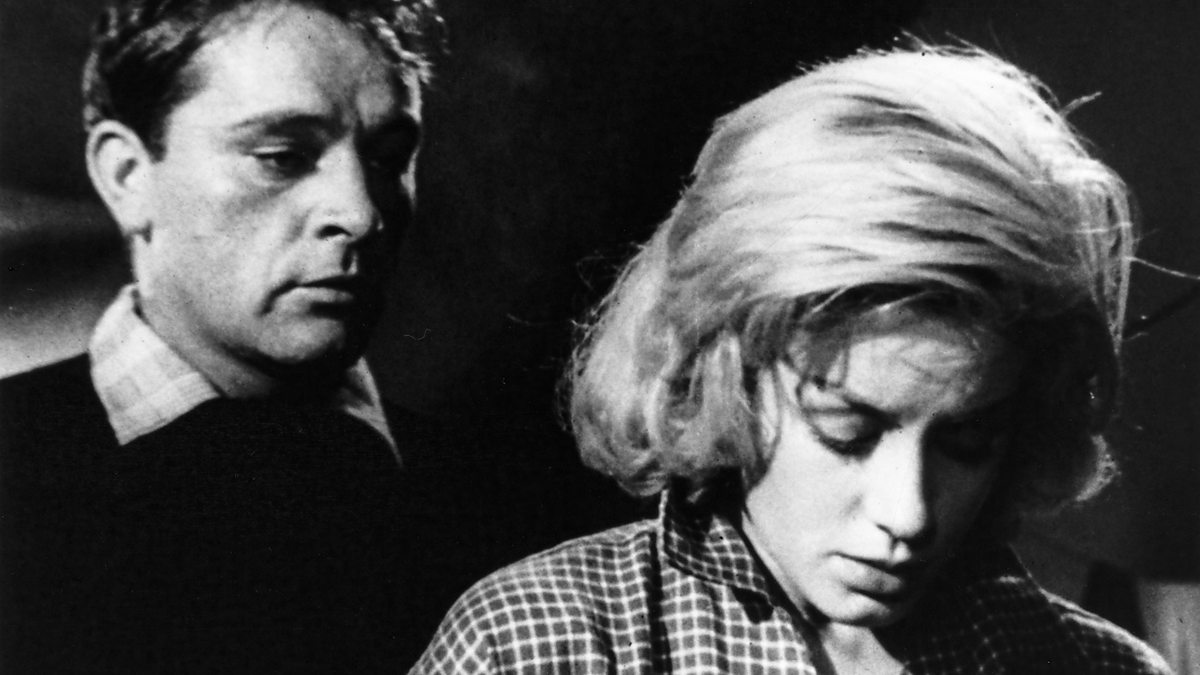
Now, in 2015, less so. The play is not performed very often, if at all, is not (at the time of writing) on GCSE syllabuses, and the reasons for Jimmy’s/John’s anger seem confused and distant. So to start with a recap. Look Back in Anger is a short play which portrays the relationships of Jimmy Porter, his wife Alison, and their friends Cliff and Helena. There is also a short appearance by Alison’s father, Colonel Redfern. Jimmy is 25, too young to have fought in the war, and is a university graduate. He runs a sweet stall in an un-named Midlands town. It is not entirely clear if this unconventional career choice is voluntary, a rejection of the rat race (in the same way that John Braine’s lead character in “Hurry on Down” becomes a window cleaner) or an expediency to pay the rent. Jimmy is often described as working class, but I think the portrayal of class in this play is more subtle than that – not too many working class people went to university in the 1950s, even if it is more white tile than redbrick, and Jimmy appears to look down on Cliff in class terms, describing him as a ruffian. He is also very erudite, reads the posh Sunday’s, and listens to classical music concerts on the radio. So hardly a working class hero.
His wife, Alison, is however, screamingly middle class. She appears to have married Jimmy, her “bit of rough” to irritate her parents, (particularly her mother), although there is also the suggestion that Jimmy is sexually irresistible. Alison is slumming it, and when the play opens with her ironing Jimmy’s clothes while he and Cliff laze around reading the Sunday papers, she is approaching the end of her tether. Jimmy taunts her constantly, appearing to have already recognised that their relationship is doomed, and therefore accelerating its end. To be fair to Jimmy, he will lash out at any target, although Cliff has developed a technique for handling him – he either gives as good as he gets, or ignores him. Not much happens beyond the grumpy conversations about their Sunday rituals, Cliff the lodger, and old friend of Jimmy’s, providing a foil to much of his good-natured abuse. Cliff and Alison have a strangely overly affectionate relationship which they act out in front of Jimmy, almost to goad him, without success.
Helena, Alison’s childhood friend, arrives as an emissary from the middle class. She spars with Jimmy constantly, and he is right to resent her presence – she makes no secret of her contempt for him and encourages Alison to leave him. Alison breaks the news that she is pregnant – this is clearly unwelcome. She plucks up the courage to leave Jimmy.
It is at this critical turning point that Osborne drops quite a dramatic bombshell (a dead metaphor if ever there was one). Alison leaves, but Helena stays, and confronts Jimmy with the news of his wife’s pregnancy. They fight, she slaps him, he cries, and she jumps on him, passionately, leaving the curtain to fall on what we are led to believe was the consummation of a passion that has been building for some time.
There is an obvious problem here – this switch is utterly unbelievable, psychologically, but the dramatic value of it far outweighs the cost in terms of the audiences’ willingness to believe in these characters. We just have to believe she finds him irresistible, not that she likes him. She quickly takes Alison’s place, literally in that she resumes her stance behind the ironing board, and familiarity quickly descends on Jimmy’s flat. In the play’s climax Alison returns, having lost her baby (strangely I mis-remembered this scene before re-reading the play, thinking she had had an abortion. The scene could be played that way – “I lost the child” could be euphemistic – but perhaps that would have been one taboo too many for Osborne’s 1950’s audience.)
So that’s the play, in summary. I wouldn’t normally spend so much time on a plot as that, but I think it is worth it to provide context for the commentary in my next blog.
Book review: Why Marx was right by Terry Eagleton
Or, irritatingly on the front cover of the book (published by Yale University Press in 2011) “why marx was right” – as if this was some e.e.cummings poem! Anyway, overcoming that minor grievance, I was pre-disposed to like this book. That the ideas of Karl Marx have been too easily dismissed or overlooked since the end of Soviet communism in the late 1980’s/early 1990’s is undeniable. A well written demolition of the more prevalent myths about Marx was long overdue. But this isn’t it. In fact, I struggled so much with this that it joins the very short list of books I have tried to finish but failed.
The principal reason for this is Eagleton’s style. I am sure that what he was attempting to do was engage his audience and make the subject matter accessible, but his use of humour to do this is so wooden, at (most) times so inappropriate, so misjudged, as to make this almost unreadable. I started underlining some examples when I was still perserving with this book, but the pages soon were covered in lines. Here’s some random examples:
“Inequality is as natural to capitalism as narcissim and megolomania are to Hollywood” (pg 78)
“Change …is not the opposite of human nature; it is possible because of the creative, open-ended, unfinished beings we are. This, as far as we can tell, is not true of stoats.” (pg 81)
“If babies could get up and walk away at birth, a good deal of adult misery would be avoided, and not only in the sense that there would be no bawling brats to disturb our sleep” (pg 85) (Unpleasant turn of phrase there).
And so on and on relentlessly, “joke” after “joke” without any genuine humour at all. These may go down well as practiced asides in the lecture hall, but on the page they didn’t work at all. Neither do the constant popular culture, man of the people references to football or going down the pub – we all know Eagleton prefers cricket and white wine. We can spot a phoney a mile off.
Eagleton has clearly read every word of Marx, and huge numbers of other thinkers, critics and commentators, who are endlessly name-checked. Take this for example:
“As the philosopher John MacMurray comments,”Our knowledge of the workd is primarily an aspect of our action in the world.” “Men”, Marx writes in Heideggerian vein in his Comments of Wagner “do not in any way begin by finding themselves in a theoretical relationship to the things of the external world” (pg 142)
Hope you got that, because there will be a quiz?
Marx wrote a huge body of work, and in the course of his life obviously refined his position on many issues. If you have the time and energy therefore you can find support for most arguments somewhere in his writing. Eagleton’s job here wasn’t to manipulate that work to support a narrow view of Marxism, but to preserve the key ideas which needed repeating. But there’s the rub – if Marx’s ideas really needed translating, saving or defending by Eagleton, aren’t they in deep trouble already? Perhaps “why marx was right” is wrong?
Incidentally, when I first started reading this book one thing struck me, and that was the confidence of the title. Typically academics write in a far less direct way – Why it could be argued that in most respects Marx was correct”. No such hesitation here, Marx was right, others are wrong, and I’ll punch anyone who disagrees. I liked that – such a shame that the book goes so far off course.
Moab is my Washpot by Stephen Fry
In the second volume of his autobiography (although “reminiscences” would be a more accurate description) Fry mentions performing in “All’s Well that Ends Well” in Queen’s College, Cambridge. I saw that performance, and while I have no memory whatsoever of “our hero” I think the odds are I must have seen him in it too. So that’s my personal connection with this book, for what very little it is worth.
If you had asked me a few days ago what the title of this book was I would have fought you to the death in defence of it being “Moab was my washpot”. Why the mental auto-correct? Obviously it’s in part the visual echo between “was” and “washpot”, but also it’s in the past tense, which is where biographies and their titles belong, in the “As I Walked Out one Midsummer Morning” category. The biblical reference is kind of explained in this edition – I reread the quasi explanation a couple of times, but am still none the wiser, and the intended impression of look at me cleverness is clearly quite deliberate.
There isn’t really a criticism of the Stephen Fry aged approximately 4 to 20 you can make that he doesn’t make of himself in the book, in a way becoming immune to such criticisms as he goes. Of course he was insufferable, profoundly irritating, dishonest and despicable towards his loved ones. Guilty as charged and yet still quite pleased with himself. Fry had as you can imagine a very privileged childhood, although he portrays it as ordinary. This is in part defensible – to him it was ordinary – but he must have enough experience of normal life by now to know that having servants in the 60’s (for example) wasn’t normal. The prep and public school experiences dwelt in in this book are however banal, I’m sorry to say – the only remarkable thing about them being that this way of life was thought worth preserving into the 1970’s and beyond, and that he thinks we will find the arcane details of the schools’ invented languages and rituals in any way interesting. Similarly his numerous digressions, which give the impression of existing simply to fill the space available, are a soapbox on which he is able to argue for his various opinions, haranguing the reader without allowing any genuine room for dissent or doubt.
Autobiography that is a careful attempt to massage perceptions of a public figure are always going to happen – don’t hate me, I am ordinary really, look at these pictures of me in short trousers on the beach at Southend etc – but this book is more subtle than that. Describing at almost all times a rather unpleasant little oik is a strange way of garnering public affection, but we forgive him almost everything (as do his saint-like parents and family, and virtually every other authority figure he comes across). He had a QC to present his mitigation at his sentencing hearing in the Magistrates’ Court for goodness sake! This forgiveness is manipulated principally by the alchemy at the end of this book – somehow the A-level failing, prison-sentence serving, obsessive thieving has been transformed into a hard working genius who gets a scholarship into Cambridge after only one year’s study, a transformation which is his responsibility alone it seems. I don’t buy that. It is the one part of the book where there is obviously a whole lot more going on that we aren’t told about. At other points he is clear that he changes details to protect the innocent – maybe some journalist will one day dig out what really went on over those months.
I have managed to get this far without using the “national treasure” description, which is quite an achievement, so there you have it. As such Fry is immune from any criticism, and good luck to him for it – let’s just hope he uses his immense power for good, not to protect public schools, fox hunting and the royal family. I worry about a day in 20 years when he is in the House of Lords lecturing us on how things were better in his day, when schoolboys were taught Greek before breakfast, where sex abuse was seen as part of normal school boy development (the description of his “deflowering” even when sanitised in its description, is not for the faint hearted) and all good fun, and the poor knew their place, good for a comic turn now and again but not much more. You really want a happy ending for Fry, you really do, but does he deserve it?
War: What is it good for? The role of conflict in civilisation, from primates to robots by Ian Morris
I have only read a handful of pages of the introduction to this long, weighty book, but I can honestly say I have never disagreed so profoundly with so much in so many different ways as I do with this author. To be precise, if the introduction is a faithful summary of the book as a whole then I disagree with it in numerous ways. Whether this is going to get in the way of actually finishing the book remains to be seen of course.
The astonishing thing for a book of popular history is that it takes as its central thesis the argument that Edwin Starr was wrong. More specifically, it argues that war, far from being good for absolutely nothing is at the heart of the development of civilisation. War builds society while at the same time driving behaviours that make war less likely and less damaging. War creates larger, more prosperous, and safer communities, and seems to have been the only way to create such bigger societies. At the same time war is now in the process of putting itself out of business. Strange that we happen to be living at such a turning point in the development of human history, the one time when war, having been the driving force behind social change and improvement, suddenly becomes obsolete. The end of history anyone?
Morris, to be fair, does seem to genuinely believe his thesis. No-one could be as cynical as you would need to be to think up a controversial and hard to prove position as he has here, dedicating the hundreds of hours of research required to support his arguments. (I assume that the following 400 pages or so aren’t filled with Garfield cartoons or such, but follow the pattern of densely written argument found in the introduction. Time will tell.)
Morris is so spectacularly wrong, in such a variety of ways, that it is quite hard to find a starting point. Let’s begin with the classic mistake of associating two things that happen at the same time and believing they are related. So wars (of many different forms) have characterised human history since the last ice age, and the beginning of modern civilisation. At the same time human civilisation has developed, population has grown, forms of Government have become more complex, and in essence we have become more “civilised”. Are the two things related? It’s impossible to disprove a theory like this. If you point to periods of peace and prosperity where society has taken a leap forward, well that’s just people reaping the rewards of earlier conflict. And periods where society has descended into barbarism – preparing the ground for the next step onward and upward. The problem here, you will have spotted, is that the exact same set of arguments could be used to prove the oppostive point – that war harms society, and the peaceful resolution of conflict or the avoidance of conflict, in those rare moments when it is tried, is what allows society to prosper.
The second thread of Morris’s argument is that over time people have become less violent, and that deaths as a result of warfare have declined – as a percentage of the population. This argument is reference in Jared Diamond’s Guns Germs and Steel, and I probably ought to read what I said about it then, but that would be cheating. I now think, irrespective of what I argued then, that the only way this point can be demonstrated is by cheating – cheating with the definition of warfare for example. The thesis becomes confused here – war builds societies, which allow people to prosper, but war is declining, becoming less lethal. Some of the wars we learn about in history involved professional armies a few tens of thousand strong, drawn from populations many times their size. I will need to see what evidence Morris presents before going much further on this point, but for now I am not persuaded.
Societies build, become larger and more prosperous, for many different reasons. Technology is obviously key, for example, in the Industrial Revolution. Morris probably would argue that war enabled the conditions in which technology could play its part, and I would concede that war has proven the catalyst for many technological breakthroughs. But was the spinning jenny developed as a response to the threat of war? Did we send battalions of steam engines or Internet enabled laptops into conflict against the French, the Germans, or anyone else we felt threatened by? You can argue war is at the root of these changes. Take the agricultural revolution – we needed more food to feed a growing population which happened because we were at peace because we had won previous conflicts, or alternatively because of a growing empire, won by war – you see, the theory fits whatever the circumstances, which means ultimately it is useless.
The Real Band of Brothers – First-hand Accounts from the Last British Survivors of the Spanish Civil War by Max Arthur
This book is a collection of eight first person narrative accounts of the Spanish Civil War, told by International Brigade survivors. Accounts such as this, obviously inspired at least in part by the fading away of the last of the Great War veterans, are an important historical legacy. This is not a history of the war, although a useful introduction provides some context. The accounts have been tidied up to an extent – no-one struggles to form a coherent sentence or remember a name – but apart from that sensible editing the accounts stand largely untouched. There is no dramatizing of events, no sanitising – when one of the interviewees describes shooting a Spanish soldier there is no hint of any regret. International Brigade volunteers went to Spain largely on their own steam – there seems to have been very limited active recruiting – and the haphazard nature of the struggle is clear. These personal accounts provide clear testimony of the struggle against fascism in the 1930s – these men and women understood the threat of the rise of fascism in Germany, Italy and of course Spain, as well as the home grown varieties in the form of Mosley’s blackshirts, and the Irish equivalent, the Blueshirts (which I hadn’t read about before, so I learned something!). Not one of the interviewees expressed regret, nor any hesitation in saying they would do it all over again, despite the very heavy price paid.
I have only one minor reservation about this book which relates to its title – the Real Band of Brothers. This title suggests that other bands of brothers lacked some essential quality which this group had. If that’s the author’s position – that because this group were all volunteers who were ideologically committed to their cause, rather than conscripts or people who sign up for other reasons, they are more real than others – then it needed to be argued rather than suggested. Without wanting to over-react on this issue, other bands of brothers (such as Henry’s Agincourt comrades, pressed men, mercenaries and regular troops) had a comradeship that was the equivalent of the international Brigades. Orwell’s Homage to Catalonia shows that comradeship on the republican side of the civil war had to say the least its limits.
The Thousand Autumns of Jacob de Zoet by David Mitchell
What a curious, complex novel this is. Let’s start with the title. Late on in the novel we find a reference to Japan (the book’s setting) as the “land of a thousand autumns”. So on one level the novel’s title can be interpreted as “Jacob de Zoet’s life in Japan”, which would be entirely accurate. But on another level the reference to a thousand autumns – ie a thousand years – hints at the theme of unnatural longevity, which is a small under-current in the novel, which I will explore in a bit more detail later on.
Japan at the end of the 18th century was obsessively insular, and made only the smallest concessions to contact with the outside world, in the form of a very small, physically segregated Dutch trading post on an island in the port of Nagasaki. The eponymous Jacob de Zoet takes a post as a clerk on this trading post to make his fortune, and the first two hundred or so pages of the novel follows his introduction to this bizarre, corrupt community. His contact with the Japanese is very limited, but his eye is caught by a Japanese midwife and medical student. This section of the novel follows a very traditional, linear, well researched formula which passed very slowly for me – the central character is not particularly interesting or appealing, and he has not much to say about his situation other than to pine for his fiancé back in Holland and simultaneously lust after the midwife, Orito. This is presented not very convincingly as a passion which he struggles against despite himself. Quite a few of the critical online reviews mention giving up on this novel due to the lack of pace or action, and I very nearly joined them. Jacob is a passive character who as a first person narrator fails to engage the reader.
However, the novel takes a sudden shift of tone and speed when the story starts to follow Orito when she joins a convent. When shown from Jacob’s perspective at the end of his section of the novel, this is a voluntary decision, but we are quickly shown that in fact a kidnapping. Orito has been sold into captivity by her step-mother (following her father’s death). Things get much darker quickly – the convent is populated by women rescued from brothels and freakshows with various ill-defined deformities, and they are used as sex slaves by the monks in the neighbouring monastery. Kept pregnant as often as possible, their babies are stolen from them shortly after birth. We are suddenly in a completely different kind of novel, lurid, exploitative, just a little bit racist. The pace of the novel accelerates – Orito tries to escape, and then a complex and desperate rescue plan is implemented. The outrageously sinister figure behind the baby farm emerges as we learn even more horrific details about the convent.
Having set up a scenario where a character we can empathise with and care about is in desperate danger, the focus then switches again, this time back to Nagasaki and the arrival of an English ship looking to plunder from the Dutch settlement. This scene is drawn from real life incident, and provides the catalyst for the novel’s denouement. There are then some hastily sketched notes for a finale in which the author appears to have lost all interest.
Having previously read the Bone Clocks, (ie out of publication sequence) the brief references here to the death cult being more than just a sick fantasy stand out. Lord Abbott Enomoto, the cult leader, mentions at one point that he is over 600 years old – there is no real explanation of this claim, and the reader is given no clue as to whether this is the claim of a lunatic, or has any substance.
My problem with this novel is this – well researched historical romances are fine, but they are not normally my preferred choice of reading. Rape/murder/infanticide/torture/time travelling thrillers also have a specialised audience. Mashing the two together, as this novel does, goes beyond bizarre. I half expected to see some vampires and zombies being woven into the plot. The case for the defence is that this is just magical realism, but I don’t buy that. The very dark aspects of this novel go far beyond the lighter feel of most magical realism novels. I do admire what Mitchell is trying to achieve. He is reinventing the novel, or at least experimenting with its form to breaking point. He is a fine writer, and his poetry, clumsily disguised as prose, is superb. His metaphors and imagery are often remarkable. But building a novel around such bleak, disturbing themes requires more than a patina of historical realism and gentle romance. I’d be really interested in your thoughts.
The Bone Clocks by David Mitchell, 2014
David Mitchell’s novels defy categorisation. Anyone who has read Cloud Atlas, or seen the pretty trippy film version, will know that he is keen to break down the traditional structures of the novel. The Bone Clocks is no exception, and I am reasonably sure that if it had been published anonymously it would have been quite easy to have identified Mitchell as the author.
I’m quite torn in reviewing this novel. On the other hand, I read it in a few short days, consuming it and carrying on reading long after the point common sense was telling me to take a break and get some sleep. I am trying to avoid the cliché “unputdownable”, but this is the first book for a long time where that has happened, where I genuinely engaged with the characters and wanted to know what happened to them, how the author manages to tie together the strands.
But on the other hand this is really a very silly novel. Woven into the naturalistic strands, stories of a teenage runaway in the seventies, a boorish Cambridge graduate on a skiing holiday in the 80’s (I think) and so on, short stories really but all linked by characters that come in and out of focus, is a time travelling science fantasy thread which on its own would be utterly preposterous and almost certainly unpublished. I suspended critical judgment when reading because the naturalistic sections are so well done, but it undoubtedly makes a strange beast of a novel.
Bone Clocks, incidentally, is a euphemism for people. Quite nasty really. On balance I’d say Mitchell just about gets away with this, although his credit in the readers’ trust is eroded somewhat. But this was enough to get me reading some of his earlier novels, in particular the more recent “Thousands Autumns of Jacob de Zoet” which I am partway through at the moment. I’ve read some of the online commentary on Bone Clocks, and there are some fierce deconstructions of the text, notably on Amazon, that make good points. It is silly and self-caricaturing at points, and evidence of “dialling it in” aren’t hard to find. But I keep coming back to those “just another chapter” nights – am I that much of a sucker for an adventure story?
Book review: Agnes Grey by Anne Bronte
There’s a Darwinism in play which determines whether novels continue to be read after the author’s death and the passage of a few decades. Authors that were once widely read and popular turn out over time to be of interest to only a very specific audience, and do not translate well into later periods. As the years pass the number of surviving and still read authors dwindles further, until even once great, Nobel-winning titles are only downloaded for £0.00 on the Kindle, to remain on aspirational reading lists but never quite got round to. But some novels buck the trend, going into hibernation for a century or more only to be rediscovered with a fresh relevance by a new generation. Agnes Grey undoubtedly is not one such novel. It is dull beyond comprehension, and only appears here a) because of the previously mentioned Kindle free availability, b) it is an AS text, c) it was written by a Bronte (Anne, her first novel).
There’s a Darwinism in play which determines whether novels continue to be read after the author’s death and the passage of a few decades. Authors that were once widely read and popular turn out over time to be of interest to only a very specific audience, and do not translate well into later periods. As the years pass the number of surviving and still read authors dwindles further, until even once great, Nobel-winning titles are only downloaded for £0.00 on the Kindle, to remain on aspirational reading lists but never quite got round to. But some novels buck the trend, going into hibernation for a century or more only to be rediscovered with a fresh relevance by a new generation. Agnes Grey undoubtedly is not one such novel. It is dull beyond comprehension, and only appears here a) because of the previously mentioned Kindle free availability, b) it is an AS text, c) it was written by a Bronte (Anne, her first novel).
A measure of the novel’s popularity is that it has never been adapted for television and screen. For good reasons – very little happens. We expect, from Wuthering Heights and Jane Eyre, for Bronte leading female characters to have some spirit, if not spunk, but Agnes is limp, passive, and dull. She gets her man in the end, but doesn’t really deserve him, AB simply rewarding patience and virtue with a predictable long foreseen happy ending which is a complete anti-climax. With most Bronte novels it’s not really about the destination, more about the journey, but with Agnes there is little if any self discovery or personal growth. Some novels deserve to be forgotten, not disinterred to torture A level students, when there is so much great literature out there waiting to be read and discovered. Sorry Anne.
Now I should end there, but I feel guilty. This novel must have some redeeming features, surely, and it is my self appointed task to seek them out. There’s a natural instinct to be protective towards Anne, a romantic figure over-shadowed by her sisters, dying tragically at a young age, a compelling part of the Bronte mythology. ( Forgive me, but I can’t resist mentioning here the academic discoveries of that great critic Mr Meyerburg who postulated, indeed demonstrated, that Bramwell was in fact the author of all the “Bronte sisters’ novels”, and that his alcoholism was all a heroic act to disguise the dissolute nature of his siblings.)
Agnes Grey, simply put, is juvenilia. It is an author learning her craft, using autobiography as material. No-one could possibly criticise Anne for writing this, following a path taken by many authors, but that doesn’t make the novel any more readable.
Game of Thrones
I started to read GoT for two simple reasons. First, I watched the television series, but found the constant cutting between scenes made it really hard to follow the story. I suspect my constant “Which one is he trying to murder/trap/skin?” became somewhat annoying. Second, my teenage sons raved about them, and in the past their judgment has been pretty reliable, at least when it comes to this genre. So I dutifully made my way through the several thousand pages across the – how many novels is it now, five but several are divided into different segments and published as separate books, so approximately eight – without finding it a particular effort. Short chapters and constant switching of scene help drive the narrative along nicely.
Having looked it up across the five books there are well over 3000 pages of text, as follows:
A Game of Thrones 704
A Clash of Kings 768
A Storm of Swords 992
A Feast for Crows 753
A Dance with Dragons 1056
I know this is not really relevant to the content of the novels itself, but I can’t avoid mentioning this fact – it has taken Martin nearly 20 years to write the five novels, the last being published in 2011 i.e. four years ago. The chances of the series being finished (by Martin) seems slim – although I have no doubt his estate will continue to allow novels set in this fictional world for many decades to come – in fact his output is likely to accelerate after his death.
Because the novels, and the television series, have been such huge successes, it is as usual (I always seem to say this) going to be hard to find something original in this review. So as a different approach, I wanted to summarises some of the debates about the series, and perhaps take some sides.
Martin is following in some well-trodden footsteps in these novels. This ground has been covered extensively before, pillaging medieval England for characters, themes, incident and drama, with an overlaid patina of magic. It is all informed by a very late 20th century perspective – the people don’t really sound or behave like pre-industrial warlords, knights, peasants and so on – they could easily be translated into numerous other settings. If you’ve only seen the television series then you might be surprised that the incidence of rape and sexual abuse is much lower in the novels – for instance the attack on Cersei by Jaime is consensual in the novel, but clearly rape on screen. (Martin’s subsequent justification for the “sexing up” of the television series, that there is plenty of sexual violence in war, doesn’t really make sense when the attack is brother on sister.) There are also plenty of strong female characters, unlike in Tolkien for example,
My main reaction to all this however is a growing conviction that Martin has quite literally lost the plot. He has lost control of his material, pulling out so many random threads that he has no chance whatsoever of drawing them back together again. Sure he will do it, but only at the expense of any credibility or coherence, most of which has already been lost anyway. Plot development were set up three or four books ago but left hanging for hundreds of chapters. Whenever you think he is going to turn to tying something together he then introduces a whole cast of new characters, (the Sand Snakes anyone) only to then throw them away and not return to them again. The whole thing shows a complete lack of control in a way that almost every other series of this kind does not. My diagnosis is JK Rowling syndrome – the phenomenon where an author becomes so successful they start to ignore or over-ride their editors. (Philosopher’s Stone is an almost perfect children’s novel – Harry Potter goes Camping aka Deathly Hallows is a bloated mess).
My other reaction to A Song of Ice and Fire is that despite the efforts to make the world of Westeros believable, it is all actually hugely incredible. Very few if any of Martin’s characters behave in a rational or realistic manner. They make bizarre, life threatening decisions. They put themselves in danger for no sensible reason. Stannis for example has the power to kill people using magic – which he then seems to completely forget about after he kills his brother Renly. The northmen are panicking for the whole of the duration of the novels about the rise of mysterious undead creatures north of the Wall, when all the signs are that they just need to close their gates and forget about them. Wherever you look people say and do stupid, unlikely things constantly. No wonder they all die so frequently. Would the huge tribes of wildlings be able to survive north of the wall given the weather (what do they eat?) and predation by the undead. Why has it taken Daenerys five novels to even start to return to Westeros, when she now has an army of ninja berserkers? (the unsullied). Why would the Black Watch recruit from the dregs of society and then expect them to behave like virtuous monks? It’s just daftness wherever you look. The suspension of critical scrutiny will only take you so far, and there comes a point when you just have to say “I’m not buying this.” How does he get away with this? Mainly because there is so much going on, and it happens so quickly, the reader isn’t given time to consider just how stupidly most of the characters are behaving. Secondly the characters are quite well realised, despite their irrational behaviour. Varys the eunuch master spy, or Littlefinger the brothel owner and master politician with the, er, little finger, are memorable characters, reinforced by their portrayal on screen.
I’ll carry on reading when and if Martin brings out 6 and 7, and may even watch the television series as it spins off on its own axis, but this will never be anything other than expensive nonsense.
 The Reading Bug