
Long-term readers of this blog, if there is such a thing, will know of my futile quest to find a novel by Stella Gibbons that contains a scintilla of the wit and wisdom of Cold Comfort Farm. I keep buying the lovely Vintage reprints, knowing that it’s not going to happen, but each time hoping to be wrong.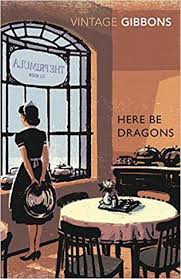
But I’m not. This novel, like all the rest, shows glimpses of promise but would probably not have been printed without the huge affection everyone feels for CCF.
This is standard-fare Gibbons. A sensible, down-to-earth heroine in her late teens or early twenties, in the Flora Poste mould, comes into contact with a group of rather louche bohemians, who are gently poked fun at, with a lot less if any of the suppressed anger and contempt that characterises “Conference at Cold Comfort Farm”.
(‘Has Benedict a beard?’
‘Not so far,’ said Nell cautiously, ‘but they do tend to grow them suddenly, you know.’)
Our heroine, Nell Sely, is uprooted from her comfortable family life when her father, a Church of England vicar, loses his faith. The family moves to a flat in Hampstead provided free of charge by her generous but unappreciated aunt, a nascent radio personality. Said aunt gets her a job as a typist but Nell gives it all up for her remarkably modest dream, a waitress job at The Primula tea rooms. At the same time she falls inexplicably for her cousin John, a scruffy and mildly comic figure who thinks of himself as an artist, but is (depending on how you react to men of this ilk) a privileged, patronising fool or a charming free-spirit. After a lot of tea being drunk and minor incidents to keep the pages turning, the novel fizzles out inconclusively. Nell gets her teashop but not her man, John being called up for National Service after rather pathetically trying to avoid it by hiding from the police (who were sent out to enforce call-ups) in a little old lady’s cottage next door to the family apartment.
This is gentle observational comedy where the interest level never really ticks above medium. We don’t really care what happens to these people – they aren’t engaging or interesting enough. Although Gibbons evokes the grimness and griminess of 1950’s London wonderfully, the plot is paper thin, little happens, and an attempt to inject a little drama as the novel wanders to an ending falls flat. The humour can at times be diverting, even though this world seems very alien from the other side of the millennium, where the worst thing that can happen is for someone to lose their faith or be called up into the Army and where sex is only hinted at as something that only bad girls do.
I won’t stop reading Gibbons, but I will continue to do so with a sense of melancholy that each novel isn’t Cold Comfort Farm, and a sense of delight that at least Cold Comfort is!
 The Reading Bug
I liked this book. I recently re-read CCF and concluded that I actually prefer the other Gibbons books I’ve read. They’re not clever but they are very readable stories.
LikeLiked by 1 person
Fair enough – although this is close to heresy I can live with the fact that not everyone is going to have the same thoughts and opinions as me – it would be a weird world if they did. I think CCF is as near perfect as a novel can get, although I can see its flaws.
LikeLiked by 1 person
I like it, I just don’t love it. I know that it’s adored by many.
LikeLike