19th Century literature, Book review, Frankenstein, gothic fiction, http://schemas.google.com/blogger/2008/kind#post, Mary Shelley

Frankenstein by Mary Shelley, 1817

With 200 years of critical analysis weighing down on any critic or reviewer, what is one to do with a novel such as Frankenstein, or the Modern Prometheus? Trying to find new insight or interpretation is almost pointless. Such is the nature of the novel that it opens itself to an almost boundless variety of interpretations, on human relationships, sex and sexuality, or science and the modern world. That burden of scholarship can be oppressive and hamper the ability to say anything sensible or interesting about such a complex novel.


Let’s start at the beginning. The story of the novel’s genesis is well know, probably much better known than the novel itself. It did not come as a surprise to me, with the experience of reading Dracula last year, that the novel bears little or no relationship to its popular culture incarnation. Crucially, the monster is not an incoherent, stumbling beast, but a highly intelligent and articulate creature, albeit one which is monstrously ugly and extremely, dangerously strong. The sub-title of the novel, the Modern Prometheus, should not be overlooked. Wikipedia says that “Prometheus became a figure who represented human striving, particularly the quest for scientific knowledge, and the risk of overreaching or unintended consequences. In particular, he was regarded as embodying the lone genius whose efforts to improve human existence could also result in tragedy“. Quite. Is this then a straightforward anti-science parable – don’t meddle with nature because you will create a monster beyond your control? Certainly the anti-GM protagonists would support that reading. But simple readings of this kind, however attractive, are invariably over-simplistic and resisted by classic texts, and this is no exception. I suspect this is a bit of authorial mis-direction. The sub-title invites us to a simplistic don’t meddle with the unknown interpretation. Suspicion of science and where it might take us at the beginning of the 19th century was certainly understandable. For me the novel’s themes about parenthood and original sin are more interesting.

The narrative structure of the novel is the complex “Russian doll” approach much loved of 19th century novelists. To be honest this adds little to the story overall – you quickly forget you are reading a letter from the explorer who has met Frankenstein and is passing on his tale to his loved one, in much the same way you forget Wuthering Heights is told as a series of fireside gossipy chats from the ever present domestic servant to the new tenant of the neighbouring house. It is almost as if the truly omniscient narrator had yet to be accepted by authors or readers at this stage of the development of the novel, (which in the early 19th century was not quite so anachronistically named). The author appears to feel compelled to show the reader what happens by using increasingly artificial devices – someone claims to have observed what happened – rather than just tell the story. In this novel this is pushed to ridiculous extremes – so for example the monster lives for almost a year in a hovel adjoining the house occupied by the DeLacey family without their once wondering “I wonder who it is who lives next door?”. Dracula uses much the same technique, despite the almost 100 years between the two novels. Is this in homage to the early 19th century spirit of the novel?

John Sutherland’s book on puzzles in 19th century literature which I wrote about earlier this month has an interesting take on this novel, and in particular the question of how Frankenstein actually creates the monster. The author gives virtually no detail – there are glimpses of how he prepares, but the actual process itself is not described at all. Time and again Shelley uses the word “disgusting” to describe Victor’s reaction to his work. This could be a response to the body parts he is presumed to have used, but when he begins to create the monster’s partner later in the nvoel he does so in a remote Orkney croft-house with only his scientific equipment to hand, far from any mortuary or graveyard. Sutherland speculates a sexual component to Frankenstein’s disgust, which is a seductive interpretation. How does man create life, after all? This would go some way to making sense of the original sin theme of the novel – Frankenstein creates life, then rejects it, and reaps the consequences. All parents will have some sympathy with how he feels.

As a central character it is hard to warn to Frankenstein. He is a complete idiot – for example, despite the monster making it clear to him that he will make him suffer if he does not create him a partner, and that he will see him again on his wedding night, the penny does not drop that there might be a threat to his fiancee. He lives a life of considerable privilege, but wastes his energies and gifts on ultimately fruitless personal obsessions.  The monster is a more interesting character, although again his “no-one loves me so I am going to kill someone….Why does nobody love me?” wears thin fairly quickly.

As I mentioned earlier, there are many ways to read this complex novel. The one that appeals to me the most is that the monster is, like Mr Hyde, a product of his creator’s sub-conscious. Both doctors Jekyll and Frankenstein create monsters that run out of control and lead to their ultimate demise. Victor is arrested for the killing of Charval, and it is surprising that no-one suspects him of Elizabeth’s murder. Several people fear he is mad, and few other witnesses see the monster clearly. The sexual under-currents of the novel could also explain Victor’s terror of his wedding night. I appreciate I haven’t explored this idea in any depth, and no doubt there are scholarly articles and books out there which explain the idea far more coherently than I could ever do, but it is an interesting reading of the novel I think.
Standard
Book review, http://schemas.google.com/blogger/2008/kind#post

Is Heathcliff a Murderer? – Puzzles in 19th Century fiction by John Sutherland

This book is a series of 34 short and not quite so short essays looking at “anomalies, enigmas and mysteries” in 19th century fiction. The definition of “puzzle” is draw deliberately loosely. Some are genuine questions that would occur to any reader – how does Jane Eyre get Mr Rochester’s mysterious “celestial” message at the end of her novel? Others would not normally occur to an ordinary reader, particularly those in which the main concerns are timing. One does not normally worry too much about or even notice small anomalies in timings and obsessively working through all the time markers in a text to spot so called mistakes feels like a huge waste of time. (Othello is a great example of this – very few if any audience members and readers spot the parallel time schemes running through the play, which of course are anything other than accidental.)
Sutherland draws on his extensive knowledge of the most arcane and obscure of 19th century novels and the period in which they were written to answer some of his puzzles. Mesmerism, for example, is suggested as the answer to the Jane Eyre puzzle. This was a rich mine for Sutherland – “Can Jane Eyre be happy?”, and “Who Betrayed Elizabeth Bennett?” followed this book in due course, as well as a similar look at Shakespeare.
Obviously knowledge of the text (rather than a film of the text) is a useful prerequisite for enjoyment of each essay here, and as Sutherland fairly quickly moves from the novels that the average reader would be familiar with to ones that only students of 19th Century novels could hope to have heard of (“Is he Popenjoy?” anyone?) I found myself reading more to enjoy his scholarship and learn a little about the text and author, than to share the judgment on the particular puzzle in question.

Genuinely original insight into the core texts are of course elusive. These – Bleak House, Emma, Wuthering Heights, Middlemarch – are some of the most studied works in literature. So it is in the margins that Sutherland finds some gems. In Bleak House the crossing sweeper Jo sweeps what exactly? Is it “dust”, an excuse for begging with no practical purpose, or is it excreta from the horses and humans of a crowded London? More controversially, what is the role of the slave trade in the prosperity of various families in Jane Austen’s novels? I particularly enjoyed the close reading of Frankenstein, soon to appear here, which looks at precisely how the good Dr creates his monster. In the absence of Hollywood’s lightning and hunchbacked servants, Sutherland deduces that there is a sexual component to the act of creation, which of course fits nicely with the creation myth reading of the novel.

I think I know why I enjoy this kind of literary sleuthing so much. In my blog entries the ones which I feel happiest about are the ones where I have from close reading and perhaps a bit of creativity come up with a new and different perspective on a novel – the parallel between A Casual Vacancy and A Christmas Carol for instance.

Standard
Book review, Zombie

Shattered Hourglass – Day by Day Armageddon – J L Bourne

 Shattered Hourglass is the third in the Day by Day Armageddon series. Zombie novels are very much a niche genre, with carefully prescribed rules. The first novel in this series worked within these conventions, but took a fresh approach. Written in diary format from the perspective of a military man surviving the outbreak one day at a time, it had an immediacy and freshness that captured the horror of the situation. In the sequel the focus broadens, and we are given more information about the unfolding apocalypse. Shattered Hourglass takes the threads of the story from the end of the previous novel and throws them to the wind. The tight focus is lost with multiple storylines, but no central character to follow. Some diary entries are retained, but these are interspersed with traditional narratives.
Granted, the author could not just keep giving us yet another day of zombie apocalypse, so it was inevitable the focus would broaden to look at, for example, the source of the infection, how the military responds, etc. But the tight focus of the first novel is now expanded with any kind of control. Essentially the novel consists of long periods of travel without zombie encounters to provide any threat or interest, interspersed with people running around shooting zombies in the head, with occasional zombie brain smashing using alternative implements for variety. Innovative ways of killing zombies such as luring them into the Panama Canal are flirted with but then spurned for more shooting and slashing. The central, originally anonymous, character, gets lost in the crowds, and we stop identifying with him or caring about him.
 
So far this is just a descent to the ordinary, but then things get worse. First, the author’s right wing, pro-gun views intrude into the text. Normally I am reluctant to accept the “Character A thinks X, therefore Author A thinks X” argument without further evidence, but here the references are sufficiently heavy handed and inappropriate as to suggest the author is using the zombie apocalypse as an excuse to promote his own views. I have to say the argument that gun control, as well as leaving the good citizens of pro-gun control states exposed to gun-toting lunatics (rather than spawning them) would leave them equally exposed to flesh eating zombies is one of the more innovative and plainly laughable arguments I have come across in a long time.
 
This book was originally due to be published earlier this year, and the final publication date – 26th December – is just weird. The published version has traces of being hurriedly finished. The author runs multiple plot lines – far too many to manage effectively – but the spinning plates come crashing down in a badly mis-managed finale. Plot lines are shut down suddenly with little or no explanation, or in the case of the Hotel 23 outpost not at all. The aircraft carrier is overtaken by zombies without any coherent rationalisation beyond a hint that it has something to do with the children on the carrier exploring (great security there), but all is OK because they manage to crash into an island secured by a previously unmentioned citizen militia. The main plot line is concluded in even more of a hurry, with the deployment of a concrete spraying weapon that would not be out of place in Scooby Doo.
 
A huge disappointment. There is plenty of scope here for further sequels, but whether this author has the commitment or interest to deliver has got to be in doubt.

Standard
Book review, http://schemas.google.com/blogger/2008/kind#post

Book review: Back Story – David Mitchell

Time was I would run a mile from a celebrity biography, with I think plenty of reason – there are so many clippings jobs with glossy front covers out there , that sorting the wheat from the cliche wasn’t usually worth the effort. Autobiographies ought to be better, but the majority are ghost-written with the minimum of effort – a few childhood anecdotes, prompted by photographs of minor parts in school plays and family holidays, progressing quickly to the break through appearance on Comic Relief/Big Brother/Help I’m a Celebrity etc. You can spot the filling and the difficult subjects avoided or glossed over a mile off.
In the spectrum of autobiographies, of which there was a huge surfeit this year, Back Story fits firmly in the middle of the pack. In its favour it is clearly not ghosted – Mitchell’s engaging personality shines through – and it is reasonably open and honest. The downside is that his career trajectory, arguably even his life, has been so predictable and routine – for a comedian that is – that you get the feeling you have read this all before, and more entertainingly.
To provide the book with a structure,other than the blindingly obvious chronological approach, which of course is in the end unavoidable, Mitchell takes a walk through north London, using the things he sees along the way to prompt a minor grumble about an aspect of modern life, followed by the appropriate reminiscence. This is a harmless enough conceit, but gets predictable very early on, and soon becomes unintentionly pedestrian (see what I did there?). It is obviously not his fault that his life has had little in the way of trauma or challenge, and he has made the most of the opportunities life has given him, but overall you have to wonder why he wrote this other than to cash in on his moment of celebrity.

If you want to get to know the real David Mitchell – and I am not sure why you would, his work doesn’t require it, and his comedy is funny irrespective of what school he went to – this is obviously a good starting place. I got the impression a few things were passed over quickly or omitted – most notably the name of the lover before his engagement to Victoria Coren. The section of the book on his relationship with Victoria is by far the most engaging, where the barriers come down the most and we see someone with a bit more than a dry wit and a comfortable life.

One quibble – Mitchell has a pop at Stewart Lee for a piece he does on Only Fools and Horses. You might have seen it – the scene where Del Boy falls through the bar was voted funniest moment on British TV in one of those made up polls that no-one ever really votes in. Lee used this vote as the basis for an extended and extremely funny rant. Mitchell objects to the points Lee makes in this rant, missing the point with considerable flair – Lee is being funny; it is a performance piece, not a political treatise. The irony is that rants about things that you really shouldn’t get upset about eg Tesco’s signs or grocers’ apostrophes are Mitchell’s trademark.

Standard
21st century literature, Book review, J K Rowling, The casual Vacancy

The Casual Vacancy by J K Rowling

This is a bit of a trojan horse of a book – ostensibly about middle England’s parochial concerns about a vacancy on the parish council of a small town in the West Country, this novel actually addresses a wide range of social issues, from self harm, racism, prostitution, domestic violence, etc, etc. Its like an episode of the Archers on crack.

The litmus test, as always, is was it a good read? The change of style from the Hogwarts novels is dramatic, and takes time to adjust. We then have a large cast of broadly similar characters doing largely similar things. Sorting out who is who takes a while. The election, when it finally comes, is a damp squib (ha ha, Hogwarts joke there for you) and some of the more melodramatic plot twists are telegraphed some way off. So far so bad, but despite that I found myself turning pages interested in what happens next.

Rowling’s middle England is a bleak, dark place. There’s not one happy family – all the children seem to despise their parents, with good reason. Huge psychological neuroses are carried around on shoulders young and old. A doctor refuses to treat a heart attack patient. There is no love or affection that is fulfilled. The only glimmer of hope for this community dies in the first chapter.

This novel has attracted over 500 Amazon reviews, so the chances of me having much original to say about it are slim. It has been portrayed as a political attack on the middle class, sneeringly done by someone whose political roots and allegiances are with the council estate rather than the detached mansions she now inhabits. This is of course simplistic; Rowling has not rewritten Hard Times here. But the mention of Dickens leads me cunningly on to what I think might be an original point. In this novel the Parish Council website is hacked four times, by four different characters, and messages are posted on the sites comment forum by “the ghost of Barry Fairweather”. Note – “the ghost of BF”, not “BF’s ghost”. Four ghosts – ring any bells? I think there is a deliberate, subtle reference here to the four ghosts in A Christmas carol, including the three Ghosts of Christmas Past, Present, and Future. Is Robbie Weedon a Tiny Tim figure perhaps?

Why – just a coincidence, or is Rowling making a more subtle point about regret. There is no Scrooge-like redemption at the end of this novel, and I clearly can’t build much of a case for the reference – but I bet it is there somewhere.

Standard
21st century literature, Alternative history, Book review, C J Sansom, Dominion

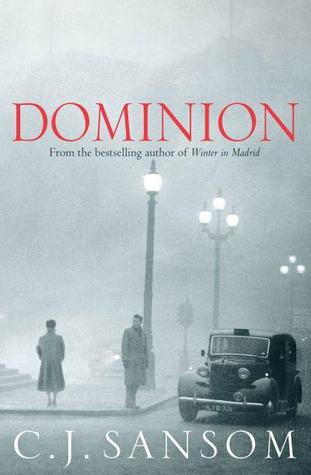
Dominion by C J Sansom

Alternative history novelists are a pretty unimaginative bunch – the Second World War is I suppose such a compelling period of history, when tiny moments can be seen to have had, in hindsight, such momentous impact, that they rarely stray far from its grasp. The turning point in this version of German victory in WW2 is Chamberlain’s resignation in 1940, and Halifax’s acceptance of the premiership. Surrender on terms to Germany swiftly follows.

So far so pedestrian, but Sansom sets his novel 12 years on, in a downtrodden England when the resistance is gaining momentum, Hitler is ailing, and the never ending war between Greater Germany and the USSR is draining the life out of the Reich. This world is realised in a lot of detail with alternative histories laid out for the rest of the world, the British political establishment (including Oswald Mosley and Enoch Powell, foreign secretary, and of course, irresistibly, Churchill, leader of the resistance) and various other British institutions.

What follows is a highly conventional spy narrative, with several strands closely interwoven, never more than a day or two apart. The principal character, David Fitzgerald, a fairly anonymous civil servant finds himself involved in a spy ring. By coincidence Frank Muncaster, a depressive university friend of his, becomes aware of some highly secret information which must not fall into German hands. This is all hugely unconvincing – it is never explained why the USA would want to try to smuggle Muncaster out of the UK when they already have the knowledge he carries. When the secret is finally revealed it is all one big “meh”, and the novel fizzles out of a beach in Rottingdean, of all places. For much of the novel this implausibility doesn’t really matter – Sansom drives the plot along convincingly and doesn’t allow too much time for reflection. The period detail, clearly the result of a lot of research, gives the book the feel of a 1950s black and white movie.

This was an undemanding, very long, read, that was an interesting digression on the “what if” theme, with a reassuring “we win the war in the end anyway” conclusion which I would not be at all surprised to see televised sooner or later.

Standard
Book review, Caitlin Moran, Modern writing, Moranthology

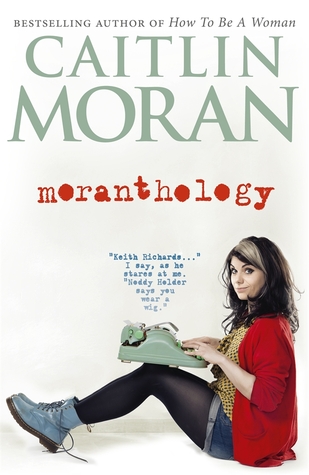
Moranthology by Caitlin Moran

You see what she did there? – the last two letters of her name are the first two letters of the word describing politely what this is, so she mashed them together to come up with the title. The good news is that this is by far the worst “joke” in the book, which is a collection of her recent articles, reviews, and gossip, the latter also being known as Celebrity Watch, which is usually the best thing about the Times on Fridays.

Moran can certainly turn a phrase. Her writing is always well constructed, easy to read, and worth reading. I have a few reservations, but these shouldn’t detract from the overall appreciation of what is a good bedtime read. The review of the Great British Bake Off, and the squirrel scandal of 2011, is genuinely laugh out loud funny.

Those reservations: first, there are some sudden switches of tone, moving from D list celebrity gossip and euphemisms for body parts, to highly serious commentary about social issues. Moran is a genuinely passionate writer on issues such as poverty and mental illness, and to read these articles alongside what is undeniably amusing chatter about Katie Price sometimes struck a jarring note. Second, her defence of the Murdoch/Times paywall didn’t ring true – I know she takes the Murdoch shilling, and has licence to speak her mind within certain no doubt unwritten constraints, and I am sure she would say she genuinely believes it is right to make people pay for some content on the Internet, but there is no serious discussion of consideration of the counter-arguments about setting the web free, user generated content, etc.

Aside from the social commentary, and in particular the attacks on the Government, Moran is at her best when writing about her enthusiasms – Lady Gaga, a quite historic interview, Sherlock, Dr Who. What struck me about many of these articles is that I had a clear recollection of reading them first time around – always a good sign, although it must mean I read the Times more often that I thought I did.

Standard
Book review, Booker Prizewinner, Irish literature, Paddy Clarke Ha Ha Ha, Roddy Doyle

Paddy Clarke Ha Ha Ha by Roddy Doyle, 1993

Winner of the Booker Prize in 1993

I made a sincere effort to read as many of the Booker Prize winners as could reasonably be expected earlier this year (see a number of reviews) – but the award of this year’s Booker to Hilary Mantel for Bring Out the Bodies, the sequel to the 2009 winner, Wolf Hall, may well have defeated me. Wolf Hall was a slog, and to have to go through it all over again is a read too far for me, now, when so many other books stand unread, waiting their turn. But one Booker winner that I have read recently is Roddy Doyle’s 1993 winner, Paddy Clarke Ha, Ha, Ha. This novel is now on the GCSE syllabus. It is written entirely through the eyes of ten year old Paddy, the title character, a ten year old boy growing up in Ireland in the late 1960s.
The appeal of the novel, to teenage boys in particular, is obvious – Paddy is a bit of a sociopath, bullying his younger brother almost to the point of resignation, and running around the fields and building sites of his home town without little or no thought as to the consequences of his actions.

I think we are supposed to warm to Paddy because of his vulnerability, but that was hard – he is clearly a bright kid but other than that he has very few saving graces. As an accurate portrait of childhood, as it was then at least, this novel would appeal to teenagers feeling no-one understands their world, even if the world of a teenager in 2012 (or 1993) is much changed from the 1960s. The language used is authentic, even down to the amount of explicit swearing. I can understand that syllabus setters would have considered themselves quite radical, setting as a GCSE text a novel in which there is little traditional narrative, strong language, and lots of slang (“mickey”, “spa”, etc). Paddy is the classic flawed narrator – his account jumps in time and between themes with no warning, and the reader has to work hard to follow the text, being challenged to  keep up. Keeping up is relatively straightforward to an adult reader, but I can see how teenager would find decoding some of his puzzles either rewarding (as the GCSE people would have hoped) or irritating, as I suspect happens more often than not.
My only reservation about this novel was its authenticity. Paddy is a coarse, violent and totally self centred little thug, but he is acutely attuned to the ebbs and flows of his parents’ relationship. While he bullies his brother relentlessly and seems to have no insight into the damage he is doing, when it comes to his parents he acquires an emotional intelligence way beyond his years. Doyle is emphasising the damaging impact of parental relationship breakdown on children, which is unarguably worthy, but my instinct is that while children pick up more than we expect, few are as finely tuned to the nuances of their relationship as Paddy Clarke.

Standard
Book review, Kim Newman, The Hound of the D'Urbevilles, Uncategorized

The Hound of the D’Urbevilles by Kim Newman

Why restrict yourself to one clever idea – the Holmes stories written from the perspective of Moriarty’s Watson? – when two – mixing in themes characters and plots from 19th Century fiction – will be twice the fun? Well, perhaps on reflection the whole is less than the sum of the parts, if I can use my second cliché this early in the review. There are some problems with this approach. Let’s start with Colonel “Basher” Moran, the character Newman creates to act as Moriarty’s second in charge and his chronicler. Moran is a nasty piece of work, and while the author tries to give him all the roguish charm at his disposal, it is still impossible to like Moran, let alone feel any sympathy for him. Perhaps at the end of the novel, when effectively abandoned by Moriarty he takes his revenge in a clever twist, one is twinged, but by then it’s a bit too late. Only in top class writing can we like mass murderers like Moran – here he is drawn as a cartoonish figure to help avoid any natural repulsion from his killing, whoring, and generally dissolute behaviour.

Secondly, in the Conan Doyle stories Moriarty is, deliberately, very lightly drawn. The absence of any detail about him adds to his sinister omnipresence. Here he comes across as less sinister master criminal as peevish schoolmaster – I exaggerate, but not much. Being second in command to a bloodless criminal mastermind might be an interesting job, but here Moriarty is just an inverted caricature of Sherlock Holmes – all his traits, quirks, and characteristics are reflected in the portrait of Moriarty, including the experiments with bees/wasps.
Lastly there is the use of stories, characters and themes from 19th Century literature. At first this seems like it might work – these stories provide a structure and setting for the Moran and Moriarty characters to develop. But it doesn’t quite work. The first story used is a very obscure Zane Grey novel – the epitome of the trashy disposable pot-boiler. Later stories are stronger but the gimmicky impression is hard to shake off. While most of the borrowed themes are recognisable, inevitably one feels irritated if one spots a reference, but is unable to remember its source – particularly as Newman seems to prefer the more obscure quarters of 19th Century fiction. Sometimes it works, as with the Green Eyed Goddess chapters – but I was left wondering why not just invent your own story lines?

Standard
21st century literature, Alan Hollinghurst, Book review, Booker Prizewinner, gay literature, The Line of Beauty

The Line of Beauty by Alan Hollinghurst

Continuing in my attempt to catch up with the best part of a life time of not reading Booker prize winners, I recently finished, not without a fair amount of persistence, Alan Hollinghurst’s “The Line of Beauty”. Hollinghurst is a slow writer – he has only written half a dozen novels in total – and the only other work of his I have read is the “Swimming Pool Library” which feels like decades ago.

This novel is a leisurely portrait of the life of a rather pampered young man in mid 1980s London, when Thatcherism was at its most rampant and Aids was beginning to have a dramatic impact on the lives of gay men.

Nick Guest leaves Oxford and lodges with the family of one of his undergraduate friends, Toby. Toby’s father Gerald is a Conservative MP. Nick is a Guest in more ways than one – welcomed as a lodger, his homosexuality is acknowledged by the family but largely on a “don’t ask, don’t tell” basis. Their’s is a social liberalism that has some clearly defined limits.

Nick begins his sex life with a romance with a black Local Government worker, but his affection for Toby remains undimmed. In parallel the political life of the family father develops, culminating in a visit from Mrs Thatcher which is vividly realised – I wonder if this was all Hollinghurst’s imagination, or whether he was present at something similar. Nick them moves on to a clandestine relationship with another Oxford friend, who keeps up a front of heterosexuality, and introduces Nick to a cocaine dependency.

The third phase of the novel sees things all fall apart. Aids takes Nick’s first boyfriend, then his second, and again in parallel Gerald’s political career falters over a financial and then sexual scandal, something the conservative party seemed to specialise in in the 1980s. Finally Nick is thrown out of the lodgings he has enjoyed for far too long, and takes an Aids test which he expects to be positive.

As a portrait of gay privileged life in the 1980s this is probably the definitive work, for what it is worth. But the novel had other attractions for me. Hollinghurst is particularly good at the detailed nuances of social interaction – words and gestures are accurately dissected for their meaning. This isn’t just the fact with the wealthy – the visit to the black, evangelical family of his first lover, Leo, where his sexuality is quite literally the love that dare no speak its name, is captured perfectly in all its ambivalence.

i didn’t fall in love with this book – the central character is far too unlikeable and unsympathetic, almost narcissistic – and it didn’t make me want to turn to more of Hollinghurst’s works. The Booker short list for 2004 was weak by comparison with some years, although this novel did beat David Mitchell’s Cloud Atlas, which by comparison was far more innovative and readable. But I was left admiring Hollinghurst’s craftsmanship, which is more than I can say for many of the other novels that have won the Booker subsequently.

Standard