http://schemas.google.com/blogger/2008/kind#post

Comment: Competitive Reading Lists

Every now and again lists circulate purporting to show the 50 best this or the 101 best that, inviting the reader to assess their worth by deciding how many of the books shown they have read.
I say “deciding” how many they have read, because this is rarely a binary decision. Have you read “A Christmas Carol”? You almost certainly know the tale from numerous film adaptations, but have you actually read the book? What if you have read some of the book but weren’t able to finish? (An example in this category for me is Don Quixote – many years ago I made a genuine and sustained effort to read this, but failed miserably). The Bible, The Canterbury tales, and Moby Dick are other examples of “books” that often appear on these lists, but for most readers the prospect of genuinely reading them from start to finish is remote.


But these are just quibbles, because there are no rules in this game, and if the “reader” decides that owning the book, having seen the film, or read a summary on Wikipedia is sufficient to merit a “read it” tick, then no-one is really to know. My real concern is that these lists are designed to make you feel bad about your reading habits. No-one with a family and job will have ever read all of the meritorious heavyweight volumes of “A Remembrance of Things Past”, “The Barchester Chronicles”, or “A Dance to the Music of Time” (“God, no!”, “partially”, and surprisingly, “yes, but a long time ago”, would be my answers). But should I really feel bad about all those Russian classics glowering at me from my bookshelves while I indulge in yet another Pratchett?

From previous entries in this blog it will be clear that I have made a concerted effort to fill some obvious gaps in my reading record – Frankenstein, Dracula, The Great Gatsby, etc – but despite this I still find myself admitting “not read” as I run through each list more often than I would have expected. The other trick played in this game is to include less popular works by popular authors – for example by listing “The Quiet American” instead of “Brighton Rock”, or “Men Without Women” (which is a collection of short stories) instead of “For Whom the Bell Tolls”.  

I know I am taking this way too seriously, but there is a point underneath all this – if people read these lists on FaceBook or wherever and think “I must be really dim because I haven’t read any of these” they will be put off even trying them, rather than filling in the gaps. So let’s start writing “These are really fantastic books that you should read if you like romance/thrillers/historical novels/etc” lists, which would be a much more constructive approach to list making wouldn’t it?

Standard
21st century literature, Book review

The Jefferson Key – Steve Berry

I have had a really bad run in recent weeks – some sub-par McEwan and the execrable Amis – so what led me to pick this one up I am not quite sure. Certainly the cover told me pretty much all I needed to know – US flag on fire, presidential seal, White House with lone figure in background – this is going to be a derivative thriller. Interestingly the cover art for the US version had a much more prominent picture of the White House – I am guessing that American reader won’t need the Jefferson link spelling out so clearly.

No surprises there then. This book is a lazy cash-in on Dan Brown’s success with “The Da Vinci Code”. Many of the components are copied without any attempt at disguise, from the supposedly impenetrable code (tick) to the reinterpretation of historical events (tick) and the secret society hiding in our midst, controlling historical events (tick). The narrative style – many very short scenes cutting from one location to another quickly – and the attempt to compress the events of the novel into as short a time period as possible, (forgetting people’s need to nap, eat, etc,) to give a sense of pace and speed is also copied directly from Brown. And then there is the simple fact of the novel’s name itself, following the formula “The (Name of figure from history) + (synonym for mystery). Expect the Michelangelo Conundrum, the Caravaggio Puzzle and the Newton Sudoku to follow.
For what it matters, the plot revolves around an American pirating community which had its origins in the American War of Independence, when privateers were encouraged to attach English shipping. These pirates were allegedly given Presidential authority – letters of marque – to operate with impunity as long as the work against enemis of the state. Successive Presidential attempts to rein them in had been countered with assassinations. This novel focusses on attempts by a President Daniels to curb the powers of the “Commonwealth” and the pirates attempts to fight back. The cast of leading characters includes Cotton Malone, who has appeared in six previous and I guess highly similar novels (from their titles) although the characters are not distinguished from one another in any marked way.
While the plot is a huge predictable disappointment, the writing is equally dire. The author seems to have been paid by the word, because the plot is ground out to its far foreseen conclusion without a hint of suspense or interest. For example, some characters die in a building ruin which floods todally – this is flagged as likely early  on, returned to many times, and finally claims the expected victims, almost in passing. Techniques such as having a character shot, followed by a switch of focus to another scene, then returning to the shooting scene only for the character to have amazingly survived through a misfire, bullet proof vest, blank shot etc happens at least three times. As the novel is seventh in the series the reader is in doubt that the principal character will survive. The writing is as turgid and cliche ridden as one would expect, although some phrases still jump out with their awkwardness – for example a stairway is said to “rightangle”. I have no problem with using nouns as verbs, but this one is a step to far for me.

Novels of this kind – written for the “if you like this writer why not try this writer” Amazon recommendation algorithm – really shouldn’t apear here – but I did promise to try not to censor myself, and to review my reading good bad or otherwise. Gosh I have even written about books I have read and not written about! So I return to the question I began with – what possessed me to read this? In part it was because this was a gift, and I didn’t want to show disrespect to the giver. Also, I was hoping that this might be one of those “so bad it is good” novels, or even something that was unoriginal but had its merits notwithstanding the genre. Sadly, not – trust the cover.

P.S. One other quibble. One character uses the phrase “a sticky wicket” which as far as I know is not American vernacular. This is a clumsy attempt to give “colour” to a character with a Spanish background – and the text refers to her father funding several Spanish national cricket teams. Now they do play cricket in Spain, Google tells me, but it’s not the traditional home of the sport. Another example of clumsiness which really jarred.

Standard
21st century literature, Book review, Lionel Asbo, Martin Amis

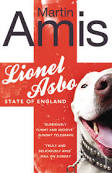
Lionel Asbo by Martin Amis

A few years ago Ben Elton, he of 1980’s stand up fame, wrote a series of zeitgeist novels, each focussing on a different aspect of popular culture – Big Brother, (the TV programme, not the character in 1984), Friends Reunited, the effect of Internet porn and violence on people’s behaviour, etc. These were all fairly lightweight and disposable, and the social/political commentary was mainly intended to provide humour rather than change minds.
“Lionel Asbo” is the novel about the poverty of working class culture that Elton wisely never wrote. There isn’t a cliche about working class life that Amis doesn’t wildly embrace. His characters avoid any hint of subtlety. Cardboard cutouts would be giving them depth and nuance they don’t ever approach. I was reminded of “Only Fools and Horses” rewritten as torture porn.
Amis’s obsessive dislike of working class people is given full and free range here – this is a shout of hatred at the underclass of which Amis is clearly afraid. Lionel Asbo is indeed a psychopathically scary figure, capable of extremes of brutality. But his world is equally brutal and atavistic, devoid of any redeeming feature or figure, save the single exception of the pathetic Desmond, who responds to every racist barb thrown his way with a shrug.


I am struggling to find a single positive thing about this novel. Yes, I suppose some of the writing is not bad, but that is a bit like commenting on the lighting in a video nasty. The laziness of the plotting and characterisation is such that if this novel had not been written by Martin Amis I can’t imagine it would have ever been considered for publication. Some critics have kindly assumed Amis is aiming for over the top satire of our celebrity, money obsessed culture. While that may have been the original intention, comparisons with any other form of satire quickly expose this as clumsy and ineffective. I did read to the end, partly out of some kind of morbid fascination. I wanted to know if Amis would have the guts to follow through on the plot lines he had been signalling wildly for most of the second half of the novel – he didn’t, which is probably just as well, but by then I was long past caring. I am not going to spend any more time listing the many things that are wrong with this novel, when I really can’t get past the class hatred.

If you think working class people are disgusting pigs with no feeling, no limits, no taste, no redeeming features whatsoever, this is the novel for you. I need a shower.

Standard
21st century literature, Book review, Enduring Love, Ian McEwan

Enduring Love by Ian McEwan

The third of my recent McEwan catch up exercise, prompted by a Waterstones promotion – who says marketing schemes don’t work?

The review I roughed out in my mind mid way through this novel is a very different beast from what I am now about to write. Let me explain.
The principal narrator of the novel, Joe Rose (there are other voices but the bulk of the novel is described from his point of view) is involved in a tragic ballooning accident in which a man dies. A fellow participant in this accident develops an obsessive delusion – that he is in love with Rose – and begins to stalk him.


There are consistent hints throughout the novel that Rose’s account of the accident is flawed. Sometimes these hints are more heavy handed than others The accident victim’s widow is torn apart at the thought that her husband was having an affair, and wouldn’t have been at the site of the accident if he was not having a clandestine meeting with his lover. She sees the accident as a judgment on his fidelity, showing off to his young mistress. We later learn he was not having an affair, and the circumstantial evidence to that effect is explained away innocently. Later in the novel a shooting in a restaurant is shown through Rose’s eyes, but the deconstruction of this incident by a police officer makes it clear that none of the witnesses saw the same thing, even down to what flavour ice cream they ate. There are many more subtle hints that perception is flawed, and that what Rose describes during and after the accident may not be the whole story – in fact, that he may be the delusional one. Even his partner struggles to believe his account of his being stalked, pointing out that the writing on the letters sent to him by his stalker, Jed Parry, looks remarkably similar to his own – one of many such strange coincidences.

I patiently waited for the reveal, the moment at which we learn what “really” happened, the extent of Rose’s self delusion. Rose is a writer on popular science, and digresses at length about the mind’s ability to deceive itself. Surely that is what is going on here – the accident didn’t happen in a way in which he is completely blameless, and has excised any possible suggestion of responsibility from his account.

But it’s not. In a classic double bluff, everything Rose tells us is true. The big reveal is that there is nothing behind the curtain. Everyone else in the novel is deluded or mistaken to some extent or another, including the police, his partner, the widow, his stalker, you name it. The police assume that an attempt on his life, in which a fellow diner is shot in error, was correctly targeted because the victim was the subject of a failed assassination attempt the previous year. Now there’s a coincidence – a contract killing misses its target and instead falls upon a diner at the next table who only months before had been the target of an earlier murder attempt.

Is this McEwan messing with us, setting up expectations only to kick them out from under our feet? I have become so used to the sudden changes of focus in McEwan’s novels, “Sweet Tooth” being a fantastically effective example of this, that to be deprived of one felt wrong.

The novel is not without merit of course. The relationship between Rose and Clarissa seemed genuine. I thought the “going to buy a gun from some hippies” scene was bizarre and out of character with the realism of previous scenes. The digressions on Romantic poetry, popular science, etc were undemanding and integrated well into the overall narrative.

Does love endure? Or is it one big delusion? The only love that lasts in this novel is the product of a psychiatric illness, a delusion that has no foundation in reality. Rose’s relationship with his partner, Clarissa, the portrait of which is one of the principal strengths of the novel, is strong and loving, but does not survive the stress of the stalking and its denouncement. But this novel isn’t an essay on love, more on big game of hide and seek between the author and the reader, with “reality” out there in plain sight all along.


Standard
21st century literature, Black Dogs, Book review, Depression, Ian McEwan

Black Dogs by Ian McEwan

On a walking holiday (and honeymoon) in early post-war southern France, a young idealistic woman, June Tremaine, is terrified by an encounter with two menacing attack dogs. This incident leads in turn to a spiritual experience and changes her life. Surprisingly she decides on an apparent whim to live in France (very near to the scene of the attacK), in the process effectively separating from her new husband, Bernard.

This incident is the kernel around which McEwan winds this novel. Ostensibly a memoir written by June and Bernard’s son-in law, written shortly after June’s death, this novel has a complex narrative structure in which the telling of the tale is delayed time after time. The dogs themselves carry a heavy symbolic burden that they couldn’t quite bear – we know from the early pages that however scary they may be they do not carry out their attack (or at least that June survives to go on and have a family). And in fact it is not the encounter with the dogs which is the turning point in June’s life, but the spiritual epiphany which follows. While we can be gripped and menaced by the dogs, June’s quasi-religious response is not one the reader can easily follow or identify with.

If you have been scared out of your wits, and feel that your survival is a result of divine intervention, and that you need to rethink your life choices as a result – fine – but June’s response, essentially settling in a farmhouse in rural France and having a very nice, fundamentally selfish and not particularly spiritual life for the rest of your days, doesn’t seem to be a coherent response.

The scenes in Berlin as the Wall is coming down, something that obviously has an especial resonance for McEwan, contrast strikingly with the views of France. If a point is being made here – other than the mundane “war is brutalising and nasty” I couldn’t spot it. War has ravaged and damaged France, but the area the couple visit on their walking holiday seems largely untouched, even though the spectral presence of the black dogs is a reminder of the damage the war has done. But other than providing “colour” I didn’t understand why the scenes in Berlin in which the narrator hears a different version of the story of June and Bernard’s marriage needs to have the backdrop of the fall of the Wall.

McEwan can be forgiven some misses among the many hits. This isn’t his worst novel – I still struggle to accept just how silly “Amsterdam” was and is – but others are far more coherent and interesting. I don’t normally do this but one comment from an Amazon reviewer jumped off the screen as spot on – “there is also the idea that McEwan perhaps had a deeper vision he has failed to communicate.”

Standard
21st century literature, Book review, Ian McEwan, Spy stories, The Innocent

The Innocent by Ian McEwan

McEwan is always strong when it comes to evoking a particular time and place, whether it be early 1960’s in “On Chesil Beach”, the Dunkirk evacuation (amongst others) in “Atonement”, or early 1970’s MI5 in “Sweet Tooth”, just to mention a few. The thing that jumps out from that short list for me is how precise this timing is – it is not a decade, or a generation which is invoked, but a very exact point in time and place. In “The Innocent” the setting is Berlin, 1955. Berlin is an occupied city, still literally shell-shocked, reconstruction is barely underway although the Wall has yet to go up – again giving us a very exact moment in time, a turning point in the way “On Chesil Beach” is timed between the Lady Chatterley trial and the Beatles first EP. The city is a microcosm of the Cold War and into this volatile environment Leonard Marnham, the eponymous innocent, a British telephone engineer, is dropped. Leonard is an everyman figure, innocent in many ways – sexually, politically, socially – and although he is quickly absorbed into an American plan to tap Russian telephone messages out of Berlin, he makes a terrible, indiscreet spy.

As a standard Cold War spy story in the Le Carre model, the introduction of a femme fatale, Maria, who approaches Leonard in a night club, comes on cue. Maria seduces Leonard by the book, and very soon he is under her spell. Leonard is too young to have fought in the war, but 30 year old, divorced Maria, survivor of the brutalities of the occupation of Berlin, is a wiser, more mature character who quickly becomes the senior figure in the relationship. Leonard develops a fairly sick fantasy in which he is an occupying soldier who forces himself on the helpless, vulnerable Maria. When he tries to act this out in a disturbing scene she is unsurprisingly repelled, and their relationship only survives by the intervention of Leonard’s American senior officer, Bob Glass.

The (protracted) climax of the novel comes with the return of Maria’s brutish ex-husband, Otto, a bit of a Teutonic caricature. Leonard and Maria are the only ones surprised by his return, and the denouncement is equally predictable, albeit the brutality of the episode is detailed and relentless. There then follows a scene when Leonard tries to dispose of the body (sorry, spoilers) and ends up leaving it in two suitcases in the tunnel dug to intercept the Russian telephone lines, on the Russian side of the border. When he then passes on the secret of the tunnel to the Russians, in a desperate attempt to avoid the body being found by the Americans, his fall from grace is complete, his last innocence lost.

The post-script “30 years later” chapter, when Leonard returns to Berlin just before the Wall comes down, is probably unnecessary, but does give Maria a voice, finally.

Although this is relatively early McEwan, a little derivative in its setting and characterisation, his potential as a mature novelist shines through. if you want to explore early McEwan start here rather than the award winning but badly flawed “Amsterdam”.

Standard
Book review, psychology

Book review: You are Not So Smart by David Mcraney

Subtitled: Why Your Memory is Mostly Fiction, Why You Have Too Many Friends on Facebook, and 46 Other Ways You’re Deluding Yourself.

This is a very gentle, easily digestible introduction to psychology. 48 chapters, each only a few pages long, covering all the basics of how the way we perceive the world is more complicated than we think. So far so good – this book began as a blog, and it shows, and who am I to pass judgment on bloggers taking their work further? Sometimes the dumbing goes too far – not all straightforward psychology points could be used to support the books central thesis, and they really didn’t need to – they should be interesting in their own right. I also felt the central thesis itself was part of the problem – explaining that the way we perceive the world is filtered through our senses, our memory and a host of other filters to create our perception of reality is a strong enough point on its own without it being reduced to the conclusion that we are not as smart as we think we are – it’s not about intelligence at all, it’s actually much more interesting than that. I accept of course that there is a marketing strategy at work here, and it seems to have been effective.

There were a couple of other quibbles I had with this book, which I generally enjoyed and consumed quite quickly. Firstly, it focuses relentlessly on everyday perception. Whenever it tiptoes closer to the darker side of psychology – not all brains are the same, and although we can be gulled into doing things we wouldn’t normally do, the point is we wouldn’t normally do them – it quickly moved on. Some people would do abnormal things, and these outliers on the scatter graph of human psychology are probably another but much more interesting book entirely. Secondly the book had a strangely mid-Atlantic feel which was a little disconcerting – apparently this was because it was originally American and had been edited for the UK market. Lastly the research the author draws upon was largely fresh – to me – but there were a few old favourites (the prison guards/prisoners experiment for example) which I was expecting to crop up throughout the book, and which eventually made an appearance. I was hoping he would manage to avoid the obvious, but he didn’t quite make it.

If you are looking for a simple and easy to read introduction to psychology you could do a lot worse. This doesn’t claim to be an academic textbook, and you largely get what you have paid for, with that caveat about intelligence/perception.
**********************************************************************

Standard
20th century Literature, Cold Comfort farm, Stella Gibbons, The Bachelor

The Bachelor by Stella Gibbons

Oh dear. If you have read anything I have written previously about Stella Gibbons it will be immediately obvious that I rate Cold Comfort farm as one of the best books ever written. Hyperbole? perhaps, because I would recognise the book is not without its flaws, but if I had to choose one book for a life time of desert island living this would be it. It is by far and away the book I have reread the most in my life. But sadly nothing Stella Gibbons ever wrote approached the genius of CCF. In bringing her catalogue back into print Vintage have done us a mixed blessing – while it is exciting to read anything she wrote, the disappointment is inescapable. I will keep reading her to try to capture the magic of CCF, but with steadily decreasing expectation and hope.


The Bachelor is a perfectly decent romantic novel of manners set in 1940s wartime London and the Home counties (a thinly disguised St Albans). The romantic entanglements of the lead characters and supporting cast is handled well, but it isn’t where the interest of the novel resides. To be honest it was the strangely detached description of the war and its impact on the lives of the characters was were I derived my most interest in this novel. The war is a fact of life, a backdrop to pretty much everything the characters do – rationing, the blackout, characters missing on service, the Home Guard, refugees, prisoners of war and evacuees are all there – but everyone just gets on with their lives as if it was a temporary piece of nastiness that sooner or later will pass, which of course it did. The novel was published in 1944 and I suspect written near then, because the threat of invasion or defeat is not even hinted at. The portrayal of the middle class characters who oppose the war and appear to treat it as a case of a misunderstanding between countries taken too far was interesting – these are not conscientious objectors or pro-German or pro-Nazi supporters, more ideological pacifists who think the conflict can be talked away. This pacifism is tolerated as an eccentricity rather than disloyalty or treason.


Towards the end of the novel the war comes more into the foreground. Kenneth the bachelor of the title is in London looking for Vartouhi, the feisty refugee who is less than half his age, (this is not seen as a problem by anyone) who has left his employment after a row with his sister Constance, and is working in a milk bar. He tracks her down in a depressed, bombed out part of London similar to the streets where “Starlight” is set, albeit twenty years later. The extent of the bomb damage is depressing if not to say upsetting, and through this landscape comes Vartouhi, followed by her “boyfriend”, a Canadian soldier with the unlikely name of Raoul who is clearly well on the way to being a psychopath. Although Vartouhi is cheerfully unafraid of the menacing Raoul, Kenneth quickly realises he is dangerous, and sees him off with a show of bravery that seems to draw upon his years in the trenches in the Great War. This section of the novel stands out as a compelling piece of narrative compared to much of the sleepiness of the rest of the book.

So why he “oh dear”. Well first this novel is the reason for my prolonged absence from this blog – it was incredibly heavy going. More than a few pages a night would send me off. The plot consistent solely of the predictable romantic affairs which resolve themselves as expected from the beginning, but take over 400 pages to do so. Very little else happens. The major plot incidents involve an argument about a bedspread – albeit a bedspread loaded with sexual symbolism – and a Christmas visit from an aged relative.
Gibbons handled romance with a delightfully light touch in CCF – the relationship between Flora and Charles is covered in a few lines of text – but when she says “This is forever isn’t it darling?” and he says something romantic about how nice her hair smells, it is utterly convincing. The relationships in the Bachelor are believable enough, but the characters take a very long time reaching the same point as Flora and Charles.
I remain Gibbons’s ardent admirer, and won’t give up on her back catalogue, but now for something completely different….

Standard
21st century literature, Mark Haddon, The Red House

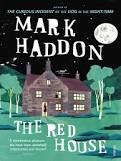
The Red House by Mark Haddon

The premise of this novel is very simple. Brother and sister Richard and Angela have recently lost their mother after a long and distressing illness. Somewhat out of the blue Richard offers to host (can host be used as a verb like this?) Angela and family in a week long holiday in a cottage in Herefordshire, the eponymous Red House. Richard brings his second wife Louisa and her daughter, Melissa. Angela brings husband Dominic, teenage son Alex, slightly younger but still teenage daughter Daisy, and eight year old Benjamin. (I wrote the sentence above without reference to the text, a good sign that the characters came to life for me).
Over the course of the week their back stories are filled in, childhood traumas revisited, (Richard and Angela’s mother was an alcoholic, Angela had a stillborn child eighteen years earlier, and so on) and although very little of note happens in the course of the week (more than you might have thought from reading some reviews) the character development is more than sufficient to maintain interest.  One teenager slowly comes to a realisation that they are gay, another is embroiled in a cyber bullying/teen suicide scenario. There is some light shopping, cooking for eight, board games and jigsaws, a traditional rainy holiday.
The narrative style Haddon uses here sometimes makes the reader work harder than they might be used to – there’s very little “Richard said” or “Angela drowsed off and began to dream” – instead we are pitched straight into the stream of consciousness or dream itself, and left to catch up from the context and content. Occasionally one has to back track once working out what is thinking or dreaming or talking. That is clearly a deliberate attempt to keep the reader focussed and paying attention, and it works well – the text is not so obscure that the reader can’t eventually work out who is thinking, even if they have jumped associatively from what was being said a moment ago.

In “The Curious Incident” Haddon came very close to successfully presenting the world through the eyes of a  child with Asperberger’s Syndrome. I had some issues with this – I thought the way Christopher navigated his way around the London Underground a bit too contrived and unconvincing – but here the ventriloquism reaches a new level. Each character has a convincing internal monologue. Benjy’s eight year old perspective on the world was especially touching and convincing, but each character is given their own realistic voice. Haddon can show the world equally well through the narcisstic eyes of a teenage bully, lovers feeling children again through one another’s touch, or a mother still grieving for a lost child after 18 years.

There are no heroes here – everyone is flawed one way or another, some more than others, but equally no cardboard villains, just real, convincing, vulnerable people. The detail is stunning – one character puts soft brown sugar on her frosties in a way only someone with weight issues would; another character has unsuccessful 20 second sex which ends violently, but still exults at having had sex. There are also plenty of reference to popular culture and literature here to keep the reader entertained, but the novel wears its learning lightly. All in all highly recommended, and I will be tracking down his second novel when a gap emerges in my reading schedule.

Standard
21st century literature

Skios, by Michael Frayn

It must be, I would have thought, quite rare for a writer to sit down and sadistically decide “I am going to write a farce”, as Frayn appears to have done here. Farce has an inflexible set of rules and protocols that can work well on stage, when in the course of a performance improbabilities can be disguised and belief suspended, but within the pages of a novel, set aside every now and then for reflection and consideration, the natural objections that spring to mind – “he wouldn’t behave that stupidly!” or “She would check before doing that” – come to the fore and won’t be ignored. I’ve long admired the artistry of successful farceurs, on the basis that farce is one of the most difficult forms of literature to pull off successfully, but trying and missing is a bit like jumping the Grand Canyon – failure even by a small margin is pretty catastrophic. So to mix my metaphors Frayn is on a highwire from the outset with this novel, and while the effort is impressive I would struggle to describe the performance as enjoyable.

The central premise of this novel is that someone collecting a guest speaker at an airport, picks up the wrong person. It could happen. Here the person picked up in error goes with the flow because – and there’s no real nice way of saying this – he has a mental disorder that means he embraces chaos, not in a “Wouldn’t it be fun” way, but in a way that has no regard whatsoever for the consequences of his actions. He lives totally in the moment, like a goldfish with a memory of a few minutes. We are invited to think of him as a charming rogue, a combination of Boris Johnson and Hugh Grant, but in reality someone like this would spend their life in A & E, picking their teeth out of the gutter. Checking she had picked up the right person doesn’t occur to Nikki – presumably she has a file on him, or access to the Internet, – and no-one at the conference has ever read a book or article by this character that included his illustration. This all has a strong period feel to it, and in the character of the academic travelling from one far flung conference to another, peddling his tired theories about nothing much I was reminded of the portrait in Larkin’s “Naturally the Foundation…” from Whitsun Wedding. The other strong echo was of Carry On films – Carry On Conferencing. So spot the foreigner with the silly accent, who can’t speak proper English, and has an identical twin brother, with much hilarity ensuing. Things are thrown in pools. Lonely secretaries yearn to be taken away from all of this. Russians are gangsters; Americans are fat and stupid. Someone even gets into bed with the wrong person and only realises their mistake when things start to get intimate. We only needed a matron and a bit of drag to complete the picture. I am not complaining – all these characteristics one would expect in a farce – but you do have to wonder who finds this funny in 2013?

Despite all this I was willing to give Frayn the benefit of the doubt. This  with what felt strongly like half an eye on the TV adaptation market. The jokes just about work, and the plotting was sufficiently tight to keep me reading. But there are only so many times the same plot devices can be used to keep the action moving, and ultimately Frayn completely ducks out of even trying to make the novel’s ending work. Having orchestrated a big finale, with all of the characters moving towards a final scene in which all the threads are drawn together, misunderstandings explained, lovers reconciled etc, it all falls flat.

If you want a beach read and some gentle discourse on identity, academia and relationships, you could do worse, but you could do a lot better – David Lodge’s “Small Worlds” for example.

Standard