100 Best Novels Guardian list, 20th century Literature, American literature, Book review, Catcher in the Rye, J D Salinger, The Catcher in the Rye

The Catcher in the Rye by J D Salinger, 1951

Three things I didn’t notice about ‘Catcher in the Rye’ when I first read it as a teenager:
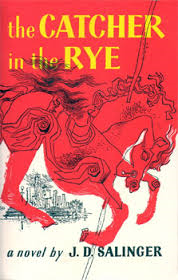
a) Holden Caulfield, the novel’s 16 year old narrator, is seriously rich. He attends a private boarding school in New Jersey, from which he has just been expelled. His family live in an apartment building close to Central Park which is large enough (the apartment, not the park) for them to have a live-in house-maid. During the 48 hours or so of the novel’s span he spends money like water, on hotels, cabs everywhere, drinks, and a prostitute. How could I have missed this first time round, seeing him as a fairly normal, typicla teenager. I think the simple reason is that we see the events of the novel through Holden’s eyes, and he is not aware of how privileged and prosperous he is – for him, it is normal to be able to afford all these things.

b) Holden hates pretty much everything. Actors. Hotels. Phonys. People who repeat themselves. Inexpensive looking suitcases. People who repeat themselves.

I hate living in New York and all. Taxicabs, and Madison Avenue buses, with the drivers and all always yelling at you to get out at the rear door, and being introduced to phony guys that call the Lunts angels, and going up and down in elevators when you just want to go outside, and guys fitting your pants all the time at Brooks, and people always….” (page 141)

Holden’s anger is random – he snarls at anything that crosses his path, but at exactly the same time tries to befriend anyone he can.

c) Holden is quite obviously clinically depressed. He is unable to sleep, he cries for no particular reason, he is unable to concentrate, and he is full of inarticulate rage against the world. Holden may have become, as described by Wikipedia, as “an icon for teenage rebellion and angst”, but that’s really a case of projection – Holden doesn’t really rebel against anything; he is just extraordinarily lonely and upset. He desperately tries to make connections with anyone who will talk to him, from taxi drivers to Salvation Army nuns, (not that the Salvation Army has nuns) and ten year-olds in the park.

By the end of the novel, Holden is hospitalised. He talks in the introduction about becoming “run-down” and coming “here” without saying explicitly where here is. However, on the final page, he mentions “how I got sick” and “this one psychoanalyst guy they have here”.

So, we have someone who is prosperous and in a loving family, with no material wants. He hates virtually everything he comes across, however trivial or inoffensive they might be. He is depressed. How can that be a simply case of teenage angst, something he will grow out of? For me, rereading ‘Catcher’ it is quite obvious that Holden has not recovered from the death of his brother a few years earlier. It is reasonable to assume that showing grief would have been frowned upon by his Waspish family. There’s no reference to any counselling or other support – instead he is simply sent away to boarding school, separating him from his remaining siblings. He still mourns for his brother, thinks about him a lot, and refers to him in the present tense in his internal monologue, but doesn’t speak about him to anyone, not even his little sister Phoebe.

‘Catcher’ is a novel much loved by teenage readers. Holden seems to speak to them in a way like few other characters in literature. He was, arguably, the first authentic teenager in literature. Coming back to the novel several decades later the authenticity of that voice is lost. In trying to establish whether this reaction was simply personal to me, or something wider, I scrolled through some Amazon (UK) reviews of the novel. One comment from a perceptive reviewer jumped out at me:

Reading it – and To Kill A Mockingbird, which is the only book that regularly beats it in polls – has been a formative influence for generations of American adolescents, to the point at which nostalgia for that time of life may impose a filter between the older reader and any objective assessment. Even so, it’s striking how many find that it can’t be reread later in life with the same admiration.”

That struck a chord – the novel is often read at a point in the life of readers when they can identify with Holden, not because of his wealth, his illness, or his loss, but because he is a teenager angry with the world. As a more mature reader we see the novel’s faults, the absence of any plot and the various implausibilities in terms of Holden’s age, an immature 16 who still gets served in bars and clubs.  We also see Holden as the distressed young man he is rather than a voice of rebellion. It is, of course, one of the strengths of the novel that is can appeal to different types of readers in very different ways.
Standard
100 Best Novels Guardian list, 20th century Literature, American literature, Book review, Housekeeping, Marilynne Robinson

Housekeeping by Marilynne Robinson, 1980

Among the various reasons for keeping this blog, the one I keep coming back to is to help me remember. I doubt if it is just me who forgets the detail of a novel, then the main events and protagonists, and finally come to doubt whether I have even read it at all. Which is why it is important that I write carefully about Marilynne Robinson’s ‘Housekeeping’, because otherwise there is not a chance in hell of me remembering it in a few months time.

The novel is narrated by Ruthie, and tells of the events of her childhood. Orphaned by the suicide of her mother she is brought up with her sister Lucille by their grandmother, then two elderly great-aunts, and finally by her aunt Sylvie. It is never stated directly, but it is fairly evident that Sylvie is mentally disturbed – she neglects the children, fills the house with rubbish and cats, and can often be found staring out into space. Housekeeping, the semi-ironic title, is not something that occurs to her, and even in the broader sense she struggles to keep a house for the girls, the younger of whom escapes to live with a teacher as soon as she is able. Finally, after Ruthie’s neglect becomes inescapable, and it appears likely she is going to be taken into care. To avoid this she and Sylvie run away, and at the novel’s close we are told they continue to live the rootless life of transients.

‘Housekeeping’ is one of those novels where the sense of place is vital. The isolated American town of Fingerbone (admittedly a fine name for a town) is settled next to a large lake, crossed by a railway bridge. From said bridge and into said lake a train crashed, carrying with it Ruthie’s grandfather, setting in chain the events that lead to this story, and providing a backdrop for the narrative itself. Think ‘Twin Peaks’ without the murder or (some of) the craziness. It always seems to be bitterly cold down in Fingerbone, and the chill and damp coming off the lake exudes from the pages.

Robinson left it almost another twenty-five years after publishing ‘Housekeeping’ to publish another novel, but it cannot have been because of the reception of this her first, prize-winning attempt. In his Guardian review Robert McCrum goes to far to say, surely in an act of wild over-exaggeration, that Robinson introduces a “new, timeless, and utterly distinctive voice into the magical polyphony of the American novel”. While she can certainly craft an image – for example  “watching gulls fly like sparks up the face of clouds that dragged rain the lenght of the lake” this restraint and economy is often absent. At times the writing is extraordinarily over-written, as here:

To crave and to have are as like as a thing and its shadow. For when does a berry break upon the tongue as sweetly as when one longs to taste it, and when is the taste refracted into so many hues and savors of ripeness and earth, and when do our senses know any thing so utterly as when we lack it? And here again is a foreshadowing–-the world will be made whole. For to wish for a hand on one’s hair is all but to feel it. So whatever we may lose, very craving gives it back to us again.”

Does it really? Or is this the triumph of style over substance, attractive to literature prize-juries but simply not that interesting?

Standard
100 Best Novels Guardian list, American literature, Book review, http://schemas.google.com/blogger/2008/kind#post, Huck Finn, Mark Twain, The Adventures of Huckleberry Finn

Adventures of Huckleberry Finn by Mark Twain, 1884/5

Mark Twain’s ‘Adventures of Huckleberry Finn‘ follows chronologically the earlier ‘Tom Sawyer’, but has a much darker, more adult tone. Huck is the novel’s first person narrator, and has a primitive, naive view of the world which contrasts with that of the reader, and provides much of the humour and insight of the novel. Huck is dirt poor, uneducated, and more than a little feral. His mother is long dead, and his father is an abusive alcoholic who treats Huck like a slave. To escape his father’s abuse he runs away – he fakes his own death, steals a boat, and sails off down the Mississippi, looking for somewhere to hide. The parallels between Huck and Jim, the escaped slave he meets and befriends, are done with a light touch – Huck has almost no self pity, and doesn’t equate his position with that of Jim. It is not so much that he believes himself superior to Jim, but that his awareness of Jim’s role as a slave, as property, with no rights whatsoever, is rarely challenged.

Jim and Huck sail down river, having various adventures. They meet a family engaged in a bitter feud with some neighbours (to be precise Huck meets the family, Jim remains hidden through these chapters) just at the point where the feud erupts into deadly violence. They meet two con-artists and become embroiled in some of their scams. Eventually Jim is captured and imprisoned, and in some of the final chapters of the novel which even its most ardent supporters recognise are misconceived, Tom Sawyer is reintroduced and the children’s book, Just-William style of the earlier novel is reimposed, before a resolution in which Jim is freed.

‘Huck Finn’ is lauded as a masterpiece of American primitive literature. Twain certainly captures the scenes of living on the river vividly. But the whole impact of the otherwise complex and subtle novel was spoiled for me by the constant and repetitive use of the n-word. The word is used casually and in most cases without vicious intent, and no doubt was historically accurate. Although the novel was published in the UK in 1884, and the US the following year, the setting of the novel is some 20 or so years earlier, when slavery in the South (having been abolished across Northern states as early as 1804) was still in force. Abolition and the free state are mentioned as background, but the attempt to take Jim to freedom is abandoned easily. Huck’s presentation of slavery is very matter of fact – he reports Jim’s distress that his wife and children have been sold to another owner – but there is little or no empathy, nor indeed recognition of their shared misfortune. All the black people in the novel are portrayed as caricatures – they speak an exaggerated form of English, rendered phonetically thus:

“But it’s awluz jis’ so; people dat’s sot, stays sot; dey won’t look into noth’n’en fine it out f’r deyselves, en when you fine it out en tell um ’bout it, dey doan’ b’lieve you.”

They are all also hugely superstitious, frightened of ghosts and witches, and are extremely easy to tease or fool, with a child-like innocence or naivety. Huck and Tom have no hesitation in exploiting this gullibility for their own amusement.

As Huck gets to know Jim, his admirable qualities emerge. He is kind, faithful, and patient. He sacrifices his freedom for Tom’s welfare, and suffers uncomplainingly the many injustices placed upon him. Twain’s portrait is generally sympathetic, despite his use of many of the ‘Uncle Tom’ cliches of the time. But this emphatically isn’t an anti-slavery novel – that battle had been won years earlier after the Civil War. Equally it doesn’t present the case for civil rights for emancipated slaves or opposition to racism – its setting means that is simply not an issue. So at best the presentation of the issue of slavery in ‘Huck Finn’ is ambiguous.

Ultimately it is the use of the n-word that defaced this book for me. Finn is a charming and thoughful narrator, and his insights into his world are at times witty and interesting. But imagine (say) ‘Pride and Prejudice’ with a foul swear word used casually by the characters every other page or so. The values of the novel would remain, its wit and intelligence, the clever characterisation, and so on, but it would be really hard to prevent the use of the distressing language from spoiling one’s appreciation of these aspects of the novel, wouldn’t it? I am not suggesting bowdlerising this novel, although such things have been done, but I doubt it would prevent readers from enjoying it if alternative language was used.

Standard
20th century Literature, American literature, Book review, Vonnegut

Mother Knight – Kurt Vonnegut – 1966

Released a few years before ‘Slaughterhouse 5’, ‘Mother Knight’ is probably best seen as a companion piece to that work. In some ways a more conventional narrative, it tells in diary form the story of Howard W. Campbell Jr, an American, who moved to Germany in 1923 as a child, and became a well-known playwright. Married to a German woman, he is approached by an American shortly before the second world war starts, and asked to stay in Germany and become a spy for the Americans. This he does, reluctantly, because in order to maintain his cover he has to become an enthusiastic propagandist for the Nazis. As he observes “we are what we pretend to be, so we must be careful about what we pretend to be” – pretending to be a Nazi for so long corrupts his soul, and he finds it hard to argue with or oppose the Americans he meets later in life who hate him, as a symbol and public face of the Nazis.

I don’t know if there was a real-life American equivalent of Campbell, but the obvious English parallel is with William Joyce, Lord Haw-Haw, who must surely have provided some inspiration for the novel, even if unlike Campbell, Joyce remained an unrepentant Nazi.

The reader is left in doubt throughout the novel whether his defence – that he was acting as a spy – is genuine. He presents no evidence in support of it, and the suggestion that he was conveying messages in his broadcasts through coughs and hesitations is implausible, to say the least. However, the final dénouement reveals his story – his defence – was actually true all along. By then it is too late for Campbell, having lost everything he values he passes his own sentence on himself.

Vonnegut is novelist of ideas – he throws them around casually, sometimes following them through, but often discarding them. This makes ‘Mother Knight’ a surprisingly easy and enjoyable read – the cast of characters was entertaining, including some cutting portraits of American Nazis, and the shifts of mood from comedy to black farce worked well. It’s also quite a brave novel – it addresses serious themes and topics such as the holocaust, the rise of fascism, and nationalism. The central character is perhaps hard to like – as narrator of his own story we should normally be sympathetic to him – we understand his motivation, even when what he does is questionable. Campbell never attempts to justify his actions in the war, but he is not prepare to accept some of the lazy condemnation thrown at him which has parallels with the way opponents of the Nazis were treated (the stealing of the light bulbs for example). Just to illustrate the point, there is a brief discussion of nationalism which quite bravely in post-McCarthy America rejects the whole concept of being proud of one’s country:

“You hate America, don’t you?’
That would be as silly as loving it,’ I said. ‘It’s impossible for me to get emotional about it, because real estate doesn’t interest me. It’s no doubt a great flaw in my personality, but I can’t think in terms of boundaries. Those imaginary lines are as unreal to me as elves and pixies. I can’t believe that they mark the end or the beginning of anything of real concern to a human soul. Virtues and vices, pleasures and pains cross boundaries at will.”

You can see Vonnegut warming up for ‘Slaughterhouse 5’ here, although without some of the surrealist components of the later novel. I also caught some echoes of ‘Lolita’ as well – both novels being the posthumous prison diary of someone reviled by society. I will definitely be returning to Vonnegut – he writes well, entertainingly, is refreshing unstuffy and unpretentious, but at the same time deals with serious themes. Recommended.

Standard
100 Best Novels Guardian list, American literature, Booker Prizewinner, gothic fiction, horror, http://schemas.google.com/blogger/2008/kind#post

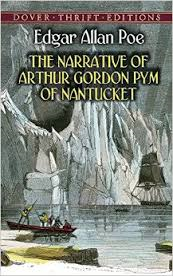
The Narrative of Arthur Gordon Pym of Nantucket by Edgar Allan Poe (1838)

One of my reasons for exploring the Guardian’s ‘best 100 novels written in English’ list is to try and find some hidden gems – books that I have not come across before that are really worth reading. Poe’s only novel, “The Narrative of Arthur Gordon Pym of Nantucket‘ meets only one of these criteria – I had not heard of it before – and now I know why.

The novel is an adventure story, following Pym as he stows away in a ship, running away to sea against his father’s wishes. He is aided by a friend, one of the crew members, and plans to reveal his presence when the ship is past the point of no return. However, a mutiny spoils this plan, and he has to remain hidden, without help from his friend, for a long time. His privations are detailed in the first person narrative in considerable, not to say tedious, detail. Finally he emerges from his hiding place, and helps in a counter-mutiny. Having secured control of the ship Pym and friends are immediately struck by a storm, which rages for days, leaving them with very little food or drink, and their ship a wreck. Again Poe details the long days of surviving on the wreck – this is actually a very short novel, but it certainly didn’t feel it while reading – until they finally resort to cannibalism, choosing one of their number to eat by lots.

Finally rescued, Pym joins another ship voyaging to the southern seas. Previous voyages of exploration are recounted in yet more detail. The purpose of all this detail is presumably to give the narrative a sense of realism, although I found the various adventures completely unconvincing. While stowed away on his first ship, for example, Pym is joined for several days by his pet dog, who his crew-member friend just happened to take along with him. Despite the ship having been taken over by the mutineers the dog at no point barks or otherwise makes his presence know. As soon as the storm arrives the dog stops being mentioned, presumably thrown overboard.

The voyage ends in the discovery of a mysterious island group deep in the Antarctic, when the rest of the group apart from Pym and a friend are massacred by duplicitous natives. Escaping from the island by canoe, Pym travels south towards the pole, when the novel ends abruptly with the appearance of a mysterious figure.

I’ve read incomplete novels where the author died mid-composition that end with more coherence and naturalism than this. It just stops, and it is obvious that the author, having reached a word count (or equivalent) thought “that will do” and moved on. The “editor’s” postscript (which incidentally is not included in the kindle version of the novel I initially read, which is really irritating) is a fig leaf that does nothing to compound the absurdity of the ending.

I look for at least one of the following in any novel: characterisation, a decent story, some interesting use of language, or some ideas. Poe provides none of the above. Pym himself hardly emerges from his narrative at all – we really have no idea what he is like, other than extraordinarily lucky in surviving his various in extremis situations, which of course we know he does from the novel’s ludicrous subtitle. (Comprising the Details of Mutiny and Atrocious Butchery on Board the American Brig Grampus, on Her Way to the South Seas, in the Month of June, 1827. With an Account of the Recapture of the Vessel by the Survivors; Their Shipwreck and Subsequent Horrible Sufferings from Famine; Their Deliverance by Means of the British Schooner Jane Guy; the Brief Cruise of this Latter Vessel in the Atlantic Ocean; Her Capture, and the Massacre of Her Crew Among a Group of Islands in the Eighty-Fourth Parallel of Southern Latitude; Together with the Incredible Adventures and Discoveries Still Farther South to Which That Distressing Calamity Gave Rise.) The story is extremely episodic and predictable, a loosely connected series of incidents. The language is inoffensive, at best, and the only idea worthy of the name is the suggestion that the south polar regions might lead to undiscovered continents, peoples, and species. I am a little more sympathetic to this final point – the world was still being explored in the 1830’s, and new species being found, so this wasn’t as ludicrous as it sounds.

Poe introduces some classic elements of gothic horror into the narrative – cannibalism, pirates, a ghost-ship, entombment, and so on, but ultimately the novel is as spooky as a Halloween costume in June.

<iframe frameborder=”0″ height=”0″ id=”google_ads_iframe_/183932232/GS_300x250_BTF_1_0__hidden__” marginheight=”0″ marginwidth=”0″ name=”google_ads_iframe_/183932232/GS_300x250_BTF_1_0__hidden__” scrolling=”no” src=”javascript:””” style=”border-image: none; border: 0px currentColor; display: none; vertical-align: bottom; visibility: hidden;” width=”0″>I’m not alone in finding this all quite ridiculous. In an introduction to the novel, Jeremy Meyers wrote that Poe’s choice of the incomplete journal form “allows Poe to disguise and excuse his own inability to control the plot and complete the novel.” Poe himself called it a “very silly book.” Indeed. I don’t know whether the unhappy experience of writing this novel led Poe to concentrate on poetry and short stories, but it is probably a good thing if it did.

Standard
100 Best Novels Guardian list, 20th century Literature, American literature, Animal stories, Book review, Jack London, The Call of the Wild

The Call of the Wild – Jack London – 1903

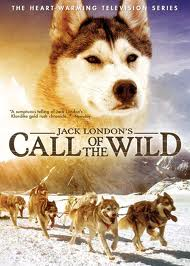
‘The Call of the Wild’ follows the adventures of Buck, a St Bernard/Collie cross. Buck is stolen from his Californian home, and sold to fuel the need for sled dogs in the Yukon as part of the 1880s gold rush. Buck goes from being a relatively pampered pet to being a possession, to be used and treated as a commodity, beaten close to death, worked even closer. London was a socialist and had first hand experience of the privations of the Yukon and the brutal treatment of animals, but I couldn’t avoid thinking that the story is more than just about dogs. 

Aren’t there clear parallels between the way Buck is broken and abused, and the treatment of slaves in America? I’m not suggesting the novel is a metaphor or parable – it could just be a story “about dogs” (I often check the Amazon reviews on books I am planning to write about, to get a feeling for the overall response, and see if there’s anything significant I have missed. One reviewer for ‘The Call of the Wild’ claims to have been disgusted upon finding out that the novel was “about dogs”, which I have to say I found wonderfully dumb) – but London’s political background suggests that his sympathy for the literal underdog extended beyond animals.

Buck is trafficked together with other captured and bought slaves, sorry dogs, to the Yukon, where he is savagely beaten until the fight goes out of him. He learns his new role chained to the straps of a sled. He is given bare rations, and slowly finds a place in the pecking order amongst the team. Once his job is done he is casually discarded, bought at a discount because he is no longer needed, and once again placed in chains. He finally finds an owner who treats him with love, but this relationship ends brutally, and Buck surrenders to the primal instincts he has been fighting for some time, and gives in to the ‘call of the wild’, becoming leader of a wolf pack.

This is not a story for animal lovers, or at least not those with any trace of sentimentality. Dogs die throughout the book, often killed by Buck himself, but also in a wide variety of other manners. Dogs are portrayed as fierce animals, following instincts derived from their days as man’s earliest companion, when the world was much darker and more dangerous. The novel of course anthropomorphises Buck, giving him human feelings and thoughts, and an understanding of the world far beyond what any pet would ever actually have, but he remains an animal, killing when he has to, and following his instincts – well, almost all his instincts – London understandably doesn’t goes down that road!

At just over 100 pages long this is a short adventure story that can be read in an afternoon or less. The Yukon is captured realistically through Buck’s eyes, and there is a wide cast of characters – I particularly enjoyed the stupid family who ignore the advice of experienced trappers and disappear through a hole in the ice, as we knew they would. The novel is carried forward at a frenetic pace, and the exercise of seeing the world through an animal’s eyes is well done. But at the end of the day this is just an adventure story, and I suspect London wrote books other than ‘Call’ more appropriate for adult readers. Whether I will seek them out is another matter.

Standard
100 Best Novels Guardian list, American literature, Book review, Sister Carrie, Theodore Dreisser

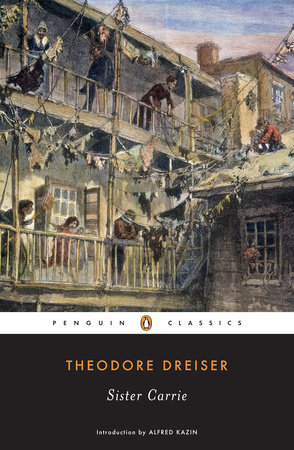
Sister Carrie by Theodore Dreisser, 1900

‘Sister Carrie’ follows a young woman as she travels from her small town life at the age of 18 to the big city. At first she lives with her sister and her sister’s husband. She struggles to find work, and succumbs, quite easily it has to be said, to the blandishments and an attractive and smooth talking young man, who sets her up in a small flat of her own. To provide this scandalous situation with a veneer of respectability they pretend to the neighbours that she is his wife. Bored with this arrangement she begins a secretive romantic liaison with another man. Dreisser loses interest at this point – I have read that he abandoned the novel several times before finishing it – and so injects some liveliness by having the second boyfriend, Hurstwood, rob his employers of $10,000, and flee across the border into Canada, taking Carrie with him. He almost immediately regrets this, pays back most of the money, and moves to New York in hope of finding an income. Carrie plays housewife, but when the money dries up she takes a job on the stage, eventually finding fame and fortune. Her boyfriend finds only poverty and destitution, and eventually kills himself in despair.

How this novel possibly found a place in the Guardian’s top 100 novels written in the English language I will never know. It has so many deficiencies, from the misleading title (the ambiguity between Carrie being a sister, and having nun-like tendencies, offers possibilities which are never explored); the tedium of the length at which poverty in Chicago and New York is unrelentingly described; and the almost complete lack of characterisation. After 500 pages we still know very little about Carrie’s thoughts and feelings, beyond a vague interest in shoes and clothes. She is a profoundly superficial and uninteresting person, and when her stage career takes off we share no delight on her behalf. This list just scratches the surface of the novel’s weaknesses, but there’s little to be gained from any further demolition of what he till now been a justly forgotten novel.


‘Sister Carrie’ caused a minor scandal on publication, because while she has affairs with men who are not her husband, she does not suffer any consequences from this, remaining unpunished by the fates. But her affairs are loveless, joyless things. Dreisser is unable to look too closely at the dynamics of these relationships – sex is barely hinted at, and the reader is simply left to infer that it probably happens at some point. She drifts into the relationships unenthusiastically, and they end with an equal lack of passion or drama.


Are there any redeeming features here? The portrait of urban America is convincing – you can certainly believe that Dreisser has walked the cold, dirty streets of Chicago and New York, looking hopelessly for work, queuing for handouts, and sleeping in filthy rented rooms for a few cents a night. There’s no hope offered for his characters – this is simply a portrait, not an analysis. There is no way out other than suicide. An interesting section clearly dropped into the novel follows a bus-drivers strike, shown from the perspective of a strike breaker. The strikers are portrayed sympathetically, but so are the scabs, and only the police get a hard time. This plot line is quietly dropped in favour of yet more street walking and hunger.


Standard
100 Best Novels Guardian list, 20th century Literature, American literature, Booker Prizewinner, Kurt Vonnegut, Second World War, Slaughterhouse 5

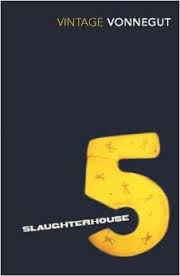
Slaughterhouse 5, by Kurt Vonnegut, 1969

I’ve written elsewhere on the mysterious process that is re-reading a novel. The experience ranges from a comforting stroll down memory lane, to the more common “I know I have read this, but for the life of me can’t remember a single thing about it”. Slaughterhouse 5 was for me definitely a re-read, and I had a dim recollection of the main elements of the plot, if you can call it that, but the primary experience was as close to a new read as makes no difference.

‘Slaughterhouse 5’ is a strange novel. It follows the life and times of time traveller, World War 2 survivor, and alien kidnapee, Billy Pilgrim. Billy experiences time as a continuum, and travels from point to point across it freely, making this an exceptionally fractured novel. “It is just an illusion here on Earth that one moment follows another one, like beads on a string, and that once a moment is gone, it is gone forever.”Breaking that down into a “what happened” narrative requires the imposition of a more formal, chronological time scheme and would be misleading; there is a collection of events spread across time that is revealed to us, the reader, but only a limited attempt to present this in any sort of order. In a classic post modernist manner, Vonnegut explains “There are almost no characters in this story, and almost no dramatic confrontations, because most of the people in it are so sick and so much the listless playthings of enormous forces. One of the main effects of war, after all, is that people are discouraged from being characters.”   On reflection, however, I think I may have overstated the impact of the fractured time scheme on the narrative flow of the novel – there is underneath all this jumping around in time nevertheless a reasonably steady progress of the central narrative, from Billy’s capture as a prisoner of war, his transport across Europe to Dresden, to the final horror of the fire-bombing.


There’s also an incongruous comic book silliness to much of the novel – at one point Billy is captured by aliens and displayed in a zoo, for example. However, the seriousness is never far away, giving the reader an unsettling experience of stepping from genre to genre in the space of a few lines.

The title of the novel refers to the refuge Vonnegut used to survive the Dresden firebombing of 1945. He unequivocally portrays this as an horrifying act of violence, but doesn’t take sides – the reader is left to draw their own conclusions about the morality of the raids. He quotes the figure of 135,000 deaths in the raid, which was accepted, to a point, at the time, but is now know to be a politically motivated exaggeration of what was nevertheless a massacre. Had the Allies lost the war the Dresden raids would undoubtedly have been treated as war crimes. Some of the horror of this event is shown, but it is mainly mitigated by insistence of the philosophy at the heart of the book, that bad things are best not dwelt upon, as they are always going to have happened; far better to focus on the good. This is best summarised in the fatalistic chant of the novel, “So it goes”.


As a classic post modern meta-narrative, Slaughterhouse 5 is as much about the process of writing a novel as the events described. As is now quite common, but at the time was much more original, the book contains its own review:
“There is no beginning, no middle, no end, no suspense, no moral, no causes, no effects. What we love in our books are the depths of many marvelous moments seen all at one time.”
Which is as good as a summary as I am going to find. One footnote – this novel contains a passing reference to “The Red Badge of Courage”, another American novel about war, and also one of the top 100 Guardian novels. So it goes.


Standard
20th century Literature, American literature, Book review, Go Set a Watchman, Harper Lee, TKAM, To Kill a Mockingbird

Go Set a Watchman by Harper Lee

“Go Set a Watchman” (and what a great title by the way) was an early, rejected draft of the story that was to eventually become “To Kill a Mockingbird” (or “that Mockingjay book” as overheard in Waterstones recently. In Watchman, 26 year-old Scout returns from New York to spend time with her family in Maycomb, Alabama. The contrast between urban, progressive New York, and the backward, sister marrying deep South, is the source of much of the dramatic tension of the novel. Scout discovers by chance that her father and family are involved in a racist movement to ensure the black community remains in its place. This movement has sinister, violent undertones. The N word is used freely by its supporters. Scout passinately confronts her father, who refuses to apologise, but tells her she is wrong. Her uncle, a doctor, repeats this message, and when she gets upset violently hits her. This calms her down in the book’s most upsetting scenes. The novel ends with the suggestion that Scout has come to terms with her family’s racism, and may even stay in Maycomb.

Much of the reaction to the novel, and speculation as to its long delayed appearance, centres on the alleged transformation of the character of Atticus Finch, from noble defender of the oppressed black peoples of Maycomb, to a racist Klan supporter. Watchman’s hero is far more human than the paragon of TKAM. This confused response is wrong on two counts. Firstly, as Watchman makes very clear, the Atticus Finch of the second novel is the same man as in the first. There has been no major transformation, no becoming racist due to a traumatic incident or gradual embitterment. Yes, the times have changed, and the circumstances with them, but Atticus was and is a decent racist. How can the brave defender of a wrongly accused black man be a racist? Simply this – he believes in the rule of law, believes black people have a right to a fair trial, but he doesn’t believe they have the right to much more than that. Certainly not equal rights, equal education, the right to have proper democractic representation. Worst still, while Scout is appalled by Atticus’s association with disgusting racists preaching race war, she still has racist views herself. She agrees with Atticus for example when he explains that co-education threatens the Southern way of life. She challenges effectively the idea that mixed relationships will lead to mongrelization of the white race – are black men so irresistible to white women that they have to be legally restrained from marrying them? – but believes the consitution should not compel people to share their schools if they don’t want to.

Realistically, this is probably as progressive you would get for white people in the 1950’s, and even then Scout’s liberalism can be traced not just to her father’s decency, but her “corruption” by New York progressivism.

Why is the Finches’s racism so apparent in Watchman, but not Mockingbird? I believe the main difference is the context. In 1930’s Southern USA, the civil rights movement didn’t really exist. (This is not my specialist subject to say the least, but I think that’s right). In the 1950’s the NAACP was on the march, organising, and challenging the institutional barriers which left most black people as simply released slaves, with few if any political rights. Watchman prefigures the battles to come over civil rights, and shows us how threatened and scared some white communities were. Not everyone in the South who opposed civil rights were monsters, even if their behaviour and language was monstrous.

This book provides us with a different way of looking at Mockingbird, and is worth reading for that reason alone. Lee shows some skill in her handling of the portraits of the Maycomb community, capturing a sense of time and place. The characters emerge strongly, recognisable and consistent with their later (but also earlier) incarnations in Mockingbird. Whether Lee’s editor, who encouraged her to shelve this book and re-create the novel based on the flashback, was right or wrong is a meaningless question – we now have both books, and if Mockingbird is slightly diminished in the eyes of some readers, there’s little that can be done about this now. I suspect Mockingbird is resilient enough to emerge form this unscathed, with Watchman becoming a footnote in future GCSE and A Level reference books. Which would be a pity, because I also suspect Watchman is the more accurate, less romantic portrayal of the two.

Standard
20th century Literature, American literature, Book review, F Scott Fitzgerald, The Great Gatsby

The Great Gatsby by F Scott Fitzgerald – 1925

What is this? – not “this” the Great Gatsby, but this, the words I am writing? It is not a review – despite the heading of this blog you can’t really review a book published 90 years ago, not one which has attracted the wealth and weight of critical comment that much loved novels such as this have? At the same time a plot summary would be redundant, and random impressions need some kind of structure to make them worth reading. I think the best I am going to get to is “some interesting things I noticed about the novel that may not have been written about elsewhere, but probably have”.


I mention above that this novel is much loved – adored would be closer. On a first reading it is hard to see why – the central character is a deeply flawed former criminal, and is involved in the death of a young woman. But he sacrifices himself for the woman he loves without flinching, knowing that his life without her love is worthless. It is in that sacrifice that he finds redemption from his previous life of crime.

The Jazz Age setting is obviously seductive, conspicuous consumption meeting post Great-War hedonism and the early days of prohibition in a perfect storm of parties, frivolousness, and excess. The narrator, Nick Carraway is a tabla rasa who observes the events of the novel without meaningful judgment or any significant involvement – he seems as hollow as many of those he observes. He suggests that he has scorn for the nouveau riche and borderline criminal people orbiting around Gatsby, but is happy to join them, and condones Tom’s unfaithfulness to Daisy by his silence.

The novel is rich, almost burdened, with symbolism. The glasses that loom over the petrol station, a key scene for the very visual settings Fitzgerald uses, are explicitly compared to Nick’s neutral gaze. I am aware as well that the name Carraway suggests the very small (if pungent) seed of the same name – he is as unsubstantial and of little significance. As a narrator he is reasonably reliable, and does not hide or obscure events, but equally his personal role is not really important – he is only there to observe.

Probably the most mundane, but unavoidable, reading of this novel is that it represents a judgment on the Jazz Age and all its excess. Mundane because once you have drawn the conclusion that rich people aren’t that nice one doesn’t really have anywhere to go with it. Gatsby is usually exempted from this judgment, despite his background and criminal career making him in many ways its exemplar. His time in the war has taught him the cheapness of human life, although perhaps he did not value his own anyway, having lost Daisy to Tom, which is why his sacrifice, when it comes, seems so easily done.

I wanted to mention one irritation, which seems churlish given the overall strength of the novel, but stood out for me anyway. Prior to the motor accident that precipitates Gatsby’s demise there is a lot of “business” about who takes what car. This is a plot device to ensure Gatsby is mistakenly blamed for the accident. It appeared clumsily done to me – it was obvious there was some reason for the “take my car” ” no take mine” nonsense that didn’t really make much sense at the time. I may be being unfair to Fitzgerald, who I am sure wouldn’t mind that much anyway! Doubly unfair because the plotting may have been tight and I might have just missed the point, or simply because in the overall context of the novel a writer should be allowed to get away with little bits of business to engineer the end he is looking for.

I think this novel, given its place in the pantheon of world literature, probably deserves another reading, which given its relative brevity isn’t asking that much. For now its success is for me, elusive.


Standard