20th century Literature, American literature, Crime, Detective, Detective fiction, Raymond Chandler, The Big Sleep

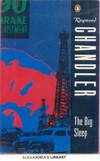
The Big Sleep by Raymond Chandler, 1939

Chandler is one of my favourite writers – top 5 at least, and pretty much everything he published is consistently readable. As such I don’t really have a favourite novel of his but if forced to choose it would probably be “The Big Sleep”. This is Chandler at his sublime best. Philip Marlowe, his iconic hard boiled detective, a loner, is the quintessential private eye, the model on which so many detectives down the ages have been based upon. We see the action through his detached, sardonic perspective, although even then many things we are left to work out for ourselves.

The principal attraction of these novels – “The Lady in the Lake”, “Farewell my Lovely”, “The Long Goodbye”, “The Little Sister” – all classics – is not the plotting, tight though this is, but the prose – Chandler had an ability to craft a phrase like few others. Take this opening from “The Big Sleep” for example, probably one of the best ever written:
“It was about eleven o’clock in the morning, mid October, with the sun not shining and a look of hard wet rain in the clearness of the foothills. I was wearing my powder-blue suit, with dark blue shirt, tie and display handkerchief, black brogues, black wool socks with dark little clocks on them. I was neat, clean, shaved and sober, and I didn’t care who knew it. I was everything the well-dressed private detective ought to be. I was calling on four million dollars.”
Doesn’t that make you want to stop and go and read the book itself? Go on, I won’t be offended. The dark little clocks are a great touch.

The plot is extremely complex, not that it matters. Marlowe is employed by the ailing General Sternwood to investigate a small blackmail problem. In doing so Marlowe gets involved with pornographic book lending (which in today’s world is almost cute), gambling, boot-legging, gangsters, and several murders. The story flies along at such pace that you don’t actually spot the join – the book was originally two shorter stories, welded together to make the novel. This is done with such craftsmanship that you don’t notice unless you are looking for it – and even then it doesn’t matter a jot. (End of chapter 19 if you are interested – everything is tied up neatly at that point with only the missing persons investigation, which Marlowe isn’t really supposed to be conducting, outstanding).
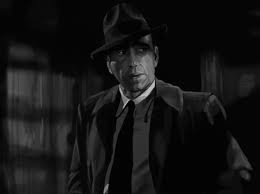
If you haven’t read Chandler before you are in for a treat. This is as good a place to start as any – it’s his first Marlowe novel. In Philip Marlowe we have one of the great literary characters – as well realised and fully rounded as any I can think of. Some Christians exhort people to ask “What would Jesus would do?”. With all possible respect to these individuals, I often wonder whether “What would Marlowe do?” would offer better advice. That won’t mean too much if you haven’t read the books, so you know what to do now, don’t you?
Standard
20th century Literature, American literature, Book review, John Steinbeck, Of Mice and Men

Of Mice and Men by John Steinbeck

Of Mice and men – John Steinbeck read in the 2010 New Longman edition
Spoiler alert – this review gives information about what happens at the end of the story. If you don’t want to find out what happens before you have read the book itself, please do not read any further.
I have a theory about “of Mice and Men”….
If George were to be tried for the murder of Lenny, he would be convicted. Everything Steinbeck writes leads us to avoid this judgment. At the end of the novel the murder is portrayed as a kindness. What is interesting to me is how Steinbeck manoeuvres the reader into this position, where we have sympathy for the killer, and empathise with his actions. How does he do this?

Firstly, we are encouraged throughout the story to think of Lennie as an animal – all of the imagery used to describe him focuses on this aspect of his appearance and behaviour. When we first see him he is described as “dragging his feet a little, the way a bear drags his paws” (page 19);  later he is said to be “as strong as a bull” (43); and later still he “came as silently as a creeping bear” (140). Bears and bulls are of course dangerous, and frequently killed by man.

The story is set in a world in which it is legitimate for man to destroy animals – for example to avoid unnecessary suffering. We are given two examples if this in the text – the killing of Candy’s dog, and the killing of four of Slim’s puppies. The putting down of Candy’s dog is particularly poignant and telling – Candy is told it is the right thing to do, and the reasons are compelling, but at the same time we can clearly see that it is not a straightforward decision. He is told to shoot the dog in the back of the head, which prefigures Lennie’s death. And of course it is Candy’s gun which is used to kill Lennie, underlining the connection between the two deaths, if such emphasis were needed. So Lennie is little more than an animal, and it is acceptable to put animals down when their owners feel it is appropriate to do so, therefore….

But Lennie isn’t an animal, and killing him is not legitimate.

The case for the defence is that this was a mercy killing. Lennie is about to be shot by Curley, and suffer a slow drawn out death. If this is somehow avoided then he would in likelihood be judicially murdered, or left to rot in a “booby house”. Even in the unlikely event of them escaping sooner or later the inevitable will happen and Lennie will be killed. Best for him to die in a moment of sublime happiness than be butchered.
The problem with this defence is that it is based on a number of false premises, albeit ones that the author has very carefully constructed. Firstly, it assumes the inevitability of Lennie’s death at the hands of the lynch mob. Well Lennie and George have some experience in escaping from mobs before, and the case that capture is inevitable is not made. Secondly, George has some responsibility for them reaching this point. While not directly responsible for Curley’s wife’s death (and how sad that anonymity is, like the other great anonymous character of GCSE fiction, Piggy) George did not do enough to avoid what was a foreseeable conclusion. We are told clearly she is “trouble” and Lennie begs George to leave the ranch – even he can tell things are going to go agley. George is well aware of Lennie’s exceptional strenght, and that he kills animals accidentally, so it didn’t take a leap of imagination to see that Curley’s wife was at risk. George admittedly warns Lennie to stay away from her, but then leaves him unsupervised while he plays ring-toss with the other ranch hands.

Lennie is brain-damaged and disabled, and whatever his crimes did not deserved to be put down like a dumb beast. Across the Atlantic, the Nazis were treating disabled people in pretty much the same way as George does Lennie, weighing their value in the balance and killing those found too much of a burden.

So why, when George kills Lennie, do so many readers see it as nothing less than an act of love, more than a mercy killing, a gift, sending Lennie to the promised land he has no prospect of inheriting on earth? Steinbeck spends the whole book leading us to this point, painting the choices George makes as unavoidable. We are told of their near escape from their previous town, when Lennie scares a young woman, sparking a manhunt. We are told of Lennie’s troubled childhood and George’s charity in taking him on. We see Lennie’s propensity for killing animals accidentally. And George loves Lennie, cares for him as best he can, and doesn’t want him to suffer the painful death Curley threatens.

So which is it – a mercy killing of a dear friend to avoid further suffering, or a cold, callous murder to relieve the burden of caring for a disabled relative? And how are we led to think it is the former, when all the circumstances suggest the latter? And finally, if we can be led into accepting a murder so easily, what else could we accept?
Standard