
“When he’s fifteen, he and his mother move to a new town and he starts at a new school. It’s not an easy age to do that – the social order of the school is already well established and he has some difficulty making friends.”
In eight discontinuous chapters, David Szalay tells the story of Istvan, whose surname is never mentioned to preserve his ‘everyman’ status. The novel opens with 15-year-old István living with his single mother (his father is also never mentioned, but his absence from Istvan’s life casts a long shadow. This is a novel about fatherhood among other more prominent themes.) Isolated at school, he begins a sexual relationship with an older, married neighbour. Told from Istvan’s perspective this affair is not perceived as abusive, but he is clearly groomed and the reader can infer how damaging it is. He repeatedly describes the neighbour as ‘old’ and ‘ugly’ and focuses on the flaws in her less-than perfect body. Eventually a violent confrontation with her husband results in his accidental death; István is held responsible (rightly so) and is sent to juvenile detention. As with many critical episodes in his life, this period of detention is skipped over in the narrative, and the next chapter opens with István about to be discharged from five years’ service in the army. He has served in Kuwait and the Iraq War, but we only learn this after the event as we are told about his discharge and attempt to return to civilian society. Another end of chapter time jump sees him moving to London to work as a bouncer at a nightclub. From there he is hired as a chauffeur and bodyguard for a wealthy businessman and he soon begins an affair with the businessman’s wife, Helen.
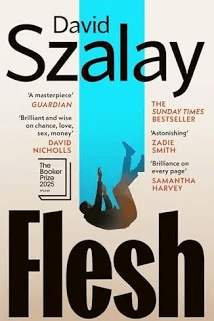
Helen’s husband has a recurrence of cancer and despite the best treatment money can buy, he dies. Another time jumps sees Istvan and Helen married, Helen pregnant, and her teenage son Thomas bitterly resenting Istvan’s very existence. All of the businessman’s estate has been left to Thomas, held in trust until he turns 25. Helen and Istvan dip into this money (with the connivance of a dodgy lawyer) to fund property development schemes. I am going to stop this plot summary at this point because there some significant spoilers ahead, if I haven’t given too many already. Suffice to say there are some significant challenges ahead for Istvan.
It’s quite some time since I read a book where I was so conscious of the author, sitting behind a screen, tapping out scenes and challenging the reader to find them banal, improbable or unconvincing. His central character – virtually every scene is recounted through Istvan’s eyes, to the extent that the small number of scenes not told from his perspective stand out starkly – finds it very difficult to access or articulate his feelings. To demonstrate this Szalay gives us literally dozens of scenes where Istvan replies in monosyllables to anyone attempting to get him to communicate on anything other than the most basic level. In conversation he either replies any time he is addressed with “I don’t know”, “Yeah” or by repeating the question:
“It’s Istvan right?”
“Yeah”
“Where are you from?”
“Hungary”
“What’s that like?
Istvan isn’t sure what to say. He says what he tends to say when people ask that question.
“It’s okay”
“You go back much?”
“Sometimes”
“Visit family?”
“Yeah”
“You must miss it”
“Yeah, sometimes”
And so on, relentlessly, daring the reader to find this banal. Even scenes of conflict, danger or excitement are described in the same, monosyllabic unengaged tone, demonstrating no awareness of the questioner’s interest in what is being discussed. Szalay has made a brave, radical choice – to take an exciting life and focus on the moments in-between the incident and drama, so all we see are the moments of reflection; and then to create a character almost completely unable to reflect on what has happened to him with any degree of insight or coherence. Istvan’s inability to talk about the events of his life quickly becomes a burden to the reader. We get it, he is inarticulate, the point is really flogged to death. I could have done with fewer of these extended conversations where nothing is said – I doubt if I was the only reader who was tempted to let their eyes slide over a chunk of dull, phatic dialogue to the next paragraph.
Reflecting on this choice while announcing the novel’s Booker Prize 2025 award, the chair of judges, Roddy Doyle explained:
“At the end of the novel, we don’t know what the protagonist, István, looks like but this never feels like a lack; quite the opposite. Somehow, it’s the absence of words – or the absence of István’s words – that allow us to know István. Early in the book, we know that he cries because the person he’s with tells him not to; later in life, we know he’s balding because he envies another man’s hair; we know he grieves because, for several pages, there are no words at all. I don’t think I’ve read a novel that uses the white space on the page so well. It’s as if the author is inviting the reader to fill the space, to observe – almost to create – the character with him. The writing is spare and that is its great strength. Every word matters; the spaces between the words matter.
If Szalay had chosen to write the scenes between the chapters, telling us directly about the moments that shape Istvan’s life, rather than letting most of it happen ‘off screen’, this would have been a very different novel, far more conventional, less challenging, but I suspect more enjoyable. But while interesting things happen to Istvan, I am not sure he is an interesting character. It will be clear by now that I am ambivalent about Flesh: you have got to admire the author’s audacity and technical skill, and I found the novel an extremely easy, two-day read, but the nagging doubt remains that at the heart of the novel there is a vacancy, a gap. Istvan drifts through life without forming any serious relationships – he is almost surprised when he realises at one point very late in the day that he actually likes his wife – and has nothing of interest to say. Perhaps Szalay was telling us that we are all, like Istvan, just flesh?
 The Reading Bug