Discussion piece

Comment: The Dangers of Background Reading

When I am preparing a review post for this blog I will often do some background reading on the novel in question. This can include:

  • reviews on Goodreads, Amazon (got to love the one star reviews!) and of course other blogs
  • the introduction to the text, and often the blurb as well
  • the novel and author’s Wikipedia page
  • anywhere else that these reads take me – for example if the novel has a historical  setting I will often read more about that.

But, and this is critical, I always do this reading after I have read the novel itself, never readingbefore. The reason for this rule is simple – I want to keep my reaction to the novel as authentic and genuine as possible. Reading about the novel before the novel itself will have an impact on that initial reaction. Apart from the obvious risk of spoilers, I have found that reading other people’s impressions of a novel can affect my own. That impression might be slight, but it will be in the back of my mind as I read, getting in the way of my own personal reaction. I don’t think there’s a danger of me being swamped by these perspectives – there’s no point in telling you what other people think about ‘Ulysses’  or ‘The Golden Bowl’, you can read there articles/essays/books yourself.

I appreciate I am making reading a novel sound like an experience that needs to be kept pure and unsullied by prior exposure to someone else’s ideas. I don’t think reading a critical response to a novel before the novel itself will necessarily ruin one’s appreciation of the narrative – it may even enhance it. But my preference is to try to make my own judgment first, then test them out with the rest of the world before committing my thoughts to paper.

A good example of where pre-reading can affect one’s reaction to a novel happened to me recently. I foolishly looked at John Sutherland’s otherwise valuable guide to “500 great novels and a handful of literary curiosities”, ‘How to be Well Read’. Sutherland’s review of ‘As I Lay Dying’ says:

“It’s a bleak novel. One puts it down with relief, but with a certain gratitude for having read it”.

No spoilers, and a slightly ambiguous judgment, but this precis shaped my approach to the novel even though I did not want it to. I led  me to expect harrowing scenes of depression-era rural America, like ‘The Grapes of Wrath’ without the laughs, and unsurprisingly that was what I found. So to an extent my impressions were John Sutherland’s, not my own raw, unfiltered thoughts and feelings. Who knows – if I had read this novel before the summary, I might have found it light-hearted or comic. Unlikely of course, but I deprived myself of the opportunity to find out. There have been novels where my reaction went against the tide of critical opinion – I found Patrick Suskind’s ‘Perfume’ highly offensive for example, whereas everyone else seemed to love it.

If you are reading in an academic context, ignore this advice. Background reading is essential, and it doesn’t matter a great deal when you do it. Reading a plot summary might make it easier to follow the novel’s storyline, differentiate characters, look at for key plot points, skim the boring bits, and so on. But for this blog, I am going to continue to maintain by “book first” rule.

What’s your approach – do you pre-read?
Standard
Book review, children's literature, Frances Hodgson Burnett, Narnia, The Secret Garden, Tropes

Supplementary: I want it now! ‘The Secret Garden’ by Frances Hodgson Burnett, 1911 – some further thoughts

I have been taken to task, with some justification, for describing Mary Lennox the ten year old heroine of ‘The Secret Garden’ as “unlikeable”.

Let’s look at the evidence.

In the novel’s haunting opening chapter, “There’s no one left”, indeed in the novel’s opening line, this is how the author describes her:

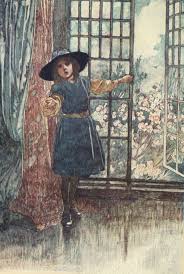
“When Mary Lennox was sent to Misselthwaite Manor to live with her uncle everybody said she was the most disagreeable looking child ever seen. It was true, too.”mary-lennox

Not one of the most disagreeable looking children, but the most disagreeable looking – and the narrator agrees!

Born a “a sickly, fretful, ugly little baby”, she is neglected if not abandoned by her parents, and left in the charge of servants and a series of governesses fearful of imposing any discipline upon her. She grows up into “as tyrannical and selfish little pig as ever lived”. She beats and kicks her servant, and calls her ‘“Pig! Pig! Daughter of Pigs”….because to call a native a pig is the worst insult of all’. Even Mary herself accepts “People never like me and I never like people.”

Unsurprising Mary is not usually remembered this way. In film adaptations and book illustrations this aspect of her appearance is quietly forgotten. In the text, once settled in Yorkshire she is quickly healed and transformed by the redeeming power of the Secret Garden. The spoilt nasty orphan is left behind and she becomes a lovable and kind child. As well as a change of character, Mary also changes in appearance. Plenty of exercise, good clean Yorkshire air, and an English diet and climate combine to fatten her up! Mrs Medlock the housekeeper says (chapter 24)

“She’s begun to be downright pretty since she’s filled out and lost her ugly little sour look. Her hair’s grown thick and healthy looking, and she’s got a bright colour. The glummest, ill-natured little thing she used to be”.

Mary’s transformation is shadowed closely by the changes in Colin. The garden has an even more dramatic effect on him, allowing him to walk again and become a happy and polite child. In Colin’s case, the friendship and support of Mary and Dickon have an important role in his recovery.

This story arc – spoilt brat is transmuted physically and emotionally – is a common trope in children’s literature. Edmund Pevensie and Eustace Scrubb* in the Narnia stories (for example) take a similar voyage, quite literally – Eustace takes things the whole way and transforms into a dragon as part of his redemption!

Was it fair to describe Mary as (at that point in her life) “unlikeable”? I’ll let you decide.

* “There was a boy called Eustace Clarence Scrubb, and he almost deserved it. His parents called him Eustace Clarence and his masters called Scrubb. I can’t tell you how his friends spoke to him, for he had none.”

Standard
Book review, Bronte, children's literature, Edwardian literature, Frances Hodgson Burnett, Jane Eyre, The Secret Garden

The Secret Garden, by Frances Hodgson Burnett, 1911


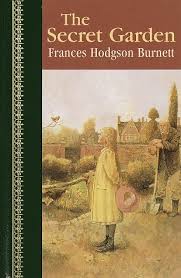
burnettFrancis Hodgson Burnett’s ‘The Secret Garden’ is predominantly a children’s novel, but like all good children’s literature its appeal spreads far beyond this audience. I increasingly found myself admiring the author’s craftsmanship, even if I was able to resist some of the more sentimental aspects of the novel.
Set in a soon to disappear Edwardian Yorkshire, where England rules half the globe, servants know their place and doff their caps, the rural poor are apple-cheeked and breed with profusion, ‘The Secret Garden’ is, despite all this historical baggage, delightful. Ten year old Mary Lennox suffers the inevitable fate of all children in literature and is orphaned in the opening pages: “The cholera had broken out in its most fatal form and people were dying like flies.” Parents out of the way, she is whisked away from colonial India to live in a large country house where she wanders the empty corridors, seeing her remote and gruff uncle Archibald Craven just once before he leaves for an extended European tour. Continue reading

Standard
20th century Literature, Book review, Bronte, Empire, Jane Eyre, Jean Rhys, Slavery, Wide Sargasso Sea

Wide Sargasso Sea, by Jean Rhys, 1966

“There is always another side, always.”

As you may know, Jean Rhys’s ‘Wide Sargasso Sea’ tells the story from ‘Jane Eyre’ of Mr Rochester’s first wife, the ‘mad woman in the attic’, Bertha Mason.wide-sargasso-sea

The idea of giving a voice to a relatively minor character from a classic work of literature may not have been invented by Jean Rhys, but I can’t think of an earlier example.*

The thematic heart of this short novel is an attempt to understand Bertha’s descent into madness. Is Rochester’s description of her condition correct, or is she the victim of a loveless marriage and the brutal property and marriage laws of the time, which allowed a husband to treat an inconvenient wife as mere property? rhys reminds us that in this world wives have fewer rights than the recently emancipated slaves.

‘Wide Sargasso Sea’ opens with Bertha, known at this point as Antoinette, as a child, living on an estate in Jamaica. Slavery has recently been abolished, and the comfortable world order in which white plantation owners ruled unchallenged is under threat. Antoinette is mixed race, although her precise racial lineage is unclear – all we are told is that her mother is a ‘Creole’. In ‘Jane Eyre’ an association is clearly drawn between this racial background and the madness that runs in the family. Rochester in particular associates “madness” with Bertha’s racially “impure” lineage. He claims

Bertha Mason is mad [because] she came of a mad family;–idiots and maniacs through three generations! Her mother, the Creole, was both a mad woman and a drunkard!” (Jane Eyre, ch 26).

Rochester on the other hand is never vulnerable to this affliction, because he comes from undiluted racial stock:

“Her family wished to secure me because I was of good race” (JE ch 27).

‘Sargasso Sea’ never directly challenges this racist association, although it does contextualise it. Antoinette’s madness is given a much clearer explanation. It seems to derive from a combination of factors. A series of traumatic events in her childhood, not least the burning down of her family home, sets her illness in motion. (This scene of course echoes the end of Thornfield Hall.) The idea that her mother’s madness has played a part in Bertha’s condition is preserved in Rhys’s version of events – Rochester’s explanation that Bertha/Antoinette is mad because she came from a mad family is at least not wholly invented. Finally, Rochester’s cold and harsh treatment of Bertha plays a part in confirming and exacerbating her illness.

In renaming Antoinette, calling her Bertha for no apparent reason except that he seems to like the name, Rochester is treating her like a slave. The plantation’s slaves lost their African names and had easy to remember Christian names imposed upon them. This enslavement is perpetuated throughout the marriage – Bertha loses all her property rights and is eventually imprisoned and kept confined in a foreign land far from home.

In the second section of the novel, Rochester’s narrative voice intervenes. We have already heard his self-justifying version of events in the original novel, but by and large this account shows him to have been mainly honest in his portrayal of his engagement and marriage. Rhys may not have wanted to diverge too much from the original version, but at times I found this voice to be inauthentic. Rochester is admittedly an alien in this land, bewildered by the strange environment, language, and culture. But when he described the honeymoon period of his marriage, it sounds more like locker room boasting than the regretful reminiscences of a man who has lost his wife to illness:

“I watched her die many times. In my way, not in hers. In sunlight, in shadow, by moonlight, by candlelight. In the long afternoons when the house was empty. Only the sun was there to keep us company. We shut him out. And why not? Very soon she was as eager for what’s called loving as I was – more lost and drowned afterwards.”

I know I have only scratched the surface of this complex and compelling novel, and it probably merits a second, closer read. But I am glad that in giving a voice to the ‘mad woman in the attic’, Rhys gave the first Mrs Rochester a dignity and a depth of character that she is deprived of in ‘Jane Eyre’. In the original novel she is little more than a plot device, an inconvenience whose death is ultimately a cause for celebration. I can’t help thinking of other victims in literature who are denied a voice by their authors, and cry out for the right to be heard.

*Tom Stoppard’s ‘Rosencrantz and Guildernstern are Dead’, first produced in the same year that ‘Wide Sargasso Sea’ was published, takes a similar idea as its inspiration, but then goes in a very different, less naturalistic, direction.

Standard
At Swim-Two-Birds, Book review, Irish literature, Lost literature, The Third Policeman

The Third Policeman, by Flann O’Brien, 1940

“Is it about a bicycle?”

This wonderful novel has an interesting history. Written between 1939 and 1940, immediately after At Swim-Two-Birds, it was declined by O’Brien’s (English) publisher, Longmans, who said that “we realise the author’s ability but think that he should become less fantastic, and in this new novel he is more so.” Instead of trying to find an alternative publisher, O’Brien literally shelved the manuscript, and later claimed to have lost it. The book remained unpublished until his death in 1966, and was eventually printed unrevised  the following year. ‘The Third Policeman‘ was hugely ahead of its time, and it is sad to think O’Brien did not see it published, or come to influence a major American television series, in his lifetime.

I don’t agree with Longmans’ reader – ‘The Third Policeman is in many ways a straightforward narrative, and certainly more accessible than ‘At Swim’. The storyline is simple: the central character commits a murder; much later, he returns to collect the victim’s cash box. When he does so, just as he reaches for the box, “something happened. It was as if the daylight had changed with unnatural suddenness, as if the temperature of the evening had altered greatly in an instant or as if the air had become twice as rare or twice as dense as it had been in the winking of an eye; perhaps all of these and other things happened together for all my senses were bewildered all at once and could give me no explanation”.

From this point the naturalistic description ends, and the narrator enters an increasingly disturbing and surreal world, in which the laws of nature are left behind. The murder victim reappears and tells the narrator about a nearby police station. On the way he meets a one-legged man who threatens to kill him.. The police station is even more disturbing: “it looked as if it were painted like an advertisement on a board on the roadside and indeed very poorly painted. It looked completely false and unconvincing.” The narrator is not deterred by this breaking down of reality. Inside the station, the two policeman he meets are utterly obsessed with bicycles, and anything to do with bicycles – it is only later that we come to realise that this is because they are, at least in part, bicycles themselves. This is a result of “atomic theory”: –

“People who spent most of their natural lives riding iron bicycles over the rocky roadsteads of this parish get their personalities mixed up with the personalities of their bicycle as a result of the interchanging of the atoms of each of them and you would be surprised at the number of people in these parts who are nearly half people and half bicycles…when a man lets things go so far that he is more than half a bicycle, you will not see him so much because he spends a lot of his time leaning with one elbow on walls or standing propped by one foot at kerb stones.”

Another of the great joys of the novel are the footnotes concerning the narrator’s obsessive interest in the great scientist and philosopher, de Selby. In a style reminiscent of Kinbote in Nabokov’s ‘Pale Fire‘,  de Selby develops a character and story line all of his own in these footnotes, at times threatening to overwhelm the primary narrative. The narrator treats de Selby with huge seriousness and respect, but he is clearly deranged – he comes up with some wonderfully bizarre theories, such as the sausage shaped nature of the earth, and undeterred attempts to prove his theories with unhinged experiments, such as his attempts to dilute water, or see himself in the past by an increasingly distant series of mirrors, which he explains thus:

“If a man stands before a mirror and sees in it his reflection, what he sees is not a true reproduction of himself but a picture of himself when he was a younger man”. 

After a series of increasingly strange adventures, the narrator finally returns to his house where he is told the cash box full of untold treasure awaits him, only to discover the disturbing explanation for the increasingly bizarre, unreal, and fragmented nature of his world.

The Third Policeman‘ is a brilliant delight, chock full of wit and ideas. The plot twist at the end – and for once I won’t spoil it for you, despite my rigorous policy on this issue – can be seen coming a long way off, not least by anyone who watched the last series of ‘Lost’ (which apparently derived its central idea from this novel) – but that doesn’t spoil it in the least. If you are trying to choose between ‘At Swim‘ and this novel, choose ‘The Third Policeman’ – it is lighter, more accessible, simply easier to follow. You will find yourself quoting the kaleidoscope of ideas O’Brien scatters around for a long time to come.

Standard
20 Books of summer, Book review, humour, Kingsley Amis, You Can't Do Both

You Can’t Do Both, by Kingsley Amis, 1994

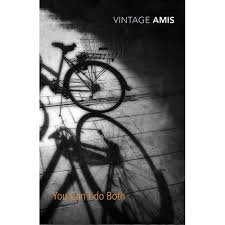
‘You Can’t do Both’ was published in 1994, a year before Amis’s death. It is strongly autobiographical, in particular the central scene when the main characters, Robin Davies and his girlfriend, Nancy, decide at the last moment not to go through with a planned illegal abortion. It is constructed in four long chapters, each representing a phase of Robin’s life – schoolchild, undergraduate, young man, and married life. The third phase is key and formative – Robin is still in his early twenties, returning from active service in the Second World War and trying to resume normal life while his parents age and die.amis

In its review of this novel when it was first published, the Independent claimed “Amis throws off his reputation as a misanthropic old goat.” Distance as always gives perspective, and reading the novel now my immediate reaction was that if this is Amis being unmisanthropic and un-old-goatish, goodness help anyone reading the earlier novels, which must have been monstrous (personally I don’t think they were that much worse – I think the reviewer saw a change of tone where there wasn’t one).  Davies, the Amis-lite central character, perhaps anti-hero of this novel, is, in the words of a Goodreads reviewer, “seriously an insufferable git.” He tolerates other people, at best, and has few real friends. He is constantly on heat, and while his sexual conquests are at first clumsy and unsuccessful, he quickly becomes, as is the way with many author-avatar figures, irresistible to women.

The humour in the novel – it is intended as a comic novel – derives in part from Robin’s Lucky Jim-like frustration with the rest of the world. Where Jim’s frustrations managed to be comic and relatable, Robin’s are simply spiteful – his misanthropy towards his harmless young niece is particularly unpleasant. Occasionally he manages to raise a wry smile – for example in Robin’s description of meeting his father for the first time after a spell in a prisoner of war camp – “There had been the kind of brief, stylised embrace between the two that might have recalled a French general half-way down a long line of winners of minor decorations”.

In essence, this novel is a long and unsuccessful attempt to justify a life ill-spent. Davies is serially unfaithful to his wife, and only begrudgingly marries her because he is unable to go through with the said abortion. The denouement, in which he is caught in-flagrante by his wife with his cousin Dilys -“Within in a couple of minutes he was hard at it…On the whole the thing was a great success” – comes without consequences for Davies, barring a well-earned slap round the face. Amis is confessing to his weaknesses, and at the same time not very subtly bragging about his success with “the ladies” – women are “the little blonde creature” or “them” (as in “never lay a finger on them till they graduate”).

If this novel was a simple portrait of an insufferable old git then it would be a great success. But I strongly suspect it is a self-portrait of someone who knows himself deep down to be insufferable, but really hasn’t come to terms with it, is in denial, and can’t understand why everyone doesn’t love him as much as he loves himself.

Finally, in reading some online reviews of this novel I came across the following analysis. https://astrofella.wordpress.com/2016/08/25/you-cant-do-both-kingsley-amis/

It’s a wonderfully careful, detailed and thorough analysis that almost persuaded me not to write my own review. It’s a little long, but when you take down and apart a Booker prize winning novelist you can justify taking your time over it.


Standard
18th century literature, Book review, Henry Fielding, Picaresque novel, Tom Jones

Tom Jones, by Henry Fielding, 1749

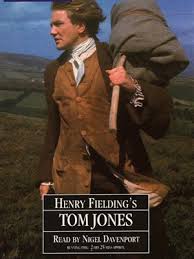
The novel was still very much in its infancy as a form when Henry Fielding wrote ‘Tom Jones‘. In this long and elaborate narrative, you can see Fielding working out some of the conventions and traditions that were still to be established. Fielding is a dominant and forceful presence throughout the novel, in contrast to Richardson’s ‘Clarissa‘, published a year earlier, where the narrator tries very hard (but ultimately unsuccessfully), to disappear into the background. Each of the eighteen books which make up the novel are introduced by a chapter where Fieldtom-jonesing discourses on anything that happens to take his interest, invariably little to do with the novel itself. During the substantive chapters the narrator constantly intrudes, usually tongue in cheek, commenting on the reader’s expectations, anticipating objections, warning of salacious or shocking content coming up, and generally commenting on the novel as it develops:

We would bestow some pains here in minutely describing all the mad pranks which Jones played on this occasion could we be well assured that the reader would take the same pains in perusing them, but as we are apprehensive that after all the labour which we should employ in painting this scene the said reader would be very apt to skip it entirely over, we have saved ourself that trouble. To say the truth, we have from this reason alone often done great violence to the luxuriance of our genius, and have left many excellent descriptions out of our work which would otherwise have been in it.”

The narrative style is discursive – Fielding is telling a relaxed tale over a few drinks, and fully intends to take his time:

“Reader, I think proper, before we proceed any further together, to acquaint thee that I intend to digress, through this whole history, as often as I see occasion, of which I am myself a better judge than any pitiful critic whatever.”

The pretence is maintained that this is a ‘history’ – indeed, the novel’s full title is ‘The History of Tom Jones, a foundling’ – but the reader is at no point under any apprehension but that all will end up well for Tom and his amour, Sophia.

The novel’s plot is said to be complex, but rambling would be a fairer description. Fielding is a fan of that standby coincidence to help resolve the plot complications he leads himself into. The novel opens with Squire Allworthy  finding an abandoned baby sleeping in his bed. The baby’s presence in his bed – as opposed to in a cardboard box on the doorstep – sends a clear message that the mother is a member of his household, with easy access to his room, but Squire Allworthy is true to his name, and doesn’t pursue the issue with any interest, and accepts the presented fiction that the child is the son of a local village woman. Allworthy promises his sister Dorothy, who we (spoilers) eventually find out to be the boy’s mother, to raise the boy, and names him Tom. Dorothy goes on to marry and have a legitimate son, Master Blifil, who is brought up with Tom.

Years pass, and Tom grows into a promiscuous young man. He impregnates the local gamekeeper’s daughter, or thinks he does, although it later turns out the child is not his – fatherhood is an uncertain business in this novel. Tom then falls for the neighbouring squire’s daughter, Sophia, but being a bastard, and thus unlikely to inherit much from the squire, the match is never going to be sanctioned by their parents.  

Sophia’s father, Squire Western, is intent on making Sophia marry Allworthy’s heir, Master Blifil, but she refuses. Where this exact situation in ‘Clarissa’ is the cause of great distress for the heroine, here it is treated as a source of comedy – Squire Western is a preposterous lunatic, and easily controlled by the women in his life. Sophia runs away, as does Clarissa, ostensibly to escape from her father’s influence, but principally to allow her to join Tom in his adventures. Tom has earlier been thrown out by Allworthy as a result of a plot by Blifil to paint him in a bad light, something Tom makes very easy for him by his sexual escapades. Thus the central part of the narrative, whereby Tom travels around central England in a largely pointless round of adventures centring on numberless inns and pubs, is established. At one point Tom joins the army briefly, thus introducing the novel’s backdrop of the 1745 Jacobite rebellion, but no sooner is this introduced than like several other threads it is quietly dropped. The legitimacy of the Hanoverian succession is freely damned by Squire Western, but the subject is mainly used for humour rather than as anything of legitimate political or dramatic interest. Later, Tom sleeps with two older women and nearly kills a man in a duel, incidents which are the source for the novel’s reputation as a bawdy “romp”. Certainly the narrator does not pass judgment on Tom for his sexual indiscretions – there is much more an attitude of encouraging the sowing of wild oats.

Eventually, the novel is wound up quite hurriedly – the happy ever afters are arranged by the discovery of Tom’s parenthood, allowing him to become Squire Allworthy’s heir and thus a suitable partner for Sophia. Tom’s previous sexual misconduct is quietly overlooked.

Tom is a likeable well-meaning hero, always falling on his feet. There’s never really a moment’s doubt about the ending that is in store for him. The supporting cast is reasonably strong – some characters such as Allworthy are two-dimensional, but there are enough well realised people such as Squire Western, Tom’s sidekick Partridge, and Sophia herself, to maintain interest when Tom’s storyline is put on hold to allow others to catch up. But the relaxed method of story telling extends matters to a pointlessly long degree – at one point even Fielding seems to recognise that yet another inn, with an identikit landlady and set of customers, is beginning to be a bit repetitive. The bawdiness of the novel is said to have been shocking to eighteenth century readers – I wonder how true this actually is? Frank discussion of “country matters” thinly disguised behind euphemism – at one point Fielding describes Tom having long “conversations” with one of his conquests, where the wink, wink,nudge, nudge is audible – surely didn’t really shock an audience used to Congreve and Shakespeare? Perhaps that is the point – Fielding is finding a new audience for the novel here, one more used to the bawdiness of the theatre.


Standard
Book review

Comment: Denying the Holocaust on Amazon

I am really flattered that Sunday Times journalists read my blog. That’s the only possible explanation for their headline today “Holocaust denial books sold on Amazon“,  full story behind their paywall, but the headline gives you the idea. You will recall that I wrote the exact same story in March 2015!aunday

Now if you follow that link you will see that I am not really claiming to be the original source of this story – it previously received national media coverage in 2013. What is remarkable is that a) Amazon are continuing to sell this stuff, even in countries where holocaust denial is a crime, and b) that the Sunday Times journalists either couldn’t be bothered to Google this story and acknowledge the fact that it is old news, or that they did know it was an old story but deliberately did not mention it. Either was that is pretty shoddy journalism. murdoch

So why is the Sunday Times going after Amazon now? Could it be anything to do with megatech’s comprehensive opposition to so-called president (and friend of the Dirty Digger) Trump? Now that would be an interesting conspiracy?


Standard
Book review, Collected poems, Merseybeat, Poetry, Roger McGough

Collected Poems, by Roger McGough, 2003

This is a first – I am going to write a blog about a book I haven’t actually read!

Last night I had the pleasure of going to listen to a reading by the great Roger McGough. If you haven’t come across McGough before he is a living legend, and his accessibility and at times sheer silliness is a joy. Just to save you the effort here’s a link to his Wikipedia page.  While I freely confess to not having read all of his collected poems – he has been writing for over 50 years, so that’s quite a collection – I have lived with his works and enjoyed his poetry pretty much all my life. And yes, of course I got him to sign my copy!mcgough

There is a particular pleasure in hearing a poet read their own works, and McGough’s gentle Scouse accent and throw-away lines are ideal for a public performance. There are plenty of recordings of him available if you want to see what I mean, and I would be shocked if he’s not got his own YouTube channel as well.

Many of McGough’s poems are short and funny, he can’t resist the worst of puns, and he doesn’t stretch the boundaries of poetic form too far. But having said all that faint praise, some of his works are wistful and elegaic. Just to give you a flavour, here’s “Let me die a youngman’s death”. (Notice all the compound words):

Let me die a youngman’s death
not a clean and inbetween
the sheets holywater death
not a famous-last-words
peaceful out of breath death

When I’m 73
and in constant good tumour
may I be mown down at dawn
by a bright red sports car
on my way home
from an allnight party

Or when I’m 91
with silver hair
and sitting in a barber’s chair
may rival gangsters
with hamfisted tommyguns burst in
and give me a short back and insides

Or when I’m 104
and banned from the Cavern
may my mistress
catching me in bed with her daughter
and fearing for her son
cut me up into little pieces
and throw away every piece but one

Let me die a youngman’s death
not a free from sin tiptoe in
candle wax and waning death
not a curtains drawn by angels borne
‘what a nice way to go’ death


Standard
100 Best Novels Guardian list, 18th century literature, Book review, Clarissa, epistolary novel, Samuel Richardson

Supplementary: Last words on ‘Clarissa’, by Samuel Richardson, 1748


A final post about ‘Clarissa’, I promise. Please be aware of multiple spoilers in the unlikely event you were planning to read this novel.

I left Clarissa at the end of volume 4 of 9 in the hands of the sinister Robert Lovelace. In his citation of this novel in the ‘100 best novels written in the English language’ series, the Guardian’s Robert McCrum describes Lovelace as “dashing and witty” and “perhaps the most charming villain in English literature”, and characterises Clarissa and Lovelace as “lovers”, comparing them to Romeo and Juliet.

I must have missed the bit in Romeo and Juliet where Romeo imprisons Juliet in a brothel, drugs and rapes her, and distresses her so much that she eventually dies. In my reading of the novel, yes, admittedly Clarissa is initially attracted by the glamour of Lovelace’s reputation, but this attraction quickly fades following her kidnap. As it would. Sexual assault, an extraordinarily elaborate subterfuge to re-enslave her, and the drugged rape does nothing to re-kindle the flames of attraction. Clarissa finally escapes from her elaborate confinement, but her health and appetite for life has been clarissadamaged beyond repair.

Lovelace is a sinister psychopath – we are told at one point he enjoyed torturing animals as a child, a perceptive insight into his mentality. He is able to convince himself that the blame for the rape rests with Clarissa, his accomplices, her family, Miss Howe, in fact everyone but him. In volume five his psychological torture of Clarissa, culminating in the drugged rape, is highly distressing. Belford, his friend, emerges as a saner version of Lovelace, and comes to be Clarissa’s friend and protector, although not before the damage is done. Lovelace is used from childhood to getting his own way, and challenging with violence anyone who resists him. He is a serial rapist, and it is difficult to imagine how he has escaped prosecution thus far – obviously being heir to an earldom might have something to do with this. Far from being dashing and witty, he is a convincing portrait of a dangerous and psychotic narcissist.

Clarissa’s death is a long drawn out affair. What she dies from is never specified. The most likely cause is self-starvation – the symptoms of gradual weakening, loss of mobility and finally sight, suggest this is the case. Her acceptance of death is presented as a heroic process from which we can all learn. Lovelace’s fate (and that of his various accomplices) is equally presented as a morality tale, with a suggestion that Lovelace prefers “death by duel” as a way of avoiding responsibility for his actions.

In a world in which many women have no (or very little) say in who their husband is to be, ‘Clarissa’ remains hugely relevant. Clarissa is treated as property by her family (at one point she is even described as such). Lovelace’s offence is seen by Clarissa’s family and friends as a form of robbery, removing her of her commercial value on the marriage market.  Richardson lays heavy emphasis on Clarissa’s inheritance from her grandfather as being the origins of her siblings’s resentment towards her, but this bequest also complicates the question of her marriage – as the younger sister she is intrinsically of less value than Arabella, but she now has an element of personal wealth that the Harlowe’s are desperately keen to keep control over. As an act of theft, Lovelace can remedy his offence my marrying Clarissa – something Miss Howe consistently urges her to do, because it will effectively legitimise his crime – you can’t steal something that is yours.

Clarissa, and by implication Richardson, reject this notion of women as property. Clarissa is a strong minded independent character, who is unwilling to allow herself to be traded as a commodity, sold to the highest bidder irrespective of her personal preferences. It would be stretching the point to paint ‘Clarissa’ as a feminist novel; Richardson creates a fully rounded character who knows her own mind, but pays a heavy price for that independence.

‘Clarissa’ is a compelling, if ridiculously long tragedy, and was clearly hugely influential – echoes of this story can be found in ‘Pride and Prejudice’ for example. But I think we can all be grateful that the novel has evolved as a form since the eighteenth century, and is not such an all-consuming affair.

Standard