Book review, Bronte, Bronte Sisters, Charlotte Bronte, Descriptions of sex in literature, http://schemas.google.com/blogger/2008/kind#post, The Professor

Supplementary: The Professor by Charlotte Bronte – inadvertent smuttiness?

Here’s a fun game for anyone finding 19th century romantic literature just a little too slow – “spot the subconscious sexual metaphor”.

These novels invariably put young men and women in the prime of their lives in close proximity, and despite every attempt to restrain their sexual impulses, it just can’t help bursting through. Usually nature is the chosen vessel in which to convey their instincts, with tree buds bursting into blossom, waterfalls spouting, and so on, but I don’t think one needs to be too smutty minded to see this effect happening elsewhere. “The Professor” provides some excellent examples. The scenario is this: William Crimsworth is teaching English to Belgian schoolgirls in Brussels. There he meets a young woman Frances Henri – we are told she is 19 – , and eventually after some complications falls for her charms. He visits her archetypal ‘umble abode, and she lights a fire to warm the place. He is worried she is using up her limited supplies of firewood and coal, and wishes he could be in a position to help her:

“I am glad it is not yet winter, thought I, but in two months more come the winds and rains of November. Would to God that before then I could earn the right and the power to shovel coals into that grate ad libitum” (page 132). At his pleasure indeed.

Later he describes the moment he declares his affection for her, and instead of this being a stumbling, formal declaration in the manner of Mr Darcy and his peers, he grabs her and sits her on his knee:

 
“The frost of the master’s manner might melt; I felt the thaw coming fast, whether I would or not. ….There are impulses we can control, but there are others which control us, because they attain us with a tiger leap, and are our masters ere we have seen them”. (page 165).

The use of the term “our masters” is particularly significant here as Crimsworth is always described as Frances’s master, even after they are married. This is an arguably less-Freudian use of language – instead of the sexual metaphors jumping unbidden into the author’s head, this second example seems more deliberate. For a Victorian female novelist to write this frankly about sexual desire – a tiger leap – and to acknowledge the sexual frisson between husband and wife is unusual, if not unique. The initial submissiveness of their relationship matures into a flirtation which is preserved by Frances’s enjoyment of chastistement. William says at one point “I fear the choice of chastisement must have been injudicious, for instead of correcting the fault, it seemed to encourage its renewal”. (188)


Standard
21st century literature, http://schemas.google.com/blogger/2008/kind#post, Miscellany

Comment: Shades of Grey

A guest blog today:

Now upon reading that title, I bet you thought of either the erotic books or the simply disturbing film. I bet none of you thought of anything else. And you know what? I hate those books – the film too I guess. They have left a mark not only on British culture, but on the minds of anyone who had the curiosity to follow the media’s hype over the damned thing.

Before you ask, no, I have not read them. I guess that may be bad given that I am writing an article criticising them, but the detailed content is not what I want to focus on. This book has a mountain-load of critics commenting on how the series is unrealistic and disrespectful in its representation of men, women, relationships and the key word “consent”; but that again is not my focus.

My repugnance towards the book is personal, mostly concerned with the title. Anything that now has “50”, “shades”, or “grey” related to it has a permanent association with this smut. For example, one of my favourite sayings, ‘Black and white and all between are all but shades of grey’ which I think is brilliant visual imagery to demonstrate how everyone is equal and should be treated with respect, is now ruined. If I were to ever again say this, it would be greeted with an awkward silence and a few childish giggles, as instead of thinking about the message of the quote (Is it a quote or a saying?), they’re thinking about a multimillionaire with a whip. Similarly, there is a superb book, based on a similar idea of proving equality set in a dystopian world with a class system ranked and distinguished by colours, called ‘Shades of Grey’. The author is the superb Jasper Fforde, whose ‘Thursday Next’ series I thoroughly recommend to any English Literature student – it is a very amusing commentary on classical literature whilst being completely supernatural and unique – check out “The Eyre Affair”. Yet now the title to poor Mr Fforde’s book is often misinterpreted by any book-store browser and rejected – or picked up by someone expecting similar ‘scenes to Fifty, who also reject, though possibly with a greater sense of disappointment.

The title has created a stigma attached to these words which interrupt and ruin the messages of other significant features of our culture That’s why I hate the damned books. The film too.
Standard
Miscellany

Comment: Miliband mispeaks – is there a word for this?

In an interview on Monday, Ed Miliband used the phrase “shuffling the deckchairs”. This is a conflation of two phrases. “Shuffling the deck”, a dead metaphor originally from playing cards of course, but now just meaning “changing things about”. It is usually used to describe an attempt to refresh a situation, and is therefore a mildly positive action, a first response to a not so serious situation. “Re-arranging the deckchairs on the Titanic” on the other hand is negative, futile activity – defined online as “saying that someone is wasting time dealing with things that are not important, and is ignoring a much more serious problem”. (Bit of an understatement). Interestingly, this phrase seems only to have gained currency in the late 1960’s.

I think it is obvious what happened here – Miliband’s brain suggested to him the original phrase – shuffling the deck – but he realised halfway through that it wasn’t quite what he intended to say, so he changed tack (dead metaphor alert) adding the “chairs” suffix, leaving him with a neither Arthur or Martha phrase. Was it just me, or was there a quick flash of puzzlement in his eyes as he said it – “did I get that right, it didn’t sound quite right?”. The second phrase obviously was suggested by the coincidence of “deck” and “deckchairs”, and interestingly Miliband isn’t the first to have done this – the online Urban dictionary gives some other examples of the use of the phrase, although doesn’t acknowledge its complex origins.

This happens all the time – people misremember or misunderstand phrases or idioms, and create new ones in the process. This undoubtedly happens with individual words, the best example being meld quoted by Stephen Fry on QI a few years back. “Meld”, by its similarities to both “mix” and “weld”, came to be used to mean (and then to mean itself) “combine”, despite its original meaning being very different. Examples of new idioms being coined by the accidental collision of old ones are rarer, but I haven’t been able to find a word for this – is there one?

Incidentally, these only work if they are accidental, where the associations between phrases are allowed to float to the surface of someone’s consciousness – trying to force them doesn’t work e.g. “Don’t put all your eggs in one basket before they hatch”. See what I mean? 

Standard
Language, Miscellany

Comment: Proverbs

I’ve written quite a bit over the years about sayings, proverbs, idiom, and dead metaphor, so this article caught my eye yesterday

http://www.theguardian.com/commentisfree/2015/apr/16/are-these-11-proverbs-for-the-digital-age 
 
If you don’t want to follow the link or read the article, the eleven phrases are:

  1. Haters gonna hate
  2. The truth will set you free, but first it will piss you off
  3. If you’re not paying for it, you’re the product
  4. You’ve got to fake it to make it
  5. The system isn’t broken. It’s fixed
  6. It’s not a bug, it’s a feature
  7. You only find out who is swimming naked when the tide goes out
  8. Don’t read the comments
  9. 90% of everything is crap
  10. Problem between keyboard and chair
  11. The fish that is being microwaved doesn’t fear the lightning

I can say with quite a high degree of confidence that while some of these phrases show some wit in their construction (7, 10, and 11 for example) and others are useful (e.g. 1, 6 and 9), none are sufficiently robust to survive and become modern proverbs. Having said that, if the curate’s egg example proves anything, it is that the source of modern proverbs is almost impossible to predict. If a need exists for a phrase, it will be found. Incidentally, my contribution to this list, without any expectation that it will last more than a few years, is “Don’t feed the troll(s)”, which I have found useful in numerous situations online and otherwise.

Standard
21st century literature, Book review, Crime, Joseph Kanon, Second World War, The Good German

The Good German by Joseph Kanon

It is, I am fairly sure, just a coincidence that the books I have been reading recently have been about the second World War, and more specifically its aftermath. (Or is it? Is there something going on in my subconscious that is leading me to these books? Probably not!) This novel, a present, tells the story of a journalist arriving in Berlin shortly after the end of the war in Europe, but before the end of the Pacific war. I am sure it is revealing that despite having followed this character’s adventures over 500 or so pages, I can’t tell you his name. He is strangely unengaging for a first person character who gets the girl, solves the riddle, stands up to the bad guys, and does the right thing by war survivors. We are presumably intended to think of him as a hero, but despite the many attempts at realism I never once thought of him as a real person.

Arriving in Berlin he stumbles across a murder, which in time honoured fashion no-one else thinks is worth pursuing. He doggedly chases down the culprits all the while reigniting a pre-war romance, getting stories for his magazine, and observing impassively the destruction and despair all around him. This takes time, and a large supporting cast of characters who one by one are ticked off as potential suspects or bumped off along the way in a manner which removes all possible suspense. That’s not the interest of the book, of which surprisingly there was some. Berlin in mid to late 1945 was obviously devastated by the Allies bombardment and subsequent capture, and the behaviour of survivors is described here with some originality. Nazi scientists are hunted by the US and Russians, and their war crimes glibly overlooked. Other Nazis buy “forgiven” status from Jewish survivors, not because they are innocent but because the survivors are desperate for money. The huge differences between the surviving Berliners, desperate for shelter, food and water, live alongside Allied troops who seemingly want for nothing, creating a black market which is the origin of the murder. This is a complex environment for a murder mystery/thriller, where the foreground is less interesting that the context.

Both this novel and “Look Who’s Back” provide an interesting commentary on the question of why Germany fought to the bitter end, leading to the destruction of Berlin and other German cities, and the loss of hundreds of thousands of lives. The Hitler of “Look Who’s Back” is clear – the punishment for losing the war is death – the Reich needed to be destroyed because it was unworthy, because it lost the war. This was not a long rearguard action hanging on for the super-weapon that never emerged, but a protracted suicide. Of course that is not how most Germans saw it. The perspective most often articulated in Kanon’s Berlin is that ordinary, good, Germans were the victims – that their cities were firebombed, their citizens targetted, long after the point they could effectively defend themselves, their women raped by rampaging Russians and others, then starved and frozen once the war ended. There is little or no understanding from Kanon’s good Germans that they are reaping what they sowed. It is unusual from a novel of this kind to have such a finely balanced discussion of difficult issues like this, and it sits uncomfortably with the other, much more conventional elements of the novel. (Incidentally, Anthony Beevor’s “Berlin” is very good on this point).

If you enjoy complex, and long, murder mysteries in the Le Carre tradition, you might enjoy this.

Standard
21st century literature, Australian literature, Book review, Booker Prizewinner, Richard Flanagan, The Narrow Road to the Deep North

The Narrow Road to the Deep North by Richard Flanagan

I was originally going to describe this Booker Prize winning novel as “a bit of a curate’s egg”, that is to say good in parts, but thinking about it further that would be wrong, unfair and confusing. Why so? The phrase derives, as I am sure you know, from a Punch cartoon of the late 19th century. It pictures a timid-looking curate eating breakfast. His host remarks: “I’m afraid you’ve got a bad egg, Mr Jones.” The curate replies, desperate not to offend his eminent host and ultimate employer: “Oh, no, my Lord, I assure you that parts of it are excellent!”

So the phrase should mean something that is obviously and essentially bad, but described as only partly bad—its supposed good features credited with undue redeeming power. That was the original meaning at least – there is no such thing as a partly bad egg. But to be honest I have used the phrase slightly differently, to describe something that is indeed partly good, partly bad, but where the bad part is so overwhelmingly bad as to spoil the whole. A balloon with only a tiny hole in it still bursts. However, usage of the phrase quickly drifted from these meanings, and is now defined in Wikipedia as “something that is at least partly bad, but has some arguably redeeming features.” Which has got to be wrong – a bad egg has no redeeming features, however much the curate may wish it has to avoid the embarrassment of his situation.
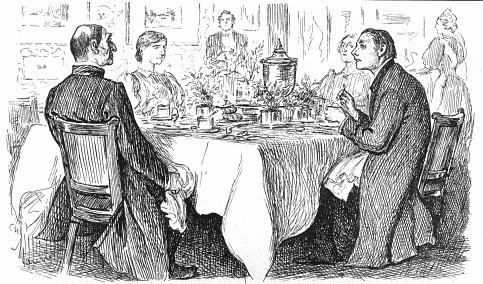

Phrases like this change their meaning all the time, and it is not something I am going to get worked up about, but I intended to honour the memory of Punch by avoiding it to mean partly good. Which is what “The Narrow Road to the Deep North” was. It has some powerful descriptive passages, most strikingly the scenes in the Burma Death Railway POW camps, and also the escape from the forest fire at the end of the novel, but there are other much less successful parts of the novel. These less successful parts do not spoil the overall effect, even if they do bring it down a notch or two.

The novel opens with a first person narative by Dorrigo Evans, surgeon and World War 2 veteran. The time scheme is very fluid, and jumps around confusingly. Clearly this is for effect, but the overall impression is incoherence. We know Dorrigo survives the war, because we see him in old age, so some of the traditional suspense of a linear narrative is forfeit. Dorrigo has a romance with his uncle’s much younger wife, shortly before going off to war where he is quickly (in terms of the narrative) taken prisoner. The novel really only takes off when it reaches this point – the survivor’s account of the brutality of the Death Railway. This is unblinkingly horrific, vividly portrayed, and pretty disturbing. Flanagan shows some events from the perspective of the prison guards, and this insight into their thought processes and values humanises them to some extent. Nevertheless this is not a “we are all guilty in war” portrayal – there are good people and bad people here, just that the bad people remain human despite their barbarity. (An example – the Japanese forces supervising the building of the railroad were given insufficient tools and machinery to lay the track. So they had to force the prisoners to build the railway with just hand tools and back breaking labour, all the time on sub-starvation rations. No wonder so many died, but did the Japanese forces have the choice of just abandoning work on the lines? Did they have spare food and medicines they withheld from their prisoners?)

The war ends suddenly and almost in passing, and the horror comes to a close. The trauma lives on of course, although Dorrigo seems to cope remarkably well considering. His tragic romance with Ella is easily the least successful part of the novel. She believes he dies in the war, he thinks she has also died, so there is no post-war happy ever after. This is not particularly tragic nor moving, and even when they do finally meet they move on without speaking. Flanagan’s prose in these sections is at times horrible, sub-Mills and Boonian. For example (page 81) “Ella was kind, he told himself. And somewhere within him he pitied Ella, and buried even deeper was an understanding that they would both suffer because of her kindness and his pity. He hated her kindness and he feared his pity, and he wanted only to escape it all forever.” Yuck.

A few years back I made a valiant effort to read as many Booker Prize winning novels as possible. I was doing well until beaten by Hilary Mantell – I managed to finish “Wolf Hall”, but just couldn’t face “Bring up the Bodies”. The Narrow Road puts me back on track, and while I have some reservations I am glad I read it, expanding my knowledge of Australian contemporary literature along the way. But I have no inclination to delve into Flanagan’s back catalogue, which I think is the test of whether this really was prize-winning literature.

Standard
21st century literature, Book review, Look Who's Back, Timur Vermes

Look Who’s Back by Timur Vermes

The inside front and back covers of the paperback edition of this novel carry a large number of positive comments from reviewers (as well as a few unfunny imaginary comments form Stalin, Churchill, and bizarrely, Napoleon) including one from the Daily Express which called the novel “laugh-out-loud-funny”. The hyphens suggest this is not to be taken too literally, although how something can be “kind of” laugh out loud but not literally laugh out loud I don’t know. But it wasn’t. It just wasn’t funny. It wasn’t particularly offensive either, which I suspect the author was aiming for at times.

The premise is simply – Hitler comes back from the dead, and tries to make sense of modern Germany. Naturally the contrast between Berlin 1945 and 2015ish is striking, and where much of the attempts at humour derive. The German nation has a reputation – in the UK at least – as being humourless, and the clumsiness of this book underlines that stereotype. There is no attempt to explain this resurrection – we are just invited to accept it as fact, or rather to suspend our belief. The satire is heavy handed, with Hitler’s commentary on 21st century German politics being fairly predictable to say the least. Some of the jokes simply don’t translate, depending as they do on a knowledge of German contemporary culture. After the premise is quickly established I wondered how the author would treat the issue of the holocaust. Obviously a resurrected Hitler would not have any reservations about the murder of six million Jews, and putting these thoughts in his mouth without sufficient challenge would be simply sick. Vermes doesn’t duck this issue – Hitler’s secretary tries to resign because her grandmother’s family was murdered but he quickly reconciles her to the idea of continuing to work for him by charming her grandmother into accepting his goodwill. The Hitler character, through who’s eyes the novel is written, has not mellowed during his hibernation, but is portrayed as human, reasonably quick witted, and while uncompromising still able to accommodate the changes he sees in the world. He is no monster, and persuasively argues that a) he was elected through a fair and open democratic process, and that b) therefore his crimes, not that he sees them in this way, are those of the German people.

This is an uncomfortable book, that has been translated well but from which you rarely escape the knowledge that it is in translation. I was hoping that the author would attempt to rationalise the time travelling and resurrection aspects of the story, but he doesn’t bother. He also winds the novel up suddenly, giving every appearance of tiring of his material and characters. It’s an interesting premise, but that’s not enough to sustain this novel over 350 pages. If anything it made we want to read a serious biography of Hitler, which I suppose is not a bad result. But as for looking at modern Germany in a new light – sadly, no.

Standard
21st century literature, Book review, Crime, Detective fiction

Supplementary: The Black-eyed Blonde – Benjamin Black (2)

A lot of the reviews of this novel praised the plotting, one going so far as to say it was better than Chandler’s. My impression on a first read was that the plot of the Black-eyed Blonde was fairly linear and straightforward, and Marlowe is something of a passive observer of the narrative rather than someone who shapes it. All, in fact, very un-Chandleresque. But it is worse. I had a spare half hour on the tube yesterday, and with nothing else to read I looked again at the first chapter of this novel. What I was looking for is whether Black’s attempts at Chandler’s imagery were successful or not. Broadly they are. Inevitably there are some misses, but an above average number of hits. I won’t quote any here because out of content they can look weak, but that’s not what I wanted to write about anyway.

The plot of the Black Eyed Blonde is simple enough. Marlowe is asked by the title character to find a missing person, Nico Peterson. After a few fruitless lines of enquiry, Marlowe asks the police if they know where Peterson is, and the information is quickly returned – he died in a hit and run accident a few weeks earlier. When Marlowe tells his client this her response is (end of chapter 4) “I know”. Marlowe is so shocked by this he actually has to ask her to repeat herself, which is in itself completely un-Marlowe like.

So why did she ask Marlowe to investigate Peterson’s disappearance when she knew that he had died in a hit and run accident. The answer she offers is that she saw Peterson alive a few weeks later, and therefore believed the accident was a fake, or a case of mistaken identity. But this doesn’t explain why she withheld this information from Marlowe when she first commissioned the case. What possible reason could she have had for not just omitting this vital information, but actively misleading him? When asked in chapter one when she first realised he was missing she tells Marlowe “I telephoned him a number of times and got no answer, Then I called at his house. The milk hadn’t been cancelled and the newspapers had been piling up on his porch”. Why would she do that if she knew he had been “killed” in a hit and run. Even if this was after the subsequent sighting, why not tell Marlowe this. I suppose you could argue she was testing Marlowe’s powers as an investigator, but someone’s death in an unsolved hit and run would be a matter of public record. The fact that Peterson’s neighbour has not heard of his “death” is unconvincing as well – in reality news like that would be in the local paper and spread quickly.

The simple reason why she misleads Marlowe is so that the author can have this plot twist. And that’s not good enough – you can’t simply have characters behave illogically just to have dramatic chapter endings. In the same way the mexican thugs would not have kidnapped, tortured and killed Peterson’s sister, but left Marlowe alive to identify them. We much later learn that Clare Cavendish, the eponymous blonde, is unwittingly helping drug smugglers who want to track Peterson down, he having stolen some of their drugs. All the more reason why they would want Marlowe to have all the available information, not waste time finding out things they already know.

This is just not good enough. Chandler’s plotting was always complex and yes, sometimes a bit besides the point. He did weld together short stories, and knowing that you can sometimes see the join. (I defy anyone not knowing that to spot, for example, that the Big Sleep is two separate narratives shunted together). But his characters never behaved irrationally like this just to engineer a plot twist, or a “dah, dah, da!!” moment.

Standard
21st century literature, Benjamin Black, Book review, Crime, Detective fiction, John Banville, The Black-eyed Blonde

The Black-eyed Blonde by John Banville/Benjamin Black

This should so have been a great find. A new Philip Marlowe novel written by John Banville, writing as Benjamin Black. Raymond Chandler is one of my favourite novelist (looking back, I see I put him at number 5 in my top ten, which is there or thereabouts), and John Banville is a Booker prize winner. The Sea, which I reviewed back in June 2012, is an ultimately flawed novel but which showed a lot of craft in its writing. O it took me a few seconds to decide to buy this. The combination should have worked – Chandler is not that hard a writer to imitate, he has so many recurring motifs, it almost writes itself. There’s the sultry blonde who turns up unannounced at Marlowe’s office, and offers him a job without telling him the whole truth; the slug on the back of the head that takes Marlowe out at a key moment, the stumbled upon body, the drugged drink, and so on. The language is tougher to copy – highly distinctive, of course, but elusive, as Banville finds here.
There were, however, looking back, some warning signals. For a start there was the strange “John Banville, writing as Benjamin Black”. I can understand the use of a pseudonym, the creation of a different writing persona to make it clear to the readers that they can expect a different experience – but “writing as” is really having your cake and eating it, saying “but it’s really me, Booker prize winning stylist here after all”. Then there was the ambiguity about the relationship with Chandler’s estate – is this an authorised use of his intellectual property or not? There is nothing on the cover to indication this, although it seems obvious it must be. On investigation, it appears this is an authorised use of Chandler’s copyright, but by a company which has bought this off Chandler’s estate, rather than something approved by surviving family members. So done for commercial gain alone. Then there is the title – The Black Eyed Blonde. There’s some ambiguity there – are her irises black, or, in the more traditional use of the term, has she bruised eyes? It is in fact the former, although do people really have black irises? In a short note at the end of this novel Banville explains that this title was in Chandler’s notes as a potential title for a future novel – but he didn’t use it for a reason I suspect. However fanciful Chandler’s imagery or imagination, there was a truth at the heart of it that is lost here.


So is this a parody, a tribute, an imitation? Was Banville taking a break from “proper” writing and having a bit of commercially rewarding fun – slumming it – writing something in the style of Chandler?  I have a horrible suspicion that this was not done with the appropriate respect for Chandler/Marlowe, but was simply an attempt to screw some more money out of the estate. This cynicism might be harsh, but the real test is whether the novel works or not. Is it a success as an effective imitation of Marlowe? Can you forget, even for a moment, that you are reading a 21st century recasting of the genre? I’m afraid not. For a start, the novel lacks the pace of true Marlowe. He was a genuinely good detective – the detective here really does very little investigative work beyond asking police contacts for help, and interviewing, ineffectively, some obvious suspects. Loose ends are not followed up, whereas the real Marlowe would have tracked them down in a night. So for example a dead body is found to fake someone’s death – who was the body, was his death a convenient coincidence, or a murder? This question is never asked, whereas true Marlowe would have cared about this casual brutality. Banville’s Marlowe wastes huge amounts of time waiting for the case to break of its own accord, rather than tracking down leads. True Marlowe is also a man of deeply held convictions, and while this version does protect his client’s confidentiality, he speaks far too freely about the case to people he has no reason to trust. This Marlowe is frankly a bit slow – it takes him an age to realise his drink has been drugged, long after the reader has worked it out. Chandler’s novels are complex and sometimes confusing – this was straightforward and simple. There are other false notes struck – why does the black-eyed blonde not tell Marlowe that the man she sends him to find, Nico Peterson, was believed to have died in a hit and run incident several weeks earlier. Her reluctance to tell him this aspect of her story serves no purpose whatsoever. Later when Marlowe and Peterson’s sister are held up by two sinister Mexican thugs, they knock him unconscious, then kidnap, torture and kill her. Why would they leave Marlowe alive if they are such vicious killers?


I wonder – in 75 years will people be writing Harry Potter novels where a grownup Harry goes back to Hogwarts to investigate mysterious goings on?  Would that be as wrong as this feels? While I appreciate that there are plenty of examples where great authors works are completed and their worlds reimagined in a different context – Young James Bond for example, the completion of the Hitchhikers sextet, and the Sherlock Holmes tributes – I can’t think of a single one that has been genuinely successful. You wouldn’t do this for any other art form, and I am not convinced it is respectful to the original authors. Chandler didn’t write enough Marlowe novels – he couldn’t have done – but he left us with enough to make novels like this pointless, and a bit tawdry.
Standard
20th century Literature, Book review

Look Back in Anger (2)

My last post summarised the plot of this play. Look Back in Anger made a big impression when it was first performed in the 1950’s. It caught the zeitgeist in that special way that some works of art do, and because they are so very much part of the cultural, social and political environment in which they were created, it is often the case that outside that context they lose much if not all of their impact. That’s not in any way a criticism of such works, or a claim that timelessness equals greatness. But the unarguable fact is that Look Back in Anger is not performed very much if at all nowadays, and for a good reason. 

The 1950s were an interesting time. The war still hung over the country and the austerity is caused was only just wearing off. People like Jimmy Porter were going to university for the first time, where they were taught by men who had come through the war. At the same time the Cold War was accelerating, and the possibility of nuclear annihilation of the planet was becoming clearer. Britain’s role on the world stage was diminishing, and Alison’s father’s reminiscences of the days of the Raj are a reminder of this. Jimmy’s anger was, for 1950’s audiences, a slap in the face, a visceral shock, and the fact that his anger is so unfocussed – it is never really clear precisely what it is he is angry about – make sit all the more difficult to respond to. Which is why Cliff and Alison, for the most part, simply absorb it. It is interesting to me that the play’s title is Look Back in Anger – that is to say Jimmy’s anger is about the past, not so much the present. And neither Cliff nor Alison can do much about the past, hence their helplessness in the face of Jimmy’s ranting. 

So the question is whether this play is simply a period piece, important at the time but no longer of any particular interest, or whether it can be re-staged and made relevant for the twenty-first century? Is there anything left to be angry about now the Cold War has been won and we are all middle class? I would be astonished if an accomplished company couldn’t resurrect this play. There are some staging issues – everyone seems to smoke throughout the play for example, although that could be updated to e-cigarettes I suppose with a bit of a nod to the passage of time – and some of the contemporary references could be updated without any damage to the integrity of the play. But the relevance of Jimmy’s frustration with the state of the country and his place (or lack thereof) in it seems screamingly relevant to me. 

Having said that I suspect the sudden switch of affection from Alison to Helena, their interchangability in Jimmy’s bed, would be hard to pull off convincingly. Jimmy would need to be irresistible, which I suppose could be done. I’d like to see a company try it. 

Standard