20th century Literature, Book review, drama, John Osborne, Look Back in Anger, Modern writing

Look Back in Anger by John Osborne

If I was writing this review say 25 years ago, I would not need to provide any details about the content of this play. It formed part of the cultural scenery, largely because of the impact it caused when first performed in the 1950s. Subsequent films (including one with Richard Burton) and revivals meant that everyone knew, broadly speaking, who Jimmy Porter was, and phrases like “angry young man” and “kitchen sink drama” were part of every day discourse.Image result for look back in anger
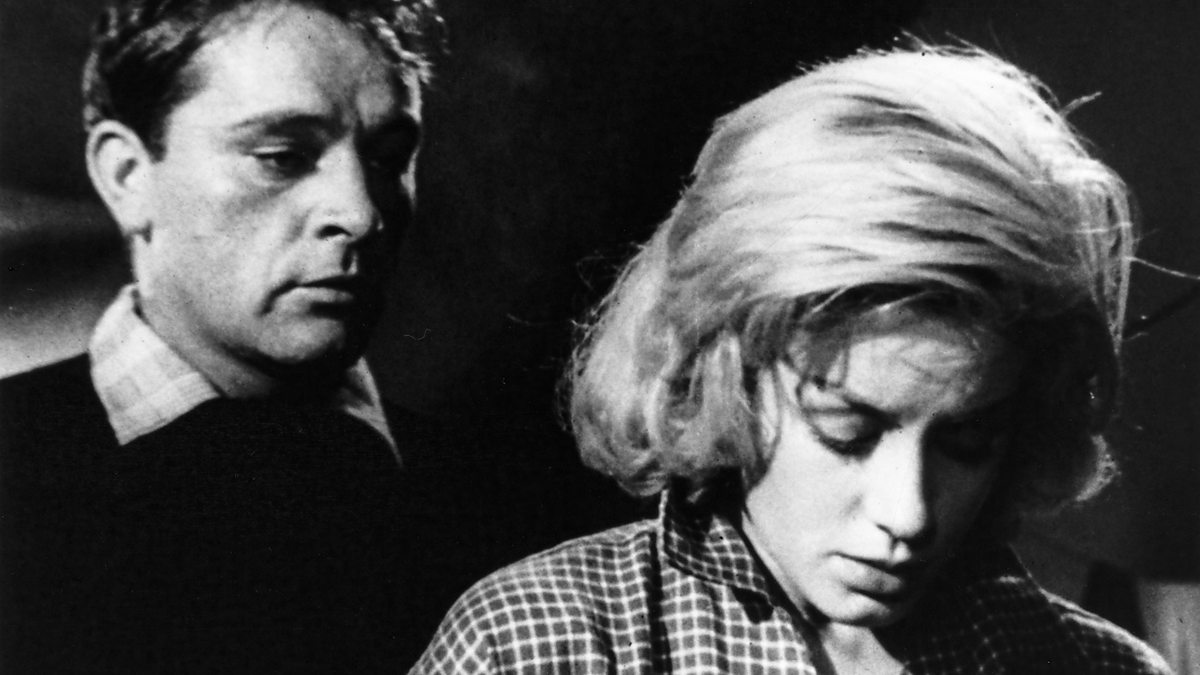
Now, in 2015, less so. The play is not performed very often, if at all, is not (at the time of writing) on GCSE syllabuses, and the reasons for Jimmy’s/John’s anger seem confused and distant. So to start with a recap. Look Back in Anger is a short play which portrays the relationships of Jimmy Porter, his wife Alison, and their friends Cliff and Helena. There is also a short appearance by Alison’s father, Colonel Redfern. Jimmy is 25, too young to have fought in the war, and is a university graduate. He runs a sweet stall in an un-named Midlands town. It is not entirely clear if this unconventional career choice is voluntary, a rejection of the rat race (in the same way that John Braine’s lead character in “Hurry on Down” becomes a window cleaner) or an expediency to pay the rent. Jimmy is often described as working class, but I think the portrayal of class in this play is more subtle than that – not too many working class people went to university in the 1950s, even if it is more white tile than redbrick, and Jimmy appears to look down on Cliff in class terms, describing him as a ruffian. He is also very erudite, reads the posh Sunday’s, and listens to classical music concerts on the radio. So hardly a working class hero.

His wife, Alison, is however, screamingly middle class. She appears to have married Jimmy, her “bit of rough” to irritate her parents, (particularly her mother), although there is also the suggestion that Jimmy is sexually irresistible. Alison is slumming it, and when the play opens with her ironing Jimmy’s clothes while he and Cliff laze around reading the Sunday papers, she is approaching the end of her tether. Jimmy taunts her constantly, appearing to have already recognised that their relationship is doomed, and therefore accelerating its end. To be fair to Jimmy, he will lash out at any target, although Cliff has developed a technique for handling him – he either gives as good as he gets, or ignores him. Not much happens beyond the grumpy conversations about their Sunday rituals, Cliff the lodger, and old friend of Jimmy’s, providing a foil to much of his good-natured abuse. Cliff and Alison have a strangely overly affectionate relationship which they act out in front of Jimmy, almost to goad him, without success.

Helena, Alison’s childhood friend, arrives as an emissary from the middle class. She spars with Jimmy constantly, and he is right to resent her presence – she makes no secret of her contempt for him and encourages Alison to leave him. Alison breaks the news that she is pregnant – this is clearly unwelcome. She plucks up the courage to leave Jimmy.

It is at this critical turning point that Osborne drops quite a dramatic bombshell (a dead metaphor if ever there was one). Alison leaves, but Helena stays, and confronts Jimmy with the news of his wife’s pregnancy. They fight, she slaps him, he cries, and she jumps on him, passionately, leaving the curtain to fall on what we are led to believe was the consummation of a passion that has been building for some time.

There is an obvious problem here – this switch is utterly unbelievable, psychologically, but the dramatic value of it far outweighs the cost in terms of the audiences’ willingness to believe in these characters. We just have to believe she finds him irresistible, not that she likes him. She quickly takes Alison’s place, literally in that she resumes her stance behind the ironing board, and familiarity quickly descends on Jimmy’s flat. In the play’s climax Alison returns, having lost her baby (strangely I mis-remembered this scene before re-reading the play, thinking she had had an abortion. The scene could be played that way – “I lost the child” could be euphemistic – but perhaps that would have been one taboo too many for Osborne’s 1950’s audience.)

So that’s the play, in summary. I wouldn’t normally spend so much time on a plot as that, but I think it is worth it to provide context for the commentary in my next blog.

Standard
Book review, Marx, Non-fiction, Terry Eagleton, Why Marx was Right

Book review: Why Marx was right by Terry Eagleton

Or, irritatingly on the front cover of the book (published by Yale University Press in 2011) “why marx was right” – as if this was some e.e.cummings poem! Anyway, overcoming that minor grievance, I was pre-disposed to like this book. That the ideas of Karl Marx have been too easily dismissed or overlooked since the end of Soviet communism in the late 1980’s/early 1990’s is undeniable. A well written demolition of the more prevalent myths about Marx was long overdue. But this isn’t it. In fact, I struggled so much with this that it joins the very short list of books I have tried to finish but failed.

The principal reason for this is Eagleton’s style. I am sure that what he was attempting to do was engage his audience and make the subject matter accessible, but his use of humour to do this is so wooden, at (most) times so inappropriate, so misjudged, as to make this almost unreadable. I started underlining some examples when I was still perserving with this book, but the pages soon were covered in lines. Here’s some random examples:

“Inequality is as natural to capitalism as narcissim and megolomania are to Hollywood” (pg 78)

“Change …is not the opposite of human nature; it is possible because of the creative, open-ended, unfinished beings we are. This, as far as we can tell, is not true of stoats.” (pg 81)

“If babies could get up and walk away at birth, a good deal of adult misery would be avoided, and not only in the sense that there would be no bawling brats to disturb our sleep” (pg 85) (Unpleasant turn of phrase there).

And so on and on relentlessly, “joke” after “joke” without any genuine humour at all. These may go down well as practiced asides in the lecture hall, but on the page they didn’t work at all. Neither do the constant popular culture, man of the people references to football or going down the pub – we all know Eagleton prefers cricket and white wine. We can spot a phoney a mile off.

Eagleton has clearly read every word of Marx, and huge numbers of other thinkers, critics and commentators, who are endlessly name-checked. Take this for example:

“As the philosopher John MacMurray comments,”Our knowledge of the workd is primarily an aspect of our action in the world.” “Men”, Marx writes in Heideggerian vein in his Comments of Wagner “do not in any way begin by finding themselves in a theoretical relationship to the things of the external world” (pg 142)

Hope you got that, because there will be a quiz?

Marx wrote a huge body of work, and in the course of his life obviously refined his position on many issues. If you have the time and energy therefore you can find support for most arguments somewhere in his writing. Eagleton’s job here wasn’t to manipulate that work to support a narrow view of Marxism, but to preserve the key ideas which needed repeating. But there’s the rub – if Marx’s ideas really needed translating, saving or defending by Eagleton, aren’t they in deep trouble already? Perhaps “why marx was right” is wrong?

Incidentally, when I first started reading this book one thing struck me, and that was the confidence of the title. Typically academics write in a far less direct way – Why it could be argued that in most respects Marx was correct”. No such hesitation here, Marx was right, others are wrong, and I’ll punch anyone who disagrees. I liked that – such a shame that the book goes so far off course.

Standard
21st century literature, Autobiography, Book review, http://schemas.google.com/blogger/2008/kind#post, Moab is my washpot, Stephen Fry

Moab is my Washpot by Stephen Fry

In the second volume of his autobiography (although “reminiscences” would be a more accurate description) Fry mentions performing in “All’s Well that Ends Well” in Queen’s College, Cambridge. I saw that performance, and while I have no memory whatsoever of “our hero” I think the odds are I must have seen him in it too. So that’s my personal connection with this book, for what very little it is worth.

If you had asked me a few days ago what the title of this book was I would have fought you to the death in defence of it being “Moab was my washpot”. Why the mental auto-correct? Obviously it’s in part the visual echo between “was” and “washpot”, but also it’s in the past tense, which is where biographies and their titles belong, in the “As I Walked Out one Midsummer Morning” category. The biblical reference is kind of explained in this edition – I reread the quasi explanation a couple of times, but am still none the wiser, and the intended impression of look at me cleverness is clearly quite deliberate.

There isn’t really a criticism of the Stephen Fry aged approximately 4 to 20 you can make that he doesn’t make of himself in the book, in a way becoming immune to such criticisms as he goes. Of course he was insufferable, profoundly irritating, dishonest and despicable towards his loved ones. Guilty as charged and yet still quite pleased with himself. Fry had as you can imagine a very privileged childhood, although he portrays it as ordinary. This is in part defensible – to him it was ordinary – but he must have enough experience of normal life by now to know that having servants in the 60’s (for example) wasn’t normal. The prep and public school experiences dwelt in in this book are however banal, I’m sorry to say – the only remarkable thing about them being that this way of life was thought worth preserving into the 1970’s and beyond, and that he thinks we will find the arcane details of the schools’ invented languages and rituals in any way interesting. Similarly his numerous digressions, which give the impression of existing simply to fill the space available, are a soapbox on which he is able to argue for his various opinions, haranguing the reader without allowing any genuine room for dissent or doubt.

Autobiography that is a careful attempt to massage perceptions of a public figure are always going to happen – don’t hate me, I am ordinary really, look at these pictures of me in short trousers on the beach at Southend etc – but this book is more subtle than that. Describing at almost all times a rather unpleasant little oik is a strange way of garnering public affection, but we forgive him almost everything (as do his saint-like parents and family, and virtually every other authority figure he comes across). He had a QC to present his mitigation at his sentencing hearing in the Magistrates’ Court for goodness sake! This forgiveness is manipulated principally by the alchemy at the end of this book – somehow the A-level failing, prison-sentence serving, obsessive thieving has been transformed into a hard working genius who gets a scholarship into Cambridge after only one year’s study, a transformation which is his responsibility alone it seems. I don’t buy that. It is the one part of the book where there is obviously a whole lot more going on that we aren’t told about. At other points he is clear that he changes details to protect the innocent – maybe some journalist will one day dig out what really went on over those months.

I have managed to get this far without using the “national treasure” description, which is quite an achievement, so there you have it. As such Fry is immune from any criticism, and good luck to him for it – let’s just hope he uses his immense power for good, not to protect public schools, fox hunting and the royal family. I worry about a day in 20 years when he is in the House of Lords lecturing us on how things were better in his day, when schoolboys were taught Greek before breakfast, where sex abuse was seen as part of normal school boy development (the description of his “deflowering” even when sanitised in its description, is not for the faint hearted) and all good fun, and the poor knew their place, good for a comic turn now and again but not much more. You really want a happy ending for Fry, you really do, but does he deserve it?

Standard
21st century literature, tribute

Comment: Terry Pratchett

I had to mark Terry’s passing last week. he went out in great style, tweeting a mini-short story featuring his greatest character (?), Death. It was just the perfect ending.

I’ve been reading Sir Terry since the mid 80’s, and pretty much everything he wrote. The DiscWorld series of some 40 novels is a comic creation of the highest order – I see back in the day he came 15th on my all time list of favourite writers, which isn’t bad but feels a bit low in hindsight.

Some memories of Discworld – on a train back from a union meeting or conference in the 80’s, god knows where, with several colleagues in their 20’s all getting drunk and being silly as you do. I got the Pratchett novel I was reading at the time, and one of the women in the group (yes, there were women trade unionists in the 80s) picked it up scornfully, as if it was toxic, and said “So you actually read this kind of stuff do you?”. Now to be fair in those days the paperbacks covers came illustrated in a fairly childish manic manner (see below) which suggested pretty strongly that these were children’s books – which I don’t agree with for one minute – so the reaction was understandable, if still a bit condescending. Fast forward ten years and a friend came to visit, him an Oxford PhD and all, and he got out his hardback copy of the latest TP, which happened to be “Hogfather”. At the time, having a young family I was saving a few quid by buying the novels in paperback, which were published when  the latest hardback came out – so I was always about 6 months in arrears. A hardback Pratchett struck me as a single man’s indulgence, although I hope I had enough sense not to say so!

Reading TP was – and is – an interesting experience. Without any effort at all I can consume the books in a matter of hours, the rest of the world fading out for that space of time. But strangely the plots rarely stay with me. That means of course I can enjoy re-reading the novels, but I think it says more than that. I think with Pratchett the plots are not that important – the scenario, yes, but the details of who does what to who, less so. With Pratchett it will always be character that is king. And what a cast of characters he developed, captured simply in a line or two – Ook – each utterly distinctive. For Terry there seems never to have been such a thing as a minor character – almost everyone is developed with care and attention to detail, so that Foul Ole Ron for instance or CMOT Dibbler are easily remembered and with as much affection as Vimes or Veterinari.

Lastly his books entertained because they are bursting with ideas. Often the ideas are thrown away quickly enough, but there is always another along quickly to take its place. He created a wonderfully completely realised universe and tackled contemporary issues seriously and effectively. You never got the sense that Pratchett was dialling it in or just writing another Discworld novel, and even in less effective novels you can see what he is trying to do. With “Raising Steam” we see Discworld beginning to come to terms and be comfortable with modern technology, which was an optimistic was to end. I think there might be an unpublished 41st in the series to come, which will be bittersweet.

I hate to end on a down-note, but I have to say this. Elsewhere I have slated the Long Earth novels Pratchett co-wrote with Steve Baxter. I have expressed doubts about the extent to which Sir Terry did more than lend his name to these books. I may of course be wrong, but there is more humour, wit and imagination in the name Moist von Lipwig alone than there is in the whole Long Earth series. So I don’t hold them against him!


Standard
Miscellany

Comment: Holocaust denial books sold on Amazon

More on yesterday’s entry re Amazon selling race hate material. This story was first broken in 2013, and received some national media coverage, as a result of which (it is claimed, but I cannot confirm) that Amazon withdrew these items for sale, albeit temporarily. They seem to have sneaked back without any publicity.

Much of the response to the media coverage took the line that if these books aren’t illegal, then why shouldn’t Amazon sell them? Fair point, but there’s two qualifications on this. First, these books are illegal in some countries in Europe, most notably and obviously in Germany. Despite this Amazon will happily post these books to you irrespective of where you live. There was no “not for sale in Germany” warnings on the site for these books. So is Amazon breaking the law? Secondly, while you can buy many things aren’t technically or actually illegal, soft porn for example, the conditions in which they are sold are controlled by responsible sellers, if not by the law itself. So soft porn goes on a top shelf. Even Viz has a “not for sale to children” label. But Amazon ignores these rules. I just checked – even highly explicit content such as the Fifty Shades series contains no warnings about the nature of the content. With these “novels” at least you get reasonably accurate reader reviews – almost 2,000 of them! – but with the holocaust denial books the descriptions give no hint that what you are getting is racist bilge.

One final point. Amazon uses clever algorythms which trace what you buy and also which items you browse. Because of these searches Amazon is now convinced I am a neo-nazi, and keeps trying to sell me more of this garbage.

Standard
Miscellany

Comment: Amazonian Extremism

Reading the Amazon reviews of a book I intend to blog about sooner or later, I came across one review which recommended another book, controversially entitled “Enoch was right”. In case you haven’t come across Enoch Powell before, he was a conservative politician who promoted racist ideas in the UK in the 1960s and later. This was captured most memorably in his “Rivers of Blood” speech, and appealed to a racist, anti-immigrant tendency within the UK at the time, which of course has some worrying parallels with the rise of UKIP today.

Following the link to “Enoch was Right” Amazon’s helpful site told me that customers who bought this book also bought these others, and gave a list of recommendations.  Each of the recommendations were, to be blunt, Nazi filth. Holocaust denial material which in other countries it would be illegal to print, sell or promote are being sold on Amazon without any warnings or qualifications of any kind.

I don’t expect Amazon to censor what its readers can buy, but there have to be limits on this freedom. Amazon wouldn’t sell child pornography would it? So why sell holocaust denial material? Worst still, why allow this material to be sold unfettered, with descriptions eulogising about the scholarly and authorative nature of the books, and supported by clearly placed “reviews” confirming how wonderful the books are, and recommending others of the genre? I will write to Amazon and ask for details of its policy on this issue, and keep you my imaginary readers posted.

Standard
Book review, History, Ian Morris, War

War: What is it good for? The role of conflict in civilisation, from primates to robots by Ian Morris

I have only read a handful of pages of the introduction to this long, weighty book, but I can honestly say I have never disagreed so profoundly with so much in so many different ways as I do with this author. To be precise, if the introduction is a faithful summary of the book as a whole then I disagree with it in numerous ways. Whether this is going to get in the way of actually finishing the book remains to be seen of course.

The astonishing thing for a book of popular history is that it takes as its central thesis the argument that Edwin Starr was wrong. More specifically, it argues that war, far from being good for absolutely nothing is at the heart of the development of civilisation. War builds society while at the same time driving behaviours that make war less likely and less damaging. War creates larger, more prosperous, and safer communities, and seems to have been the only way to create such bigger societies. At the same time war is now in the process of putting itself out of business. Strange that we happen to be living at such a turning point in the development of human history, the one time when war, having been the driving force behind social change and improvement, suddenly becomes obsolete. The end of history anyone?

Morris, to be fair, does seem to genuinely believe his thesis. No-one could be as cynical as you would need to be to think up a controversial and hard to prove position as he has here, dedicating the hundreds of hours of research required to support his arguments. (I assume that the following 400 pages or so aren’t filled with Garfield cartoons or such, but follow the pattern of densely written argument found in the introduction. Time will tell.)

Morris is so spectacularly wrong, in such a variety of ways, that it is quite hard to find a starting point. Let’s begin with the classic mistake of associating two things that happen at the same time and believing they are related. So wars (of many different forms) have characterised human history since the last ice age, and the beginning of modern civilisation. At the same time human civilisation has developed, population has grown, forms of Government have become more complex, and in essence we have become more “civilised”. Are the two things related? It’s impossible to disprove a theory like this. If you point to periods of peace and prosperity where society has taken a leap forward, well that’s just people reaping the rewards of earlier conflict. And periods where society has descended into barbarism – preparing the ground for the next step onward and upward. The problem here, you will have spotted, is that the exact same set of arguments could be used to prove the oppostive point – that war harms society, and the peaceful resolution of conflict or the avoidance of conflict, in those rare moments when it is tried, is what allows society to prosper.

The second thread of Morris’s argument is that over time people have become less violent, and that deaths as a result of warfare have declined – as a percentage of the population. This argument is reference in Jared Diamond’s Guns Germs and Steel, and I probably ought to read what I said about it then, but that would be cheating. I now think, irrespective of what I argued then, that the only way this point can be demonstrated is by cheating – cheating with the definition of warfare for example. The thesis becomes confused here – war builds societies, which allow people to prosper, but war is declining, becoming less lethal. Some of the wars we learn about in history involved professional armies a few tens of thousand strong, drawn from populations many times their size. I will need to see what evidence Morris presents before going much further on this point, but for now I am not persuaded.

Societies build, become larger and more prosperous, for many different reasons. Technology is obviously key, for example, in the Industrial Revolution. Morris probably would argue that war enabled the conditions in which technology could play its part, and I would concede that war has proven the catalyst for many technological breakthroughs. But was the spinning jenny developed as a response to the threat of war? Did we send battalions of steam engines or Internet enabled laptops into conflict against the French, the Germans, or anyone else we felt threatened by? You can argue war is at the root of these changes. Take the agricultural revolution – we needed more food to feed a growing population which happened because we were at peace because we had won previous conflicts, or alternatively because of a growing empire, won by war – you see, the theory fits whatever the circumstances, which means ultimately it is useless.

Standard
Book review, History, Max Arthur, Spanish Civil War, The Real Band of Brothers, War

The Real Band of Brothers – First-hand Accounts from the Last British Survivors of the Spanish Civil War by Max Arthur

This book is a collection of eight first person narrative accounts of the Spanish Civil War, told by International Brigade survivors. Accounts such as this, obviously inspired at least in part by the fading away of the last of the Great War veterans, are an important historical legacy. This is not a history of the war, although a useful introduction provides some context. The accounts have been tidied up to an extent – no-one struggles to form a coherent sentence or remember a name – but apart from that sensible editing the accounts stand largely untouched. There is no dramatizing of events, no sanitising – when one of the interviewees describes shooting a Spanish soldier there is no hint of any regret. International Brigade volunteers went to Spain largely on their own steam – there seems to have been very limited active recruiting – and the haphazard nature of the struggle is clear. These personal accounts provide clear testimony of the struggle against fascism in the 1930s – these men and women understood the threat of the rise of fascism in Germany, Italy and of course Spain, as well as the home grown varieties in the form of Mosley’s blackshirts, and the Irish equivalent, the Blueshirts (which I hadn’t read about before, so I learned something!). Not one of the interviewees expressed regret,  nor any hesitation in saying they would do it all over again, despite the very heavy price paid.
I have only one minor reservation about this book which relates to its title – the Real Band of Brothers. This title suggests that other bands of brothers lacked some essential quality which this group had. If that’s the author’s position – that because this group were all volunteers who were ideologically committed to their cause, rather than conscripts or people who sign up for other reasons, they are more real than others – then it needed to be argued rather than suggested.  Without wanting to over-react on this issue, other bands of brothers (such as Henry’s Agincourt comrades, pressed men, mercenaries and regular troops) had a comradeship that was the equivalent of the international Brigades. Orwell’s Homage to Catalonia shows that comradeship on the republican side of the civil war had to say the least its limits.
Standard
21st century literature, Book review, David Mitchell, The Thousand Autumns of Jacob de Zoet

The Thousand Autumns of Jacob de Zoet by David Mitchell

What a curious, complex novel this is. Let’s start with the title. Late on in the novel we find a reference to Japan (the book’s setting) as the “land of a thousand autumns”. So on one level the novel’s title can be interpreted as “Jacob de Zoet’s life in Japan”, which would be entirely accurate. But on another level the reference to a thousand autumns – ie a thousand years – hints at the theme of unnatural longevity, which is a small under-current in the novel, which I will explore in a bit more detail later on.  
Japan at the end of the 18th century was obsessively insular, and made only the smallest concessions to contact with the outside world, in the form of a very small, physically segregated Dutch trading post on an island in the port of Nagasaki. The eponymous Jacob de Zoet takes a post as a clerk on this trading post to make his fortune, and the first two hundred or so pages of the novel follows his introduction to this bizarre, corrupt community. His contact with the Japanese is very limited, but his eye is caught by a Japanese midwife and medical student. This section of the novel follows a very traditional, linear, well researched formula which passed very slowly for me – the central character is not particularly interesting or appealing, and he has not much to say about his situation other than to pine for his fiancé back in Holland and simultaneously lust after the midwife, Orito. This is presented not very convincingly as a passion which he struggles against despite himself. Quite a few of the critical online reviews mention giving up on this novel due to the lack of pace or action, and I very nearly joined them. Jacob is a passive character who as a first person narrator fails to engage the reader.  
However, the novel takes a sudden shift of tone and speed when the story starts to follow Orito when she joins a convent. When shown from Jacob’s perspective at the end of his section of the novel, this is a voluntary decision, but we are quickly shown that in fact a kidnapping. Orito has been sold into captivity by her step-mother (following her father’s death). Things get much darker quickly – the convent is populated by women rescued from brothels and freakshows with various ill-defined deformities, and they are used as sex slaves by the monks in the neighbouring monastery. Kept pregnant as often as possible, their babies are stolen from them shortly after birth. We are suddenly in a completely different kind of novel, lurid, exploitative, just a little bit racist. The pace of the novel accelerates – Orito tries to escape, and then a complex and desperate rescue plan is implemented. The outrageously sinister figure behind the baby farm emerges as we learn even more horrific details about the convent.
Having set up a scenario where a character we can empathise with and care about is in desperate danger, the focus then switches again, this time back to Nagasaki and the arrival of an English ship looking to plunder from the Dutch settlement. This scene is drawn from real life incident, and provides the catalyst for the novel’s denouement. There are then some hastily sketched notes for a finale in which the author appears to have lost all interest.
Having previously read the Bone Clocks, (ie out of publication sequence) the brief references here to the death cult being more than just a sick fantasy stand out. Lord Abbott Enomoto, the cult leader, mentions at one point that he is over 600 years old – there is no real explanation of this claim, and the reader is given no clue as to whether this is the claim of a lunatic, or has any substance.
My problem with this novel is this – well researched historical romances are fine, but they are not normally my preferred choice of reading. Rape/murder/infanticide/torture/time travelling thrillers also have a specialised audience. Mashing the two together, as this novel does, goes beyond bizarre. I half expected to see some vampires and zombies being woven into the plot. The case for the defence is that this is just magical realism, but I don’t buy that. The very dark aspects of this novel go far beyond the lighter feel of most magical realism novels. I do admire what Mitchell is trying to achieve. He is reinventing the novel, or at least experimenting with its form to breaking point. He is a fine writer, and his poetry, clumsily disguised as prose, is superb. His metaphors and imagery are often remarkable. But building a novel around such bleak, disturbing themes requires more than a patina of historical realism and gentle romance.  I’d be really interested in your thoughts.
Standard
21st century literature, Book review, David Mitchell, The Bone Clocks

The Bone Clocks by David Mitchell, 2014

David Mitchell’s novels defy categorisation. Anyone who has read Cloud Atlas, or seen the pretty trippy film version, will know that he is keen to break down the traditional structures of the novel. The Bone Clocks is no exception, and I am reasonably sure that if it had been published anonymously it would have been quite easy to have identified Mitchell as the author.
I’m quite torn in reviewing this novel. On the other hand, I read it in a few short days, consuming it and carrying on reading long after the point common sense was telling me to take a break and get some sleep. I am trying to avoid the cliché “unputdownable”, but this is the first book for a long time where that has happened, where I genuinely engaged with the characters and wanted to know what happened to them, how the author manages to tie together the strands.
But on the other hand this is really a very silly novel. Woven into the naturalistic strands, stories of a teenage runaway in the seventies, a boorish Cambridge graduate on a skiing holiday in the 80’s (I think) and so on, short stories really but all linked by characters that come in and out of focus, is a time travelling science fantasy thread which on its own would be utterly preposterous and almost certainly unpublished. I suspended critical judgment when reading because the naturalistic sections are so well done, but it undoubtedly makes a strange beast of a novel.
Bone Clocks, incidentally, is a euphemism for people. Quite nasty really. On balance I’d say Mitchell just about gets away with this, although his credit in the readers’ trust is eroded somewhat. But this was enough to get me reading some of his earlier novels, in particular the more recent “Thousands Autumns of Jacob de Zoet” which I am partway through at the moment. I’ve read some of the online commentary on Bone Clocks, and there are some fierce deconstructions of the text, notably on Amazon, that make good points. It is silly and self-caricaturing at points, and evidence of “dialling it in” aren’t hard to find. But I keep coming back to those “just another chapter” nights – am I that much of a sucker for an adventure story?
Standard