Favourite authors lists

Comment: Favourite Authors (Two)

Favourite authors – fantasy and science fiction
  1. Douglas Adams. I first encountered Douglas Adams’ work on the radio, which is probably where it worked best. This must have been the late 70’s I guess. I can still remember the time and place, (if not the date). The books are a joy – try the Dirk Gently series as well.
  1. Tolkien. Teenage fiction perhaps, but captivating stuff. Outside the LoTR and the Hobbit, pretty unreadable. I have a sneaking suspicion that the films were better than the books, but it’s been a while since I read the latter.
  1. C.S.Lewis. Going back even further into my childhood now, but as an eight/nine year-old I found the Narnia series entrancing and magical. The Last Battle is a travesty of epic proportion, but forgivable as long as I don’t ever have to read it to my kids!
  1. Eoin Colfer. The Artemis Fowl series is for late pre-teens, and is very inventive, with some nicely dark stuff in there as well. Make sure you read them in the right order!
  1. Terry Pratchett. DiscWorld is an as well realised a creation as any other on this list.
  1. JK Rowling. What JKR does is so deceptively simple – when I first read HP and the Philosopher’s Stone I thought “I could do that” – but by the end of the series I was utterly hooked. It was great fun being part of the journey as well, and a fairly unique experience (yes, I know you can’t qualify an absolute, but you know what I mean) – no-one will ever read the Deathly Hallows again wondering if JKR would have the audacity to kill off her main character, as seemed inevitable at more than one point. No-one will ever do the midnight queue for the next instalment (unless Shades of Grey continues to sell in the way it has over the last few weeks)
  1. Roald Dahl. Pre-teen again – inevitably I guess given the topic. I am sure there is some adult sci-fi/fantasy out there but I just haven’t read it yet. Any recommendations? Some slightly more grown-up writers are…
  1. Kurt Vonnegut, for Slaughterhouse 5.
  1. Max Brooks – for World War Z. Zombie fiction can be very repetitive, but Brooks’ use of fractured first person statements works very effectively.
  1. Jasper Fforde – especially the Thursday Next books.
Just missing out – HG Wells, Jules Verne, as well as all traditional sci-fi writers such as Asimov and Clarke.


Standard
Favourite authors lists

Comment: Favourite Authors (One)

As this will be my 50th blog entry, I thought I would succumb to some list writing – in this case my 50 favourite authors. Now I haven’t prepared this list in advance, although I have of course given it some thought, so who knows if I will get to 50?

  1. Shakespeare. Of course.
  2. Stella Gibbons – see earlier blogs for some fan mail.
  3. Mervyn Peake, the stunningly brilliant author of the Gormenghast trilogy
  4. George Orwell. Never wrote an uninteresting word. If you have read 1984 and Animal Farm, and chances are you have, try the essays or journalism, or even the much under-appreciated (including by GO himself) minor novels such as Burmese Days, Coming Up for Air, or Keep the Aspidistra Flying.
  5. Raymond Chandler – see blog entry 49.
  6. Anthony Burgess – best known for Clockwork Orange, but I have a real soft spot for the Enderby novels – really funny. There is a scene where Enderby, the poet, cooks spaghetti carbonara badly – doesn’t sound funny I know but try it.
  7. Kingsley Amis – 95% of which is for Lucky Jim of course.
  8. Evelyn Waugh – try “The Loved Ones”.
  9. Jane Austen – an author you are supposed to like, but I wonder how many people just make do with the TV adaptations? But I genuinely believe she is better on the page, where the subtlety can emerge at it own speed.
  10. Charles Dickens – I have read all the principal novels many moons ago, but there is so much more to explore.

Ten is enough for now – if I had just these authors and no more I think I could probably rest happy for many years. But ten more tomorrow.

DJJ

Standard
20th century Literature, American literature, Crime, Detective, Detective fiction, Raymond Chandler, The Big Sleep

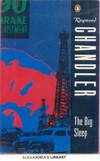
The Big Sleep by Raymond Chandler, 1939

Chandler is one of my favourite writers – top 5 at least, and pretty much everything he published is consistently readable. As such I don’t really have a favourite novel of his but if forced to choose it would probably be “The Big Sleep”. This is Chandler at his sublime best. Philip Marlowe, his iconic hard boiled detective, a loner, is the quintessential private eye, the model on which so many detectives down the ages have been based upon. We see the action through his detached, sardonic perspective, although even then many things we are left to work out for ourselves.

The principal attraction of these novels – “The Lady in the Lake”, “Farewell my Lovely”, “The Long Goodbye”, “The Little Sister” – all classics – is not the plotting, tight though this is, but the prose – Chandler had an ability to craft a phrase like few others. Take this opening from “The Big Sleep” for example, probably one of the best ever written:

“It was about eleven o’clock in the morning, mid October, with the sun not shining and a look of hard wet rain in the clearness of the foothills. I was wearing my powder-blue suit, with dark blue shirt, tie and display handkerchief, black brogues, black wool socks with dark little clocks on them. I was neat, clean, shaved and sober, and I didn’t care who knew it. I was everything the well-dressed private detective ought to be. I was calling on four million dollars.”
Doesn’t that make you want to stop and go and read the book itself? Go on, I won’t be offended. The dark little clocks are a great touch.

The plot is extremely complex, not that it matters. Marlowe is employed by the ailing General Sternwood to investigate a small blackmail problem. In doing so Marlowe gets involved with pornographic book lending (which in today’s world is almost cute), gambling, boot-legging, gangsters, and several murders. The story flies along at such pace that you don’t actually spot the join – the book was originally two shorter stories, welded together to make the novel. This is done with such craftsmanship that you don’t notice unless you are looking for it – and even then it doesn’t matter a jot. (End of chapter 19 if you are interested – everything is tied up neatly at that point with only the missing persons investigation, which Marlowe isn’t really supposed to be conducting, outstanding).

If you haven’t read Chandler before you are in for a treat. This is as good a place to start as any – it’s his first Marlowe novel. In Philip Marlowe we have one of the great literary characters – as well realised and fully rounded as any I can think of. Some Christians exhort people to ask “What would Jesus would do?”. With all possible respect to these individuals, I often wonder whether “What would Marlowe do?” would offer better advice. That won’t mean too much if you haven’t read the books, so you know what to do now, don’t you?
Standard
21st century literature, science fiction', Terry Pratchett, The Long Earth

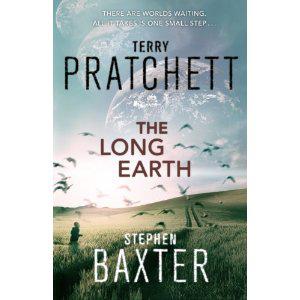
The Long Earth by Terry Pratchett and Stephen Baxter

Occasionally a new series is announced on television. The director is someone well known, the lead actors are famous, the production has obviously (from the trailers) had a lot of money spent on it. So you tune in with high expectations…. but end up a bit underwhelmed – the whole is less than the sum of the parts. Somewhere the story has been lost.

The premise of the novel is simple but well realised. The idea of multiple parallel universes has been around for a long time, but Pratchett/Baxter’s idea is to ask – “What if we could travel easily to and from these worlds?” This is the “Long Earth” of the title. The challenge these writers faced was to take this idea and overlay it with a story, without letting the conceit overwhelm the narrative. Broadly speaking I don’t think they achieved this. They explore a lot of the issues that the Long Earth presents – how would migration to these new worlds affect the old earth, what about those who are unable to travel, (stepping), what would the new worlds be like – almost like an intellectual exercise. New species and civilisations are discovered, but the heart of the novel is a journey to the far reaches of the Long Earth to discover a new form of intelligent life, that may or may not represent a threat to the rest of civilisation.

There are a huge number of threads left hanging at the end of the novel – the mysterious Black corporation, for example, is mentioned in passing as some kind of global MegaCorp, but this goes nowhere. Joshua the main character is built up as a messiah-like figure and there are references to “the Silence” that aren’t properly explored or explained. Equally there is little of the typical Pratchett whimsy – the organic matter that drives the stepping devices is a potato (why?), and we are told about but do not meet a religious cult that believes all of existence is a practical joke. There are also some obvious traces of Pratchett in the character of Lobsang, a hyper-intelligent robot that passes the Turing test and claims to be the reincarnated spirit of a Tibetan priest. But the lightness of touch which usually characterises Pratchett’s writing is largely missing. In its stead are long passages describing the journey West through the long earth. (Incidentally, the journey West is a deliberate and explicit echo of the journey across the Wild West of the USA, without the red indians/native americans.

Pratchett started a story based on the idea of the Long Earth and stepping between worlds, in the 1980’s, and abandoned it, presumably because he wasn’t able to craft a story out of it. DiscWorld might have got in the way a bit as well. Bringing in a sci-fi writer (Baxter is often described as a “hard sci-fi” writer – I can only guess this means he doesn’t normally include any fantasy element in his work) to help finish the work was misconceived – Pratchett already had the sci-fi component of his story, what he needed was a strong plot to bring to life the world he had created.

Despite a literal big bang, the book actually ends with a bit of a whimper, and it is made obvious that we are being invited to participate in a series of novels – the Long Earth perhaps becoming the new DiscWorld, with characters such as the police officer we meet but who has very little to do in this novel becoming more central, having their own plot lines, etc. If that inference is correct it is a fine ambition, and I am sure I will keep reading – for now.

Standard
20th century Literature

Lucky Jim – Kingsley Amis

I am conscious that I have written a run of pretty negative reviews in recent weeks, so to redress the balance and cheer myself up a little I have just re-read an old favourite, Kingsley Amis’s 1954 novel “Lucky Jim”.
 
Jim Dixon is a lowly academic at a provincial Midlands university. He hates his job, his boss, his “digs” (ie lodgings), his colleagues – he doesn’t even like his girlfriend very much. The novel follows his struggle to impress his boss sufficiently to avoid getting the push, which involves having a pointless piece of research published, delivering an end of term lecture on “Merrie England”, and generally brown-nosing his boss and his boss’s family for all he is worth. (“Educating Rita” nicked the drunken end of term speech by the way). Because every instinct within him objects to this he does a poor job of it, and only avoids being dismissed through his titular luck in being offered a much more desirable job out of academia.
 
The comedy derives from Jim’s inability to express his rage and frustration. His interior monologue expresses this anger effectively enough, but externally he has to keep up a pretence. This conflict leads him to self sabotage – most dramatically at a weekend stay at his boss’s house when he gets drunk and starts a small fire in his bedroom (see quotes below).
 
The expression “laugh out loud” is used far too often in the context of books – I see the phrase on the blurbs of books quite regularly – but I can honestly say in all my journeys to work and back I have never heard anyone burst out loud with laughter when reading a book. But “Lucky Jim” genuinely, hand on heart, makes me laugh, out loud. Out of context quotes probably lose much of their impact, but I still find the description of Jim’s drunken escapades at Welch’s house really funny; his description of getting, being, and recovering from being, drunk are completely spot on.
 

Here’s some of the scene with Jim slowly realising just how drunk he is:

It wasn’t as nice in the bathroom as it had been in the bedroom. Though it was a cool night for summer he found he felt hot and was sweating. He stood for some time in front of the wash basin, trying to discover some more about how he felt. His body seemed swollen below the chest, and uneven in density. The stuff coming from the light seemed less like light than a very thin but cloudy phosphorescent gas; it gave a creamy hum” (Chapter 5)


And this is the hangover description, one of the best I have ever read, which opens chapter 6:

Dixon was alive again. Consciousness was upon him before he could get out of the way; not for him the slow gracious wandering from the halls of sleep, but a summary, forcible ejection. He lay sprawled, too wicked to move, spewed up like a broken spider crab on the tarry shingle of the morning. The light did him harm, but not as much as looking at things did; he resolved, having done it once, never to move his eyeballs again….His mouth had been used as a latrine by some small creature of the night, and then as its mausoleum. During the night, too, he’d somehow been on a cross-country run and then been expertly beaten up by secret police. He felt bad.”


Note incidentally that this isn’t just funny, but it is clever and well written too – the creamy hum quote for instance is a great example of a “I know what you mean” kind of imagery.

Lucky Jim has a strong period feel. This is very clearly recovering post-war Britain, with the war and rationing fresh in everyone’s minds. References to the war are scattered through the novel like a background noise. The contrast between Dixon as a representative of a new generation, wanting to break free of the shackles of pre-War Britain, and his many opponents, is a precursor of the coming rebellions of the 1960s. I appreciate Dixon isn’t a political figure, and would resist being co-opted into any rejection of traditional values – Amis was deeply conservative, not to say misogynist. Much of Dixon’s anger comes from his sexual frustration – his girlfriend Maureen places strict boundaries on their relationship. But we don’t read Lucky Jim because of its social commentary.

 
Despite this period feel I was delighted at the extent to which the novel had not dated. Normally humour doesn’t age well – try watching Fawlty Towers today; what was once side splitting now hardly raises a smile. But “Lucky Jim” speaks to some timeless themes – frustration with authority and the eternal internal struggle between doing what is right and doing what one wants.
 
Amis in later years degenerated into a bit of a self parody, and never met the heights of Lucky Jim again. That’s not to say his other novels are not worth reading – I found “The Green Man” for example quite compelling when I read it many years ago, and he won the Booker in 1986 for the Old Devils – but his grumpiness eventually became just a bit too insistent. But if you haven’t read it before, or even if you have, give yourself a treat with this gem.
 
Standard
20th century Literature, Amsterdam, Booker Prizewinner, Ian McEwan

Amsterdam by Ian McEwan

Read in 1999 Vintage edition
The important thing to remember about this novel, winner of the 1998 Booker prize, is that it is pre-Atonement, pre-On Chesil Beach, even pre-Saturday.  In other words it is not the work of a mature writer at the height of his powers – which I know is not much of an excuse, but it was the best I could come up with. In fact after a few hours of puzzlement – what the heck was he thinking of? – I think I came to understand what McEwan was trying to do here, and I was willing to forgive him.
The plot is flimsy. Molly Lane has died in her forties of an unspecified dementia, (false note struck straight away – everyone would have wanted to know what her illness was, and would have talked about it) and her past lovers assemble to mourn her. The cast includes:
·         George, her present husband, who maliciously prevented people from visiting her, and used her illness as a means of imposing the control on her he was never able to exercise when she was well.
·         Vernon, editor of a mildly left wing broadsheet, who is struggling to take it down market, running stories about conjoined twins instead of chess tournaments
·         Clive, a composer who has been commissioned to write a millennial symphony (we are in the late 1990s). Clive is revealed as a casual plagiarist;
·         Garmody, the Foreign Secretary, who has a range of unpleasant right-wing views. He is a Portillo-like figure (that is the nasty Portillo of the mid 1990’s not the avuncular figure he has become).
Clive and Vernon, long standing friends, casually make a pact to kill one another should either of them become ill in the way Molly did. George finds pictures of Garmody amongst Molly’s possessions that show him cross-dressing.  He sells them to Vernon, who uses them to boost circulation, but falls out with Clive as a result. Meanwhile Clive, on a walking break in the Lake District, sees a woman being attacked, but does not intervene because he wants to work on his composition.
Vernon is sacked, Clive can’t finish his composition, and in a rage they decide to kill one another, which they do while in Amsterdam, using the country’s relaxed laws on euthanasia. The front cover of this edition shows two gentlemen in frock coats and top hats duelling in a wood or forest, with one or two others watching on as seconds, a not so subtle reference to this mutual destruction.
Each character tells their section of the story in the first person, so we don’t see them in their full awfulness immediately – they have little or no insight into their own behaviour. For example when Clive sees the woman attacked he views the incident as little more than a domestic argument, when to the reader it is chillingly, obviously, more than that: “She made a sudden pleading whimpering sound, and Clive knew exactly what he had to do.” (88) He walks away.
McEwan assembles a cast of grotesques, and hurries to dole out suitable outcomes to them all. The implausibility of the ending really needs no elaboration from me, and he came in for a huge amount of criticism – the worst of which was to compare it to the kind of contrivance used by Jeffrey Archer. To a point this is justified – the ending is ridiculous and unbelievable. But I have a theory as to what McEwan was aiming for. It is a mistake to read this as social realism, a psychological study, or a thriller. This was intended as social satire, however clumsily it is executed. In fact the novel I am most strongly reminded of is Evelyn Waugh’s The Loved Ones, which is deliciously dark, and ends, like this, with sudden death. But while Waugh carries it off, McEwan undoubtedly doesn’t. Principally this is due to simple care with the various elements of the plot. Satire is such a difficult art that a near miss – as I believe Amsterdam is – is nevertheless a profound miss. If evidence of this were needed, I think it is significant that while the characters and events of Waugh’s 1930s novel have stayed clearly with me for more than 20 years, I could remember nothing of this novel from a 1999 reading until I read the book this week. McEwan’s themes – the intrusions of the press, injunctions, euthanasia, etc – are still very relevant, so I was surprised at how dated the novel felt.
Standard
21st century literature, Book review, Booker Prizewinner, John Banville, The Sea

The Sea – John Banville


Read in a Picador 2006 edition. Winner of the 2005 Booker prize.
A generic Booker prize winner is emerging from my reading of recent weeks. The short novel is narrated by an older character looking back on a formative incident from their youth – an incident that is not revealed until well into the novel. This incident has profoundly affected the later life of the main characters, but like the sun cannot be looked at directly, and has to be revealed slowly and through hints and subtle references. Other than this climactic event there is little plot development, and all the characters are seen through the prism of this incident. The typical 21st century Booker favourite is heavy on atmosphere and imagery, but light on some of the more traditional components of the novel such as story.
The Sea could almost have been written as a “How to win the Booker prize” exercise, ticking so many of these boxes. This does it a disservice however, because within the generic Booker candidate is a much stronger novel struggling to get out.
The plot is easily summarised: Max Morden, (a pun on “maximum modern”?) recently widowed, having lost his wife after a long illness, goes to drink himself quietly into oblivion in a seaside boarding house from his youth, where, many years earlier, “something happened” – the traditional formative experience. Max narrates the novel in a stream of consciousness which flits from one time period to another. Slowly the childhood summer where he met the Grace family is unfolded. While clearly distressed at the loss of his wife, the narrator is still able to craft elaborate metaphorical descriptions of the Grace family and their seaside summer.
In what way does this childhood experience make the man, as we are led to conclude? Why does being witness to a traumatic childhood experience, combining sex and death (and while this is a spoiler, apologies, the real surprise would have been if his childhood had not been marked by an experience combining sex and death, wouldn’t it?) make Max the man he becomes? Does it affect his ability to form adult relationships, make a career, or otherwise live his life? Apparently not – there is no real hint that his average career and average life has been affected by the incidents of this extraordinarily long summer.
The fallibility of memory is often a strong theme of these novels, but is played straight here. Max misremembers, adjusts his focus, admits to fallibility, but on other occasions when the authorial voice is stronger has a stroner grasp of time and place. While he recognises these memories may be fallible or flawed, this doesn’t detain him long – nothing comes of the gap between memory and reality.
The reviews quoted on the cover and back of this novel focus heavily on Banville’s use of language. He has a particular flair for imagery which while not directly associated with the thing being described, does have the effect of making the reader pause and reflect. At times this tips over into plain over-writing, such as when a farmyard is described thus – “Big shallow muslin-draped pans of milk lost in their own silence” (53). This doesn’t really mean anything, but has the effect, if you are like me, take another pass at the sentence. Most of the time though the imagery works well; seabirds dive like “torn scraps of rag” (64), a waiter approaches “tentative as a fox cub” (65); a car engine cools “still clicking its tongue to itself in fussy complaint” (79). I particularly liked the narrator’s description of lying in bed next to his wife like “toppled statues of ourselves” (99)
Banville (or is it Morden?) tiptoes on the border with nonsense so frequently that is not surprising that occasionally he oversteps – such as when “being alone with Myles was like being in a room which someone had just violently left” (83); or when Chloe’s teeth are described as having “a faint tinge to the enamel of her incisors that was green indeed, but a delicate damp grey-green, like the damp light under trees after rain, or the dull-apple shade of the underside of leaves reflected in still water” (138).
I have a sneaking suspicion that this is actually a great novel – or more specifically that Banville has the potential to write a great novel. The writing here is allusive, (I got lots of echoes of Eliot which I haven’t traced yet) complex, very clever, and improves with time – rereading for this blog very shortly after the first reading was a surprisingly pleasant experience, not having to worry about the distracting nonsense of the big reveal, and being able to just enjoy the writing instead. Absolutely this is a flawed novel, but would it be too patronising of me to say it shows great promise?
Standard
21st century literature, Book review, Waiting for Sunrise, William Boyd

Waiting for Sunrise by William Boyd

Be careful what you wish for – I was bemoaning the absence of a novel with a structure or plot, and this is what the bookshop’s shelves presented me with.
 
I normally start these entries with a plot summary to provide me with some means to remember the book by in months and years to come, as well as being at heart a traditionalist. This novel is itself deeply traditional – with one exception – it reads almost as a pastiche. Briefly, it follows the adventures of Lysander Rief, an improbably named actor who is in 1913 Vienna for psychiatric treatment of a sexual problem. This problem melts away when he meets another ex-pat, an English artist, Hettie Bull, who swiftly and artfully seduces him under the nose of her Austrian lover. Like most of the other problems in the novel this psychological issue is transient and easily solved – nothing much stands in our hero’s way. Hugely improbably Hettie later accuses him of rape when their affair leads to a pregnancy. Rather than being a serious threat to our hero this is simply a way to disguise their affair from her sculptor common-law husband. Despite the charge being transparently fabricated, Lysander escapes Vienna in a comic disguise with the help of some shadowy embassy officials. It is hard to take this or any other peril he faces seriously when all problems fade away so easily.
 
This is the start of his wartime career as a spy, and where the Buchan pastiche really gets going. The embassy officials contact Lysander back in the UK. He has joined up on the declaration of war but been posted to an internment camp in Wales. On the pretence of collecting payment for the legal and bail bill incurred in Vienna they persuade him to travel back to Europe to track down a spy. He brutally tortures the relevant information out of an embassy official who dies of a heart attack shortly thereafter – we can never be entirely sure if this is as a result of the torture, but quite possibly. Another comedy disguise allows escape back to the UK, despite his being shot in transit by a fellow spy as the result of a misunderstanding. All this promises mystery and suspense that never quite materialises, but the recovered code points to a mole in a UK Government War Ministry, which Lysander, once quickly recovered from his wounds, infiltrates. Uncovering the mole is a business-like affair, quickly done, and the book shudders to a halt with the spy’s eventual perfunctory revelation and dispatch. There is no twist in the tale or denouement beyond the resolution we had been shown 100 pages earlier.
 
Throughout the novel false trails are laid none of which go anywhere. Mysterious characters are sketched in and then fade away and are forgotten. The front line of the war is visited briefly in the manner of a tourist, and the solution to the various puzzles thrown in Lysander’s way can all be resolved without much effort. This all adds up to an author on auto-pilot.
 
I mentioned earlier one instance where this novel differs from its Edwardian predecessors, and that is in its frank treatment of sex. Lysander effortlessly sleeps his way though the book, with none of the women immune to his charms. The treatment of women in this novel has not been picked up on by any of the reviewers I have read, but to me it was ridiculous – he only has to snap his fingers for corsets to be unbuckled and stays removed, an Edwardian James Bond.  
 
If fiction which is unchallenging and instantly forgettable – and I found myself having to check on the novel’s bland title – is to your taste then I would have thought an original, such as Riddle of the Sands or 39 Steps would be much more rewarding fare.
 
 
Standard
21st century literature, Booker Prizewinner

Supplementary: The Sense of an Ending (2) – Julian Barnes

I wanted to add a few comments to my notes on Julian Barnes’s “A Sense of an Ending”. I have spotted what I think is a significant flaw at the heart of the novel, although to be fair it is one that is not apparent on a casual read. 

The novel’s primary theme is the imperfection of memory, which the narrator describes more eloquently as “some approximate memories which time has deformed into certainty” (page 4), and “that certainty produced at the point where the imprefections of memory meet the inadequacies of documentation” (page 17). To illustrate this the letter Tony writes to Adrian and Veronica is exhibit A. In Tony’s memory this letter is unremarkable:

“as far as I remember,I told him pretty much what I thought of their joint moral scruples. I also advised him to be prudent” (page 42) 

– all fairly restrained, dignified stuff. The actual letter is far more robust, and is positioned by the narrator as being the cause of all the subsequent problems in their various relationships.

But this doesn’t work, because when Tony describes his recollection of the letter he is already aware of what he wrote, he has seen the original – unless we are being invited to understand that the narration of part one is divided from part two by the reading of Mrs Page’s will.

While possible that is unconvincing – why would Tony record the events of part one unless to provide background to part two? So he already knows his language was harsher than he describes it in his softened page 42 version. This is important to the understanding of Barnes’s central theme, that memory is fallible, but that documentary evidence can often teach us how flawed our memory is. Here the documentary evidence is to hand, but Tony still presents us with the pre-documentary version.

I appreciate that I need to set this out more clearly, but for now I think my central point is that the points Barnes are discussing are not fully thought through.

Standard
21st century literature, Booker Prizewinner

The Sense of an Ending – Julian Barnes, 2011

Read in a Vintage books edition 2012.

Plot outline – Part 1

The narrator of the novel, Tony Webster, looking back over 40 years to his youth, tells us about his group of friends at school in the 1960s. The tight knit group is joined by a slightly detached fourth member, Adrian. Adrian sees the world from a different perspective from the others, but is clearly very bright, and goes on to Cambridge. Tony goes to Bristol, another friend to Sussex, and the fourth goes into his father’s business (Barnes having fun there with the subtle gradations of university attainment and status.) Just before they leave school another boy commits suicide, ostensibly because he has got his girlfriend pregnant. This is a portent of things to come, a rather clunking clue in fact. There are along the way some irritating “if this were a novel” comments from the narrator, drawing our attention to the artificiality of the construct, just in case we weren’t aware that we are reading a book rather than watching real life unfold.

At university Tony has a relationship with a girl, Veronica, including an awkward weekend stay at her parents’ house. He later introduces her to his former school-friends; shortly afterwards they separate, and shortly after that she and Adrian get involved. Hearing from them about the relationship, Tony writes a spiteful letter cursing them. In the end it appears to have been a literal curse, because Adrian commits suicide. At the time we are told this was an existential act of someone unable to see the point of life, but it doesn’t take much to detect that it might be more complicated than that.

Part 2

Forty years flash past, and we are brought to the present. As this is a routine and predictable discursion on the fallibility of memory, we know that the way Tony remembers things is unlikely to be an accurate recollection of the past (even Tony knows and acknowledges this). It comes as no surprise therefore when these events are given a new focus. This is precipitated by the death of Veronica’s mother, who bequeaths Tony £500 “blood money” (Veronica’s description) and Adrian’s diary. We are left to guess how she came into possession of this document, but Veronica has requisitioned it and refuses to honour her mother’s will.

Tony pesters Veronica for the diary, which leads to several abrupt, uncomfortable meetings. She persistently tells T he “doesn’t get it” – there is clearly some dark secret from their youth that has yet to emerge. She takes him to meet a disabled person who we are led to believe is her child. Finally, in the last scenes from the novel it is suggested that the disabled person is Veronica’s brother, the product of a late pregnancy of her mother’s (am I the only one offended by the simple leap that equates late pregnancy with an undefined disability?) It is also suggested, but never made explicit, that the child’s father was Adrian, and that Tony’s spiteful letter had been the catalyst of this affair, which in turn had led to Adrian’s suicide and Veronica’s embitterment.

Although Barnes is trying hard to be modern here – having a flawed narrator retelling tales of their past through the perspective of the present, and then having to re-evaluate that initial view because of an unexpected catalyst – is in many ways very traditional.

Does it work as a novel? Well the Booker judges obviously though so, for what that is worth. But the book is not without its problems. First of these is Veronica. Her behaviour is irrational. Even if we fill in some of the gaps of the story in line with Barnes’ s hints and assume that Tony’s letter to Adrian was the catalyst for an affair with veronica’s mother, and subsequently Adrian’s suicide, this still asks us to accept that:

a)       Veronica believes that Tony’s letter was the sole reason for the affair and suicide, and that none of the principal actors bore virtually any responsibility for their behaviour. She maintains a relationship with Sarah, her mother, until her death in old age, despite the suggestion that she (Sarah) had stolen her boyfriend from her, borne him a child, and provoked his suicide.

b)       She would bottle up her anger and resentment for forty years without saying anything to Tony

c)       When finally her mother dies and the diary comes to light she is willing to show Tony the consequences of his actions, but not simply tell him. If he doesn’t “get it” telling him he doesn’t get it seems a pretty stupid waste of time.

None of this is in any way psychologically convincing. It just doesn’t ring true. Barnes tries to disguise this by showing us events solely from Tony’s point of view, which works for a while, but not after some reflection on the puzzles he sets us at the end of the novel.

Some other observations:

·          The novel opens with a series of vivid images, almost all of which relate to water in one way or another, including steam, the Severn Bore, and bodily fluids being washed down a basin. What is the significance of this symbolism – is water being used to represent memory, or time? 

·          There are some strong connections between this novel and Amis’s On Chesil Beach – a relatively banal incident in the early but unliberated 1960’s looked back on in older age and seen in a different light.

·          The novel is to my mind about a third too long – the meetings between Veronica and Tony where she seethes with anger about his betrayal could easily be collapsed into a single, much more powerful meeting. This would have made it a long short story rather than a novella, and disqualified it for the Booker – is Barnes really that cynical?

Standard