21st century literature, Anne Enright, Book review, Booker Prizewinner, The Gathering

The Gathering by Anne Enright, 2007

Read in the Vintage 2008 edition shown

The decision of the 2007 Booker prize judges to give this book the nod over On Chesil Beach must rank as one of the all-time puzzling decisions of a prize panel. Because this was lame. The novel’s central premise is very traditional – a family member has committed suicide, and the clan gathers to mourn their loss and review his life. This is shown us by Veronica Hegarty, the book’s narrator, sister of the suicide, Liam. We are told early on that Liam’s death can be traced back to an event in his childhood. The traditional dark secret revolves around her grandmother, Ada – I was irresistibly reminded of another Ada, great-aunt Ada Doom, who saw something nasty in the woodshed, and has never been the same since.

The reveal – that Liam was sexually assaulted by a friend of the grandmother. (he was staying with his grandmother as his mother went through yet another pregnancy) is underwhelming. The line between this assualt and his eventual suicide decades later is never drawn – in fact Liam is a very lightly sketched character, and we understand little about his life and why he took it. The disclosure of this incident from the past is not the turning point we are led to expect – it is not revealed to the wider family, and nothing comes from it.

Stylistically the prose is wooden and at times comically so. When the narrator has sex with her husband she describes lying there “quartered like a chicken”. The narrator says of the young undertaker “You could unpeel him and he would still be true” (75) which is not just a whacky metaphor but gibberish isn’t it? Whether this disjointed narrative is supposed to reflect the distressed psyche of the narrator is besides the point – it is still clumsyily written.
The central character is unsympathetic and the fact that her mother often is unable remember is unsurprising.
Novels where nothing happens, and the events just consist of unstructured memory – and the point that Veronica’s memory is flawed, and is constantly being reconstructed is laboured to death here – flowing back and forth across the events of the past – are getting tired. I am really crying out for a novel where something happens and the characters are believable and interesting. Not much to ask for is it?

P.S. As with The Accidental, negative reviews on Amazon outweigh the positive – and I genuinely don’t believe this is just Booker bashing.

Standard
Uncategorized

Comment: Reading Lists

Remarkably this will be one of the only resolutions I have ever kept. The aim was to keep a record of books read in 2012 for posterity’s sake, and to allow me space to record my thoughts and impressions of the books. It has led me to think of some possible new resolutions for 2013 and beyond:

  • Shakespeare – reading the whole of the canon, including the poetry, in one year. More than do-able, especially as I have read probably 75% already (although I would have to reread, as most of this was 30 years ago!)
  • Russian classics – a big black hole in my reading thus far, although I am coming close to finishing Crime and Punishment, finally.
  • Booker prize winners – about 40 novels or so which is comfortably do-able in a year – again I can tick off a good dozen or so already, although some, such as Cloud Atlas would definitely be worth revisiting. Other, like The Old Devils, Amis senior, probably less so. I reckon I could take a good bite out of all shortlisted books as well, but I think that counts as sadism.
  • Noble laureates – lots of world literature out there which I know nothing about.

Any other ideas?

Standard
21st century literature, Ali Smith, The Accidental

The Accidental by Ali Smith

This novel is set in 2003 and follows the Smart family, on holiday in a rather tatty cottage in Norfolk. The (step)father, Michael, is a university professor and serial adulterer; the mother, Eve, is a (blocked) writer, imagining how the lives of people killed in the war would have ended had they lived; the son, Magnus, is in his late teens, and is suffering from crushing depression having been involved in cyber-bullying that led to the suicide of a girl at his school, and finally Astrid, is a bright but a little obsessive 12 year old.
The narrative is told alternately through their eyes, and as no concession is made to explaning context, the story emerges in fits and starts and not in chronological order. This structure is fresh and keeps the reader engaged – there is no way you could read this novel casually.
Into their broken world arrives a messiah-like character, Amber, who proceeds to kill or cure the family. Magnus is cured of his suicidal depression by heathly bouts of sex; Astrid is shown the world through a new, mainly paranoid, pair of eyes (the scene where Astrid and Amber take pictures of security cameras at Norwich station, freaking out the security staff, is genuinely funny); Michael and Eve are shown how unheathly and disfunctional their lives are less directly, but the result is still transformative. 
I though this was a clever, well written, funny book. But I was hugely disappointed in the ending. I know it is depressingly traditional of me to look for ends to be tied up, but I was left with nothing resolved, and not knowing who Amber was, why she picks on the Smart’s for her shock therapy, apart from the fact they needed it.
After writing the above I checked out the reader reviews on Amazon. This is probably the first novel I have ever seen where the one star reviews out-scored the five star. Usually if people hate a book they don’t bother to review it – or even finish it. But this seems to have been widely loathed. I can see why some of the stylistic techniques might have been irritating, and I understand that some of the characters, especally the philandering don, were not engaging. But the contrast with some of the other contemporary fiction I have been reading this week was stark.
Standard
21st century literature, Booker Prizewinner

The Inheritance of Loss – Kiran Desai

Read in a 2007 Penguin edition.
Kiran Desai’s novel is in many ways a very traditional exploration of modern India, but a dramatic contrast to White Tiger. The book is set in the 1980s in the shadows of the Himalayas, and follows the affairs of a small prosperous household – a retired judge, his cook, and his teenage granddaughter.
This is not a plot-driven book. From the time of the opening chapters to the novel’s conclusion only a small amount of time has passed, and there has been little incident. Most of the narrative is devoted to following the characters’ back stories – how the judge went to university in England, how his granddaughter’s parents died in Russia, and so on. Most of this is extraordinarily predictable – everything plays out just as we expect, with little happening and minor dramas being created out of minor events such as the loss of a dog. The more dramatic events of the time are shown but appear largely incidental. In any event the time structure of the narrative has already shown us that no-one central to the story will be affected.
Although the setting allows for some exploration of the politics of northern India, and in particular the struggle for independence of the Gurkhas, this largely feels like window dressing for the centre of the novel, the lives of the main characters and the cast of eccentrics that circles them. The book really only comes to life when it jumps across to follow the cook’s son struggling to make a life for himself in New York.  I wasn’t surprised to subsequently read that this is the author’s current home.
This has all been done before, and better, most obviously by Rushdie. The contrast with White Tiger though is interesting. Here the portrayal of India remains convincingly honest; the police are corrupt, there is crushing poverty, which robs people of their dignity, tourists are crass and insensitive – but at the same time the country has its beauty and the people have their charm, even when you have to struggle to find it. The book is well written, and the descriptive prose is very well done. For me this was not enough, and while this novel was head and shoulders above White Tiger, it nevertheless disappointed. Incidentally I found the title pompous and patronising – yes everyone has experienced loss of some kind of another, and it has had an affect on their situation and personality, and yes there is an obvious read across to India itself, but the same could be said of just about anyone and any country.
Standard
20th century Literature, American literature, Book review, John Steinbeck, Of Mice and Men

Of Mice and Men by John Steinbeck

Of Mice and men – John Steinbeck read in the 2010 New Longman edition
Spoiler alert – this review gives information about what happens at the end of the story. If you don’t want to find out what happens before you have read the book itself, please do not read any further.
I have a theory about “of Mice and Men”….
If George were to be tried for the murder of Lenny, he would be convicted. Everything Steinbeck writes leads us to avoid this judgment. At the end of the novel the murder is portrayed as a kindness. What is interesting to me is how Steinbeck manoeuvres the reader into this position, where we have sympathy for the killer, and empathise with his actions. How does he do this?

Firstly, we are encouraged throughout the story to think of Lennie as an animal – all of the imagery used to describe him focuses on this aspect of his appearance and behaviour. When we first see him he is described as “dragging his feet a little, the way a bear drags his paws” (page 19);  later he is said to be “as strong as a bull” (43); and later still he “came as silently as a creeping bear” (140). Bears and bulls are of course dangerous, and frequently killed by man.

The story is set in a world in which it is legitimate for man to destroy animals – for example to avoid unnecessary suffering. We are given two examples if this in the text – the killing of Candy’s dog, and the killing of four of Slim’s puppies. The putting down of Candy’s dog is particularly poignant and telling – Candy is told it is the right thing to do, and the reasons are compelling, but at the same time we can clearly see that it is not a straightforward decision. He is told to shoot the dog in the back of the head, which prefigures Lennie’s death. And of course it is Candy’s gun which is used to kill Lennie, underlining the connection between the two deaths, if such emphasis were needed. So Lennie is little more than an animal, and it is acceptable to put animals down when their owners feel it is appropriate to do so, therefore….

But Lennie isn’t an animal, and killing him is not legitimate.

The case for the defence is that this was a mercy killing. Lennie is about to be shot by Curley, and suffer a slow drawn out death. If this is somehow avoided then he would in likelihood be judicially murdered, or left to rot in a “booby house”. Even in the unlikely event of them escaping sooner or later the inevitable will happen and Lennie will be killed. Best for him to die in a moment of sublime happiness than be butchered.
The problem with this defence is that it is based on a number of false premises, albeit ones that the author has very carefully constructed. Firstly, it assumes the inevitability of Lennie’s death at the hands of the lynch mob. Well Lennie and George have some experience in escaping from mobs before, and the case that capture is inevitable is not made. Secondly, George has some responsibility for them reaching this point. While not directly responsible for Curley’s wife’s death (and how sad that anonymity is, like the other great anonymous character of GCSE fiction, Piggy) George did not do enough to avoid what was a foreseeable conclusion. We are told clearly she is “trouble” and Lennie begs George to leave the ranch – even he can tell things are going to go agley. George is well aware of Lennie’s exceptional strenght, and that he kills animals accidentally, so it didn’t take a leap of imagination to see that Curley’s wife was at risk. George admittedly warns Lennie to stay away from her, but then leaves him unsupervised while he plays ring-toss with the other ranch hands.

Lennie is brain-damaged and disabled, and whatever his crimes did not deserved to be put down like a dumb beast. Across the Atlantic, the Nazis were treating disabled people in pretty much the same way as George does Lennie, weighing their value in the balance and killing those found too much of a burden.

So why, when George kills Lennie, do so many readers see it as nothing less than an act of love, more than a mercy killing, a gift, sending Lennie to the promised land he has no prospect of inheriting on earth? Steinbeck spends the whole book leading us to this point, painting the choices George makes as unavoidable. We are told of their near escape from their previous town, when Lennie scares a young woman, sparking a manhunt. We are told of Lennie’s troubled childhood and George’s charity in taking him on. We see Lennie’s propensity for killing animals accidentally. And George loves Lennie, cares for him as best he can, and doesn’t want him to suffer the painful death Curley threatens.

So which is it – a mercy killing of a dear friend to avoid further suffering, or a cold, callous murder to relieve the burden of caring for a disabled relative? And how are we led to think it is the former, when all the circumstances suggest the latter? And finally, if we can be led into accepting a murder so easily, what else could we accept?
Standard
21st century literature, Booker Prizewinner

The White Tiger – Aravind Adiga

The White Tiger won the 2008 Booker Prize.

This first novel is written in the form of a letter to the Premier of China as an introduction to modern India. The author is not a fan – of modern India, that is, not China. India is a rich source of material for contemporary novelists, (for example, the Inheritance of Loss) and seems to be favoured by Booker judges. The novel charts the life of the narrator as a chauffeur to a prosperous family, and portrays the country as sordid, brutal, and above all bitterly corrupt.

If written by a Western author this account could be easily have been seen as racist. The author’s closeness to the country he describes probably deflects that criticism. Nevertheless there are virtually no redeeming features of the country – the bravery of people who fought for India’s independence is mocked, the beauty of the countryside goes unmentioned, and no-one acts through anything other than cowardice or self interest. The Indian Tourist Board will not be recommending this book in a hurry! It is an indictment of the country India has become in the years since independence, and is horribly unbalanced compared to say Slumdog Millionaire, which shines a light on the underbelly of India but equally shows the beauty of the country and its people.

The plot is very simple. The narrator murders his boss, and runs away with his money, showing a small amount of compassion by taking his nephew with him, despite knowing that the rest of his family is almost certain to be slaughtered in retaliation. Using the stolen money he bribes his way into a position of influence, and gloats over those he has left behind. We are told this fairly on in the book, so I am not including any spoilers. Years later he records his crimes in letters to the Chinese Premier, a plot device that makes little sense incidentally. The central character is deeply unpleasant; as well as being an unrepentant murderer, he is also bigoted towards gays, black people, and women. of course I am not suggesting the author shares these views, but they are presented without adequate challenge. Just because bad views are expressed by a bad person doesn’t make them any more palatable.

By coincidence I am also reading “Crime and Punishment” at the moment, and although the comparison is probably unfair, Dostoyevsky does something Adiga does not (or cannot), which is given us an insight into the mind of a killer. While the portrait of Raskolnikov shows us the internal struggles a killer goes through, in White Tiger the killing is shown as a simple commercial transaction, with little or no horror, nor psychological consequences – extraordinarily I have even seen one reviewer describe the murder as “brave”. Killing someone in cold blood and leaving your family and friends to live or die with the consequences isn’t brave. It’s not even as if the main character was living an impoverished life on the streets – he was doing fairly well as a chauffeur. I appreciate the author isn’t saying “Life in India is so bad murder becomes acceptable” – what he is surely is presenting us with is a world where morality has disappeared, so much so that a murderer sees little wrong with their crime, because they see similar acts of immorality being rewarded all around them. This is “Crime” with no “Punishment”.

All in all a strange Booker choice, subverting many of our expectations about what novels about modern India should be, but with very few redeeming features.

Standard
20th century Literature, Book review, Michael Frayn, Towards the end of the morning

Towards the End of the Morning by Michael Frayn

Read in a Faber and Faber 2005 edition. This is one of Frayn’s early (1967) novels about life in the newspaper industry pre-Wapping. It is an affectionate portrait, which some well observed scenes, but overall it is the slight kind of novel that can slide over your eyes without ever entering your brain. You really get no sense of the highly skilled writer Frayn was to become. The story, such as it is, follows two men in one of the backwaters of an unnamed Fleet Street newspaper, pointlessly churning out unread copy to fill gaps in the paper. Churning is a poor choice of verb actually, because we rarely see them doing any work before going to the pub, and their colleague sleeps extensively, then dies, at his desk, without anyone noticing for some time. His replacement is a charmless character who is never really fleshed out at all. The men are unlovable buffoons, tolerated with a deep sigh by their womenfolk. They have various mildly amusing situations before the novel peters out inconclusively. The comic scenes, such as the freebie holiday one of the newspapermen goes on, are over-extended, and I found them tiresome and unfunny. This has all been done so much better by for example, Kingsley Amis.

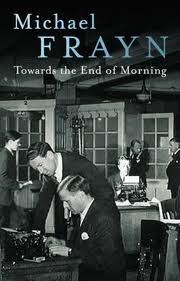
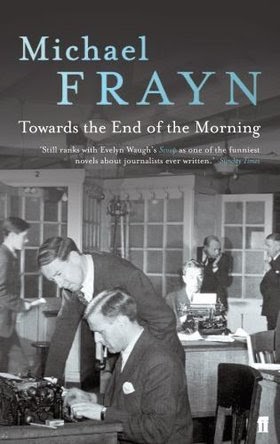
Frayn writes in his introduction that “No-one, for some reason, can remember the title I gave it” (the novel). This short essay, written presumably for the re-issue of the novel in 2000 on the back of some of his more successful, contemporary work, is arguably a more interesting portrait of the lost world of Fleet Street than the novel itself. But the reason the title is forgotten is the forgetability of the novel itself. If evidence of this were needed, look at these two book covers:

Spot the difference? The title of the novel!!

Frayn is one of our most interesting writers and probably doesn’t get the recognition he deserves. His craft is infinitely stronger these days, and while I thought Spies was flawed, it is still a great book. Hopefully I will get round to writing about it soon.

Standard
20th century Literature, A Handful of Dust, Book review, Evelyn Waugh

A Handful of Dust by Evelyn Waugh, 1934

First published in 1934, and read in a gorgeous Penguin Modern Classic Edition.  

Waugh is the great chronicler of mid-war upper class British life, and this is one of his bleakest, blackest novels. This savage, bitter comedy charts the end of a aristocratic marriage. The world the characters inhabit is not the comic, chaotic swirl of events seen in for example Vile Bodies, in which characters are not far from caricatures. Although all Waugh’s novel contain an element of bile, the taste here is particularly bitter – one would imagine the writer had experienced a relationship breakdown or divorce. There is a moment about half way through the novel when tragedy strikes. Even though I had read it before it still struck me with a visceral force, such is the quality of the writing and characterisation.


The title of the novel, in case you weren’t able to place it, is from the Waste Land:

“I will show you something different from either
Your shadow at morning striding behind you
or your shadow at evening rising to meet you;
I will show you fear in a handful of dust”
 

When I was taught Eliot at A level I was told I would find, or simply found, the Waste Land impenetrable, but looking back and re-reading it now I find lines like those above chillingly straightforward, even if they are open to many different readings. Here, a handful of dust can either be anything mundane – i.e. fear can be found in the everyday or ordinary, or the phrase can suggest the burial ritual, dust to dust.

 
The ending of the novel disappoints – there is a feeling of not knowing quite how to draw matters to a close, and it lapses almost into absurdity, as if the writer wanted to allow us to dismiss the novel as a straightforward, farcical comedy, rather than the tragedy which dominates the heart of the book.
 
If you haven’t read Waugh before this is probably not the best place to start, not because it is inaccessible – it is a compelling read – but because it is not the most representative of his writing. Try Vile Bodies or the Loved Ones for something less likely to leave you in quiet desperation.


Standard
http://schemas.google.com/blogger/2008/kind#post, Jasper Fforde, Thursday Next

One of our Thursdays is Missing – Jasper Fforde

The law of diminishing returns is setting in for this series. Fforde keeps delivering his linguistic pyrotechnics, clever plot twists, and his imaginative recasting of the world of fiction. And yet I can’t deny my interest is waning, and as a result I fear I will end up focussing on minor flaws which in early books in the series – and the seventh is coming out later in the year – were more easily over-looked.

This admittedly jaundiced view is not helped by the choice of the “written” Thursday Next as the main protagonist – the real Thursday Next being missing, as the title suggests. Even writing that, and considering trying to draw a distinction between two different flavours of literary character being used here emphasises just how nonsensical that would be. The power of fiction is such that when we identify with a character, and that character is replaced, even if the replacement is a carbon copy of the original, we feel the loss. In any event the primary Thursday in this novel is not a carbon copy of the original, and we are constantly reminded of the fact – she is a more timid, reserved, version. Because the action of the book takes place almost exclusively within BookWorld, we are deprived of most if not all of the characters that have grown over the series. 

One other gripe – there are some jumps in the narrative, almost as if some paragraphs or pages are missing. One example where a puzzle is set – Thursday has to work it out to escape from an island of fan-fiction – and we are not given the answer. I understand this is because Fforde set his fans a series of puzzles on his website, which is where the answer to this and the other narrative discongruities can be found (such as who gives Thursday her Jurisfiction badge?) In the edition I read there was no signposting of this which meant that the book read as rushed and incomplete. Disappointing, but I don’t don’t I will be coming back for more with TN7.

P.S. Just one more moan – why the silly book titles? I was going to say puns, but there’s no punning going on, just the simple insertion of one word for the original. Doing this to a Jeffrey Archer was bad enough, but One of our Dinosaurs is Missing – really?

Standard
20th century Literature, Books by Nobel Prize Winners, imagery and symbolism, Lord of the Flies, William Golding

Lord of the Flies by William Golding, 1954

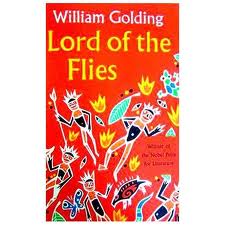
Lord of the Flies by William Golding, first published in 1954, read in a Faber edition.
Unless you have not been paying attention for the last 60 years, the plot of Lord of the Flies will be familiar – a group of schoolboys crash land on a tropical island during an unsuccessful evacuation from a nuclear conflict. Without adults or the trappings of civilisation, order quickly breaks down, the little savages emerge, and things go badly for the vulnerable characters, until at the last minute order is restored by the arrival of the British navy.
Golding was a schoolmaster in Salisbury, and a veteran of the Second World War. Lord of the Flies was written at a time when war threatened as the USSR acquired a nuclear capability, and only a short time after the devastation of the Second World War. These experiences and context clearly inform much of the structure and themes of the novel. It can be read as a fairly simple parable – the savage within is only a little beneath the surface of man, and it takes only a slight change in circumstances for him to appear. We are all – those of us with Y chromosomes anyway – one missed meal away from murder. This simple interpretation is usually resisted – it is the fact they are boys alone on the island that leads to anarchy, and the presence of an adult immediately restores order. The contrast with Ballantyne’s Coral island, referenced several times both explicitly and implicitly in the novel, suggests that this is a corrective account of how boys would cope if stranded. But that I think misses the point. The adult world beyond the confines of the island is not a mature civilisation but an equally barbaric place where people are killed on an industrial scale. Instead of war-paint the adults wear uniforms, instead of sharpened sticks carry machine guns. The island is a microcosm of the wider world, not some sort of bizarre social experiment where, stripped of constraint, boys run wild. The Heart of Darkness, explicitly referenced in the novel’s closing lines (“Ralph wept for the end of innocence, the darkness of man’s heart”) is within man, not just boys.
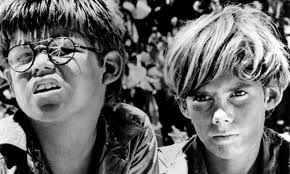
But is “underneath it all we are just savages” a strong enough message to sustain interest and, indeed, justify the book’s persistence on GCSE reading lists, and ultimately Golding’s Nobel prize? the book has its weaknesses. The symbolism is heavy handed – the conch, the pig’s head, etc – and the outcome of the narrative is flagged very early on. Jack is described as being almost mad as early as chapter 3, and as for Piggy’s destination – well probably even the most passive of readers will work out quite early on that things are not going to end well for Piggy. He is portrayed as one of nature’s victims, almost inviting his mistreatment/bullying. When the choir reform as a hunting group, focussed obsessively on killing pigs, the writing is on the wall for our anonymous, if endearing and ultimately quite brave friend.  
So we need to look elsewhere for material to sustain interest in the novel. You don’t get the Nobel prize for literature by writing adventure stories for children. Golding is a mature writer, even in this, his first novel, and his technique is complex. For example, he does something very sophisticated with his narrational point of view. He uses a third person narrator but gives them a limited perspective. It is not quite as simple as this being the viewpoint of the boys, although little is explained other than what is immediately obvious to the protagonists. So we are not told directly how they came to be on the island, why there are no adults (or girls!), and are left to deduce a lot of the backstory – the conflict, the evacuation, etc – from snippets of dialogue. The reader is given just enough information to understand that many of the boy’s observations about their circumstances are wrong – for example that the beast is not an actual creature. (And by the way, another obvious source for Lost here – or are there simply no tropical islands on which people are stranded by way of an air crash that are not haunted by strange creatures?). The narrator only occasionally tells us more about the island than the boys would know – one example is the scene where the plane fight in the night sky is described, and the dead parachutist lands on the island. At other times the scene comes closer to the boy’s perspective, such as the chilling scene where the Lord of the Flies speaks to Simon through the decapitated pig’s head.
This point of view allows us to understand the boys’ feelings as they get used to not having adults around, and as their sense of liberation ebbs away to be replaced by concern, then fear. We understand the lure of the hunters, and why savagery gets the upper hand. It also avoids the necessity of filling in much of the backstory – the reader is left to do the work.
Golding also uses a very rich range of imagery to evoke the island and the events of the story. The narrative uses simile, metaphor, personification, synecdoche and metonymy, as well as when appropriate figures of speech, which robbed from their traditional context are given new life on the island. This imagery flowers when the narrative reaches key points. Thunder is like the “blow of a whip”; pig guts look like a “heap of glistening coal” (160); the night has a “dentist’s chair unreality” (134) flies buzz “like a saw (152); Ralph kneels “like a sprinter at his mark” (155).
The island and elements are personified as a living creature or person – seaweed is like “shining hair” (121) the sea has “fingers of spray” (121) and its swell is “like the breathing of some stupendous creature” (115) and again is described as a “sleeping leviathan” (115); even the air acts as if it is sentient, “pushing2 in from the sea, (160) and “cuffing” the trees (161). The sun doesn’t just beat down, it does so with “enmity” (9). When Simon’s body is carried gently out to sea  it is treated reverently by the tide and the micro-organisms in the sea, as if they are showing him the kindness and respect he did not receive from his peers.
There is one final, telling use of imagery that I wanted to underline. When the children first see the “beast”, in the form of the body of the airman, it is described a sitting asleep “like a great ape”. (135). Jack has already been described (49) as ape-like, and later, when he is in full Mr Kurtz mode, the connection is reinforced: he is described thus: “power lay in the brown swell of his forearms; authority sat on his shoulder and chattered in his ear like an ape” (165). We are left in little doubt as to who the beast really is.

 

Standard